
Review · BERLIN TOURS
Berlin: Museum of Communication Entrance Ticket
The most surprising part of Berlin’s Museum of Communication is its enormous time span. You move from the hand axe to the smartphone, with 2,000 objects showing how people have shared news, ideas, warnings, and affection across roughly 40,000 years. The famous Blue Mauritius stamp is the star object, but the hands-on displays give the visit its real energy.
I like the interactive communication gallery, where you can try smoke, light, and acoustic signals rather than simply read about them. I also like the freedom of a self-guided visit: use the audio-visual app, spend extra time with the objects that catch your eye, and leave when you are ready. The main consideration is that this is not a guided tour, so you need to take charge of your own route and pace.
Key points
- See the Blue Mauritius: View one of the world’s rarest and most famous stamps.
- Cover 40,000 years: Follow communication from early tools to modern smartphones.
- Try the exhibits: Send messages with smoke, light, and acoustic signals.
- Use the app: An audio-visual guide helps you explore without a live guide.
- Plan about 1.5 hours: That is enough for a useful visit, though interactive displays may tempt you to stay longer.
- Pay about $9: The low admission price makes this an easy add-on to a Berlin museum day.
Why this museum is more than a stamp collection
The Museum of Communication Berlin presents communication as a basic human need, not just a technical subject. Its displays ask how people send information, how messages change as they travel, and how new tools affect daily life.
That approach gives the museum a broad reach. You are not limited to postal history or old telephones. The collection connects ancient tools, postal systems, signals, digital displays, and smartphones. It also refers to current debates and invites you to form your own view.
The museum describes itself as the world’s oldest postal museum, but the experience is not stuck in the past. The exhibits put old and new forms of communication side by side. A hand axe and a smartphone may seem unrelated, yet both represent a human desire to solve problems, reach others, and pass information along.
I find that useful for families and mixed-age groups. Someone interested in stamps can focus on the postal displays. Someone more curious about technology can spend time with the digital terminals. Children can take part in the interactive stations instead of trying to absorb a long series of written panels.
More museums and galleries in Berlin:
- Berlin: Jewish Museum Berlin Entrance Ticket
★ 4.5 · 8,393 reviews - Berlin: DDR Museum Tickets
★ 4.3 · 3,443 reviews - Berlin: Natural History Museum Entrance Ticket
★ 4.6 · 3,382 reviews
Starting with 40,000 years of human messages
Your visit begins at the Museum for Communication Berlin, where the entire experience is self-guided. There is no required time slot, and your ticket is valid for one day. That makes the visit easy to fit around other plans in central Berlin, at least in terms of timing.
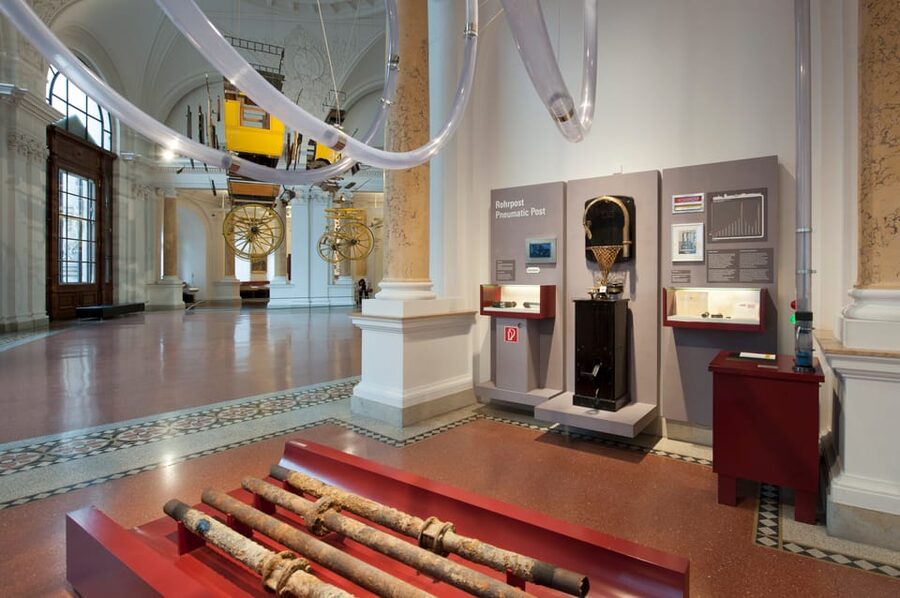
The exhibitions cover about 40,000 years of communication through around 2,000 objects. You can expect a wide range of subjects rather than one narrow chronological display. The journey runs from simple tools and signals to systems that move messages across cities and continents, then on to electronic and digital communication.
You should give yourself about 1.5 hours for a solid first visit. That is enough to see the main displays and try some interactive stations without rushing. If you enjoy reading every panel or testing each terminal, you may need more time. The one-day admission gives you room to organize the visit around your own interests.
The museum also links historical objects to present-day questions. That matters because communication is not only about machines. It is also about trust, speed, access, privacy, and the way people understand one another. You are encouraged to look at the displays from different angles and take part in the discussion rather than passively move from case to case.
The Blue Mauritius and the appeal of rare objects
The Blue Mauritius gives the museum a clear must-see object. This stamp is among the most famous and rarest in the world, so even visitors with little interest in philately may want to make time for it.
A rare stamp can be easy to dismiss as a tiny piece of paper behind glass. Its value here is the story around it. Stamps made postal communication more organized and recognizable, while rare examples reveal how ordinary tools can become prized cultural objects.
I would not plan the entire visit around the Blue Mauritius alone. It is an important highlight, but the museum offers a better experience when you use it as one stop within the larger story. After seeing it, continue into the communication gallery and the other displays. The contrast between a delicate historic stamp and interactive digital equipment helps show how quickly communication methods have changed.
If you have a strong interest in postal history, the stamp displays may deserve extra time. If you are visiting with children, treat the Blue Mauritius as a short visual stop, then move toward the stations where they can interact with the subject.
The communication gallery puts you to work

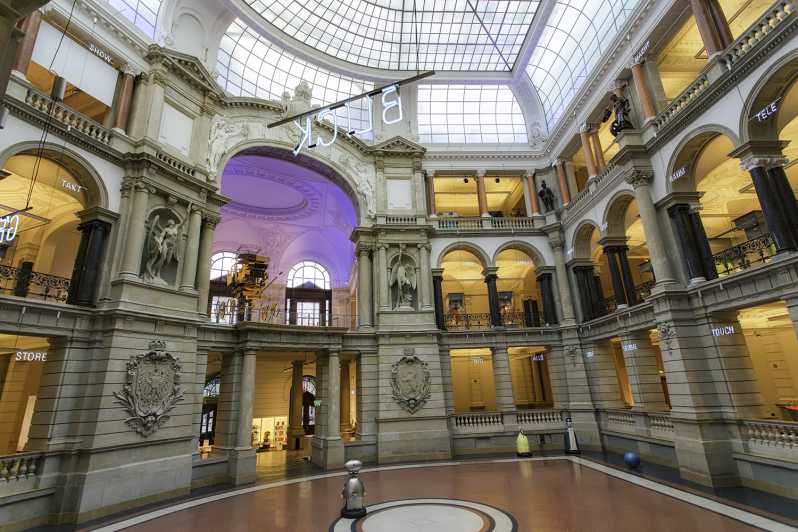
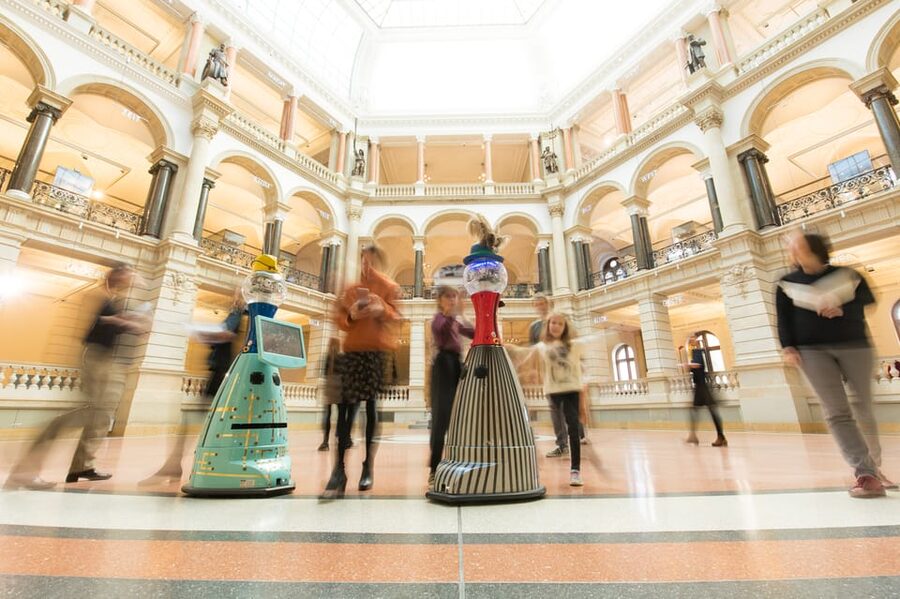
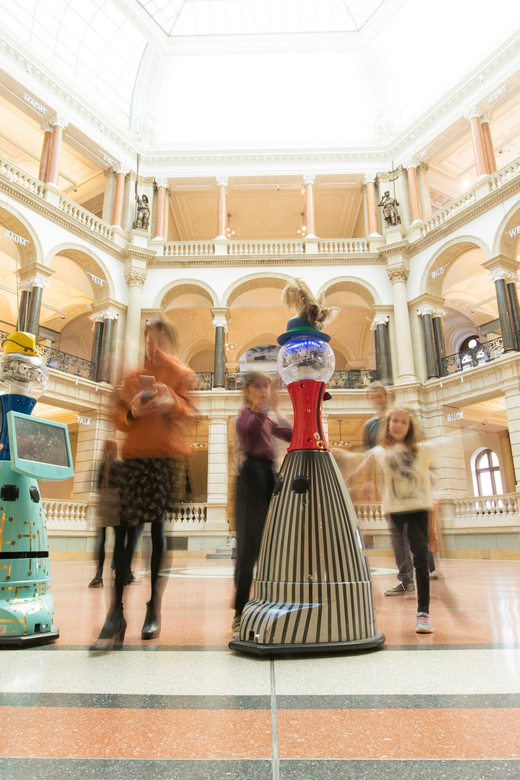
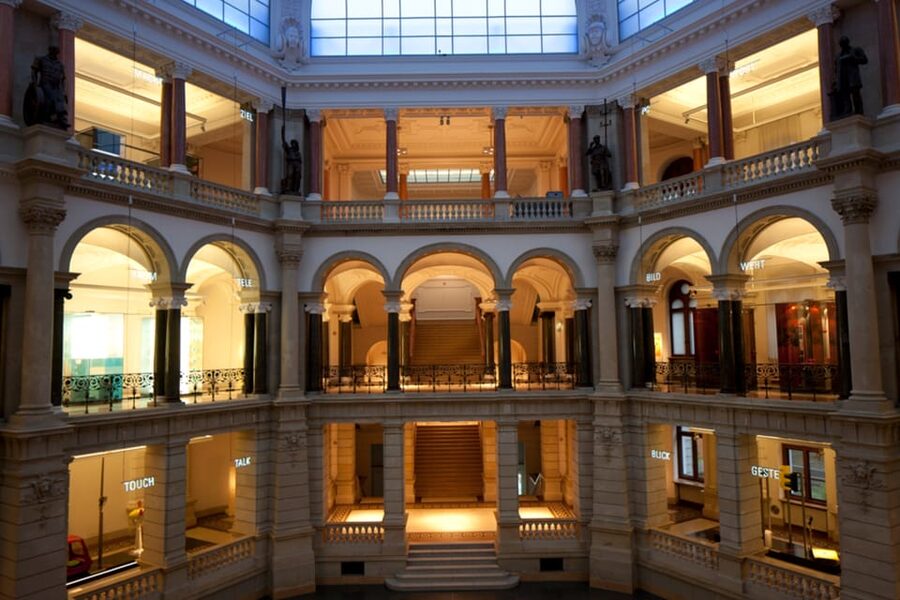
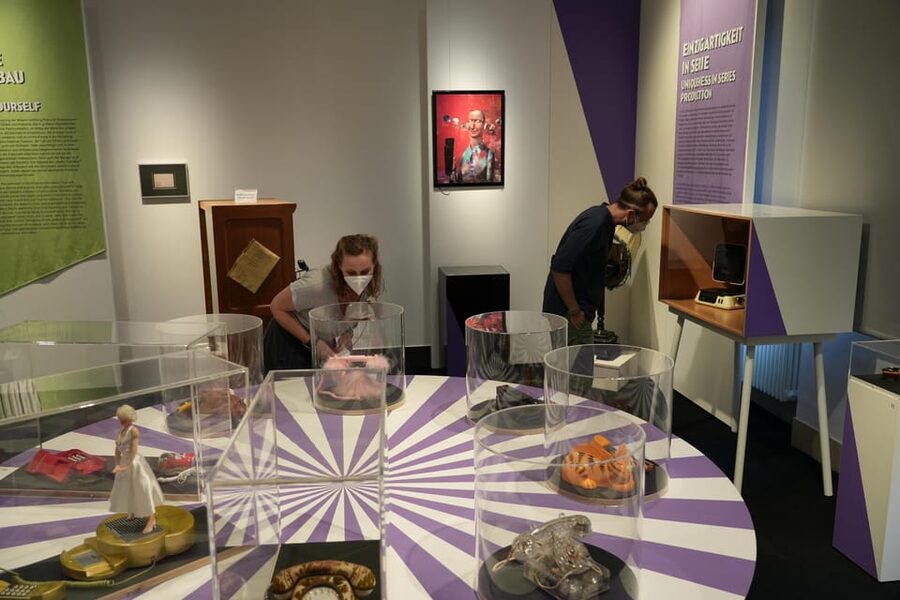
The communication gallery around the atrium is the liveliest part of the visit. It contains interactive terminals that let you explore the basic mechanics of communication through action.
You can try exchanging news by smoke, light, or acoustic signals. These activities give you a quick sense of the problems people have always faced: how to send a message, how to make it visible or audible, and how to ensure that the other person understands it.
The digital displays add another layer. You can learn how people greet one another around the world, which is a small but useful reminder that communication depends on culture as well as technology. A greeting may be simple, but it carries social rules and expectations that change from place to place.
This section is especially valuable if you prefer learning by doing. The museum does not ask you to accept a long explanation before you understand the point. You test a method, see its limits, and then connect it to the larger history of communication.
The interactive areas also explain why the visit can take longer than expected. A 1.5-hour plan works for a general look, but you may want extra time if every person in your group wants a turn. The museum is best approached with some flexibility rather than a rigid minute-by-minute schedule.
A few more Berlin half-days to weigh up
- Berlin: Reichstag, Dome and Government District Guided Tour
★ 4.7 · 18,288 reviews - Berlin: 1-Hour City Tour by Boat with Guaranteed Seating
★ 4.3 · 16,993 reviews - Berlin: Boat Tour Along the River Spree
★ 4.4 · 11,252 reviews - Discover Berlin Half-Day Walking Tour
★ 5.0 · 9,624 reviews
Using the audio-visual app at your own pace
Admission includes an audio-visual app that guides you through the museum. Since there is no live guide named for this experience, the app becomes your main source of added direction and context.
I like this format for a museum with such a wide subject. You can move at your own speed, pause when an object interests you, and return to the app when you want more explanation. It also lets you avoid being tied to a group route.
The trade-off is simple: a self-guided app cannot react to your questions in the way a personal guide can. If you want a story shaped around your particular interests, you will need to choose your own focus. Still, for a $9 admission ticket, the included app adds useful support without requiring a separate guided booking.
Use the app as a companion, not a demand that you follow every instruction. Start by getting a sense of the museum’s layout. Then select the objects and interactive areas that appeal to you. This approach suits independent visitors and gives families room to move at different speeds.
A practical 1.5-hour visit
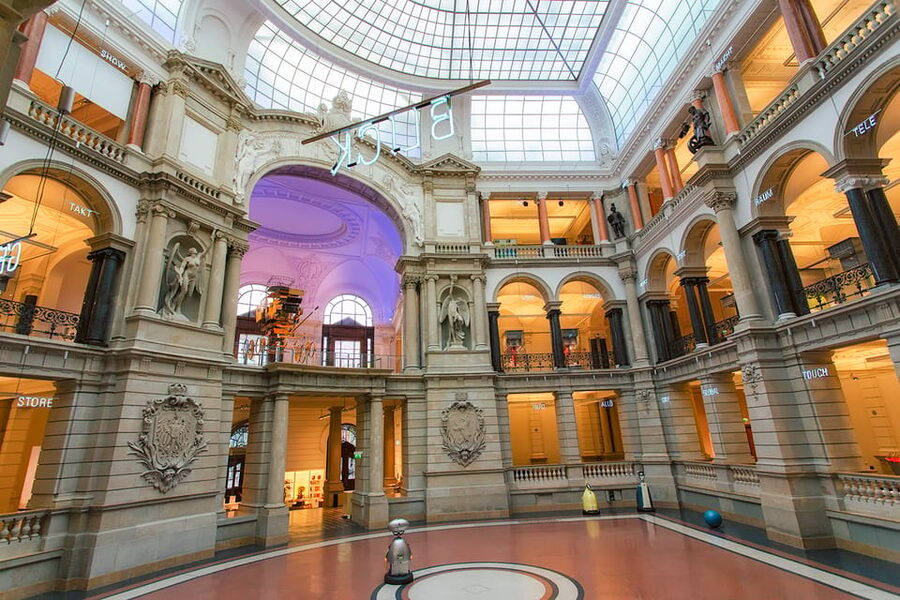
For a short visit, I would divide the time into three parts. Begin with the broad communication story, giving yourself enough context to understand what the later objects represent.
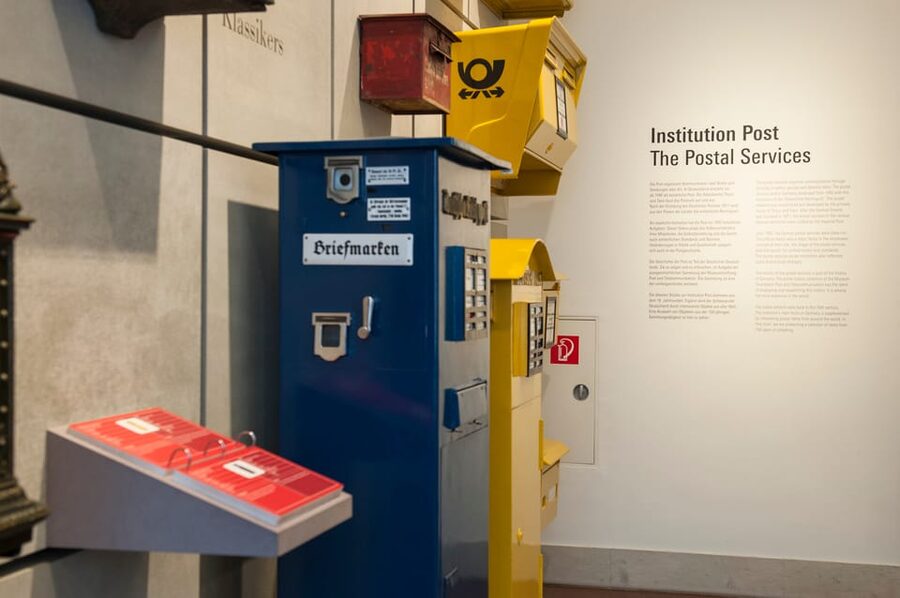
Next, make time for the Blue Mauritius and the postal displays. These are the clearest connection to the museum’s postal roots. Do not rush this section, but also do not let one small object consume the entire visit.
Finish in the communication gallery around the atrium. Try the smoke, light, and acoustic signal activities, then explore the digital terminals and the displays about greetings around the world. Ending with the interactive section gives the visit a more active finish.
The experience description includes sightseeing, scenic views on the way, and pass-by elements, but this is fundamentally a museum visit rather than a moving tour through Berlin. You should not expect hotel pickup, drop-off, or a city transport component. You make your own way to the museum and explore inside independently.
There is also no need to reserve a time slot. That is handy if your Berlin plans are still changing. The ticket is valid for one day, and the museum can be added to a flexible afternoon or morning plan. At the museum counter, cash payment is available, while the activity information also notes ticket purchases without cash.
Who will get the most from this visit
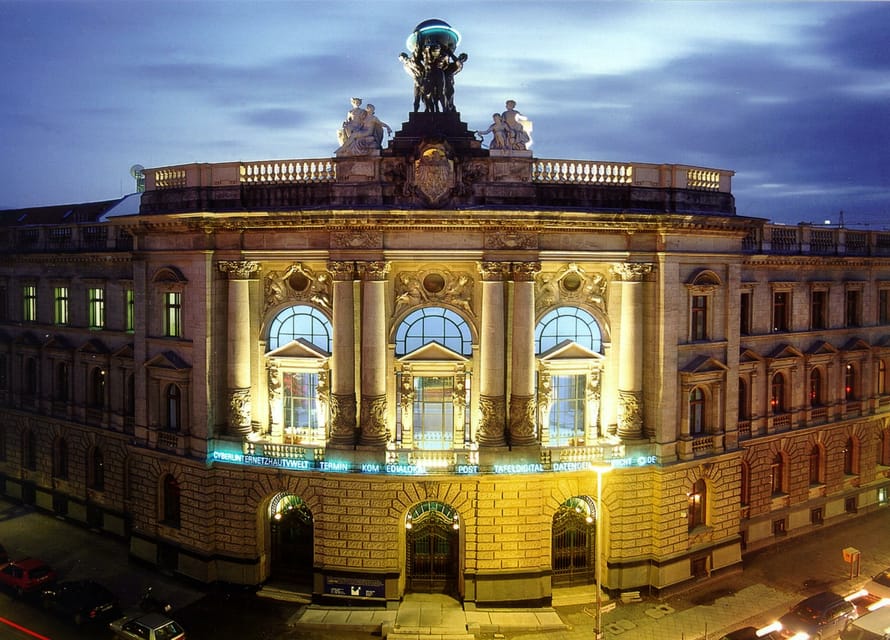
Families have a good reason to consider this museum. The chance to operate terminals, test different signals, and learn greetings gives children something to do. The collection also offers enough variety to keep adults engaged, especially those interested in technology, design, postal systems, or social history.
It suits solo visitors and couples who prefer freedom over a fixed group schedule. You can spend a few minutes with a familiar subject or follow the audio-visual app through less familiar parts of the collection.
It may be less satisfying if you want a tightly narrated guided tour with a named expert leading every step. The supplied experience does not identify a personal guide, and the format is clearly self-guided. You need to read, listen through the app, and choose your route.
The museum also works well for visitors who want a relatively short indoor activity. At $9 per person, it does not require a major budget decision. You can visit for 1.5 hours, or use the one-day validity to give yourself more time if the displays catch your attention.
The overall rating is 4.5 from 452 bookings, and the strongest praise points toward the museum’s appeal as a hands-on place. One German comment describes the Berlin Salon as fascinating and beautiful. Another, written in Polish, highlights the historical communication displays, the chance to touch and interact, and the postal material, especially for children. Those details match the museum’s main strength: it turns a subject that could feel dry into something you can see and try.
Opening details and useful planning notes
The museum is closed on Mondays. It is also closed on December 24, December 25, and December 31. On public holidays, it opens from 10:00 AM to 6:00 PM.
The supplied information does not give regular weekday opening hours, so check the current schedule before setting out on a specific day. Public holiday hours are clear, but normal hours may require a separate check.
The museum is wheelchair accessible. There is no hotel pickup or drop-off, so plan your own transport to the Museum for Communication Berlin.
You can cancel up to 24 hours in advance for a full refund, and the reserve-now, pay-later option lets you hold a place without paying immediately. These terms are useful if you are arranging several Berlin activities and want to keep your schedule flexible.
Is the $9 ticket good value?
For most visitors, yes. The ticket costs about $9 per person and includes admission plus the audio-visual app. That is a modest price for a museum covering 40,000 years and 2,000 objects, especially when the visit can fill roughly 1.5 hours without requiring a reservation.
The value improves if you enjoy interactive displays or are visiting with children. A traditional collection can be hard to judge from a short description, but the communication gallery gives you a direct way to take part.
The value is lower if you only want to see the Blue Mauritius and leave immediately. The stamp is important, but it is one object within a much larger museum. Plan to explore the wider displays so the admission feels worthwhile.
Should you book the Museum of Communication?
Book it if you want an affordable, flexible Berlin museum visit with a clear hands-on element. I would especially recommend it for families, technology fans, postal-history enthusiasts, and anyone who likes museums that connect old objects with current questions.
Skip it if you strongly prefer a live guide or have no interest in communication, stamps, technology, or interactive displays. For most people, though, the low price, one-day validity, accessible format, and unusual range make this an easy museum to add to a Berlin itinerary. Give it at least 1.5 hours, and save time for the signal experiments rather than rushing straight to the famous stamp.
FAQ
How much does admission cost?
The ticket costs $9 per person.
How long is the museum visit?
The planned museum experience lasts about 1.5 hours, though the ticket remains valid for one day.
Do I need to reserve a time slot?
No. You do not need to reserve a time slot for your museum visit.
What is included with the ticket?
Admission to the Museum of Communication Berlin and an audio-visual app are included.
Is there a live guide?
The experience is self-guided. An audio-visual app is provided to help you explore the museum.
Can I see the Blue Mauritius stamp?
Yes. The museum displays the Blue Mauritius, one of the world’s most famous and rarest stamps.
Is the museum wheelchair accessible?
Yes. The activity is wheelchair accessible.
When is the museum closed?
It is closed on Mondays and on December 24, December 25, and December 31. On public holidays, it is open from 10:00 AM to 6:00 PM.
Can I cancel or pay later?
You can cancel up to 24 hours in advance for a full refund. The reserve-now, pay-later option lets you book without paying immediately.
Just added around Berlin
- From Berlin: Gardens & Palaces of Potsdam Bike Tour★ 5.0 · 61 reviews
- Berlin: Battle for Seelow Heights WW2 tour -Clash of Titans★ 5.0 · 27 reviews
- From Berlin: Historical Gems of Potsdam Private Day Trip★ 4.4 · 4 reviews
- Berlin: Französischer Dom 360° Panorama & Crémant to go★ 3.9 · 5 reviews
- Explore Berlin Tour: History and Highlights★ 4.7 · 5 reviews
- Berlin: Evening Yacht Cruise with Aperitif & Dinner Upgrade★ 4.6 · 178 reviews
- Berlin: Expats in Berlin Comedy Show Ticket★ 4.7 · 182 reviews
- Berlin: The Epic Comedy Club Friday Night Showcase★ 4.8 · 28 reviews
Berlin Tours, compared.

Reichstag, Dome and Government District Guided Tour
Read our review →
1-Hour City Tour by Boat with Guaranteed Seating
Read our review →



Reichstag, Plenary Chamber, Cupola & Government Tour
Read our review →
Browse the lists this tour appears in