
Review · BERLIN TOURS
Berlin: Interactive DeJa Vu Museum Entrance Ticket
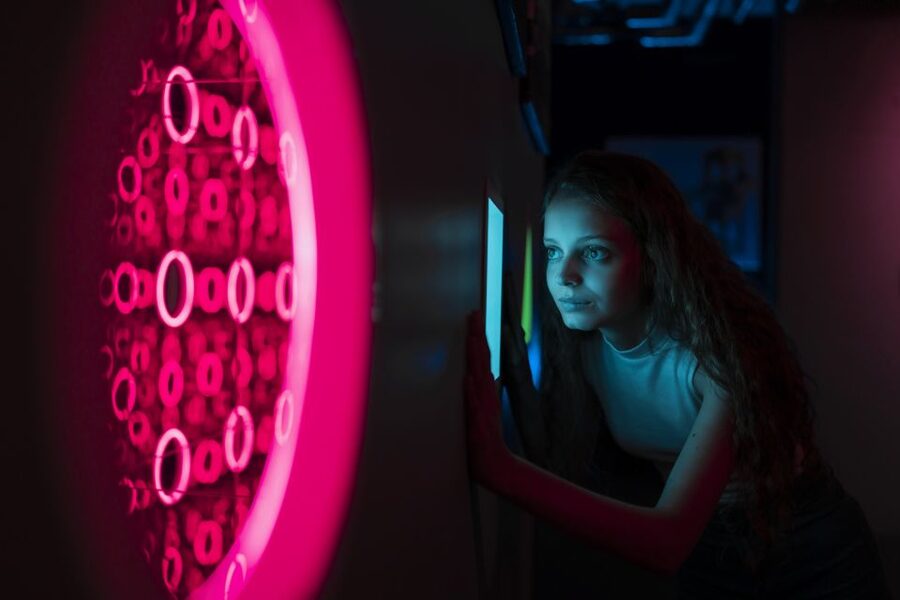
The DeJa Vu Museum turns your own eyes into unreliable tour guides. Across two floors near Alexanderplatz, you can shrink or stretch your sense of scale, step into mirror rooms, solve visual puzzles, and become part of projected artwork. I especially like the Oleg Shupliak portrait gallery and the chance to take photos in rooms such as Starroom and Abyss. The Beuchet-Stuhl, Dark Room, and Interactive Sandbox add hands-on fun rather than leaving you to simply look at framed art. The main drawback is that some rooms are small, and busy periods can mean a wait for exhibits designed for only two people.
This is a good pick when you want something light, playful, and different from Berlin’s major museums. At $17 per person, it offers reasonable value for families, teenagers, friends, and rainy-day planners, though some people move through it in only 30 minutes instead of the advertised 1.5 hours.
Key points to know before you go
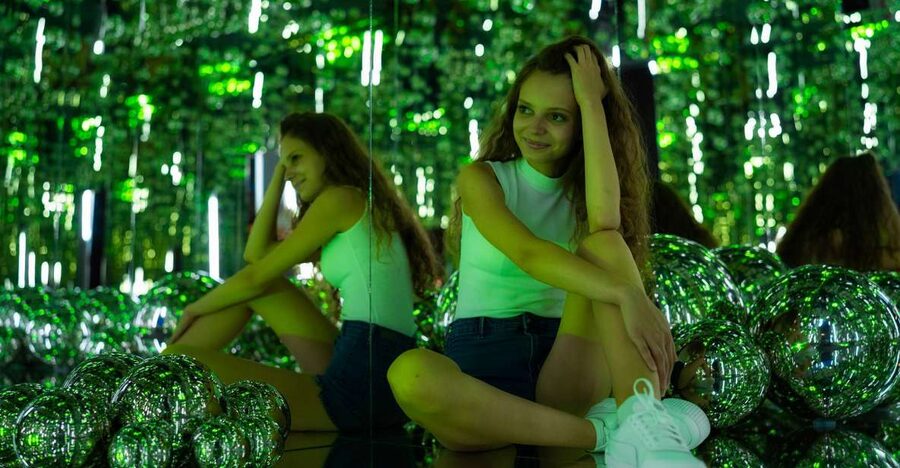
- Two floors of hands-on exhibits: You do more than look. You sit, touch, test, walk through, and pose inside the displays.
- Oleg Shupliak’s double-image portraits: Study paintings that reveal more than one subject, then guess who or what is hidden in each image.
- Several strong photo rooms: Starroom, Abyss, and colorful kaleidoscope spaces give you unusual settings for photos and short videos.
- A central Alexanderplatz location: The entrance is about 300 meters from the Fernsehturm, making this easy to add to a sightseeing day.
- Best for a relaxed one-hour visit: The full experience is listed at 1.5 hours, but a quick group may finish in around 30 minutes.
- Plan around access needs: The museum is not suitable for people with mobility impairments or epilepsy, and food, drinks, pets, alcohol, and drugs are not allowed.
What the DeJa Vu Museum is really about
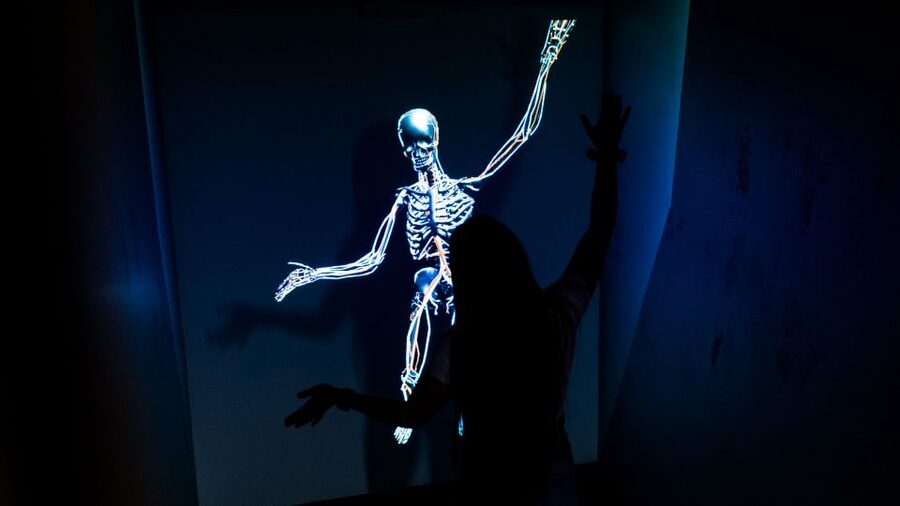
This is not a traditional museum where you quietly follow a line of paintings. It is a playful collection of optical illusions, interactive puzzles, projection spaces, mirror rooms, and art installations. The point is to make you part of the display.
You may find yourself sitting in one exhibit while the room changes your apparent size, testing a visual trick with your friends, or trying to work out why a picture seems to contain more than one face. The appeal comes from the quick change of pace. One room asks you to observe closely, the next encourages you to pose, and another gives you something physical to try.
I like this format for a mixed-age group. Children can focus on the puzzles and moving parts, while adults often get more interested in how the illusion works. Teenagers have plenty of material for photos and videos, and friends can compare how each person sees the same display.
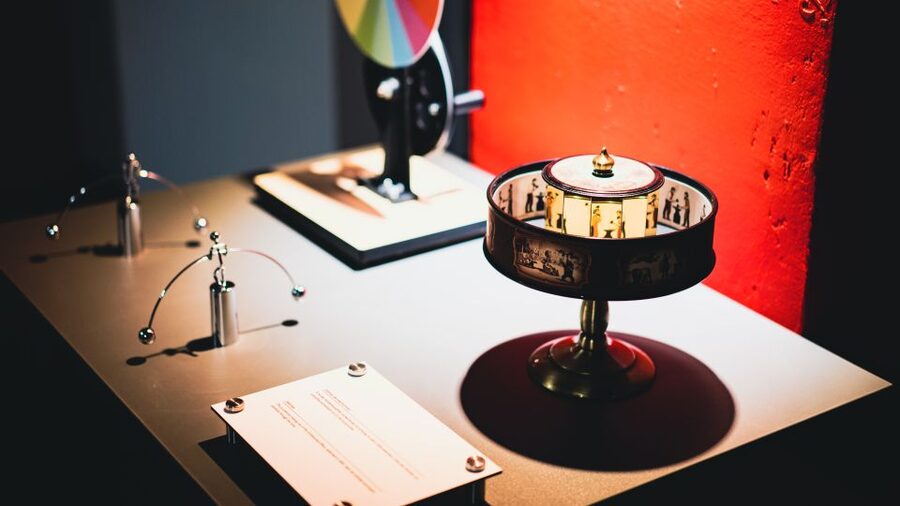
The museum also gives you a small lesson in perception without turning the visit into a science class. Your eyes collect information, but your brain decides what that information means. The exhibits make that process easy to notice because the result is immediate and often amusing.
More museums and galleries in Berlin:
- Berlin: Jewish Museum Berlin Entrance Ticket
★ 4.5 · 8,393 reviews - Berlin: DDR Museum Tickets
★ 4.3 · 3,443 reviews - Berlin: Natural History Museum Entrance Ticket
★ 4.6 · 3,382 reviews
Starting near Alexanderplatz
The museum is right by Alexanderplatz, roughly 300 meters from the Fernsehturm. That location matters because you can fit the visit into a central Berlin day without arranging a separate trip across the city.
You might visit before or after seeing the television tower, exploring Alexanderplatz, or handling other central sightseeing plans. The area is also useful when the weather turns wet, since this is a fully indoor activity. One review specifically found a Thursday afternoon comfortable and uncrowded, which points to a practical tip: if your schedule allows, aim for a quieter weekday period.
You should not think of the museum as a guided walking tour with a long introduction. English, German, Polish, Spanish, and French assistance is available from the host or greeter, but the main experience comes from moving through the exhibits at your own pace.
At the entrance, expect to begin with gallery spaces before reaching the more interactive rooms. The exact flow can vary, but the broad pattern is clear: art, perception puzzles, projection displays, and mirror installations are combined across two floors.
Oleg Shupliak’s portraits reward a second look
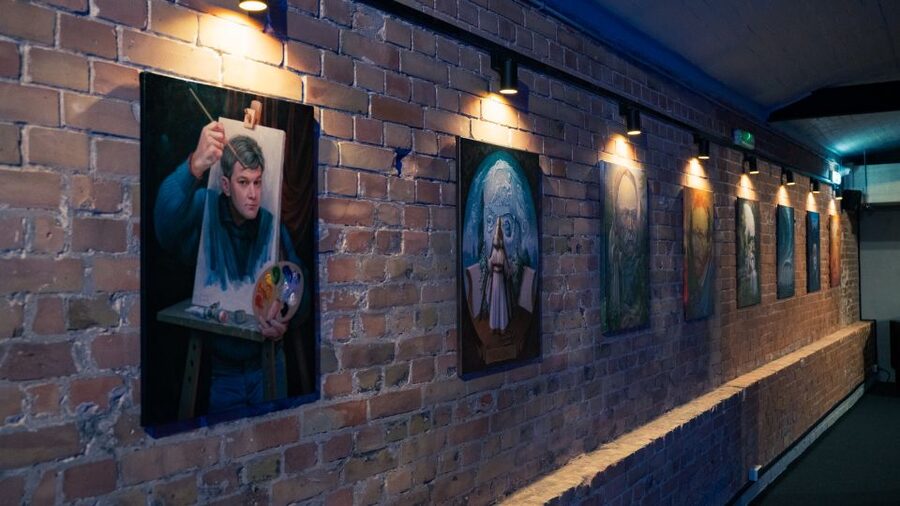
One of the more distinctive sections is the gallery of works by painter Oleg Shupliak. His paintings are designed with different visual layers, so one image can suggest another face, figure, or scene when you change the way you look at it.
This gallery gives the visit a little more substance than a collection of photo backdrops. You are asked to pause and guess who is portrayed or what secondary image is hiding in the main composition. It is a good place to slow down after the more physical displays.
I would give this section a little time instead of rushing toward the mirror rooms. The paintings work best when you stand back, look at the whole image, then examine the smaller shapes. You can also compare your interpretation with friends, since people do not always notice the same image first.
The art gallery may appeal most to adults and older children who like visual puzzles. Younger children may hurry through it, but the museum quickly offers more active rooms afterward.
Testing the Beuchet-Stuhl, Dark Room, and Interactive Sandbox
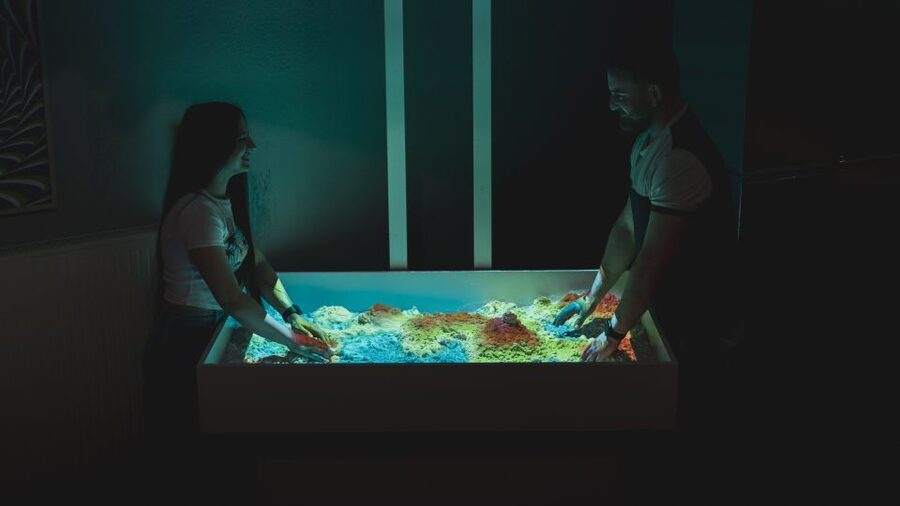
The named interactive exhibits give you a useful idea of the museum’s tone. The Beuchet-Stuhl is a forced-perspective chair display, built around the way a room can make a person appear unusually large or small. It is the sort of exhibit that makes sense once you see it, but looks puzzling from the outside.
The Dark Room changes the mood. Instead of relying on bright colors and open gallery space, it uses darkness to challenge your sight and sense of orientation. You become more aware of how much you depend on light to judge a room.
The Interactive Sandbox offers a more direct activity. You can manipulate the display and see how your actions affect what appears before you. It gives children something to do with their hands, while adults may enjoy working out the connection between action and image.
These exhibits are important because they prevent the museum from becoming a string of passive photo stops. Still, not every display will hold your attention for the same amount of time. If you like puzzles and physical interaction, you may spend much longer here than someone who mainly wants photos.
A few more Berlin half-days to weigh up
- Berlin: Reichstag, Dome and Government District Guided Tour
★ 4.7 · 18,288 reviews - Berlin: 1-Hour City Tour by Boat with Guaranteed Seating
★ 4.3 · 16,993 reviews - Berlin: Boat Tour Along the River Spree
★ 4.4 · 11,252 reviews - Discover Berlin Half-Day Walking Tour
★ 5.0 · 9,624 reviews
Projector rooms put you inside the artwork
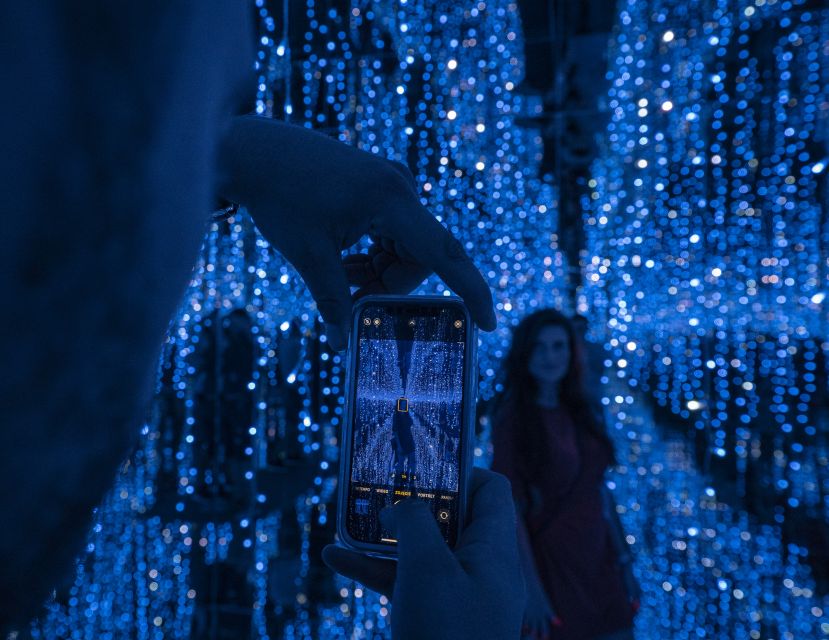
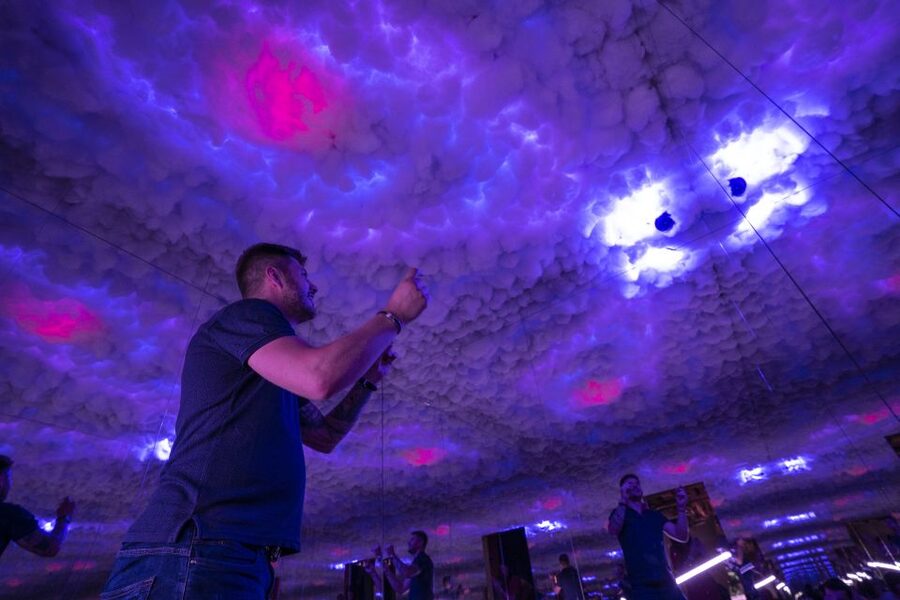
The projector rooms are built around your presence. Rather than standing outside a finished picture, you become part of the scene as the projected artwork and illusion respond to your position or frame your body.
This is where the museum’s main idea becomes clearest. You are not just learning that perception can be fooled. You are placed inside the trick, with your own body helping complete the image.
These rooms also work well for groups. One person can pose while another takes a photo or video, then you can switch roles. If you visit alone, the experience may be less satisfying in rooms that depend on someone else taking the picture, so keep that in mind when deciding who to bring.
The quality of the visit depends partly on patience. Some spaces are small and can hold only two people comfortably. On a busy weekend, you might wait before entering. If you dislike queuing or feel rushed by other people, a quieter time will make a real difference.
Mirror rooms, kaleidoscopes, Starroom, and Abyss
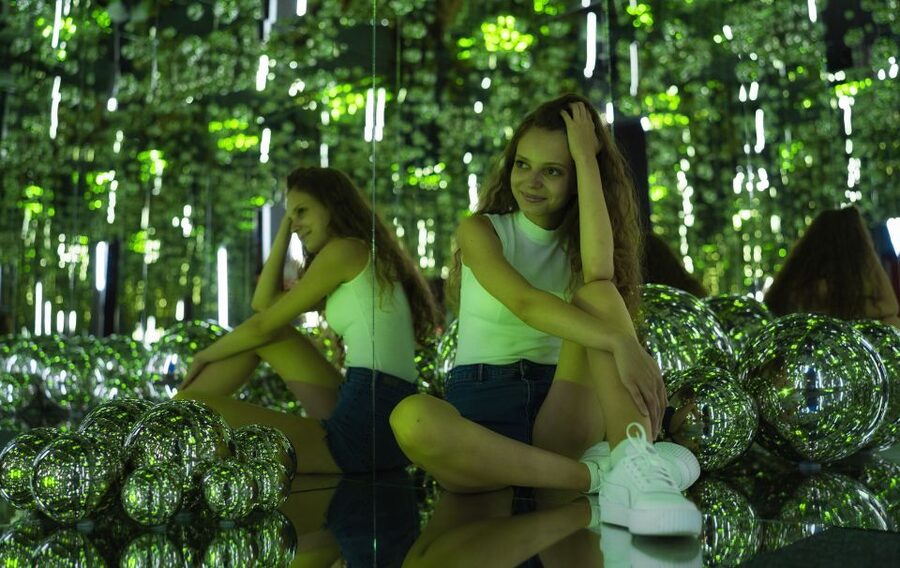
The themed mirror rooms are among the museum’s most obvious photo attractions. Starroom and Abyss offer different visual moods, while colorful kaleidoscopes create shifting patterns and repeated reflections.
You will want to take your time with the camera here. A quick snapshot may capture the room, but changing your position can alter the reflections and create a much more interesting frame. Short videos can work especially well in the kaleidoscope spaces because movement makes the patterns feel less static.
The mirror rooms are also where crowding matters most. A room that feels magical with a little space can feel cramped if several people are waiting, posing, or trying to photograph one another. I would avoid building your whole schedule around taking a perfect picture. Treat the rooms as part of the visit, not as a professional photo studio.
The Abyss room, by its name and theme, is designed to create a strong sense of depth. Starroom offers a more cosmic setting. Neither replaces Berlin’s major art collections, but both deliver something those museums generally do not: you become the subject.
How long should you allow?
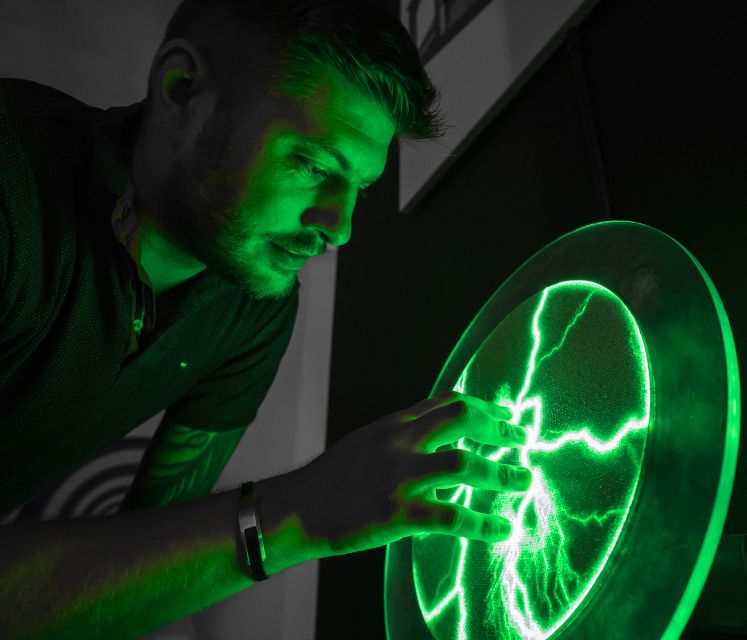
The stated duration is 1.5 hours, and that is a sensible amount of time if you want to examine the paintings, try the interactive exhibits, wait for a room, and take photos without hurrying.
Your actual visit may be shorter. One person completed the rooms in about 30 minutes, while another found the attraction capable of filling a couple of hours. The difference comes down to group size, interest, photo habits, and queues.
If you are visiting with children, allow closer to the full time so they can try each activity. If you are with friends who want photos, you may also need extra minutes for repeated poses. A fast-moving adult who only wants to see each room once could finish quickly.
For planning purposes, I would reserve 60 to 90 minutes. That gives you room to stop at the art gallery, try the key exhibits, and wait for smaller rooms without forcing this activity to dominate your Berlin schedule.
Is $17 good value?
At $17 per person, the museum offers fair value if you enjoy interactive entertainment and use the visit as a shared activity. The price covers the interactive exhibits, mirror rooms, puzzles, and Oleg Shupliak’s art gallery, rather than a single display or short photo opportunity.
Families and groups may find the price easier to justify because everyone can participate. Children and teenagers are likely to get the most from the hands-on elements, while adults can enjoy the visual tricks and take part in the photos.
The value is weaker if you move through museums quickly or prefer historic objects, detailed cultural context, and long explanations. This is a compact entertainment experience, not one of Berlin’s major institutions. You are paying for participation, surprise, and photo possibilities.
The rating is 4.1 out of 5 from 1,338 ratings, which fits the experience well: many people enjoy the clever displays and photo rooms, but the visit is not equally satisfying for everyone. The main concerns are repetition, small rooms, and the chance of a short visit.
When the museum works best
I would choose a weekday afternoon if possible. A quieter visit lets you enjoy each room without rushing, and it reduces the chance of waiting for a two-person exhibit.
A rainy day is another good time. The museum gives you a structured indoor activity near one of Berlin’s best-known central locations. It can also fill a gap between larger plans when you want an hour of something less serious.
This is particularly suitable for:
- Families with children
- Teenagers who enjoy interactive displays and photography
- Friends looking for a shared activity
- Couples who like playful photo settings
- Visitors seeking a rainy-day stop near Alexanderplatz
It may be less suitable for someone wanting a quiet art gallery, a long historical explanation, or a large museum with dozens of major works. The attraction is deliberately playful and visual.
Important practical limits
The museum is not suitable for people with mobility impairments or epilepsy. Those restrictions matter because the experience includes mirror rooms, optical illusions, dark areas, and displays that may affect how you see or move through the space.
Pets are not allowed, and you cannot bring food or drinks into the museum. Alcohol and drugs are also prohibited.
You can cancel up to 24 hours in advance for a full refund, and the reserve-now, pay-later option allows you to keep your plans flexible. Starting times vary, so check availability before you commit a specific part of your day.
Should you book the DeJa Vu Museum?
Book it if you want a short, central, photo-friendly activity that gives your group something to do together. The strongest reasons are the clever interactive exhibits, Shupliak’s layered portraits, the named mirror rooms, and the way the museum lets you become part of the illusion.
I would be more cautious if you dislike small spaces, queues, or attractions where several displays use similar visual tricks. Go at a quieter time, allow about 60 to 90 minutes, and treat the $17 ticket as payment for playful participation rather than a major art museum visit.
For families, teenagers, and friends near Alexanderplatz, this is an easy choice. For a serious museum day, save your budget for somewhere else.
FAQ
Where is the DeJa Vu Museum in Berlin?
The entrance is near Alexanderplatz, about 300 meters from the Fernsehturm.
How long does the DeJa Vu Museum visit last?
The listed duration is 1.5 hours. Some people may move through the rooms in about 30 minutes, while visitors who stop for photos, puzzles, and the art gallery can spend longer.
What is included with the ticket?
The ticket includes the interactive exhibits, mirror rooms, puzzles, and Oleg Shupliak’s art gallery.
Which languages are available?
Host or greeter assistance is available in English, German, Polish, Spanish, and French.
Can I cancel the booking?
Yes. You can cancel up to 24 hours in advance for a full refund.
Who should not visit the museum?
The museum is not suitable for people with mobility impairments or epilepsy. Pets, food, drinks, alcohol, and drugs are not allowed.
Just added around Berlin
- From Berlin: Gardens & Palaces of Potsdam Bike Tour★ 5.0 · 61 reviews
- Berlin: Battle for Seelow Heights WW2 tour -Clash of Titans★ 5.0 · 27 reviews
- From Berlin: Historical Gems of Potsdam Private Day Trip★ 4.4 · 4 reviews
- Berlin: Französischer Dom 360° Panorama & Crémant to go★ 3.9 · 5 reviews
- Explore Berlin Tour: History and Highlights★ 4.7 · 5 reviews
- Berlin: Evening Yacht Cruise with Aperitif & Dinner Upgrade★ 4.6 · 178 reviews
- Berlin: Expats in Berlin Comedy Show Ticket★ 4.7 · 182 reviews
- Berlin: The Epic Comedy Club Friday Night Showcase★ 4.8 · 28 reviews
Berlin Tours, compared.
Reichstag, Dome and Government District Guided Tour
Read our review →
1-Hour City Tour by Boat with Guaranteed Seating
Read our review →
Reichstag, Plenary Chamber, Cupola & Government Tour
Read our review →
Browse the lists this tour appears in