
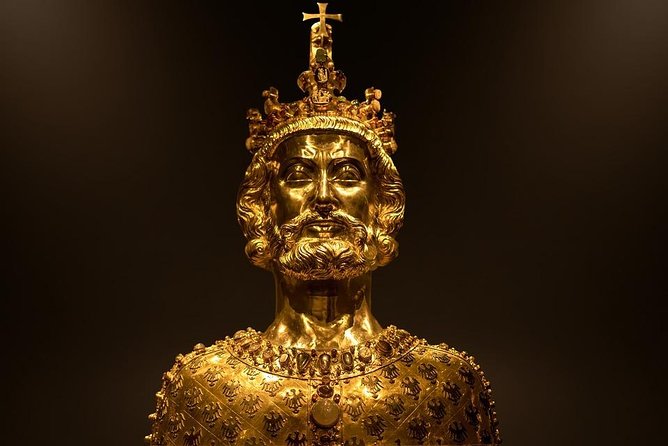
Review · WALKING TOURS
Aachen: Private Walking Tour With A Professional Guide
Aachen’s story begins with Charlemagne, but it does not end with a grand emperor and a famous church. This private 90-minute walk links Roman beginnings, royal coronations, medieval streets, holy relics, and a fountain full of curious mechanical characters. You meet your guide in front of the cathedral, then explore the city center on foot.
I like the private format for two reasons: you can ask about the subjects that catch your eye, and the guide can adjust the commentary on the spot. Guides named Julia-Anna and Frau Haas have been praised for making the history lively and answering individual questions well. The main consideration is price: at $288 per group, it is a strong deal for a large party, but costly for one or two people.
Key Points Worth Knowing
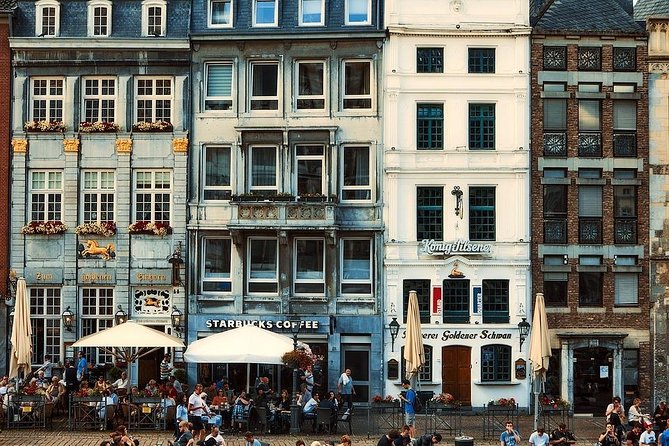
- Charlemagne’s Aachen: Follow the story of the emperor who chose Aachen as the capital of his empire.
- Aachen Cathedral: Learn why this was Germany’s first UNESCO World Heritage Site and see Charlemagne’s burial place, throne, and sacred relics.
- Thirty crowned kings: Hear how the cathedral became tied to German royal power.
- Puppet Fountain symbols: Meet the rooster, horse, professor, and canon, each with a part to play in the fountain’s story.
- Private and flexible: A group of up to 15 receives its own English- or German-speaking guide, with possible changes during the walk.
- Short city introduction: The 90-minute route is useful for first-time orientation, but it cannot cover every museum or interior in detail.
Why Aachen Makes Such a Good Walking Tour
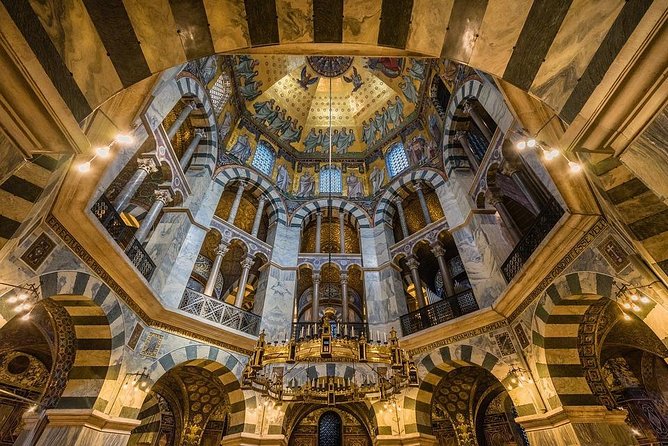
Aachen is easy to underestimate. It is known as a spa town, yet its importance reaches back to the Roman era and the court of Charlemagne. Its name also changes across languages, a small but memorable clue to the city’s position at the meeting point of Germanic, Roman, and European traditions.
This tour gives you a useful timeline rather than a pile of disconnected dates. You move from early Roman influence to Charlemagne’s reign, then to the cathedral’s royal role and the later life of the medieval city. The result is a city walk with a clear spine.
I especially like this approach if you are visiting Aachen for only part of a day. A local guide can point out the central sights while explaining why they matter. Instead of seeing a church, a fountain, and old buildings as separate photo stops, you begin to understand how they fit into Aachen’s story.
The format is private, so your group can ask about Charlemagne, architecture, royal ceremonies, local symbols, or the city’s various names. That matters in Aachen, where a short walk can raise more questions than a standard sightseeing route has time to answer.
More walking tours in Germany:
- Discover Berlin Half-Day Walking Tour
★ 5.0 · 9,624 reviews - Berlin: Third Reich and Cold War 2 Hour Walking Tour
★ 4.9 · 6,830 reviews - Munich: Third Reich & WWII Walking Tour
★ 4.6 · 6,181 reviews
Meeting Charlemagne at Aachen Cathedral
The tour begins in front of Aachen Cathedral, the most important sight in the city and the natural place to start. This is not simply a grand church to admire from outside. It is linked to Charlemagne’s burial, his imperial court, a royal throne, sacred relics, and the coronation of 30 kings.
Your guide’s explanation should help you read the building as a piece of political and religious history. Charlemagne chose Aachen as the capital of his empire, giving the city a role far beyond that of a regional spa town. His presence still shapes the way the center is understood.
The cathedral was Germany’s first UNESCO World Heritage Site. That designation reflects its historic importance, its architecture, and its connection with Charlemagne. You can expect the guide to explain why this particular church carries such weight in European history.
One of the most unusual details is Charlemagne’s throne, which remains in the cathedral. It gives the story a physical focus. You are not only hearing about kings and imperial power in the abstract. You are seeing an object tied to the ceremonies that made Aachen a center of royal authority.
The cathedral also holds holy relics. The tour introduces their place in Aachen’s religious story, though entrance fees are not included. If you want to go inside beyond what is covered during the walk, check the current admission arrangements separately and allow extra time.
The cathedral can be the busiest part of your visit, especially around a tour meeting point. Arrive a little early so you can find the guide without rushing. Since the meeting place is directly in front of the cathedral, the location is simple to identify.
The Royal City of Thirty Kings
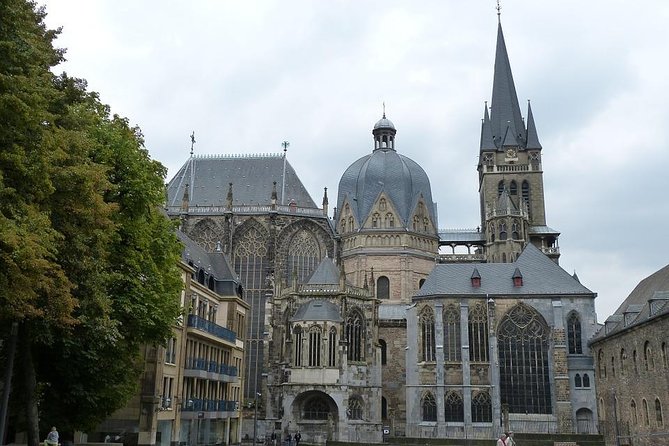
The number 30 helps explain Aachen’s importance. The cathedral was connected with the coronation of 30 kings, making it one of the key settings for German royal power.
Your guide can turn that number into a story about ceremony and continuity. A coronation was not merely a religious service. It linked a ruler to tradition, sacred authority, and the legacy of Charlemagne. Aachen’s buildings therefore carry both spiritual and political meaning.
I find this part of the tour most useful for people who know Charlemagne’s name but not his place in European history. The guide fills in the bridge between the emperor’s rule and the later use of Aachen as a royal center. You also gain a better sense of why the cathedral remains the city’s main historical anchor.
The tour does not promise a full lesson in every German king or every coronation. That is a good thing for a 90-minute walk. You get the main thread, then have the chance to ask about the figures or periods that interest you most.
If your group includes children, the royal stories may work best when connected to visible details such as the throne, the cathedral, and the old buildings nearby. The private setting lets your guide change pace instead of giving every person the same fixed talk.
From Roman Aachen to the Medieval Streets
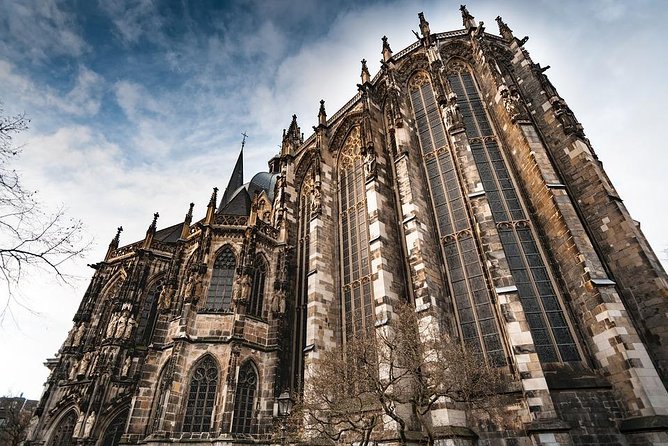
Aachen’s history begins before Charlemagne. The tour places the city in a Roman-era context, then follows the significant changes that shaped it over time.
This broad sweep is one of the tour’s strongest features. You are not shown only the grand imperial chapter. The guide also explains how Aachen developed as a city and spa center, and how its buildings and gates preserve traces of its medieval past.
The surviving medieval structures matter because they make the story visible. You can connect historical events to streets, walls, and gateways rather than hearing dates in a vacuum. The exact route may vary with the guide and your group’s interests, but the stated focus is on major central highlights tied to Charlemagne’s legacy.
A 90-minute walk gives you a useful first look, not a complete survey of Aachen. You should expect an introduction to the city’s major themes rather than detailed visits to every historic site. If you want a long architectural study or several museum interiors, you will need extra time after the tour.
That limitation is also part of the value. The walk helps you decide where to return. You might use the guide’s suggestions to plan the rest of your time in Aachen or to choose sights in the surrounding area.
A few more Germany half-days to weigh up
- Berlin: Private Reichstag and Glass Dome Tour
★ 4.8 · 2,226 reviews - Berlin Private Complete History All Day Walking Tour
★ 5.0 · 474 reviews - Munich Private Tour with a Local – Highlights & Hidden Gems
★ 5.0 · 469 reviews - Private Walking Tour Berlin Third Reich Hitler and World War II
★ 5.0 · 360 reviews
Reading the Characters at the Puppet Fountain
The Puppet Fountain brings a lighter tone to the route. Its characters include a rooster, a horse, a professor, and a canon. Each figure carries symbolism, and the guide explains what lies behind the characters.
This is a smart stop because it gives you a break from royal dates and church history. The fountain can appeal to children, but adults have plenty to notice as well. Its figures turn local history and civic life into something visual and playful.
Do not treat it as a quick photo stop. The point is learning how the characters represent parts of Aachen’s identity. A good guide can use the fountain to show that historic cities preserve their stories in more than monuments and official buildings.
The fountain also adds balance to the tour. Aachen is not presented only as Charlemagne’s imperial capital. You see a city that has continued to explain itself through public art, local symbols, and everyday places.
Since the tour is private, this is a good moment to ask questions. If you are curious about one figure, the guide can spend more time on it. If your group prefers the cathedral and medieval history, you can keep the fountain portion moving.
What the Private Format Really Gives You
The group limit is 15 people, but you do not share the guide with strangers. That changes the feel of the walk. You can stop for a question without worrying about holding up a large public group, and the guide can adjust the explanation to your interests.
This flexibility is stated as part of the experience, with possible customization during the tour. It does not mean you can redesign the entire route at the last second, but it does give you room to shape the conversation.
Guides such as Julia-Anna and Frau Haas have been described as professional, friendly, engaging, and strong on individual questions. One German-language comment noted that the 90 minutes passed quickly and that the explanation remained interesting throughout. Another praised the guide’s ability to match the commentary to personal wishes.
That is exactly what you want from a private history walk. The best use of the format is to arrive with two or three questions. You might ask about Charlemagne’s daily life, the coronation tradition, the cathedral’s relics, the city gates, or the meaning of Aachen’s names in other languages.
The language choices are English and German. Make sure you select the language that suits your group, particularly if some people are more comfortable discussing history in German.
Is $288 a Fair Price for 90 Minutes?
The price is $288 per private group of up to 15 people. If you fill the group, that works out to about $19.20 per person. For a family, school group, or larger party, the value becomes much better because you are paying one group fee rather than separate tickets for each person.
For two people, the calculation is different. The same price becomes $144 per person, which is expensive for a 90-minute walk. You are paying for privacy, a dedicated local guide, and the ability to adjust the discussion, not just for time on the clock.
One piece of feedback called the experience excellent but somewhat expensive. That is a fair warning. I would book it for a larger group that wants a personal introduction to Aachen, especially if the group includes people with different interests or questions.
I would compare it with a public group tour if you are traveling alone or as a couple and mainly want basic orientation. The private option makes more sense when the group values direct questions, flexible pacing, and a guide focused only on you.
Entrance fees are not included. The tour’s main sights are introduced as part of the walking route, but any separate interior admission or additional visit should be budgeted apart from the $288.
Timing, Languages, and Practical Details
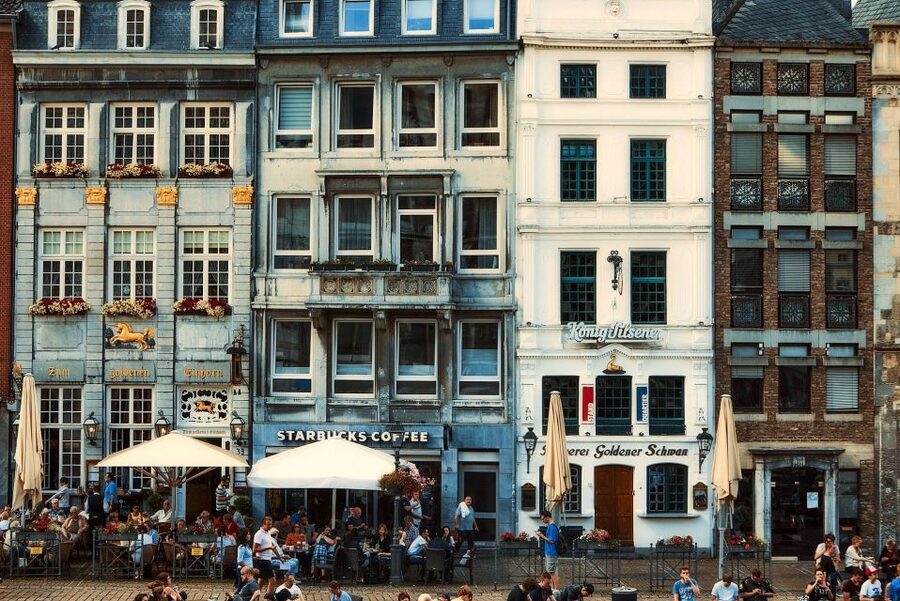
The walk lasts 90 minutes. That is long enough to cover the cathedral, the main Charlemagne story, the Puppet Fountain, medieval buildings, city gates, and the Roman-to-modern timeline at a sensible pace.
It is short enough to fit before lunch, after arriving in Aachen, or alongside other plans. You should not expect time for a slow interior visit, a meal, or a full museum stop within those 90 minutes.
You meet the guide in front of Aachen Cathedral. This is a central and clear meeting point, but the area may have people coming and going. Have your booking details ready and arrive with enough time to identify the guide.
The tour is offered in English or German. It is a private group experience, and the provider is Travmonde OÜ. The schedule depends on availability, so check the available starting times before booking.
Cancellation is flexible: you can cancel up to 24 hours in advance for a full refund. You can also reserve now and pay later, which helps if your wider German itinerary is still changing.
Who Will Get the Most From This Walk
I would recommend this tour most strongly to first-time visitors who want Aachen’s main story explained in one sitting. It suits people who enjoy history but do not want to spend hours reading plaques or sorting out dates alone.
Families may like the mix of Charlemagne, kings, a throne, cathedral relics, and the Puppet Fountain. The fountain gives children something concrete and amusing to watch, while the cathedral and coronation stories give adults more serious history.
It also works well for a group with a shared interest in European history. Charlemagne’s life and Aachen’s royal role provide plenty of material for questions. The private setting means the guide can spend more time on the subjects your group actually cares about.
You may want another option if you prefer a low-cost public walk, need a full cathedral interior visit, or want a long tour focused on architecture. Ninety minutes goes quickly, and the tour cannot cover every part of Aachen in detail.
Should You Book the Aachen Private Walking Tour?
Book it if you are traveling with a larger group and want a clear, personal introduction to Aachen. The strongest reasons are the cathedral’s unusual royal story, the connection to Charlemagne, the playful Puppet Fountain, and the chance to shape the tour with questions.
For a small group, think carefully about the cost. The private format and local guide add real value, but $288 is a lot for 90 minutes when divided between only one or two people.
I would choose this walk as an opening look at Aachen, then use the guide’s suggestions to decide what deserves more time. If you want an efficient route, direct answers, and a history lesson that connects Roman origins with kings, emperors, and local symbols, it is a sensible choice. If low price matters most, look for a shared alternative.
FAQ
Where does the Aachen walking tour meet?
You meet your guide in front of Aachen Cathedral.
How long does the tour last?
The walking tour lasts 90 minutes.
How much does the private tour cost?
The price is $288 for a private group of up to 15 people.
What languages are available?
The live tour guide is available in English or German.
Is this a private group experience?
Yes. Your group has a private guide rather than joining a shared group.
Are entrance fees included?
No. Entrance fees are not included in the tour price.
Can the tour be customized?
Possible customization with the local guide is available during the tour, depending on your group’s interests and the guide’s arrangements.
What is the cancellation policy?
You can cancel up to 24 hours in advance for a full refund. You can also reserve now and pay later.
Just added around Germany
- From Berlin: Gardens & Palaces of Potsdam Bike Tour★ 5.0 · 61 reviews
- Berlin: Battle for Seelow Heights WW2 tour -Clash of Titans★ 5.0 · 27 reviews
- From Amsterdam: Cologne Private Sightseeing Tour★ 5.0 · 4 reviews
- From Berlin: Historical Gems of Potsdam Private Day Trip★ 4.4 · 4 reviews
- Freiburg: Veni, vidi, vino – wine hike and tasting★ 4.5 · 144 reviews
- From Alken: Return Day Trip by Boat to Cochem★ 4.6 · 141 reviews
- Fritz Haarmann – Die Mördertour★ 4.6 · 41 reviews
- Freiburg: Tour of the city with cathedral visit★ 4.7 · 167 reviews
Walking Tours, compared.

Berlin’s Best: 2 Hour Walking Tour Third Reich and the Cold War
Read our review →
Third Reich Berlin: Hitler and WWII Walking Tour
Read our review →Browse the lists this tour appears in