
Review · WALKING TOURS
Kassel’s Private City Walk through 1100 years
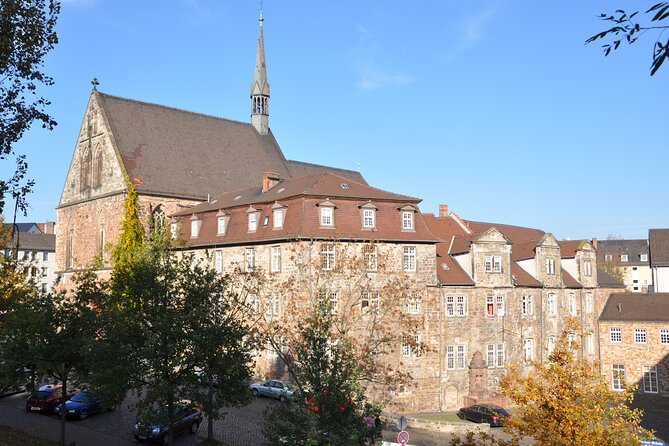
Kassel’s story is unusually easy to read on foot. In about two hours, this private walk connects the modern city’s postwar buildings with old churches, former civic spaces, documenta art, and the gardens around the Orangerie. You get a useful first look at a city that has changed greatly while keeping clear traces of its past.
I like the private format, which keeps the pace and questions tailored to your own group, and I like the broad sweep from 1,100 years of history to Kassel’s role as a major art center. The guides also seem to make room for anecdotes, not just dates and names. The main consideration is simple: at $196.79 per group, the price makes much more sense for a larger party than for one or two people.
Key points to know before you book
- A 1,100-year overview: The walk links medieval Kassel, postwar rebuilding, and the city’s modern cultural identity.
- A private group of up to 15: You can ask questions and set the pace within the fixed two-hour window.
- Five contrasting sights: The route includes documenta’s Fridericianum, Martinskirche, Renthof, and the Orangerie.
- A strong first-day activity: The walk gives you a city map in your head before you explore museums or parks on your own.
- A central Rathaus meeting point: You start at the KasselKiosk beside the town hall on Obere Königsstraße.
- Good access for most people: Public transportation is nearby, service animals are allowed, and most participants can take part.
Kassel in two hours, from medieval roots to postwar streets
Kassel is not a city that reveals itself in one quick glance. Much of its historic center was damaged during the Second World War, and the city that came afterward developed a modern architectural character alongside the older buildings that survived or were restored.
That mix is the point of this walk. You are not being shown a single polished old quarter. Instead, you get a look at the different versions of Kassel that exist side by side: the old Protestant center, former religious and civic buildings, modern exhibition culture, and the broad green setting of Karlsaue.
I like this approach because it gives you context for what you see later. A traditional sightseeing walk can leave you with a list of attractive buildings. This one aims to explain why Kassel looks the way it does today.
The walk lasts about two hours. That is enough time for a solid introduction without turning your morning or afternoon into a full-day commitment. The scheduled stops are brief in places, so expect a moving city walk rather than long interior visits.
The private setup is especially useful if you are with family or friends. The group can include up to 15 people, so the per-person cost drops sharply as your party grows. A couple paying the full group rate would find it expensive, while a group of 10 to 15 people gets a much better deal per person.
More walking tours in Germany:
- Discover Berlin Half-Day Walking Tour
★ 5.0 · 9,624 reviews - Berlin: Third Reich and Cold War 2 Hour Walking Tour
★ 4.9 · 6,830 reviews - Munich: Third Reich & WWII Walking Tour
★ 4.6 · 6,181 reviews
Starting at the Rathaus on Obere Königsstraße
The meeting point is Stadtführungen KasselKiosk am Rathaus, at Obere Königsstraße 8. This puts you in a central part of Kassel, close to public transportation and easy to reach before the walk begins.
The tour ends back at the same meeting point. That is handy if you have plans afterward, since you are not left trying to find your way back from an unfamiliar part of town.
A mobile ticket keeps check-in straightforward. Pickup is offered, though the stated start and finish are at the Rathaus meeting point, so you should confirm the pickup details when booking if you need that option.
Wear comfortable shoes. The route covers several city sights on foot, and the experience works best when you can pay attention to the guide rather than think about tired feet. Since the walk is outdoors for much of its length, weather can affect your comfort.
No guide name is provided in the booking details. The strongest descriptions of the guiding style point to a pleasant, competent presentation that stays informative without becoming dull. That matters here, since the appeal depends less on entering a large number of buildings and more on the quality of the explanation between stops.
Documenta and the Fridericianum: Kassel’s modern identity
One of the early highlights is the Fridericianum, the main exhibition venue for documenta. The building is used for exhibitions when documenta is not taking place, so its role is broader than that of a venue that only comes alive during the major art event.
The stop is short, listed at about three minutes. That tells you what to expect: a quick explanation and a look at the building and its place in Kassel, rather than a museum visit with time to study individual works.
This is still a useful stop. Kassel’s identity is tied closely to documenta, and understanding that connection helps explain why the city attracts art-minded visitors from around the world. You can learn where the event is centered before deciding if you want to return for a longer museum visit.
I appreciate that the walk places modern art beside older landmarks. Kassel is not presented as a city that belongs only to one era. The Fridericianum helps you see how the city’s cultural life developed after its older urban fabric was changed so heavily.
Do not book this walk expecting admission to a documenta exhibition. The listed activity is a city walk, and admission at the stop is free. The real value is the orientation and context.
Martinskirche and the Protestant heart of Kassel
Martinskirche is described as Kassel’s cathedral, although it is a Protestant church. Its size and importance make it one of the key historic buildings on the route.
You have about 10 minutes here. That is enough for a focused introduction, a look at the church interior if access permits, and attention to the epitaph and modern organ mentioned as notable features.
The contrast between an old church and a modern organ is a small but telling detail. It shows how historic buildings can remain active places rather than frozen museum pieces. The epitaph gives the guide a concrete object to discuss, while the organ adds a present-day element.
This is also where the tour’s balance between architecture and human stories can work well. A church becomes easier to remember when you hear about the people connected with it, not just the date of construction. The guide’s use of local anecdotes is one of the reasons this stop should appeal even if you are not deeply interested in church architecture.
The brief time here has a downside. You will not get an extended art, music, or architectural study. Think of Martinskirche as a meaningful introduction, then return on your own if you want a quieter visit.
A few more Germany half-days to weigh up
- Berlin: Private Reichstag and Glass Dome Tour
★ 4.8 · 2,226 reviews - Berlin Private Complete History All Day Walking Tour
★ 5.0 · 474 reviews - Munich Private Tour with a Local – Highlights & Hidden Gems
★ 5.0 · 469 reviews - Private Walking Tour Berlin Third Reich Hitler and World War II
★ 5.0 · 360 reviews
Renthof and Brüderkirche in the former old town
The Renthof and Brüderkirche form an ensemble in what was once Kassel’s old town. The scheduled stop is only about two minutes, so this is primarily a quick visual and historical note during the walk.
That short timing may sound minor, but it helps the route cover a lot of ground. The guide can point out the relationship between the buildings and explain their place in the former old town without asking you to spend a large block of time at every location.
This stop is best for people who enjoy seeing how a city’s religious, residential, and civic pieces fit together. You may find the buildings more interesting after hearing what the area once represented, especially because Kassel’s old center cannot be understood only through the surviving structures.
The tradeoff is that you should not expect a detailed visit inside the Renthof or Brüderkirche. The walk gives you a framework, not a full tour of each building. If one of them catches your eye, note it and consider returning later.
The Orangerie and Karlsaue: a calm final chapter
The Orangerie is the longest named stop after Kassel itself, with about 10 minutes set aside. It also serves as a gateway to Karlsaue, a large park area that is described as an excellent starting point for longer walks.
This makes a pleasant closing section. After churches, city streets, and exhibition buildings, you reach an open setting where you can slow down and think about what you have seen.
The Orangerie and Karlsaue are worth more time than the tour can provide. The walk gives you the practical benefit of knowing where to return when you want fresh air, a longer stroll, or a break from central Kassel.
I like the way this stop broadens the picture of the city. Kassel is not only a place of museums and rebuilt streets. Its gardens and park spaces are part of the city experience, and the guide can show you how to use them during the rest of your stay.
Because the tour ends back at the Rathaus, the Orangerie is not the final drop-off point. You visit it as part of the route, then continue with the group to the starting location. Keep that in mind if you were hoping to end your day in Karlsaue.
What the guiding style seems to offer
The guiding style is described as both informative and entertaining. Those two qualities matter on a walk with several short stops, since a stream of facts can become tiring if the presentation is too formal.
The feedback connected with the experience also points to lively explanations of historical events and amusing local anecdotes. One particularly useful sign is that the walk can still offer something new to people who already live in Kassel. That suggests the guide does more than recite the most obvious information.
You should expect a broad overview rather than an academic lecture. The route covers 1,100 years, so no period can receive a full treatment. The benefit is range: you can learn enough to decide which parts of Kassel deserve a closer look later.
A private tour also gives you a chance to ask about subjects that interest your group. The supplied information does not promise a customized route, so do not assume that every request can change the itinerary. Still, a smaller party usually makes questions easier than they would be on a large public walk.
The reported length, about two hours, seems well judged for this purpose. It is long enough to cover the major ideas and short enough to fit between other plans. If you want every building explained in detail, you will need more time elsewhere.
Price, group size, and what you receive
The price is $196.79 for the entire group, with up to 15 people permitted. This is not a per-person ticket, so the math changes depending on your party size.
For 15 people, the cost works out to about $13.12 per person. For 10 people, it is about $19.68 each. For four people, it is nearly $49.20 each, and for two people it is almost $98.40 each.
That makes the tour a particularly sensible choice for a family group, school-style party, reunion, or circle of friends. For a solo visitor or couple, a shared public walk would usually offer better financial value if one were available at a lower price.
You are paying for a private guide, not entry to paid attractions. The stops listed here have free admission, and the main product is the guide’s time, local interpretation, and efficient route through Kassel.
The value is strongest if you are new to Kassel and want to use the rest of your visit well. A good overview can prevent you from spending hours moving between sights without understanding their connections. It can also help you choose which places deserve a second visit.
The experience is non-refundable and cannot be changed for any reason. That is important when comparing the price with a flexible booking. Only reserve once your schedule is firm.
Who should book this Kassel walk?
I would choose this for a first visit, especially if you have only a short stay and want a clear sense of the city. The combination of postwar architecture, older religious buildings, documenta, and Karlsaue gives you more range than a route focused only on traditional monuments.
It also fits a group that likes to ask questions. Since only your party takes part, you do not have to compete with a large crowd to hear the guide or stop for a quick explanation.
The walk suits history-minded visitors, art fans curious about documenta, and people who prefer an overview before visiting museums. It should also work well for local residents who want background and anecdotes they may not have encountered before.
I would hesitate if you want a long museum visit, extensive interior access, or a slow architectural study. The Fridericianum, Martinskirche, and Renthof are seen within a route that keeps moving. You get the city’s connections, not a detailed tour of every room.
The tour may also be less appealing if your main goal is the Orangerie and Karlsaue. You will see them, but the park is better treated as a place to return to after the walk, not as the central activity itself.
Service animals are allowed, public transportation is nearby, and most people can participate. The information does not give a detailed accessibility assessment, so anyone with specific mobility needs should confirm route conditions before booking.
Should you book it?
Book this private Kassel walk if you want a friendly, efficient introduction to a city whose story is spread across old buildings, modern architecture, art venues, and parkland. The strongest reasons are the broad 1,100-year scope, the lively use of local anecdotes, and the chance to keep the experience within your own group.
The price is fair for a larger party and harder to justify for only one or two people. If you book, arrive ready to walk, treat the tour as your orientation, and save extra time for Martinskirche or Karlsaue if either catches your interest.
FAQ
Where does the Kassel city walk start?
It starts at Stadtführungen KasselKiosk am Rathaus, Obere Königsstraße 8, 34117 Kassel, Germany.
Where does the tour end?
The activity ends back at the meeting point near Kassel’s Rathaus.
How long does the tour last?
The tour lasts approximately two hours.
Is this a private tour?
Yes. Only your group participates, and the group can include up to 15 people.
What is the price?
The price is $196.79 per group of up to 15 people.
Is pickup available?
Pickup is offered. The stated meeting point is the KasselKiosk am Rathaus, so confirm the pickup arrangement when booking if you need it.
Which places are included?
The route includes Kassel’s central city sights, documenta and the Fridericianum, Martinskirche, Renthof and Brüderkirche, and the Orangerie with Karlsaue.
Are admission tickets included?
The listed stops have free admission. This is a walking tour rather than a package of paid museum entries.
Can service animals take part?
Yes. Service animals are allowed, and most people can participate. Public transportation is also nearby.
Just added around Germany
- Konstanz Scavenger Hunt and Sights Self-Guided Tour★ 4.5 · 14 reviews
- e-Scavenger hunt Koblenz: Explore the city at your own pace★ 4.0 · 20 reviews
- Private city tour in Constance★ 4.0 · 5 reviews
- Koblenz Guided tour of the Ehrenbreitstein Fortress★ 4.5 · 7 reviews
- Koblenz – Old Town with the Ehrenbreitstein Fortress★ 4.0 · 7 reviews
- Koblenz – Old Town including the Deutsches Eck★ 4.5 · 16 reviews
- Kiel – Private Historic Walking Tour★ 5.0 · 4 reviews
- Lubeck Private Walking Tour With A Professional Guide★ 4.5 · 10 reviews
Walking Tours, compared.

Berlin’s Best: 2 Hour Walking Tour Third Reich and the Cold War
Read our review →
Third Reich Berlin: Hitler and WWII Walking Tour
Read our review →Browse the lists this tour appears in