
Review · BERLIN TOURS
Berlin: Jewish Museum Highlights Tour
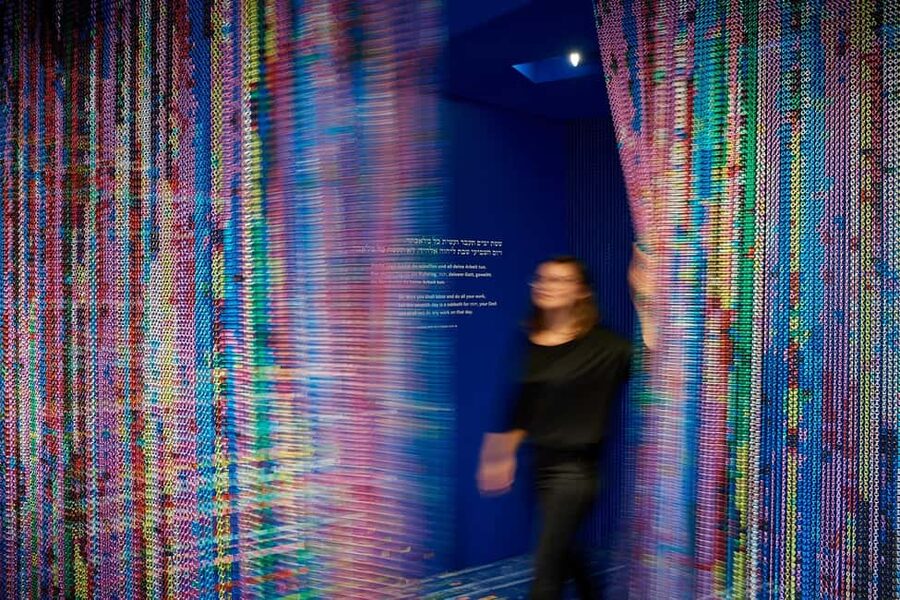
Berlin’s Jewish Museum asks you to think as much as look. Its symbolic architecture sets the mood before the tour even reaches the objects, and the new core exhibition traces Jewish life in Germany from the Middle Ages through the Nazi era, postwar years, and the present day. I like the way the tour places history, art, and personal identity side by side.
I especially like two things here: the 90-minute format gives you a clear first visit without eating half your day, and the English guide adds context to exhibits that can feel dense on your own. The main consideration is that the tour is held in English only, so you’ll get less from it if you need French or another language.
Key points to know before you go
- Five historical chapters: Follow Jewish life in Germany from the Middle Ages to the present, with particular attention to the Nazi period and the years after 1945.
- Eight rooms on art and culture: The exhibition uses art, objects, films, and media stations to explore Jewish identity and the tension between belonging and exclusion.
- Architecture is part of the visit: The building’s form carries symbolic meaning, so the guide explains the structure as well as the displays.
- A focused 90-minute route: You receive a first overview rather than an exhaustive museum visit, which works well on a packed Berlin schedule.
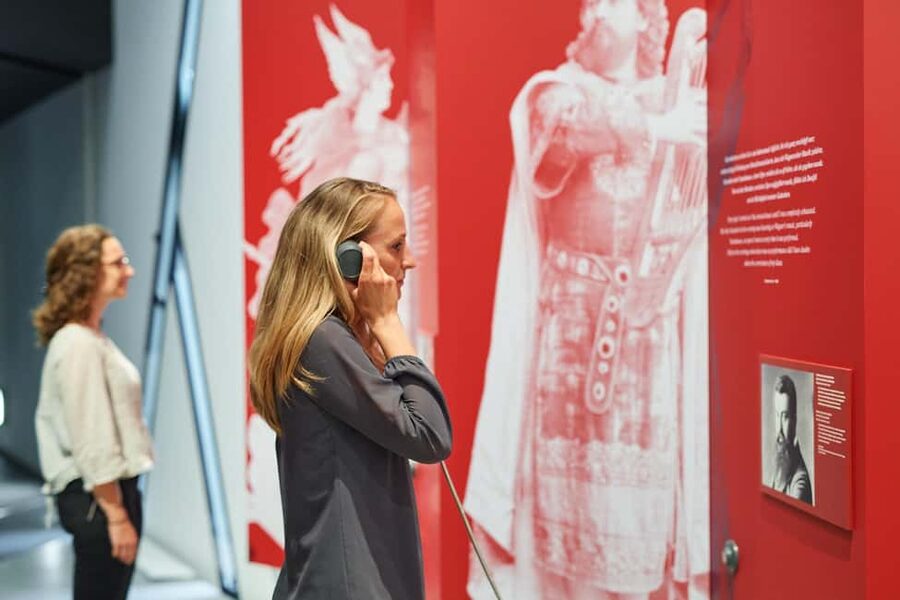
- English guidance and audio support: The live tour is in English, and an English audio guide is included.
- Good value at $7: Entry and the guided tour are included, though you must also obtain a free core exhibition ticket at the entrance.
Why this museum visit feels different from a standard history tour
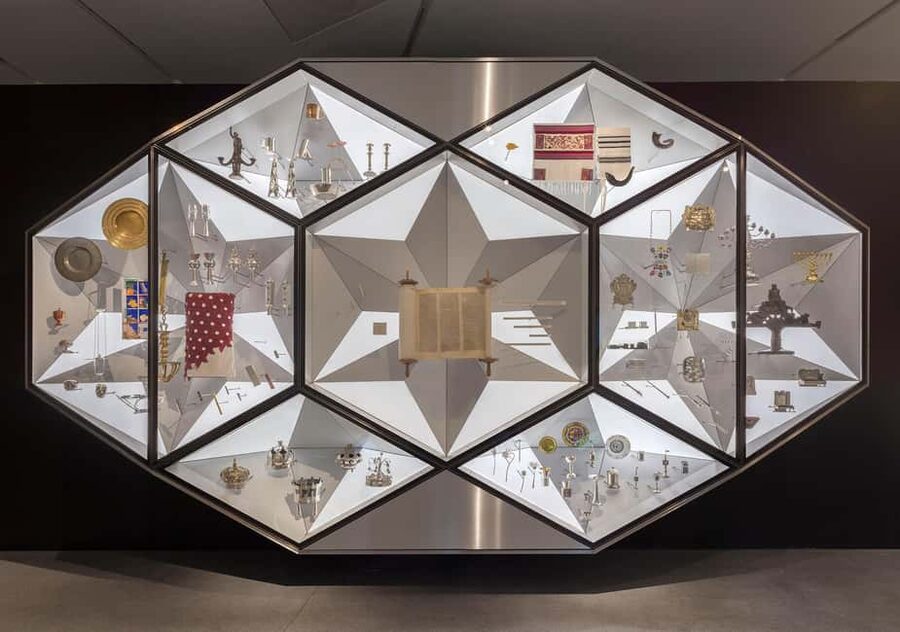
Many museums put history in neat rows: date, object, label, next date. The Jewish Museum takes a less tidy approach. Its core exhibition presents Jewish life in Germany through historical chapters, cultural rooms, works of art, and modern media. The result is not just a timeline. You are asked to consider how belonging can change, who gets excluded, and how Jewish identity is understood today.
That matters because Jewish history in Germany cannot be reduced to the Nazi era, even though the Nazi period receives major attention here. The exhibition begins in the Middle Ages and moves through centuries of daily life, cultural contribution, discrimination, and changing relationships with wider German society.
I like that the tour is told from a Jewish perspective. That choice affects what you notice. Instead of seeing Jewish people only through the actions of governments, churches, or hostile majorities, you encounter Jewish voices, objects, culture, and changing ideas of selfhood. The exhibition also allows for disagreement and contradiction, rather than pretending there is one simple Jewish experience.
The museum is not a light stop, and that is part of its value. You should arrive ready to give the subject your attention. This is not a quick collection of decorative objects or a casual architectural photo opportunity. It is a serious visit that may leave you thinking about displacement and minority identity beyond the specific German story.
More museums and galleries in Berlin:
- Berlin: Jewish Museum Berlin Entrance Ticket
★ 4.5 · 8,393 reviews - Berlin: DDR Museum Tickets
★ 4.3 · 3,443 reviews - Berlin: Natural History Museum Entrance Ticket
★ 4.6 · 3,382 reviews
Meeting your guide in the old building
Your meeting point is in the old building, on the ground level in the glass courtyard. Pay attention to this detail. The Jewish Museum complex has a strong architectural presence, and the meeting location gives you a useful starting point for understanding how the building shapes the visit.
The glass courtyard also provides a practical place to get oriented before the tour begins. Since the meeting point is inside the museum complex rather than at a city landmark, allow enough time to reach the entrance and find the old building. The tour includes entry and lets you skip the ticket line, but you still need to collect a free ticket for the core exhibition at the museum entrance.
That extra ticket step is easy to overlook. Treat it as part of your arrival routine: enter the museum, go to the ticket desk, obtain the free core exhibition ticket, and then meet the guide on the ground level in the glass courtyard. The activity price is $7 per person, so this is not a costly tour, but the separate free-ticket requirement means you should not assume the booking confirmation is the only document needed for admission.
Reading the architecture before reading the displays
The building is not a neutral container. Its angles, spaces, and unusual design are meant to communicate ideas, and the tour uses the architecture as part of the story. A strong guide can help you understand why the building feels unsettled and how its design relates to absence, rupture, and memory.
One verified experience describes the architecture and art as thought-provoking, which is a useful warning about the tone. You may find that the building demands attention even before the historical material becomes difficult. Another visitor simply singled out the architecture as a favorite part of the experience. That makes sense for anyone who enjoys museums where the structure itself forms part of the exhibit.
I like having a guide here because symbolic buildings can be easy to admire without understanding. You may notice a sharp line, an empty space, or a disorienting passage and move on without knowing what it suggests. The guide provides a framework, then lets you decide how convincing or moving you find it.
Still, the architecture may not work equally well for everyone. If you prefer a calm, conventional museum layout, the building can feel demanding. The visit rewards patience more than speed. Give yourself time to look around rather than treating the structure as a backdrop for photographs.
Five chapters from medieval life to the present
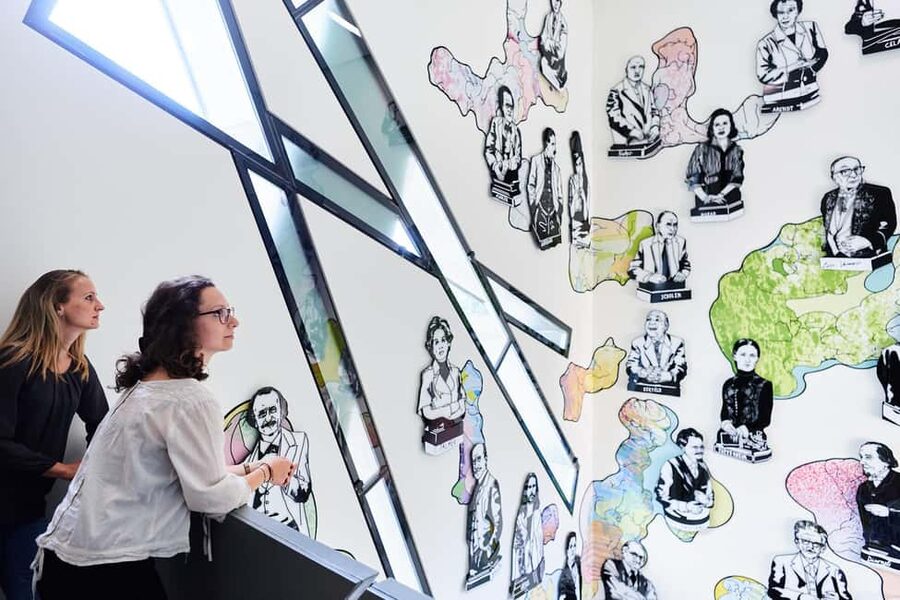
The historical part of the core exhibition is arranged in five chapters. You will move across a long period, beginning in the Middle Ages and continuing to the present day. The tour selects particular stations and objects, so you should think of the 90 minutes as a guided introduction, not a complete examination of every display.
The medieval material establishes that Jewish life in German lands has a long history. This helps correct a common mistake: viewing Jewish presence in Germany only through the modern period or the Holocaust. The early chapters give you a wider frame for understanding community life, religious practice, social restrictions, and relationships with surrounding society.
As the exhibition moves forward, the balance between belonging and exclusion becomes a central thread. Jewish people could participate in German society while also facing limits, suspicion, or outright hostility. The exhibition’s value lies in showing these tensions rather than offering a simple story of steady progress.
The focus then turns sharply toward the Nazi era. The material is challenging, and the museum does not treat this period as a detached date range. Historical objects, media stations, videos, and art help show how persecution affected people and how public life was reshaped by Nazi policy.
The years after 1945 receive special attention as well. That is important because the story does not end with liberation or the collapse of the Nazi regime. The postwar period raises its own questions about memory, responsibility, rebuilding, Jewish life, and the meaning of being Jewish in Germany after catastrophe.
The final movement toward the present gives the exhibition a living quality. You are not asked to think of Jewish history as something finished. Instead, the museum considers what Jewish identity and Jewish life mean today, while keeping room for different and sometimes opposing points of view.
A few more Berlin half-days to weigh up
- Berlin: Reichstag, Dome and Government District Guided Tour
★ 4.7 · 18,288 reviews - Berlin: 1-Hour City Tour by Boat with Guaranteed Seating
★ 4.3 · 16,993 reviews - Berlin: Boat Tour Along the River Spree
★ 4.4 · 11,252 reviews - Discover Berlin Half-Day Walking Tour
★ 5.0 · 9,624 reviews
Eight rooms where art and culture carry the story
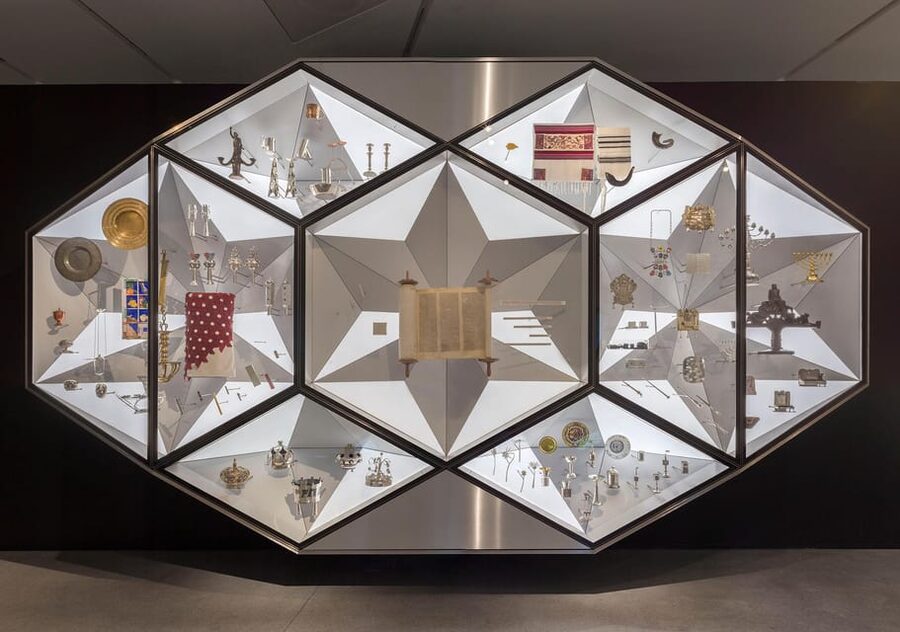
Alongside the five historical chapters, the core exhibition includes eight rooms devoted to art and culture. These rooms broaden the visit beyond political history. You will encounter works from the collection, cultural objects, media displays, and video installations that explore how people express identity and make a place for themselves.
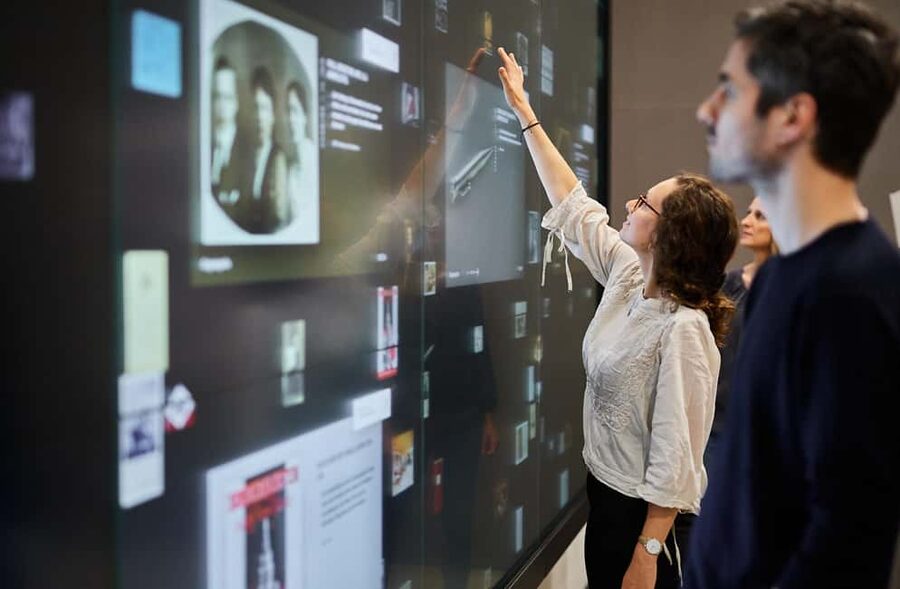
This mix is one of the tour’s strongest features. A historical document can tell you what happened, but art may show how people experienced or remembered it. A video installation can present a voice or viewpoint in a way a label cannot. Media stations also give the exhibition a more active rhythm than a room full of cases.
The art rooms address the relationship between belonging and exclusion from another angle. Culture can create community, but it can also reveal the pressure to conform. Jewish identity is not presented as one fixed category, and the range of objects helps you see why.
You should not expect every room to deliver a simple message. The exhibition deliberately includes polyphonic positions, meaning several voices and interpretations can exist together. At times, those positions may contradict each other. That can be frustrating if you want a single official answer, but it is honest to the complexity of identity and memory.
The guide’s role is especially useful in these rooms. Without context, a work of art or media installation may seem separate from the historical chapters. With explanation, you can see how it fits the larger question of what it has meant, and still means, to be Jewish in Germany.
What the 90-minute guided route can and cannot do
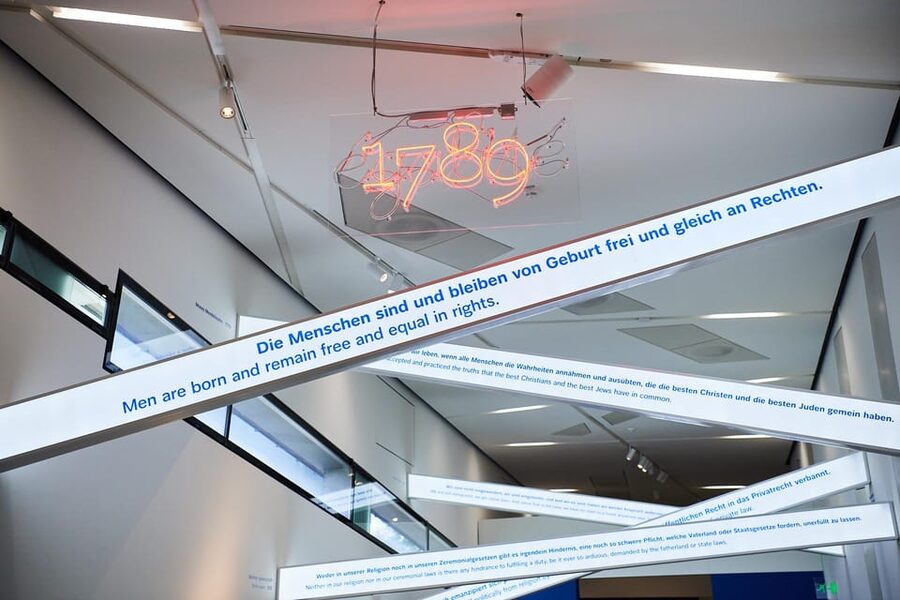
Ninety minutes is a sensible length for a first look. You get a clear route through the exhibition, selected stations, and an explanation of the building without trying to read every label or use every media feature. If your Berlin schedule is tight, this format gives you structure and keeps the museum from becoming an all-day commitment.
The tradeoff is depth. The exhibition covers centuries, several major historical breaks, eight rooms of art and culture, and a large set of ideas about identity. No 90-minute tour can give equal attention to all of that. You will leave with a map of the museum and its central questions, not a complete record of every object.
That is not a weakness if you plan properly. I would use the tour as an introduction. Listen for the rooms or themes that interest you most, then return to those areas after the guided portion if museum access and your schedule allow. The guided route should help you choose where to spend extra time rather than attempting to replace independent viewing.
A tour also helps if you find Holocaust and Jewish history museums difficult to approach alone. The subject matter can be emotionally and intellectually heavy. A live guide gives the visit a human structure and helps connect individual objects to the larger story.
English guidance, audio support, and the language question
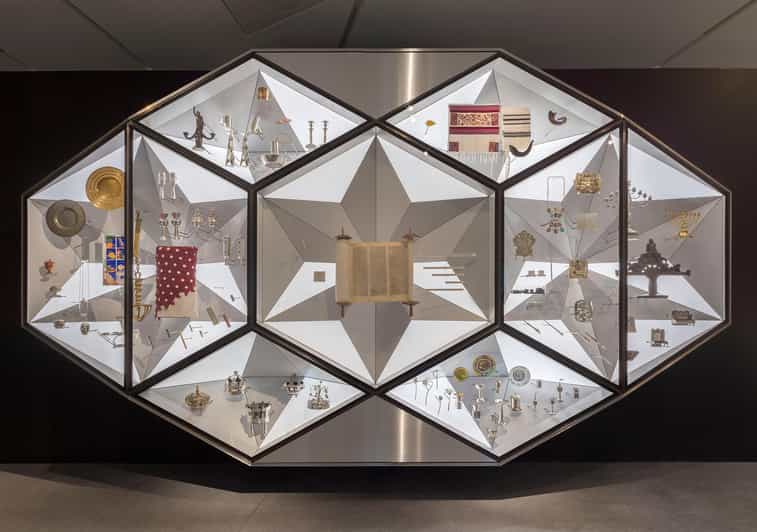
The live tour is in English, and an English audio guide is included. That makes the experience useful for English-speaking visitors who want both personal explanation and the option to revisit information through recorded material.
The tour is not advertised as multilingual. One French-speaking participant specifically wished for more written material in French, so I would not book this expecting French support. If English is not comfortable for you, check carefully before reserving. The subject matter is complex, and language confidence matters more here than it would at a simple sightseeing stop.
No guide names are provided for this experience, so you should not book it expecting a particular individual. What you can expect is a live English-speaking museum guide who interprets selected objects, artworks, media stations, and the architecture.
The strongest guide style for this museum is thoughtful rather than theatrical. The subject does not need forced drama. You want clear explanations, respect for difficult material, and room to consider the exhibition’s different voices. The most praised qualities in the feedback are passionate storytelling, emotional depth, and an ability to explain the building and art in a way that connects to wider questions about displaced minorities.
Who will get the most from this museum tour
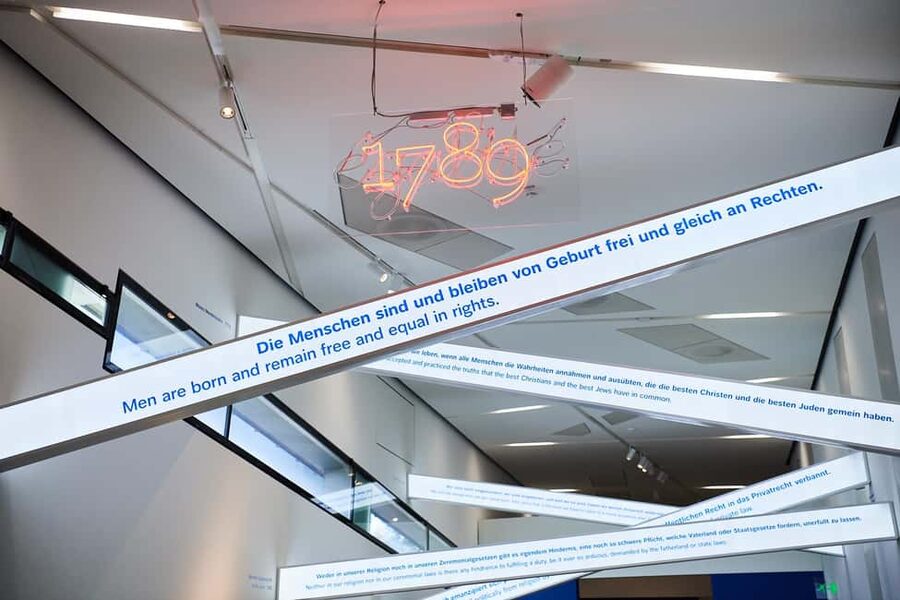
This experience suits you if you want more than a quick look at Berlin’s famous buildings. It is particularly useful for first-time visitors who want an organized introduction to Jewish history in Germany without committing to a much longer museum session.
It also suits people interested in architecture. The building is not merely the setting, and the tour explains its symbolic character alongside the collection. If you enjoy museums where design, space, and ideas work together, the $7 price offers strong value.
Students and history-minded visitors should find the five-chapter structure helpful. Families with older children may also appreciate the guided format, although the difficult material means adults should decide if the subject is suitable for their children. The information provided does not specify an age recommendation.
You may want to choose another activity if you are looking for light entertainment, a general sightseeing tour, or a museum with an easy, cheerful mood. This visit deals with persecution, displacement, memory, and identity. It can be rewarding, but it asks for attention and emotional readiness.
The museum is wheelchair accessible, which makes the experience practical for visitors who need step-free access. Food, drinks, and transportation are not included, so plan those separately. The museum visit itself is the focus.
Is $7 a fair price?
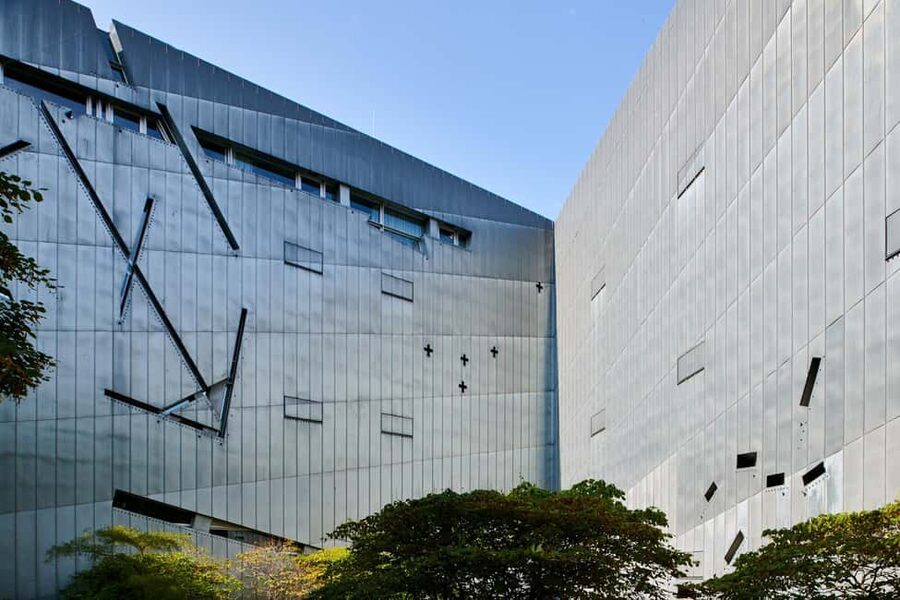
At $7 per person, this is an unusually modest price for a guided museum experience. Entry and the guided tour are included, and you also receive an English audio guide. The price is especially good if you value explanation, since a guide can make the architecture and layered exhibition easier to understand.
The low cost does not mean the visit is casual or limited in subject. You are receiving a structured introduction to a major museum exhibition, covering Jewish history from the Middle Ages to today. The main limit is time, not the importance of the material.
You should also factor in the free core exhibition ticket at the entrance. It costs nothing, but it adds a small practical task. The $7 booking is best understood as the charge for the guided experience and entry arrangement, while the museum still requires you to obtain the free exhibition ticket separately.
Flexible booking is another advantage. You can reserve now and pay later, and cancellation is allowed up to 24 hours before the tour for a full refund. Starting times vary, so check availability for your date rather than assuming a fixed schedule.
My advice for planning the visit
Give yourself enough time to reach the old building and find the glass courtyard meeting point. Do not walk straight to the guide without first checking the ticket desk for the free core exhibition ticket.
Wear comfortable shoes, since the museum experience involves moving through several chapters and rooms. The provided information does not give a group size or exact route order, so avoid planning another appointment immediately after the tour. A little breathing room will help if the final discussion or a particular installation holds your attention.
You may want to keep the rest of your day flexible. The exhibition’s themes are serious, and you might prefer a quiet break afterward rather than rushing into another demanding historical site. That is not a reason to skip it. It is simply a reason to place it thoughtfully in your Berlin schedule.
Should you book the Jewish Museum Highlights Tour?
Book it if you want a short, affordable, guided introduction to Jewish history in Germany and you are willing to engage with difficult material. The strongest reasons are the excellent $7 value, the clear five-chapter structure, and the guide’s attention to both the collection and the museum’s symbolic architecture.
Skip it if you need a French-language tour, want a light sightseeing experience, or prefer to explore every display at your own pace. For most English-speaking visitors with 90 minutes to spare, this is a focused way to understand one of Berlin’s most thought-provoking museums.
FAQ
Where does the tour meet?
Meet your guide in the old building on the ground level in the glass courtyard.
How long does the guided tour last?
The guided tour lasts 1.5 hours, or 90 minutes.
What language is the live tour in?
The live guided tour is held in English.
Is an audio guide included?
Yes. An English audio guide is included.
What does the tour cover?
The tour covers highlights of the Jewish Museum’s new core exhibition, including five historical chapters and eight rooms focused on art and culture.
What historical period does the exhibition cover?
The exhibition follows Jewish history in Germany from the Middle Ages to the present day.
Does the exhibition cover the Nazi era?
Yes. The Nazi era and the years after 1945 receive particular attention.
Is museum entry included?
Yes. Entry and the guided tour are included, but you must also obtain a free ticket for the core exhibition at the museum entrance.
Is the museum wheelchair accessible?
Yes. The activity is wheelchair accessible.
Can I cancel the booking?
Yes. You can cancel up to 24 hours in advance for a full refund. You can also reserve now and pay later.
Just added around Berlin
- From Berlin: Gardens & Palaces of Potsdam Bike Tour★ 5.0 · 61 reviews
- Berlin: Battle for Seelow Heights WW2 tour -Clash of Titans★ 5.0 · 27 reviews
- From Berlin: Historical Gems of Potsdam Private Day Trip★ 4.4 · 4 reviews
- Berlin: Französischer Dom 360° Panorama & Crémant to go★ 3.9 · 5 reviews
- Explore Berlin Tour: History and Highlights★ 4.7 · 5 reviews
- Berlin: Evening Yacht Cruise with Aperitif & Dinner Upgrade★ 4.6 · 178 reviews
- Berlin: Expats in Berlin Comedy Show Ticket★ 4.7 · 182 reviews
- Berlin: The Epic Comedy Club Friday Night Showcase★ 4.8 · 28 reviews
Berlin Tours, compared.

Reichstag, Dome and Government District Guided Tour
Read our review →
1-Hour City Tour by Boat with Guaranteed Seating
Read our review →


Reichstag, Plenary Chamber, Cupola & Government Tour
Read our review →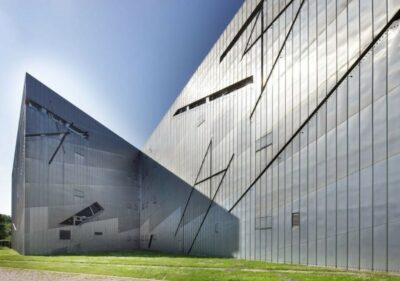
Browse the lists this tour appears in