
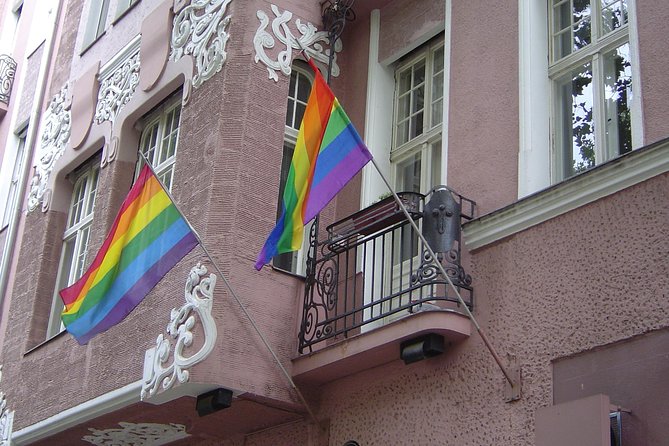
Review · BERLIN TOURS
Berlin’s Gay, Lesbian, and Queer Scene Small-Group Walking Tour
Berlin’s queer story is woven into the city itself, from 19th-century scandals and famous artists to today’s bars, clubs, memorials, and political life. This walk links Schöneberg, Tiergarten, and Kreuzberg rather than treating LGBTQ+ history as a single neighborhood story.
I like the way the tour connects big names such as Marlene Dietrich and Klaus Wowereit with ordinary streets and meeting places. I also like the use of photographs and an iPad, which can help you picture buildings and people as they once were. The main drawback is practical: the meeting point can be confusing if several Berlin walking tours gather in the same place, and the museum portion may not be central for everyone.
Key points at a glance
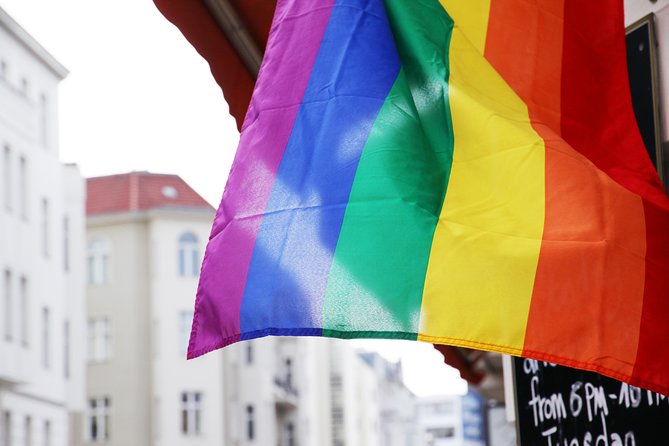
- Three-and-a-half-hour route: Follow Berlin’s queer story from central Berlin through Kreuzberg, Tiergarten, and Schöneberg.
- Small group size: The tour accepts a maximum of 15 people, allowing room for questions and conversation.
- Guides with different strengths: Finn, Mal, Lorna, and Tom have all led highly praised departures, so the exact style depends on who leads your walk.
- Modern and historic Berlin together: See a queer-run bar, hear about club culture, and connect those places to older struggles and personalities.
- Museum option: The Schwules Museum adds context, but the visit may not suit everyone and should be clarified if it matters to you.
- Budget-friendly pricing: At $24.14, the tour is inexpensive for a long, specialist walk, though you must pay separately for public transport.
Why Berlin’s queer history works best on foot
This is not simply a tour of bars. It is a walk through the changing meaning of public life for LGBTQ+ people in Berlin. Your guide traces the story from the 19th century to the present, showing how acceptance, repression, art, politics, nightlife, and memory have shaped one another.
That range gives the outing more weight than a quick tour of current venues. You hear about figures such as Marlene Dietrich, whose public image challenged conventional ideas about gender and sexuality, and Klaus Wowereit, Berlin’s openly gay former mayor. The point is not only to list famous names. It is to show how queer life has been visible in the city, even when it was not safe or openly accepted.
The route also deals with difficult periods. Berlin’s LGBTQ+ story includes discrimination and persecution, not just glamorous nightlife. A good guide needs to handle that past with care, and the strongest departures appear to balance serious material with humor and lively storytelling.
You should expect a walking tour with some public transportation along the way. One guide used a bus ride to connect several parts of the route and point out additional buildings. That can save your legs and make the city feel more connected, but you need a Berlin Transport AB Zone ticket. The guide can provide one on the day for about €7.
More walking tours in Berlin:
- Discover Berlin Half-Day Walking Tour
★ 5.0 · 9,624 reviews - Berlin: Third Reich and Cold War 2 Hour Walking Tour
★ 4.9 · 6,830 reviews - Berlin: Discover Berlin Walking Tour
★ 4.9 · 5,998 reviews
Starting in central Berlin at noon
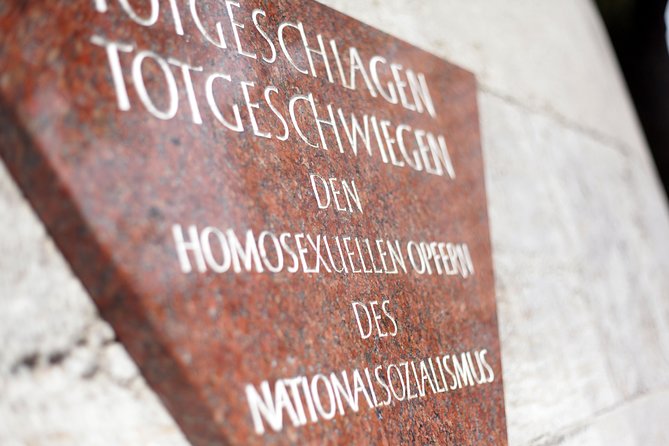
The tour begins at Neue Promenade 3 at 12:00 pm. This is a central location, but it can also be a gathering point for several tours. The most useful tip is simple: arrive early, look for the queer tour specifically, and listen for the guide’s announcement before following a group.
A mix-up here can send you off on an entirely different walk. Several Berlin tours may leave at around the same time, and the meeting arrangement does not necessarily provide an obvious sign for this particular experience. Arriving around 15 minutes early gives you time to confirm the guide’s name and subject.
Once the group is together, the opening discussion places queer culture in Berlin across several centuries. This introduction matters because the tour is not limited to the present-day club scene. You begin with the idea that queer life has long been part of Berlin, even though its visibility and legal treatment have changed sharply over time.
The maximum group size is 15. That is small enough for you to hear the guide on city streets and ask questions without having to fight for attention. It also means the experience may feel more like a conversation than a large flag-led procession.
Kreuzberg, Südblock, and Berlin’s alternative side
Kreuzberg brings the tour into modern Berlin. The district is associated with alternative culture, political life, art, and nightlife, making it a useful setting for discussing how queer communities create their own spaces.
One especially interesting stop is Südblock, a queer-run bar and restaurant. The place is presented as more than somewhere to eat or drink. It functions as a community institution, and the guide explains how it supports LGBTQ+ life in the neighborhood.
You should not expect food or drinks to be included. The stop is about the role of the venue and the people who use it, not a scheduled meal. If you want to buy something, budget separately and ask the guide how much time is available.
Südblock also helps explain a point that can be missed on a conventional history tour: queer culture is not only found in monuments or museums. It lives in businesses, social rooms, and places where people gather regularly. The stop gives the tour a present-day anchor after the earlier historical material.
The walk then turns to Berlin club culture, including one of the city’s most famous clubs. The discussion connects its origins to the 1990s gay scene and follows its later reputation as an all-hours center of nightlife. The club is treated as part of a longer story about queer spaces, changing audiences, and Berlin’s unusual approach to nightlife.
The tour does not promise entry to the club. You hear its story and see its place within Berlin’s queer past and present. That distinction matters if you are expecting a nightclub experience rather than a historical stop.
Schöneberg and the Christopher Isherwood connection
Schöneberg is one of Europe’s oldest and best-established LGBTQ+ neighborhoods. Here the tour moves from alternative Kreuzberg to a district with a more defined place in international queer history.
The guide discusses Christopher Isherwood, whose life in Berlin helped shape the way many people outside Germany imagined the city’s queer nightlife. His connection gives the neighborhood a literary angle, but the walk is not only about one writer. It also looks at the broader social world around him and the people who made the neighborhood what it was.
Schöneberg is especially valuable because it shows how a district can become associated with queer life over time. You learn to read streets and public spaces as more than scenery. They are settings for friendship, romance, performance, political organizing, and, at times, danger.
This part of the route may be the highlight for anyone interested in Berlin’s early 20th-century queer culture. It also helps explain why Schöneberg remains so closely linked with LGBTQ+ Berlin today. At the same time, the tour does not reduce the district to nightlife. The historical discussion includes the limits of tolerance and the fact that visibility did not always mean security.
A few more Berlin half-days to weigh up
- Berlin: Gay Berlin Out in Schöneberg Walking Tour
★ 4.8 · 281 reviews - Street Art & Berlin Gay, Queer, Trans History + Free Gay Map
★ 4.9 · 15 reviews - Queer Berlin Tour: Birthplace of LGBTQ+ Movements
★ 5.0 · 6 reviews - Berlin: BKA Theater “Operetta for two gay tenors”
★ 4.0 · 4 reviews
Tiergarten, memorials, and public memory
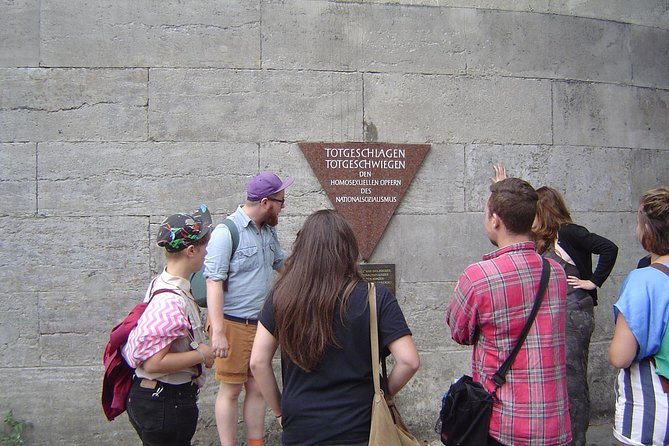
Tiergarten adds another layer to the route. The area allows the guide to discuss queer life in public spaces and the way Berlin remembers people who were persecuted.
The precise stops can vary by guide and day, but the tour’s historical method is clear: monuments, photographs, and original locations are used to connect past events with the places where they unfolded. That approach is more useful than a string of dates because you can see how the city’s physical setting relates to its social history.
This is also where the tone may become more serious. Berlin’s queer past includes painful chapters, and the guide gives you a chance to consider what has changed and what still requires attention. One of the strongest parts of the experience is this movement between celebration and caution. You hear about people who expanded public acceptance, but you also hear why vigilance and historical memory matter.
Bring comfortable shoes and water. Three and a half hours is a long time to spend on city streets, and one departure ran closer to four and a half hours. Hot weather can make the walk tiring. The tour operates in all weather, so dress for the forecast rather than assuming a sunny Berlin afternoon.
The Schwules Museum and how to judge its value
The Schwules Museum is listed as a major part of the experience and can provide a fuller look at LGBTQ+ history and culture. A museum visit is useful if you want exhibits, objects, and a slower look at themes that a walking guide can only introduce.
Still, you should clarify how the museum fits into your departure. The supplied details describe it as a place to visit, but one account indicates that the museum was not a major part of the actual walk and that only one person wanted to go inside. This suggests that the museum component may depend on the guide, timing, or group interest.
That is not necessarily a flaw. Some people prefer the streets, stories, and original locations, while others want time indoors with displays and archival material. If the museum is your main reason for booking, confirm the plan before the tour begins. If you mainly want a guided walk through Berlin’s queer districts, the city route should remain the central attraction.
The museum may also make the tour feel longer. The advertised duration is about three hours and 30 minutes, but the pace can vary. Those who enjoy extended discussion may welcome the extra time. Anyone with another timed activity should leave a generous buffer.
Guide quality and the value of a small group
The guide makes a major difference here because the subject requires both factual range and sensitivity. Finn is praised for bringing an iPad with images of people and original places. That is a practical tool, especially when a building has changed or disappeared and you need help seeing what once stood there.
Mal, Lorna, and Tom also led departures that were described as engaging and well presented. Tom was particularly effective at combining monuments, photographs, and original sites with a respectful treatment of difficult material. You should remember that guide assignments vary, so the tone will not be identical every day.
The strongest guides appear to make the past approachable without making light of suffering. That balance is important. A tour about queer Berlin can easily become either a dry lecture or a nightlife checklist. This experience aims for something in between: solid historical content, personal stories, humor, and time to think.
The group limit of 15 helps. You can ask about a person, neighborhood, or period without interrupting a huge crowd. It also keeps the guide close enough to point out smaller details. The tradeoff is that the tour may move at the pace of the group, and a particularly talkative departure can run beyond the stated time.
Is $24.14 a fair price?
At $24.14 per person, this is a strong value for a specialist tour lasting about three and a half hours. You are paying for a professional guide, a carefully connected route, and access to a subject that is not covered in the same way by standard Berlin sightseeing walks.
The public transport ticket is extra, at about €7 for an AB Zone day pass. That raises your total cost, but the ticket can also be useful for the rest of your day in Berlin. Food and drinks are not included, and hotel pickup and drop-off are not offered.
The low price comes with a few limits. You do not get a private guide, transport arranged from your hotel, or a guaranteed extended museum visit. You also need to manage the start point yourself and pay attention to which group is leaving.
For someone who has already read extensively about queer Berlin, the tour may feel less essential. A guide cannot replace a full book, and a well-prepared reader may find some of the historical material familiar. If you are new to the subject, the walk gives you a clear framework and a useful sense of place for very little money.
Who will get the most from this walk
I would choose this tour if you want more than nightlife recommendations. It suits anyone interested in LGBTQ+ history, Berlin’s changing politics, social movements, literature, art, and the relationship between public space and personal freedom.
It is also a good choice for people visiting Berlin who want a focused introduction rather than a general city tour. The route covers several districts, so you see more than one version of queer Berlin. You can return later to Schöneberg, Kreuzberg, or the museum with better context.
You should think twice if you dislike long walks, have a tightly packed afternoon, or want a purely present-day bar crawl. The subject includes persecution and loss, and some sections are serious. The museum may also receive less attention than you expect.
The activity is offered in English. Confirmation arrives when you book, and most people can participate. Service animals are allowed, and the route is near public transportation. Because the walk operates in all weather, suitable clothing is part of the preparation.
My verdict on Berlin’s queer history walk
Book it if you want Berlin’s LGBTQ+ story explained through real neighborhoods, community spaces, famous personalities, and original sites. The best guides, including Finn, Mal, Lorna, and Tom, add warmth and visual references that help the past feel connected to the streets around you.
Before booking, decide how important the Schwules Museum is to you and confirm how it will fit into the day. Arrive early at Neue Promenade 3, identify the queer tour clearly, and leave extra time after the scheduled finish. With those small precautions, $24.14 buys an unusually broad and thoughtful introduction to queer Berlin.
FAQ
How long does the Berlin queer walking tour last?
The tour lasts approximately three hours and 30 minutes. Some departures may run longer, with one lasting about four and a half hours.
What is the price of the tour?
The listed price is $24.14 per person.
Where does the tour start and finish?
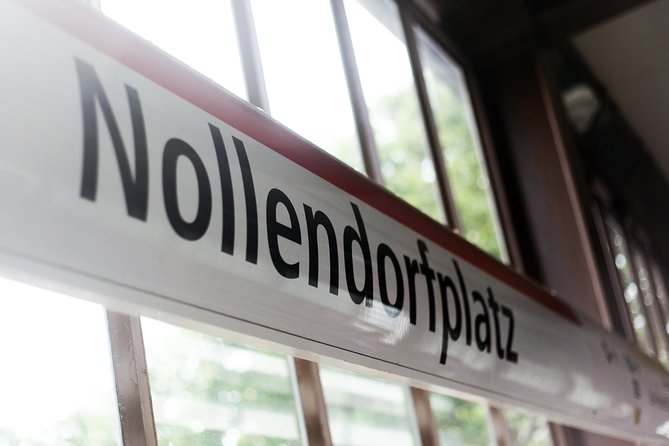
The tour starts at Neue Promenade 3, 10178 Berlin, at 12:00 pm. It finishes at Nollendorfplatz, 10787 Berlin.
Is the tour offered in English?
Yes. The experience is offered in English.
What is included in the price?
A professional guide is included. Hotel pickup and drop-off, food, drinks, and the Berlin Transport AB Zone ticket are not included.
Do I need a public transportation ticket?
Yes. An AB Zone ticket is required for the public transportation used during the tour. The ticket costs approximately €7 for a day pass and is available from the guide on the day.
Can I cancel the booking?
You can cancel up to 24 hours before the start time for a full refund. Cancellations or changes made less than 24 hours before the start time are not accepted for a refund.
Just added around Berlin
- eSIM for Germany and 34 European Countries★ 4.5 · 16 reviews
- Your ticket to The Wall Museum Berlin★ 3.0 · 60 reviews
- Walking on the Wall: 3-Hour Tour in Berlin★ 4.5 · 34 reviews
- Rickshaw Tours Berlin – Groups of up to 16 people with several rickshaws★ 4.0 · 97 reviews
- Warnemuende Shore Excursion: Private Berlin Tour★ 4.5 · 27 reviews
- Love and War in Berlin: Self-Guided Story Puzzle Walk★ 5.0 · 7 reviews
- Warnemuende Shore Excursion: Berlin Private Sightseeing Tour from Rostock★ 5.0 · 4 reviews
- Cold War Berlin – Private Live Virtual Experience★ 5.0 · 4 reviews
Berlin Tours, compared.

Reichstag, Dome and Government District Guided Tour
Read our review →
1-Hour City Tour by Boat with Guaranteed Seating
Read our review →

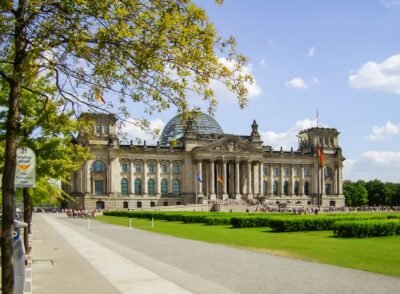
Reichstag, Plenary Chamber, Cupola & Government Tour
Read our review →
Browse the lists this tour appears in