Review · BERLIN TOURS
Queer Berlin Tour: Birthplace of LGBTQ+ Movements
Berlin’s queer story is not tucked into a single museum. It runs through Schöneberg’s bars, the Tiergarten’s memorials, a former research institute, Christopher Isherwood’s old neighborhood, and the streets of Cold War East Berlin. This three-hour walking tour follows that trail with stories of scientists, artists, activists, club owners, and political figures.
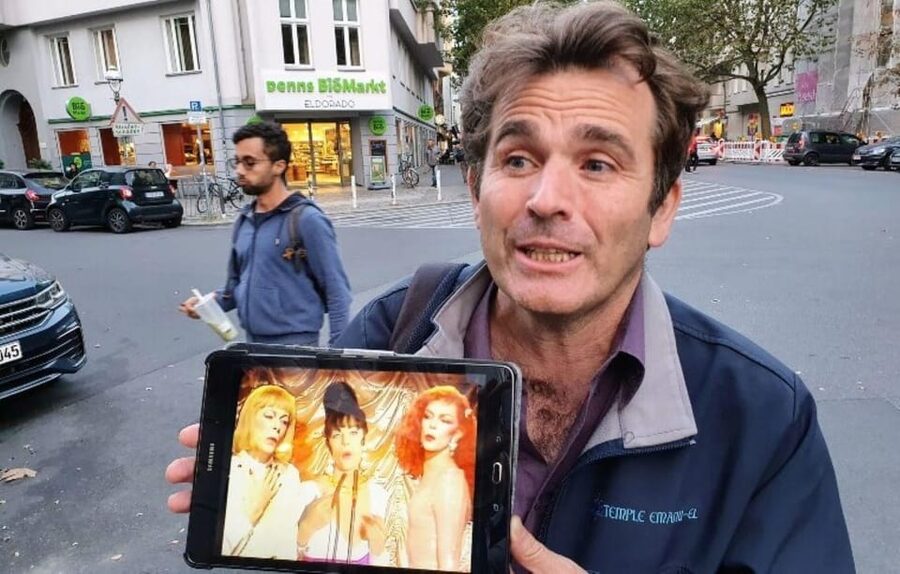
I like the small-group format, which gives Dan or Justin room to explain complicated history and answer questions. I also like the use of photographs and music, a detail that helps bring Weimar cabaret and later nightclub culture to life. The main drawback is simple: this is a serious amount of walking, and metro fare is not included.
Key things to know before you book
- Magnus Hirschfeld’s institute: Learn how the pioneering sexologist helped shape early gay rights work and research.
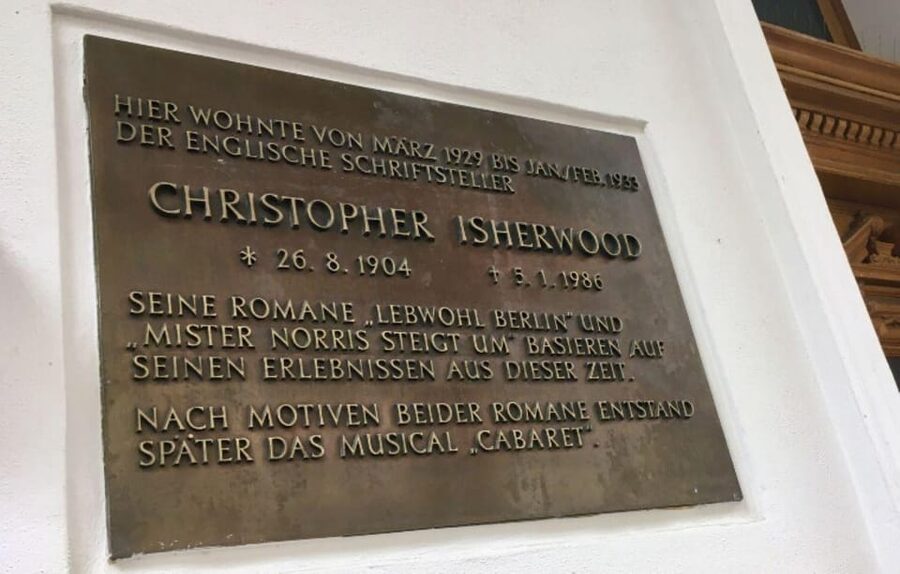
- Schöneberg’s queer past: Walk through the neighborhood linked with cabarets, lesbian bars, Christopher Isherwood, and Berlin’s early gay scene.
- Cabaret and nightlife stories: Hear about El Dorado, Marlene Dietrich, Romy Haag, and David Bowie.
- History beyond the Weimar era: The route also covers Nazi persecution, postwar rebuilding, and queer life behind the Iron Curtain.
- A guide-led experience: Dan and Justin bring personal perspective, historical context, images, and music in English or German.
- A full three hours on foot: Wear comfortable shoes and contact the provider ahead of time if mobility is a concern.
Why Berlin matters in queer history
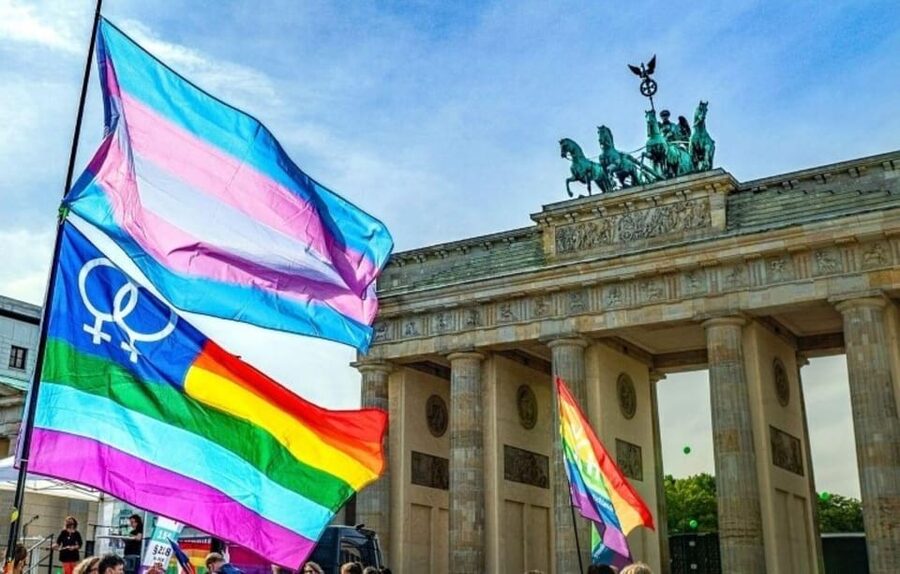
Berlin became a major center of queer life long before the modern language of LGBTQ+ rights took shape. In the 1920s and early 1930s, Schöneberg was known for its bars, cabarets, clubs, and public social life. The scene was not free of danger, but it offered more room for self-expression than many other European cities at the time.
This tour makes that past feel local. Instead of giving you only names and dates, it connects people to addresses and street corners. A former apartment, a nightclub site, or a memorial becomes a doorway into a larger story about sex, politics, art, censorship, and survival.
The route also avoids presenting Berlin’s queer past as one long success story. The same city that supported bold research and open nightlife later saw the destruction of Hirschfeld’s work and the persecution of gay men under the Nazis. After the war, queer Berlin rebuilt itself, but life in East Germany brought another set of restrictions and fears.
That range is the tour’s greatest strength. You are not just looking at old nightlife sites. You are learning how political power shaped private life.
A few more Berlin half-days to weigh up
- Berlin: Gay Berlin Out in Schöneberg Walking Tour
★ 4.8 · 281 reviews - Berlin: BKA Theater “Operetta for two gay tenors”
★ 4.0 · 4 reviews
Starting in Schöneberg at Nollendorfplatz
The tour begins at a starting point that depends on the option you select, then moves through Nollendorfplatz and Schöneberg. This is the right place to begin because the neighborhood itself is part of the story. Schöneberg became associated with Berlin’s queer social world during the Weimar period and later reclaimed its place as the city’s gay center after the Second World War.
You will hear about the clubs and bars that helped make the area famous. Some landmarks are no longer operating as they once did, so this is not a nightlife crawl. It is a walking history lesson through a district where ordinary buildings can carry unusual stories.
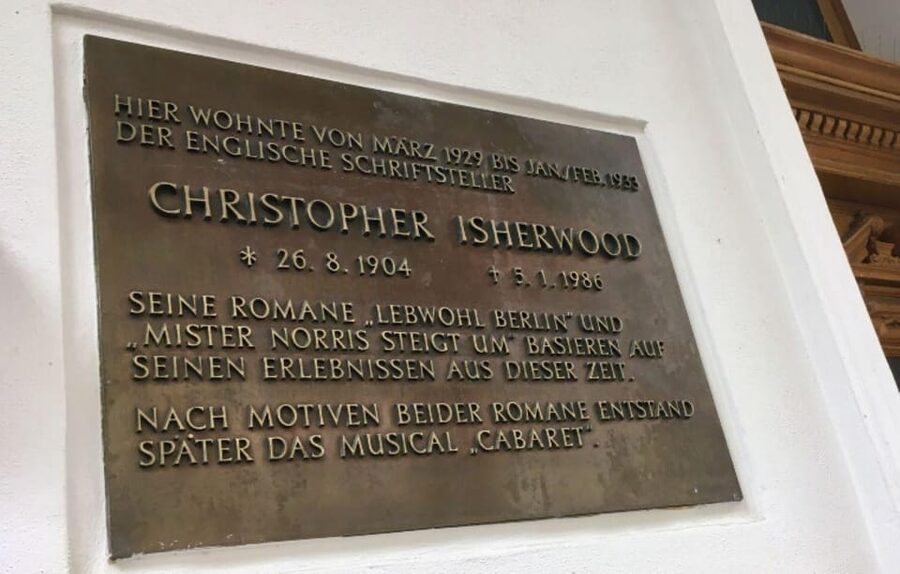
Christopher Isherwood’s former flat is one of the most personal stops. Isherwood’s experiences in 1930s Berlin helped inspire the work that later became associated with the musical Cabaret. Seeing where he lived gives you a sharper sense of how writers turn city life into fiction, and how fiction can later shape the world’s image of Berlin.
The tour also points out clubs that Isherwood frequented, along with a rent-boy dive that remains gay-run. That contrast matters. One site connects to an internationally famous writer, while another points to the working lives and less polished corners of queer Berlin.
The former El Dorado and the complicated cabaret world
The former El Dorado Cabaret is one of the route’s more memorable stops. Marlene Dietrich performed there, and the club drew a mix of artists, regulars, political figures, and people seeking freedom from conventional social rules.
The site also opens up a harder question. Ernst Röhm, the openly gay head of the Nazi Sturmabteilung, was among the notable figures linked with El Dorado. His sexuality did not prevent him from helping lead a violent Nazi organization, and he was later executed during the 1934 Night of the Long Knives.
That story keeps the tour from turning Weimar Berlin into a simple party postcard. Queer spaces could be daring and accepting in some ways while still sitting inside a society shaped by class divisions, political violence, and prejudice. You get a more useful picture when the guide puts glamorous cabaret beside moral contradictions.
Hirschfeld, science, and the destruction of an institute
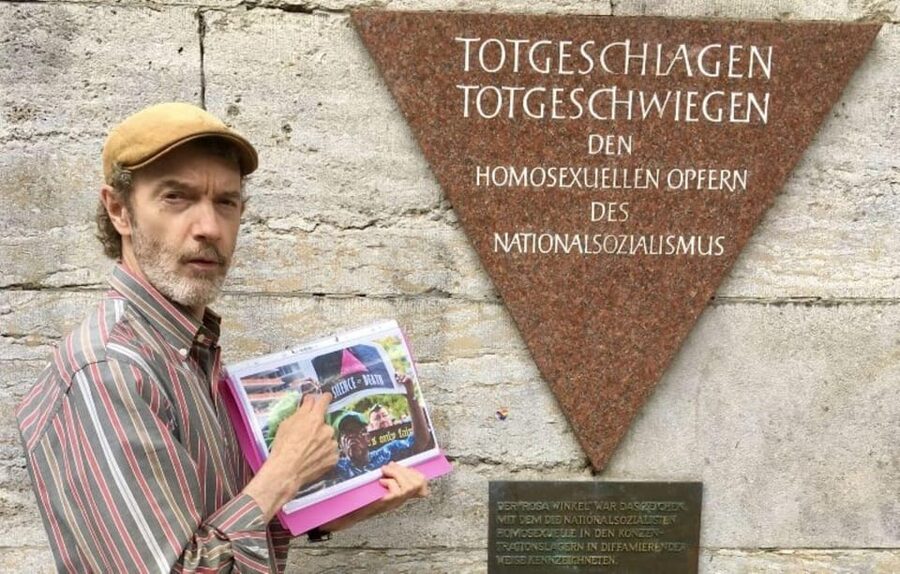
One of the tour’s most important stops is the site of the Institute for Sexual Science, founded by Magnus Hirschfeld. The institute was an early center for research, counseling, and advocacy around sexuality and gender. Hirschfeld helped pioneer the gay rights movement and coined the term transsexualism.
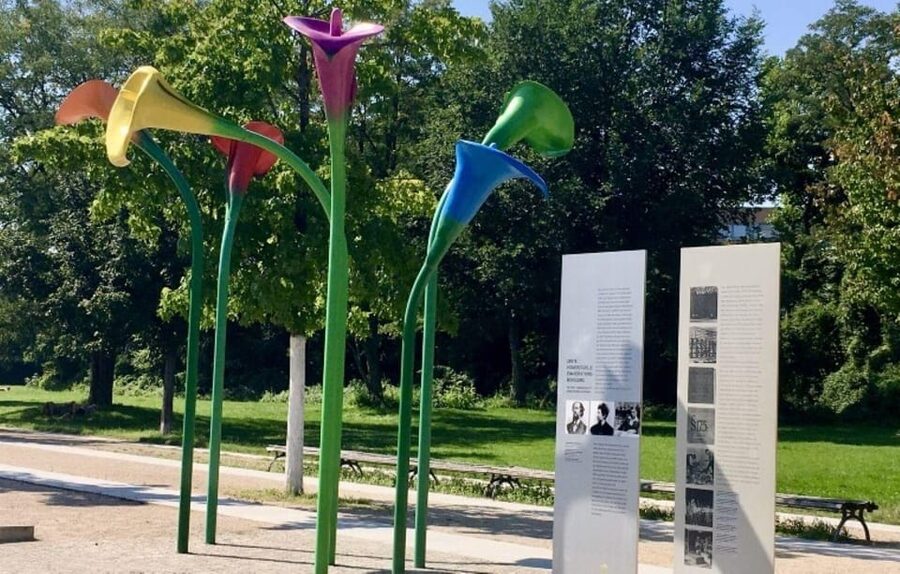
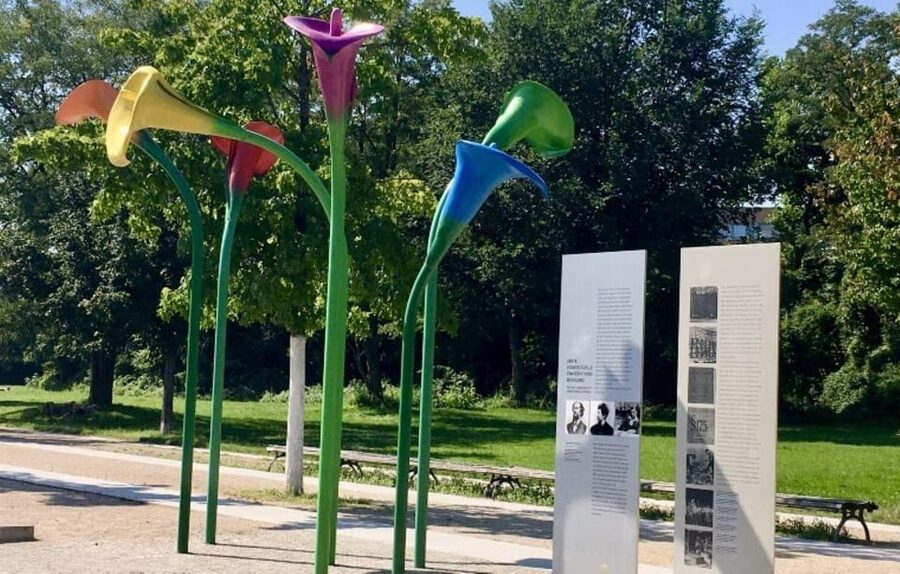
The site is marked by the Memorial to the First Homosexual Emancipation Movement, a colorful monument connected with this history. The memorial gives the guide a place to explain what Hirschfeld tried to build and why his work mattered far beyond Berlin.
Hirschfeld also co-authored Anders als die Andern, or Different from the Others, in 1919. It is described as the first pro-gay film in the world. The film challenged criminalization and public prejudice at a time when such a message was unusual and risky.
The story then turns dark. The Nazis closed the institute in 1933 and burned its library. That act was not just an attack on a building. It destroyed research, records, and a public center for people whose lives and identities were already under pressure.
I value this part of the walk because it shows why memorials matter. You are not asked to admire an abstract historical figure. You are shown how a real institution served people, and how quickly political force could erase its work.
Same city, a completely different sort of afternoon:
- Berlin: Reichstag, Dome and Government District Guided Tour
★ 4.7 · 18,288 reviews - Berlin: 1-Hour City Tour by Boat with Guaranteed Seating
★ 4.3 · 16,993 reviews - Berlin: Boat Tour Along the River Spree
★ 4.4 · 11,252 reviews - Discover Berlin Half-Day Walking Tour
★ 5.0 · 9,624 reviews
Memorials that make persecution visible
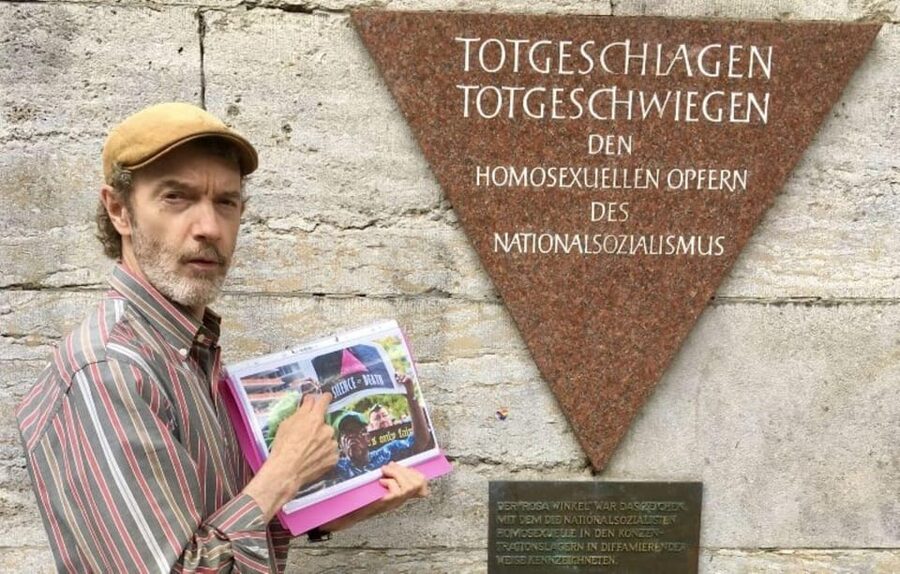
The route includes the Memorial to Homosexuals Persecuted Under Nazism. This stop deals with one of the most painful parts of Berlin’s past: the persecution, imprisonment, and murder of homosexual people under National Socialism.
The guide also connects the period to people who held public power. The story of Röhm is especially unsettling because it shows that personal connections and political usefulness did not protect someone from a regime’s shifting demands. The so-called moral purge of 1934 used sexuality, loyalty, and political rivalry as tools.
You should expect this section to be serious. The tour is not only about famous clubs and artists. It asks you to consider how queer people suffered under dictatorship, and how public memory has developed since then.
At the same time, the memorials help tie the history to the city you are walking through now. Berlin’s streets contain both the remains of cultural freedom and reminders of the violence that crushed it.
The 1970s, Romy Haag, and Bowie’s Berlin

The tour later pays tribute to Chez Romy Haag, an iconic nightclub of 1970s Berlin. Romy Haag was a transgender actress, singer, and dancer who ran the club and became a major figure in the city’s nightlife.
Her connection with David Bowie adds a pop-cultural thread. Haag and Bowie met and began an affair, and the relationship is described as an inspiration for Bowie’s song Heroes. This part of the route links queer nightlife with the wider story of Berlin as a place where artists could reshape their public identities.
The value here is not simply the celebrity connection. Romy Haag’s own career matters. The club represents a later generation of queer Berlin, one shaped by postwar change, performance, music, and more visible transgender life.
You will also hear how Schöneberg regained its place as the gay heart of the city after the war. The neighborhood’s role did not end with the Weimar era. It changed, adapted, and formed new communities.
Unter den Linden and queer figures in official history
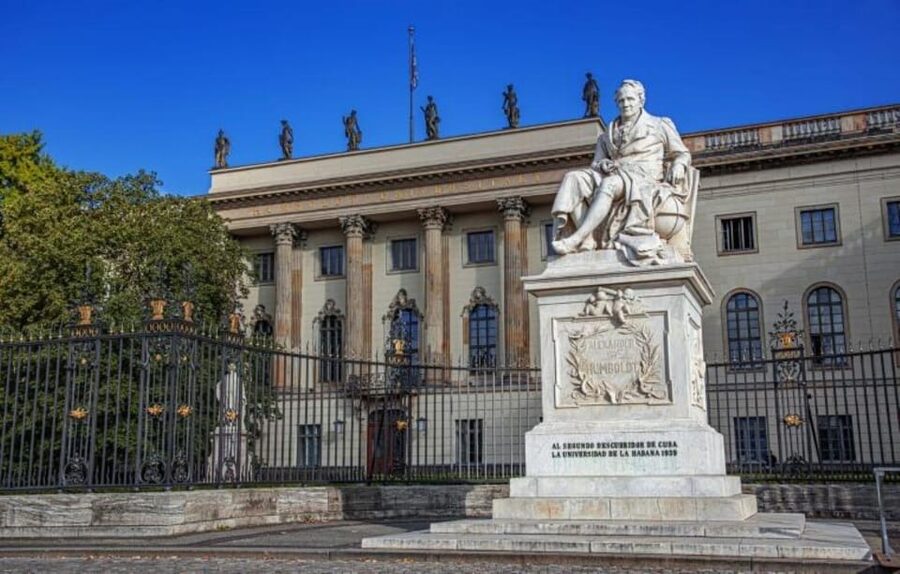
The walk extends beyond Schöneberg to Unter den Linden, one of Berlin’s historic boulevards. Here, the focus broadens to early Berliners such as Prussian King Frederick the Great and explorer Alexander von Humboldt.
The guide explains how these men disguised or managed their sexuality within the strict social and political systems of their time. Their stories remind you that queer history is not limited to people who lived openly in clubs or activist circles.
This part may appeal especially to visitors who want more than a neighborhood tour. It places queer lives inside the history of Prussia, science, exploration, and monarchy. You begin to see that LGBTQ+ history is not a side topic added to Berlin’s story. It is part of the story of the people who shaped the city and the state.
Because the tour covers several eras and areas, the pacing can feel full. You are getting a wide sweep in three hours, not a slow visit to one museum or archive. The payoff is variety, but you should expect the guide to keep moving.
Alexanderplatz and queer life behind the Iron Curtain
The final major stop is Alexanderplatz, the center of Cold War East Berlin. Here the subject changes again, focusing on the hardships faced by gay men and lesbians behind the Iron Curtain.
This is an important addition because many visitors know Berlin’s Weimar reputation but know less about queer life in divided Germany. The tour places East Berlin within the same larger story, showing that the end of the Nazi period did not create immediate freedom for everyone.
Alexanderplatz also gives the route a strong geographic finish. You move from Schöneberg’s cabarets and former clubs to one of the best-known public spaces in East Berlin. The change in setting mirrors the change in political conditions.
By the end, the tour connects past struggles with present-day Queer Berlin. It does not promise a full survey of every community or neighborhood, but it gives you a clear framework for understanding why Berlin became such an important center of LGBTQ+ life.
Guide style, group size, and language
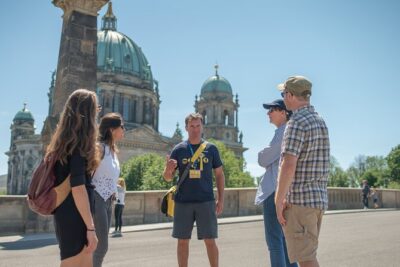
Dan leads tours with personal experience as a gay man in Berlin, including memories of the city from before the Wall came down. His approach combines first-person perspective with historical storytelling, photographs, and music. That mix can make the walk feel less like a lecture and more like a guided performance with a clear historical purpose.
Justin also brings a personal connection to Berlin and has been praised for pairing love of the city with detailed queer history. His background as a US-born guide can help if you appreciate comparisons with American history and familiar reference points.
The tour is offered in English or German, with private and small-group options available. A smaller group is useful here. Many subjects are sensitive, and the format allows for questions without the rushed feel of a large city walk.
One small practical improvement would be a formal introduction at the start so everyone knows who is in the group. That is a minor point, but it matters on a private or intimate tour where conversation is part of the experience.
Is $153 a fair price?
At $153 per person, this is not a cheap walk. The value depends on what you want from it.
If you are looking for a standard three-hour city stroll with a few queer-themed stops, the price may feel high. Metro fare is extra, and the tour does not include museum admission, food, or drinks. Much of what you see is outdoors and connected with sites rather than preserved interiors.
I think the price makes more sense for visitors who want a specialist guide, a private or small-group setting, and a carefully connected story. Dan and Justin bring personal perspective, historical research, music, images, and local context. You are paying for interpretation, not just transportation between landmarks.
The tour also covers a wide time span: the early emancipation movement, Weimar nightlife, Nazi persecution, postwar Schöneberg, 1970s club culture, Bowie’s Berlin, and Cold War East Berlin. That breadth would be hard to assemble on your own in three hours.
Practical advice for the walk
Wear comfortable shoes. The activity is entirely focused on walking, and the route crosses several parts of Berlin. Contact the provider before booking if you have mobility concerns.
Check the starting time and meeting point for your chosen option. The pickup location can vary, and metro fare is not included, so keep that small cost in mind when planning the day.
I would choose this tour early in a Berlin visit if queer history is a major interest. It can give you addresses and names to revisit later, including Schöneberg sites and memorials. If you prefer a relaxed pace, ask about the small-group or private option.
The material includes persecution, genocide, political violence, and the destruction of Hirschfeld’s institute. It also includes nightlife, music, romance, and humor. You should expect emotional range rather than a light entertainment tour.
Who should book this experience?
I recommend it to anyone interested in LGBTQ+ history, Weimar Berlin, cabaret, social movements, or the personal stories behind major Berlin landmarks. It is also a strong choice if you have already seen the major monuments and want a new way to understand the city.
The tour suits visitors who like stories tied to actual places. It is less suited to anyone who wants a museum-based experience, a short route, or a simple nightlife outing.
You do not need to identify as LGBTQ+ to find value here. The tour explains how sexuality, gender, science, politics, art, and dictatorship shaped Berlin. It gives you a clearer sense of how a city can offer freedom in one era and repression in another.
Should you book the Queer Berlin Tour?
Book it if you want a focused, personal account of Berlin’s queer past and do not mind paying for a specialist walking guide. The strongest reasons are the detailed Schöneberg route, the Hirschfeld story, the links to Isherwood, El Dorado, Romy Haag, and Bowie, and the inclusion of Nazi and Cold War history.
Skip it if you want an inexpensive general sightseeing walk or have difficulty walking for three hours. For everyone else, the tour offers a thoughtful way to see Berlin through people and places that standard city tours often leave out. Its best lesson is that queer history is not separate from Berlin history. It is written into the streets.
FAQ
How long does the Queer Berlin Tour last?
The tour lasts three hours.
What languages are available?
The tour is available in German and English.
Is the tour guided?
Yes. A live guide leads the walking tour.
Who may lead the tour?
The guides identified for this experience are Dan and Justin.
Is this a private tour?
Private and small-group options are available.
What neighborhood does the tour explore?
The tour explores Schöneberg, including areas connected with Berlin’s early queer nightlife and later gay community.
Does the tour visit the former Institute for Sexual Science?
Yes. It visits the site where Magnus Hirschfeld founded the Institute for Sexual Science.
Does the tour include Christopher Isherwood’s former flat?
Yes. The route passes Christopher Isherwood’s former flat and discusses how his Berlin experiences inspired Cabaret.
Is public transportation included?
No. Metro fare is not included.
Is the tour suitable for people with mobility concerns?
This is a walking tour, so you should contact the provider before booking if you have mobility issues or concerns.
Just added around Berlin
- From Berlin: Gardens & Palaces of Potsdam Bike Tour★ 5.0 · 61 reviews
- Berlin: Battle for Seelow Heights WW2 tour -Clash of Titans★ 5.0 · 27 reviews
- From Berlin: Historical Gems of Potsdam Private Day Trip★ 4.4 · 4 reviews
- Berlin: Französischer Dom 360° Panorama & Crémant to go★ 3.9 · 5 reviews
- Explore Berlin Tour: History and Highlights★ 4.7 · 5 reviews
- Berlin: Evening Yacht Cruise with Aperitif & Dinner Upgrade★ 4.6 · 178 reviews
- Berlin: Expats in Berlin Comedy Show Ticket★ 4.7 · 182 reviews
- Berlin: The Epic Comedy Club Friday Night Showcase★ 4.8 · 28 reviews
Berlin Tours, compared.

Reichstag, Dome and Government District Guided Tour
Read our review →
1-Hour City Tour by Boat with Guaranteed Seating
Read our review →
Reichstag, Plenary Chamber, Cupola & Government Tour
Read our review →