
Review · BERLIN TOURS
Berlin’s Gallery Scene
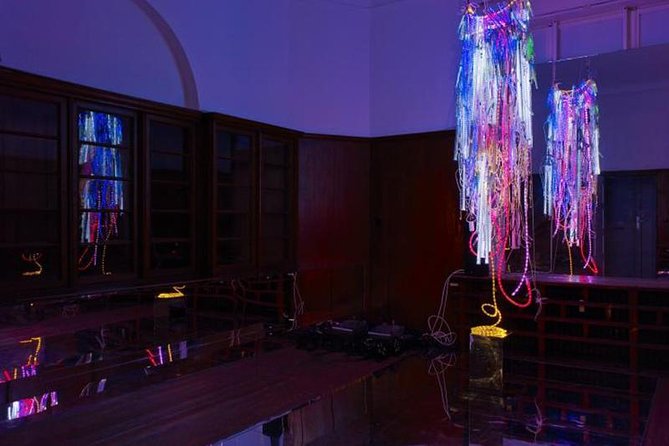
Berlin’s gallery world is at its best when you are looking beyond famous museums. This private three-hour walk takes you through working galleries in Mitte and around Potsdamer Straße, where former schools and plain city buildings now host serious contemporary art. I like the small-group format and the way the guide connects today’s art to Berlin’s changes after 1989. I also like the mix of major institutions and smaller commercial galleries, which gives you a broader view than a single museum visit.
The tour costs $330 per group of up to 10, so it makes the most sense when shared by several people. Your guide may be an art historian such as Justin or Laureline, both praised for clear, thoughtful explanations. The main catch is that exhibitions change, and KW Institute is closed on Tuesdays, so the exact route and gallery access can shift.
Key points to know before you book
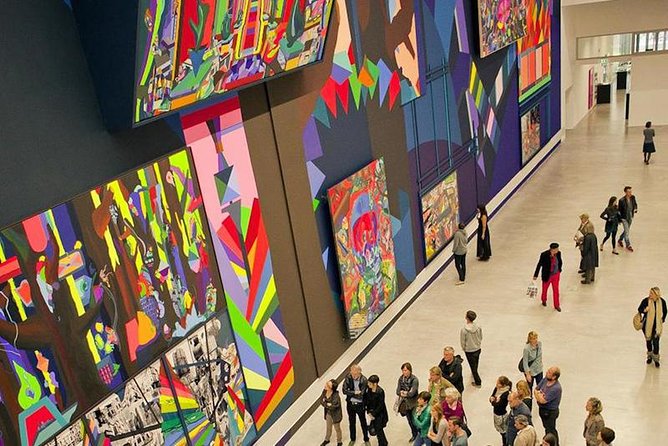
- Post-Wall Berlin is the central theme: Learn how the city’s art scene grew after the fall of the Berlin Wall in 1989.
- Five gallery areas fill three hours: Stops include KW Institute, Auguststraße, Potsdamer Straße, Esther Schipper, Eigen + Art, and Giti Nourbakhsch.
- You get a private art historian: Only your group participates, with a maximum of 10 people.
- The art changes with the calendar: The route depends on current exhibitions and major art events in Berlin.
- KW Institute costs extra: Admission is listed at €10 for adults and €6 for seniors or students.
- Tuesday needs special planning: KW is closed that day, so the tour operates as a walking experience without the KW visit.
Why Berlin’s gallery world deserves a morning
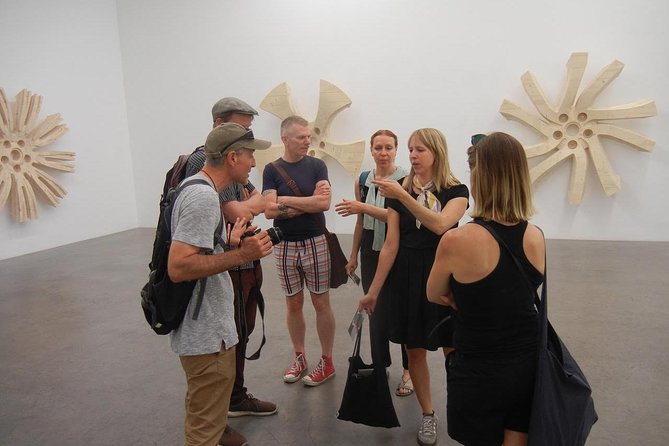
Berlin’s art scene does not depend on one grand avenue or one famous museum. It spreads through former schools, industrial spaces, old commercial buildings, and discreet doors that can be easy to miss if you are walking alone.
That scattered quality is part of the appeal. You are not simply looking at finished paintings in a formal museum. You are seeing how Berlin uses its buildings and neighborhoods as working spaces for contemporary culture. The guide helps explain why this became possible after the Wall fell in 1989, when Berlin developed a reputation as a place where artists, galleries, and experimental institutions could take risks.
I find that context especially useful because contemporary art can feel remote without a little help. A guide who understands both art and Berlin’s past can point out why a gallery occupies a former school, how an institution differs from a commercial gallery, and why a particular artist or exhibition matters.
The pace is also practical. Three hours is long enough to get a real sense of the city’s gallery culture without asking you to spend an entire day looking at contemporary work. It is a good choice early in a Berlin visit, when you want to understand the city before deciding which museums or exhibitions deserve more of your time.
More museums and galleries in Berlin:
- Berlin: Jewish Museum Berlin Entrance Ticket
★ 4.5 · 8,393 reviews - Berlin: DDR Museum Tickets
★ 4.3 · 3,443 reviews - Berlin: Natural History Museum Entrance Ticket
★ 4.6 · 3,382 reviews
Starting near Schöneberger Ufer
The listed starting point is Schöneberger Ufer 65, in the 10785 Berlin area. Pickup is offered, and the tour is near public transportation, but you should confirm the exact meeting arrangements when your booking is confirmed. The stated end point is simply Berlin, so do not expect a precise return location unless the operator provides one.
The route is described as a walking tour through Mitte and nearby gallery districts. The itinerary includes several stops, but the order may change. Current shows and major art events can affect which galleries are open or worth visiting, so flexibility is part of the deal.
That flexibility is useful in Berlin, where gallery programs change often. It also means you should not book this expecting a fixed museum-style schedule with every room guaranteed. You are paying for an informed introduction to the scene as it exists during your visit, not a permanent list of artworks.
KW Institute: Berlin’s laboratory for contemporary art
KW Institute for Contemporary Art is the most substantial institutional stop on the route. It does not maintain a permanent collection. Instead, it works as a place for temporary exhibitions, artist studios, events, and new forms of contemporary culture.
That distinction matters. At a museum with a permanent collection, you can usually count on seeing familiar names or a set historical story. KW is more changeable. You may encounter work that feels current, experimental, or difficult at first glance. The guide’s role is important here, since the exhibition itself may not offer much background.
The scheduled visit lasts about 40 minutes, making it the longest stop. That gives you time to look carefully rather than rush through a large building. Admission is not included. The listed cost is €10 for adults and €6 for seniors and students, so add that to your budget.
KW is closed on Tuesdays. On that day, the tour still operates as a walking portion, but you will not have the normal KW interior visit. If this institution is a priority, choose another day or confirm the current arrangement before booking.
Auguststraße and the former Jewish Girls’ School
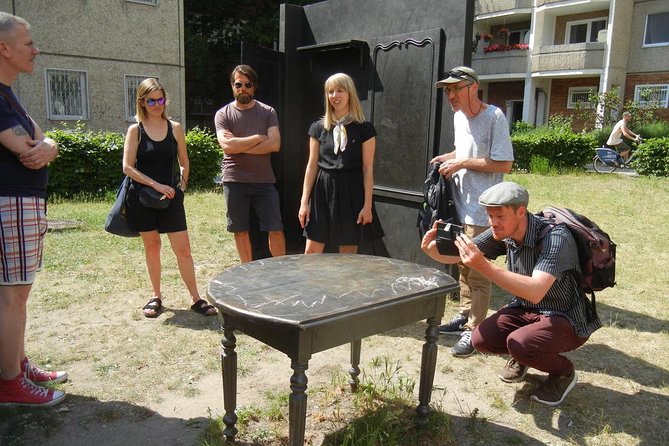
Auguststraße brings you into one of the more distinctive settings on the route. Michael Fuchs Galerie presents contemporary art alongside classical modernist works in a former Jewish girls’ school. The gallery uses the old assembly hall and two former classrooms for changing exhibitions.
The building is part of what makes this stop worthwhile. You are looking at art in rooms with a prior purpose, not in a neutral white box designed only for display. That setting can change the way you read the work, and the guide can help place both the building and the artists into a wider Berlin story.
The planned time here is 30 minutes. Admission is free, though access depends on the current exhibition schedule. Since the gallery shows both contemporary and modernist material, this stop may provide a useful bridge between established artistic traditions and newer work.
You should also expect some variety in tone. One gallery may offer work that is pleasing at first sight, while another may ask harder questions about politics, identity, or the role of art. The tour is not limited to easy, decorative pieces, which is good for anyone hoping to understand what Berlin artists are actually doing now.
A few more Berlin half-days to weigh up
- Berlin: Reichstag, Dome and Government District Guided Tour
★ 4.7 · 18,288 reviews - Berlin: 1-Hour City Tour by Boat with Guaranteed Seating
★ 4.3 · 16,993 reviews - Berlin: Boat Tour Along the River Spree
★ 4.4 · 11,252 reviews - Discover Berlin Half-Day Walking Tour
★ 5.0 · 9,624 reviews
Potsdamer Straße and Esther Schipper
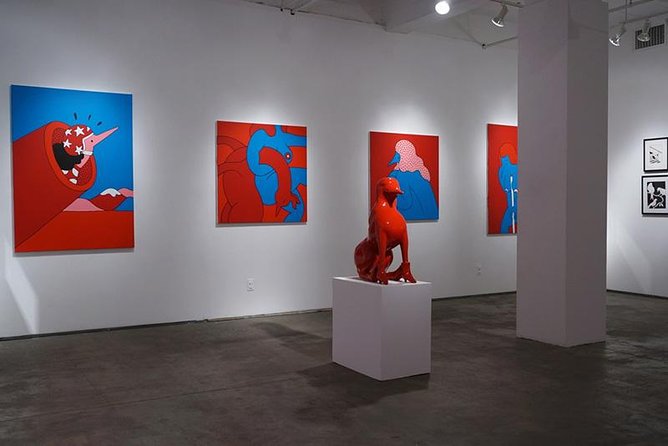
The tour then moves to Potsdamer Straße, an important gallery area on the itinerary. Esther Schipper is a contemporary art gallery based here, and the scheduled visit lasts about 20 minutes.
A short stop does not mean a lesser one. Commercial galleries often present a small number of artists in carefully planned exhibitions, so 20 minutes may be enough to see the main rooms and discuss the ideas behind the show. The guide can also explain how a gallery such as Esther Schipper fits into Berlin’s international art network.
The benefit of visiting a commercial gallery is that you see art in the setting where it is exhibited for collectors and the wider public, rather than only in a museum. You do not need to be shopping for art to find this useful. It gives you a clearer sense of how Berlin’s art economy works and how artists reach audiences.
Admission is free at Esther Schipper. As with the other galleries, the show in place during your visit will shape the experience.
Eigen + Art in a former school
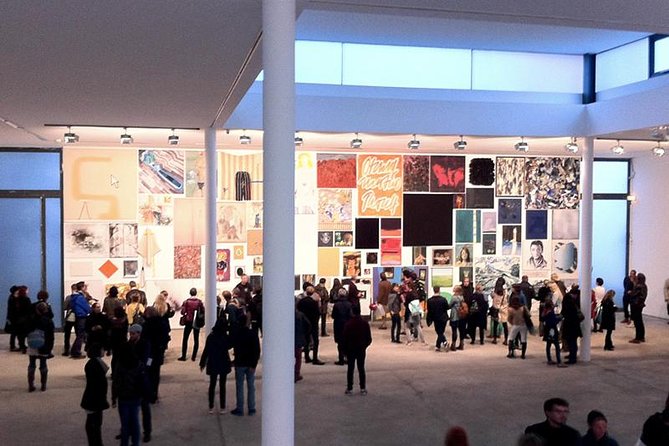
Galerie Eigen + Art is another former-school setting, with temporary exhibitions by international contemporary artists. The allotted time is around 20 minutes, which keeps the tour moving while adding another type of gallery to the day.
The former school setting reinforces one of the tour’s recurring ideas: Berlin’s art scene often grows in buildings that were not built as art institutions. Those spaces can make the city feel less polished and more experimental. They also remind you that Berlin’s gallery districts are tied to ordinary urban buildings, not separated from daily city life.
Eigen + Art’s international focus helps broaden the tour beyond German artists. You may find work that connects Berlin to wider debates in contemporary art, while the guide explains what you are seeing without assuming that you already know the names.
This is also a good point to notice the limits of a three-hour tour. You will see a selection of spaces, not entire exhibitions. If a particular show catches your attention, ask the guide where you might return later for a longer visit.
Giti Nourbakhsch and the gallery district near Potsdamer Platz
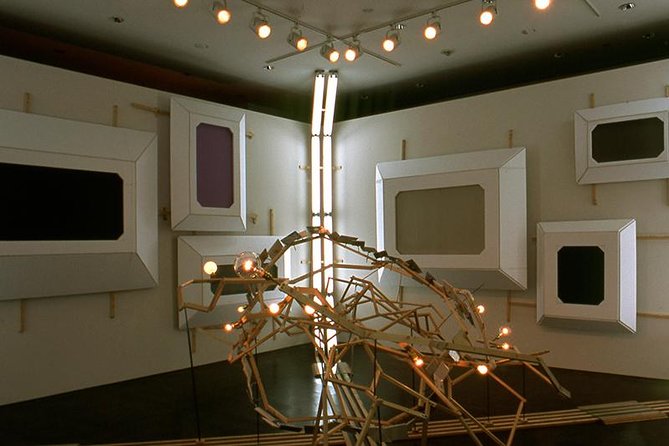
The final listed gallery is Galerie Giti Nourbakhsch. The gallery is associated with one of the early galleries in the popular district near Potsdamer Platz, and Giti Nourbakhsch was a founding member of Berlin Gallery Weekend.
That background gives the stop extra importance. You are not only seeing another temporary exhibition. You are learning about the people and institutions that helped shape Berlin’s current gallery culture. Gallery Weekend also shows how Berlin’s art world operates as a network of spaces and events, rather than as a few isolated museums.
The scheduled time is about 20 minutes. Admission is not included, so ask ahead about any current entry arrangements. The gallery’s program will determine whether the stop feels intimate, challenging, or visually accessible.
I would treat this final visit as a prompt for further exploring Berlin on your own. By this point, you will have seen several ways that the city presents art, and you may be ready to return to one neighborhood at a slower pace.
What the art historian adds
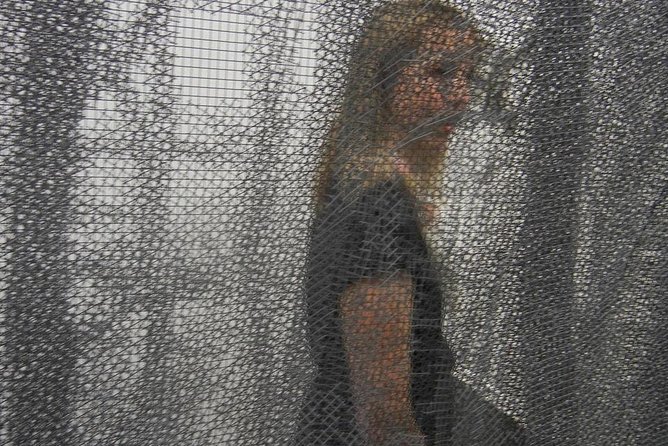
The guide is the heart of this experience. Justin has been praised for presenting a broad range of galleries and for adding historical and artistic context. Laureline has been singled out for careful preparation, strong insight into artists and their work, and an ability to connect the gallery visits with the center of former East Berlin.
Those strengths matter because gallery visits can otherwise become a string of rooms and names. A good guide explains what makes one place an institution, another a dealer, and another a temporary project space. You also get help with the basic questions that contemporary art often raises: What am I looking at? Why is it here? Why does it matter now?
The tour is not just about identifying famous German painters. It includes local artists, international contemporary work, and the history of the spaces themselves. The guide may also lead you into buildings and viewpoints that you would not notice on a normal walk through the historic center.
The best approach is to stay open-minded and ask questions. If a work seems confusing, say so. A private format gives you more room to talk than a large group tour, and the guide can adjust the explanation to your interests.
The $330 price and who gets good value
At $330 per group, the price is not cheap for one person. It becomes more reasonable when divided among several people. A full group of 10 would pay about $33 per person before any admission fees, while a couple would carry the full cost between them.
The price includes a professional art historian and a private tour. It does not include food, drinks, or admission to KW Institute. The other listed gallery visits are free, though current access can change.
I see the value in the private format rather than in the number of stops alone. You are getting a guide who can respond to your questions, explain the city’s artistic development, and adjust the discussion to the work in front of you. If you already know Berlin’s gallery scene well, the tour may feel introductory. If you are new to contemporary art or want an informed starting point, it offers more value.
You should also remember that the route is not designed as a shopping excursion. The galleries are commercial spaces, but the experience focuses on understanding the art and the city. You do not need to plan on buying anything.
Timing, walking, and changing exhibitions
The tour lasts approximately three hours and is offered in the morning or afternoon. That makes it easy to fit around a museum visit, though you should avoid scheduling another fixed activity too tightly afterward. Gallery hours and current exhibitions can affect the route.
You will be walking between stops in central Berlin. The tour is near public transportation, and most people can participate, but the supplied information does not give a detailed accessibility assessment. If you have mobility concerns, contact the provider before booking and ask about the current route.
Because exhibitions change, the exact artistic quality of the day cannot be guaranteed in advance. That is not a flaw unique to this tour. It is simply part of visiting a living gallery scene. The tradeoff is that you see Berlin as it is now, rather than a permanent display chosen years ago.
The tour also works best when you allow room for surprise. One exhibition may appeal immediately, while another may leave you thinking about it later. The guide’s explanations can make both kinds of encounters useful.
Who should book this private gallery walk
I would recommend this experience to you if you want more than Berlin’s major museums. It suits visitors who enjoy contemporary art, want historical context, or would like a local introduction before exploring galleries alone.
It is also a strong option for a small group with mixed levels of art knowledge. Someone who already follows modern art can ask detailed questions, while a newcomer can get basic orientation without feeling lost in a large group.
The tour may be less suitable if you want a fixed list of famous masterpieces, a leisurely visit to one large museum, or a guaranteed set of galleries. The route changes with current shows, and Tuesday does not include the normal KW visit.
Book with a little flexibility in mind. Check the meeting point, confirm the pickup details, and ask which exhibitions are expected during your date. Those simple steps will help you judge whether the current program matches your interests.
Should you book Berlin’s Gallery Scene?
Book it if you want to understand how Berlin became an important art center after 1989 and you value a guide who can connect buildings, artists, institutions, and city history. The private group format is especially worthwhile when several people share the $330 cost.
Skip it if your main goal is a conventional museum tour or if you need every stop and artwork to be fixed in advance. For most curious art lovers, though, this is a smart way to get oriented quickly, see unusual gallery spaces, and leave with better ideas about where to continue exploring on your own.
Free cancellation is available if you cancel at least 24 hours before the start time. Confirmation is sent within 48 hours, subject to availability.
FAQ
How long does Berlin’s Gallery Scene last?
The tour lasts approximately three hours.
How many people can join the private tour?
The private tour is for your group only, with up to 10 people.
What is included in the price?
The price includes a professional art historian guide and a private tour.
Is admission to KW Institute included?
No. Admission to KW Institute is listed separately at €10 for adults and €6 for seniors or students.
Does the tour operate on Tuesdays?
Yes, but KW Kunst-Werke Berlin is closed on Tuesdays. The tour operates as the walking portion only that day.
Can I cancel for a full refund?
Yes. You can cancel for a full refund up to 24 hours before the experience begins. Changes or cancellations made less than 24 hours before the start time are not accepted for a refund.
Just added around Berlin
- eSIM for Germany and 34 European Countries★ 4.5 · 16 reviews
- Your ticket to The Wall Museum Berlin★ 3.0 · 60 reviews
- Walking on the Wall: 3-Hour Tour in Berlin★ 4.5 · 34 reviews
- Rickshaw Tours Berlin – Groups of up to 16 people with several rickshaws★ 4.0 · 97 reviews
- Warnemuende Shore Excursion: Private Berlin Tour★ 4.5 · 27 reviews
- Love and War in Berlin: Self-Guided Story Puzzle Walk★ 5.0 · 7 reviews
- Warnemuende Shore Excursion: Berlin Private Sightseeing Tour from Rostock★ 5.0 · 4 reviews
- Cold War Berlin – Private Live Virtual Experience★ 5.0 · 4 reviews
Berlin Tours, compared.
Reichstag, Dome and Government District Guided Tour
Read our review →
1-Hour City Tour by Boat with Guaranteed Seating
Read our review →

Reichstag, Plenary Chamber, Cupola & Government Tour
Read our review →
Browse the lists this tour appears in