
Review · BERLIN TOURS
Half-Day Bike Tour of Berlin’s Lesser Known And Historical Sites
Berlin’s famous sights tell only part of the story. This small-group bike tour heads into Prenzlauer Berg, Lichtenberg, and Weissensee, where former East German housing, Stasi offices, old industrial sites, and quiet lakes show you how ordinary Berlin changed after reunification. It is a useful choice if you have already seen the Brandenburg Gate and Berlin Wall memorials.
I like two things in particular: the route gives you daily-life history, not just grand political events, and the bicycle makes it possible to cover several scattered districts without spending half the morning underground. Guides including Katrin and Markus are noted for mixing clear history with personal stories and humor.
The trade-off is simple: this is not a greatest-hits tour. You will pass many sites rather than enter them, and the ride is less suitable if you want Berlin’s major landmarks, museum interiors, or a slow walking pace.
Key points at a glance
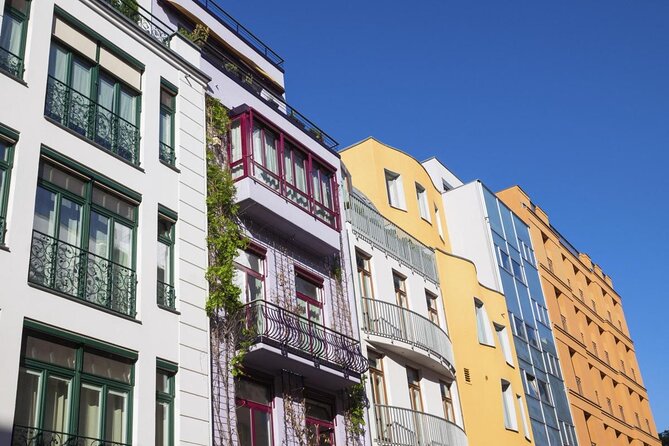
- East Berlin beyond the postcards: See typical communist-era apartment blocks and learn how daily life worked in Prenzlauer Berg.
- A look at the Stasi machine: Pass the enormous former Stasi headquarters and prison complex, with time to understand its role in East Germany.
- Old industry under modern Berlin: Follow traces of former slaughterhouses and breweries that shaped these districts.
- A surprisingly green route: Ride through parks and around Orankesee, Obersee, and Weissensee.
- A personal, compact group: The booking limit is eight people, allowing guides such as Katrin, Markus, or Ferenz to adjust the conversation.
- Good value for active sightseers: At $36.88, the price covers the bicycle, local guide, and about three and a half to four hours of touring.
Why this ride reaches a different Berlin
The best reason to book this tour is its subject. Central Berlin is packed with monuments that explain the state, the war, and reunification. This route spends more time asking a quieter question: what did Berlin feel like for people living ordinary lives in the eastern districts?
Prenzlauer Berg provides the clearest introduction. You will see apartment blocks tied to the former German Democratic Republic, or GDR, and hear about daily routines during the Cold War. That can mean more than simply looking at a preserved border crossing. Housing, streets, parks, and neighborhood design show how ideology reached into normal life.
The route also moves through places connected with slaughterhouses, breweries, and state institutions. These are not polished attractions. That is precisely their value. You get clues about work, food production, housing, surveillance, and recreation, rather than a steady parade of famous buildings.
A bicycle is well suited to this subject. The districts are spread out, but not so far apart that the ride becomes a test of endurance. You keep moving, see how one neighborhood gives way to another, and cover more ground than you would on foot. The route includes green stretches and what one review described as quiet shortcuts, which helps keep the four-hour outing from feeling like a city traffic exercise.
More bike days around Berlin:
- Berlin: Sights and Highlights Bike Tour with a Local Guide
★ 4.8 · 2,698 reviews - Berlin Highlights 3-Hour Bike Tour
★ 5.0 · 948 reviews - Berlin City Bike Tour with Beer Garden Stop
★ 5.0 · 917 reviews
Prenzlauer Berg and the texture of Cold War life
The first major section lasts about an hour in Prenzlauer Berg. That generous amount of time makes sense because this is where the tour sets up its main theme.
You will look at typical communist-era housing and hear how East Berlin’s residents lived during the Cold War. The point is not simply architectural style. Apartment blocks can reveal the priorities of the old system: practical housing, planned neighborhoods, and a clear difference between official ideals and personal experience.
This is also a good place to ask questions. Katrin, one of the guides associated with the tour, is described as accommodating and able to adjust the discussion to the group. Markus has also tailored the route for people who had already visited Berlin’s better-known historical sites. That flexibility matters if you know the basic timeline of the Berlin Wall and want more social detail.
Do not expect every stop to look dramatic. Some of the strongest material may come from ordinary streets and buildings. If you prefer grand memorials, you may find this opening section understated. If you want to understand the city beyond its monuments, it is a strong start.
The former Stasi complex and the cost of surveillance
The stop at the former Stasi headquarters and prison lasts only about five minutes according to the published schedule. Treat it as an orientation point rather than a museum visit.
The Stasi, East Germany’s state security service, operated a broad network of officers and informers. The headquarters represented the bureaucratic side of that system, while the prison represented its human cost. Seeing the scale of the former complex helps explain that surveillance was not a small police operation hidden in one office. It was a large state structure with many layers.
The tour does not include a ticket or a long indoor visit here. You will mainly pass the memorial area and hear the guide put the site into context. That keeps the bike route moving, but it also means you should not book this experience as a substitute for a full Stasi museum visit.
The short stop works best when you already have some interest in Cold War Berlin. A guide such as Markus or Katrin can connect the building to the wider story of informers, control, and everyday caution. The value comes from the explanation, not from spending a long time examining the exterior.
Ernst-Thälmann-Park and planned GDR living
Ernst-Thälmann-Park is a brief stop of about ten minutes. It combines a GDR-era park and housing area with a planetarium.
This is another place where the tour focuses on planning and daily life. The park and housing area show how the former East German state shaped public space and residential districts. The planetarium adds a cultural and educational angle, reminding you that life in the GDR was not only about political control. People also lived, studied, exercised, and spent leisure time within the system.
Because the stop is short, you will not have time for a full visit to the planetarium. Think of the site as a visual example and a conversation point. The guide can help you notice how housing, open areas, and public buildings fit together.
The brief pause also keeps the outing balanced. You are not standing at every location for half an hour. Instead, you get a series of useful pieces that make more sense when joined across the whole ride.
More history-led days in Berlin:
- Berlin: Natural History Museum Entrance Ticket
★ 4.6 · 3,382 reviews - Berlin: World Heritage Cruise to Potsdam
★ 4.5 · 1,435 reviews - Berlin Historical Highlights Walking Tour
★ 4.9 · 657 reviews - Berlin Private Complete History All Day Walking Tour
★ 5.0 · 474 reviews
Former slaughterhouses, breweries, and working Berlin
The route passes sites linked to former slaughterhouses and breweries. These places may not sound like headline attractions, but they help explain how Berlin worked as a city.
Industrial sites tell a different story from government buildings. They point to food supply, jobs, storage, transport, and the growth of working districts. When factories and slaughterhouses close or change use, the surrounding neighborhoods change with them. You may see little more than the sites or traces of their former purpose, so the guide’s commentary is important.
This is one of the tour’s more authentic elements because it avoids turning Berlin into a museum of famous events only. You get a sense of the city as a place where people produced goods, traveled to work, raised families, and lived with the consequences of political decisions.
The route is particularly useful for anyone who has already covered the central historical circuit. Instead of repeating the same explanation of the Wall, it adds the practical background that makes Berlin’s eastern districts easier to read.
The former border station at Platz des 9. November 1989
At Platz des 9. November 1989, the group stops for about fifteen minutes at a former border station and Berlin Wall site.
The date refers to November 9, 1989, when the Wall began to open. A former border point gives you a concrete setting for that dramatic change. The site is less about a famous viewpoint and more about how movement between East and West was controlled, checked, and eventually transformed.
Fifteen minutes is enough for an explanation and a look around, but not for a long memorial visit. You will get more from this stop if you have already seen one of Berlin’s larger Wall exhibitions or if you ask the guide how this crossing fit into the wider border system.
The benefit of reaching it by bicycle is that you see the site in relation to the neighborhoods around it. The Wall was not an isolated monument. It ran through streets where people lived, worked, and traveled every day.
Lakes and green routes in Orankesee, Obersee, and Weissensee
The eastern part of the ride becomes quieter and greener. Short stops at Orankesee and Obersee, followed by a longer visit around Weissensee, show a side of Berlin that many first-time visitors miss.
Orankesee is an inner-city lake, while Obersee is an artificial lake. Their presence adds variety after the heavier Cold War subjects. You may find these stops useful as visual breaks, but they are not long swimming or picnic periods. The scheduled time at each is about five minutes.
Weissensee receives about forty-five minutes, making it the main outdoor pause in this section. The district and its lake give the tour room to slow down. You will also pass Strandbad Weissensee, a lakeside bathing area, for about ten minutes.
These stops are not filler. They show how Berlin’s eastern districts include open space as well as dense housing and official buildings. The green stretches also make the ride feel less tiring than a route that stays on major urban roads.
Still, weather matters. A pleasant day will make the lakes and parks far more enjoyable. Smart-casual clothing is requested, but practical cycling clothes and comfortable shoes make more sense than dressing for a formal attraction. Since food and drinks are not included, carry what you need for the morning, especially if you are used to regular breaks.
A relaxed ride, not a race
The bicycle route is described as manageable, including for teenagers and students. The reviews also emphasize a relaxed pace and good bicycles. That makes the tour suitable for most people who are comfortable riding for several hours.
You should still be honest about your energy level. The tour lasts about three and a half hours in the detailed description, while the general duration is listed as approximately four hours. You will be on a bicycle for much of that time, with regular stops for explanation. Anyone who dislikes cycling, has difficulty riding for a sustained period, or wants a fully seated sightseeing experience should choose a bus or walking tour instead.
The small group limit of eight is a real advantage. You can hear the guide more easily, ask questions without holding up a large crowd, and get a route adjusted around what you have already seen. One guide, Ferenz, is praised for keeping the experience customer-focused, including running a tour for only two people. At the same time, the provider says a minimum number is required, so a very small booking is possible but not guaranteed in every case.
The guides are another strong part of the experience. Katrin is described as warm, informative, and flexible. Markus is noted for an easy, humorous manner and for adapting the historical focus. Ferenz is associated with a particularly personal approach. Guide assignments can vary, but the pattern is clear: this is meant to be conversational rather than a memorized speech delivered from the front of a large group.
Price, meeting point, and practical value
At $36.88 per person, this is a solid-value tour if you want both transportation and interpretation. The fee includes the bicycle, driver or local guide, and the guided route. It does not include food, drinks, hotel pickup, or drop-off.
You start at Bornholmer Str. 75A in Berlin at 10:00 am and return to the same meeting point. The location is near public transportation, which makes it easier to reach without arranging a private transfer. Plan your morning around arriving at the meeting point rather than expecting collection from your hotel.
The price looks especially fair for visitors who have already seen central Berlin and want something different without paying for several separate museum entries. Every stop listed has free admission, so you are paying mainly for the bicycle, planning, route, and guide’s historical explanation.
The main limitation is that the value depends on your interests. If you want entry to museums, long time at monuments, or a guided tour of the Brandenburg Gate and Reichstag, your money is better spent elsewhere. If you value local districts, Cold War context, and a moving outdoor format, the cost is modest for nearly four hours.
Free cancellation is available if you cancel at least 24 hours before the 10:00 am start time. Changes or cancellations inside that window are not refunded, and the activity can be changed or refunded if the required minimum number is not reached.
Who should book this East Berlin bike tour?
I would choose this ride after spending time with Berlin’s central sights, especially if I wanted to understand the city’s eastern neighborhoods rather than repeat the standard route.
It suits:
- First-time visitors who want social and Cold War context beyond major memorials
- Repeat visitors who have already seen the main tourist sites
- Couples, families with older children, and small groups comfortable on bicycles
- People who enjoy parks, lakes, and neighborhood streets as much as formal attractions
- Anyone who prefers a guide who can answer questions and adjust the conversation
It is less suitable for anyone seeking a museum-heavy morning, a short and effortless outing, or a route built around famous landmarks. Children must be accompanied by an adult, and the tour is capped at eight people per booking.
Should you book it?
Book this tour if you want ordinary East Berlin, not just the Berlin of famous photographs. Its strongest moments come from the combination of planned housing, former state-security sites, industrial traces, Wall history, and lakeside districts. The bicycle links those subjects in a way that makes the city’s eastern half easier to understand.
Skip it if your Berlin schedule is short and you have not yet visited the major central sights. For most people who have already covered those basics, though, this is an inexpensive, active, and thoughtful way to see a less familiar side of the capital.
FAQ
How long does the bike tour last?
The experience lasts approximately four hours, with the detailed tour duration described as about three and a half hours.
What time does the tour start?
The tour starts at 10:00 am.
Where does the tour begin?
You meet at Bornholmer Str. 75A, 10439 Berlin, Germany.
Where does the tour end?
The activity ends back at the meeting point.
Is bicycle use included?
Yes. Use of a bicycle is included in the tour price.
How many people can join the tour?
The maximum is eight travelers per booking.
Are food and drinks included?
No. Food and drinks are not included.
Are hotel pickup and drop-off provided?
No. Hotel pickup and drop-off are not included.
Can I cancel for a full refund?
Yes, if you cancel at least 24 hours before the experience start time. Cancellations made less than 24 hours before the start are not refunded.
More Half-Day in Berlin
- Discover Berlin Half-Day Walking Tour
★ 5.0 · 9,624 reviews - Berlin Third Reich Sites: Half-Day Walking Tour
★ 5.0 · 835 reviews - Potsdam Half-Day Walking Tour from Berlin
★ 4.5 · 398 reviews - Berlin Private Half-Day Walking Tour: Discover the German Capital’s History
★ 5.0 · 244 reviews
Just added around Berlin
- eSIM for Germany and 34 European Countries★ 4.5 · 16 reviews
- Your ticket to The Wall Museum Berlin★ 3.0 · 60 reviews
- Walking on the Wall: 3-Hour Tour in Berlin★ 4.5 · 34 reviews
- Rickshaw Tours Berlin – Groups of up to 16 people with several rickshaws★ 4.0 · 97 reviews
- Warnemuende Shore Excursion: Private Berlin Tour★ 4.5 · 27 reviews
- Love and War in Berlin: Self-Guided Story Puzzle Walk★ 5.0 · 7 reviews
- Warnemuende Shore Excursion: Berlin Private Sightseeing Tour from Rostock★ 5.0 · 4 reviews
- Cold War Berlin – Private Live Virtual Experience★ 5.0 · 4 reviews
Berlin Tours, compared.
Reichstag, Dome and Government District Guided Tour
Read our review →
1-Hour City Tour by Boat with Guaranteed Seating
Read our review →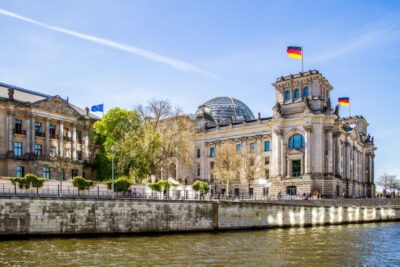

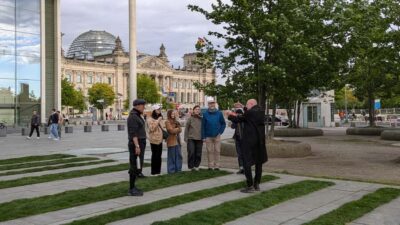
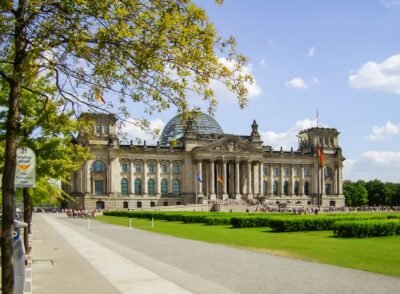
Reichstag, Plenary Chamber, Cupola & Government Tour
Read our review →
Browse the lists this tour appears in