
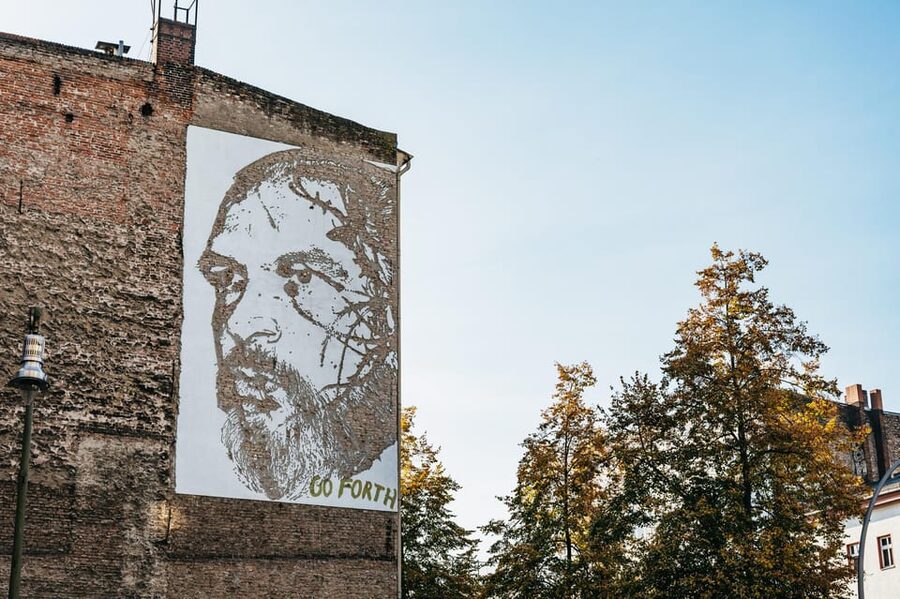
Review · BERLIN TOURS
Berlin: Gay Berlin Out in Schöneberg Walking Tour
Berlin’s queer history comes into sharp focus around Nollendorfplatz, where clubs, cafés, writers, activists, and performers helped shape one of Europe’s best-known gay neighborhoods. This 2.5-hour walk follows that story from the freer years of the 1920s through Nazi persecution, postwar change, and the district’s return as a West Berlin LGBTQIA+ center.
I like the way the tour connects famous names and lost venues to ordinary streets, especially the former Nationalhof, El Dorado’s site on Motzstraße, and Christopher Isherwood’s former home. I also like Tobias’s use of archive pictures, personal stories, and humor. The main thing to consider is the weather: you are outside for most of the tour, and one past participant felt the ending was rushed. The café suggested afterward has also received one poor service report.
Key points at a glance
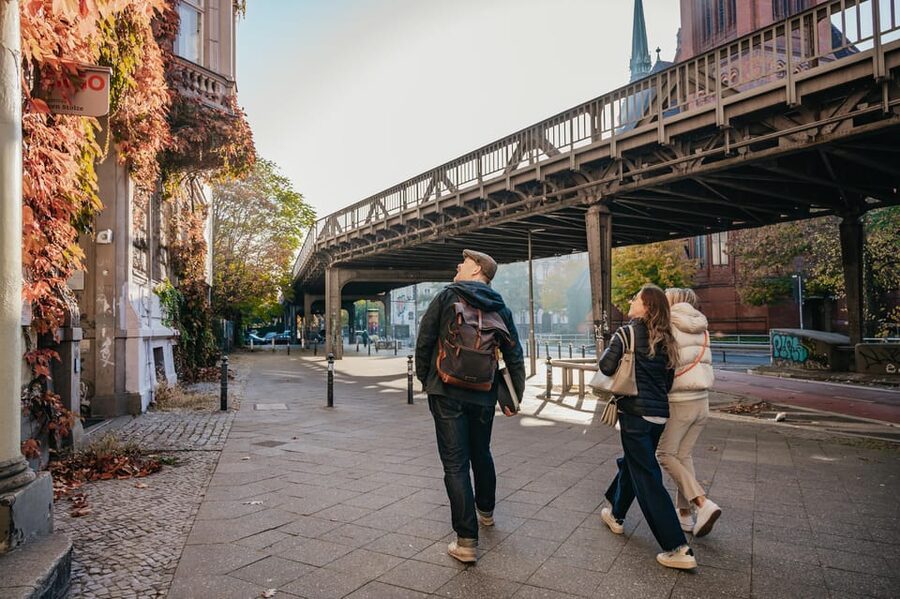
- 1920s Berlin brought to life: Learn how Schöneberg became a center of gay life and early gay rights activism before the Nazi takeover.
- Landmarks with stories: Visit the former sites of the Nationalhof, Hollandais club, Kleist Casino, and El Dorado cabaret.
- Christopher Isherwood connection: Stop outside the novelist’s former home on Nollendorfstraße and explore his place in queer cultural history.
- More than gay male history: Walk through the lesbian quarter on Schwerin Straße and hear stories involving lesbian, trans, intersex, and gender-nonconforming people.
- A personal, lively guide: Tobias leads in English or German, using archive material, wit, and anecdotes to make the past easier to grasp.
- Good value for a short city tour: At $23 per person, you get a focused 2.5-hour walk with a live guide, but no food or drinks.
Why Schöneberg matters to Berlin’s queer story
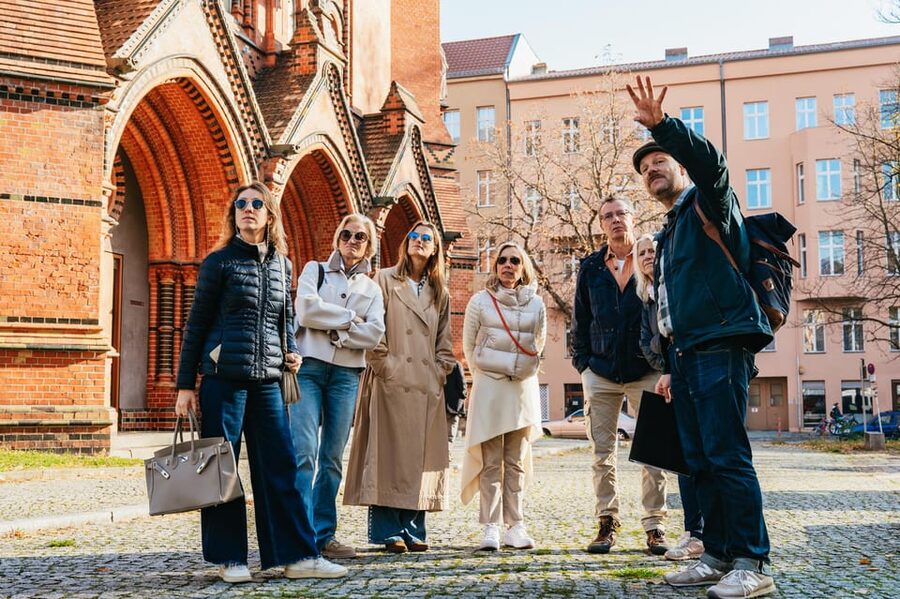
Schöneberg is not simply a district with a few LGBTQIA+ bars. It is a place where social life, political action, literature, nightlife, and public debate met over many decades.
The walk centers on Nollendorfplatz and nearby streets. That makes the tour easy to picture on a map, but the subject reaches far beyond a collection of addresses. You learn how a local community formed, how it was targeted, and how it later rebuilt itself.
The most important period is the time between the end of World War I and the early 1930s. Berlin’s interwar years are often remembered for cabaret and nightlife, but this tour gives that era a clearer queer focus. You hear about clubs, meeting places, performers, writers, and activists who helped create a public gay culture.
That openness was fragile. The Nazi accession ended the district’s earlier freedom and brought persecution. The tour does not treat the past as a simple story of progress. It shows how a district can be both a place of liberation and a place marked by loss.
For me, that context is the chief reason to book. You are not just looking at old buildings. You are learning why these streets mattered to people who needed places to meet, organize, express themselves, and find community.
More walking tours in Berlin:
- Discover Berlin Half-Day Walking Tour
★ 5.0 · 9,624 reviews - Berlin: Third Reich and Cold War 2 Hour Walking Tour
★ 4.9 · 6,830 reviews - Berlin: Discover Berlin Walking Tour
★ 4.9 · 5,998 reviews
Nollendorfplatz, the natural starting point
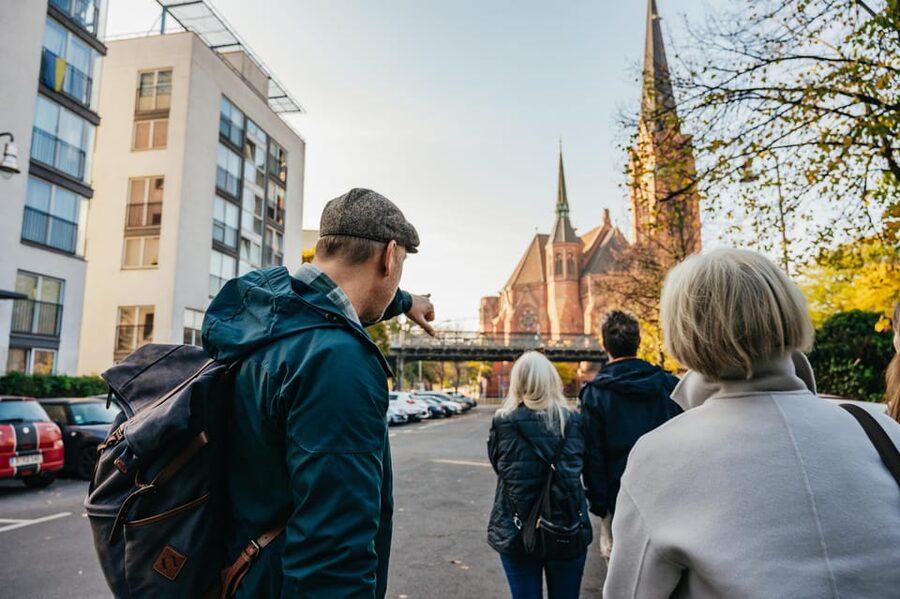
Nollendorfplatz is the right area for this subject because it links several parts of Schöneberg’s queer story. From here, the tour moves through streets that once held clubs and gathering places, then toward locations connected with writers, activists, and the modern LGBTQIA+ scene.
Do not expect a museum-style tour with preserved interiors at every stop. Many of the places you visit are former sites, street corners, or buildings whose meaning comes through the guide’s explanation. That is also the point. Berlin’s queer past is often hidden in plain sight.
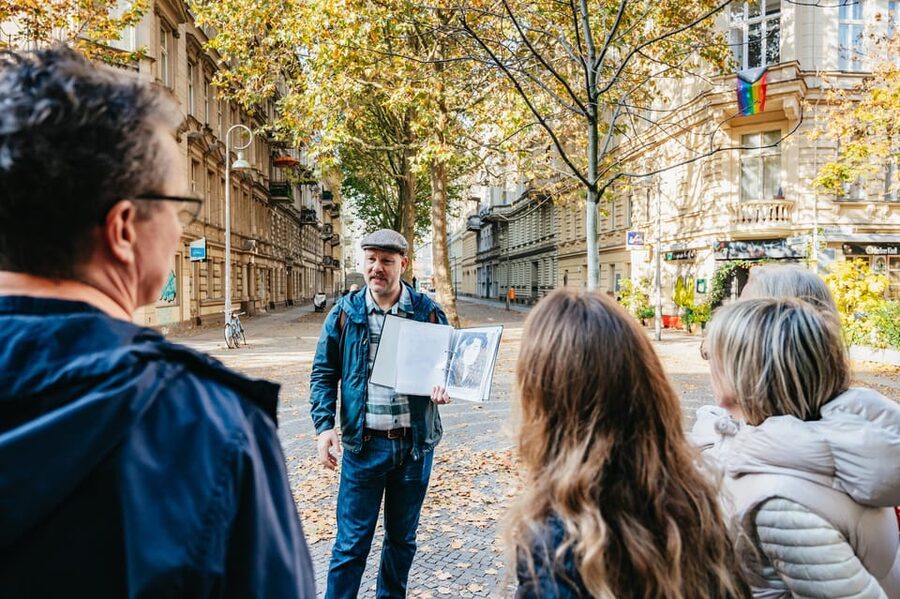
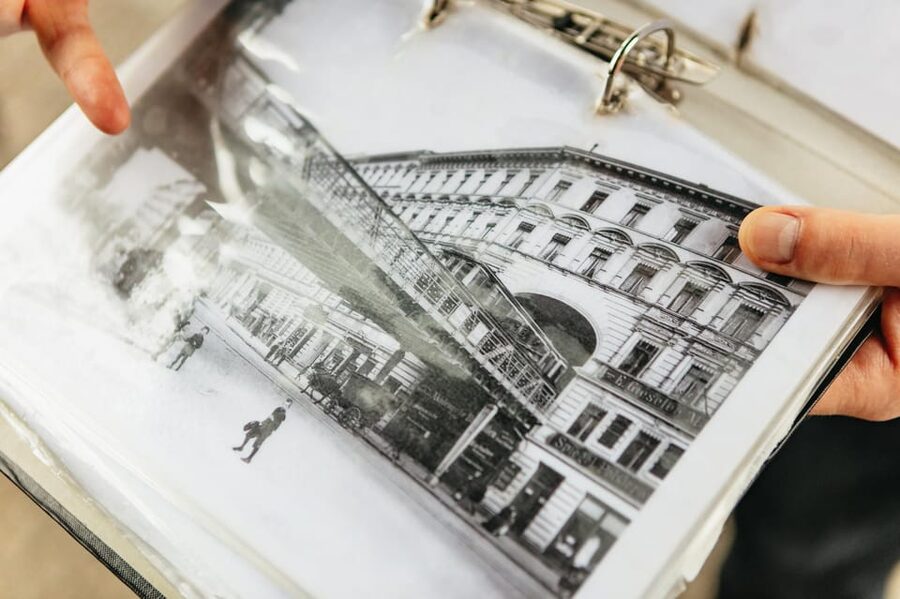
Tobias makes the streets easier to read. He brings archive images and text, allowing you to compare the present-day setting with earlier photographs and accounts. This is especially useful when a famous club no longer exists or when a modern building gives little visual clue about its former role.
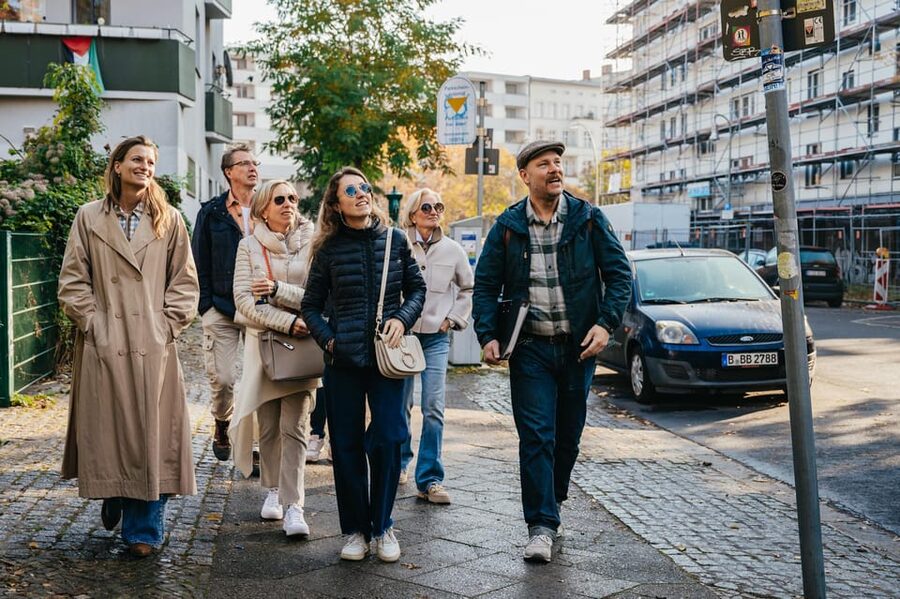
The pace includes chances to stop, listen, ask questions, and take in the architecture. You are walking for 2.5 hours, but the experience is not a nonstop march. Previous participants have found time for comfort stops, and Tobias has adjusted the walk in difficult weather.
The Nationalhof and the early rights movement
The former Nationalhof is one of the tour’s key stops. It was a major meeting place for Berlin’s gay community and a central site in the gay rights movement of the 1920s.
This is where the tour moves from nightlife into organized activism. You learn that queer life in Berlin was not only about cabaret, parties, or private relationships. People were also building networks, arguing for legal change, and creating institutions that gave the community a public voice.
The site may not look dramatic today. That can make the stop more powerful, not less. A guide’s story helps you understand how an ordinary address could once carry great importance.
Tobias is particularly strong when explaining the people behind the movement. He puts names and personalities into the story instead of reducing the period to dates. His approach gives you a sense of the choices people made, the risks they took, and the social world they helped build.
Some of the material is difficult, especially when the tour reaches the destruction of this earlier community under the Nazis. The subject is handled as part of the larger historical story, not as a quick aside. Tobias has also been praised for sensitivity when discussing painful subjects.
Hollandais, Kleist Casino, and lost meeting places
The former Hollandais club and Kleist Casino show how many different kinds of spaces once served Berlin’s queer community. These were not interchangeable venues. Each place had its own role, atmosphere, and audience.
As you move between them, the tour helps you imagine how a district works as a social network. One venue might be known for entertainment, another for meeting people, and another for political or cultural exchange. The addresses matter because they show that queer life was spread across the neighborhood rather than confined to one building.
This part rewards you if you enjoy city history based on small details. You might pass a site without noticing anything unusual, then discover that it once played a part in a much larger story. Tobias’s archive material is useful here, since photographs and text can reveal what the street looked like during the interwar years.
A practical point: take notes if a name or venue catches your interest. The tour covers a lot of people and places, and you may want to research them later. Several participants have found the walk prompted further reading, which is a good sign for anyone who wants more than a quick sightseeing circuit.
A few more Berlin half-days to weigh up
- Queer Berlin Tour: Birthplace of LGBTQ+ Movements
★ 5.0 · 6 reviews - Berlin: BKA Theater “Operetta for two gay tenors”
★ 4.0 · 4 reviews
Motzstraße and the El Dorado cabaret
Motzstraße brings the nightlife side of the story into view. The tour stops at the former location of El Dorado, one of the best-known cabaret clubs associated with Berlin’s queer culture.
El Dorado is useful for understanding the role of performance. Cabaret gave people a place to play with gender, identity, style, and public image. It also drew a wider audience, making queer culture visible within the city’s entertainment scene.
Again, you are visiting a former site rather than entering a preserved club. The value lies in the contrast between the ordinary street you see now and the reputation the venue once carried. Tobias explains the characters and social world connected with the club, helping you picture the performances and people who made the place famous.
This is one of the more entertaining sections of the walk, but it should not be mistaken for a light nightlife tour. The cabaret story sits beside the political and social pressures of the period. The tour shows both the fun and the vulnerability of a community that had gained public visibility without gaining lasting security.
Christopher Isherwood’s Nollendorfstraße
The stop outside Christopher Isherwood’s former home on Nollendorfstraße adds a literary angle. Isherwood’s writing helped bring Berlin’s queer world to a broad audience, and his work later became important to the Gay Liberation movement.
You do not need to be an Isherwood expert to appreciate this stop. Tobias explains how the novelist’s connection to Schöneberg fits into the district’s wider story. The address becomes a useful link between personal experience, literature, and the way outsiders came to understand Berlin.
I like this part because it keeps the tour from becoming only a list of clubs and political groups. A neighborhood is also shaped by the stories people tell about it. Isherwood’s work helped preserve a particular view of Berlin, while the walking tour adds voices and places that literature alone cannot provide.
The stop is also a reminder to keep some historical distance. No single writer can represent every person in Berlin’s queer community. The tour broadens the picture by moving on to activists, performers, lesbian history, and people whose identities have often been left out of older accounts.
From Nazi repression to postwar change
The walk covers a difficult break in the district’s story when the Nazi Party came to power in the early 1930s. The gay clubs and meeting places associated with the earlier period could not continue as before, and the community faced persecution.
This section matters because it prevents the 1920s from becoming a postcard version of bohemian Berlin. The district’s freedoms were real, but they were not permanent. When political power changed, the people and institutions that had made queer public life possible were attacked.
The tour then moves toward the later revival of Schöneberg. From the end of the 1960s, the area began to bloom again as West Berlin’s only gay district. That change reflects a different political and social era, with new forms of activism, community life, and public identity.
The contrast between the two periods gives the tour its shape. You see an early movement, its destruction, and a later rebuilding. That long view helps you understand why today’s cafés, shops, bars, and community spaces matter. They are part of an ongoing story, not a sudden addition to Berlin’s nightlife.
Schwerin Straße and the lesbian quarter
The walk also includes the lesbian quarter around Schwerin Straße. This is an important feature, since queer history tours can too easily focus on gay men and famous male writers.
Here, the emphasis shifts toward women’s networks and lesbian life in Schöneberg. The setting reinforces a point made throughout the tour: communities are formed through many kinds of relationships, meeting places, and shared work.
The route also includes trans, intersex, and gender-nonconforming stories. That wider scope gives the walk a more useful picture of queer Berlin across time. You will not get only a narrow account of one identity or one political campaign.
This section may be especially valuable if you want a tour that treats LGBTQIA+ history as a broad subject. It also gives you more reason to pay attention to the streets themselves. The tour connects architecture, street art, cafés, shops, and local life with the people who have used this part of Berlin.
Eisenacher Straße and Schöneberg today
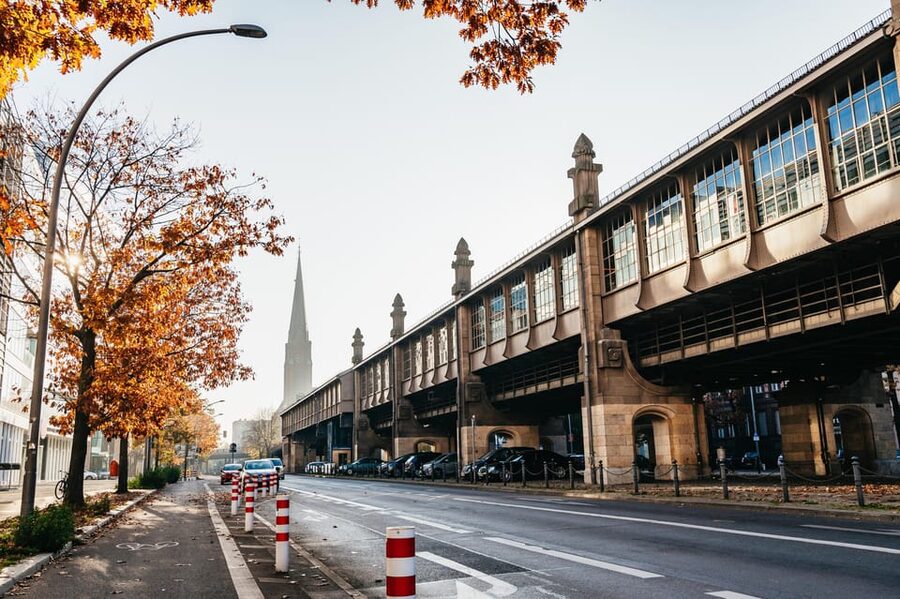
Eisenacher Straße reflects the district’s continuing LGBTQIA+ life. The tour uses the street to connect the past with the present, showing how the neighborhood remains associated with queer community and culture.
You should not expect every modern business or piece of street art to receive a long explanation. The focus remains historical, but Tobias also points out present-day features that help you see how the area functions now.
This blend is one of the walk’s strengths. You can learn about a lost club, then look at a current street scene and think about what has changed. The neighborhood is not frozen in the 1920s, and it is not presented as a museum. It is a living part of Berlin with a past that still shapes its identity.
The route ends with a sense of continuity rather than a neat finish. Depending on your guide and the day, you may receive a suggestion for a nearby queer café or bookshop. One caution: a café recommendation received one poor service report, so treat it as an optional idea rather than part of the tour itself.
Tobias as your guide
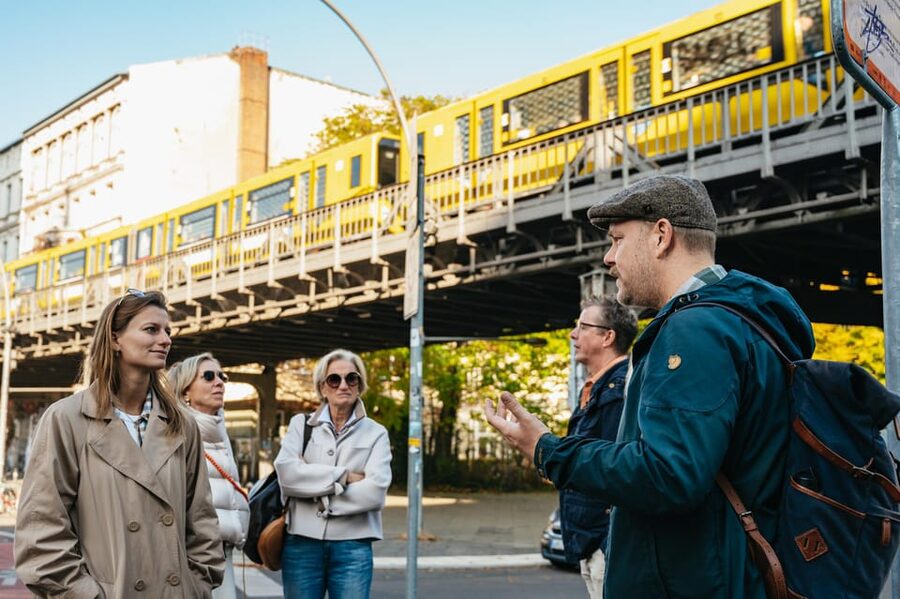
Tobias is the central reason this tour works so well. He leads in English and German, and his style combines careful research with humor, personal anecdotes, and an easy willingness to answer questions.
He has been praised for bringing historical characters to life without turning the walk into a lecture. That matters during a subject with many names, dates, and former venues. A dry presentation could make the material feel distant. Tobias keeps it human.
His personal connection to the community also adds another viewpoint. He shares stories about himself and his husband, but the tour remains focused on the history of the district. The personal touches make the walk warmer without replacing the research.
He has also shown flexibility in difficult conditions. People have taken the tour in cold rain, snow, and freezing weather, and he has adapted the pace and included comfort stops. Still, you should dress for a long outdoor walk. Weather can affect how much you enjoy any walking tour, especially in winter.
Is $23 a fair price?
At $23 per person, the tour offers solid value if you care about Berlin’s queer history. You get a live guide, a focused route, archive images, and 2.5 hours of explanation. Comparable value comes from the detail and interpretation, not from the number of attractions you enter.
There are no food or drinks included, and this is not a ticketed attraction tour. You are paying for access to a well-researched story and for help seeing meaning in places that may otherwise look ordinary.
The price is easiest to justify if you are visiting Schöneberg for the first time or want a clear introduction before exploring the neighborhood on your own. It is also a useful choice early in your Berlin stay, since the guide may point out streets, cafés, shops, and places you can revisit later.
The tour offers free cancellation up to 24 hours before departure and a reserve-now, pay-later option. The meeting point can vary by booking, so check your confirmation carefully. Private groups can arrange special dates, times, and meeting points by telephone.
Who should book this walk?
I would choose this tour if you enjoy social history, literary connections, and neighborhoods shaped by community life. You do not need to identify as LGBTQIA+ to find value in it. The walk offers a clear way to understand Berlin’s political and cultural past.
It suits solo visitors, couples, and small groups. The guide’s conversational style makes it easy to ask questions, and the route has enough pauses to avoid feeling like a race.
You should think twice if you want indoor sights, preserved club interiors, or a general overview of Berlin. This is a focused history walk around Schöneberg, and most of the experience happens on city streets.
It is wheelchair accessible, though the meeting point and route details should be confirmed when booking. The activity lasts 2.5 hours, so comfortable shoes and weather-ready clothing are sensible choices.
Final verdict: book it for the stories behind the streets
Book the Gay Berlin Out in Schöneberg Walking Tour if you want to understand why Nollendorfplatz and its surrounding streets matter. The strongest parts are the early gay rights movement, the former Nationalhof and El Dorado sites, Isherwood’s connection, and the inclusion of lesbian, trans, intersex, and gender-nonconforming stories.
Tobias brings warmth, humor, archive material, and serious research to a subject that deserves all four. The only real drawbacks are the outdoor format, the possibility of a hurried ending, and the fact that the recommended café is not part of the paid experience.
At $23, this is a smart, focused way to spend an afternoon in Berlin. You leave with a better understanding of the people and places behind the modern district, then you can walk Schöneberg again with much sharper eyes.
FAQ
How long does the Gay Berlin Out in Schöneberg Walking Tour last?
The tour lasts 2.5 hours.
How much does the tour cost?
The listed price is $23 per person.
What language is the tour offered in?
The live guide offers the tour in English or German.
Who guides the tour?
Tobias is the guide named in the available tour information and participant feedback. Guide assignment may depend on the booking.
What places does the tour visit?
The walk explores the area around Nollendorfplatz, including the former sites of the Nationalhof, Hollandais club, Kleist Casino, and El Dorado cabaret. It also stops at Christopher Isherwood’s former home on Nollendorfstraße, the lesbian quarter on Schwerin Straße, and Eisenacher Straße.
Does the tour include food or drinks?
No. Food and drinks are not included.
Is the tour wheelchair accessible?
Yes, the activity is listed as wheelchair accessible.
Can I cancel the tour for a refund?
You can cancel up to 24 hours in advance for a full refund.
Can private groups request a different time or meeting point?
Yes. Special dates, times, and meeting points can be arranged for groups according to their wishes. You need to provide those details by telephone.
Just added around Berlin
- From Berlin: Gardens & Palaces of Potsdam Bike Tour★ 5.0 · 61 reviews
- Berlin: Battle for Seelow Heights WW2 tour -Clash of Titans★ 5.0 · 27 reviews
- From Berlin: Historical Gems of Potsdam Private Day Trip★ 4.4 · 4 reviews
- Berlin: Französischer Dom 360° Panorama & Crémant to go★ 3.9 · 5 reviews
- Explore Berlin Tour: History and Highlights★ 4.7 · 5 reviews
- Berlin: Evening Yacht Cruise with Aperitif & Dinner Upgrade★ 4.6 · 178 reviews
- Berlin: Expats in Berlin Comedy Show Ticket★ 4.7 · 182 reviews
- Berlin: The Epic Comedy Club Friday Night Showcase★ 4.8 · 28 reviews
Berlin Tours, compared.

Reichstag, Dome and Government District Guided Tour
Read our review →
1-Hour City Tour by Boat with Guaranteed Seating
Read our review →
Reichstag, Plenary Chamber, Cupola & Government Tour
Read our review →
Browse the lists this tour appears in