

Review · BERLIN TOURS
Street Art & Berlin Gay, Queer, Trans History + Free Gay Map
Berlin’s street art and queer past meet on this compact walk through Schöneberg, one of the city’s most important LGBTQ neighborhoods. With guide Gali Jaffe, a trans woman and archaeology specialist, you’ll connect colorful murals with the people and places that shaped Berlin’s queer life.
I like the small group of no more than 10 and the personal approach. I also like the mix of outdoor art, a distinctive church, Urban Nation Gallery, and major historical names such as Christopher Isherwood and Magnus Hirschfeld. The main drawback is pace: two hours is enough for an introduction, not a full study of Berlin’s queer past.
Key points at a glance
- Street art before the history walk: Start with colorful public art in less visited parts of Berlin.
- A personal guide: Gali Jaffe leads in English and adapts the walk to the group’s interests.
- Urban Nation Gallery: Spend about 20 minutes at this street-art gallery, with some free time to look around.
- Schöneberg landmarks: See the former home of Christopher Isherwood and the site of the El Dorado club.
- Magnus Hirschfeld’s legacy: Learn about his Institute for the Science of Sexuality, an important early center for sexology and queer research.
- Practical format: The tour lasts two hours, returns to Wittenbergplatz, and includes a free Berlin Gay Map.
Why this walk gives Berlin a different starting point

Many first visits to Berlin focus on the Brandenburg Gate, Museum Island, Checkpoint Charlie, and the remains of the Wall. Those places matter, but they do not explain the city’s queer identity or its street-level creative life. This tour takes a different route.
You begin at Wittenbergplatz, in front of the KaDeWe department store, then use public transport for a short five-minute ride. From there, the tour moves through Schöneberg on foot. That shift matters: you are not simply looking at famous monuments. You are following a neighborhood story through streets, buildings, art, and remembered meeting places.
The tour also joins two subjects that do not always appear together. Street art gives you an immediate sense of Berlin’s visual culture. The queer and trans history adds the people, institutions, and social changes behind the neighborhood. I like that balance. It keeps the experience light in tone without treating the past as a decorative extra.
Gali Jaffe’s role is another important part of the experience. She is described as a trans woman guide, and the tour is designed around LGBTQ history and culture rather than adding one brief mention to a general city walk. If you want a guide who can discuss queer and trans subjects directly, this format is more focused than a standard sightseeing tour.
More street art walks in Berlin:
- Berlin: City Street Art Guided Walking Tour
★ 4.8 · 886 reviews - Berlin: 3-Hour Street Art Tour
★ 4.7 · 778 reviews - Berlin Street Art Walking Tour – Off The Grid
★ 5.0 · 270 reviews
Starting at Wittenbergplatz and moving into Schöneberg
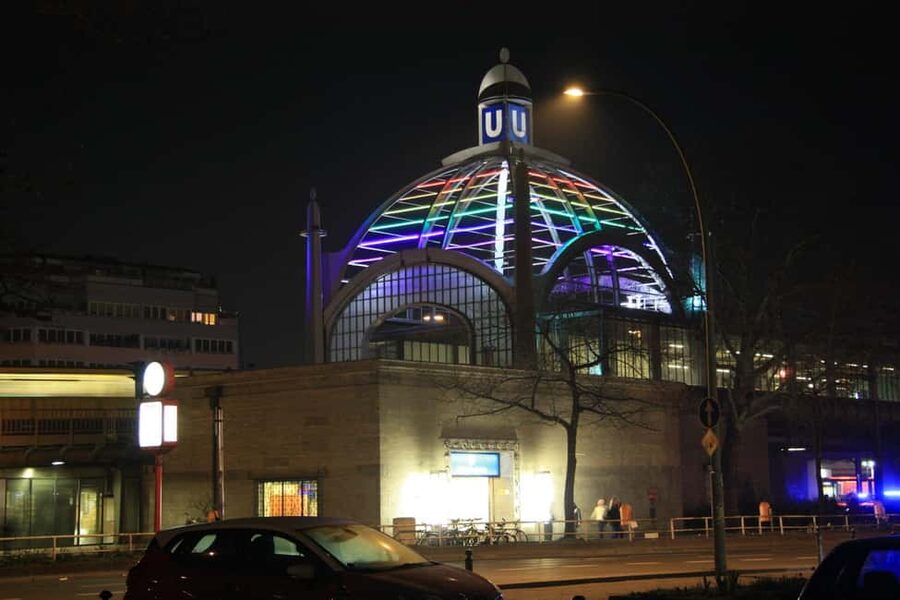
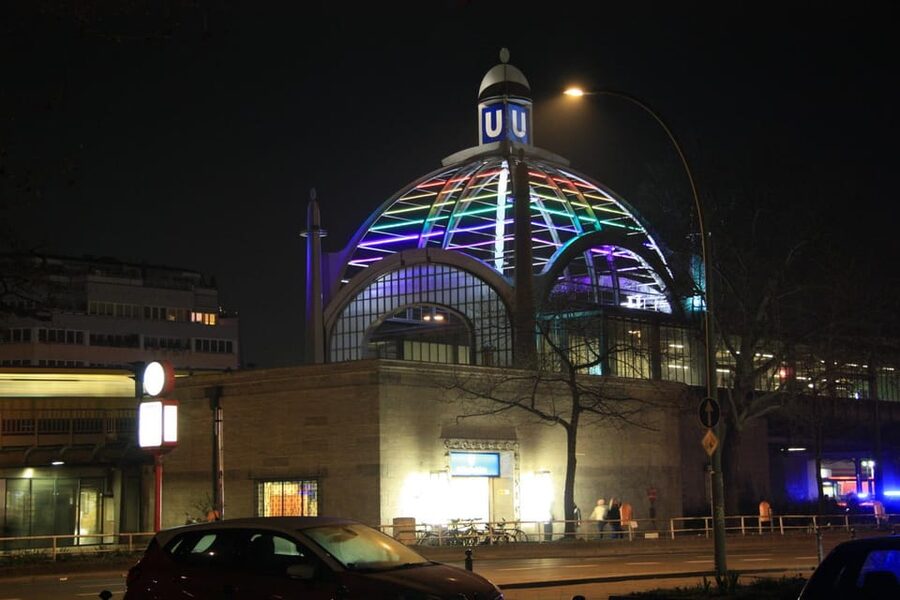
The meeting point is easy to identify: the entrance to the Wittenbergplatz Underground Station, directly in front of KaDeWe. This is a useful place to begin because the group can meet near a major public transport point instead of searching for a small street address.
Bring a valid public transport ticket. The tour includes a short ride of about five minutes, but that ticket is not included in the price. The activity begins and ends at Wittenbergplatz, so you do not need to arrange a transfer from a distant part of the city.
Once you reach Schöneberg, expect about 40 minutes of guided touring before the Urban Nation stop. The exact street-art works can vary, and the supplied details do not promise a fixed mural list. That is worth keeping in mind if you are booking because of one particular artist or wall.
What you can count on is a walk through colorful street art and graffiti in areas that see less attention than central Berlin. I like this opening because it gives you something to look at right away. It also lets Gali set the tone before the tour turns toward more serious historical subjects.
The first section is likely best for people who enjoy seeing how Berlin uses walls, facades, and public spaces as places for expression. It is not presented as a technical art lecture, so you should not expect a full course in mural styles or graffiti history. The value is in seeing the art in the city and then connecting it to the neighborhoods around you.
The unusual church and the art stop at Urban Nation
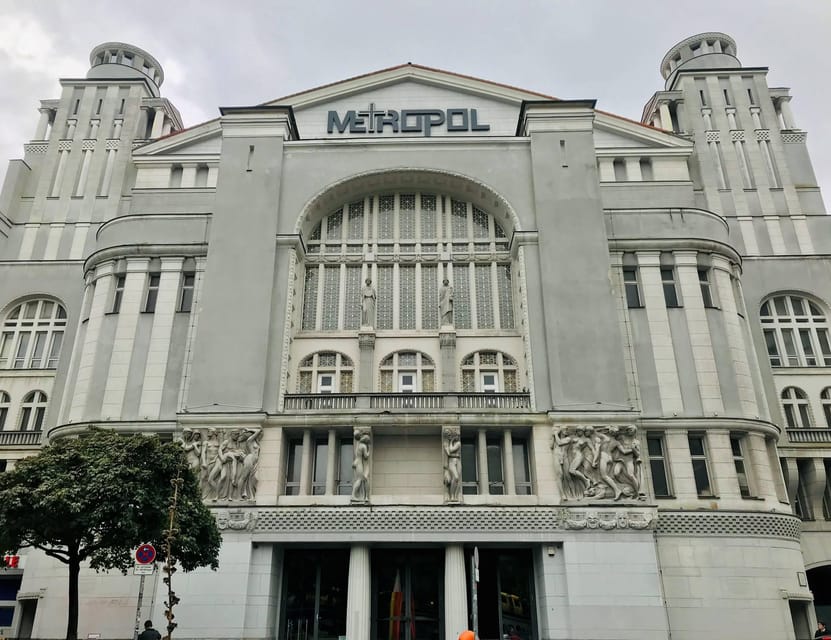
The route includes a stop at what is described as the most unique and interesting church in Berlin. The information does not name the church or explain its design, so I would not book this part expecting a specific architectural landmark. Instead, treat it as one of the walk’s surprises, with Gali explaining why it matters to the route.
The Urban Nation Gallery follows, with about 20 minutes for a guided visit and free time. This is a short stop, so you will get an introduction rather than an exhaustive gallery visit. That limitation is also part of the appeal. The gallery breaks up the outdoor walk and gives you a place to look at street art in a more formal setting.
If you have already planned a long visit to Urban Nation, this tour will not replace it. If you have never heard of the gallery or want a quick orientation, the stop can help you decide if you should return on your own. The combination of guide commentary and free time is useful because you are not required to move through every display as one tight group.
I especially like the way this section keeps the tour from becoming a simple list of historic addresses. You get public art, a church, and an art gallery before the walk turns more fully toward Schöneberg’s queer past.
Christopher Isherwood, El Dorado, and the Nollendorf neighborhood
After Urban Nation, the group strolls through Nollendorf and nearby Schöneberg for about 30 minutes. This is the part most closely tied to Berlin’s queer cultural memory.
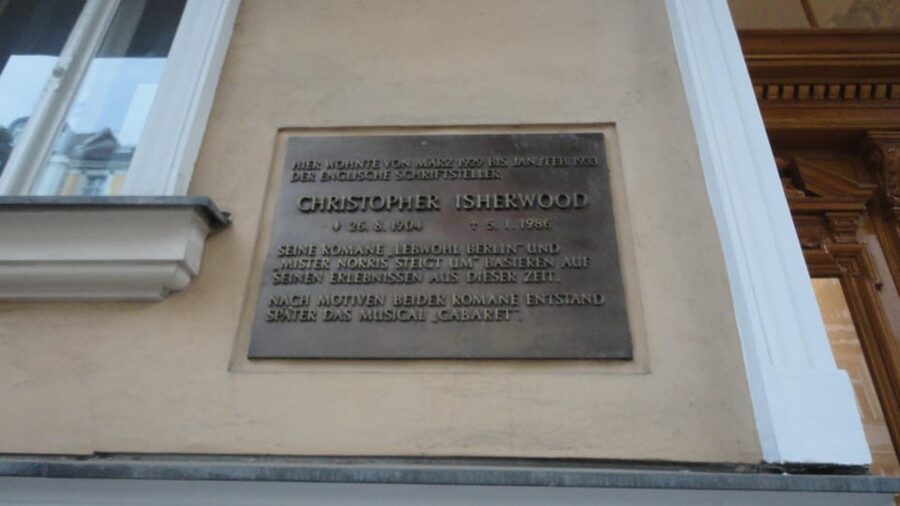
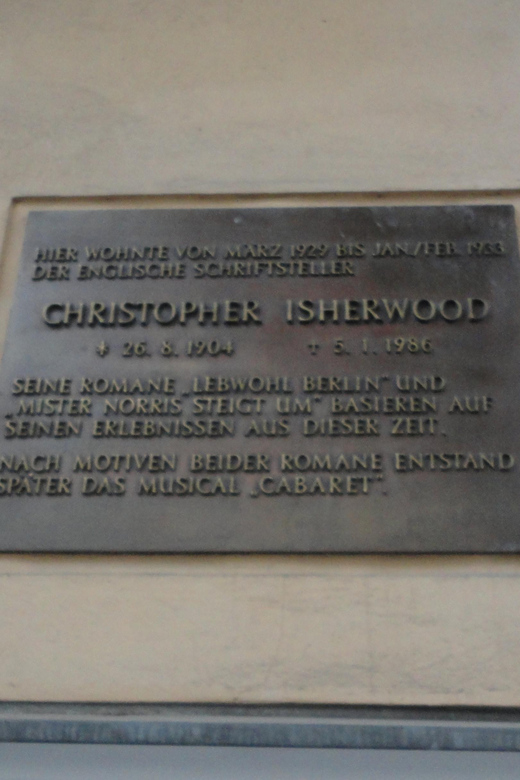
You will see the house of Christopher Isherwood. Isherwood’s connection gives the neighborhood a literary angle, and his name helps place Berlin’s queer life within the wider world of art and writing. The tour does not promise entry into the building, so think of this as a location-based story. The address matters because of the person who lived there and the life associated with the neighborhood.
The route also includes the location of the famous El Dorado club. You should expect to learn about the site and its place in Berlin’s past, not necessarily see a functioning club. Former venues can be easy to miss when you walk by alone. A guide turns an ordinary-looking address into a point of reference.
This is one of the strongest reasons to take the tour rather than explore the neighborhood with a map alone. The buildings and streets may not explain themselves. Gali supplies the connections, helping you see how queer social life, artistic circles, and public memory overlap in Schöneberg.
The 30-minute timing means the discussion has to stay focused. You will not cover every club, writer, political group, or local institution. That is a fair trade for a two-hour activity, but readers with a strong interest in LGBTQ history may want to treat this tour as a beginning and use the free map for further exploring.
More history-led days in Berlin:
- Berlin: Natural History Museum Entrance Ticket
★ 4.6 · 3,382 reviews - Berlin: World Heritage Cruise to Potsdam
★ 4.5 · 1,435 reviews - Berlin Historical Highlights Walking Tour
★ 4.9 · 657 reviews - Berlin Private Complete History All Day Walking Tour
★ 5.0 · 474 reviews
Magnus Hirschfeld and the Institute for the Science of Sexuality

The tour also discusses Magnus Hirschfeld and his Institute for the Science of Sexuality. This is a major subject because Hirschfeld’s work reached beyond nightlife and social venues. The institute was world famous and described as the first of its kind, giving the tour a chance to explain the role of research, advocacy, and medical thinking in queer history.
You will not simply be visiting a museum devoted to Hirschfeld. The experience is a walking conversation, and the institute is part of the wider story told through places in Berlin. That format can make the subject easier to follow because it ties names and ideas to the city around you.
I appreciate that the tour includes transgender history as well as gay and queer history. The description does not promise a complete account of every trans figure or movement, so you should not expect that level of detail in two hours. Still, having a trans woman guide lead a tour that includes Hirschfeld’s work gives the subject a direct and relevant point of view.
This section may be the most meaningful for you if you want historical context rather than only a list of nightlife sites. It also gives the walk more weight. Street art and colorful neighborhoods draw you in, while Hirschfeld and the institute show how Berlin’s queer past included organized study and public debate.
A small group makes the history easier to discuss
The group is limited to 10 people. That is a good size for an urban walk. You should be able to hear the guide without standing in a large crowd, and there is a better chance to ask a question when the group reaches a historic address or gallery stop.
The activity is described as a personal tour, and this is supported by the way Gali has handled previous groups. She has adapted the content to the interests of the people on the walk, and one account describes the experience as especially engaging because of that personal approach. Another mentions her warmth and insight.
Those comments point to the tour’s strongest feature: not simply the number of facts, but the way the guide connects those facts to the group. That can make a real difference with a subject that includes sensitive personal and political history.
You should still keep your expectations sensible. A personal tour does not mean a private tour. Other people will be with you, and the pace must work for the group. The small size helps, but it cannot turn a two-hour walk into a custom full-day study.
The experience is in English only. It is suitable for people aged 16 and older, and one account specifically describes a 16-year-old enjoying the tour with her mother. The tone appears accessible to older teenagers, adults, and people who want a thoughtful cultural activity without the formality of a lecture.
What the two-hour schedule really allows

The total duration is two hours. The listed timing includes a five-minute public transport ride, about 40 minutes in Schöneberg, 20 minutes at Urban Nation, another 30 minutes walking through Schöneberg, and a second five-minute transport segment back to Wittenbergplatz.
That leaves little room for long detours or extended gallery time. The schedule works best if you want a clear introduction that fits neatly into a morning or afternoon. You can learn the basic story, see several types of place, and receive a free Berlin Gay Map for later use.
I would not choose this activity if your main goal is a slow photography walk or a full museum visit. The tour moves between subjects and locations. Street art, the church, Urban Nation, Isherwood, El Dorado, and Hirschfeld each receive part of the time.
The compact schedule is useful early in your Berlin stay. You can get your bearings in Schöneberg, learn which names and places interest you, and then return independently. It also works well on a day when you want a focused activity rather than another large museum or long historical tour.
The tour returns to the original meeting point, which keeps the ending simple. You can continue shopping near KaDeWe, use the Underground, or head elsewhere in the city without arranging a separate pickup.
Is $57 a fair price?
The price is $57 per person. That is not the cheapest way to see street art, especially since much of the route takes place outdoors and you must pay for your own public transport ticket. You are not paying for a long gallery admission or a full-day excursion.
The value comes from the combination. For the price, you receive a two-hour guided experience, a small group, an English-speaking trans woman guide, access to a focused queer and trans history route, a short Urban Nation visit, and a free Berlin Gay Map.
I think the price makes the most sense if you value interpretation. You can walk through Schöneberg on your own, but you may not recognize the relevance of Isherwood’s house or the former El Dorado site. You may also miss the connections between public art, queer culture, Hirschfeld, and the neighborhood.
The value is weaker if you only want to photograph murals or spend a long time inside Urban Nation. In that case, a self-guided walk may be cheaper and give you more control. The map helps soften that concern because it gives you a tool for continuing after the tour ends.
The free cancellation option up to 24 hours before departure and the ability to reserve now and pay later also reduce the risk of fitting this into a changing Berlin schedule. Those are booking conveniences rather than reasons to choose the tour, but they are useful when planning ahead.
Accessibility, age, and what to bring
The activity is listed as wheelchair accessible. Because the route includes public streets, public transport, a gallery, and a church, you may still want to confirm the exact conditions for your date if you have specific mobility needs. The available information does not give details about step-free access at every point.
You need a public transport ticket. That is the main practical item specifically requested for the activity. Comfortable walking shoes are sensible for any city walk, though the supplied information does not state a required dress code or equipment list.
The tour is not suitable for children under 16. The experience can suit older teenagers, as shown by the account of a 16-year-old joining her mother, but the subject matter and historical discussion are aimed at a mature audience.
The tour runs in English. If you need another language, this is not the right choice based on the available details.
Who should book this Schöneberg walk?
I would recommend it to you if you want three things in one outing: Berlin street art, LGBTQ history, and a guide who treats queer and trans subjects as the main focus rather than a side note.
It is especially useful for first-time visitors who want to find their bearings in Schöneberg. It also suits returning visitors who have seen central Berlin but have not spent time learning why this neighborhood matters.
The tour should appeal to people interested in art, architecture, literature, nightlife history, and social history. You do not need to be an expert in any of those areas. The short stops and personal explanations make the route approachable.
I would be more cautious if you want a private, highly academic tour or a detailed account of every period in Berlin’s LGBTQ past. The small group is limited to 10, but it is still a shared experience. The two-hour schedule also requires the guide to move briskly between locations.
One strong reason to choose this activity is Gali herself. The most praised qualities are her warmth, personal attention, and ability to explain Berlin’s art and cultural past in an engaging way. Those qualities matter here because the tour depends on interpretation more than on major ticketed sights.
Should you book it?
Book this tour if you want an approachable, personal introduction to Berlin’s queer and trans past, with street art and Schöneberg locations adding color and place to the story. The visit to Urban Nation, Christopher Isherwood’s house, El Dorado’s former location, and the discussion of Magnus Hirschfeld give the route enough range to feel substantial within two hours.
Skip it if your priority is a long gallery visit, a fixed list of famous murals, or a private expert itinerary. For most people who want a focused cultural walk, the small group, free map, and direct perspective from Gali Jaffe make the $57 price reasonable, provided you remember to bring your public transport ticket.
FAQ
Where does the tour start?
It starts at the entrance to the Wittenbergplatz Underground Station, in front of the KaDeWe department store.
Where does the tour end?
The activity ends back at the Wittenbergplatz meeting point.
How long does the experience last?
The tour lasts two hours. Starting times vary, so check availability for the date you want.
What language is the tour in?
The live guided tour is conducted in English.
Is public transport included?
No. You need to bring your own public transport ticket for the short rides during the tour.
Is the tour suitable for children?
The tour is not suitable for children under 16.
More LGBTQ-Friendly in Berlin
- Berlin: Gay Berlin Out in Schöneberg Walking Tour
★ 4.8 · 281 reviews - Berlin’s Gay, Lesbian, and Queer Scene Small-Group Walking Tour
★ 4.5 · 66 reviews - Queer Berlin Tour: Birthplace of LGBTQ+ Movements
★ 5.0 · 6 reviews - Berlin: BKA Theater “Operetta for two gay tenors”
★ 4.0 · 4 reviews
Just added around Berlin
- eSIM for Germany and 34 European Countries★ 4.5 · 16 reviews
- Your ticket to The Wall Museum Berlin★ 3.0 · 60 reviews
- Walking on the Wall: 3-Hour Tour in Berlin★ 4.5 · 34 reviews
- Rickshaw Tours Berlin – Groups of up to 16 people with several rickshaws★ 4.0 · 97 reviews
- Warnemuende Shore Excursion: Private Berlin Tour★ 4.5 · 27 reviews
- Love and War in Berlin: Self-Guided Story Puzzle Walk★ 5.0 · 7 reviews
- Warnemuende Shore Excursion: Berlin Private Sightseeing Tour from Rostock★ 5.0 · 4 reviews
- Cold War Berlin – Private Live Virtual Experience★ 5.0 · 4 reviews
Berlin Tours, compared.

Reichstag, Dome and Government District Guided Tour
Read our review →
1-Hour City Tour by Boat with Guaranteed Seating
Read our review →

Reichstag, Plenary Chamber, Cupola & Government Tour
Read our review →
Browse the lists this tour appears in