
Review · NUREMBERG TOURS
Nuremberg: Tour of Former Nazi Party Rally Grounds
Nuremberg’s former Nazi Party Rally Grounds are not a tidy collection of museum rooms. They are a vast, unfinished stage for political power, where the scale of the buildings tells part of the story before your guide says a word. You’ll see the Congress Hall, Zeppelin Field, and the Great Road while learning how National Socialism used architecture and mass gatherings to project control.
I like the private group format, which keeps the tour to your party of up to eight and gives you room to ask direct questions. I also like the guide-led explanation of the political planning behind the site, including Albert Speer’s proposed assembly area for as many as 400,000 people. The main consideration is that the tour is in German, and the meeting point can be easy to miss if you do not check the DokuZentrum location carefully.
Key points to know before you go
- The 90-minute route covers the former rally grounds, including the unfinished Congress Hall, Zeppelin Field, and the Great Road.
- The private group price is $128 for up to eight people, making the per-person cost much better when your group is full.
- The tour is conducted in German, so you’ll get the most from it if you understand the language.
- The guide focuses on political context, not just architecture and photo stops.
- The meeting point is in front of the DokuZentrum, at Bayernstraße 110 in Nuremberg.
- The guide’s experience and ability to answer questions are major strengths, while the unclear meeting point is the main practical nuisance.
Why these rally grounds matter
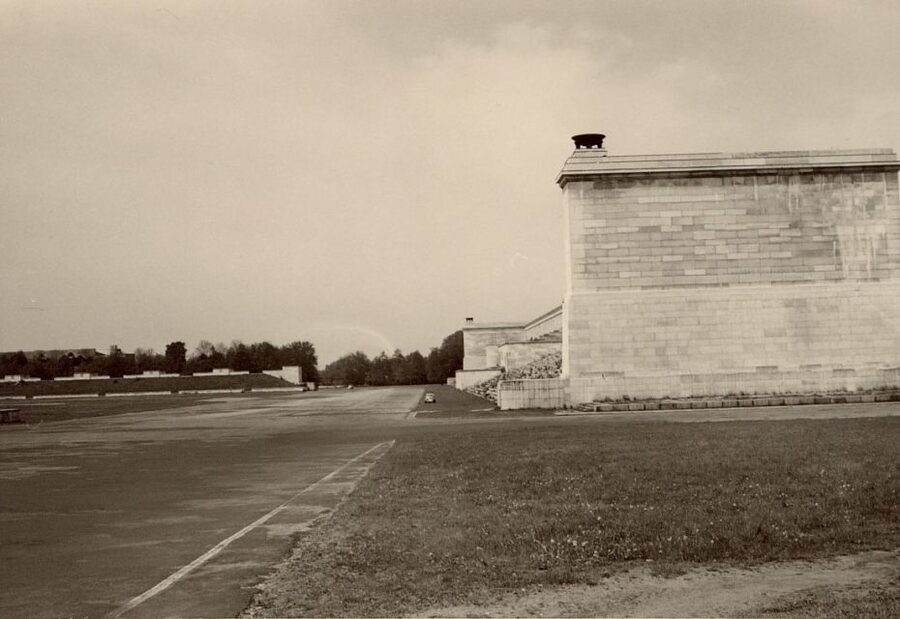
The former Nazi Party Rally Grounds are difficult to understand from a quick look. You see big stone structures, long open spaces, and unfinished construction. Without context, the place can seem like an enormous building project that simply ran out of money or time.
The guided tour helps connect the physical site to the political plans behind it. The National Socialist regime intended this corner of Nuremberg to serve as a gigantic setting for assemblies and demonstrations. Albert Speer, the regime’s head architect, planned an area that could hold up to 400,000 people.
That number is central to understanding the site. The architecture was not designed mainly for everyday use. It was designed to shape public gatherings, direct attention, and make the government appear permanent and all-powerful. The unfinished buildings are useful evidence in their own right because they show both the ambition of the plans and the fact that the project was never fully completed.
You’ll also hear how Nuremberg later became linked to the Nuremberg Trials in 1946. That connection gives the city a second role in the story: first as a major setting for National Socialist spectacle, then as the place where leading figures of the regime faced legal judgment.
This is a serious historical visit. The subject is not treated as entertainment, and the site is not presented as a collection of glamorous monuments. A good guide helps you read the buildings as political tools and understand why they still matter.
More WWII History Tours in Nuremberg
- Nuremberg: Walking Tour of Former Nazi Party Rally Grounds
★ 4.7 · 1,665 reviews - Nuremberg: Historischer Kunstbunker WWII Art Bunker Tour
★ 4.8 · 921 reviews - Nuremberg Old Town and Nazi Party Rally Grounds Walking Tour in English
★ 4.5 · 504 reviews
Starting at the DokuZentrum on Bayernstraße
The tour begins in front of the Documentation Centre Nazi Party Rally Grounds, known locally as the DokuZentrum, at Bayernstraße 110. You should arrive with the meeting point already marked on your phone or map, since one participant found the location unclear and had to call the guide using the number on the booking confirmation.
That small detail matters. The grounds are large, and a vague arrival plan can cost you time before a short 90-minute tour. I would treat the DokuZentrum entrance as your fixed reference point and allow enough time to identify the guide before the scheduled start.
The supplied information does not say that admission to the Documentation Centre is included. Entrance fees are listed separately from the tour, so you should not assume the walking tour includes entry to an indoor exhibition. The experience itself is described around the former rally grounds and their major outdoor structures.
The private format is useful from the first minute. Your group can stay together without being mixed with a large public crowd, and you can raise questions about details that interest you. The maximum group size is eight, which is small enough for a more personal conversation but large enough for a family or group of friends.
The unfinished Congress Hall and the scale of the plan
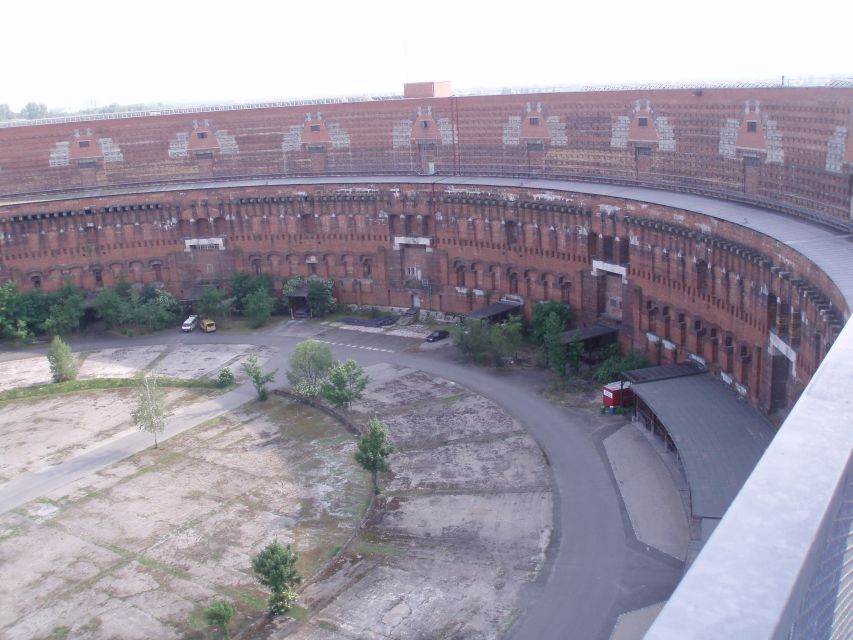
The Congress Hall is one of the clearest places to see the regime’s grand ambitions. It was intended to be a masterpiece, but it remains unfinished. That contrast gives the guide something concrete to explain: the difference between the image the regime wanted to project and the incomplete reality left behind.
As you look at the building, pay attention to its size rather than rushing toward a single architectural detail. The point is not simply that the structure is large. Its scale was meant to overwhelm people and support the political theater of mass gatherings.
Your guide can add the missing layer of meaning. The building was part of a wider plan for an assembly and demonstration zone, not an isolated hall. The surrounding spaces were meant to work together, with architecture and movement helping turn a political event into a display of discipline and unity.
This is where the tour’s strongest feature comes into play: explanation. The guide is not just pointing out old structures. The guide describes the political background of National Socialism and answers questions in detail. Feedback about the experience repeatedly praises the guide’s experience, depth of information, and ability to respond fully to questions.
That makes the tour a better choice than simply walking around with a map. You can see the Congress Hall independently, but understanding why it was planned at such a scale requires someone to connect the building to the regime’s wider aims.
Zeppelin Field and the theater of mass gatherings
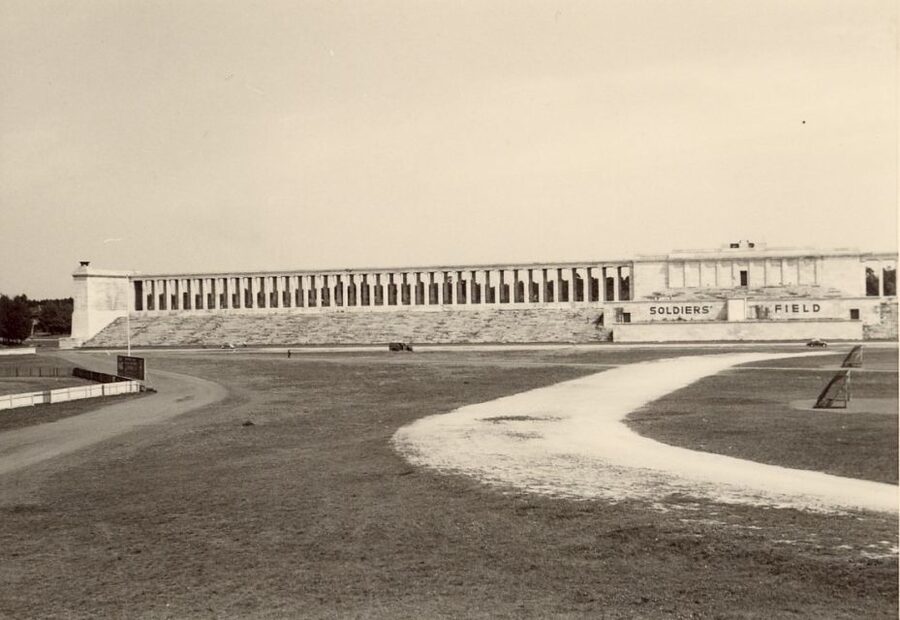
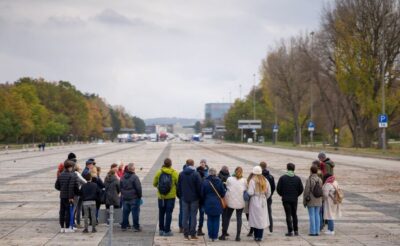
Zeppelin Field is another essential stop. It remains a powerful reminder of how the National Socialist regime used open space, architecture, and mass participation to create a sense of power.
The tour does not treat the field as a normal sightseeing plaza. Your guide explains the political purpose behind the site and the role of demonstrations in the regime’s public image. That framing helps you avoid a common mistake: judging the place only by its appearance.
The field’s size matters because the rally grounds were planned for crowds on a scale that is difficult to picture. The stated capacity of up to 400,000 people gives you a measure of the ambition, but the open ground makes the idea easier to grasp. You can see why the site was designed as a setting for mass spectacle rather than a conventional civic square.
This stop may feel less intimate than a small museum room. You are dealing with broad spaces and monumental plans, not personal objects or a tightly arranged exhibit. That can be a drawback if you prefer detailed artifacts, but it is also the reason a walking guide is valuable here. The physical setting supplies the scale, while the guide supplies the interpretation.
The subject also calls for a careful tone. The point is not to admire the spectacle. It is to understand how political power was presented, organized, and made visible through public gatherings.
More wartime history tours in Nuremberg:
- Nuremberg Old Town and Nazi Rally Grounds Walking Tour
★ 4.7 · 377 reviews - Nuremberg Third Reich Tour in Spanish
★ 5.0 · 355 reviews - Nuremberg: WWII Tour, Courtroom 600 and 3rd Reich Sites
★ 4.6 · 94 reviews - Nuremberg: World War II Tour with Hotel Pickup
★ 4.4 · 51 reviews
Walking the Great Road toward the wider grounds
The Great Road gives the tour a sense of direction. Rather than viewing each structure as a separate stop, you begin to see the former rally grounds as one planned system of routes, gathering spaces, and monumental buildings.
A walk along this broad route helps explain how visitors were meant to move through the area. The plan was not only about constructing impressive buildings. It was about arranging people within a carefully designed political setting.
The 90-minute duration works well for an overview of the main sites. You’ll have time to hear the story and see the key areas without giving up an entire day in Nuremberg. At the same time, 90 minutes is not enough for every detail of the grounds, so expect a focused introduction rather than an exhaustive study.
That balance makes the tour easy to fit into a city visit. You can pair it with time in central Nuremberg or with a separate visit to the Documentation Centre if you want more indoor material. Since entrance fees are not included, plan those as separate parts of your day.
The private arrangement also helps with pacing. If your group has many questions, the guide can spend more time on the topics that matter most to you. If you already know the basic history, you can ask about the architecture, planning, or the later significance of the site.
The Nuremberg Trials connection
The former rally grounds are best understood alongside Nuremberg’s role in the 1946 Nuremberg Trials. The tour connects the site to that later chapter, reminding you that the city was associated both with the public staging of National Socialism and with the legal response that followed.
This does not turn the rally grounds into a courtroom site. Instead, it adds a wider historical frame. You see how the city’s symbolic role changed from a place chosen for huge political displays to a place known for legal judgment of the regime’s leaders.
The connection is especially useful if you are visiting Nuremberg for several days. It helps you organize the city’s history into a clearer sequence rather than treating the rally grounds and the trials as unrelated subjects.
You should expect the guide to tell stories and explain political background rather than provide a simple list of construction dates. The experience is built around the meaning of the site, the plans behind it, and the real events connected with it.
What the German-language guide adds
The tour is conducted in German, and no other language is specified. This is the most important booking decision for many people. If you do not understand German, you should not assume that English interpretation or printed translation is included.
For German-speaking visitors, the format has clear advantages. The guide can explain complicated political ideas in a natural conversation, and your private group can ask follow-up questions without waiting for a large group to move on.
The strongest comments about the guide focus on extensive experience, detailed information, and complete answers to questions. That is exactly what this site needs. The buildings are visually striking, but their purpose is disturbing and complex. A guide who can explain the political background makes the visit more useful than a quick photo stop.
You should also be ready for a sober experience. The subject is a dark chapter of German history, and the tour is designed to help you understand it rather than soften it. Families with older children, history students, and visitors with a serious interest in twentieth-century Germany may find the format especially helpful.
Is $128 good value for a private group?
The price is $128 per group of up to eight, not $128 per person. If you fill all eight places, the cost works out to about $16 per person. For four people, it is about $32 each, and for two people, about $64 each.
That pricing makes the tour most attractive to families and small groups. You are paying for a private guide, not just access to the grounds, so the value depends on how much you want explanation and conversation. A solo visitor or couple may find the total price high compared with a public group tour, while a full group gets a strong deal.
The 90-minute length also keeps the commitment reasonable. You can learn the main story without spending half a day on the site. The trade-off is that the tour will not cover every corner or provide a long, detailed museum visit.
Meals are not included, though that is not a serious concern for a 90-minute walk in Nuremberg. Entrance fees are also separate, so add the cost of any indoor visit you plan to make at the DokuZentrum.
You can cancel up to 24 hours before the start for a full refund, and reserve now while paying later. Those terms are useful if your Nuremberg schedule is still shifting. Individual start times are possible upon request, which may help you fit the tour around trains, museum visits, or other plans.
Who should book this experience?
I would choose this tour if you want the former rally grounds explained as a political project, not merely photographed as imposing architecture. The guide’s role is central, and the private format is a good match for anyone who wants to ask questions.
It suits:
- German-speaking visitors who want a guided explanation of National Socialism
- Small families or friend groups that can share the $128 price
- Visitors interested in architecture, propaganda, and political history
- People who want a focused 90-minute introduction
- Anyone planning to combine the outdoor tour with a separate indoor visit
I would think twice if you need an English-language tour, want a museum admission included, or prefer a long visit centered on objects and exhibitions. The available information confirms German as the tour language, and entrance fees are not part of the price.
My recommendation for Nuremberg visitors
Book this tour if the former Nazi Party Rally Grounds are important to your Nuremberg plans and you want the scale, architecture, and political purpose explained in one focused walk. The private group price is especially fair for six to eight people, and the guide’s detailed answers are a major reason to choose it.
Before booking, confirm that German works for everyone in your party and mark the DokuZentrum carefully. If you do those two things, you’ll have a clear, serious introduction to the unfinished Congress Hall, Zeppelin Field, the Great Road, and the wider plan for a rally area built for up to 400,000 people.
FAQ
Where does the tour begin?
The meeting point is in front of the Documentation Centre Nazi Party Rally Grounds, or DokuZentrum, at Bayernstraße 110 in Nuremberg.
How long does the tour last?
The tour lasts 90 minutes.
What language is the tour conducted in?
The live tour guide speaks German.
Is this a private tour?
Yes. It is offered as a private group experience for up to eight people.
What sites are included in the walk?
The tour visits the former Nazi Party Rally Grounds, including the unfinished Congress Hall, Zeppelin Field, and the Great Road.
Are entrance fees or meals included?
No. Entrance fees and meals are not included in the tour price.
Just added around Nuremberg
- Tour en español al Campo Zeppelin★ 5.0 · 8 reviews
- Stein: Public guided tour of the “Old Mine” museum★ 4.5 · 18 reviews
- “Rotes Bier” and “Blaue Zipfel”. A historical-culinary walk★ 4.4 · 190 reviews
- Nuremberg: Old Town Guided Tour By Bus★ 4.4 · 198 reviews
- Nürnberg Bachelor(ette) Party with Night PubCrawl★ 4.2 · 5 reviews
- Nuremberg: Bar and Club Tour with Free Shots and Free Entry★ 3.8 · 23 reviews
- Nürnberg kennenlernen: Highlights in der Altstadt★ 4.7 · 189 reviews
- Nuremberg: World War 2 History Tour with Beer Tasting★ 5.0 · 4 reviews
Nuremberg Tours, compared.
Tunnels and Secret Passages in the City Wall Tour
Read our review →
Walking Tour of Former Nazi Party Rally Grounds
Read our review →
Browse the lists this tour appears in