
Review · NUREMBERG TOURS
Nuremberg Old Town and Nazi Party Rally Grounds Walking Tour in English
Nuremberg’s story changes sharply during this four-hour tour. You begin among medieval walls, churches, markets, and the Imperial Castle, then take public transport to the vast Nazi Party Rally Grounds, where unfinished monuments reveal how propaganda was built into the city. I like the strong contrast between old Nuremberg and the Third Reich, and I like that bus or train transport is included rather than added to the bill.
I also appreciate the short market break and the guides’ use of historic photographs to connect today’s streets with the past. Hannes, Nick, Natasha, and Niklas receive especially warm praise for clear English, humor, and strong storytelling. The main caution is simple: this is a long walking tour, with an uphill stretch to the castle and a fairly brisk schedule at the Rally Grounds. On busy Christmas-market weekends, groups can feel crowded and hearing the guide may be harder.
Key points to know before you book
- Two very different halves: Spend roughly the first part in the medieval Old Town, then continue by included public transport to the Nazi Rally Grounds.
- A serious history tour: The guide covers Holy Roman emperors, the Renaissance, Nazi rallies, and the Nuremberg Trials.
- A real walk: Allow for about four hours, including the climb toward the Imperial Castle, city streets, a market pause, and movement around the Rally Grounds.
- Strong guide factor: Hannes, Nick, Natasha, Niklas, Dimitri, and Archim have all been singled out for clear explanations, humor, and personal attention.
- The Documentation Center is optional: You may stay longer for the museum exhibits, but the guided portion does not provide unlimited museum time.
- Good value at $44.74: The price includes the local guide and public transportation, but not food, drinks, or the St. Sebaldus Church admission.
Why this tour works as a first look at Nuremberg
Nuremberg can be hard to read at street level. A pretty square may have medieval roots, a church may have been rebuilt after wartime destruction, and a broad avenue outside the center may point to a very different chapter in German history. This tour gives you a guide to those layers instead of leaving you with disconnected sights.
The timing is useful. At 10:00 a.m., you meet in front of Nuremberg Central Station, a practical point if you arrive by train or are staying near the station. From there, the group heads into the Old Town. The first portion is not only about architecture. It explains Nuremberg as an imperial city, a center of German art and craft, a Nazi showpiece, and the setting for the postwar trials.
You should expect an English-language group tour with a maximum of 25 people. That is small enough to feel manageable, though not intimate. The best guides, including Hannes, Nick, Natasha, and Niklas, appear to make a real difference by using humor, old photographs, and answers to questions. Still, if you stand at the back, street noise can make it harder to catch every word.
More Old Town Walking Tours in Nuremberg
- Nuremberg: Old Town Guided Walking Tour
★ 4.6 · 2,416 reviews - Nuremberg Old Town and Nazi Rally Grounds Walking Tour
★ 4.7 · 377 reviews - Nuremberg: The Old Town in Evening Light – IN GERMAN
★ 4.7 · 353 reviews
Handwerkerhof and the old city walls
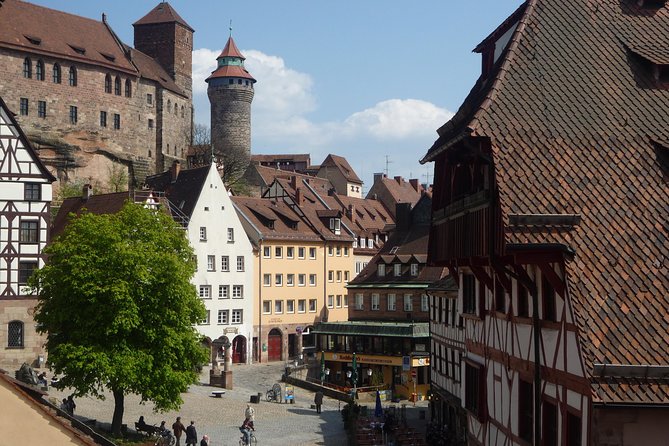
The tour begins at Handwerkerhof, the Craftsmen’s Courtyard beside the station. It is a reproduction of a traditional crafts market, with small shops and restaurants associated with local trades such as glass cutting, leatherwork, gold and silversmithing, and stained glass.
I like this opening because it gives you a quick sense of Nuremberg’s connection to skilled work and trade. It is not a major museum stop, and the scheduled visit is only about 10 minutes, so treat it as an introduction rather than a shopping session.
Soon you get a look at Nuremberg’s impressive city fortifications. The Old Town walls still run for about four kilometers, giving the center a clear medieval shape. Your guide can help you understand how the walls protected a prosperous city and how the old center grew within them.
The walking route also passes a former medieval customs house and granary, now connected with one of the city’s breweries. Details like this are useful because they show the practical side of medieval Nuremberg. This was not just a place of castles and churches. It was a working commercial city where goods were stored, taxed, and sold.
Hauptmarkt, churches, and the Beautiful Fountain
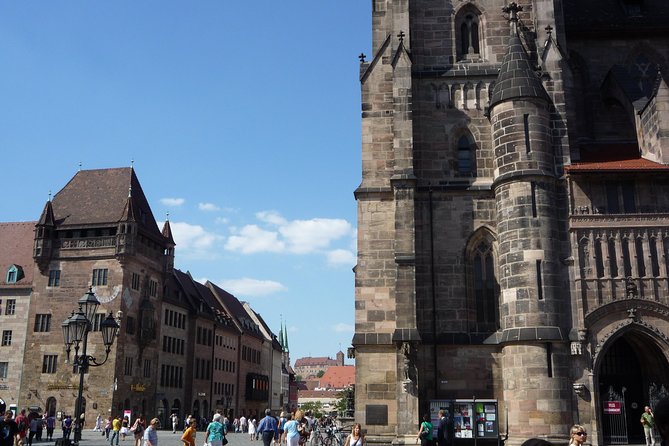
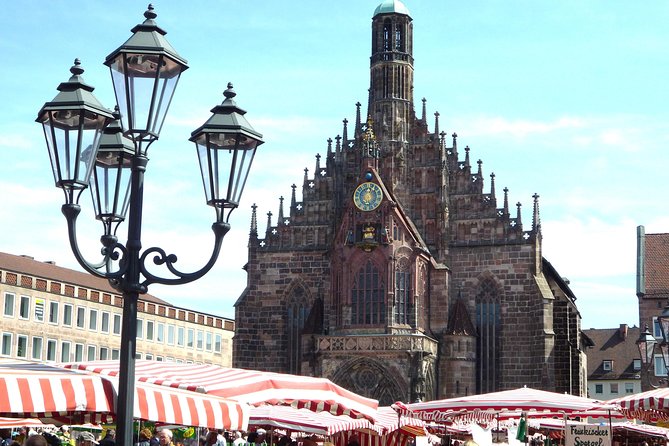
Hauptmarkt has been the center of Nuremberg since the 1300s. The square is also the site of the famous Christkindlesmarkt, Germany’s best-known Christmas market. At other times of year, it remains a key public space and a good place to pause and take in the city’s scale.
The tour allows about 15 minutes here, enough for an explanation and a look around, but not enough for a long market browse. If you are visiting during the Christmas season, prepare for noise and crowds. The square can be especially difficult for a group to navigate on a Saturday, and the guide may need to gather everyone often.
Nearby, the tour stops at St. Sebaldus Church, the oldest church in Nuremberg and the home of the city’s patron saint. The planned stop is brief, about five minutes, and admission is not included. That means you should not count on a full interior visit as part of the guided experience.
The Beautiful Fountain is another short stop. Its golden Gothic tower and famous wishing ring make it one of the Old Town’s most recognizable details. Your guide can explain its place in the square, but you will have only a few minutes here, so take your photographs promptly.
The route continues to the Old Town Hall, completed in 1622. This is a useful reminder that Nuremberg’s story did not end in the Middle Ages. The city remained important through the Renaissance and into the early modern period, with civic buildings that reflect its wealth and political role.
Dürer, the Imperial Castle, and the uphill walk
Albrecht Dürer’s former house is another major sight along the route. Dürer was one of Germany’s leading Renaissance artists, and his home is now a museum. The tour points out the building and places his work in the story of Nuremberg’s artistic life, but museum admission is not listed as part of the tour.
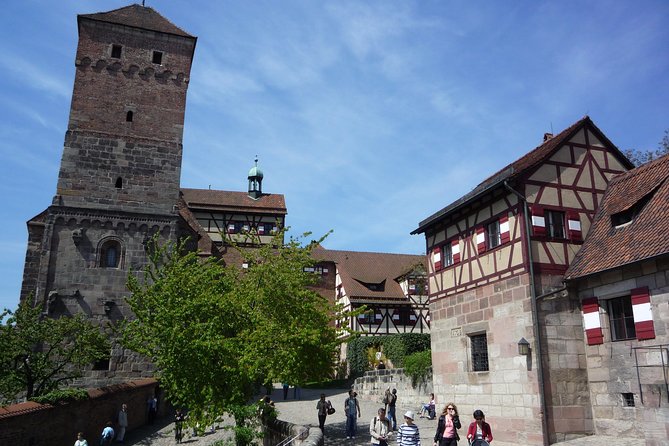
The Imperial Castle is the Old Town’s grand climax. Dating back at least to 1050, it recalls the period when German emperors used Nuremberg as an important imperial center. The courtyards are included in the walking route, and the stop is scheduled for about 10 minutes.
You should take the climb seriously. The route rises through the Old Town toward the castle, and the paving can make the walk tiring, especially in poor weather. One participant in their seventies found this section challenging, while another guide took care to keep a rainy-day group comfortable. The tour includes a lunch break and public transport, so you are not walking nonstop for four hours, but good footwear and a reasonable level of fitness will make the day far more enjoyable.
The castle stop is more about setting and explanation than a long castle visit. If you want to tour the interior museums or spend time on the grounds, plan a separate visit. This experience gives you an overview, not an exhaustive castle tour.
More WWII History Tours in Nuremberg
- Nuremberg: Walking Tour of Former Nazi Party Rally Grounds
★ 4.7 · 1,665 reviews - Nuremberg: Historischer Kunstbunker WWII Art Bunker Tour
★ 4.8 · 921 reviews - Nuremberg Third Reich Tour in Spanish
★ 5.0 · 355 reviews
The lunch pause at Hauptmarkt
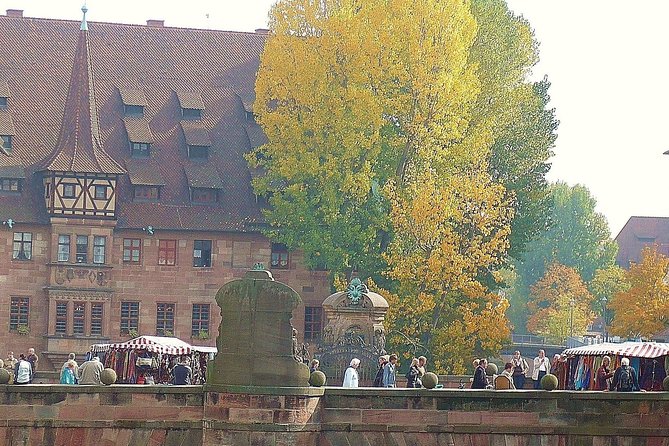
The itinerary includes a short lunch break at the market area, often around 30 minutes according to the way the tour is paced. Food and drinks are not included, so bring money and use the pause for a quick meal rather than expecting a formal restaurant stop.
This break matters more than it may sound. You have already covered the main Old Town route, and the pause gives you time to rest before the second half. It is also a chance to ask the guide a question privately or catch up if you have fallen behind.
Keep the meal simple. The tour has a fixed schedule, and a long lunch could make you late for the group’s move to public transport. If you need more time for food, you may prefer an Old Town-only tour or a self-guided visit.
Taking public transport to the Nazi Rally Grounds
The transition to the Rally Grounds is one of the tour’s practical strengths. Public transport is included, and the ride gives your feet a break before the next section. The exact route may use a city bus or train, and one account described about 20 minutes of travel.
This journey also helps explain the scale of the Nazi project. The Rally Grounds are not tucked into a small historic corner. They form a broad complex outside the medieval center, designed for mass gatherings and political theater.
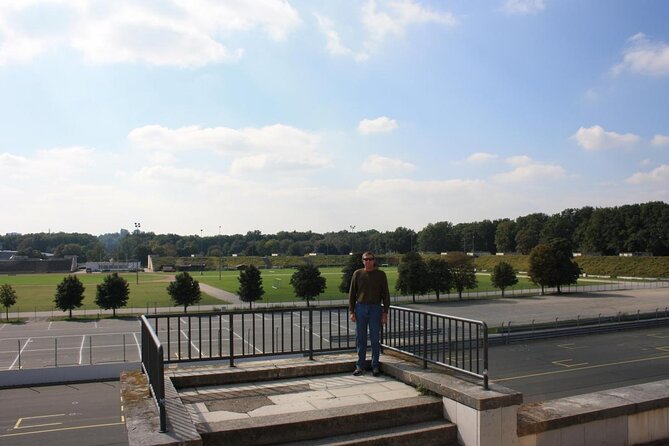
At Volksfestplatz, the guide explains the area’s use for the Nuremberg Rallies. The planned stop is about 15 minutes. This is a site where photographs and clear narration are especially helpful, since the present-day setting may not look exactly as you expect from wartime images.
That difference is important. Some visitors arrive expecting a preserved Nazi monument frozen in time. Instead, you see surviving structures, open space, modern use, and unfinished plans. The gap between historical photographs and the current site is part of the lesson.
Great Street and the unfinished Congress Hall
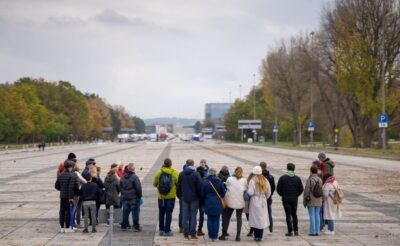
The Great Street was designed by Albert Speer as the central axis of the Rally Grounds. It was meant to direct attention and movement during huge Nazi events, turning architecture into a tool of power.
Standing there, you can grasp the scale better than you can from a photograph. The space was designed for spectacle, order, and control. Your guide explains the intended use and connects the physical plan to the political goals of the Third Reich.
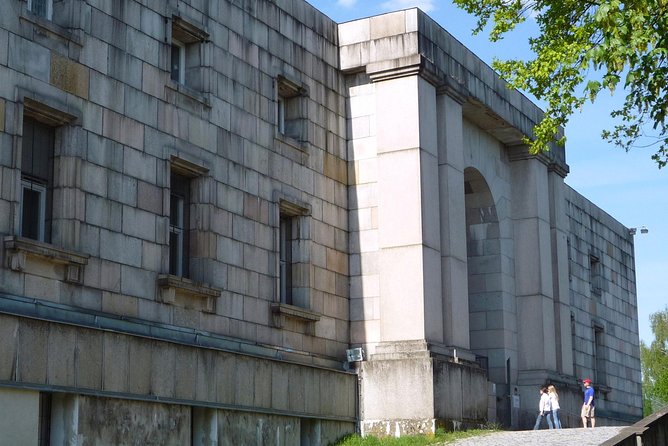
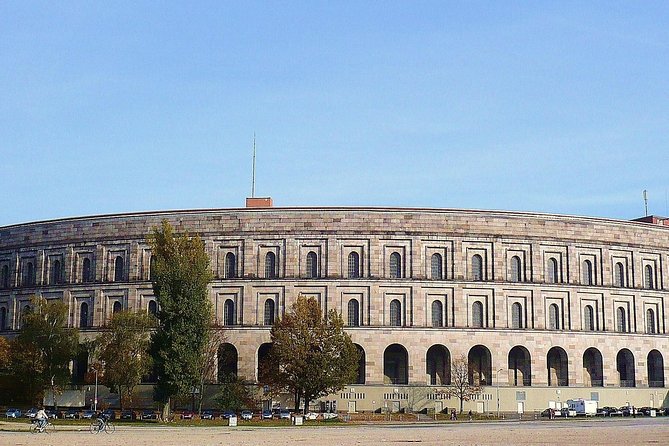
Congress Hall is one of the most striking stops. It is the unfinished building Hitler planned to use for party meetings. Its enormous outer shell makes the regime’s ambition visible, while its incomplete state shows that the grand plan was never fully realized.
The guided stop lasts about 15 minutes, which is enough for context and photographs but not a full museum visit. If your main reason for coming to Nuremberg is twentieth-century history, you may wish the Rally Grounds section were longer. The tour tries to divide its time between the Old Town and the Third Reich sites, but there is more to see than four hours can cover.
You will also encounter the largest surviving Third Reich buildings in the complex, including areas associated with Hitler’s inspection of SS members. The guide’s role here is crucial. These sites need context, and a good explanation keeps the visit focused on how propaganda, architecture, and power worked together rather than treating the buildings as curiosities.
The Documentation Center and the Nuremberg Trials
The Documentation Center covers important wartime and postwar subjects, including the Nuremberg Trials. It offers a more detailed museum experience than the outdoor walk, with exhibits that help connect the Rally Grounds to the crimes of the Nazi regime and the legal response after the war.
The guided tour brings you to the center, but you may stay longer if you want more time inside. That flexibility is helpful, especially for anyone with a serious interest in World War II. You should confirm the practical museum details when booking or on the day, since the supplied tour information does not list a separate admission price or guarantee a set amount of indoor time.
If you remain at the Documentation Center, you will need to manage your return independently. Otherwise, you can return with the group toward central Nuremberg, where the activity ends back at the original meeting point.
This final option makes the tour easy to fit into a day of sightseeing. The start and usual finish are both near the central station, so you can continue by train or explore more of the Old Town afterward.
Guide quality, group size, and hearing the story
The strongest part of this experience is the guide. Hannes, also referred to as John Ziener, is praised for his grasp of Nuremberg’s architecture, culture, medieval past, and wartime role. Nick is noted for an engaging delivery, humor, and the ability to work with people who have different interests. Natasha is described as clear, friendly, and able to answer questions across the full route.
Niklas receives particular credit for using historic photographs to connect present-day places with their earlier appearance. Dimitri and Archim are also praised for adding extra stories and details, including a less obvious route along the medieval wall.
That does not mean every guide will have the same energy. One person found the delivery less lively, and another had trouble hearing without a sound system. The operator’s response indicates that a sold-out group can contain about 20 people, while the stated maximum is 25. Busy Saturdays during the Christmas markets are the riskiest time for crowd noise.
My practical advice is to stay near the guide, ask for a repeat if needed, and choose a weekday when possible. The tour is offered in English, but good listening conditions still matter. The score of 4.6 from 504 ratings and a 91 percent recommendation rate suggest a strong overall record, with the usual variation that comes from group size, weather, and guide assignment.
Is $44.74 a fair price?
At $44.74 per person, the tour is reasonably priced for a four-hour guided experience that includes public transportation. You are paying for a local guide, a planned route through two very different parts of Nuremberg, and the historical explanation that makes the sites meaningful.
The value is strongest if you are visiting for the first time or have limited time in the city. You can see the main Old Town sights, get oriented around the castle and market, and reach the Rally Grounds without working out the transport yourself.
The value is weaker if you want long museum visits, extended time at the castle, or a detailed study of every Rally Grounds structure. Food, drinks, church admission, and any museum costs are extra. The tour also runs on a fixed timetable, so independent sightseeing is limited during the four hours.
Still, the included transport and the guide’s storytelling make the price fair for most first-time visitors. A private tour would cost far more, while exploring alone would give you more freedom but less context.
Who should book this Nuremberg tour?
I would choose this tour if you want both sides of Nuremberg in one morning and early afternoon: medieval power, Renaissance art, Nazi spectacle, and the Nuremberg Trials. It suits history fans, first-time visitors, and anyone who wants a clear city orientation before exploring independently.
You should also book it if you value explanation over simply collecting photographs. The best moments come when the guide shows how a street, wall, church, or massive empty space fits into the city’s long story.
I would hesitate if you dislike group walks, need a slow pace, or want to spend most of your time inside museums. The climb to the castle and the outdoor Rally Grounds require stamina. During Christmas-market weekends, the noise and crowds can reduce the pleasure of a guided walk.
For the best chance of a calm experience, pick a weekday outside the busiest Christmas-market period, wear comfortable shoes, and stand close enough to hear. Free cancellation is available up to 24 hours before the 10:00 a.m. start, and poor weather may lead to a new date or full refund.
FAQ
Where does the Nuremberg walking tour start?
The tour starts at 10:00 a.m. in front of Nuremberg Central Station, at Nürnberg Hbf, Bahnhofsplatz, 90443 Nürnberg.
How long does the experience last?
The experience lasts approximately four hours. This includes the Old Town walk, a short lunch break, public transportation, and the visit to the Nazi Rally Grounds.
Is public transportation included?
Yes. Public transportation by bus or train to the Nazi Rally Grounds is included in the tour price.
Is the tour offered in English?
Yes. This experience is offered in English and includes a local English-speaking guide.
What food is included?
No food or drinks are included. The tour does provide a short lunch break at the market place, when you can buy something for yourself.
Does the tour enter St. Sebaldus Church?
Admission to St. Sebaldus Church is not included. The tour includes a short stop outside or around the church, but the supplied details do not promise an interior visit.
Can I stay longer at the Documentation Center?
Yes. You may remain at the Documentation Center for a longer visit. If you do, you will need to return to central Nuremberg on your own rather than continuing with the group.
What is the cancellation policy?
You can cancel up to 24 hours before the local start time for a full refund. Changes or cancellations made less than 24 hours before the start are not accepted for a refund. If poor weather cancels the activity, you will be offered another date or a full refund.
More Walking Tours in Nuremberg
- Discover Berlin Half-Day Walking Tour
★ 5.0 · 9,624 reviews - Berlin: Third Reich and Cold War 2 Hour Walking Tour
★ 4.9 · 6,830 reviews - Munich: Third Reich & WWII Walking Tour
★ 4.6 · 6,181 reviews - Berlin: Discover Berlin Walking Tour
★ 4.9 · 5,998 reviews
Just added around Nuremberg
- Nuremberg: The Old Town in Evening Light – IN GERMAN★ 4.7 · 353 reviews
- Nuremberg Third Reich Tour in Spanish★ 5.0 · 355 reviews
- Nuremberg Old Town and Nazi Rally Grounds Walking Tour★ 4.7 · 377 reviews
- Nuremberg: Hop-On Hop-Off Bus Tour★ 4.3 · 763 reviews
- Nuremberg: PLAYMOBIL®- FunPark★ 4.7 · 863 reviews
- Nuremberg: Historischer Kunstbunker WWII Art Bunker Tour★ 4.8 · 921 reviews
- Medieval Tour in Nuremberg in Spanish★ 5.0 · 1,374 reviews
- Nuremberg: Walking Tour of Former Nazi Party Rally Grounds★ 4.7 · 1,665 reviews
Nuremberg Tours, compared.
Tunnels and Secret Passages in the City Wall Tour
Read our review →
Walking Tour of Former Nazi Party Rally Grounds
Read our review →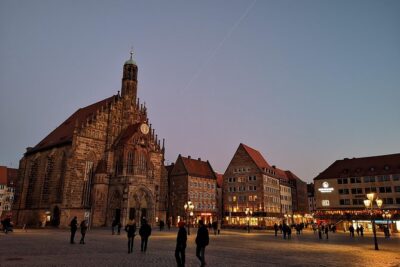
Browse the lists this tour appears in