
Review · NUREMBERG TOURS
Nuremberg Third Reich Tour in Spanish
Nuremberg’s connection to the Third Reich is not confined to one museum or rally ground. It runs through the old market square, churches, the town hall, the former synagogue site, and the streets leading toward the Nuremberg Trials. This three-hour Spanish-language walk connects those places into one clear story, from medieval antisemitism to Nazi propaganda and the city’s difficult recovery.
I like two things in particular: the route shows how older religious prejudice fed later Nazi ideology, and it ends with the Street of Human Rights, giving the tour a thoughtful direction rather than leaving you only with destruction. Guide Federico is praised for making a large amount of material lively and understandable. The main drawback is simple: this is a walking tour on city streets, so warm weather, rain, and the amount of information can affect your experience.
Key points before you book
- A Spanish-language route through nine central Nuremberg sites, including the main synagogue memorial, St. Lorenz, the Nuremberg Trials location, and the Street of Human Rights.
- Medieval and Nazi history are linked, with stops explaining the 1349 pogrom, antisemitism, Julius Streicher, and the city’s role in Nazi propaganda.
- The tour begins at 3:30 p.m. at Hauptmarkt 14 and finishes near the central train station.
- Guide Federico gives the tour a personal, flexible feel, with praise for his clear explanations, energy, and command of the subject.
- The group can reach up to 30 people, a useful detail if you prefer a smaller walk.
- At $19.70 per person, the tour offers a lot of guided context for a modest price, with no attraction admissions needed along the route.
Why Nuremberg was chosen by the Nazis
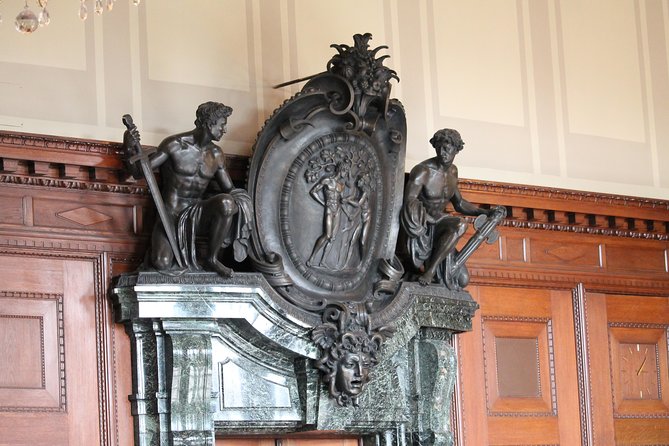
Nuremberg had symbolic weight long before Hitler arrived. During the medieval Holy Roman Empire, the city hosted the Diets of Nuremberg, major assemblies where the emperor met with prince electors. That old imperial role made Nuremberg useful to a regime that wanted to present itself as the heir to a powerful Germanic past.
The Nazis turned that symbolism into political theater. Hitler treated Nuremberg as the capital of party congresses and as a model German city, presenting it as especially loyal to National Socialism. The tour helps you see why the city was selected, rather than treating it as just another place where Nazi events happened.
This framing is one of the walk’s strongest features. You are not simply moving from one plaque to another. You are following the way a medieval identity was reused for modern propaganda, and how public spaces can be given new meaning by a political movement.
The Spanish format also matters. The subject includes many names, dates, institutions, and connections that can become muddled if you are relying only on signs or a quick museum visit. Federico’s role is to place the details in order and explain how they relate to one another.
More WWII History Tours in Nuremberg
- Nuremberg: Walking Tour of Former Nazi Party Rally Grounds
★ 4.7 · 1,665 reviews - Nuremberg: Historischer Kunstbunker WWII Art Bunker Tour
★ 4.8 · 921 reviews - Nuremberg Old Town and Nazi Party Rally Grounds Walking Tour in English
★ 4.5 · 504 reviews
Hauptmarkt and the Frauenkirche: starting with the 1349 pogrom
The meeting point is Hauptmarkt 14, beside the Frauenkirche in the heart of old Nuremberg. This is a practical start because it is easy to reach by public transport and puts you immediately inside the city’s historic center.
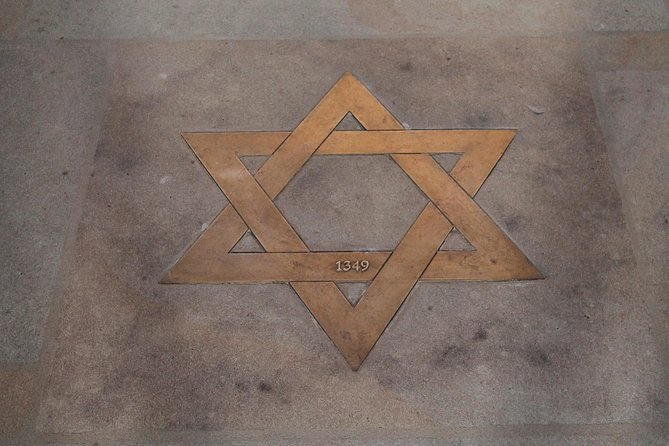
The first stop examines the Jewish quarter and the pogrom of 1349. That event is important because the tour does not begin with Hitler. It begins with the long record of antisemitism that existed in Europe centuries before National Socialism.
At the Frauenkirche, you can expect around 15 minutes of explanation. Admission is free, and the focus is on the relationship between the church, the market area, the Jewish community, and the city’s medieval power structures.
This opening gives the rest of the walk a needed foundation. Nazi antisemitism did not appear from nowhere, even though the Nazi regime transformed older prejudices into a state program of persecution and murder. If you want a tour that explains causes and development rather than only famous Nazi sites, this is a valuable beginning.
The setting can also be busy, since Hauptmarkt is one of central Nuremberg’s main public squares. Listen closely at the start and make sure you are near the guide before the group moves on.
St. Sebaldus Church and the long road to National Socialism
The next stop is St. Sebaldus Church, where the discussion continues from medieval antisemitism into the modern era. The stop lasts about 15 minutes and remains outside the church’s religious setting as a place to discuss changing attitudes and political uses of prejudice.
I appreciate this part because it places National Socialism in a longer timeline. You are encouraged to think about how religious hostility, social exclusion, and modern political antisemitism could overlap, while still recognizing that the Nazi regime gave those ideas a new and terrifying reach.
The guide’s ability to handle this transition is important. The subject can easily become a list of dates. Instead, the route uses two prominent churches to show how the city’s public identity was shaped over many centuries.
If you want detailed interior visits, this is not the right format. The listed stops are brief, and admission to the churches is not included because the tour is built around outdoor interpretation. Its value comes from the explanation and sequence, not from time spent inside each building.
Nuremberg Town Hall and Hitler’s bond with the city
At Nuremberg Town Hall, the tour turns more directly to Hitler and his connection with the city. You spend about 15 minutes here, looking at the civic setting where Nuremberg’s public identity met the ambitions of the Nazi regime.
The key idea is Nuremberg’s carefully promoted status as the German city par excellence, the place presented as most loyal to the regime. The Nazis did not choose the city only for its buildings. They used its old imperial associations to make their own movement appear rooted in German tradition.
The tour also brings in Julius Streicher, one of the regime’s major representatives of antisemitism. Streicher owned and promoted Der Stürmer, a weekly publication built around antisemitic propaganda. His connection with Nuremberg shows how the city’s political image and the machinery of hate were tied together.
This stop should interest you if you want to understand propaganda as a local force. It was not only produced in distant government offices. It was displayed, repeated, and attached to familiar civic places.
More wartime history tours in Nuremberg:
- Nuremberg Old Town and Nazi Rally Grounds Walking Tour
★ 4.7 · 377 reviews - Berlin: Third Reich and Cold War 2 Hour Walking Tour
★ 4.9 · 6,830 reviews - Munich: Third Reich & WWII Walking Tour
★ 4.6 · 6,181 reviews - Berlin: Sachsenhausen Concentration Camp Tour in English
★ 5.0 · 5,711 reviews
The former main synagogue: destruction and Kristallnacht
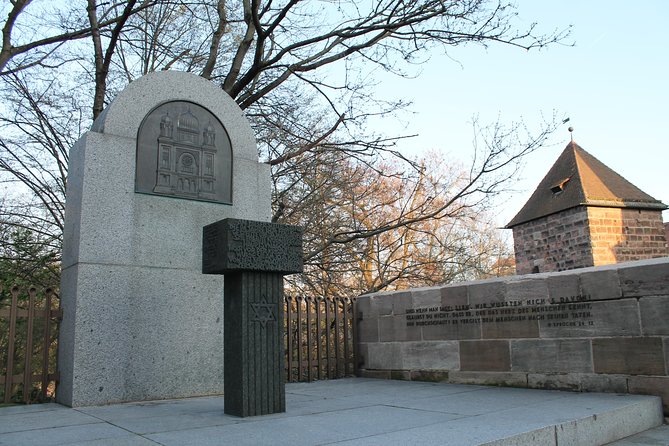
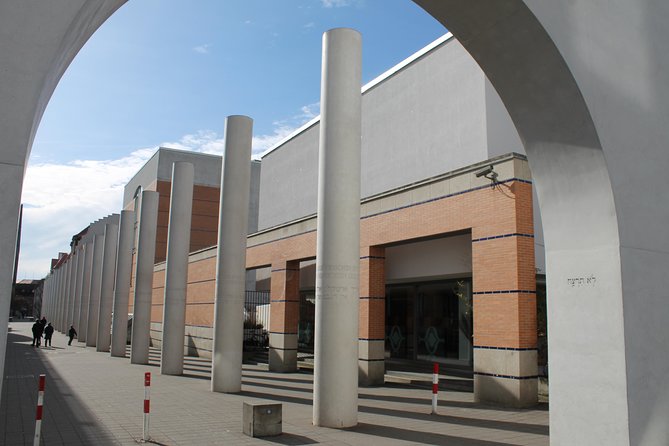
The memorial at the former site of Nuremberg’s main synagogue is one of the most serious points on the walk. About 10 minutes are devoted to the synagogue’s destruction and the Night of Broken Glass, the coordinated violence against Jewish people and property in November 1938.
The stop is physically modest, but its meaning is large. A place of worship that once formed part of city life was destroyed as the regime moved from discrimination toward open, organized violence. The absence of the synagogue becomes part of the story.
You should expect this section to be concise rather than a long memorial visit. The route keeps moving, and that is both a strength and a limitation. You receive the essential explanation in context, but anyone seeking extensive documentation or a quiet museum setting will need to add another visit elsewhere in Nuremberg.
Still, placing the synagogue site after the town hall makes sense. First you see how the city was used to project Nazi loyalty. Then you confront what that political culture did to the Jewish community.
St. Catherine’s ruins and the wartime destruction of Nuremberg
The ruins of St. Catherine’s Church introduce the war years and the city’s destruction. The stop lasts around 10 minutes and covers the fighting, the liberation of Nuremberg, and the rebuilding that followed.
Ruins can be more revealing than restored buildings. They show the physical cost of the war without requiring a dramatic presentation. At St. Catherine’s, the damaged structure helps connect the ideology discussed earlier with its final result: a city caught in war and left to rebuild after defeat.
The tour also addresses the liberation of Nuremberg. That word matters. The story is not only about German suffering or damaged architecture. It must include the defeat of the regime and the end of its control.
Because the stop is short, you may want to ask questions if you are especially interested in the city’s reconstruction. The route gives you the broad picture, then moves onward. Its purpose is to keep the whole story connected across central Nuremberg.
St. Lorenz and the concentration camp connection
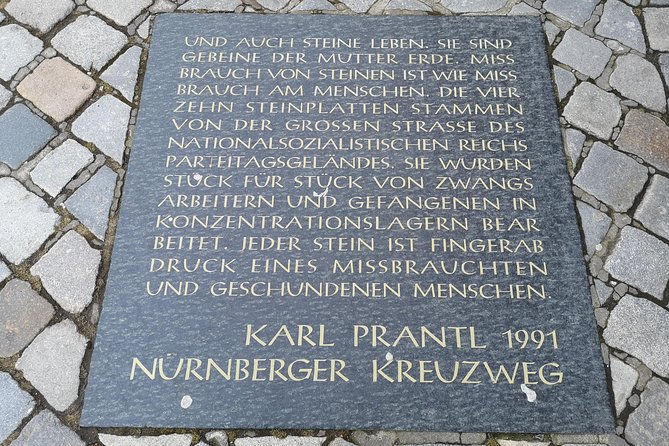
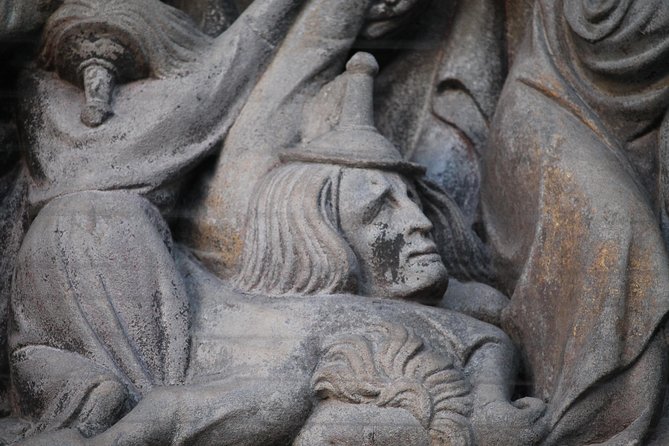
At St. Lorenz, the tour examines the Via Crucis of the church and its relationship to the Nuremberg Concentration Camp. You spend about 10 minutes here.
This is a challenging section because religious imagery and Nazi persecution are brought close together. The connection is not presented as a separate subject with a long museum explanation. Instead, it forms part of the route’s wider effort to show how the city’s religious, civic, and political spaces intersected.
The stop also reminds you that Nuremberg’s Nazi history is not limited to mass rallies and famous courtrooms. Concentration camp history belongs in the city’s story as well, even when the evidence is not concentrated in one major monument along this route.
I would pay close attention here, especially if you are using the tour as an introduction before visiting other memorial sites. The information comes quickly, and the group may be standing in a public area rather than a quiet memorial space.
The State Theater and opera under National Socialism
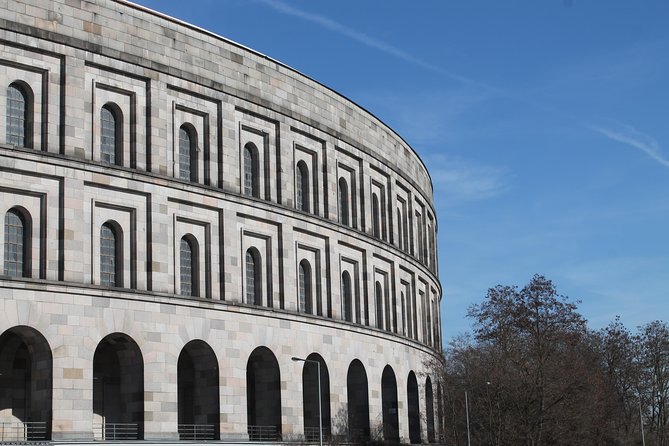
The Nuremberg State Theater is the next stop, with about 10 minutes devoted to the opera house and its connection with National Socialism. This is a useful change of setting because it shows how the regime related to culture and public entertainment.
Political control does not work only through speeches and police power. Theater and opera can also help shape ideas about national identity, authority, and belonging. The stop gives you a look at the cultural side of the regime, adding another layer to the political story.
This may be one of the less immediately familiar points on the walk, which is exactly why it earns its place. Most people arrive knowing about the rallies or the trials. Fewer have considered what happened in the city’s cultural institutions.
Again, do not expect a performance or a long indoor visit. The tour uses the theater as a place for explanation, not as a ticketed attraction.
Charterhouse Gate and the Nuremberg Trials
At Charterhouse Gate, the subject shifts to the Nuremberg Trials. The stop lasts about 15 minutes, making it one of the longer pauses on the route.
The trials are a natural turning point. Earlier stops explain how Nuremberg became a symbolic center of Nazi power. Here, the city becomes the setting for legal judgment of leading figures from the defeated regime.
The location also helps connect the wartime story to the postwar question of accountability. The trials were not simply another event in Nuremberg. They shaped how the world discussed crimes committed by governments and how leaders could be held responsible for them.
The tour does not list an admission to the courtroom or the documentation center, so you should not expect an interior court visit as part of the three-hour walk. If the trials are your main interest, set aside additional time for the dedicated museum. The guided stop works well as a clear introduction, especially if you want to understand why Nuremberg was selected for the proceedings and how they fit into the city’s broader story.
Street of Human Rights: a deliberate ending
The final stop is the Street of Human Rights, where the tour considers Nuremberg’s rebirth after the war. The route ends at Kartäusergasse 1, close to the main train station and about a ten-minute walk from the starting point.
This ending is carefully chosen. After medieval persecution, Nazi propaganda, the destruction of the synagogue, war, liberation, and the trials, you finish with a public statement about human dignity and rights.
I like that the tour does not end at the moment of defeat or with the courtroom story. Nuremberg’s modern identity includes an effort to face its past and express a different political ideal. The Street of Human Rights gives the walk a forward-looking finish without pretending that the earlier history can be erased.
The end point is also useful for your day. You are near the station, so you can continue by train or walk back toward the old town. Since the starting point and ending point are only about ten minutes apart on foot, the route is easy to fit into a day of sightseeing.
Is $19.70 a fair price for three hours?
At $19.70 per person, I consider this good value for a three-hour guided walk in Spanish. You are paying for a guide who links nine places and several centuries of history, not for admission to a museum or a special monument.
The free-admission format keeps the price down. That also means you should judge the experience by the quality of the explanations, pacing, and route. If you want interiors, exhibits, or time with original documents, you will need to plan separate visits and possibly pay their admission fees.
The group size can reach 30 people. That is not a private walk, and you may find it harder to ask extended questions if the group is full. On the other hand, the price is notably lower than a private guide, and the route covers a wide section of central Nuremberg.
The tour is booked, on average, about 35 days ahead. That suggests you should not leave it until the last day of a short visit, especially if your schedule requires a Spanish-language tour at the 3:30 p.m. start.
Timing, comfort, and who will enjoy this walk
The 3:30 p.m. start can work well after a morning museum visit or a day of exploring Nuremberg’s old town. The full route takes about three hours, so you should allow enough energy for a sustained walk and several standing explanations.
Warm weather deserves attention. One of the strongest comments about the experience praised how enjoyable it remained despite the heat, but heat is still a real consideration on an outdoor route. Bring water, wear comfortable shoes, and check the forecast before you go.
The tour requires good weather and may also require a minimum number of participants. If poor weather or low enrollment cancels it, you are offered another date or a full refund. You can cancel for a full refund up to 24 hours before the start time, but changes or cancellations inside that window are not accepted.
Most people can participate, service animals are allowed, and the meeting area is near public transportation. The maximum group size is 30, so this is best for someone who wants a shared walk rather than a private, highly tailored conversation.
The Spanish language is the central reason to choose it. If Spanish is your preferred language, the guide can spend the full tour explaining difficult subjects without forcing you to rely on translated signs or partial understanding. The tour is also suitable for Spanish-speaking visitors who already know some German history and want a more connected account.
Should you book the Nuremberg Third Reich Tour in Spanish?
Book it if you want a clear, serious introduction to Nuremberg’s Nazi past in Spanish, especially if you value connections between medieval antisemitism, Nazi propaganda, the war, the trials, and the city’s postwar identity.
I would choose it for a first visit because the route gives you a useful map of the subject. Federico’s energetic style and ability to handle a large amount of information are strong advantages, and the price is modest for three hours of guiding.
Skip it if you want a quiet memorial experience, a private guide, or long indoor visits at each site. The group may be sizeable, the pace includes many short stops, and the tour depends on weather.
For most Spanish-speaking visitors with an interest in 20th-century European history, I would book it early and treat it as the framework for further visits. It gives you the names, places, and connections needed to make Nuremberg’s museums and memorials easier to understand.
FAQ
Where does the Spanish Third Reich tour begin?
It begins at Hauptmarkt 14, 90403 Nürnberg, Germany, near the Frauenkirche.
What time does the tour start?
The tour starts at 3:30 p.m.
How long does the experience last?
The walking tour lasts approximately three hours.
Where does the tour end?
It ends at the Street of Human Rights, Kartäusergasse 1, 90402 Nürnberg, Germany. The end point is near the central train station and about a ten-minute walk from the starting point.
Is the tour offered in Spanish?
Yes. A Spanish-speaking guide is included.
How much does the tour cost?
The listed price is $19.70 per person.
Can I cancel for a full refund?
Yes, you can cancel up to 24 hours before the experience starts for a full refund. Cancellations or changes made less than 24 hours before the start time are not accepted.
Just added around Nuremberg
- Nuremberg: The Old Town in Evening Light – IN GERMAN★ 4.7 · 353 reviews
- Nuremberg Old Town and Nazi Rally Grounds Walking Tour★ 4.7 · 377 reviews
- Nuremberg Old Town and Nazi Party Rally Grounds Walking Tour in English★ 4.5 · 504 reviews
- Nuremberg: Hop-On Hop-Off Bus Tour★ 4.3 · 763 reviews
- Nuremberg: PLAYMOBIL®- FunPark★ 4.7 · 863 reviews
- Nuremberg: Historischer Kunstbunker WWII Art Bunker Tour★ 4.8 · 921 reviews
- Medieval Tour in Nuremberg in Spanish★ 5.0 · 1,374 reviews
- Nuremberg: Walking Tour of Former Nazi Party Rally Grounds★ 4.7 · 1,665 reviews
Nuremberg Tours, compared.
Tunnels and Secret Passages in the City Wall Tour
Read our review →
Walking Tour of Former Nazi Party Rally Grounds
Read our review →
Browse the lists this tour appears in