
Review · NUREMBERG TOURS
Medieval Tour in Nuremberg in Spanish
Nuremberg’s best-known sights tell only part of the story. This Spanish walking tour takes you from Hauptmarkt to the Kaiserburg, using fountains, towers, bridges, and old lanes to uncover tales of witchcraft, executions, palace intrigue, flying horses, and medieval trade. I like the route because it makes the city feel like a storybook with sharp edges, not just a parade of handsome buildings.
I especially like the small-scale route, which gives each stop time for a short story, and the way the tour ends at Nuremberg Castle after passing through the old town. Guide Fede also receives special praise for staying in touch before the meeting, explaining the city clearly, and keeping the group engaged with humor, even in rainy weather.
The main consideration is language and pace. This is a Spanish-language walking tour lasting about two and a half hours, with ten stops and plenty of storytelling. If you want detailed interior visits or a quick overview in English, this will not be the right fit. You should also be ready to walk outdoors in changing weather.
Key points at a glance
- A different Nuremberg: The route focuses on medieval legends, witchcraft, executions, fountains, trades, and hidden corners beyond Dürer and the Christmas market.
- Spanish guide at 3:30 pm: Meet at Hauptmarkt 14, then walk through the historic center toward the Imperial Castle.
- Ten story-filled stops: Highlights include St. Lorenz, the Hangman’s Bridge, Weißgerbergasse, and the city wall near Tiergärtnertor.
- Guide Fede may lead the walk: He is noted for helping guests find the meeting point and mixing historical detail with humor.
- Good value at $19.60: The price covers a 2-hour-30-minute guided walk, with no separate admission charges listed for the stops.
- A castle finish: The tour ends at Kaiserburg, one of Nuremberg’s most important sights, making it easy to continue sightseeing there afterward.
Why this route shows Nuremberg’s stranger side
You probably know Nuremberg for the Kaiserburg, Albrecht Dürer, the red-roofed old town, and Christkindlesmarkt. Those are worthwhile, but this walk asks you to look at the city through its oddest stories.
The themes are broad. You hear about witch hunts and the fear of sorcery, then shift to medieval legends involving the devil, a clever boy, and knights who supposedly flew with their horses. Fountains become clues to social life, marriage, foolishness, and death. Old trades reveal how the city worked, including the unpleasant duties of the executioner.
That mix gives the tour its appeal. You are not simply moving from one major monument to the next. You are learning how people explained danger, love, crime, work, and power in a medieval city.
At $19.60 per person, the value is strong if you want a guided introduction rather than a silent walk past buildings. The tour runs about 150 minutes, which works out to a modest cost for a long, story-led route through central Nuremberg. You are paying for the Spanish commentary and the connection between places, not for entry into paid attractions.
A few more Nuremberg half-days to weigh up
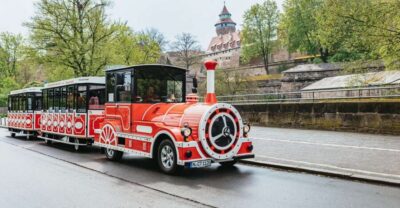
- Nuremberg: City Tour with the Bimmelbahn Train
★ 4.4 · 2,475 reviews - Nuremberg: Old Town Guided Walking Tour
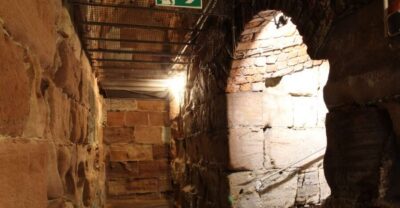
★ 4.6 · 2,416 reviews - Nuremberg: Tunnels and Secret Passages in the City Wall Tour
★ 4.8 · 2,334 reviews
Starting at Hauptmarkt with the city’s basic story
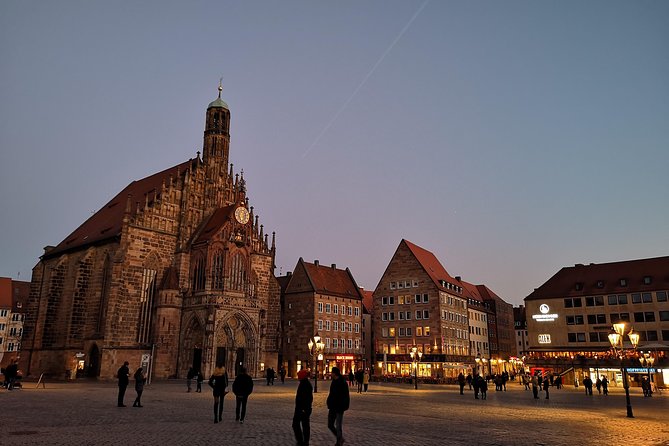
The tour begins at Hauptmarkt 14 at 3:30 pm. This central square is a sensible meeting place because it puts you close to several of Nuremberg’s major sights and public transport connections.
The first stop lasts about ten minutes and sets out the history of Nuremberg. That opening matters. Without it, the later legends can feel like disconnected tales. With a little city background, you can place the churches, walls, bridges, and castle within the growth of a powerful medieval center.
You receive a mobile ticket and confirmation at booking. Since this is a walking tour, arrive with your phone ready and allow a few minutes to locate the guide. Fede is specifically noted for contacting the group and helping with the meeting point, a useful touch in a busy square.
St. Lorenz and the stories behind a grand church
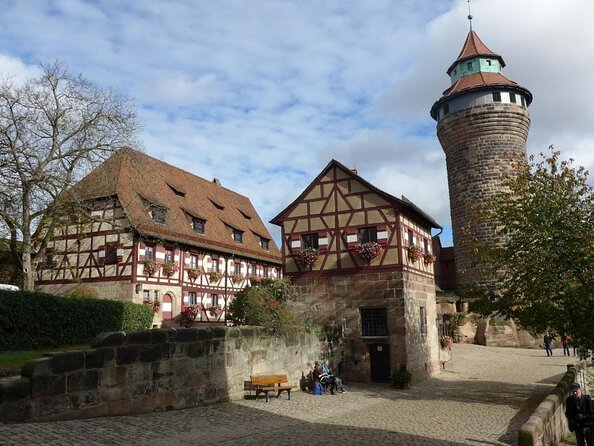
From Hauptmarkt, the route continues to St. Lorenz, where you spend about ten minutes hearing about the church’s construction and particular stories connected with it.
The value here is not only the building itself. A church such as St. Lorenz helps explain the public and religious life of medieval Nuremberg. The stop is brief, so you should think of it as an introduction and a chance to hear the guide’s interpretation, not as a full architectural tour.
If you want to study every sculpture or enter every chapel, you may need to return on your own. The tour’s strength is the larger route, so each stop is designed to keep the walk moving.
Heilig-Geist-Spital and Till Eulenspiegel
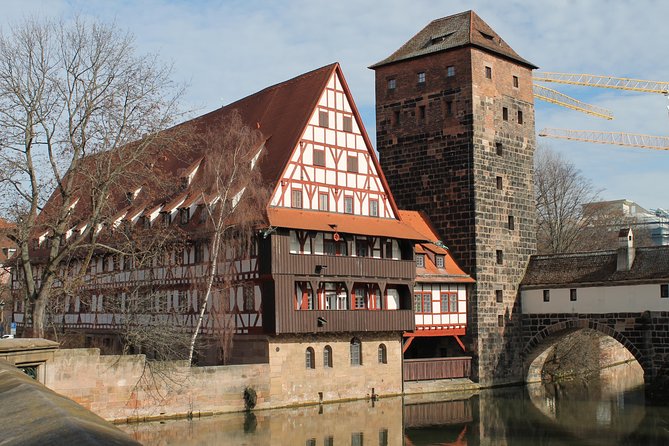
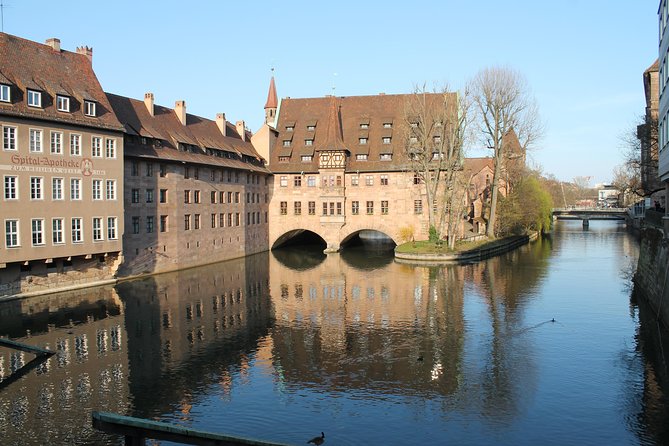
At Heilig-Geist-Spital, the tour turns to Till Eulenspiegel, a famous trickster figure from German folklore. This ten-minute stop adds humor and mischief to a route that also deals with witchcraft, punishment, and death.
That change of tone is useful. Medieval life was not only churches, rulers, and grim judgments. Tales of cleverness and foolishness also shaped how people understood society. The story of Eulenspiegel gives the walk a lighter moment before it moves toward towers, fountains, and more difficult subjects.
The stop is outdoors and part of the continuous walk. You should expect the guide to tell the story on location rather than take you through a dedicated museum display.
Same city, a completely different sort of afternoon:
- Nuremberg: Medieval Dungeons Guided Tour
★ 4.8 · 1,726 reviews - Nuremberg: Walking Tour of Former Nazi Party Rally Grounds
★ 4.7 · 1,665 reviews - Nuremberg: Historischer Kunstbunker WWII Art Bunker Tour
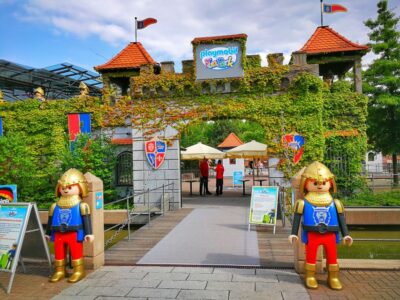
★ 4.8 · 921 reviews - Nuremberg: PLAYMOBIL®- FunPark
★ 4.7 · 863 reviews
Weisser Turm and the old city defenses
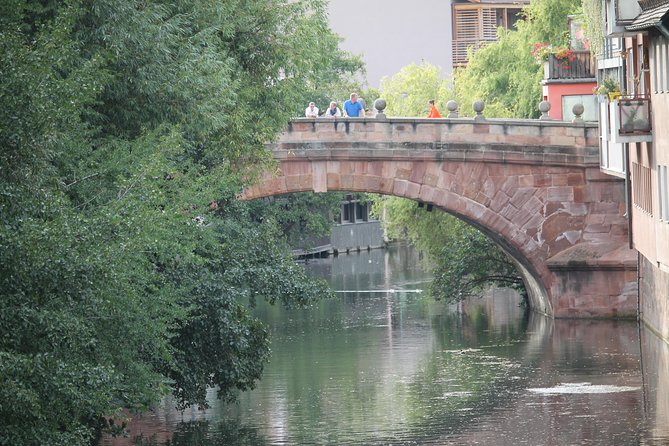
The Weisser Turm, or White Tower, is a short five-minute stop. It marks the tower of the first city wall and gives you a compact lesson in how Nuremberg defended and organized itself.
Five minutes may sound brief, but that suits the purpose. The tower is one piece of a much larger defensive system, and the guide later returns to the city walls near Tiergärtnertor. Together, the two stops help you understand the old town as a fortified place rather than a collection of isolated monuments.
You will want comfortable shoes here and throughout the tour. The route covers several central locations and is designed for walking, not for remaining in one square.
Ehekarussell and the pleasures of married life
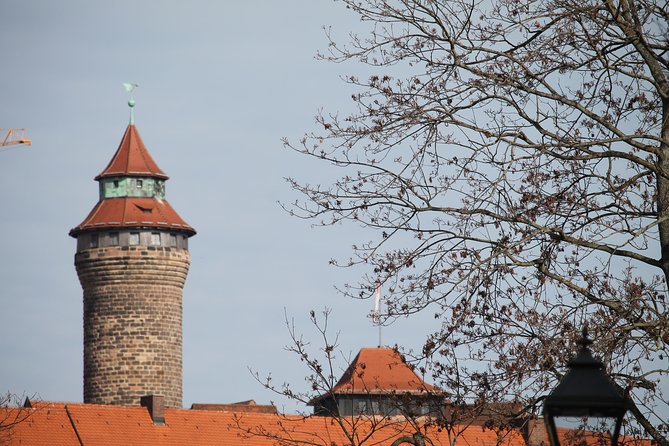
The Ehekarussell fountain receives about ten minutes. Its name refers to the carousel of married life, and the stop examines love, marriage, pleasure, conflict, and the darker side of domestic life.
This is one of the more memorable parts of the route because a public fountain can carry a large amount of social commentary. Rather than treating it as a quick photo stop, the tour uses it to discuss how marriage was viewed and represented.
The fountain is called a source of married life in the tour’s themes, alongside the source of fools and other fountains linked with madness or death. You get a sense of how public art could make moral lessons visible in the middle of daily city life.
Unschlitthaus and the mystery of Kaspar Hauser
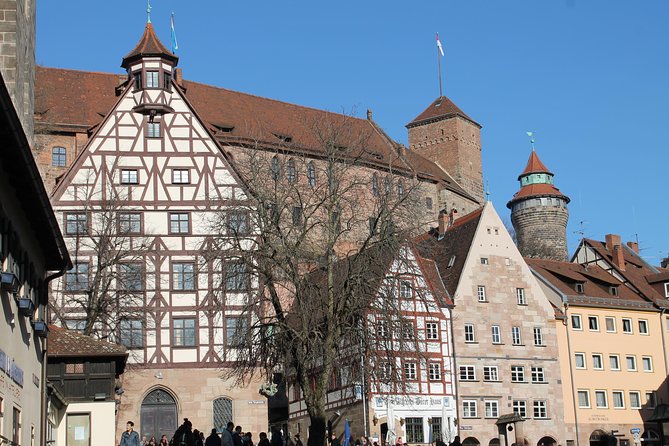
At Unschlitthaus, the focus shifts to Kaspar Hauser, described as the orphan of Europe and one of the most mysterious figures connected with Nuremberg.
The ten-minute stop explores how his story brought palace intrigues to light. This is a break from strictly medieval material, but it fits the tour’s larger aim: showing the city through unusual episodes that reveal fear, power, secrecy, and social control.
You should not expect a full biography or a museum visit. The stop gives you a concise introduction to the mystery and explains why Kaspar Hauser remains such a striking part of Nuremberg’s historical imagination.
Hangman’s Bridge and the city’s least desired job
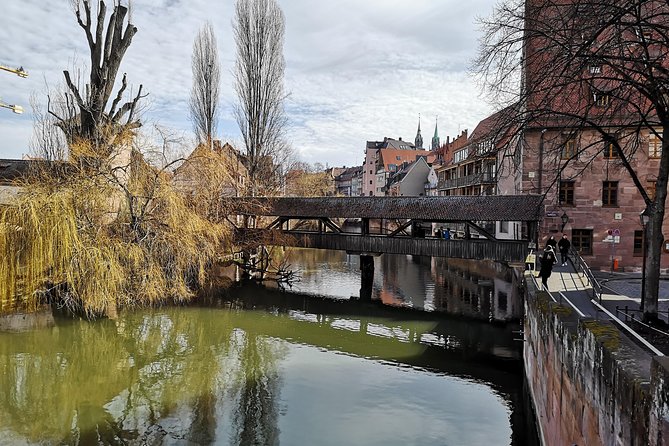
The Hangman’s Bridge is one of the route’s most distinctive stops. For about ten minutes, the guide explains the executioner’s trade, his work, and his place in Nuremberg society.
This subject gives you a blunt look at medieval life. The executioner performed a necessary public function, yet the profession carried stigma. That tension helps explain the social boundaries of the old city better than a list of dates ever could.
The stop also shows why this tour is aimed at people who want more than postcard views. You hear about the people who lived and worked around the grand buildings, including those whose jobs placed them outside polite society.
Weißgerbergasse and the most medieval-looking street
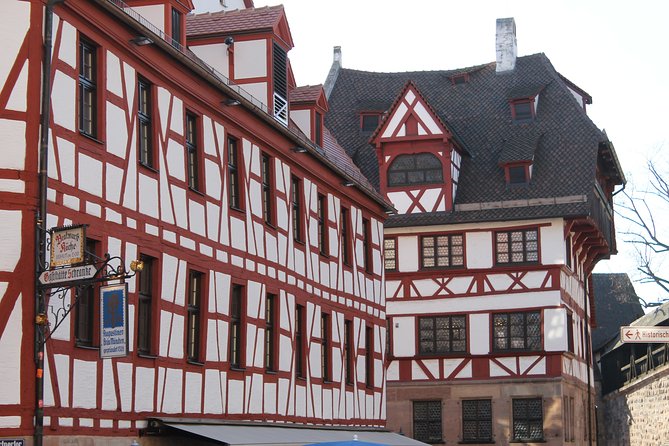
Weißgerbergasse is presented as the most medieval street in Nuremberg. You spend about ten minutes here, taking in one of the route’s most visual sections.
The lane is tied to the city’s craft traditions, especially the work of leather tanners. Its narrow scale and historic buildings help you picture a working neighborhood rather than a ceremonial square. This is a good place to slow down and notice the street itself while the guide explains the trades that supported medieval urban life.
For photography, this may be one of the strongest stops. The route does not treat it only as a backdrop, though. Its real value is the link between architecture and work. The street survives as a reminder that old Nuremberg was built by craftspeople as much as by rulers and merchants.
Tiergärtnertor and the hidden story of the walls
Near Beim Tiergärtnertor, the tour spends about five minutes on Nuremberg’s walls and their less obvious history.
The short timing means you receive the main idea rather than a military lecture. You learn how the walls shaped the city’s limits and helped create the compact old town you are walking through. The phrase city coordinates also points toward the way the fortifications help orient you within Nuremberg.
This is a useful navigation moment. By now, the route has crossed several parts of the center, and the walls give you a physical sense of where the medieval city began and ended.
Kaiserburg and stories of flying horses
The final stop is Kaiserburg Nuremberg, where the tour spends about fifteen minutes. The castle is one of the city’s most important attractions, and ending here gives the walk a strong finish.
The stories at the castle turn dark and legendary. You hear about flying horses and women of bad life, among other tales tied to the fortress and its setting. These stories are not presented as a standard castle chronology. Instead, they add mystery to a monument that already dominates the old town.
The tour ends at Burg 17, at or near the Imperial Castle. That is practical because you can continue with the castle afterward, take photographs, or explore nearby streets without crossing back through the city. The tour itself does not list castle admission as included, so plan to treat any interior visit as a separate activity.
Guide style, group size, and the walking experience
The tour is capped at 30 people. That is not a private walk, but it is still limited enough to keep the group manageable in the old town. Your experience will depend on how close you stay to the guide, especially at public squares and busy streets.
Guide Fede is the only guide named in the available information. He is described as reaching out to help with the meeting point and combining serious preparation with jokes. That blend matters on a route filled with executions, witchcraft, and political intrigue. The humor can keep the tone from becoming heavy.
The walk is conducted in Spanish, so it suits you best if Spanish is your preferred language or if you are comfortable following historical storytelling in Spanish. The route is near public transportation, service animals are allowed, and most people can participate. Specific accessibility details beyond that are not provided, so you should ask before booking if you need information about surfaces, steps, or mobility equipment.
Timing, weather, and what to bring
The 3:30 pm start gives you a useful afternoon option. You can spend the earlier part of the day at a museum or castle interior, then meet the guide for a city walk that finishes at Kaiserburg.
The tour lasts approximately two hours and thirty minutes. Since the itinerary includes ten stops, some talks are short, with five or ten minutes at many locations and fifteen minutes at the castle. You will get a steady sequence of stories rather than long periods at one site.
Bring shoes suited to city walking and clothing for changing weather. The route remains outdoors, and the guide has been praised for keeping the afternoon enjoyable even in rain. That does not mean bad weather will be comfortable, so check the forecast and bring rain protection when needed.
Who will get the most from this Spanish tour
I would choose this tour if you have already seen Nuremberg’s obvious sights and want the city’s legends, trades, and darker social history. It also works well as a first introduction if you prefer stories and neighborhoods to a formal chronology.
You are likely to enjoy it most if you:
- Prefer Spanish-language guiding.
- Like folklore mixed with documented city history.
- Want to see several old-town areas in one walk.
- Enjoy unusual subjects such as witchcraft, executions, and Kaspar Hauser.
- Want to finish near the Kaiserburg.
- Value a low-cost guided experience rather than paid admissions.
I would hesitate if you want long visits inside churches, museums, or the castle. The route is about outdoor interpretation and movement. You will also need to keep up with a group of up to 30 people and accept that the stories, rather than detailed visual analysis, are the main attraction.
Booking value and the practical decision
At $19.60 per person, this is an inexpensive way to add structure to an afternoon in Nuremberg. The price includes the Spanish guide and the full walking route, while the listed stops have no separate admission charge. Soda or pop is not included, though that is hardly a serious cost issue for a city walk.
The free-cancellation rule is useful: you can cancel for a full refund up to 24 hours before the start time. Changes made inside that window are not accepted, and the tour requires a minimum number of participants. If the operator cancels for that reason, you are offered another date or experience, or a full refund.
Should you book this Nuremberg walk?
Book it if you want Spanish storytelling, unusual local legends, and a carefully connected old-town route at a modest price. The combination of the Hangman’s Bridge, Weißgerbergasse, Kaspar Hauser, medieval fountains, and Kaiserburg gives you a side of Nuremberg that a standard landmark checklist can miss.
Skip it if your priority is interior access, museum time, or an English-language guide. For everyone else, especially fans of folklore and social history, the 3:30 pm walk makes a useful afternoon plan. Just arrive at Hauptmarkt ready to walk, watch the weather, and stay with the guide.
FAQ
Where does the Medieval Tour in Nuremberg in Spanish begin?
The tour begins at Hauptmarkt 14, 90403 Nürnberg, Germany.
What time does the tour start?
The scheduled start time is 3:30 pm.
How long does the tour last?
The tour lasts approximately 2 hours and 30 minutes.
Where does the tour end?
The tour ends at the Imperial Castle of Nuremberg, at Burg 17, 90403 Nürnberg, Germany.
Is the tour conducted in Spanish?
Yes. A Spanish-speaking guide is included.
What sights are included on the route?
The route includes Hauptmarkt, St. Lorenz, Heilig-Geist-Spital, Weisser Turm, Ehekarussell, Unschlitthaus, the Hangman’s Bridge, Weißgerbergasse, Beim Tiergärtnertor, and Kaiserburg Nuremberg.
How much does the tour cost?
The listed price is $19.60 per person.
How many people can join the tour?
The tour has a maximum group size of 30 people.
Can I cancel for a full refund?
Yes. You can cancel up to 24 hours before the experience start time for a full refund. Cancellations or changes made less than 24 hours before the start time are not refunded.
Just added around Nuremberg
- Nuremberg: The Old Town in Evening Light – IN GERMAN★ 4.7 · 353 reviews
- Nuremberg Third Reich Tour in Spanish★ 5.0 · 355 reviews
- Nuremberg Old Town and Nazi Rally Grounds Walking Tour★ 4.7 · 377 reviews
- Nuremberg Old Town and Nazi Party Rally Grounds Walking Tour in English★ 4.5 · 504 reviews
- Nuremberg: Hop-On Hop-Off Bus Tour★ 4.3 · 763 reviews
- Nuremberg: PLAYMOBIL®- FunPark★ 4.7 · 863 reviews
- Nuremberg: Historischer Kunstbunker WWII Art Bunker Tour★ 4.8 · 921 reviews
- Nuremberg: Walking Tour of Former Nazi Party Rally Grounds★ 4.7 · 1,665 reviews
Nuremberg Tours, compared.
Tunnels and Secret Passages in the City Wall Tour
Read our review →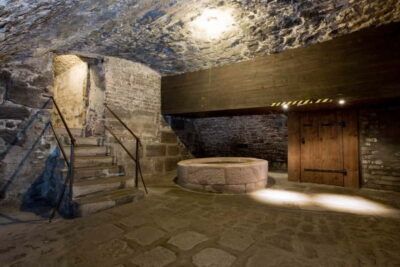
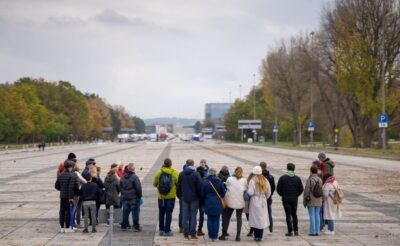
Walking Tour of Former Nazi Party Rally Grounds
Read our review →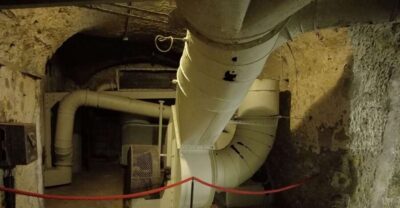
Browse the lists this tour appears in