
Review · BERLIN TOURS
Where It All Began: Berlin’s Queer & Trans History Tour
Berlin’s queer history is not tucked away in a single museum. It is written into ordinary streets, former clubs, memorials, bookshops, and even the names of roads. This tour connects those places, from Karl Heinrich Ulrichs’s early call for gay rights to today’s Pride marches, clubs, and housing activism.
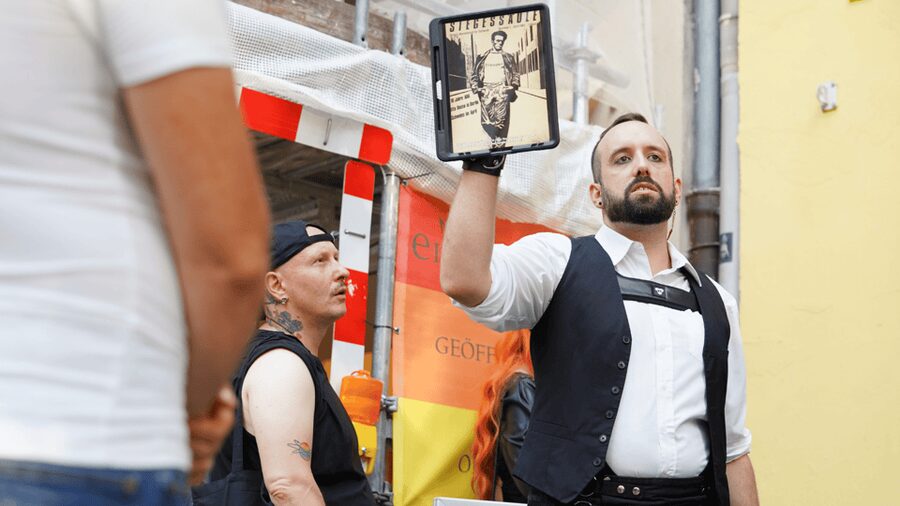
I like the small group of no more than 10, which gives the guide room to explain difficult subjects and answer questions. I also like the iPad-based augmented reality, especially the way old photographs can be placed over the streets where the events happened.
The main consideration is the price, about $83.13 per person, for a walking tour with no food or paid admissions included. You are paying for specialist research, the visual archive, and access to stories that are easy to miss, not for monuments or indoor attractions.
Key points to know before you book
- Trace more than a century of queer life: The route links early gay-rights activism, 1920s lesbian and gay culture, Nazi persecution, post-war organizing, the AIDS crisis, and present-day nightlife.
- See history through an iPad: More than 200 rare photographs, videos, and archival items help you compare past scenes with the streets in front of you.
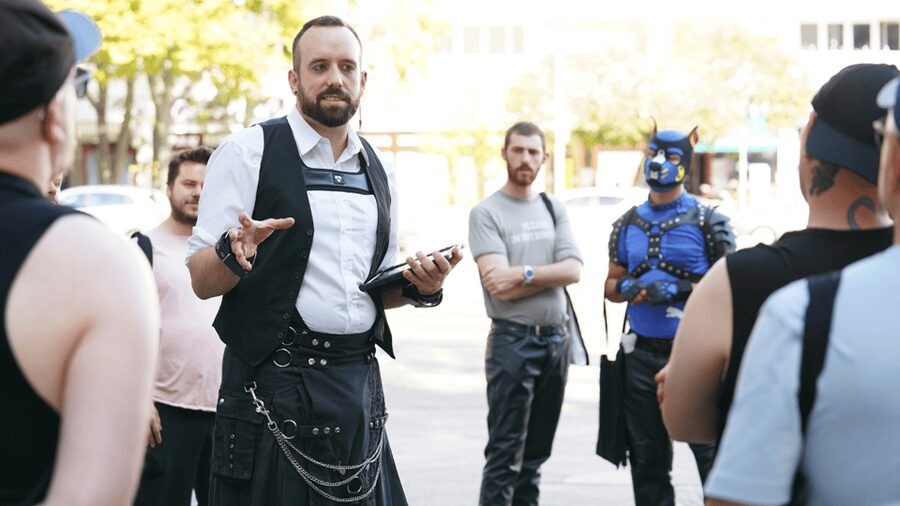
- Expect a serious but lively guide: Jeff, identified as a queer activist and gender scholar, leads the experience with historical detail, humor, and personal insight.
- Visit former nightlife sites: Stops include the former Eldorado drag bar, Chez Romy Haag, Metropol, SO36, and places linked to SchwuZ and Berghain’s club lineage.
- Plan for a full afternoon: The tour starts at 2:00 pm, lasts about three and a half hours, and ends at Metropol in Nollendorfplatz.
- Book ahead if your dates are fixed: This experience is often reserved about 36 days ahead, and its small capacity can make last-minute planning harder.
Why Berlin’s streets make such a good classroom
This tour works because Berlin’s queer past is tied to real addresses rather than only broad dates and famous names. You begin at Alnatura Super Natur Markt on Else-Lasker-Schüler-Straße 18, then walk through Schöneberg and nearby districts toward Nollendorfplatz.
The route does not simply celebrate Berlin as an easy haven. It shows the city’s contradictions. Berlin offered queer people clubs, political groups, and spaces for self-expression, yet those same communities faced police surveillance, criminal law, Nazi terror, the AIDS crisis, and pressure from rising rents.
The iPad adds something a standard walking tour cannot. Jeff can show an old photograph while you are standing at the same address, then use an augmented-reality image to connect the group with the historic setting. The supplied feature called Mixies also lets you make personalized photographs with AR elements, a lighter touch that gives the tour a memorable souvenir.
You should still expect a walking and listening experience first. The stops range from 5 to 20 minutes, and the route includes several outdoor locations. Wear comfortable shoes and bring a rain layer, since poor weather can lead to a new date or a full refund.
More history-led days in Berlin:
- Berlin: Natural History Museum Entrance Ticket
★ 4.6 · 3,382 reviews - Berlin: World Heritage Cruise to Potsdam
★ 4.5 · 1,435 reviews - Berlin Historical Highlights Walking Tour
★ 4.9 · 657 reviews
Karl Heinrich Ulrichs and the first public call for gay rights
The first stop, Karl-Heinrich-Ulrichs-Straße 1, introduces Karl Heinrich Ulrichs, often described as the world’s first gay rights activist. His importance comes from his decision to speak publicly about same-sex desire and argue for decriminalization at a time when queer identities lacked the language used today.
This short, five-minute stop sets the tone. You are not starting with a grand building or a famous club. You are starting with an idea: that people could name their own identity and challenge the law.
For me, this is a useful opening because it places Berlin within a much longer international story. Modern LGBTQIA+ activism did not appear from nowhere in the late 20th century. Ulrichs’s work helped form an early basis for later campaigns around identity, law, and human dignity.
Nollendorfplatz and the dangerous contradictions of Nazi Berlin
At Nollendorfplatz, the tour turns to persecution under the Nazis. This is one of the most serious parts of the afternoon, and it asks you to hold several uncomfortable facts together.
You hear about Adolf Brand, right-wing gay activists, and Ernst Röhm, an openly gay Nazi whose position inside the Nazi party did not protect him. The Night of the Long Knives brought Röhm’s execution along with the killing of many others connected to the party. Hitler’s later policy toward homosexuality helped drive wider persecution.
The tour also explains the pink triangle forced on gay men in concentration camps. That symbol, later reclaimed by parts of the LGBTQIA+ movement, carries the weight of imprisonment, violence, and resistance.
This stop is valuable because it avoids the simple idea that every queer person in Germany shared one political position. Some supported the far right, some resisted, and many were targeted regardless of their private beliefs. The story is painful, but the guide’s role is to connect policy with individual lives rather than leave you with only dates and labels.
Lesbian Berlin at Schwerinstraße 13
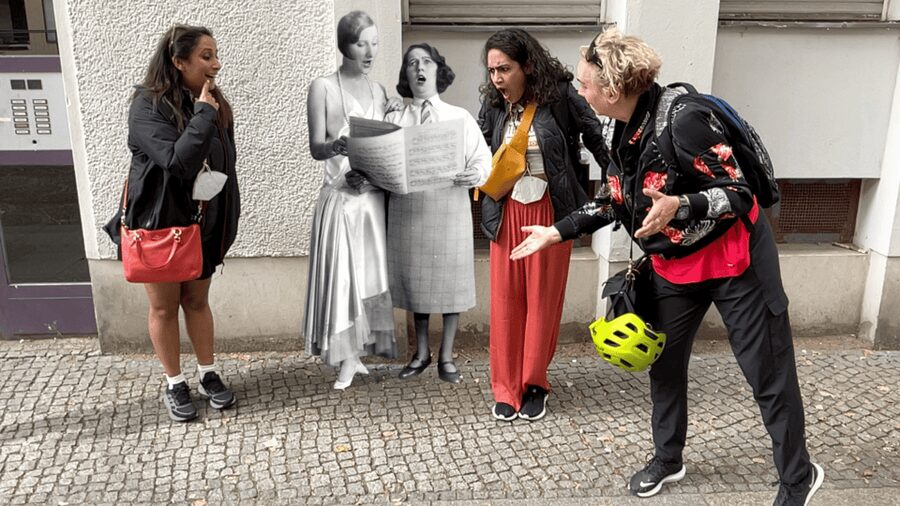
At Schwerinstraße 13, you look at lesbian life in 1920s Berlin through the former site of Toppkeller, a lesbian bar. The stop lasts about 20 minutes and gives needed space to women whose stories are often pushed behind the better-known accounts of gay male nightlife.
Bars like Toppkeller offered more than entertainment. They provided meeting places, community, and a measure of safety for queer women. That matters when you picture 1920s Berlin not as a carefree party town, but as a city where public identity could bring social and legal danger.
The tour also introduces Claire Waldoff, a lesbian cabaret singer whose songs became associated with defiance. Josephine Baker appears here as a bisexual performer and a major cultural figure who attracted people of different genders.
This stop may appeal most if you want a broader account of queer culture. It gives music, performance, and women’s social spaces their proper place instead of treating them as side notes to a mainly male story.
A few more Berlin half-days to weigh up
- Berlin: Reichstag, Dome and Government District Guided Tour
★ 4.7 · 18,288 reviews - Berlin: 1-Hour City Tour by Boat with Guaranteed Seating
★ 4.3 · 16,993 reviews - Berlin: Boat Tour Along the River Spree
★ 4.4 · 11,252 reviews - Discover Berlin Half-Day Walking Tour
★ 5.0 · 9,624 reviews
Christopher Isherwood and the world behind Cabaret
Nollendorfstraße 17 brings gay male life in 1920s Berlin into view. Here you learn about the homosexual department of the Berlin police force, an unexpected institution that shows how official surveillance and queer urban life could exist side by side.
The stop also follows Christopher Isherwood, whose Berlin writing later inspired the musical and film Cabaret. His relationship with Heinz Neddermeyer, and their escape from Nazi Germany as queer refugees, turns a familiar cultural work into a story about real risk.
If you know Cabaret, this section can sharpen your understanding of what the artistic version leaves out. The famous clubs and performances were not just stylish scenery. They were part of a city where queer people sought freedom while facing laws and police systems that could track them.
I would not expect a film-location tour here. The focus is on the people and institutions behind the cultural image, with the street itself serving as the setting for a more serious account.
Magnus Hirschfeld and the lost Institute for Sexual Science
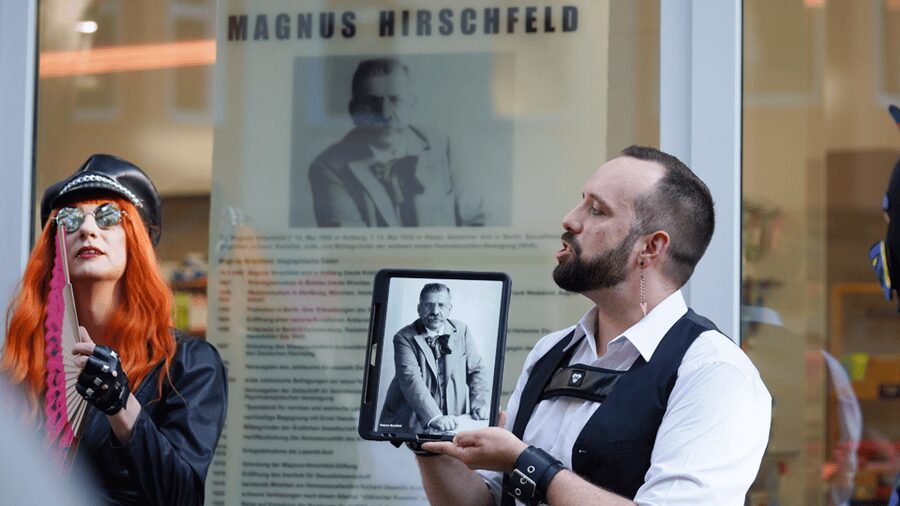
At Magnus-Apotheke, the tour reaches one of its most important historical subjects: Magnus Hirschfeld. His Scientific-Humanitarian Committee is presented as the world’s first organization devoted to queer rights and gender studies.
You also learn about Hirschfeld’s Institute for Sexual Science, his theory of sexual intermediaries, and the idea of Berlin’s third gender. The discussion includes early gender-affirming surgeries connected with Dora Richter, Lili Elbe, and Karl M. Baer, as well as the campaign against Paragraph 175, the law that criminalized homosexuality.
The destruction of the institute by the Nazis is a major loss, not only for Berlin but for the preservation of queer records and research. The tour makes that loss concrete. When a library, clinic, archive, or research center is destroyed, later generations lose far more than a building.
This 20-minute stop is likely to be especially useful if you are interested in trans history, medical history, or the origins of organized rights work. The subject matter is complex, so the specialist guide and visual material help keep it grounded.
Eldorado, drag, and the politics of queer nightlife
The present-day Denns BioMarkt marks the former site of Eldorado, one of Berlin’s best-known drag bars in the 1920s. The contrast between the current business and the former club site is part of the point. Queer venues often disappear physically even when their influence remains.
Eldorado welcomed gender-nonconforming people and queer performers. It also attracted public figures such as Ernst Röhm, a reminder that nightlife could cross political lines in strange and troubling ways.
You will not be walking into the old bar, of course. You are seeing a modern location connected to a vanished one, with the iPad helping restore some of the visual context. This is where the AR feature can be especially helpful, since photographs and video can give shape to a venue that no longer exists.
Post-war activism, SchwuZ, and Charlotte von Mahlsdorf
At Prinz Eisenherz, the route shifts to queer organizing after World War II. You hear about Homosexuelle Aktion West-Berlin, one of the first queer rights groups formed after the war, and the founding of SchwuZ, a club that became central to Berlin’s queer social life.
The stop also highlights Charlotte von Mahlsdorf, a trans woman who preserved Berlin’s queer history and built safe spaces in East Berlin. Her story widens the tour beyond the better-known West Berlin account and shows how queer life developed on both sides of the divided city.
This 15-minute stop is shorter, but it links activism and nightlife in a clear way. Clubs were not only places to dance. They could help people find one another, build organizations, and create room for identities that official society rejected.
Chez Romy Haag and the trans club revolution
At Connection, the focus turns to West Berlin’s trans community in the 1970s and 1980s. Chez Romy Haag, a legendary trans-led nightclub, is presented as a place where gender-diverse people could live more openly and reshape the city’s nightlife.
This is one of the tour’s strongest links between past and present. Berlin’s current queer club culture did not appear fully formed. It grew from venues where performers, club owners, activists, and patrons tested new ways to live in public.
The 15-minute stop gives you a concise look at that change. If your main interest is trans history, pay close attention here and at the Magnus Hirschfeld stop, since the tour connects early medical and political work with later community-led nightlife.
AIDS, divided Berlin, and community survival
At the Internationale Stele GEGEN DAS VERGESSEN, the tour examines the AIDS crisis and the different ways East and West Berlin handled it. This is another 20-minute stop, with an emphasis on community action rather than only political history.
Rita Süssmuth appears as one of the few politicians advocating for AIDS awareness. The tour also explains the metaphor of the Berlin Wall as the condom of the GDR, pointing to the sharp differences between the two systems and their responses to the crisis.
The subject can be difficult, but it is central to understanding modern queer activism. The crisis forced communities to organize around health, education, care, and political pressure. It also changed how governments and the public talked about sexuality.
The memorial marker gives the discussion a physical place. You are not only hearing about a past emergency. You are standing in a city still marked by the lives lost and the activism that followed.
Metropol, Pride, and the fight to keep queer Berlin affordable
The final stop is Metropol at Nollendorfplatz 5, where the tour ends. This location connects early gay nightlife with the later techno scene and with clubs such as Berghain and Lab.Oratory.
The discussion then widens to present-day activism. You hear about SO36’s queer nights, Folsom Europe, Kreuzberg Pride, and the Dyke March. The tour also addresses the radical Tuntenhaus squat and the ongoing struggle to keep Berlin affordable for the people and communities that made its queer culture possible.
That final point keeps the tour from turning history into nostalgia. Clubs can close, rents can rise, and neighborhoods can change. The question is not only what Berlin once offered queer people, but who can still afford to live and gather there now.
Ending at Metropol is practical too. You finish near public transportation and in one of the city’s best-known queer districts, with insider tips on modern nightlife and events.
What the $83.13 price gets you
At about $83.13 per person, this is not a bargain-priced general walking tour. There are no admission tickets, meals, or included drinks. A café break may be offered, but coffee or tea costs extra.
The value comes from the narrow subject, the guide’s specialist background, the 200-plus archival images and videos, and the small group. A standard city tour may pass Nollendorfplatz or Schöneberg without explaining why those places matter. This tour builds a connected story across ten stops.
The small capacity also matters. With only up to 10 people, you should have a better chance to see the iPad screen, ask questions, and follow the guide through sensitive material without the feel of a large crowd.
I would choose this tour if queer and trans history is a main reason you want to understand Berlin. If you only want a quick overview of the city’s major sights, the price may feel high and the specialist focus may not fit your plans.
Timing, meeting point, and who will enjoy it most
The tour begins at 2:00 pm at Alnatura Super Natur Markt, Else-Lasker-Schüler-Straße 18, 10783 Berlin, and ends at Metropol, Nollendorfpl. 5, 10777 Berlin. It lasts about three and a half hours, so keep the rest of your afternoon fairly open.
The route uses public streets and is near public transportation. Service animals are allowed, and most people can take part. Since the activity depends on good weather, check the status before setting out if rain is expected.
I recommend it for first-time visitors who want a focused way into Berlin’s social history, LGBTQIA+ travelers seeking local context, and anyone who prefers stories about people and places over a checklist of monuments. It also suits repeat visitors who have already seen Museum Island and want a different side of the city.
The tour is offered in English. Booking confirmation arrives at the time of booking, and free cancellation is available until 24 hours before the start. If weather or minimum numbers force cancellation, you are offered another date or a full refund.
Should you book Where It All Began?
Book it if you want a serious, place-based account of Berlin’s queer and trans past, with enough humor and visual material to keep the history accessible. Jeff’s engaging delivery, the AR photographs, and the range of subjects are the strongest reasons to choose it.
Think twice if you want a cheap, short stroll or a tour built around famous landmarks. This is a specialist experience, and some sections deal directly with persecution, the AIDS crisis, and loss.
For the right audience, the price is fair. You leave with more than a list of former bars. You gain a clearer sense of how activism, nightlife, gender expression, and political struggle shaped Berlin, and why those issues still matter at the final stop.
FAQ
How long is the tour?
The tour lasts approximately three hours and 30 minutes.
What time does it start?
The tour starts at 2:00 pm.
Where does the tour begin?
It begins at Alnatura Super Natur Markt, Else-Lasker-Schüler-Straße 18, 10783 Berlin, Germany.
Where does the tour end?
It ends at Metropol, Nollendorfpl. 5, 10777 Berlin, Germany.
How large is the group?
The tour has a maximum of 10 travelers.
Is the tour offered in English?
Yes. The experience is offered in English.
What is included in the tour?
A queer activist and gender scholar leads the walking tour. You also receive an iPad for augmented-reality elements, access to more than 200 historical photos, videos, and archival materials, personalized AR photos called Mixies, and tips about modern queer nightlife and events.
Can I cancel for a full refund?
Yes. You can cancel at least 24 hours before the start time for a full refund. Cancellations or changes made less than 24 hours before the start are not accepted for a refund. If poor weather or insufficient bookings cancel the tour, you are offered another date or a full refund.
Just added around Berlin
- eSIM for Germany and 34 European Countries★ 4.5 · 16 reviews
- Your ticket to The Wall Museum Berlin★ 3.0 · 60 reviews
- Walking on the Wall: 3-Hour Tour in Berlin★ 4.5 · 34 reviews
- Rickshaw Tours Berlin – Groups of up to 16 people with several rickshaws★ 4.0 · 97 reviews
- Warnemuende Shore Excursion: Private Berlin Tour★ 4.5 · 27 reviews
- Love and War in Berlin: Self-Guided Story Puzzle Walk★ 5.0 · 7 reviews
- Warnemuende Shore Excursion: Berlin Private Sightseeing Tour from Rostock★ 5.0 · 4 reviews
- Cold War Berlin – Private Live Virtual Experience★ 5.0 · 4 reviews
Berlin Tours, compared.
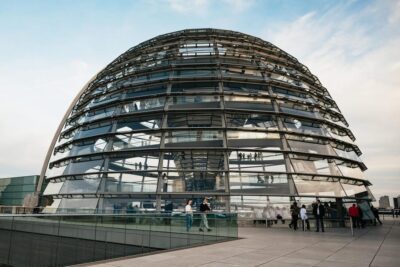
Reichstag, Dome and Government District Guided Tour
Read our review →
1-Hour City Tour by Boat with Guaranteed Seating
Read our review →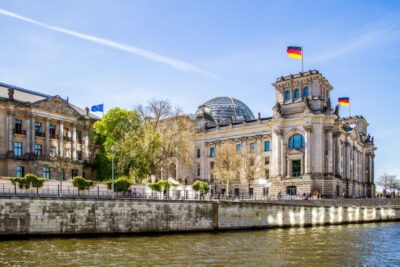
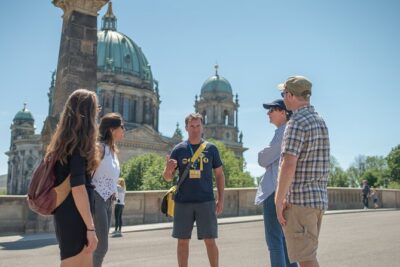
Reichstag, Plenary Chamber, Cupola & Government Tour
Read our review →
Browse the lists this tour appears in