
Review · BERLIN TOURS
Private Taxi Tour City East & West History and Architecture 3-4h
Berlin makes more sense when you see its two halves together. This private taxi tour links the grand Prussian center, West Berlin’s shopping boulevards, Nazi-era sites, Cold War landmarks, and the rebuilt eastern core in one moving lesson. Guide and driver Gunter Bauer adds plenty of detail, personal stories, and a useful sense of how the city changed.
I like two things right away: door-to-door pickup inside the S-Bahn ring, and a warm, private car when Berlin weather turns cold or wet. I also like the chance to shape the route around your interests, from World War II and the Wall to architecture and modern Berlin.
The trade-off is pace. You cover a huge amount of ground in only three to four hours, so most stops are photo breaks and short walks rather than full museum visits. If you want long time inside the Reichstag, Humboldt Forum, or Topography of Terror, you will need to return on your own.
Key points to know before booking
- A private taxi links East and West Berlin: You see Ku’damm and KaDeWe alongside Alexanderplatz, the Brandenburg Gate, Checkpoint Charlie, and the former East Berlin center.
- Gunter Bauer drives and explains: He speaks English, answers questions, and can adjust the tour to your interests.
- The route works well in poor weather: You spend much of the tour in an air-conditioned vehicle, with stops to stretch your legs and take photos.
- The history reaches beyond postcard sights: Expect stories about Prussian kings, Nazi terror, the Berlin Wall, reunification, and the rebuilding of the city.
- Pickup is included within the S-Bahn ring: Airport pickup and locations outside the ring cost extra.
- The listed price is $150.18 per person: Private transport, parking, WiFi, vehicle air conditioning, and both taxi and tour charges are included.
Why a private car helps you understand Berlin
Berlin is spread out. Its major sights do not form one tidy old-town circuit, and the city’s story is split between former East and West. A taxi lets you move from Charlottenburg to Mitte, then across the old Wall line and back toward the government quarter without losing time to train changes.
This is not a hop-on, hop-off ride. You have one guide, one vehicle, and one conversation. That matters if you want to ask why a building looks the way it does, how a street changed after 1989, or what daily life felt like in divided Berlin.
Gunter’s explanations also give the route a human scale. He does not only point at famous buildings. He explains why the Kaiser Wilhelm Memorial Church was partly preserved, why the Victory Column was moved, and how Berlin’s grand boulevards were shaped by kings, war, ideology, and commerce.
The tour has earned a 4.9 rating from 42 reviews, with 100 percent recommending it. The strongest praise centers on Gunter’s friendly manner, careful driving, English fluency, historical detail, and willingness to help with photos or practical questions after the tour.
More history-led days in Berlin:
- Berlin: Natural History Museum Entrance Ticket
★ 4.6 · 3,382 reviews - Berlin: World Heritage Cruise to Potsdam
★ 4.5 · 1,435 reviews - Berlin Historical Highlights Walking Tour
★ 4.9 · 657 reviews
Charlottenburg and the western beginning
The western section usually opens around the Kaiser Wilhelm Memorial Church, one of Berlin’s most effective reminders that the city does not hide its scars. The surviving tower and west portal belong to the original church, erected for Wilhelm I by his grandson and the Hohenzollern family.
Look closely at the entrance sculptures. The faces of the Holy Family and disciples were modeled with Prussian rulers in mind, a small royal touch that makes the building more than a war ruin. The modern church hall and tower were designed by Egon Eiermann and are known for their blue glass blocks. Berliners gave the buildings playful nicknames based on lipstick and a powder compact.
You normally see the church from more than one angle during the drive. From inside, the blue glass creates a quiet, almost enclosed mood despite the traffic and crowds outside. The double-wall construction, with a soundproof air space, helps explain why the interior is so calm.
Nearby, Berlin Zoo recalls the city’s royal past in a different way. Friedrich Wilhelm IV moved animals from Pfaueninsel into part of his hunting grounds, creating one of Germany’s oldest zoos. Its animal gates and historic buildings are worth noting even if you do not enter.
The tour also passes the Theater des Westens, an ornate theater built when wealthy Berliners were moving west from crowded Mitte toward villas and greener streets. Its confectioner-like exterior is easy to dismiss as excessive, but that excess tells you something about the ambitions of early 20th century Berlin. Inside is an imperial box, and today the building is used for musical theater.
Ku’damm, Tauentzien, and Berlin’s shopping face
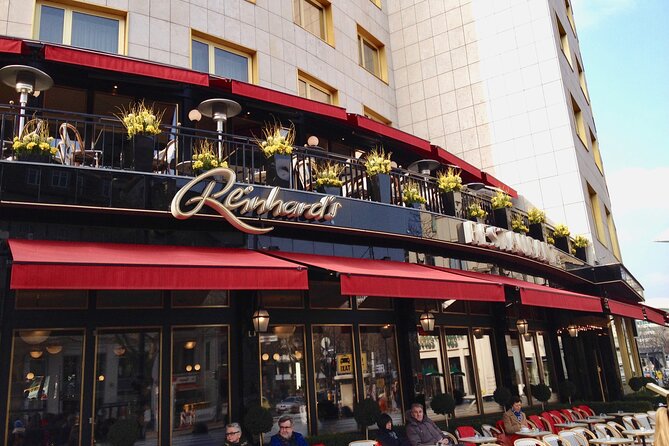
From Kantstrasse, the route turns toward Kurfürstendamm, usually shortened to Ku’damm. This is West Berlin’s famous commercial boulevard, planned in part on the model of Paris’s Champs-Élysées.
At its height, Ku’damm was lined with cinemas, cafés, entertainment venues, and fashionable addresses. Today, the western end leans more toward luxury shopping, with designer names and major flagship stores. That change is useful to see in person: the boulevard still looks grand, but its role is more retail than social.
Tauentzien continues the shopping route toward KaDeWe, or Kaufhaus des Westens. The department store covers about 60,000 square meters and is one of the biggest single department stores in continental Europe. The gourmet floor is the main attraction, with champagne, oysters, chocolate, bread, cheese, and other specialty foods.
KaDeWe is one of the few places on this tour where you may want to stay longer than the planned photo stop. The suggested time is about 15 minutes, enough to look around but not enough for a serious meal or leisurely shopping. If food interests you, ask Gunter in advance if the timing can be adjusted.
The route continues past Wittenbergplatz and Nollendorfplatz, where Berlin’s transport history becomes part of the story. The underground system is old, and the station architecture reflects the city’s early 20th century growth. The former workers’ railway once stopped short of the wealthy villas of Charlottenburg because residents did not want a noisy, dirty train passing their homes.
At Urania, you get another look at Berlin’s civic culture. The organization was founded to make science accessible to a broad audience and still hosts talks and presentations. Nearby Lützowplatz and the broad green traffic strip reflect earlier plans for a car-friendly city. Berlin came close to becoming a very different place, with elevated roads cutting through the center.
Tiergarten and the government quarter
Tiergarten began as a royal hunting ground. Frederick the Great opened it to the public and ordered part of it reshaped into a formal garden. Later, Peter Joseph Lenné transformed it into an English-style park, using the Landwehr Canal to drain wet ground and create paths, lakes, and views.
World War II left the park badly damaged. Trees were cut down, and potatoes were grown near the Reichstag. Allied help later supported reforestation, giving today’s park a second life.
The House of World Cultures, once the American gift-funded Congress Hall, is easy to spot by its curved roof. Berliners call it the Pregnant Oyster. The roof collapsed in 1980, killing a journalist, but the building was reconstructed and now hosts non-European art and cultural events.
Bellevue Palace is the official Berlin residence of Germany’s Federal President. It was built for August Ferdinand, a younger brother of Frederick the Great, and once had a clear view toward Charlottenburg Palace. War damage and postwar rebuilding changed the setting, but the palace remains an important link between Prussian Berlin and the modern federal state.
The Victory Column, or Siegessäule, has its own political journey. It originally stood in front of the Reichstag and had three sections honoring victories over Denmark, Austria, and France. Hitler moved it to its present location while planning a giant new avenue and hall. He added a fourth section after another victory, though history did not provide the outcome he expected.
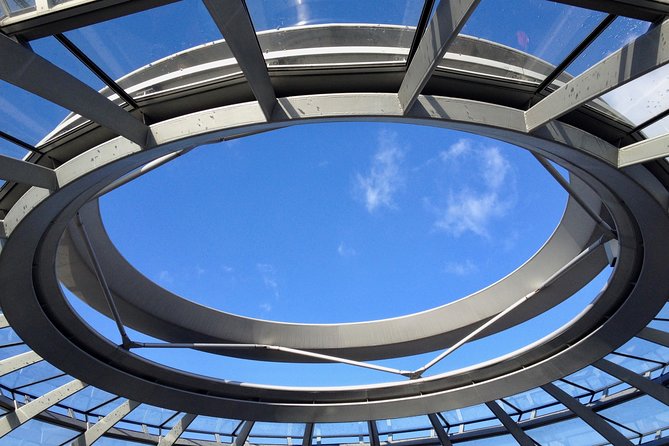
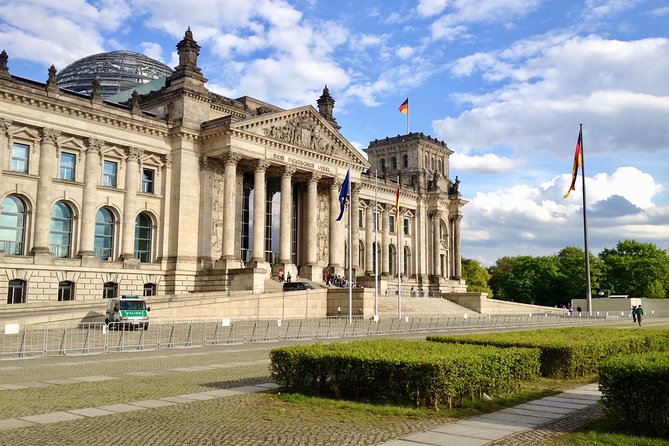
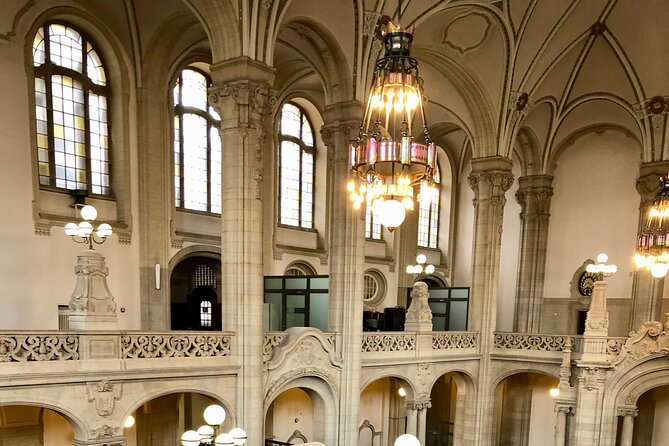
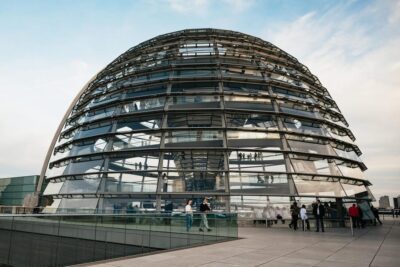
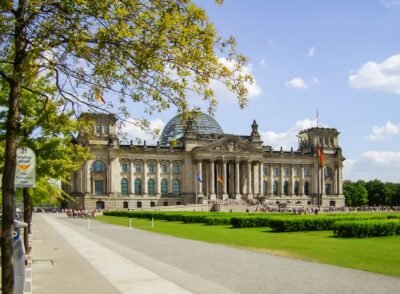
The Reichstag then brings you to the center of modern German democracy. Its Wilhelminian exterior survived war and neglect, while the interior was gutted and redesigned after reunification. The glass dome, added during the renovation, has become one of Berlin’s best-known modern symbols.
You will also pass the Paul-Löbe Building, where much of the actual parliamentary work takes place in committee rooms, and the Federal Chancellery, a huge modern building with hundreds of offices. The route continues by the press area, recognizable by its large central window and blue backdrop.
These government buildings are best understood as a group. They show how reunified Germany placed open, glass-fronted institutions beside older monuments loaded with imperial and wartime associations.
A few more Berlin half-days to weigh up
- Berlin: Reichstag, Dome and Government District Guided Tour
★ 4.7 · 18,288 reviews - Berlin: 1-Hour City Tour by Boat with Guaranteed Seating
★ 4.3 · 16,993 reviews - Berlin: Boat Tour Along the River Spree
★ 4.4 · 11,252 reviews - Discover Berlin Half-Day Walking Tour
★ 5.0 · 9,624 reviews
Mitte, courtyards, and the memory of the Wall
The Hackesche Höfe offer a different side of Mitte. Built in 1908, the connected courtyards were designed to mix workshops, small factories, printing houses, shops, and apartments. The restored Art Nouveau facades make the complex photogenic, but its original purpose was practical: people could live and work in one place.
Today, workshops have largely given way to shops and cafés. You can see products from the Royal Porcelain Manufactory and the famous East Berlin Ampelmännchen, the little traffic-light man. The planned stop is about 10 minutes, so use it for a quick look rather than a full shopping session.
Berlin Central Station provides a sharp contrast. It is enormous, with underground and elevated tracks spread across five levels. The station was built to serve as a true central hub for a city that had previously relied on separate terminal stations in different directions.
The tour then crosses the former East-West border near the Invaliden area. This section connects geography with personal loss. Günter Litfin was killed while trying to escape across the harbor shortly after the Wall went up. The story reminds you that the border was not just a line on a map. It cut through waterways, streets, cemeteries, homes, and families.
Torstrasse and the area around Rosenthaler Tor show how former East Berlin neighborhoods changed after reunification. The district has hotels, hostels, late-night food, bars, and small shops. Its name comes from the old city boundary, where gates once controlled entry into Berlin.
The New Synagogue on Oranienburger Strasse is recognizable by its Moorish details and golden dome. The main synagogue was destroyed during the war, but the front section was rebuilt and now contains an exhibition on Jewish life in Berlin. Security is strict, much like an airport, so do not expect to walk in casually during a short taxi stop.
Brandenburg Gate and the grand center
Unter den Linden was once a royal riding path from the Berlin Palace toward the hunting grounds. Linden trees replaced the proposed nut trees, giving the boulevard its name. Today, the avenue is lined with major institutions, including Humboldt University, the State Opera, the State Library, and the former royal palaces.
At Bebelplatz, a glass panel in the pavement marks the Nazi book burning of May 10, 1933. Below it is an empty library, a stark image of censorship and cultural destruction. Nearby buildings form the Forum Fridericianum, including the former Royal Court Library, St. Hedwig Cathedral, and Humboldt University.
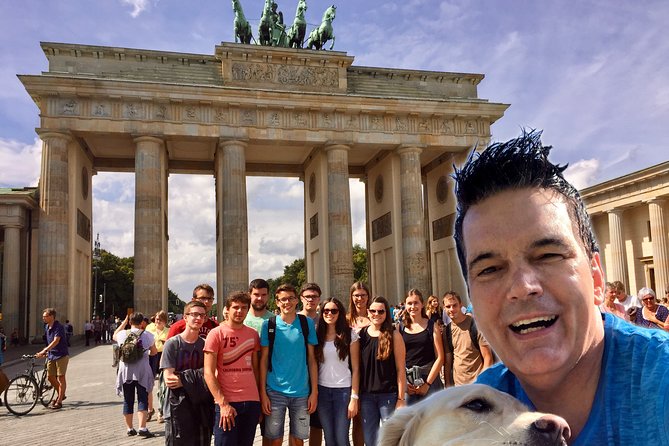
The Brandenburg Gate is the grand photo stop, with about 15 minutes planned. It sits on Pariser Platz, Berlin’s formal front room, surrounded by rebuilt embassies, the Academy of the Arts, the Liebermann House, and the Hotel Adlon.
The Gate once stood isolated by the Wall. From the West, a heavy barrier blocked the approach. From the East, fencing and guards kept people away. After reunification, the square was rebuilt with modern structures that preserve the earlier street pattern.
Gendarmenmarkt follows, often regarded as Berlin’s finest square. The German and French cathedrals flank the concert hall, though neither church is technically a cathedral. Frederick the Great added cathedral-like towers to the meetinghouses, and the French church served Berlin’s Huguenot community.
The Neue Wache is a small but powerful memorial. Once a guardhouse, it now honors victims of war and tyranny. Inside is Käthe Kollwitz’s Pietà, enlarged to commemorate grief on a national scale.
Palace rebuilding and Alexanderplatz
The route passes the Kronprinzenpalais and Kronprinzessinnenpalais, former residences for royal children. The buildings are easy to miss among the larger monuments, but they help fill in the domestic side of the Hohenzollern court.
The former armory now houses the German Historical Museum. Its exterior and courtyard include unsettling images based on death masks of soldiers. The building was designed in the Baroque period by Andreas Schlüter, who also worked on the Berlin Palace.
The Humboldt Forum occupies the former palace site. The East German government demolished the war-damaged palace, leaving a large open area for decades. The new building combines a modern interior with reconstructed Baroque facades and the Schlüter courtyard. Its collections include non-European art and material connected with Humboldt University.
Expect about 30 minutes here, but check what you most want to see before arriving. A short stop can give you the building and courtyard. It cannot cover the full museum.
Alexanderplatz presents a different urban idea. Once called Ochsenplatz, it was reshaped in the GDR period as a broad socialist plaza with large buildings and space for public gatherings. The television tower remains the clearest symbol of that era, built to display the technical confidence of socialist East Germany.
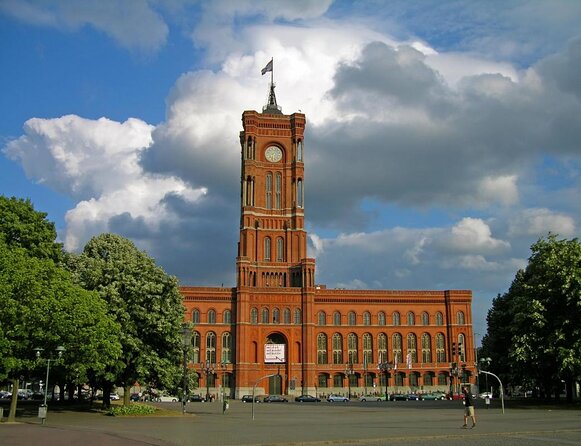
The nearby Red City Hall gets its name from its red brick, not from the political party of the mayor. You can visit selected rooms free of charge, including a room with plaster casts of famous sculptures.
Checkpoint Charlie and the final western return
The route may pass the Kulturforum, built as a counterpart to Museum Island. The Philharmonie, New State Library, New National Gallery, picture gallery, and museums for decorative arts and musical instruments form a major cultural center.
The picture gallery contains old masters by artists including Titian, Caravaggio, and Rembrandt. The area is not always easy to read from the street, and a new building for 20th-century art is planned nearby, so the appearance of the district may continue to change.
Along the Landwehr Canal, you see another example of Berlin’s dependence on water management. The city has about 200 kilometers of waterways, shaped by efforts to drain marshes, move cargo, and connect parts of the growing city.
The former Reich Naval Office and later military headquarters now house parts of the Defense Ministry. The site is linked to the failed July 20, 1944 attempt to kill Hitler. Claus Schenk Graf von Stauffenberg and others were executed in the courtyard after the plot failed.
A brief pass through the embassy district adds architectural variety. Italy, Japan, India, South Africa, Turkey, the Nordic countries, and others use distinct styles and materials. The Nordic embassies share a compound, including Iceland, which is easy to forget when counting the five countries.
Checkpoint Charlie is a short photo stop, about 10 minutes. The guardhouse and sign you see are replicas, not original Cold War equipment. The place is still useful if you understand its role: in October 1961, American and Soviet tanks faced each other here during one of the most dangerous moments of the Cold War.
The nearby Topography of Terror offers a more serious stop. The site brings together Prussian institutions, a Nazi aviation ministry building, the former SS and Gestapo headquarters, excavated torture cells, an outdoor exhibition, and a surviving section of the Berlin Wall. About 15 minutes allows only a quick look, but it is worth returning for the full documentation center.
The final aquarium view near the DomAquarée adds a lighter note. The large aquarium holds many aquatic animals, and its unusual hotel elevator passes through the South Sea tank. It is not part of the main historical story, but it gives the ride one last striking piece of Berlin architecture.
Price, timing, and comfort
The listed price is $150.18 per person, with group discounts available. For a private party, the value depends on how many people share the vehicle. Compared with arranging several taxis, paying for parking, and hiring separate guides, the package can make sense for a group that wants a focused introduction.
The price includes private transportation, WiFi, air conditioning, parking fees, pickup within the S-Bahn ring, and both the taxi fare and tour charge. Lunch and admission tickets are not included.
Allow three to four hours, but understand that this is an overview. You will see far more of Berlin than you could comfortably cover on foot in that time, yet you will not thoroughly tour every interior.
The car is especially useful for older adults, families, and anyone visiting in winter. Child seats are available for toddlers from six months to three years, a booster seat is available for older children, and a baby seat can be requested.
Pickup happens at your chosen city hotel or apartment within the S-Bahn ring. You are asked to come outside after Gunter sends an SMS or WhatsApp message. Airport pickup from BER and pickup outside the ring cost extra.
Free cancellation is available up to 24 hours before the start time. Confirmations arrive at booking, and service animals are allowed.
Should you book this Berlin taxi tour?
Book it if you want a fast, personal orientation to Berlin and prefer explanations in the car to navigating a large city alone. It suits first-time visitors, families, older travelers, and anyone with limited time. It is also a smart choice in cold or rainy weather.
Gunter Bauer’s biggest strengths are his English, historical range, careful driving, friendly conversation, and flexibility. He has also helped with train-ticket questions and sent photographs taken during the tour, so bring a phone number that can receive WhatsApp messages if you want that option.
Skip it if your main goal is long museum time, a slow walking tour, or a tightly focused subject such as only Nazi Berlin or only the Wall. You will get a broad view rather than a specialist seminar.
For the best experience, bring water, tell Gunter your priorities before pickup, and choose two or three sites for a longer stop. That small bit of planning will turn a very wide city tour into one that fits your own Berlin story.
FAQ
How long does the private taxi tour last?
The tour lasts approximately three to four hours.
What language is the tour offered in?
The tour is offered in English.
Is pickup included?
Pickup is included from a hotel or apartment within Berlin’s S-Bahn ring. Pickup from BER Airport or locations outside the ring costs extra.
Is this a private tour?
Yes. Only your own group participates in the activity.
What is included in the price?
Private transportation, WiFi, an air-conditioned vehicle, parking fees, city pickup within the S-Bahn ring, and both the taxi fare and city-tour charge are included.
Are admission tickets included?
Admission tickets are not generally included. The listed stops at KaDeWe, Hackesche Höfe, Brandenburg Gate, Gendarmenmarkt, Humboldt Forum, Nikolaiviertel, and Checkpoint Charlie are shown as free stops, while lunch is not included.
Are child seats available?
A toddler seat for children from six months to three years and a booster seat for older children are available. A baby seat can be brought on request.
Just added around Berlin
- eSIM for Germany and 34 European Countries★ 4.5 · 16 reviews
- Your ticket to The Wall Museum Berlin★ 3.0 · 60 reviews
- Walking on the Wall: 3-Hour Tour in Berlin★ 4.5 · 34 reviews
- Rickshaw Tours Berlin – Groups of up to 16 people with several rickshaws★ 4.0 · 97 reviews
- Warnemuende Shore Excursion: Private Berlin Tour★ 4.5 · 27 reviews
- Love and War in Berlin: Self-Guided Story Puzzle Walk★ 5.0 · 7 reviews
- Warnemuende Shore Excursion: Berlin Private Sightseeing Tour from Rostock★ 5.0 · 4 reviews
- Cold War Berlin – Private Live Virtual Experience★ 5.0 · 4 reviews
Berlin Tours, compared.
Reichstag, Dome and Government District Guided Tour
Read our review →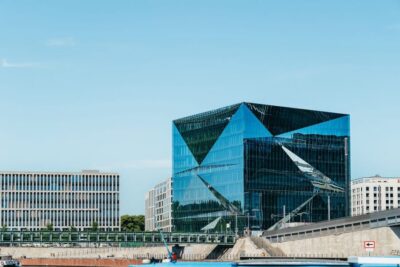
1-Hour City Tour by Boat with Guaranteed Seating
Read our review →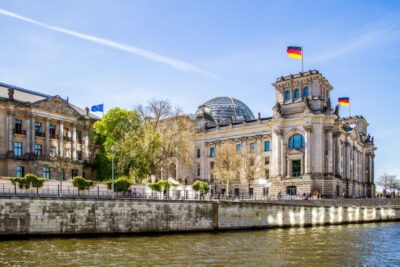

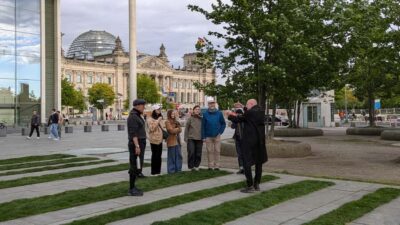
Reichstag, Plenary Chamber, Cupola & Government Tour
Read our review →
Browse the lists this tour appears in