
Review · BERCHTESGADEN TOURS
Eagle’s Nest-Berchtesgaden-Obersalzberg Private Half Day WWII Historical Tour
The most revealing part of this tour is not the famous mountaintop teahouse. It is the chance to connect the Eagle’s Nest with the wider Obersalzberg command center, including bunker tunnels, former Nazi residences, SS housing, and the ruined Berghof. I like the private vehicle and the freedom to ask questions as you go. I also like the way guides such as Tom Lewis and Sharon use old photographs and lesser-known stopping points to make the sites easier to understand.
The catch is time. Four hours is enough for a strong introduction, but the bunkers, museum, Eagle’s Nest, and mountain ruins compete for the same half-day. Admission is extra, and from November to mid-May the Eagle’s Nest building is closed, though the tour continues with a longer account of the site and other WWII locations.
Key points at a glance
- The Eagle’s Nest is only open from mid-May to October, and access still depends on weather.
- The underground bunker section adds essential context to the mountaintop visit, but its €4.50 admission is not included.
- Hitler’s Berghof ruins are reached on foot through the woods, away from the main attractions.
- Tom Lewis and Sharon are named guides associated with this experience, with Tom especially praised for using historic photographs and local research.
- Private transport and a group limit of six make this a good fit for families or friends who want a focused outing.
- The $591.34 group price works best with four to six people, since the fee does not change for a larger group within the limit.
Why Obersalzberg matters beyond the Eagle’s Nest
It is easy to treat the Eagle’s Nest as a dramatic mountain viewpoint with a dark historical footnote. That misses the main story. Obersalzberg was a major center of Nazi power, and the buildings, roads, tunnels, and private compounds spread across the mountainside show how much more was here than a single teahouse.
I find the setting important because it reveals the contrast between the peaceful Bavarian scenery and the decisions made here during the Third Reich. The tour points out the former homes of Hermann Göring and Albert Speer, the former RSD headquarters, and housing once used by SS officers. These locations help you see the area as a working power center rather than an isolated monument.
Your guide also explains the site of Hitler’s Berghof, his former residence on Obersalzberg. The house itself is gone, but the ruins remain in the woods, along with the broad mountain views that once framed the property. That stop gives the tour a more personal and grounded quality. You are not simply looking at a famous building. You are standing where the Nazi leadership lived, worked, entertained visitors, and shaped policy.
More wartime history tours in Germany:
- Berlin: Third Reich and Cold War 2 Hour Walking Tour
★ 4.9 · 6,830 reviews - Munich: Third Reich & WWII Walking Tour
★ 4.6 · 6,181 reviews - Berlin: Sachsenhausen Concentration Camp Tour in English
★ 5.0 · 5,711 reviews
Starting in Berchtesgaden with a private vehicle
The tour begins and ends in Berchtesgaden. Your guide can meet you at Bahnhofplatz 2, near the train and bus station, or at your accommodation in the local area. This matters because the experience is not designed as a day trip from Salzburg or Munich. You need to arrange your own way to Berchtesgaden.
The air-conditioned vehicle saves you from working out the mountain transport and site order yourself. I like that practical side of the tour, especially when the weather is changeable or your group includes several age ranges. You can focus on the commentary and the views instead of watching the clock for connections.
Because it is private, only your group takes part. That gives you room to ask about particular people, buildings, or wartime events without waiting for a larger group to catch up. The guides have also been praised for engaging teenagers and for keeping adults of different ages involved. This is useful on a subject that can become overly technical if the guide does not adjust the pace.
Still, four hours passes quickly. If you want long museum visits, extended time in the bunkers, and a relaxed Eagle’s Nest stop, you should ask about a full-day option before booking. One practical idea is to request a different end point in advance, such as the Documentation Centre, if that fits your plans. Changes may be possible, but they should not be left until the last minute.
Inside the Dokumentationszentrum Obersalzberg bunkers
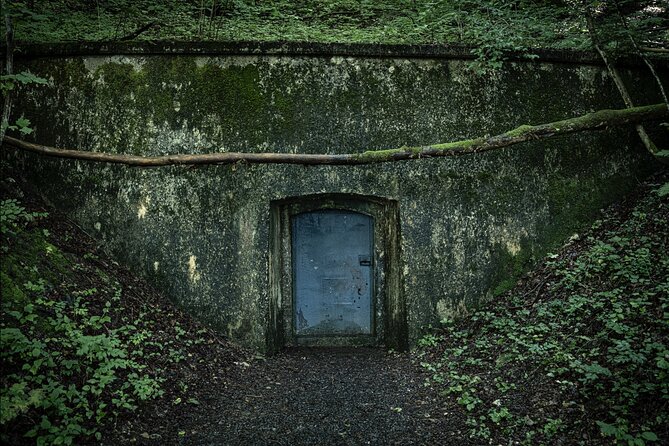
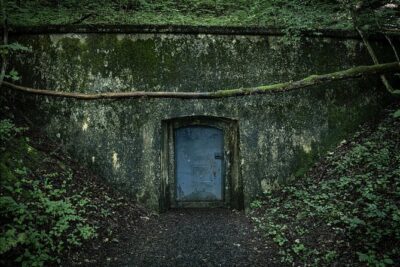
The first listed stop is the Dokumentationszentrum Obersalzberg, where you have the chance to enter an original section of the underground bunker complex. The route leads through twisting tunnels and large chambers buried beneath the former compound.
This is one of the most valuable parts of the tour because it takes the story below ground. The mountain was not just a setting for grand residences and ceremonial rooms. The bunker network reflects the security needs and military importance of the compound, and the physical spaces help explain how the site functioned during the war.
You should allow for a focused visit rather than expecting to see every part of the museum and bunker system. The planned time is about 30 minutes, and the €4.50 admission fee is separate. That is a short window for reading displays, entering the tunnels, and listening to detailed commentary.
I would treat the guide’s explanation as the main value here. Historic photographs can be especially helpful, since many of the original structures above ground were destroyed or altered. Tom has been praised for showing before-and-after images on a tablet, which makes it easier to match wartime photographs with the modern site.
If you are particularly interested in military engineering, underground facilities, or the daily operation of the Nazi leadership compound, this stop may leave you wanting more time. That is the clearest reason to consider the longer tour.
Reaching the Eagle’s Nest at 6,017 feet
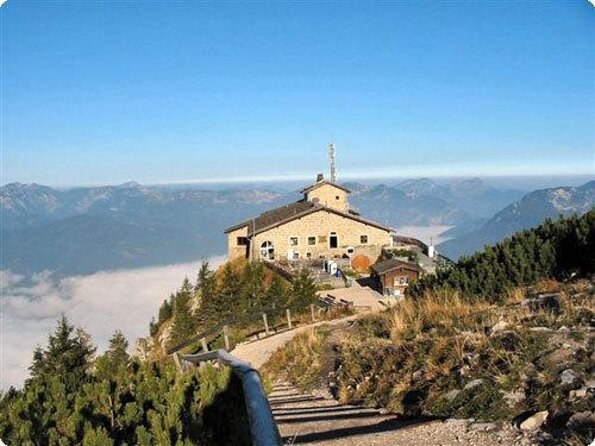
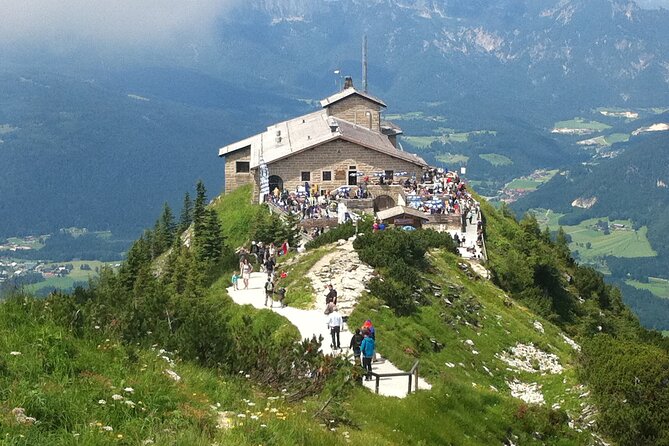
The Eagle’s Nest, or Kehlsteinhaus, is the visual centerpiece of the outing. It sits on Kehlstein mountain at about 6,017 feet, and the approach gives you the mountain setting that made the place so famous.
Inside, the original features include a large marble fireplace and the brass elevator. Those details are striking because they show the building’s deliberately impressive design. The elevator is part of the attraction itself, not just a way to avoid the climb, and the interior offers a direct link to the building’s past as Hitler’s mountain retreat and teahouse.
The visit is not only about the structure. Your guide explains why the building mattered, how it fit into the Obersalzberg compound, and how its popular image can distort the larger story. I appreciate that distinction. The Eagle’s Nest is memorable, but it was only one piece of a much larger network of residences, offices, tunnels, and security facilities.
Admission costs €31.90 per person and is not part of the tour price. You should also keep the seasonal limit firmly in mind. The building is open only from mid-May through October, with weather affecting access. If you book during that period, an unexpected closure can still change the plan.
From November to mid-May, you cannot enter the Eagle’s Nest building itself. The tour does not simply stop being useful, though. The guide gives an in-depth explanation of its historical role and adds an extended drive through Berchtesgaden to other WWII sites. Several people who took the tour in March or April considered the wider Obersalzberg story worthwhile even without the building visit.
That makes the off-season option more than a backup plan, but you should book it for the history rather than for the elevator and mountain interior. If standing inside the Eagle’s Nest is your main goal, choose the operating season and keep weather in mind.
More history-led days in Germany:
- Leipzig: City History Canal Sightseeing Tour on a Motorboat
★ 4.7 · 6,232 reviews - Berlin: Natural History Museum Entrance Ticket
★ 4.6 · 3,382 reviews - Leipzig: 1.5-Hour Historical Walking Tour in German
★ 4.7 · 2,217 reviews - Berlin: World Heritage Cruise to Potsdam
★ 4.5 · 1,435 reviews
Following the Obersalzberg road to lesser-known sites
The driving portion across Obersalzberg is where a private guide can add the most value. From a car window, the remains of a former headquarters or residence can be easy to miss. A guide identifies the location, explains who used it, and places it within the wider compound.
You are shown the former site of Hermann Göring’s home, Albert Speer’s former home and studio, the former RSD headquarters, and former SS officers’ housing. These stops are not presented as isolated curiosities. Together, they show the division of space among senior Nazi officials, security personnel, and staff.
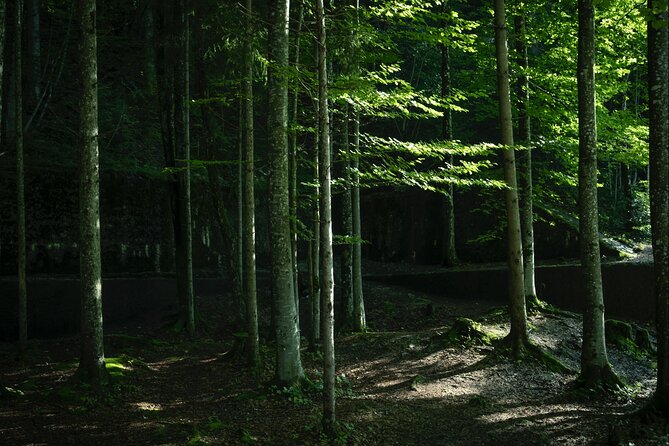
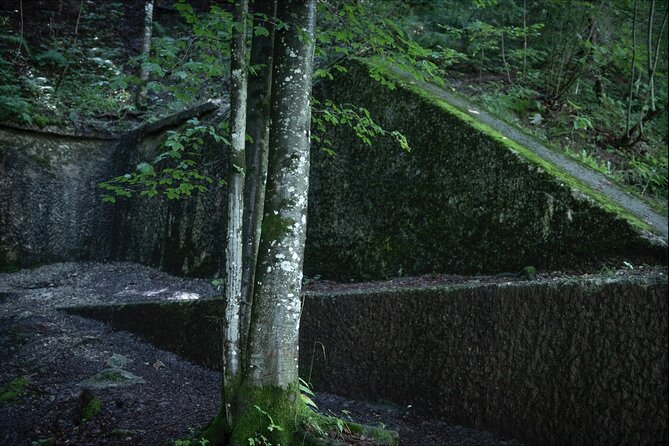
The tour then continues on foot into the woods to the lesser-known ruins of Hitler’s Berghof. This is a more atmospheric stop than the Eagle’s Nest. The building is no longer intact, but the remaining ruins and the view from the former house site help you understand why Hitler valued Obersalzberg as a retreat and center of power.
Wear sensible shoes and be ready for a short walk outdoors. The tour can operate in winter conditions, and one April outing included wintry weather and umbrellas supplied by the guide. That detail tells you to pack for the actual mountain conditions, not just the forecast in central Berchtesgaden.
The woods and ruins may appeal most to people who want a quieter, less polished side of the site. You do not get the same clear architectural experience as at the Eagle’s Nest, but you gain a better sense of the former compound’s size and setting.
The guides and their approach to WWII history
Tom Lewis is the guide most often associated with the strongest praise for this experience. His approach combines local knowledge, historical research, personal contacts, and visual material. He has been described as especially good at correcting myths and showing how the modern area relates to wartime photographs.
That matters because the subject is full of popular stories that are incomplete or inaccurate. A good guide can separate the dramatic details from the documented role of each building. Tom has also been praised for making the subject work for both serious WWII readers and family members who do not usually seek out military history.
Sharon is another named guide connected with the tour. She has been praised for steering a group away from crowded areas and adding important points not obvious from the basic route. That suggests some flexibility in how the day unfolds, though the four-hour limit still applies.
The tone is historical, not celebratory. You visit places associated with Nazi leadership in order to understand their function and consequences. I would choose this tour if you want context, clear explanations, and the chance to ask direct questions. It is less suitable if you only want scenic transport to a mountaintop viewpoint.
What $591.34 means for your group
The price is $591.34 per group of up to six people. That is a substantial fixed fee for a half-day, but the value changes sharply with group size.
For six people, the guide and private vehicle work out to about $98.56 per person before entrance fees. Add €31.90 for the Eagle’s Nest and €4.50 for the bunker section, and the required admissions total €36.40 per person. For two people, the base cost is about $295.67 each before those same admissions, so the tour makes more financial sense for a family or group of friends.
You also pay for time saved. The vehicle, pickup, route planning, and historical interpretation are handled for you. A larger public outing may cost less, but it will not offer the same control over questions, pace, or photo stops.
The main value question is depth. If you want only the Eagle’s Nest, a four-hour private historical tour may feel like more than you need. If you want the bunker, Berghof, Nazi residences, and the broader Obersalzberg story in one organized visit, the fixed group rate is easier to justify.
Food and drinks are not included, so plan to eat before or after the tour. The activity returns to the original meeting point unless another arrangement is made ahead of time.
Who should book this four-hour tour
I would recommend it most strongly for:
- Families who want a private pace and a guide able to keep teenagers involved.
- Friends sharing the cost across four to six people.
- WWII history enthusiasts who want more than the standard Eagle’s Nest photo stop.
- Visitors staying in Berchtesgaden who value door-to-door transport within the local area.
- Off-season visitors willing to trade the building visit for a wider historical driving tour.
- First-time visitors who would struggle to identify the former compound sites on their own.
You should think twice if your main aim is a long museum visit, an unhurried mountain outing, or a low-cost public excursion. The half-day schedule is efficient, but it is not leisurely.
Most travelers can participate, service animals are allowed, and the tour is near public transportation. The experience requires good weather. If poor conditions force a cancellation, you are offered another date or a full refund. You can cancel for a full refund up to 24 hours before the start time, but late changes are not accepted.
Should you book the Eagle’s Nest historical tour?
Book it if you want the full Obersalzberg story rather than a quick look at one famous building. The strongest parts are the private transport, the bunker access, the Berghof ruins, and guides such as Tom Lewis who can connect present-day sites with historic images and careful explanation.
For the best value, bring a group of four to six and book during the Eagle’s Nest operating season if entering the building is essential. If you are visiting in winter or early spring, book only if you are happy to focus on the bunkers, ruins, former compounds, and the guide’s historical account.
The tour gives you a clear framework for understanding why Berchtesgaden mattered to Nazi leadership. It is compact, serious, and packed with places you could easily pass without noticing. For a private half-day introduction to WWII history in Berchtesgaden, I would choose it, while keeping the time limit and extra admission fees in view.
FAQ
Where does the tour start and end?
It starts and ends in Berchtesgaden. Pickup is available at Bahnhofplatz 2, near the train and bus station, or at accommodation in the local area.
Can I join the tour from Salzburg or Munich?
No. The tour starts and ends in Berchtesgaden, not Salzburg or Munich.
How long does the experience last?
The tour lasts approximately four hours.
Is the Eagle’s Nest open all year?
No. The Eagle’s Nest is open from mid-May through October, depending on weather. From November to mid-May, the building itself cannot be visited, but the guide provides an in-depth historical account and extends the driving tour to other WWII sites.
Are entrance fees included?
No. The Eagle’s Nest entrance fee is €31.90 per person, and the Dokumentationszentrum Obersalzberg bunker admission is €4.50 per person.
How many people can join the private tour?
The price covers one private group of up to six people.
What happens if poor weather cancels the tour?
You are offered a different date or a full refund if the experience is canceled because of poor weather.
Just added around Germany
- From Berlin: Gardens & Palaces of Potsdam Bike Tour★ 5.0 · 61 reviews
- Berlin: Battle for Seelow Heights WW2 tour -Clash of Titans★ 5.0 · 27 reviews
- From Berlin: Historical Gems of Potsdam Private Day Trip★ 4.4 · 4 reviews
- From Amsterdam: Cologne Private Sightseeing Tour★ 5.0 · 4 reviews
- Freiburg: Veni, vidi, vino – wine hike and tasting★ 4.5 · 144 reviews
- From Alken: Return Day Trip by Boat to Cochem★ 4.6 · 141 reviews
- Fritz Haarmann – Die Mördertour★ 4.6 · 41 reviews
- Freiburg: Tour of the city with cathedral visit★ 4.7 · 167 reviews
Berchtesgaden Tours, compared.
Browse the lists this tour appears in