
Review · MUNICH TOURS
Dachau Small-Group Half-Day Tour from Munich By Train
Dachau is not a sightseeing stop in the usual sense. It is a place of memory, and this five-hour tour gives you the historical framework needed to understand what you are seeing, from the rise of Hitler to the camp’s liberation and later transformation into a memorial. The train and bus journey from Munich is part of the experience, not a nuisance, since your guide leads you through each transfer.
I like the small group of up to 20 people, which makes it easier to hear the guide and ask questions. I also like the practical transport help. Guides such as James have been praised for knowing which part of the platform to use, keeping the group together, and using short waits to explain the history.
The main drawback is the pace. The site is large, the subject is emotionally heavy, and five hours must cover both the journey and the memorial. You get some time to look around independently, but this is not a loose, all-day visit with unlimited museum reading.
Key points to know before booking
- You travel by train and bus from Marienplatz: Your guide handles the public transport connections, which keeps the morning organized.
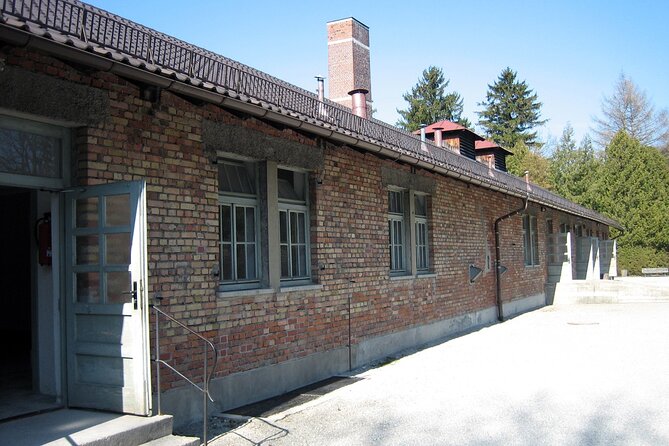
- The tour covers the full public memorial site: Expect the main gate, prisoner registration, camp history, liberation, postwar use, and the documentation center.
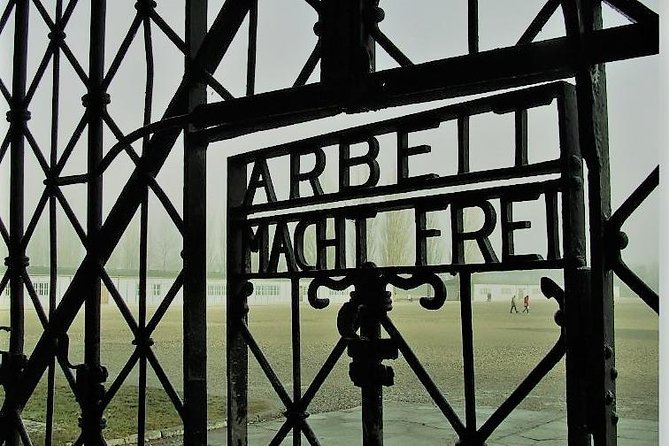
- The history begins before Dachau: The guide explains Hitler’s rise, the Nazi Party, the Reichstag fire, and the formation of the camp system.
- The atmosphere is serious and sometimes intense: This is an educational memorial visit, not casual sightseeing.
- You need to arrive by 8:45 a.m.: The group leaves Marienplatz at 9:00 sharp and cannot wait for late arrivals.
- Prepare for indoor and outdoor walking: Comfortable shoes and weather-appropriate clothing matter, and food is not provided.
Why this Dachau tour matters
Dachau was the first regular concentration camp established by the Nazi regime in 1933, and it later served as a model for other camps. That makes the site important not only for what happened there, but also for understanding how the wider camp system developed.
A visit on your own can show you buildings, memorials, and exhibits. A guide can connect those pieces. You need someone to explain how political repression expanded, how prisoners were classified, why Dachau mattered to the SS, and how the camp system changed over time.
That context is the strongest reason to choose this tour. The guide does not simply point out the entrance and barracks. The presentation begins with the political climate of the 1920s and Hitler’s appointment as Chancellor in 1933. It then follows the burning of the Reichstag, the growth of concentration camps, and the way Dachau became a training center for SS personnel.
The result is a visit that links individual places to a larger process. The main gate is not just a famous photograph. The prisoner categories are not just colored symbols. The liberation is not treated as the final page. You are shown how each part fits into the history of the camp and the memorial that exists today.
More WWII History Tours in Munich
- Munich: Third Reich & WWII Walking Tour
★ 4.6 · 6,181 reviews - Dachau Concentration Camp Memorial Site Tour from Munich by Train
★ 4.5 · 5,637 reviews - Third Reich Walking Tour Munich
★ 4.5 · 4,291 reviews
Meeting at Marienplatz at 8:45 a.m.
The tour begins at Marienplatz 15 in central Munich. The official start is 9:00 a.m., but you need to arrive 15 minutes early for check-in. This is important because the group leaves on time and cannot hold the train connection for late arrivals.
That early meeting point is convenient if you are staying in central Munich or can reach the square by public transport. It also gives the guide a chance to gather the group before the more complicated part of the morning begins.
Bring only what you need. The tour lasts about five hours, and refreshments are not supplied. You can buy snacks and drinks at several places near the meeting area, so it makes sense to eat something before departure.
The group size is limited to 20 people. That is not private touring, but it is small enough for a guide to keep track of everyone during the train and bus transfers. It also helps at the memorial, where several groups may be moving through the same spaces.
The train and bus journey from Munich
Round-trip public transport is included in the price. You travel from Marienplatz by train and then continue by bus to the memorial site. On the way back, the guide organizes the return trip to Munich, ending at the original meeting point.
This arrangement offers real value. You could reach Dachau without a tour, but you would need to work out the train and bus connections yourself, keep an eye on timing, and find your way through the site without the same historical explanation. The transport is not luxurious, but it is straightforward when someone experienced is leading the group.
The transfer time also becomes useful teaching time. Guides such as James have used short waits to explain the rise of the Nazi Party and the structure of the camp system. That helps the morning begin before you even arrive at the memorial.
You should still expect normal public transport conditions. There may be short waits, standing, and movement between the train and bus. Wear shoes that can handle walking on gravel and concrete. One practical advantage of the guide is that you do not need to focus on finding the correct platform position or bus connection while also preparing yourself for the memorial visit.
Entering through the Jourhaus and Arbeit Macht Frei gate
The first major part of the memorial is the Jourhaus, the former main gatehouse. Its gate carries the Nazi slogan Arbeit Macht Frei, or Work Sets You Free. Seeing those words in their original setting is disturbing because the slogan was part of a system designed to deceive, humiliate, and control prisoners.
Your guide places this entrance in the history of Dachau rather than treating it as a photo stop. You learn how prisoners arrived, how the site was organized, and why Dachau became a model for other concentration camps.
The tour covers the three main phases of the camp system. That broad structure helps you understand that Dachau was not static. Its role and prisoner population changed over time, as did the wider Nazi system of imprisonment and persecution.
This opening section can be crowded. Other groups may be present, and the guide may adjust the order of stops to avoid waiting in busy areas. That flexibility is useful because it keeps the visit moving without skipping the main points.
More wartime history tours in Munich:
- From Munich: Dachau Memorial Site Day Tour
★ 4.8 · 2,723 reviews - From Munich: Dachau Memorial Site Half-Day Trip
★ 4.7 · 2,526 reviews - From Munich: Dachau Memorial Site Full-Day Tour
★ 4.9 · 1,406 reviews - Dachau Concentration Camp Memorial Tour with Train from Munich
★ 4.5 · 955 reviews
Prisoner registration and the categories of persecution
One of the more important parts of the visit is the explanation of prisoner registration. You learn how people were processed when they arrived and how the Nazi system assigned different categories to prisoners.
The colored symbols on prisoner uniforms represented those categories. The guide explains how the markings were used and how the population of Dachau changed by year. This is where the camp’s bureaucracy becomes clear. The system did not rely only on physical walls. It also used paperwork, labels, classification, and routine administration to strip people of their identities.
The tour also covers the first major influx of Jewish prisoners after Kristallnacht, the November 1938 pogrom against Jews. That subject helps connect Dachau to events beyond the camp itself and shows how persecution intensified before the mass extermination phase of the Holocaust.
You will also hear about ghettos and extermination camps, as well as concentration camps. These terms are not interchangeable, and the guide’s explanation helps clarify the different functions within the Nazi system. This is especially useful if your previous knowledge comes mostly from films, school lessons, or museum displays.
Barracks, camp functions, and the SS training role
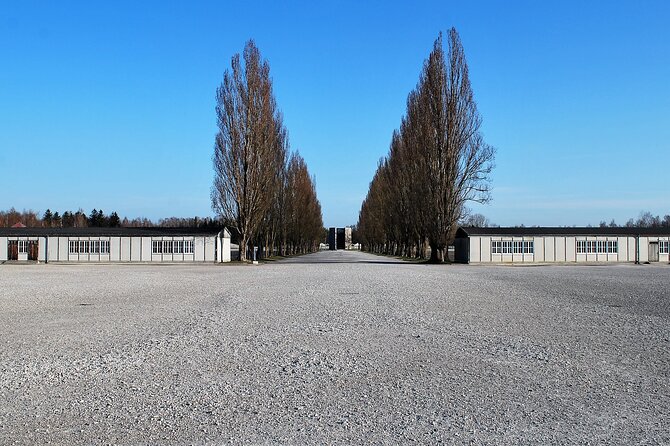
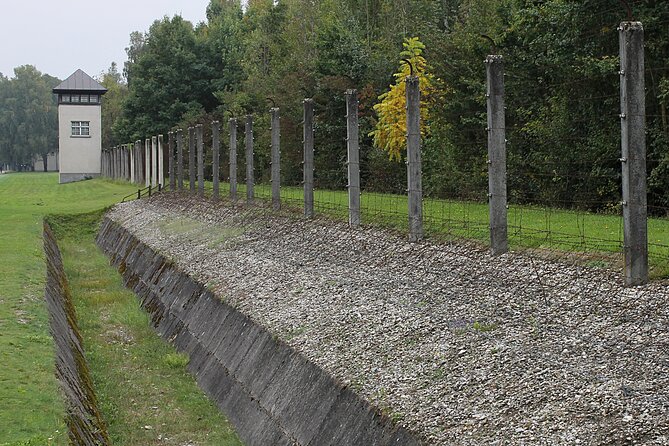
The memorial site includes all areas open to the public, and the tour explains how the camp functioned day to day. Dachau’s role as an SS training facility is a key part of that story.
The guide helps you see the camp as both a place of imprisonment and a center for spreading methods of control to other camps. That detail gives the site an importance beyond its physical boundaries. What happened at Dachau influenced how the camp system operated elsewhere.
The tour also addresses the daily experience of prisoners, including arrival, registration, classification, life in the camp, and the ways prisoners left. The subject is difficult, but the presentation is intended to be clear rather than sensational.
You should expect a mixture of indoor and outdoor sections. Some spaces offer exhibits and historical material, while others require walking across open ground. The weather can affect the experience, so check the forecast and bring suitable layers, rain protection, or sun protection as needed.
Liberation and the memorial after 1945
Dachau’s liberation is covered along with what happened afterward. The history does not end when American forces arrived. The site was used in the postwar period, and the tour explains the years between 1945 and the opening of the documentation center in 1965.
This later chapter is easy to miss on a self-guided visit. Many people focus on the Nazi period and leave without considering how Germany handled the former camp after the war. Learning about the site’s changing purpose adds an important layer to the memorial.
The documentation center helps present the camp’s history in a structured way. Still, you should allow yourself time to read independently where possible. The guided portion is strong on explanation, but several parts of the exhibitions deserve a slower look.
This is one of the tour’s main tradeoffs. The guide keeps you moving and makes sure you see the key areas, but five hours is not enough for every display and every document. If you tend to read every panel, you may wish for more free time.
A guide who handles both history and logistics
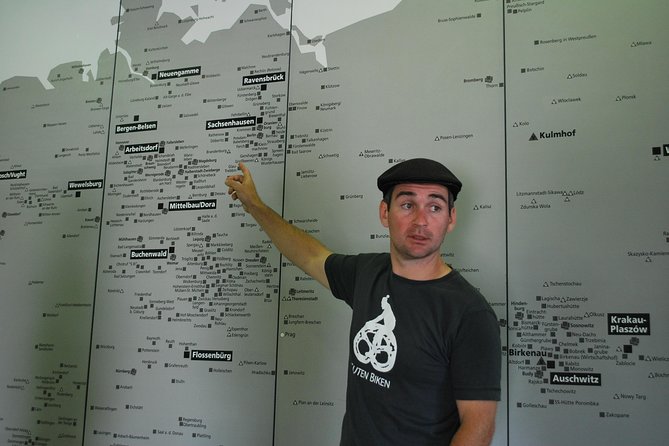
The strongest part of this experience is the guide’s role. A good guide must manage two very different tasks: moving a group through public transport and a busy memorial, while also explaining material that demands care and accuracy.
James has been especially praised for handling the train and bus connections, choosing practical platform positions, keeping the group together, and adjusting the route when certain parts of the site are crowded. That matters more than it may sound. A poorly managed transfer can drain time and energy before the main visit begins.
He has also been praised for speaking clearly enough to hear in a group setting and for allowing a few minutes to explore independently. The presentation is described as detailed but not so rushed that you cannot absorb it.
Samuel has also led this experience, including tours for families with teenagers. His approach has been described as connecting the history of the 1930s and 1940s with questions about government, injustice, and the present day. The exact guide may vary, but the tour is built around a licensed professional rather than an audio recording or a simple route map.
The emotional tone matters. Guides are expected to treat the memorial and the victims with respect. This is not a place for theatrical storytelling or casual jokes. The best moments come from precise explanation, quiet attention, and room for serious questions.
Price, group size, and overall value
The price is $60.46 per person. Admission to the memorial is free, and public transport to and from the site is included. So you are paying mainly for the guide, organization, and interpretation.
I consider that fair value if you want structure and historical context. The transport alone is not the reason to book, since Dachau can be reached by public transportation. The value comes from having someone lead the connections, explain the site in sequence, answer questions, and make sure the important areas are not missed.
A group of up to 20 people keeps the cost well below that of a private tour. The compromise is that you will not control every stop or set your own pace. You may need to wait for the group, and you will have less time for personal reading than on an independent visit.
The tour is recommended by 98 percent of customers and has a 4.9 rating from 811 ratings. Those figures point to a consistently strong experience, especially in guide quality and organization. They do not change the nature of the subject. A high rating here reflects a well-run educational visit, not a light or entertaining outing.
Who should book this half-day visit
I would choose this tour if you are visiting Munich for a few days and want to understand the Nazi period and Holocaust through a serious visit to an actual memorial site. It suits adults, students, history readers, and families with older teenagers.
Students can select the youth price category, but they must bring valid identification on the day. Children under 14 are not allowed to join guided tours at the memorial, so families should check the age rule before booking.
You should also be ready for an emotionally demanding morning. The memorial can feel intense, and the subject is not suitable for someone looking for a relaxed day trip. That does not mean you need specialist historical knowledge. The guide supplies the needed background, but you should arrive prepared to listen and reflect.
Service animals are allowed, and the site is near public transportation. Most people can participate, though you should consider the amount of walking on gravel and concrete and the mixture of indoor and outdoor areas.
Practical ways to prepare
Eat before the tour or buy something near Marienplatz. No food or drinks are provided during the five-hour activity, and there is no scheduled meal break.
Wear comfortable shoes. Even though the tour uses public transport, you will walk around a large memorial site on hard and uneven surfaces.
Check the weather. A cold, rainy day can make an already difficult visit more tiring, while hot weather can make outdoor sections uncomfortable. Dress in layers and bring suitable protection.
Arrive at 8:45 a.m. The departure time is 9:00 a.m. sharp, and late arrivals cannot be accommodated. Keep your confirmation available on your phone, since the ticket is mobile.
Finally, leave room in your schedule afterward. The tour returns to Marienplatz after about five hours, but the emotional effect may last longer. You may not feel like rushing straight into another busy attraction.
Should you book the Dachau tour from Munich?
Book it if you want a guided, well-organized introduction to Dachau and prefer not to manage the train, bus, and memorial route alone. The combination of transport help, a maximum group of 20, and serious historical explanation makes the $60.46 price reasonable.
Choose a self-guided visit instead if you want to spend unlimited time reading, move at your own pace, or already know the history well. You will need to arrange transportation yourself and provide your own context.
For most first-time visitors to Dachau, I would book the guided option. The memorial deserves more than a quick walk through the gate and a few photographs. A careful guide helps you understand how the system developed, what the camp meant, and why the site remains important today.
FAQ
Where does the Dachau tour begin?
The tour begins at Marienplatz 15, 80331 München, Germany. You should arrive by 8:45 a.m. for check-in before the 9:00 a.m. departure.
How long does the experience last?
The tour lasts approximately five hours and ends back at the meeting point in Munich.
Is transportation to Dachau included?
Yes. Public transportation costs to and from the memorial site are included. The journey uses a train and bus from central Munich.
Is admission to the memorial included?
Admission to the Dachau Concentration Camp Memorial Site is free. The tour price includes the licensed guide and public transport.
Can children join the guided tour?
Children under 14 are not permitted to join guided tours at the memorial site. Students may use the youth price category but must show valid identification on the day.
Is food provided during the tour?
No. Refreshments and snacks are not provided. You can buy food and drinks at several locations near the meeting point before departure.
Can I cancel the booking?
You can cancel up to 24 hours before the local start time for a full refund. Cancellations or changes made less than 24 hours in advance are not accepted, and the experience may also be canceled if its minimum number of participants is not reached.
More Half-Day in Munich
- Early-Start Dachau Memorial Half-Day Tour from Munich
★ 5.0 · 942 reviews - Discover Berlin Half-Day Walking Tour
★ 5.0 · 9,624 reviews - Berlin Third Reich Sites: Half-Day Walking Tour
★ 5.0 · 835 reviews - Potsdam Half-Day Walking Tour from Berlin
★ 4.5 · 398 reviews
More Rail Days in Munich
- Guided Dachau Concentration Camp Memorial Site Tour with Train from Munich
★ 5.0 · 920 reviews - Nuremberg Guided Day Trip from Munich by Train
★ 4.5 · 546 reviews - From Munich: Nuremberg Day Trip by Train
★ 4.4 · 357 reviews - Nuremberg: City Tour with the Bimmelbahn Train
★ 4.4 · 2,475 reviews
Just added around Munich
- Munich: Express Walk with a Local in 90 minutes★ 5.0 · 7 reviews
- Exploring Munich in a Rikscha★ 4.9 · 33 reviews
- Exploring Munich by Pedicab: Premium Two Hour Tour★ 5.0 · 10 reviews
- Erding: 1-Day Spa Ticket at Therme Erding★ 4.5 · 50 reviews
- Munich: KUNSTLABOR 2 Entry Ticket★ 4.2 · 89 reviews
- Private Van Tour to the Royal Palace of Herrenchiemsee★ 5.0 · 6 reviews
- From Munich: Königssee Day Trip with Boat Ride and Salt Mine★ 4.5 · 93 reviews
- Culinary Haidhausen – The Food Tour★ 4.3 · 4 reviews
Munich Tours, compared.

Neuschwanstein & Linderhof Castle-Fairytale Day Tour from Munich
Read our review →
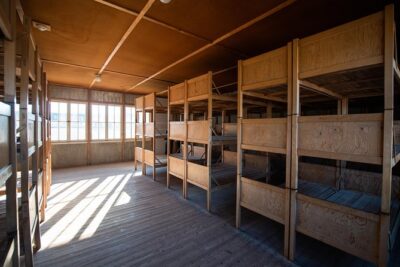
Dachau Concentration Camp Memorial Site Tour from Munich by Train
Read our review →
Munich Hop-On Hop-Off Tour: 1-Day or 2-Day Ticket
Read our review →Browse the lists this tour appears in