
Review · MUNICH TOURS
From Munich: Dachau Memorial Site Full-Day Tour
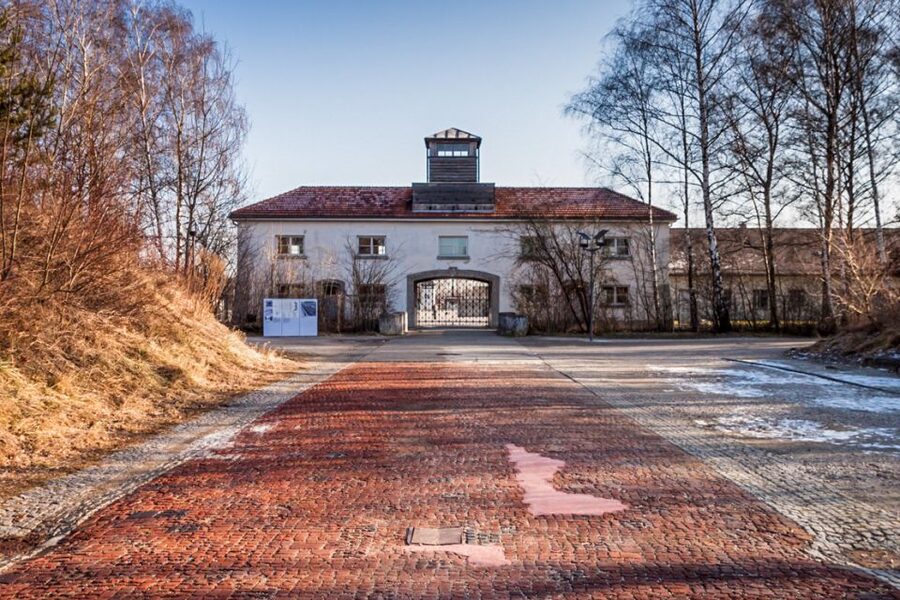
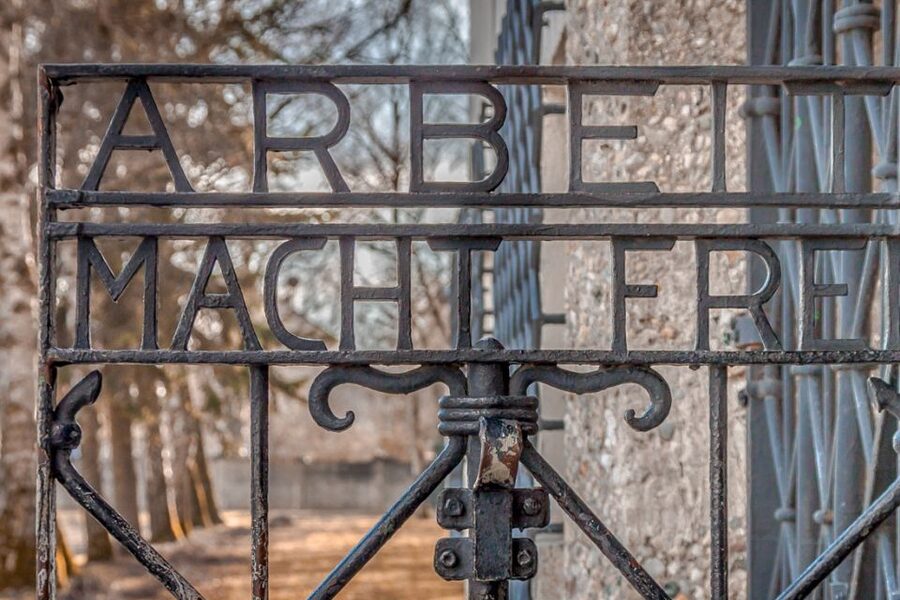
Dachau is not a sightseeing stop in the usual sense. It is the former Nazi concentration camp that operated for the full 12 years of the regime, and this tour takes you through its surviving buildings and memorial spaces with a Memorial-qualified guide. The first shock comes at the Jourhaus, where the infamous Arbeit Macht Frei sign still hangs over the entrance.
I like two things here: the guide handles the Munich-to-Dachau transport, and the nearly four-hour visit gives the site the time it demands. Guides such as Sam, Adam, Marcin, Hein, Keith, and Scott have been praised for clear explanations, survivor stories, thoughtful pacing, and calm organization. The main drawback is that this is a long, emotionally heavy day with no meal break, and the local train can be crowded.
Key points to know before booking
- A full four hours inside the Memorial Site: This is not a quick photo stop. You have time to follow the prisoner route, see the main buildings, and pause at important locations.
- Public transport from central Munich: Meet at Marienplatz, then travel by train and bus with your guide. The journey takes about two hours in total.
- Small-group feel: The group may be limited to about 14 people, which makes it easier to hear the guide and ask questions.
- A serious, graphic subject: The tour covers imprisonment, torture, forced labor, punishment, and death. It is not suitable for children under 14.
- Bring water and eat first: Food cannot be eaten during the tour at Dachau, so have a substantial breakfast or eat on the train.
- Best for visitors who want context: You can visit alone, but the guide connects the buildings, systems, and personal stories in a way that is hard to achieve from signs alone.
Why Dachau needs a guided visit
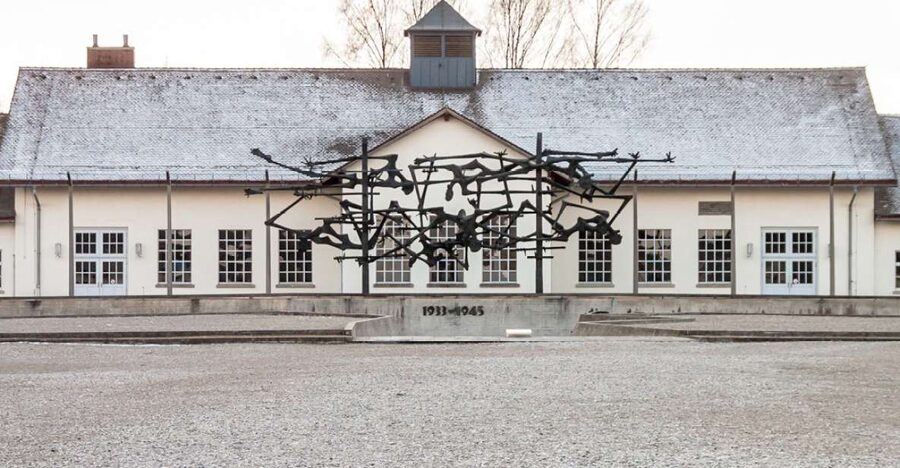
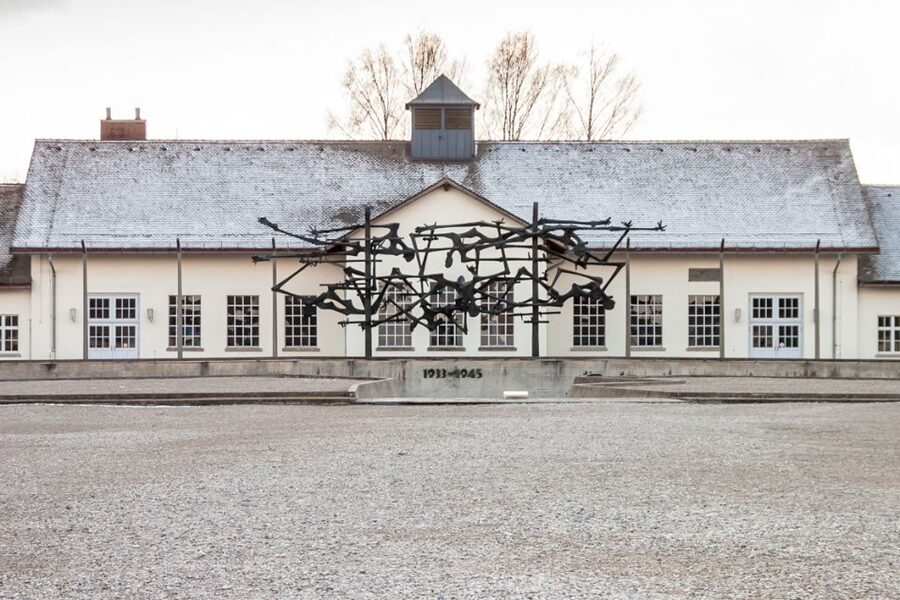
Dachau was the first permanent concentration camp built by Nazi Germany. It opened in 1933 and remained in operation until 1945, making it a model for the wider camp system and a place of terror far beyond its gates.
That history can be difficult to grasp by simply walking across the site. The buildings are stark, and some spaces may look quiet or empty at first. A good guide explains what each area was used for, how prisoners were processed, and how the camp’s daily routine turned cruelty into an organized system.
The route covers the camp’s three main phases of development and explains how the site changed over time. You learn about the first prisoners, registration on arrival, camp rules, punishment, torture, forced labor, and the conditions faced by people held there.
I find the guided format especially useful at a memorial site because it helps you avoid treating the place like a collection of old buildings. The guide keeps attention on the people who passed through the gates and on the choices that made the system work.
More WWII History Tours in Munich
- Munich: Third Reich & WWII Walking Tour
★ 4.6 · 6,181 reviews - Dachau Concentration Camp Memorial Site Tour from Munich by Train
★ 4.5 · 5,637 reviews - Third Reich Walking Tour Munich
★ 4.5 · 4,291 reviews
Meeting at Marienplatz and traveling to Dachau
The morning begins in central Munich at Marienplatz, in front of the Ludwig Beck department store at Marienplatz 11. Look for the white and blue umbrella and signs for the Dachau Tour.
From there, the group uses Munich’s public transport. The subway or metro portion takes about 40 minutes, followed by a bus ride of roughly 10 minutes to the Memorial Site. The return trip follows the same general pattern, with about 10 minutes by bus and 40 minutes by train.
This arrangement is practical for several reasons. You avoid arranging separate tickets, you do not have to work out the route yourself, and the guide can explain the plan before you arrive. Adam, one of the guides named in the tour feedback, was particularly praised for keeping the group organized and dealing calmly with a U-Bahn disruption.
The tradeoff is that you are traveling during the day on ordinary public transport. The train can be very crowded in both directions, so do not expect a private coach or a quiet ride. The two hours of transport are included in the six-hour schedule, and comfortable shoes are important from the start.
Arriving at the Dachau Memorial Site
There is a short break of about 15 minutes after arrival. Use it for the restroom and water because eating is not permitted while you are on the tour at Dachau.
You should eat a good breakfast before meeting the group. You can also bring a snack to eat on the train, but do not plan on stopping for a meal inside the Memorial Site. This small detail matters more than it might on an ordinary day trip, especially since the guided visit lasts close to four hours.
The site is not suitable for everyone. The activity is listed as unsuitable for people with mobility impairments, wheelchair users, and people with respiratory issues. The tour involves walking between buildings and outdoor areas, and the provider does not offer hotel pickup or drop-off.
Walking through the Jourhaus and Appellplatz
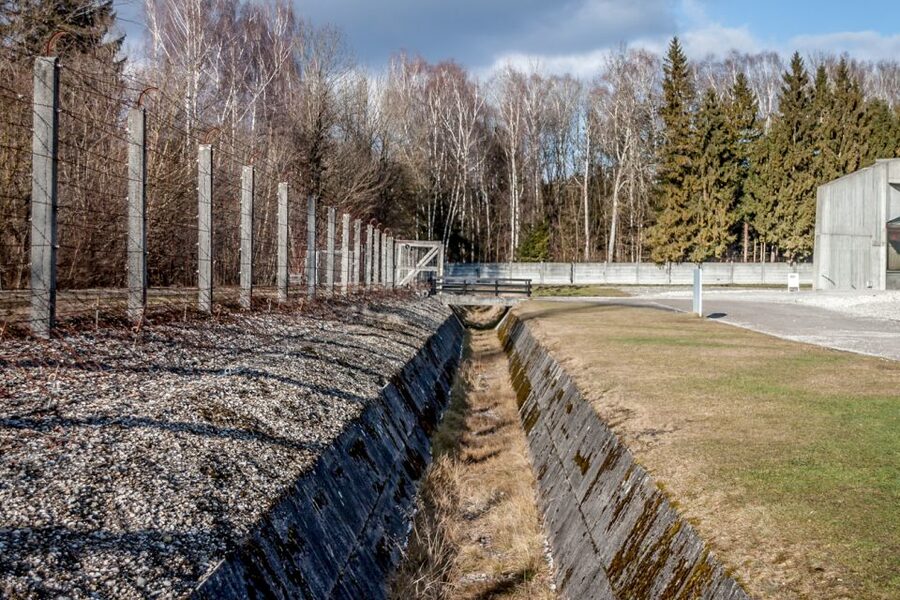
The first major stop is the Jourhaus, the entrance building and gateway into the camp. This is where you see the Arbeit Macht Frei sign, one of the most recognizable and disturbing symbols connected with Nazi concentration camps.
Your guide sets the sign and entrance in context rather than treating it as a dramatic photo opportunity. From here, the route leads into the Appellplatz, the roll-call square where prisoners were assembled and counted.
The Appellplatz helps you understand how control operated at Dachau. The camp was not only a place of confinement. It was a carefully controlled institution in which registration, roll calls, orders, punishment, and surveillance shaped every part of daily life.
This is one of the points where the guide’s pacing matters. Sam has been praised for giving clear explanations while keeping a comfortable walking pace, and Adam for making sure no one fell behind. On a serious visit like this, good organization is not a small extra. It lets you concentrate on the site instead of wondering where to go next.
More wartime history tours in Munich:
- From Munich: Dachau Memorial Site Day Tour
★ 4.8 · 2,723 reviews - From Munich: Dachau Memorial Site Half-Day Trip
★ 4.7 · 2,526 reviews - Dachau Concentration Camp Memorial Tour with Train from Munich
★ 4.5 · 955 reviews - Early-Start Dachau Memorial Half-Day Tour from Munich
★ 5.0 · 942 reviews
The Bunker and the prisoner experience
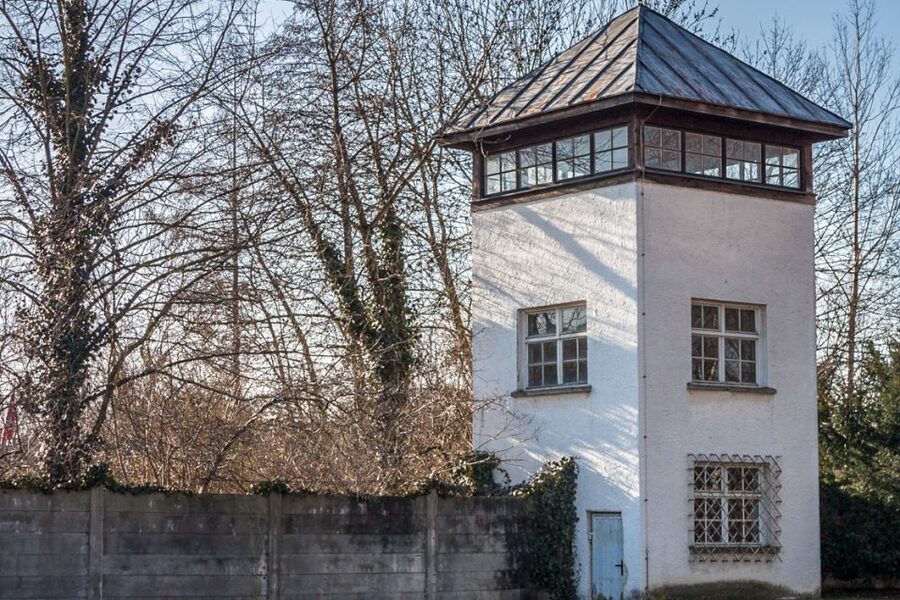
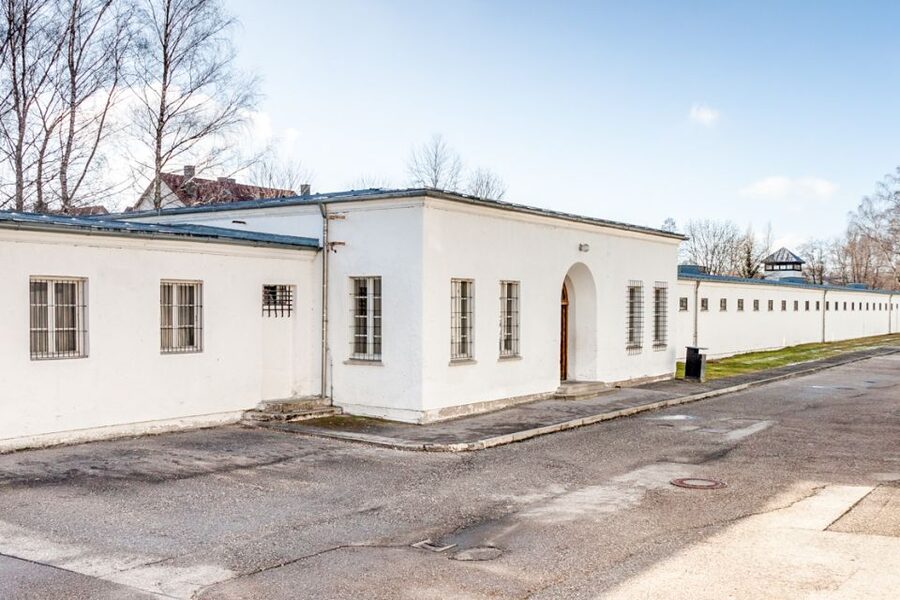
The Bunker was the camp prison. It is one of the most important buildings on the route because it shows how punishment operated within the camp itself.
Here, the guide explains the treatment of prisoners and the system of torture and discipline. The focus is on how the camp processed people from arrival through registration and punishment, not just on isolated incidents.
You should expect difficult material. The tour is designed for visitors aged 14 and older, and children under 14 are not permitted. Young people aged 14 and above may attend only with parents who understand the graphic nature of the subject. Proof of age may be requested.
The guides are experienced in presenting the site to younger visitors, but the Memorial Site itself warns that some themes and exhibits are unsuitable for children under 14. I would take that guidance seriously. This is not a suitable family outing for younger children.
The barracks and Barrack X
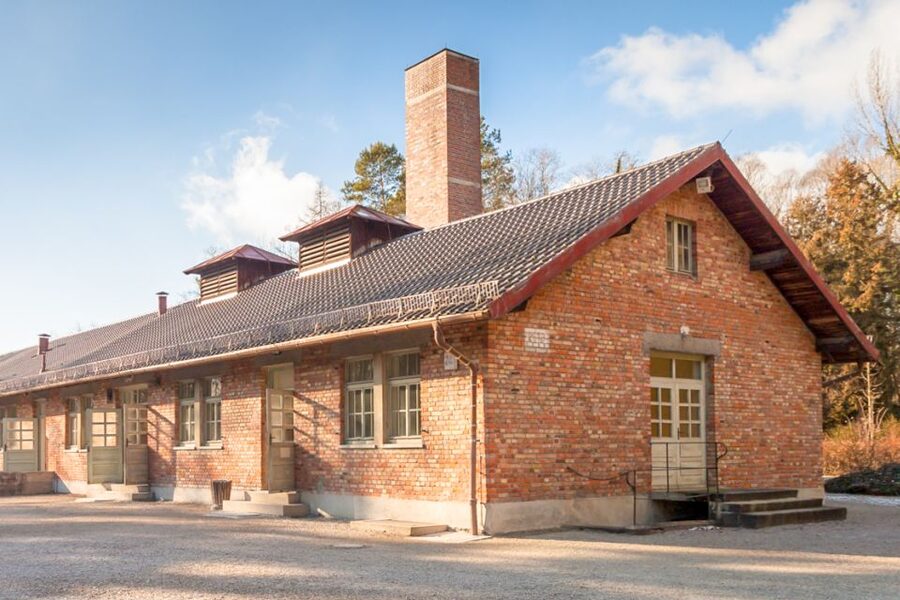
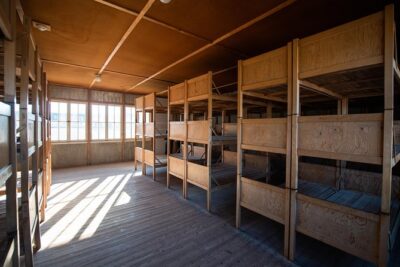
The former barracks show the physical conditions in which prisoners were housed. The buildings and displays help explain crowding, routine, hierarchy, and the loss of privacy that defined camp life.
Barrack X is another key stop. The guide explains its place within the camp and the wider machinery of imprisonment and death. The route is not simply a tour of rooms. It links the buildings to the camp’s operation, showing how the entrance, roll-call square, prison, barracks, and other facilities worked together.
You may find that the most powerful moments are not always the largest displays. A quiet room, a short personal account, or an explanation of how prisoners were handled on arrival can make the system more understandable and more painful to consider.
Several guides have shared survivor accounts or stories connected with people who lived through the period. Adam, in particular, has been praised for adding personal stories learned from survivors and for encouraging visitors to read the text rather than rely only on photographs. That is useful advice here. The written accounts are not background decoration. They are central to understanding the human cost.
The S.S. Training Facility, the School of Terror
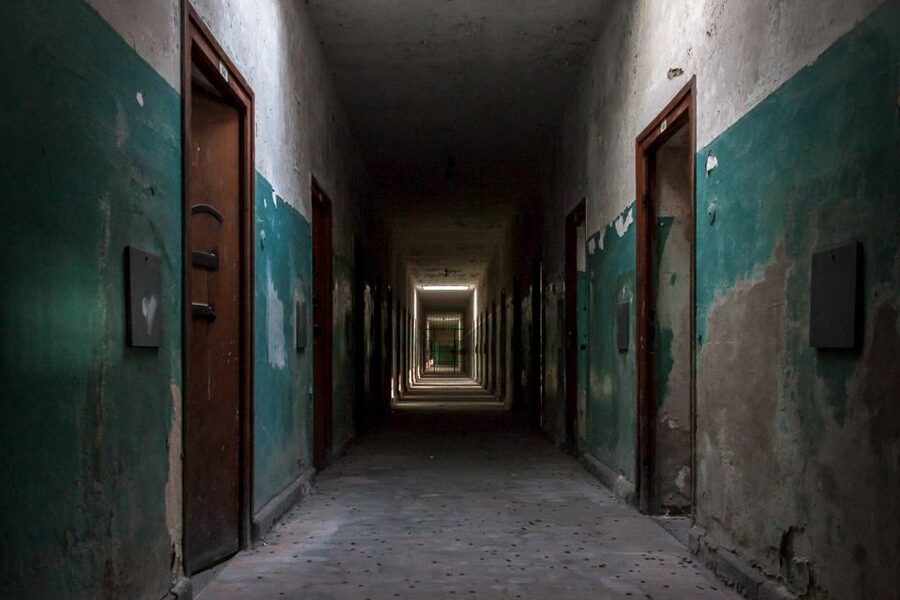
The tour also covers the S.S. Training Facility, sometimes called the School of Terror. This stop helps explain that Dachau was part of the wider training and administration of Nazi terror, not an isolated prison hidden from the outside world.
Your guide places the facility alongside the camp itself, showing how the site helped shape methods and personnel used across the concentration camp system. That broader view is one of the strongest reasons to take a guided tour.
Without context, you might see separate buildings and memorials. With context, you can follow the relationship between training, administration, punishment, forced labor, and prisoner control. The result is a clearer picture of how the system expanded and became more organized.
A guide makes the difference
The tour’s strongest feature is the quality of the guide. The experience is delivered in English, and the guides named in the feedback include Sam, Adam, Marcin, Hein, Keith, and Scott.
Their strengths differ slightly, but the pattern is clear. Sam is praised for being friendly, considerate, and clear about practical matters such as pace, weather, group organization, and restrooms. Marcin is noted for detailed explanations, easy instructions, and a respectful approach. Hein is praised for keeping the group together and explaining the site clearly.
Adam receives especially strong comments for his depth of information, loud and easy-to-hear delivery, survivor stories, and willingness to answer questions. He also helps with transport and general Munich questions, which is handy when the day includes several public transport connections.
The group size may be capped at around 14 people. That is a useful middle ground. You get the structure of a guided group without the scale of a large crowd, and the guide can usually hear questions and adjust the pace.
Still, this is a group tour, so you will not control every pause. Some sections may feel information-heavy, and the subject requires concentration. The best guides allow quiet time at the right points, but you should not expect a casual, flexible wander.
Six hours, and why the timing matters
The complete outing lasts about six hours. Roughly two hours are spent traveling, with about four hours at Dachau, including a short break and approximately 3 hours and 50 minutes of guided touring.
That is a sensible schedule for a first visit. Dachau is too important for a rushed hour, but the visit can also be emotionally draining. The tour gives you enough time to understand the main areas without turning the day into an unstructured all-day visit.
Wear comfortable shoes and weather-appropriate clothing. Parts of the route are outdoors, and rain, cold, or heat can change how tiring the day feels. Bring water, and plan food before or after the tour because eating is not allowed during the visit.
Smoking, alcohol, and drugs are not allowed. Video recording is also prohibited. Treat the site as a memorial first and a sightseeing stop second.
Is the $51 price good value?
At about $51 per person, the price includes the train fee, bus fee, and live English-speaking guide. Hotel pickup and drop-off are not included.
I consider that fair value if you want a structured historical visit from central Munich. You are paying not only for transport, but also for the guide’s ability to explain the camp’s development, connect the buildings, manage the route, and answer questions.
You could reduce the cost by arranging public transport and visiting on your own. The saving may appeal to confident visitors who prefer to read independently and set their own pace. But you would need to plan the route, understand the transport system, and handle the site’s history without a guide linking the material together.
The tour earns its price through interpretation rather than luxury. There is no private vehicle, hotel collection, meal, or extra comfort. If you want those things, this is not that kind of excursion. If you want practical transport and serious historical explanation, the price is sensible.
Free cancellation is available up to 24 hours before departure, and you can reserve now while paying later. Check the available starting times because the exact schedule can vary.
Who should book this Dachau tour?
I would choose this tour if you are staying in Munich and want a reliable first visit to the Memorial Site. It suits adults, older teenagers aged 14 and above with parental guidance, history-minded visitors, and anyone who would rather have the route and transport handled.
It is also a good choice if you value personal stories and explanation over simply seeing the buildings. The strongest guides, including Sam, Adam, Marcin, Hein, Keith, and Scott, are praised for respectful delivery, clear instructions, and answers that go beyond a memorized script.
I would think twice if you want a light day trip, dislike group schedules, need frequent meal breaks, or have mobility or respiratory concerns. The subject is painful, the walking day is long, and the site guidelines deserve respect.
Final call: book it if you want context, not entertainment
Book this tour if you want to understand Dachau as a working system of Nazi terror, not just photograph the entrance sign. The combination of central Munich departure, included public transport, a small group, and nearly four hours with a trained guide makes the visit easier to manage and more meaningful.
Skip it only if you are not ready for graphic and upsetting material or if you need a more accessible, private format. For most adults who want a serious and well-organized visit, this is a strong use of half a day in Munich, and one you are unlikely to forget.
FAQ
Where does the Dachau tour start?
Meet your guide in Munich at Marienplatz, in front of the Ludwig Beck department store at Marienplatz 11. Look for a white and blue umbrella and signs advertising the Dachau Tour.
How long does the activity last?
The full activity lasts about six hours. This includes approximately two hours of travel and about four hours at the Dachau Memorial Site.
How do I get to Dachau from Munich?
The group travels by public transport. The route includes about 40 minutes by subway or metro, 10 minutes by bus, the visit, then approximately 10 minutes by bus and 40 minutes by train on the return.
Is transportation included?
Yes. The train fee and bus fee are included in the tour price. Hotel pickup and drop-off are not included.
What language is the tour in?
The live guided tour is in English.
Can children join the tour?
Children aged 13 or under are not permitted. Children aged 14 and older may attend with parents who understand the graphic nature of the tour content. Proof of age may be required.
Can I eat during the Dachau visit?
No. Eating food is not permitted while on tours at Dachau. Eat a substantial breakfast or bring food to eat on the train.
What should I bring?
Bring comfortable shoes, water, snacks for before or after the visit, and clothing suited to the weather. Smoking, alcohol, drugs, and video recording are not allowed.
More Full-Day in Munich
- From Munich: Neuschwanstein & Linderhof Castle Full-Day Trip
★ 4.5 · 12,494 reviews - From Munich: Neuschwanstein Castle Full-Day Trip
★ 4.7 · 3,977 reviews - From Munich: Neuschwanstein Castle Full-Day Trip by Van
★ 4.8 · 1,177 reviews - Full-Day Dachau Concentration Camp Memorial Site Tour from Munich
★ 5.0 · 897 reviews
Just added around Munich
- Munich: Express Walk with a Local in 90 minutes★ 5.0 · 7 reviews
- Exploring Munich in a Rikscha★ 4.9 · 33 reviews
- Exploring Munich by Pedicab: Premium Two Hour Tour★ 5.0 · 10 reviews
- Erding: 1-Day Spa Ticket at Therme Erding★ 4.5 · 50 reviews
- Munich: KUNSTLABOR 2 Entry Ticket★ 4.2 · 89 reviews
- Private Van Tour to the Royal Palace of Herrenchiemsee★ 5.0 · 6 reviews
- From Munich: Königssee Day Trip with Boat Ride and Salt Mine★ 4.5 · 93 reviews
- Culinary Haidhausen – The Food Tour★ 4.3 · 4 reviews
Munich Tours, compared.

Neuschwanstein & Linderhof Castle-Fairytale Day Tour from Munich
Read our review →
Dachau Concentration Camp Memorial Site Tour from Munich by Train
Read our review →
Munich Hop-On Hop-Off Tour: 1-Day or 2-Day Ticket
Read our review →Browse the lists this tour appears in