
Review · BERLIN TOURS
Berlin’s Jewish Heritage: Private Tour of the Vibrant Jewish District
Berlin’s Jewish quarter is not a single preserved old neighborhood. It is a city district shaped by Jewish life, Nazi persecution, war, rebuilding, and memory. This private walk links those layers through the New Synagogue, Scheunenviertel, and Otto Weidt Museum, then adds memorials that bring the past close to street level.
I like the private format, since you can ask questions and set the pace with your own guide. I also like the mix of grand architecture and small memorials, from the golden domes of the synagogue to the Stolpersteine set into ordinary sidewalks. The main consideration is that the tour lasts about three hours, and some stops are brief, so this is an introduction rather than a full museum day.
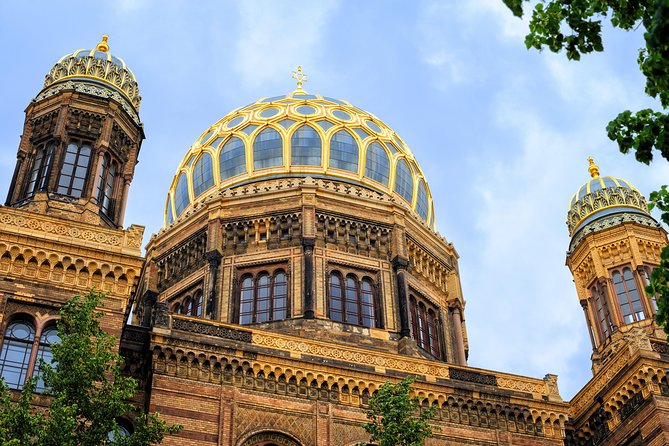
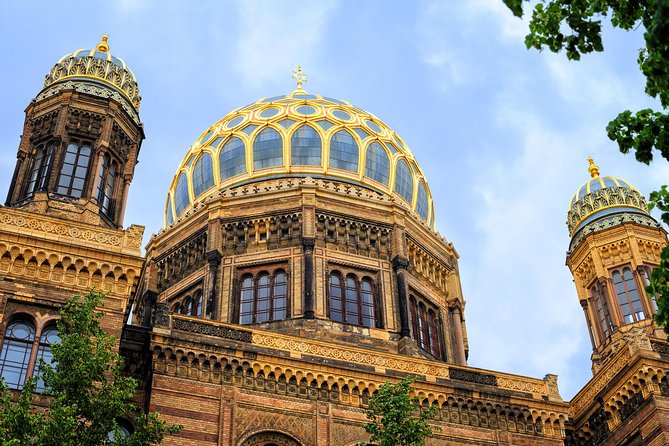
- New Synagogue: See the golden-domed landmark of Berlin’s former Jewish quarter.
- Scheunenviertel streets: Walk through the old neighborhood and find Moses Mendelssohn’s gravesite.
- Stolpersteine: Read small brass memorial stones placed outside former homes.
- Friedrichstraße memorial: Reflect on children sent west to safety and others deported east.
- Otto Weidt Museum: Learn how a factory owner protected blind and deaf Jewish workers.
- Private guiding: Travel with only your group, with morning and afternoon departure choices.
A three-hour walk through Berlin’s Jewish past
This tour works because it does not treat Jewish Berlin as a subject confined to one museum. You move between a synagogue landmark, neighborhood streets, memorial stones, a railway station, and a small museum. Each setting changes the scale of the story.
The route focuses on the Jewish quarter known as Scheunenviertel, an area associated with Jewish life before World War II. Your guide explains the neighborhood’s place in Berlin and the destruction caused by Nazi rule. The walk also addresses the period before the Holocaust, which matters because Jewish history in Berlin did not begin with persecution and end with memorials.
The private setup is useful here. You can stop to ask what a building meant, why a memorial is placed in a particular spot, or how Berlin remembers its Jewish past today. Guides Orit and Walid have been described as personable and professional, with Orit also sharing a personal story while explaining the neighborhood. Your assigned guide may differ, but the format gives you direct access to that local perspective.
The tour offers morning and afternoon departures. That choice helps you fit the walk around a museum visit or another Berlin plan, though you should allow time before and after the stated three hours. The route includes walking and public transport may be involved, depending on the option you book.
The New Synagogue and its golden domes
The New Synagogue is an immediate visual marker. Its ornate golden domes rise above the former Jewish quarter and make clear that Jewish Berlin once had a major public and religious presence in the city.
The synagogue was formerly the largest Jewish place of worship in Germany. That fact gives the first stop real weight. You are not simply looking at an attractive facade. You are beginning with a building that points to the size, confidence, and public role of Berlin’s Jewish community before Nazi rule.
The scheduled stop is about 10 minutes. That is enough for an exterior explanation and orientation, but not enough for an unhurried visit to every part of the site. Admission is not included, and the tour information says no museum entry is required for the experience. If you want a longer visit inside the Centrum Judaicum, treat that as a separate plan and check its current admission details before booking the walk.
I would pay close attention to the contrast between the building’s ornate appearance and the difficult story attached to it. A short stop can work well at the start because it gives you a visual anchor for the rest of the route. You know where the former Jewish quarter begins, and the later memorials feel connected to a real community rather than presented as isolated facts.
More history-led days in Berlin:
- Berlin: Natural History Museum Entrance Ticket
★ 4.6 · 3,382 reviews - Berlin: World Heritage Cruise to Potsdam
★ 4.5 · 1,435 reviews - Berlin Historical Highlights Walking Tour
★ 4.9 · 657 reviews
Walking the Scheunenviertel streets
The Scheunenviertel portion lasts about 30 minutes. This is where the tour shifts from a single landmark to the texture of the neighborhood.
You walk through streets of Berlin’s former Jewish quarter and visit the oldest Jewish Cemetery in the city, including the gravesite of Moses Mendelssohn. Mendelssohn was an important Jewish philosopher and writer, and his grave gives the walk a personal point of focus. Instead of hearing only about institutions and dates, you encounter a named person connected to Berlin’s Jewish intellectual life.
The neighborhood walk also introduces the Stolpersteine memorials. These small markers are placed in sidewalks outside buildings connected to people persecuted or killed under Nazism. Their scale is part of their force. You may be walking through an ordinary street when a brass stone at your feet asks you to stop and read a name.
I like this part of the route because it shows how Berlin’s memory work appears in daily life. The memorials are not separated from shops, apartments, and passing traffic. You need to stay close to your guide and look down as you walk, since the stones can be easy to miss.
The drawback is that a 30-minute neighborhood segment cannot cover every street or explain every memorial. The value comes from the guide’s selection and interpretation. This is not a leisurely architecture walk with time to inspect each building. It is a focused introduction to the district and its Jewish past.
Children, trains, and the Friedrichstraße memorial
At Friedrichstraße Station, the memorial Trains to Life, Trains to Death brings the story of Nazi persecution to children and families.
The memorial recalls children transported west to safety after the Nazi pogroms of 1938. It also recalls children deported east by the Nazi regime after 1942, including transports to extermination centers such as Auschwitz-Birkenau. The same broad railway system is therefore linked to two sharply different outcomes: rescue for some children and deportation to death for others.
The stop lasts about 10 minutes and admission is free. Its location beside a working station gives it a difficult immediacy. This is not a remote monument that you visit apart from city life. Trains continue to arrive and depart nearby, which makes the subject of transport feel especially direct.
Your guide’s role matters at this point. The facts are stark, but a good explanation helps you understand the sequence and the choices forced on families. Orit’s personal approach, noted in connection with this experience, may appeal to you if you prefer history presented with a human voice rather than a list of dates. Walid’s personable style may suit you if you want a conversational walk with room for questions.
Since the visit is short, I would not expect a long period of silent reflection. You may need to return later if this memorial is especially important to you. Still, its place in the route is well chosen. After seeing neighborhood markers linked to individual lives, you confront the wider machinery that carried children away.
The Otto Weidt Museum and one act of protection
The Museum Blindenwerkstatt Otto Weidt is the most intimate stop on the walk. The visit lasts about 30 minutes and focuses on Otto Weidt, a German factory owner who employed mainly blind and deaf Jewish workers during the Nazi period.
The story matters because it shows individual action inside a system built on persecution. Weidt used his workshop and position to help protect workers who faced certain death under the Nazi regime. The museum gives the tour a human scale once again, but in a different way from the Stolpersteine. Instead of marking a life after destruction, it focuses on work, courage, and efforts to save people.
The museum is especially useful for understanding how Jewish workers and their protectors navigated daily life under Nazi rule. A half-hour visit will not cover every detail, but it gives the route a strong closing point. You have moved from a major synagogue to a district, from street memorials to deportation, and finally to a workplace where one person tried to help.
The information provided for the tour says museum entries are not required. That suggests the experience can be completed without paying separate admission for a museum visit. Because the New Synagogue stop also lists admission as not included, you should confirm exactly which areas your chosen option enters when you book. The route itself is designed to work without additional museum tickets.
A few more Berlin half-days to weigh up
- Berlin: Reichstag, Dome and Government District Guided Tour
★ 4.7 · 18,288 reviews - Berlin: 1-Hour City Tour by Boat with Guaranteed Seating
★ 4.3 · 16,993 reviews - Berlin: Boat Tour Along the River Spree
★ 4.4 · 11,252 reviews - Discover Berlin Half-Day Walking Tour
★ 5.0 · 9,624 reviews
What the private format changes
A private tour is more than a smaller group. It changes how you use the three hours.
With only your own group participating, you can ask about subjects that matter most to you. If you want more context on prewar Jewish life, you can spend extra attention there. If the Stolpersteine or the Friedrichstraße memorial raises difficult questions, you can pause rather than wait for a large group to move on.
The pace may also suit families or mixed-age groups. Most people can participate, and the tour is near public transportation. Still, it is a walking experience with several outdoor stops, so sensible shoes and weather-ready clothing are practical choices. That advice is based on the route itself, not a special equipment requirement.
Pickup is offered, and a private vehicle with a professional driver may be included depending on the option selected. Public transportation costs may apply under another option. Read the exact package details before booking, since pickup and vehicle service are not presented as identical for every choice.
Private tours can cost more than a shared walk, but the advertised price of $23 makes this option unusually accessible if that price applies to your group or selected booking arrangement. You should still check the final total, group size, pickup terms, and transport inclusions. The value is strongest for people who want a personal guide without committing to a full-day private tour.
Who will get the most from this walk
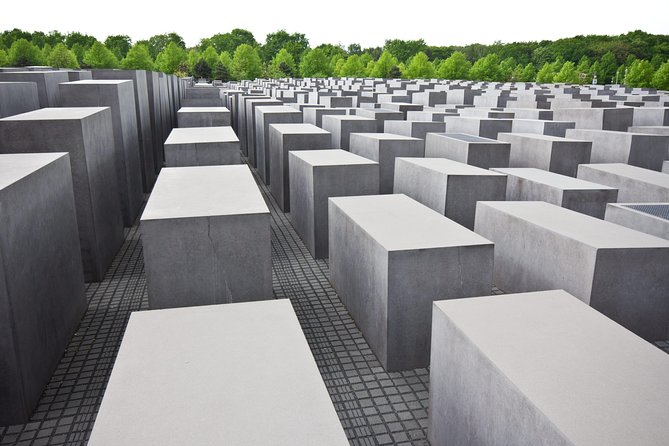
I would choose this experience if you want a clear introduction to Jewish Berlin and the Holocaust memorials in central Berlin. It gives you a useful framework before visiting larger institutions such as the Jewish Museum Berlin or the Memorial to the Murdered Jews of Europe, though neither is part of this route.
The tour also suits you if you prefer places connected to ordinary life. The Stolpersteine, cemetery, railway station, and former workshop do not present history as a distant display. They place it in streets and buildings that still form part of Berlin.
It may be less suitable if you want long interior visits, extensive architectural detail, or a full study of Berlin’s Jewish community. The New Synagogue stop is short, the Friedrichstraße memorial stop is short, and the whole experience is finished in about three hours. You will gain structure and context, but you will not see every major Jewish site in the city.
The subject matter is serious. Nothing in the route suggests a light sightseeing outing, and that is appropriate. You should give yourself room afterward if you prefer not to rush straight into another busy activity.
Practical details before you book
The tour has morning and afternoon departure choices, which makes it easy to place around a day in Berlin. Confirmation is sent within 48 hours of booking, subject to availability, so do not leave a time-sensitive plan until the last minute.
Free cancellation is available if you cancel at least 24 hours before the local start time. Within 24 hours, you receive no refund, and changes are not accepted. Keep that cutoff in mind if your Berlin schedule may shift.
Food and drinks are not included. You should plan those separately, especially since the route is a focused walk rather than a food tour. Admission is not included at the New Synagogue, while the stated tour does not require museum entries. If you want to add an interior visit, verify the current rules and cost independently.
The tour is near public transportation, and pickup may be offered. A private vehicle and professional driver depend on the chosen option, so do not assume every booking includes door-to-door service.
Should you book Berlin’s Jewish Heritage walk?
Book it if you want a private, compact introduction to Berlin’s Jewish quarter, especially one that combines prewar community life with the Holocaust and its memorials. The route is strongest when the guide connects the grand New Synagogue with the small Stolpersteine, the children’s railway memorial, and Otto Weidt’s workshop.
I would also book it if you value a guide who can make space for questions and personal context. Orit and Walid are both associated with professional, personable guiding, and Orit’s personal story adds a human touch to the subject.
Skip it if your priority is a long synagogue or museum visit, or if you want a full-day examination of Jewish Berlin. For most people seeking a focused three-hour walk, the price, private format, and range of sites make it a sensible way to begin.
FAQ
How long does the Jewish heritage tour last?
The experience lasts approximately three hours.
Is this a private tour?
Yes. Only your group participates in the activity.
What places are included in the route?
The route includes the New Synagogue Berlin, Scheunenviertel, the Moses Mendelssohn gravesite, Stolpersteine memorials, the Trains to Life, Trains to Death memorial at Friedrichstraße Station, and the Museum Blindenwerkstatt Otto Weidt.
Are morning and afternoon departures available?
Yes. You can choose between morning and afternoon departure times.
Is transportation included?
A private vehicle with a professional driver is included depending on the option selected. Public transportation costs may apply for another option, and pickup is offered.
Are museum admission fees included?
Museum entries are not required for the stated tour. Admission to the New Synagogue is not included, so confirm the details of your selected option if you want an interior visit.
Can most people participate?
Yes. The available information states that most people can participate, and the tour is near public transportation.
What is the cancellation policy?
You can cancel for a full refund at least 24 hours before the experience starts. Cancellations or changes made within 24 hours are not refunded or accepted.
Just added around Berlin
- eSIM for Germany and 34 European Countries★ 4.5 · 16 reviews
- Your ticket to The Wall Museum Berlin★ 3.0 · 60 reviews
- Rickshaw Tours Berlin – Groups of up to 16 people with several rickshaws★ 4.0 · 97 reviews
- Warnemuende Shore Excursion: Private Berlin Tour★ 4.5 · 27 reviews
- Walking on the Wall: 3-Hour Tour in Berlin★ 4.5 · 34 reviews
- Love and War in Berlin: Self-Guided Story Puzzle Walk★ 5.0 · 7 reviews
- Warnemuende Shore Excursion: Berlin Private Sightseeing Tour from Rostock★ 5.0 · 4 reviews
- Cold War Berlin – Private Live Virtual Experience★ 5.0 · 4 reviews
Berlin Tours, compared.

Reichstag, Dome and Government District Guided Tour
Read our review →
1-Hour City Tour by Boat with Guaranteed Seating
Read our review →
Reichstag, Plenary Chamber, Cupola & Government Tour
Read our review →
Browse the lists this tour appears in