

Review · BERLIN TOURS
Berlin: walking tour about Charité
Berlin’s Charité began as an 18th-century plague house and grew into one of Europe’s major university hospitals. This two-hour walk turns that long medical story into a human one, following doctors such as Rudolf Virchow, Robert Koch, Emil von Behring, and Ferdinand Sauerbruch through moments of discovery, ambition, and shame. I like the strong medical focus and the visit to Berlin’s oldest surviving teaching building, the Animal Anatomical Theatre. I also like that the route deals with Nazi-era collaboration instead of offering a polished story with the hard parts removed.
The main limitation is clear: you do not enter the Charité Bed House or the hospital grounds. The tour is in German, and the Animal Anatomical Theatre can close at short notice for private events or on public holidays. If you want an inside look at the modern hospital, this is not the right outing. If you want context, stories, and a walk through Berlin’s medical past, it offers good value at $27.
Key points about Berlin’s Charité walk

- Three centuries of medicine: Follow the Charité from its plague-house beginnings in the 18th century to its role as a major university hospital.
- Famous physicians: Learn about Rudolf Virchow, Emil von Behring, Robert Koch, and Ferdinand Sauerbruch.
- A difficult moral chapter: The tour addresses doctors who worked with the Nazi regime.
- The Animal Anatomical Theatre: Visit Berlin’s oldest surviving teaching building, a curious medical building tucked into a backyard.
- Mostly an outdoor route: See the Charité Bed House from outside, then walk along Luisenstraße and across the university campus.
- German-language guiding: The live tour is conducted in German and lasts two hours.
Why the Charité makes such a good Berlin subject
You do not need to be a doctor to find this tour worthwhile. Medicine touches every city, but Berlin’s medical story is unusually tied to its politics, universities, wars, public health crises, and scientific fame. The Charité gives your guide a single place from which to explain all of that.
The story begins with a plague house in the 18th century. That starting point matters because it shows how practical and fearful early public health could be. The institution was not created as a grand research center. It developed from a response to disease, then changed with Berlin itself.
As you walk, you hear about the doctors and scientists who helped shape modern medicine. Rudolf Virchow, Emil von Behring, Robert Koch, and Ferdinand Sauerbruch are not treated as names on a plaque. Their work becomes part of a larger question: how did medicine change, and what did those changes mean for ordinary people?
I appreciate that this is not only a success story. Scientific breakthroughs make an easy tour subject, but the Charité also carries a troubling record from the Nazi period. Doctors collaborated with the regime, and the tour addresses that dark chapter directly. That gives the visit more weight than a simple parade of famous discoveries.
More walking tours in Berlin:
- Discover Berlin Half-Day Walking Tour
★ 5.0 · 9,624 reviews - Berlin: Third Reich and Cold War 2 Hour Walking Tour
★ 4.9 · 6,830 reviews - Berlin: Discover Berlin Walking Tour
★ 4.9 · 5,998 reviews
Starting at the Charité Tower
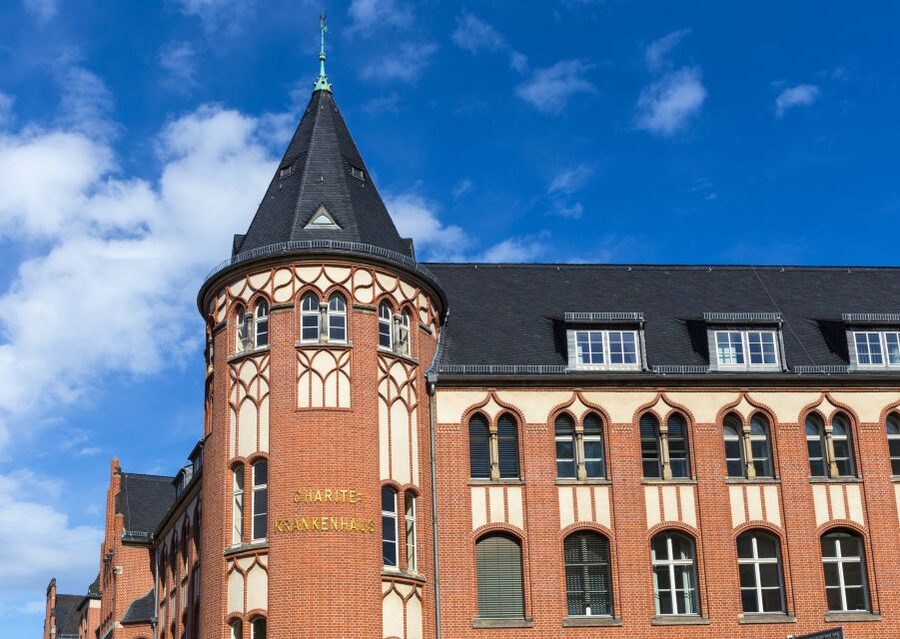
Meet your guide in front of the Charité Tower, at the crossroads of Schumannstraße, Charitéplatz, and Charitéstraße. Arrive early enough to find the exact meeting point, since the tour starts on time.
The opening location helps you get your bearings. You are beside one of Berlin’s best-known medical institutions, but you are not entering as a hospital patient or museum visitor. The guide establishes the difference right away: this is a historical walking tour around the Charité area, not a tour of hospital wards or laboratories.
That distinction is useful. The Charité remains a working hospital, so ordinary protection and hygiene rules apply. The hospital grounds at Campus Mitte are not open to group tours, and the Bed House is viewed from outside. You should not book this expecting access to clinical spaces.
Instead, you begin with the institution as part of Berlin’s urban fabric. The buildings, streets, and nearby university setting help connect medical history to the city around it. I find that approach more honest than pretending a functioning hospital is a normal sightseeing attraction.
The Bed House and the limits of access

The Charité Bed House is one of the first major points on the route. You look at it from the outside while your guide explains its place in the hospital complex and the broader Charité story.
There is a practical reason for the outside-only visit. The building serves as a hospital facility, with hygiene and safety requirements that do not fit a public group tour. That may disappoint anyone hoping to see grand interiors, but it also keeps the route focused on history rather than on corridors that are not designed for sightseeing.
I would treat the Bed House as an orientation point, not the main attraction. Its importance comes from the story attached to it. You are seeing the working face of the Charité, then hearing how this institution grew from a plague house into a major center for medical teaching and research.
The route continues along Luisenstraße. Walking here gives the tour a steady rhythm. You are not standing in one exhibition room while a guide lists dates. You move through the area where the Charité, university life, and Berlin’s medical institutions developed side by side.
Luisenstraße and Berlin’s medical network
The walk along Luisenstraße helps widen the story beyond one hospital. Berlin’s medical progress was connected to teaching, research, and the exchange of ideas. The university campus becomes part of the explanation, even though the hospital grounds themselves are not accessible to group tours.
You hear about scientists whose work made Berlin a major name in medicine. Robert Koch and Emil von Behring bring the scientific side of the story into view. Rudolf Virchow represents another important strand, linking medical study with wider questions about society and public health. Ferdinand Sauerbruch adds a later chapter in surgical medicine.
The guide’s job here is to make these figures understandable without turning the walk into a textbook. You can expect stories about achievement, rivalry, institutional power, and the human cost of medical decisions. The exact balance may depend on the guide, but the route has enough subject matter to support more than a list of biographies.
This part will appeal most to you if you enjoy history that explains how a city works. It is less suited to someone who wants nonstop visual attractions. Much of the value comes through spoken interpretation, so staying close to the guide and listening carefully matters.
A few more Berlin half-days to weigh up
- Berlin: Reichstag, Dome and Government District Guided Tour
★ 4.7 · 18,288 reviews - Berlin: 1-Hour City Tour by Boat with Guaranteed Seating
★ 4.3 · 16,993 reviews - Berlin: Boat Tour Along the River Spree
★ 4.4 · 11,252 reviews - Berlin: Hop-on Hop-off Bus Tour with Live Commentary
★ 4.3 · 8,579 reviews
The famous doctors behind the story
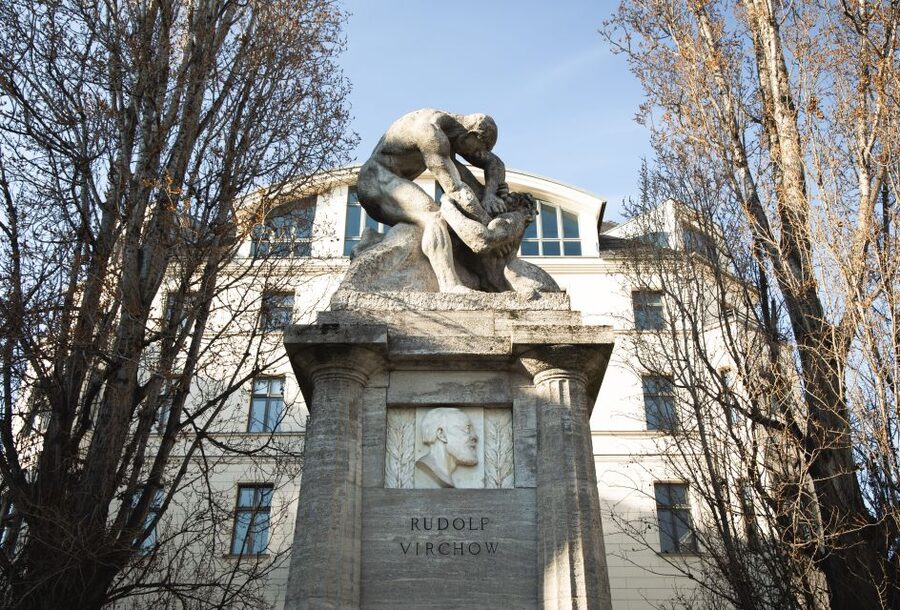
The Charité’s best-known names give the tour its familiar anchors. Rudolf Virchow, Emil von Behring, Robert Koch, and Ferdinand Sauerbruch each represent a different part of Berlin’s medical past.
You learn about their work and their connection to the Charité. The tour also places them among the city’s famous scientists and Nobel Prize winners. That makes the route appealing to anyone interested in the people behind medical progress, not just the buildings where they worked.
At the same time, you should not expect a detailed academic seminar on every physician. Two hours must cover roughly 300 years, several major personalities, the institution’s changing role, and the final indoor visit. The guide will necessarily select key episodes rather than explain every discovery in full.
That is a fair trade for a city walk. I would rather leave with a clear sense of why these people mattered than with a pile of dates that blur together. If one scientist catches your interest, you can use the tour as a starting point for further reading.
The Charité’s Nazi-era history
The most serious part of the route deals with the years when doctors collaborated with the Nazi regime. This subject is not an optional footnote. It shows how a respected medical institution could be drawn into a criminal political system.
You can expect the guide to discuss the dark times of the Charité alongside its scientific achievements. That balance is important. A tour about famous physicians can easily become too admiring, especially when it focuses on Nobel Prize winners and major discoveries. Including institutional wrongdoing forces a more careful look at professional responsibility.
I value this section because it connects medical history to moral choices. Doctors do not work outside society. Their research, treatment, and authority can help people, but those same powers can be used or abused by the state.
The tone may be sobering, and families with young children should consider that before booking. The supplied information does not give specific details about the content or age suitability, so I would ask the operator if you need a precise sense of how the Nazi-era material is presented.
The mysterious Animal Anatomical Theatre
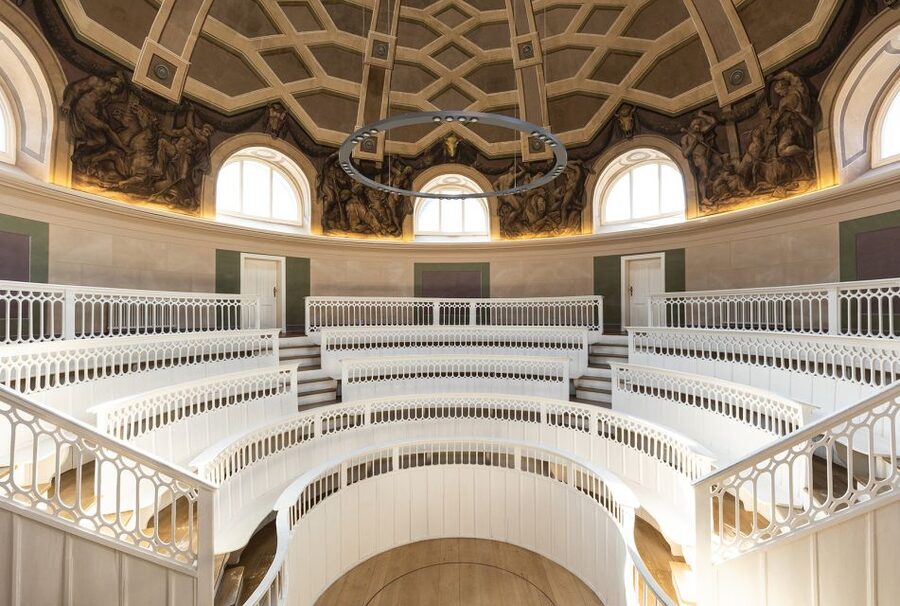
The tour’s most unusual stop is the Animal Anatomical Theatre, often called the TAT. It is described as Berlin’s oldest surviving teaching building and is hidden in a backyard. You visit this building from the inside, making it the key indoor moment of the walk.
The name alone hints at an older style of medical education. This was a place connected with teaching and anatomy, not a modern hospital gallery. The setting gives you something physical to remember after the outdoor sections: a preserved teaching space with a strong link to the way medicine was once studied and demonstrated.
I like this stop because it adds atmosphere without needing theatrical effects. A building tucked away behind ordinary city streets can tell you how medical teaching once operated and how institutions organized knowledge before today’s hospitals and lecture halls.
The TAT is also the main scheduling risk. It is closed on public holidays and may change its opening hours at short notice for closed events. If seeing the interior is important to you, check availability before booking and understand that access can be affected by circumstances outside the tour company’s control.
What two hours feels like on foot
Two hours is a sensible length for this route. It gives you enough time to hear the main story without turning the walk into a full-day specialty program. You begin at the Charité Tower, follow the streets around the institution, cross the university campus area, and finish back at the meeting point after the TAT visit.
The route is not presented as a visit through the entire hospital. It is better understood as a walking lecture with selected exterior views and one historic interior. Wear comfortable shoes, since the tour moves between several locations and includes outdoor walking.
The start and finish at the same meeting point make it easy to fit into a day in central Berlin. You can schedule another nearby activity afterward without having to arrange a separate return journey. Still, because the tour starts on time, do not cut your arrival too close.
The live guide speaks German. That is the most important practical point for international visitors. If you do not understand German well, the historical detail will be difficult to follow, and the tour’s value will drop sharply. The information provided does not list an English-language option.
What you get for $27
At $27 per person, the price is reasonable if you have a real interest in medical history, Berlin’s university culture, or the ethical problems surrounding science. You are paying for two hours of live explanation, a carefully chosen route, and entry to the Animal Anatomical Theatre when it is open.
The value is less obvious if you measure a tour by the number of interiors entered. You do not go inside the Bed House, and the hospital grounds are closed to group tours. Much of the route takes place on public streets, where the guide’s storytelling is the main product.
That is not a weakness by itself. A strong guide can make an ordinary street meaningful, especially when the subject is hidden in the city’s institutions rather than displayed in a large museum. But you should book with the right expectations.
The activity has a 4.4 rating from 537 reviews, which suggests a broadly positive response with room for the usual differences in guide style and personal interest. The clearest appeal is the medical background: people who want more than standard Berlin landmarks will find a subject here that is specific, serious, and unusual.
Free cancellation up to 24 hours before the tour and the reserve-now, pay-later option make it easier to fit into a changing itinerary. Those booking terms are useful, but they do not change the central question: can you follow a German-language talk about a specialized subject for two hours?
Who should book this Charité tour
I would recommend it to you if you like:
- Medical and scientific history
- Berlin’s university institutions
- Stories about famous doctors and Nobel Prize winners
- Tours that address Nazi-era responsibility directly
- Historic buildings that are easy to miss without a guide
- Walking tours with more explanation than sightseeing spectacle
It is also a good choice if you have already seen Berlin’s major landmarks and want a subject tied closely to one part of the city. The Charité route offers a different angle on Berlin, one built around public health, teaching, research, and institutional power.
I would be cautious if you want to enter the hospital, see modern medical equipment, or explore a large museum collection. You may also want another activity if you need an English-language tour, since this one is conducted in German.
Should you book the Berlin Charité walk?
Book this tour if you are comfortable with German and want a focused look at Berlin’s medical past. The best reasons are the 18th-century plague-house origins, the stories of Virchow, Koch, Behring, and Sauerbruch, the honest treatment of Nazi-era medicine, and the indoor visit to the Animal Anatomical Theatre.
Skip it if your main goal is to tour the Charité Bed House or walk through the hospital campus. Those areas are not available to group tours, and the TAT can close on public holidays or for private events.
For the right audience, $27 is a fair price for a two-hour historical walk with a distinctive subject. Check the German-language format and TAT opening status before you commit, then arrive at the Charité Tower early. If those details suit you, this is one of Berlin’s more unusual ways to understand how medicine helped shape the city.
FAQ
Where does the Charité walking tour begin?
The tour begins in front of the Charité Tower, at the crossroads of Schumannstraße, Charitéplatz, and Charitéstraße.
Where does the tour end?
The activity ends back at the meeting point in front of the Charité Tower.
How long does the tour last?
The walking tour lasts two hours. Starting times vary, so check availability when booking.
What language is the tour conducted in?
The live tour guide speaks German.
Can the group enter the Charité Bed House?
No. The Charité Bed House is viewed from outside because it is a working hospital facility with protection and hygiene regulations.
Can the group visit the hospital grounds?
No. The Charité Campus Mitte hospital grounds are not accessible to group tours. The route does include an indoor visit to the Animal Anatomical Theatre, but that building can close on public holidays or for closed events.
Just added around Berlin
- From Berlin: Gardens & Palaces of Potsdam Bike Tour★ 5.0 · 61 reviews
- Berlin: Battle for Seelow Heights WW2 tour -Clash of Titans★ 5.0 · 27 reviews
- From Berlin: Historical Gems of Potsdam Private Day Trip★ 4.4 · 4 reviews
- Berlin: Französischer Dom 360° Panorama & Crémant to go★ 3.9 · 5 reviews
- Explore Berlin Tour: History and Highlights★ 4.7 · 5 reviews
- Berlin: Evening Yacht Cruise with Aperitif & Dinner Upgrade★ 4.6 · 178 reviews
- Berlin: Expats in Berlin Comedy Show Ticket★ 4.7 · 182 reviews
- Berlin: The Epic Comedy Club Friday Night Showcase★ 4.8 · 28 reviews
Berlin Tours, compared.

Reichstag, Dome and Government District Guided Tour
Read our review →
1-Hour City Tour by Boat with Guaranteed Seating
Read our review →


Reichstag, Plenary Chamber, Cupola & Government Tour
Read our review →
Browse the lists this tour appears in