
Review · BERLIN TOURS
Berlin: Urbex Abandoned Places & History Tour
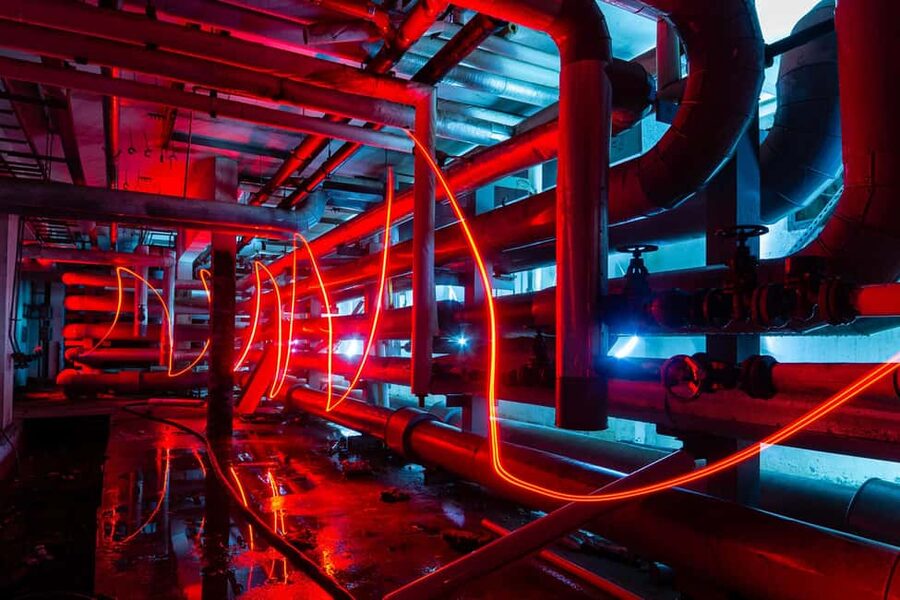
Berlin’s old Stasi hospitals offer a rare look at the physical remains of East Germany’s secretive medical system. On this three-hour Urbex tour, you move through abandoned buildings, underground passages, and rooftop viewpoints while Yoorii explains how the site once served the country’s feared security service.
I like the small six-person group, which gives you room to ask questions and lets the guide control the pace. I also like the practical side: torches are included, and Yoorii focuses on safe, legal exploration rather than sending you off to clamber through ruins alone.
The main caution is the site’s condition. Some areas have been damaged, burned, or stripped, and one visitor found the bunker closed and broken glass a constant problem. At $116, this tour makes the most sense if you value expert guidance, access to unusual places, and urban photography more than a perfectly preserved historic building.
Key points to know before you go
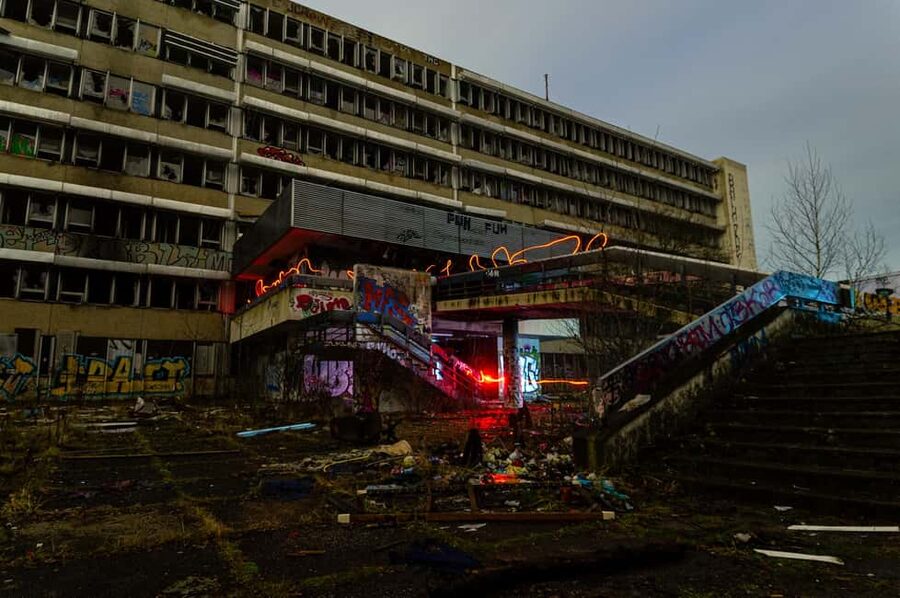
- Former Stasi hospital complex: Explore a secluded medical site once linked to East Germany’s secret police and senior officials.
- Tunnels, dungeons, and rooftops: The route can include dark underground areas, graffiti-covered passages, and high viewpoints.
- Yoorii leads the way: His enthusiasm, humor, historical knowledge, and care for the group are central to the experience.
- Small group of six: The size suits a site where it is easy to lose your bearings or waste time in repetitive corridors.
- Bring the right gear: Torches are supplied, but wear sturdy, comfortable clothing and a hat or cap.
- Not a casual sightseeing walk: The tour is unsuitable for children under 10, pregnant women, wheelchair users, people with high blood pressure, people over 70, and anyone over 130 kilograms.
Entering Berlin’s abandoned Stasi hospital grounds
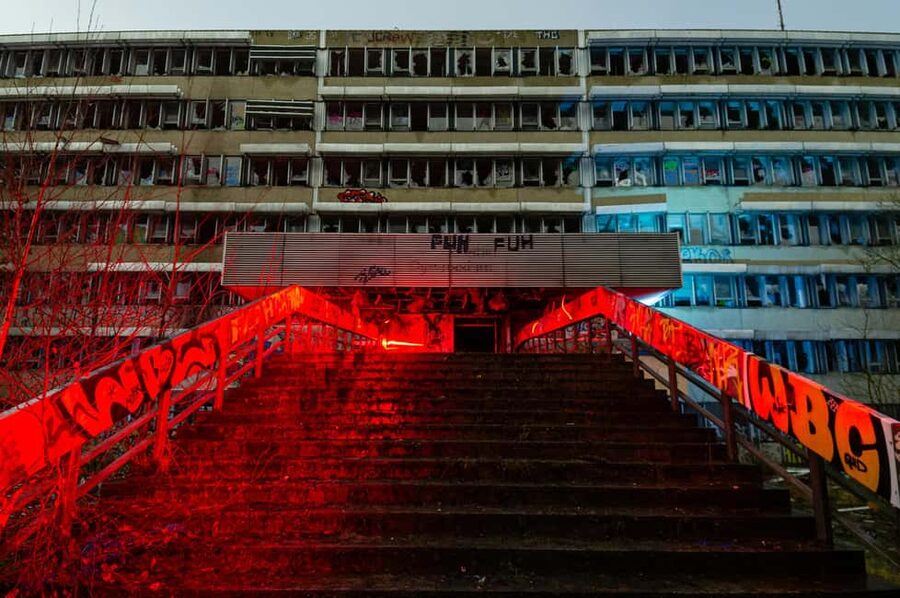
The tour begins at the exit of S-Bahn Buch, on the side facing the Netto supermarket. Turn left after coming downstairs. That meeting point matters because the site is outside the usual central Berlin sightseeing circuit, so you need to allow time to reach Buch before the three-hour outing begins.
From there, you meet Yoorii, an urban explorer who guides the group through the former Stasi hospital grounds. The attraction is not polished or packaged like a standard museum. You are visiting a place where paint peels, floors may be damaged, and silence fills rooms once built for a secret state medical service.
The hospitals were used mainly by Stasi agents and senior officials. They had modern equipment and medical staff bound to secrecy, creating a closed health system apart from ordinary East German life. The setting also served a practical purpose: injured operatives could receive treatment away from public attention and Western intelligence services.
That background gives the empty rooms more weight. An old floor, document, corridor, or medical remnant is not just an abandoned object. It connects to a system built around secrecy, suspicion, and control. Yoorii’s explanations help you read the site rather than simply walk through a collection of derelict rooms.
More history-led days in Berlin:
- Berlin: Natural History Museum Entrance Ticket
★ 4.6 · 3,382 reviews - Berlin: World Heritage Cruise to Potsdam
★ 4.5 · 1,435 reviews - Berlin Historical Highlights Walking Tour
★ 4.9 · 657 reviews
Why the guide matters inside a huge abandoned site
An Urbex location can sound exciting but prove frustrating once you arrive. Large abandoned complexes often contain long corridors, similar rooms, unsafe sections, and areas that have already been stripped of anything interesting. Without guidance, you may spend much of your time wandering and wondering if you have missed the best parts.
This is where the small group helps. With no more than six participants, Yoorii can point out places worth stopping for and move you past sections that are empty or repetitive. You get time to look around without the confusion that often comes with exploring a big site on your own.
His approach also appears to be a major part of the outing. He combines historical detail with humor and a serious concern for the group’s safety. That balance matters here. You want enough freedom to feel like an explorer, but you also need someone who knows which spaces can be entered legally and safely.
The experience is designed to push you a little beyond your normal comfort zone. That may mean entering a dark tunnel, stepping through a dusty room, or climbing toward a rooftop view. It should not mean taking reckless risks. The tour’s appeal lies in guided access to an unusual place, not in pretending you are on an illegal break-in.
What you see above ground
The above-ground buildings carry the clearest sense of the hospital’s former purpose. Their empty interiors show how quickly a working institution can become a shell when the political system supporting it disappears.
Some original details remain. One visitor found old documents and original flooring, useful traces for anyone interested in the everyday operation of the site. These small pieces can be more affecting than a dramatic ruin because they suggest the people who worked, treated patients, and followed orders there.
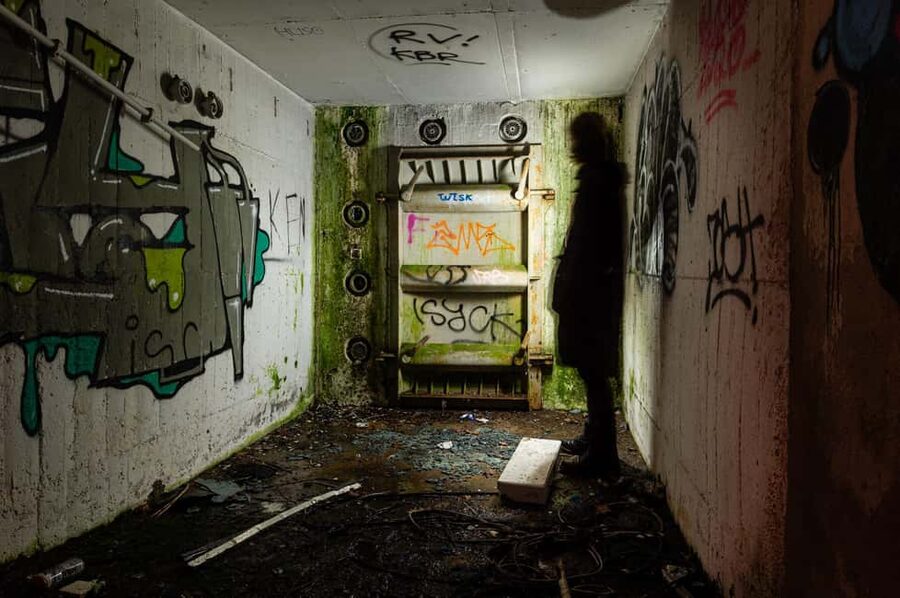
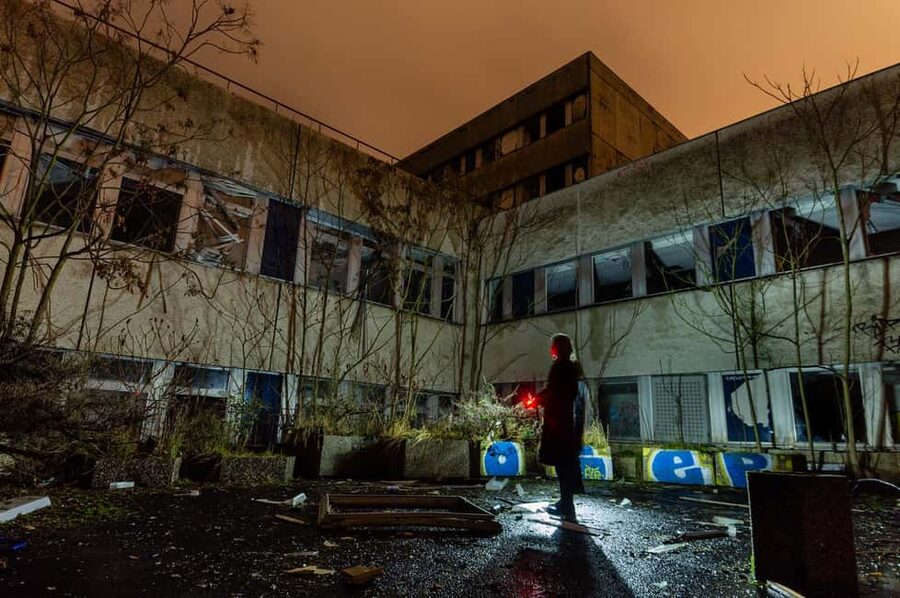
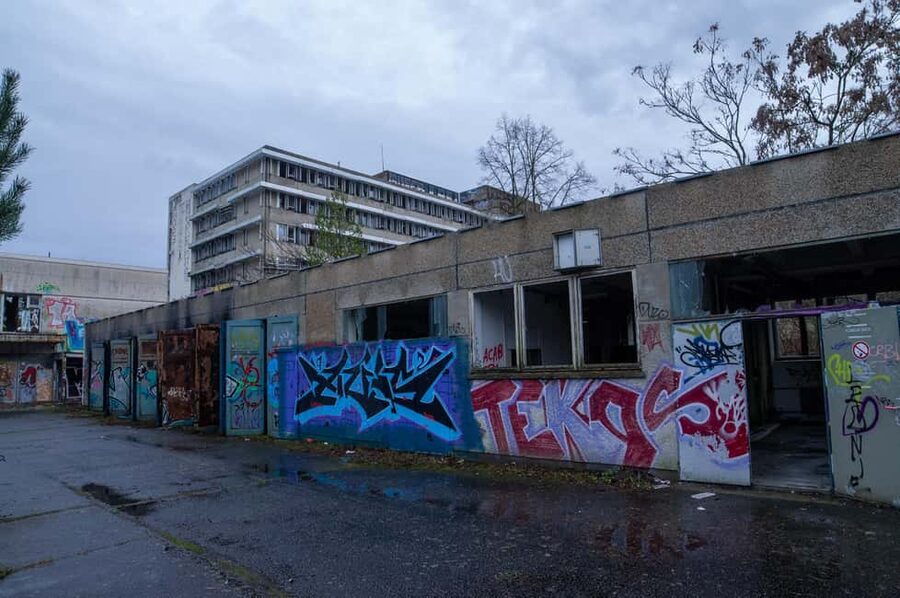
Graffiti adds another layer. The painted walls are not part of the Stasi story, but they show how later generations have taken over a place once controlled by secrecy. In some rooms, colorful street art contrasts sharply with the hospital’s bleak decay.
The condition is uneven. The site has suffered damage from young people, fires, and general neglect. You may see broken glass and rooms with little left to discover. That is worth accepting before you book. The tour cannot restore missing artifacts, and the setting may feel less remarkable than older photographs or past descriptions suggest.
Still, the pleasure comes from reading the remains. I like tours where the guide helps you notice a floor pattern, a document, or the layout of a room rather than simply ticking off famous sights. This site rewards that slower look.
Heading underground with torches
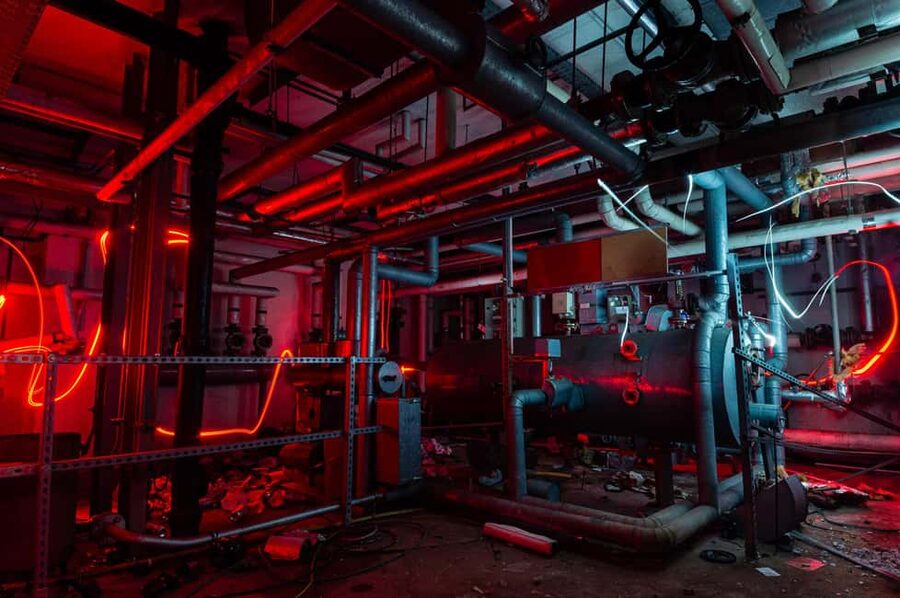
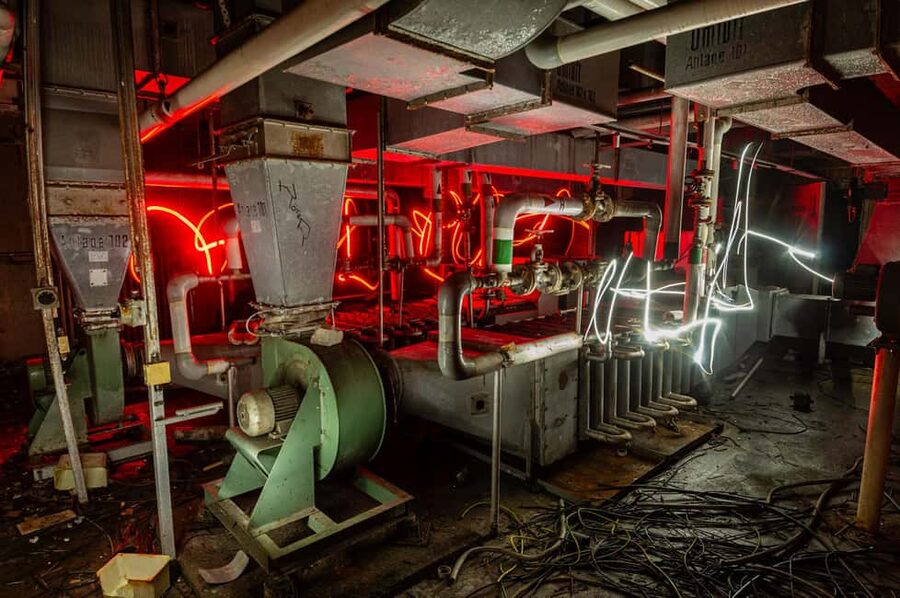
The underground sections provide the strongest Urbex atmosphere. You use torches to move through tunnels and darker areas, with graffiti appearing in the beam of light. Torches are included in the price, so you do not need to bring your own, although a personal light may still be useful if you have one.
The tunnels change the mood of the tour. Above ground, you can examine walls and views. Underground, your attention narrows to the next few steps, the ceiling overhead, and whatever the torch reveals. That sense of uncertainty is a big part of the attraction.
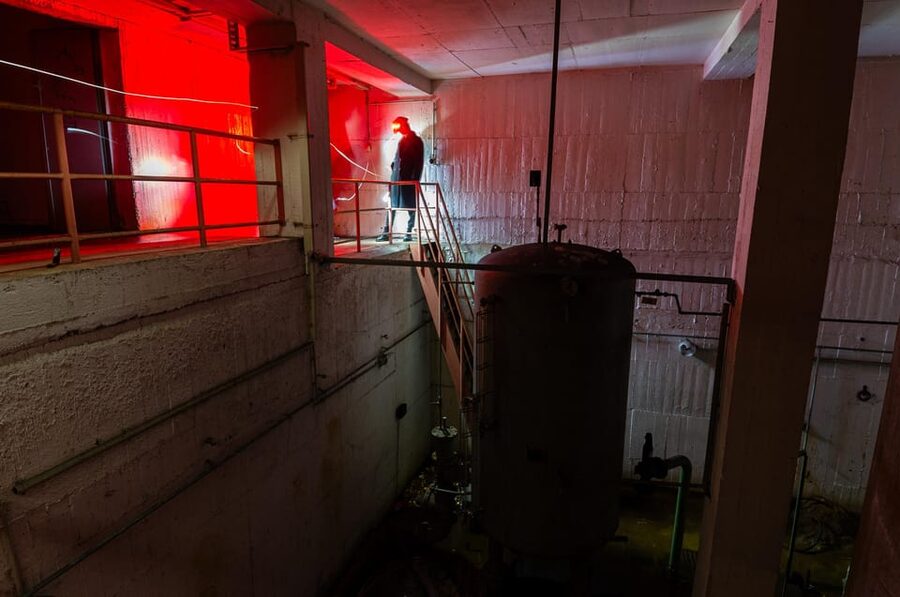
The experience description refers to dungeons and a bunker, but access can change. One visit found the bunker no longer open, so you should not treat every underground feature as guaranteed. The route depends on the condition and accessibility of the site at the time of your visit.
Take care with your footing. The setting is abandoned, and broken glass has been reported. Comfortable clothing is essential, and shoes should be suitable for uneven or dirty ground. The advice to wear a cap or something on your head is practical too, since low ceilings, dust, and debris are part of the setting.
This is not the place for delicate clothes. Leave the tuxedo and high heels at the hotel. A small bag is better than a large backpack, which can catch on walls and make tight passages harder to manage.
A few more Berlin half-days to weigh up
- Berlin: Reichstag, Dome and Government District Guided Tour
★ 4.7 · 18,288 reviews - Berlin: 1-Hour City Tour by Boat with Guaranteed Seating
★ 4.3 · 16,993 reviews - Berlin: Boat Tour Along the River Spree
★ 4.4 · 11,252 reviews - Discover Berlin Half-Day Walking Tour
★ 5.0 · 9,624 reviews
Rooftops, views, and urban photography
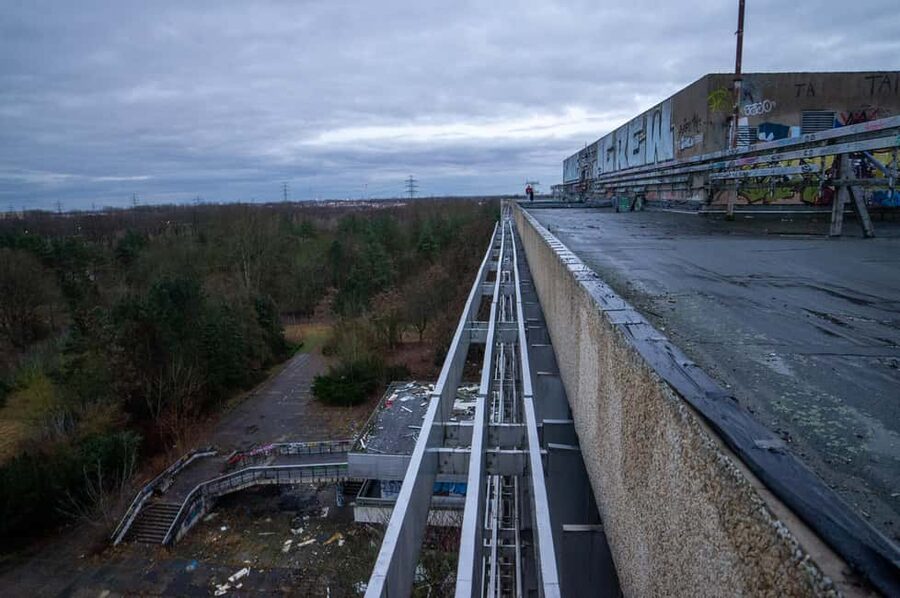
The tour also takes you upward, with rooftop access and views across the surrounding area included in the experience. The contrast works well: one moment you are in a dark passage with a torch, and the next you are looking out from above the abandoned complex.
For photographers, the site offers a varied set of subjects. You can frame peeling rooms, graffiti, old documents, floor details, tunnels, and wide views from higher points. The changing light underground and the strong shapes of empty hospital spaces make this more than a simple record of the visit.
Bring a tripod if photography is important to you. It can help in the darker sections, where a phone camera may struggle. Just remember that the site is active as an exploration environment, not a studio. Your equipment should not slow the group or create a hazard in narrow areas.
Yoorii’s local knowledge is especially useful for photography. He can help you find the more interesting rooms and avoid wasting time in spaces that look much like the last one. The group limit also gives you a better chance of setting up a shot without a crowd in every frame.
The best photographs here are likely to be atmospheric rather than tidy. Expect dust, decay, dark corners, and strong contrasts instead of carefully preserved interiors. If you want bright, clean, museum-quality images, this is the wrong setting. If you like the visual tension between abandoned architecture and new graffiti, it is a promising choice.
The real value of a $116 ticket
At $116 per person, this is not a cheap walk around a ruin. The price needs to be judged against the guide, the small group, the three-hour duration, the supplied torches, and the unusual nature of the location.
You are paying for more than entry. A guide turns a confusing abandoned complex into a readable historical site. Yoorii can explain the Stasi connection, identify worthwhile details, manage the route, and help keep the group together. For a large place with repetitive sections, that can save a lot of time.
The value is strongest for people who would otherwise struggle to explore such a site legally and safely. It is also stronger if you care about photography or Cold War history. The experience combines both, rather than offering only a quick look at empty rooms.
The value is weaker if you expect a preserved hospital with many original furnishings. Damage and fire have changed the site, and some sections may no longer be accessible. One visitor felt there was too little remaining to justify the price and found the broken glass troublesome.
I would make the booking decision based on your expectations. Think of this as a guided encounter with a changing ruin, not a formal museum visit. If that sounds exciting, the cost is easier to defend. If you want a large number of intact historical objects, you may find it expensive.
Who should book this Berlin Urbex tour
I would recommend it most strongly to adults and older children who enjoy abandoned buildings, Cold War history, urban photography, and unusual places away from central Berlin’s main sights.
It suits people who like a little physical challenge but still want a guide. You should be comfortable walking through dirty, damaged spaces and entering dark underground areas. You also need to accept that the site is imperfect and that access may change.
This is not suitable for children under 10, pregnant women, wheelchair users, people with high blood pressure, people over 70, or anyone weighing more than 130 kilograms. Baby strollers and carriages are not allowed, and bikes, alcohol, and drugs are also prohibited.
The tour is offered in English. That makes it a practical option if you want historical context without relying on German. The small group is particularly helpful for questions, photos, and keeping the pace manageable.
You should arrive ready for the setting. Wear clothes you do not mind getting dirty, choose comfortable footwear, avoid a large backpack, and bring a tripod if you want serious photographs. A cap is sensible, and the supplied torches cover the basic lighting need.
Booking flexibility and timing
The tour lasts three hours, with starting times based on availability. That is long enough to give the site proper attention without consuming your entire Berlin day.
Free cancellation is available up to 24 hours before the start for a full refund. You can also reserve now and pay later, which is useful when you are arranging several Berlin activities and do not want to pay everything at once.
The Buch meeting point means you should plan your route carefully. The instructions are specific: use the S-Bahn Buch exit on the Netto supermarket side, then turn left after coming downstairs. Do not treat this as a central meeting point near Museum Island or the Brandenburg Gate.
My call: book it for the place, not perfection
I would book this tour if I wanted a small-group look at Berlin’s secret-police past and enjoyed photography in rough, atmospheric places. Yoorii’s energy, care, and command of the site add real value, especially when the complex becomes repetitive or hard to read.
I would skip it if broken glass, fire damage, closed sections, or a lack of intact artifacts would spoil the day. The old Stasi hospital is not a polished attraction, and $116 is a serious price for a site that has changed over time.
For the right person, that uncertainty is part of the appeal. You get tunnels, graffiti, old documents, original flooring, rooftop views, and a guide who can connect the ruins to East Germany’s secret medical system. Go with sturdy clothes, a light bag, and realistic expectations, and this can become one of Berlin’s more unusual history outings.
FAQ
Where does the Berlin Urbex tour meet?
The meeting point is at the exit from S-Bahn Buch on the side facing the Netto supermarket. Turn left after coming downstairs.
How long does the tour last?
The tour lasts three hours. Starting times depend on availability.
What language is the tour in?
The tour is conducted in English.
How large is the group?
The group is limited to six participants.
Are torches provided?
Yes. Torch rental is included in the tour price.
What should I wear?
Wear comfortable clothing that you do not mind getting dirty. A cap or other head covering is recommended, and large backpacks should be avoided. Bring a tripod if you plan to take photographs.
Is the tour suitable for children and wheelchair users?
No. It is not suitable for children under 10 or wheelchair users. It is also not suitable for pregnant women, people with high blood pressure, people over 70, or people over 130 kilograms.
Can I cancel or pay later?
Yes. You can cancel up to 24 hours before the tour for a full refund. Reserve now and pay later is also available.
Just added around Berlin
- From Berlin: Gardens & Palaces of Potsdam Bike Tour★ 5.0 · 61 reviews
- Berlin: Battle for Seelow Heights WW2 tour -Clash of Titans★ 5.0 · 27 reviews
- From Berlin: Historical Gems of Potsdam Private Day Trip★ 4.4 · 4 reviews
- Berlin: Französischer Dom 360° Panorama & Crémant to go★ 3.9 · 5 reviews
- Explore Berlin Tour: History and Highlights★ 4.7 · 5 reviews
- Berlin: Evening Yacht Cruise with Aperitif & Dinner Upgrade★ 4.6 · 178 reviews
- Berlin: Expats in Berlin Comedy Show Ticket★ 4.7 · 182 reviews
- Berlin: The Epic Comedy Club Friday Night Showcase★ 4.8 · 28 reviews
Berlin Tours, compared.

Reichstag, Dome and Government District Guided Tour
Read our review →
1-Hour City Tour by Boat with Guaranteed Seating
Read our review →


Reichstag, Plenary Chamber, Cupola & Government Tour
Read our review →
Browse the lists this tour appears in