
Review · BERLIN TOURS
Berlin Uncensored: A History of Sex & Freedom
Berlin’s sexual past is not a side note. It is a sharp way to understand the city itself, from the experimental 1920s to Nazi repression, the divided city, and today’s famous club culture. This 210-minute walk turns streets around Nollendorfplatz into a history lesson about desire, science, censorship, queer life, and political freedom.
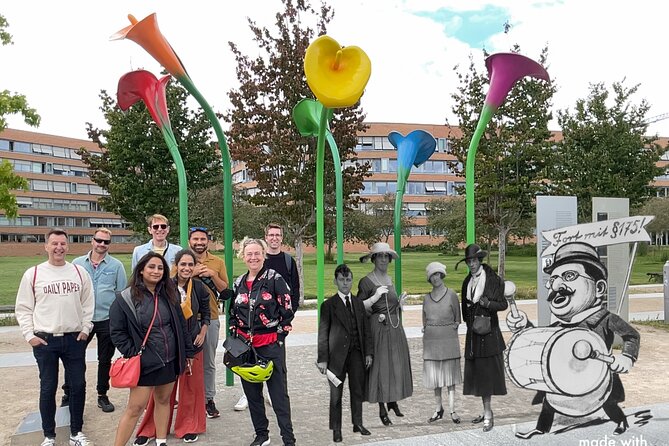
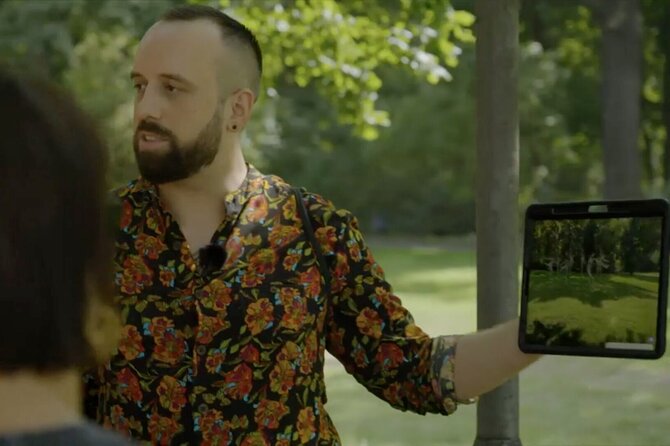
I like the small group of no more than 10 people, which gives you room to ask questions, and I like the way guide Jeff uses more than 200 photographs, films, recordings, and quotes instead of relying on talk alone. The AR images can show lost clubs and buildings where they once stood. The main drawback is that you spend much of the tour outside locations rather than entering them, and three and a half hours without a planned refreshment stop may feel long.
Key points to know before you book
- 1920s Berlin comes alive through archival media and AR: See the city’s cabarets, clubs, sexual experiments, and early contraception work through visual material rather than words alone.
- Jeff brings specialist training: Your guide is a sociologist, certified sex educator, and journalist who has studied Berlin’s sexual past for more than a decade.
- The route covers difficult subjects with care: Nazi censorship, persecution, sex work, queer communities, the AIDS crisis, and changing gender roles all form part of the story.
- The walk connects past and present: You learn about the Institute for Sexual Science, FKK nudism in East Germany, West Berlin liberation, and current places such as KitKat Club and Berghain.
- The group stays intimate: With a maximum of 10 participants, discussion and questions are a real part of the experience.
- Plan for three and a half hours on foot: Bring a public transport ticket for the meeting point and wear shoes suited to city pavements, including some paths that may be bumpy.
Why Berlin’s sexual history explains the city
This is not simply a tour of old brothels and famous clubs. Its larger subject is freedom, and the ways governments, churches, doctors, police, artists, and ordinary people have tried to control or expand it.
Berlin’s 1920s are the natural starting point. After the First World War, the city became known for cabaret, nightlife, changing gender roles, sex work, lesbian and gay communities, nudism, and experiments in relationships. Art and sexuality often shared the same rooms. A club could be a theatre, a dance hall, a meeting place, and a challenge to social rules all at once.
The tour also gives attention to practical sexual history. Berlin played a role in early contraception, including the invention of the first rubber condom. That detail helps move the subject beyond scandal. Sexual freedom depends not only on clubs and performances, but also on health, education, legal rights, and access to contraception.
I find this approach useful because it puts famous nightlife into context. Instead of treating Berlin’s sexual culture as a modern marketing slogan, you see the arguments and institutions that helped shape it.
More history-led days in Berlin:
- Berlin: Natural History Museum Entrance Ticket
★ 4.6 · 3,382 reviews - Berlin: World Heritage Cruise to Potsdam
★ 4.5 · 1,435 reviews - Berlin Historical Highlights Walking Tour
★ 4.9 · 657 reviews
Starting at Nollendorfplatz
Meet in front of the Alnatura organic supermarket at Else-Lasker-Schüler-Straße 18, near Nollendorfplatz. The walk returns to this same area after visiting a series of locations around Schöneberg and nearby streets.
The meeting point is easy to identify, but it is not a major monument or formal visitor center. Give yourself time to find the store entrance, especially if you are arriving by public transport. A public transport ticket is not included, so arrange that before the tour begins.
The route includes short walks between stops, with one five-minute walk to Magnus-Apotheke and several ten-minute stretches later on. The total time is listed as 210 minutes. Much of that time is spent listening, looking at media, and discussing what happened at each place, not simply walking from one sight to the next.
Magnus-Apotheke and the practical side of sexual freedom
The first substantial stop is Magnus-Apotheke, where the guide spends about 20 minutes. This is a good early introduction to the link between sexuality and public health.
The story here includes contraception and Berlin’s part in the development of the first rubber condom. That may sound like a small technical detail, but it shows how sexual history is also a history of medicine, commerce, personal safety, and changing ideas about responsibility.
You can expect the tour to use images and other archive material to make the subject more concrete. Jeff’s background as a sex educator is especially useful here. The discussion is not limited to famous people or sensational stories. It also considers how sexual behavior, attraction, and health have been studied across different societies.
The Nazi memorial and the end of open expression
A short walk leads to the Memorial to the Homosexuals Persecuted Under Nazism. The guided portion lasts about 15 minutes, but its place in the route gives the entire tour moral weight.
The earlier story of clubs, cabarets, sexual research, and queer life is followed by censorship and persecution. Under the Nazi regime, erotic magazines, clubs, and cabarets were shut down. The Institute for Sexual Science was attacked, and its work was erased or suppressed. People were persecuted and sent to concentration camps because of their sexuality.
The tour also addresses the regime’s double standards. Nazi sexual policy was not simply a ban on all sexual expression. It was selective, political, and tied to ideas about race, reproduction, gender, and who counted as socially acceptable.
You should expect this part to be serious. The subject includes sexual minorities, sex workers, censorship, and state violence. The guide’s training matters because the discussion needs both historical accuracy and care. The memorial itself gives the section a direct connection to people who suffered, rather than leaving the material as an abstract political story.
A few more Berlin half-days to weigh up
- Berlin: Reichstag, Dome and Government District Guided Tour
★ 4.7 · 18,288 reviews - Berlin: 1-Hour City Tour by Boat with Guaranteed Seating
★ 4.3 · 16,993 reviews - Berlin: Boat Tour Along the River Spree
★ 4.4 · 11,252 reviews - Discover Berlin Half-Day Walking Tour
★ 5.0 · 9,624 reviews
Kurfürstenstraße, Schwerinstraße, and Nollendorfstraße
The route then moves through Kurfürstenstraße, Schwerinstraße, and Nollendorfstraße. These stops shift the focus from institutions and memorials to streets associated with nightlife, sex work, queer communities, and Berlin’s changing social life.
At Kurfürstenstraße, the guide spends about 20 minutes. You may hear about the sex trade and the different ways public authorities, churches, and local society have dealt with prostitution. One especially unusual detail concerns church involvement in setting up prostitution huts. It is a reminder that Berlin’s sexual past rarely fits a simple division between religious respectability and nightlife freedom.
Schwerinstraße receives about 15 minutes, followed by 10 minutes at Nollendorfstraße. These shorter stops help trace lesbian and queer life, including bars and meeting places that may no longer exist in their original form.
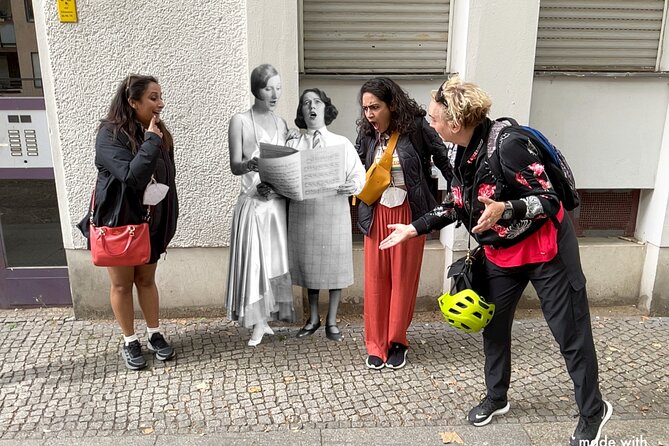
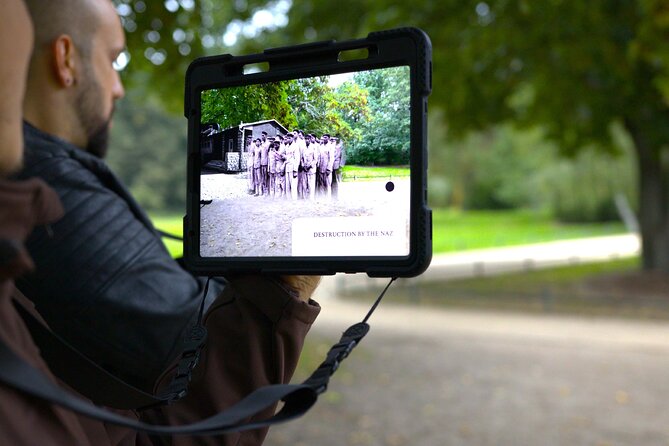
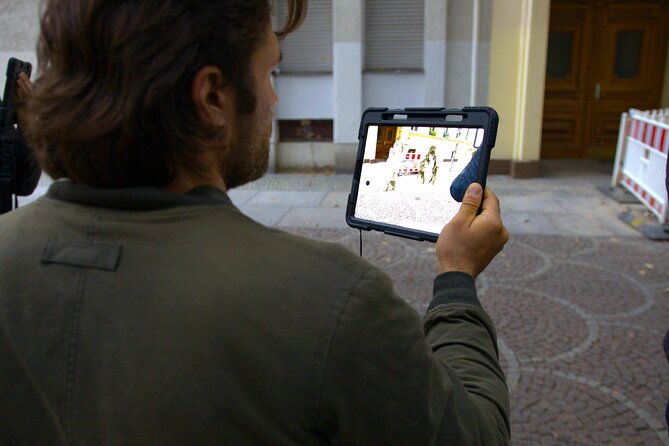
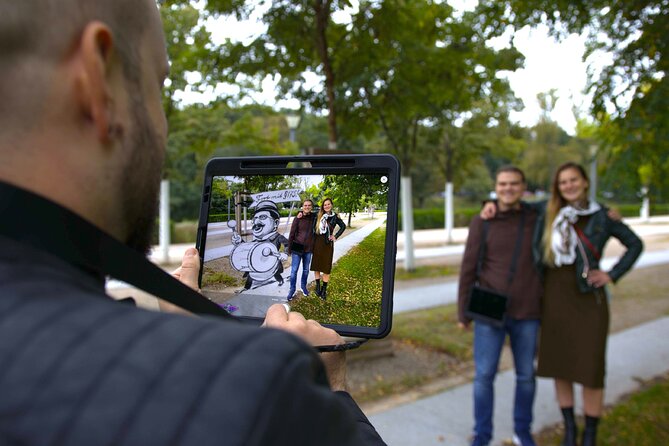
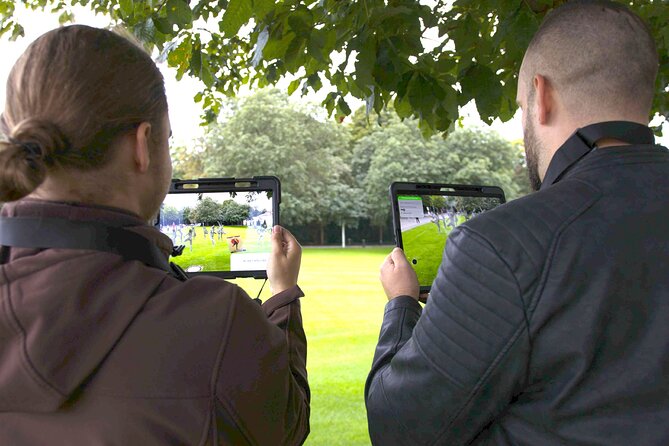
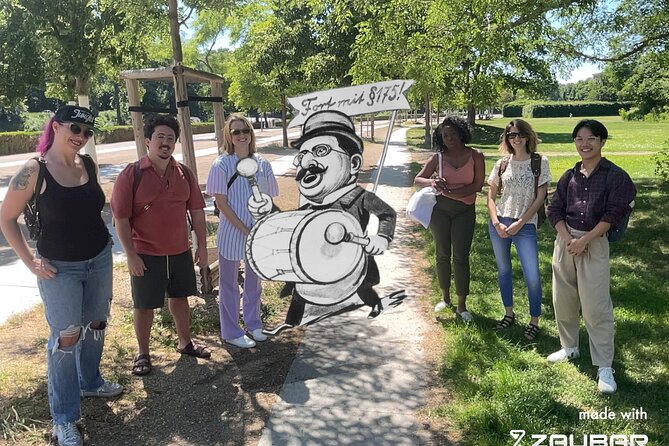
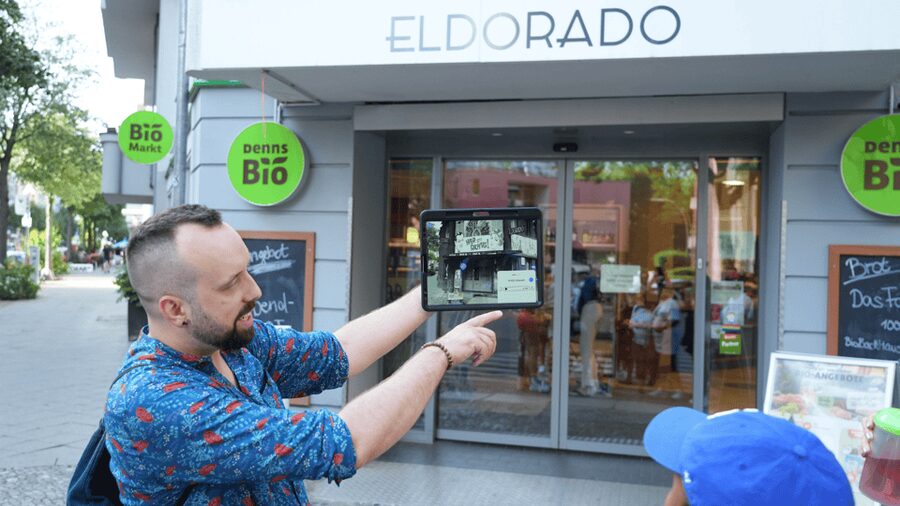
This is where the AR material earns its place. Berlin has changed quickly, and many historical clubs, cabarets, and institutes are gone. Looking at a present-day street while seeing an earlier building or club through the guide’s iPad can bridge that gap.
Still, keep your expectations sensible. You are generally looking at the outside of locations or the streets where they once stood, not entering a preserved historic club. One practical criticism of the format is that some people expect a series of interior visits and instead spend time standing outside while the guide explains what happened there.
The archive on the guide’s iPad
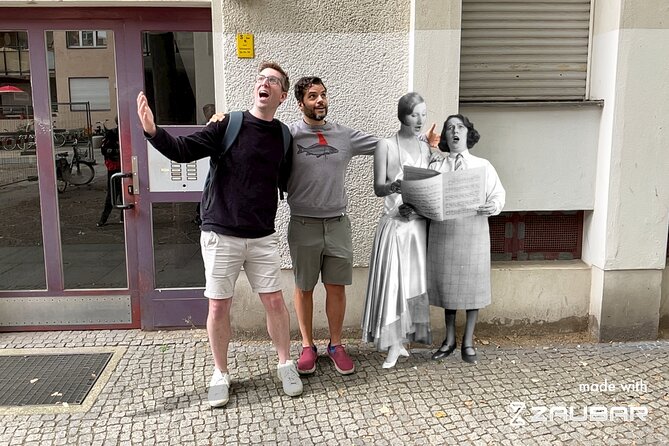
The tour includes more than 200 rare photographs, videos, audio recordings, and provocative quotations. This is a large amount of material for one walk, and the guide’s choices matter as much as the collection itself.
The media gives faces and sounds to subjects that can feel distant in a textbook. A photograph of a club, a recording connected with a scene, or an image of a lost institute can make the location easier to picture. The guide also uses quizzes and questions, so you are not expected to listen passively for the full three hours.
The AR feature is designed to show historic places in their former setting. You may see the Eldorado Club recreated on the iPad or take photos with AR elements through the Mixies feature. The technology is not the main attraction, and it should not be mistaken for a full virtual reality show. It works best when it supports a strong explanation.
That balance seems important. One person might find digital overlays distracting, while another might appreciate seeing vanished buildings placed back onto the street. The guide’s handling of the material is the key factor. Jeff uses it as evidence and illustration rather than letting the screen replace the story.
Denns BioMarkt and Prinz Eisenherz
Denns BioMarkt is another guided stop, with about 15 minutes set aside. The itinerary includes modern businesses because present-day Berlin does not preserve every historic location as a museum. The value here comes from the connection between an ordinary street setting and the stories that once unfolded nearby.
Prinz Eisenherz receives around 20 minutes. Its place on the route supports the discussion of queer culture, publishing, community, and the way sexual minorities have created spaces for themselves. The tour is strongest when it shows that liberation movements were not built only in famous nightclubs. Bookshops, bars, meeting rooms, health projects, and activist groups also mattered.
You will hear about queer and feminist liberation movements, lesbian bars, sexual health, and the AIDS crisis. These subjects give the tour a wider time frame than a simple look at the 1920s. They also show that sexual freedom is not a straight line toward progress. Gains can be lost, and new problems appear even after old restrictions fade.
Metropol and the changing nightclub city
The final major stop is Metropol, with about 20 minutes of guided discussion before the route returns to Alnatura. Metropol helps bring the story back to performance, nightlife, and the way Berlin continues to use clubs as places for music, identity, experimentation, and social connection.
The final section looks at today’s sex-positive scene, including KitKat Club, Berghain, Lab.Oratory, Folsom Europe, fetish culture, and the connection between electronic music and underground nightlife. You get context rather than a club entry. The guide offers insider tips on modern events and places, but this is not a nightlife crawl and does not include admission to any venue.
That distinction matters when you compare this walk with a club tour. You spend the evening learning how these spaces fit into Berlin’s political and social story. If you want to enter a club, dance, or see a live performance, you will need to make separate plans.
East and West Berlin after 1945
The postwar section gives the tour a useful change of scale. Berlin was divided after the Second World War, and sexual culture developed differently on each side of the Wall.
West Berlin became associated with sexual liberation, queer activism, alternative lifestyles, and nightlife. East Germany allowed nudism, known as FKK, in ways that could seem surprisingly open to outsiders. At the same time, sexuality remained subject to state control and limits.
The comparison is more interesting than a simple claim that one side was free and the other was not. Nudism did not mean complete sexual liberty, and West Berlin’s famous permissiveness did not erase discrimination, police pressure, health problems, or social inequality.
The route also considers relationships, gender roles, and sexual freedom in both systems. This gives you a better way to understand why Berlin’s current reputation grew from several different traditions, including East German nudism, West German liberation movements, queer activism, and the city’s post-Wall club culture.
What the three and a half hours feel like
At 210 minutes, this is a serious walking and listening commitment. The route has regular short walks, but the main work is taking in information at each stop. If you like asking questions and discussing ideas, the length is an advantage. You have time to connect the 1920s, Nazi period, Cold War, AIDS crisis, and current club scene.
If you prefer a quick overview with a few photo stops, this may feel too long. There is no formal lunch or coffee break included. One useful tactic is to eat beforehand and carry water. Rain need not end the experience, since the guide has adjusted the plan during poor weather, but you should still dress for an outdoor city walk.
The small group makes a difference. With no more than 10 people, the tour can include questions and conversation without the crowd becoming unwieldy. It also suits people who want to discuss sensitive subjects without making the experience feel like a lecture hall.
The walk is wheelchair accessible, although some paths may be bumpy. Accessible toilets can be arranged if requested. Videos have English, German, or both sets of subtitles, and detailed descriptions of visual material can be provided for visitors with visual disabilities. Some sections take place in high-stimulation settings with strong sensory input, and indoor mask use can be arranged if needed.
Is $81 a fair price?
At $81 per person, this is more expensive than a standard city walking tour. The price makes more sense if you value the specialist guide, small group, extensive archive, and AR production.
You are not paying for entrance tickets to a chain of museums or clubs. You are paying for interpretation, research, and access to a carefully assembled visual record while walking through the relevant streets. That can be good value for a visitor who wants one focused experience that combines social history, queer history, medical history, and present-day nightlife.
The value is weaker if you mainly want to see interiors or visit active clubs. The tour stays outdoors and offers information about modern venues rather than entry. You may also wish for a break during the long route, especially in hot weather or rain.
Free cancellation up to 24 hours before departure and reserve-now, pay-later booking make the cost easier to fit into a changing itinerary. Children under 18 cannot join, and the tour is conducted in English.
Who should take Berlin Uncensored?
I would recommend this experience to adults who want a different way to read Berlin. It suits people interested in:
- Queer and feminist history
- The Weimar-era city
- Sexual science and contraception
- Nazi censorship and persecution
- East and West German social life
- Berlin’s current club and fetish culture
- Archive photography, film, audio, and AR
It is also a good choice if you have already seen the Brandenburg Gate, Museum Island, and the main Wall sites and want a more focused look at the city.
I would think twice if you dislike long outdoor talks, sensitive subjects, or technology used during a walking tour. You should also choose another experience if your main aim is to enter clubs or see preserved interiors. This is a history walk with nightlife as its subject, not a club pass.
FAQ
Where does the tour start?
It starts in front of the entrance to the Alnatura organic supermarket at Else-Lasker-Schüler-Straße 18, 10783 Berlin, near Nollendorfplatz.
Where does the tour finish?
The route returns to the Alnatura supermarket meeting point.
How long does the experience last?
The tour lasts 210 minutes, or three and a half hours.
What language is the tour conducted in?
The live tour is conducted in English. Videos include English, German, or both languages in subtitles.
Is public transport included?
No. You need to bring your own public transport ticket.
Is the tour suitable for wheelchair users?
Yes. The tour is wheelchair accessible, although some paths may be bumpy. Accessible toilets can be arranged upon request.
Are children allowed to join?
No. The experience is not suitable for children under 18.
What happens if I need to cancel?
You can cancel up to 24 hours in advance for a full refund. Reserve-now, pay-later booking is also available.
Should you book Berlin Uncensored?
Book it if you want Berlin’s sexual history treated as social and political history, not just as a collection of sensational club tales. Jeff’s specialist background, the small group, and the archive material give the walk real substance, while the AR images help you picture places that have disappeared.
Go in expecting to stand outside historic sites, walk for several hours, and think about difficult subjects. Bring water, eat before you start, and leave room in your schedule for the discussion to continue afterward. At $81, it is a niche experience, but for adults curious about queer history, sexual science, censorship, and Berlin nightlife, it offers a thoughtful and unusual way to understand the city.
Just added around Berlin
- From Berlin: Gardens & Palaces of Potsdam Bike Tour★ 5.0 · 61 reviews
- Berlin: Battle for Seelow Heights WW2 tour -Clash of Titans★ 5.0 · 27 reviews
- From Berlin: Historical Gems of Potsdam Private Day Trip★ 4.4 · 4 reviews
- Berlin: Französischer Dom 360° Panorama & Crémant to go★ 3.9 · 5 reviews
- Explore Berlin Tour: History and Highlights★ 4.7 · 5 reviews
- Berlin: Evening Yacht Cruise with Aperitif & Dinner Upgrade★ 4.6 · 178 reviews
- Berlin: Expats in Berlin Comedy Show Ticket★ 4.7 · 182 reviews
- Berlin: The Epic Comedy Club Friday Night Showcase★ 4.8 · 28 reviews
Berlin Tours, compared.
Reichstag, Dome and Government District Guided Tour
Read our review →
1-Hour City Tour by Boat with Guaranteed Seating
Read our review →
Reichstag, Plenary Chamber, Cupola & Government Tour
Read our review →
Browse the lists this tour appears in