
Review · BERLIN TOURS
Berlin: Tickets for the BODY WORLDS Museum in Berlin
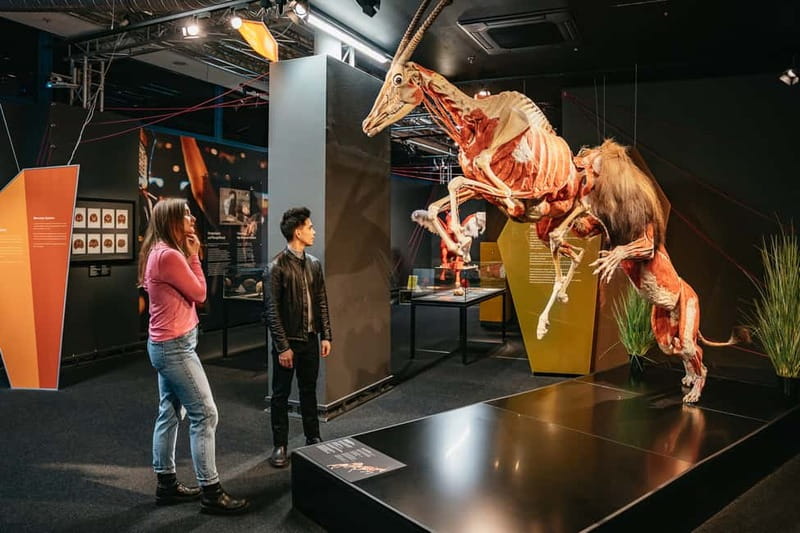
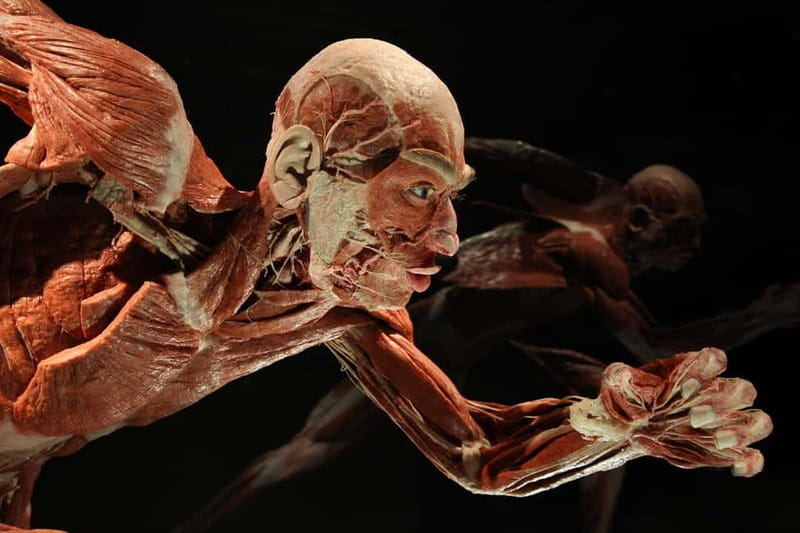
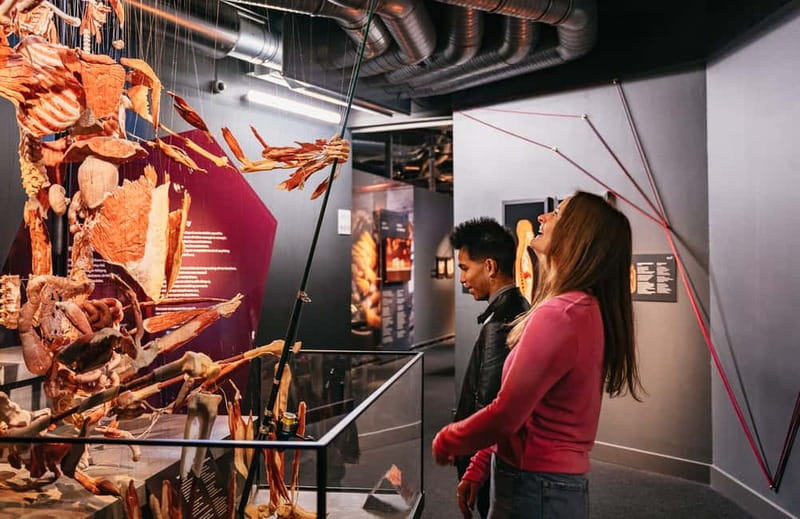
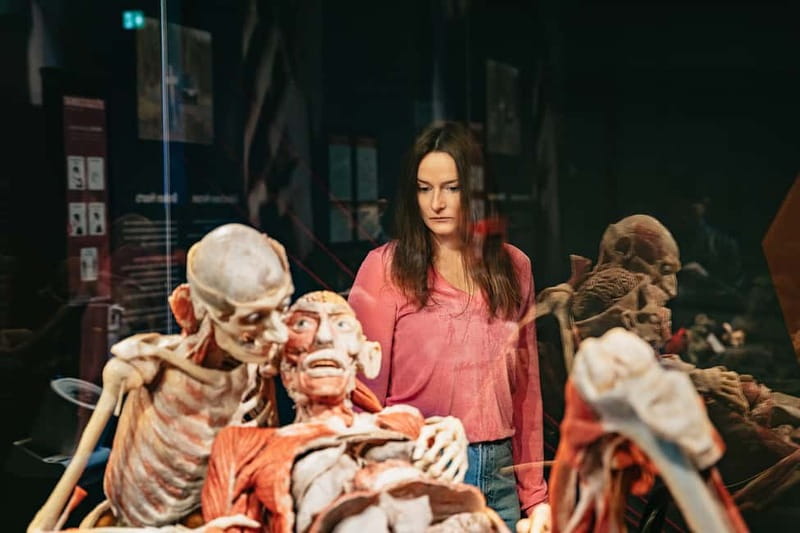
The most striking part of Berlin’s BODY WORLDS Museum is its use of real human specimens. Whole-body plastinates and individual organs show anatomy as it really is, from the skeleton and muscle system to the delicate network of blood vessels. It is direct, unusual, and far more memorable than a textbook diagram.
I like two things in particular: the clear explanation of body systems and the way the exhibition links anatomy with everyday health. You do not just see organs in isolation. You follow how they work together, how disease affects them, and what stress, excess, and healthy habits can do to the body.
The main consideration is that this is not a conventional art museum. Some displays may feel confronting, and the exhibition can be less satisfying if you want lots of hands-on activities. A few audio exhibits have reportedly been out of order or hard to locate, while some displays may look a little dusty or tired.
Key points to know before you go
- Real human plastinates: See whole-body specimens, skeletons, organs, muscles, and blood vessels prepared through plastination.
- Anatomy made practical: Displays explain digestion, circulation, breathing, the nervous system, pregnancy, disease, and organ function.
- More than a medical exhibition: Sections also examine happiness, stress, moderation, and the habits connected with a long life.
- Central Berlin location: The museum is at Panoramastraße 1a, 10178 Berlin, making it easy to fit into a day of sightseeing.
- Plan for a steady museum visit: Your ticket is valid for one day, with opening hours from 10 AM to 7 PM and last admission at 6 PM.
- Bring your own patience: Audio equipment may not always work perfectly, and lockers cost extra.
What you are really seeing at BODY WORLDS
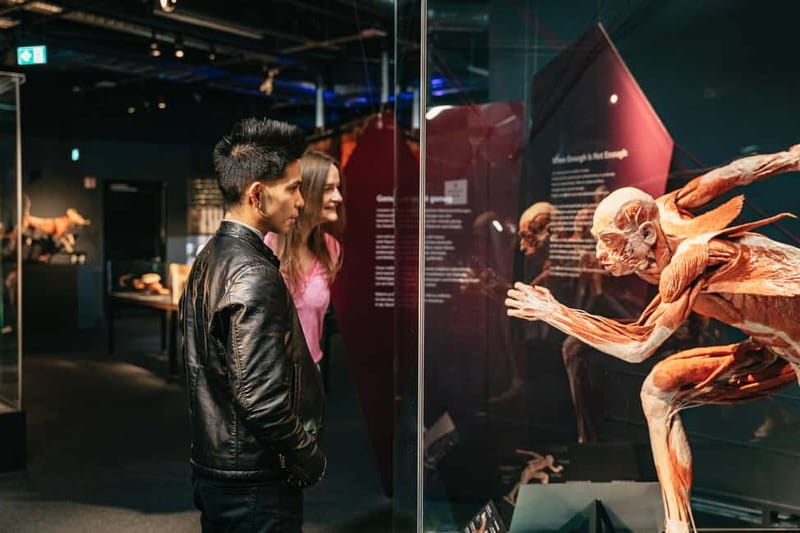
BODY WORLDS was created by Dr. Gunther von Hagens and uses plastination to preserve human bodies and body parts. The method allows the specimens to be displayed in a dry, stable form, so you can see structures that are normally hidden beneath skin, muscle, and connective tissue.
That changes the scale of the human body. A skeleton no longer feels like an abstract classroom model. Muscles show their shape and direction. Blood vessels reveal how widely the circulatory system spreads. Organs become part of a working network rather than a collection of mysterious names.
The exhibition is designed to explain rather than simply shock. Labels and displays connect what you see with the way the body functions. You can study a single organ, then look at a whole-body plastinate to understand where that organ sits and what it works alongside.
The presentation may still feel intense. These are real human preparations, not plastic replicas. I would not choose this as a casual stop for someone who is uncomfortable with medical subjects, death, or exposed anatomy. For most people who accept that premise, the exhibition offers a serious and thought-provoking look at the human form.
More museums and galleries in Berlin:
- Berlin: Jewish Museum Berlin Entrance Ticket
★ 4.5 · 8,393 reviews - Berlin: DDR Museum Tickets
★ 4.3 · 3,443 reviews - Berlin: Natural History Museum Entrance Ticket
★ 4.6 · 3,382 reviews
Start with the skeleton and muscular system
The early sections focus on the basic framework of the body. The skeleton gives you the structure, while the muscular system shows how movement is created and controlled.
This is useful because anatomy often becomes confusing when you see organs without their supporting structure. Here, you can connect bones, joints, and muscles in a more physical way. The arrangement helps you understand why a muscle sits where it does and how different parts cooperate when you move.
Whole-body plastinates are especially helpful at this point. They give you a broad view before the exhibition moves into smaller systems. You can compare the body’s outer shape with the structures that support it inside.
The displays are not just for medical students. The information is presented in an accessible way, and English translations are available on the displays. A phone-based interactive guide also adds another layer for people who want a more active way to follow the material.
That guide may be particularly useful for families and older children. One practical warning: audio exhibits may be difficult to find, and some may not be working on the day you visit. I would treat the written panels and phone guide as the main tools rather than depending entirely on the audio.
Follow food through the digestive system
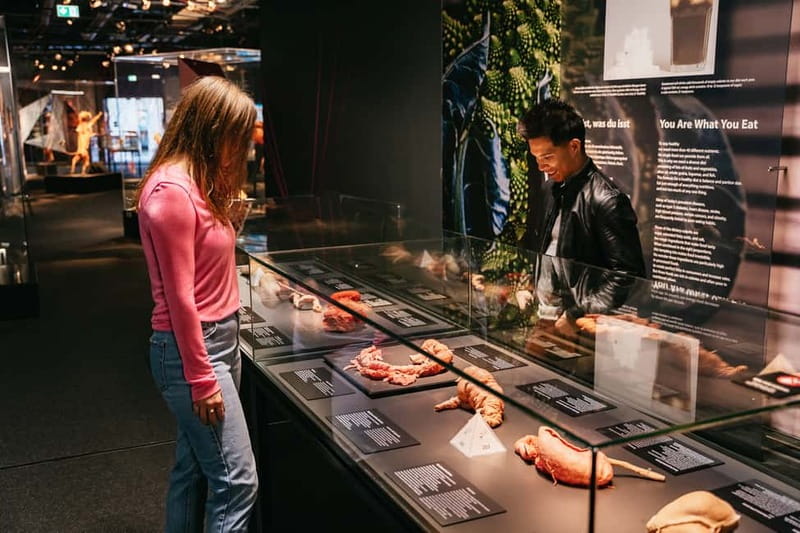
The digestive section gives the exhibition a strong everyday connection. You can see the organs responsible for processing food and learn how the system fits into the rest of the body.
This part works well because digestion is familiar, but the internal process is not. The displays turn a routine act into a visible chain of organs and functions. You begin to see how much coordination is needed for the body to take in nutrients, process food, and remove waste.
You may find this section more useful than a simple display of isolated organs. The museum’s strength is showing relationships. A stomach, intestine, liver, and other organs make more sense when you understand how they depend on one another.
The subject can also lead naturally into the exhibition’s broader health message. What you eat, how much you eat, and how consistently you care for your body all affect these systems. BODY WORLDS does not turn into a diet seminar, but it does ask you to think about daily choices in physical terms.
See pregnancy and the development of an embryo
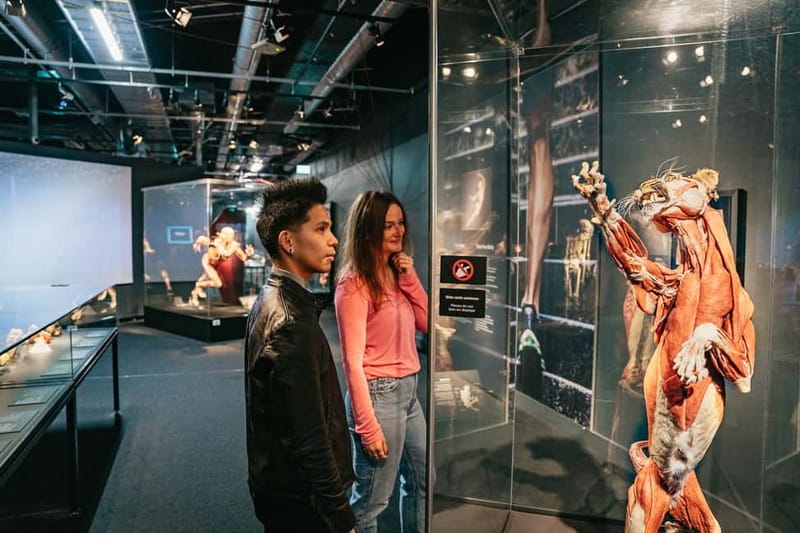
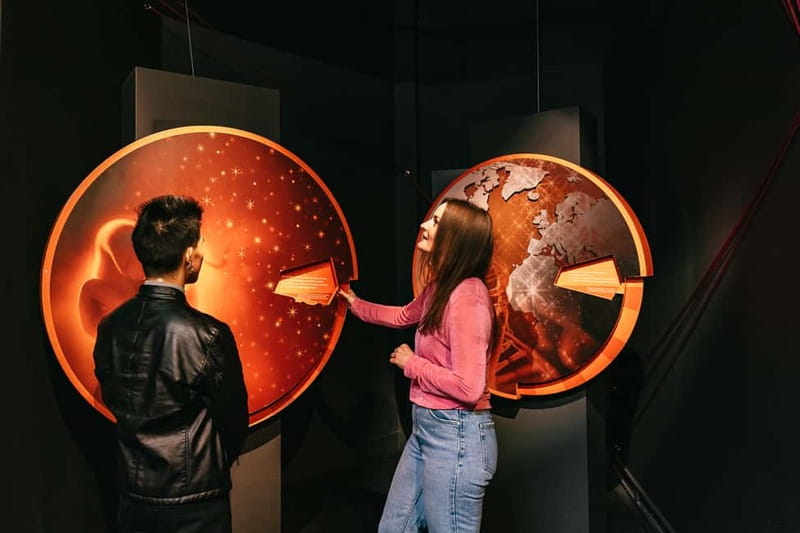
The section on pregnancy follows the development of an embryo in the womb. It adds a different perspective to the museum because it focuses on growth rather than disease or decline.
This display can be one of the most affecting parts of the visit. It shows how much change takes place before birth and how complex human development is from its earliest stages.
At the same time, this is another area where the real nature of the specimens matters. The subject may be difficult for some people, particularly younger children, so you may want to prepare your family before arriving. The museum is educational, but it does not soften every subject.
The value here comes from seeing development as a process. Instead of treating the human body as a finished object, you see how its systems begin and develop. It adds scale to the rest of the exhibition and helps explain why the body is both resilient and fragile.
A few more Berlin half-days to weigh up
- Berlin: Reichstag, Dome and Government District Guided Tour
★ 4.7 · 18,288 reviews - Berlin: 1-Hour City Tour by Boat with Guaranteed Seating
★ 4.3 · 16,993 reviews - Berlin: Boat Tour Along the River Spree
★ 4.4 · 11,252 reviews - Discover Berlin Half-Day Walking Tour
★ 5.0 · 9,624 reviews
Trace the cardiovascular and respiratory systems
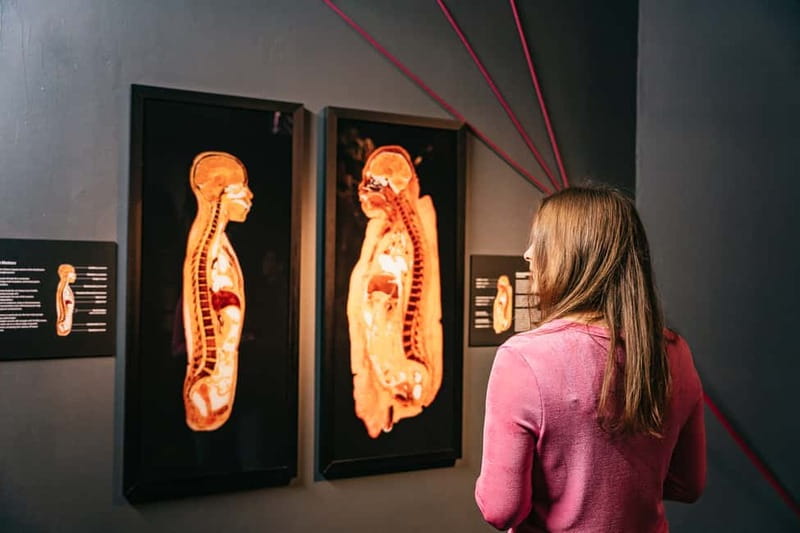
The cardiovascular section shows the heart and the network of blood vessels that carries blood through the body. The respiratory section then turns your attention to breathing and the organs that make it possible.
These areas are among the strongest for understanding how much activity is happening inside you at every moment. The heart is not simply a symbol. It is a pump within a large, branching system. The lungs are not just two empty shapes. They are part of an exchange process that keeps the body supplied with oxygen.
The plastinates help because they make scale visible. A diagram can show a branching vessel, but a preserved specimen lets you see how the network occupies space around other organs.
Disease is also explained through the displays. You can learn how common conditions affect organs and body systems, although the exhibition should not be treated as personal medical advice. Its purpose is to make function and illness easier to understand, not to diagnose you.
If you have a particular interest in health, biology, or nursing, you could spend a long time in these sections. If you move at a quicker pace, they still provide a clear outline of how circulation and breathing support the rest of the body.
Examine the nervous system and the effects of stress
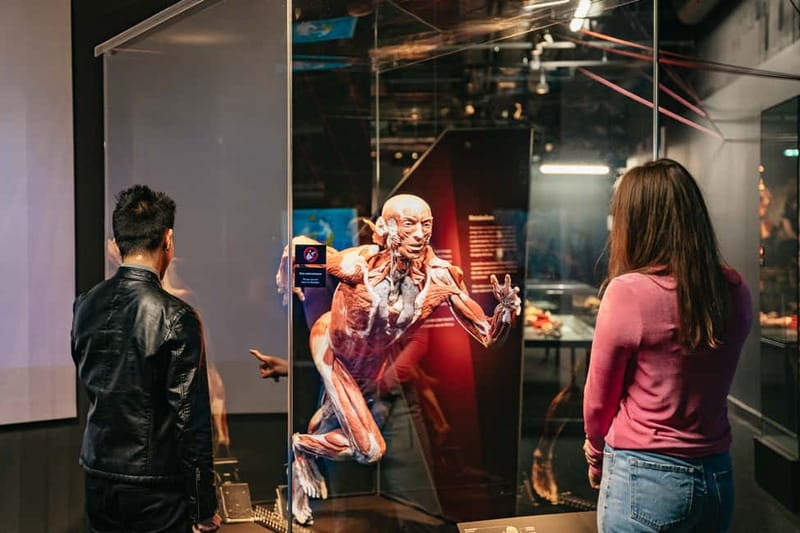
The nervous system section brings the exhibition into the area of sensation, control, and response. It helps explain how the body receives information and manages its many functions.
This is also where BODY WORLDS begins to ask larger questions about how you live. The museum looks at what determines happiness and how the body responds to stress. Those topics give the exhibition a human dimension beyond anatomy.
Stress is not presented only as an idea in your head. The exhibition connects it with physical responses and the ways your body copes. That makes the subject practical, especially if you are thinking about work, sleep, habits, or long-term health.
The discussion of moderation is similarly grounded in daily life. The museum considers the space between excess and modesty, then asks what the body needs for a long and healthy life. You will not leave with a personal wellness plan, but you may leave thinking more carefully about the effect of ordinary choices.
I appreciate this wider focus because it prevents the exhibition from becoming a sequence of body parts. The human body is presented as a living system shaped by behavior, emotion, disease, and time.
How long should you spend inside?
Your ticket is valid for one day, so you do not need to rush through the museum. Opening hours are 10 AM to 7 PM every day, except December 24, with last admission at 6 PM.
The supplied information does not set a fixed visit length. In practical terms, I would allow at least one to two hours if you want to read the explanations and use the interactive material. You can move faster if you are mainly interested in the visual displays, or stay longer in the systems that interest you most.
The exhibition is self-guided. No guide’s name or scheduled tour is provided, and your admission ticket covers entry rather than a personal tour. That gives you freedom to stop where you like, but you will need to direct your own pace.
A school group or a busy period may affect the atmosphere. One account describes schoolchildren running around and hiding, which could make a quiet visit harder. If calm concentration matters to you, arriving earlier in the day may be sensible, though a specific crowd forecast is not provided.
Is the $22 ticket good value?
At $22 per person, BODY WORLDS is not a bargain basement museum stop, but it can offer fair value if you want something focused and distinctive. The ticket gives you access to the full exhibition for one day, and the subject matter is unusual enough that it is not easily replaced by a standard museum visit.
I see the value in the combination of real specimens, clear anatomy explanations, and broad health topics. You are not paying simply to look at preserved bodies. You are paying for a structured explanation of how bones, muscles, organs, circulation, breathing, digestion, nerves, disease, and stress connect.
The value is lower if you prefer large interactive museums or need a highly polished, constantly updated presentation. Some interactive parts are limited, and a few displays may look tired. Lockers cost extra, and an audio guide is not included, so allow for those small additional costs if you need storage or audio support.
English translations on the displays help international visitors get full value from the ticket. The phone-based interactive guide can also add useful context without requiring a separate guided tour.
Location, access, and practical planning
The museum is at Panoramastraße 1a, 10178 Berlin. The activity begins and ends at this same location, so there is no transport element to arrange after entry.
The museum is wheelchair accessible. That is important for a collection with several body-system sections, because you can spend time moving through the exhibition without treating access as an afterthought.
Cloakroom service is not included. Lockers are available for a charge, so travel light if you can. A small bag may make the visit easier, especially if you want both hands free for reading panels or using a phone guide.
The museum is closed on December 24. On other days, it opens from 10 AM to 7 PM, with entry ending at 6 PM. Check the available starting time when booking, since the ticket information directs you to availability for the current times.
You can cancel up to 24 hours before the activity for a full refund. A reserve-now-and-pay-later option is also available, which helps if your Berlin schedule is still changing.
Who will get the most from this museum?
I would recommend BODY WORLDS to anyone curious about anatomy, medicine, health, or the way the body works. It is especially suitable for teenagers, adults, students, and families whose children are ready for direct medical imagery.
It can work well during a rainy afternoon or as a change from Berlin’s historical museums. The central location also makes it easy to place within a day of city sightseeing, although the experience itself deserves more attention than a quick 20-minute stop.
You may enjoy it less if you want a playful attraction with lots of touch screens, games, or live demonstrations. The exhibition is educational first. The real plastinates carry much of the impact, while the interactive elements play a supporting role.
Think carefully about younger children. The material includes real human preparations, pregnancy, organs, disease, and the effects of the body’s decline. The museum can teach children a great deal, but age and temperament matter.
Should you book BODY WORLDS Berlin?
Book it if you want a clear, unusual look at the human body and are comfortable with real human specimens. The strongest reasons are the whole-body plastinates, the explanations of organ systems, and the way the exhibition connects anatomy with stress, happiness, moderation, and long-term health.
Skip it if you are looking for a conventional art museum, a lively guided tour, or a heavily interactive family attraction. Also keep your expectations realistic about the audio equipment and presentation quality. A few displays may feel worn, and not every audio feature may work.
For the right visitor, the $22 admission is reasonable. BODY WORLDS gives you something difficult to find elsewhere in Berlin: a direct lesson in what connects every human being, presented through the actual structures of the body.
FAQ
Where is BODY WORLDS Museum in Berlin?
The museum is located at Panoramastraße 1a, 10178 Berlin.
What are the opening hours?
It is open Monday through Sunday from 10 AM to 7 PM. The museum is closed on December 24.
What is the last admission time?
Last admission is at 6 PM.
How long is the ticket valid?
The ticket is valid for one day. Check availability for the available starting times.
What does the ticket include?
The ticket includes entrance to the BODY WORLDS exhibition.
Is an audio guide included?
No. An audio guide is not included with the entrance ticket.
Are lockers available?
Lockers are available, but they are subject to a charge. Cloakroom service is not included.
Is the museum wheelchair accessible?
Yes. The activity is wheelchair accessible.
Can I cancel my booking?
Yes. You can cancel up to 24 hours in advance for a full refund. A reserve-now-and-pay-later option is also available.
Just added around Berlin
- From Berlin: Gardens & Palaces of Potsdam Bike Tour★ 5.0 · 61 reviews
- Berlin: Battle for Seelow Heights WW2 tour -Clash of Titans★ 5.0 · 27 reviews
- From Berlin: Historical Gems of Potsdam Private Day Trip★ 4.4 · 4 reviews
- Berlin: Französischer Dom 360° Panorama & Crémant to go★ 3.9 · 5 reviews
- Explore Berlin Tour: History and Highlights★ 4.7 · 5 reviews
- Berlin: Evening Yacht Cruise with Aperitif & Dinner Upgrade★ 4.6 · 178 reviews
- Berlin: Expats in Berlin Comedy Show Ticket★ 4.7 · 182 reviews
- Berlin: The Epic Comedy Club Friday Night Showcase★ 4.8 · 28 reviews
Berlin Tours, compared.

Reichstag, Dome and Government District Guided Tour
Read our review →
1-Hour City Tour by Boat with Guaranteed Seating
Read our review →




Reichstag, Plenary Chamber, Cupola & Government Tour
Read our review →
Browse the lists this tour appears in