
Review · BERLIN TOURS
Berlin: Neukölln Walking Tour
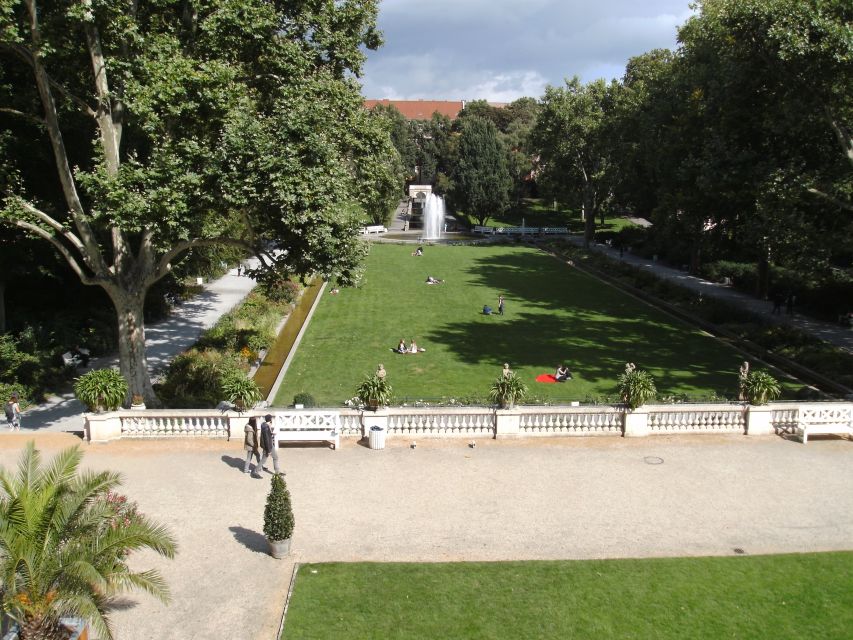
Neukölln is at its best when someone helps you read between the ordinary buildings. On this private walk, guide Reinhold Steinle turns old housing blocks, local legends, and a grand public garden into a clear picture of how this Berlin district has changed. The finale is Körner Park, a surprising neo-Baroque garden tucked among Neukölln’s older buildings.
I like the tour’s local focus and its small scale. You get stories about Will Meisel, an eccentric gravel-pit owner, a scandal-tainted erotic dancer, and Neukölln’s link to David Bowie, rather than a standard roll call of Berlin’s headline sights. I also like that the tour ends with a written summary and personal tips for exploring on your own.
The main drawback is practical: the tour is in German, lasts only 90 minutes, and is not suitable for people with mobility impairments. If you want a broad Berlin overview or a museum-heavy outing, this will feel too narrow. If you want a closer look at one district, it offers good value, especially when shared by a group of up to six.
Key details of the Neukölln walk
- Körner Park is the visual high point: See one of Berlin’s most important neo-Baroque gardens set within the older streets of Neukölln.
- Reinhold Steinle leads the walk in German: His approach centers on local stories, district history, and the positive changes of the past decade.
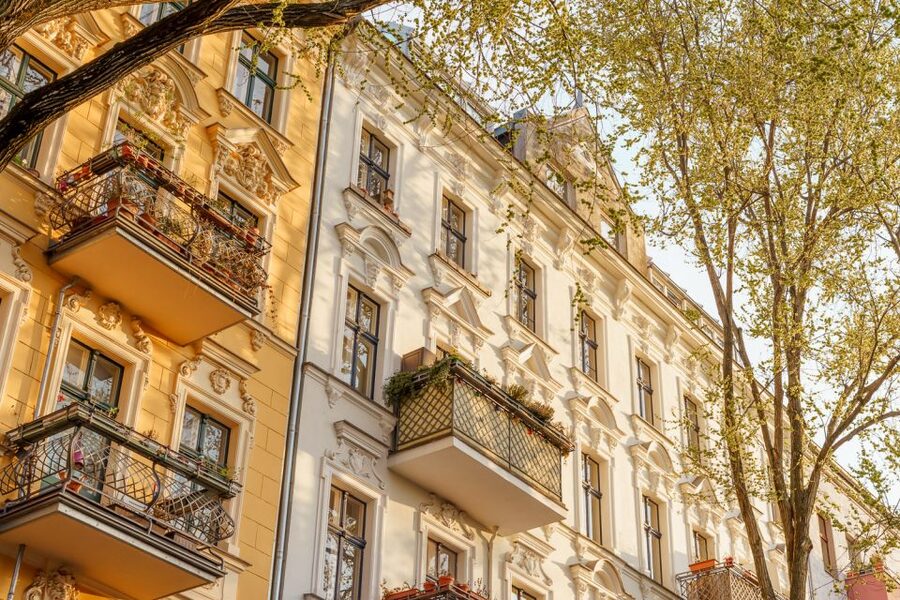
- The route includes the 1920s Ilsenhof: This residential complex gives you a look at Neukölln’s planned housing history.
- Local personalities replace generic sightseeing: Hear about Will Meisel, an unusual gravel-pit owner, a notorious erotic dancer, and other former residents.
- The walk connects Neukölln with David Bowie: The guide explains the district’s Bowie link without treating it as the whole story.
- The private format keeps the experience personal: The $70 price covers a group of up to six, not each individual participant.
Why this Neukölln walk feels different from central Berlin
Central Berlin gives you grand political buildings, royal museums, and famous Cold War sites. Neukölln offers something less polished and, for many visitors, more revealing. You move through a working district whose character has shifted over the past ten years, while the guide points out details that are easy to miss when you walk alone.
That is the point of this experience. It is not a checklist of major attractions. It is a neighborhood reading lesson. You learn how a place can carry several identities at once: old residential Berlin, a district shaped by migration and change, a setting tied to entertainment figures, and an area now attracting fresh attention.
Reinhold Steinle has been described as an Ambassador for Neukölln, and that gives you a useful idea of his angle. He does not present the district as a problem to be solved or as a fashionable backdrop. He focuses on its good qualities while still explaining how it got here.
That positive approach matters. A walk about urban change can easily become a parade of complaints or trendy shorthand. Here, you get a guide who cares about the neighborhood and wants you to notice its strengths. The result should suit you if you prefer street-level context to grand declarations.
More walking tours in Berlin:
- Discover Berlin Half-Day Walking Tour
★ 5.0 · 9,624 reviews - Berlin: Third Reich and Cold War 2 Hour Walking Tour
★ 4.9 · 6,830 reviews - Berlin: Discover Berlin Walking Tour
★ 4.9 · 5,998 reviews
Meeting at Leuchtstoff Kaffeebar
The tour begins at Leuchtstoff Kaffeebar, Siegfriedstraße 19, 12051 Berlin. Starting at a cafe gives the outing a local feel from the first minute, though you should check the exact start time when booking because several starting times may be available.
The meeting point is in Neukölln rather than at a central Berlin landmark. Allow enough time to reach it without rushing. This is a neighborhood walk, so arriving ready to begin on foot is more important than planning for a formal attraction entrance.
There is no ticket queue to worry about. The private format also means you are not being folded into a large group with strangers. For up to six people, the guide can keep the pace and conversation more focused than a standard public walking tour.
The tour lasts 90 minutes. That is long enough to build a story around several stops, but short enough to fit beside another Berlin plan. It is not a full-day district study. Think of it as a concentrated introduction that gives you a better way to see Neukölln afterward.
The old buildings and Neukölln’s changing character
The early part of the walk sets up the district itself. You hear about the area’s background and the changes that have taken place during the last decade. The useful thing here is not just learning dates or names. You begin to understand why older buildings, new interest, and local memory sit side by side.
Steinle’s method relies on small details. The supplied tour information notes that even people who have lived in Neukölln for decades can notice things they had previously passed without a second thought. That is a good measure of what a strong neighborhood guide should do: make familiar streets readable.
You can expect the walk to move through older parts of Neukölln rather than staying on a single formal avenue. The appeal is the contrast between everyday surroundings and the stories attached to them. An unremarkable building may connect to a former resident, a cultural figure, or a turning point in the district’s past.
The tour also presents Neukölln through people. Stories of the former erotic dancer and the eccentric gravel-pit owner add humor and human scale. They keep the walk from becoming a dry account of urban planning. Steinle tells these tales with a wink and enthusiasm, so the history feels conversational rather than academic.
Glory Halls of Neukölln and Will Meisel
One of the more unusual themes is the history of the Glory Halls of Neukölln. The name alone suggests a part of the district’s entertainment or cultural past, and the tour uses it to show that Neukölln has long had more going on than its present-day reputation might suggest.
You also learn who Will Meisel was. The supplied details do not spell out every part of his life, so I would not book this expecting a full biographical lecture. Instead, expect his story to be one piece of a larger portrait of the people and institutions that shaped Neukölln.
That balance is one of the walk’s strengths. You are not asked to memorize a parade of names. Each person helps explain the district’s former social life, its public image, or its changing identity. The anecdotes make the route easier to remember because they attach history to real human quirks.
If you enjoy unusual local stories, this part should be especially rewarding. If your interest is limited to famous Berlin figures, you may find the focus less familiar. That is also the reason to take the tour: Neukölln is presented on its own terms, not simply as an extension of Mitte.
A few more Berlin half-days to weigh up
- Berlin: Reichstag, Dome and Government District Guided Tour
★ 4.7 · 18,288 reviews - Berlin: 1-Hour City Tour by Boat with Guaranteed Seating
★ 4.3 · 16,993 reviews - Berlin: Boat Tour Along the River Spree
★ 4.4 · 11,252 reviews - Berlin: Hop-on Hop-off Bus Tour with Live Commentary
★ 4.3 · 8,579 reviews
The David Bowie connection
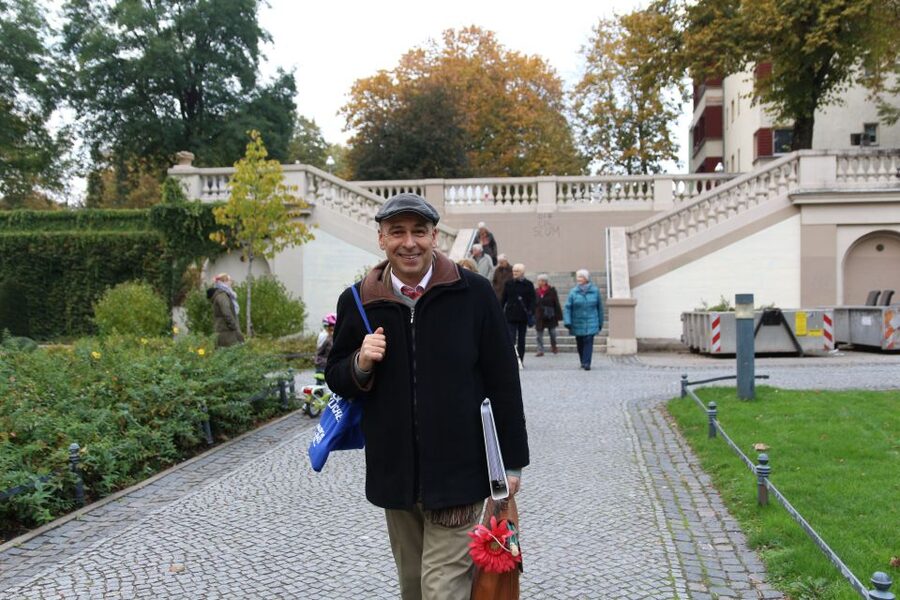
The David Bowie link gives the walk a recognizable thread for visitors who know Berlin through music. Bowie’s Berlin years are often discussed through better-known central locations, so learning about a connection to Neukölln adds a different angle.
It is important to keep expectations in check. This is not advertised as a dedicated David Bowie tour, and Bowie is one element among many. You will not spend the entire 90 minutes tracing his career. The value is in seeing how a global artist can connect with a neighborhood that is otherwise left out of standard Berlin routes.
Steinle’s storytelling appears to place the Bowie connection alongside local people, buildings, and district changes. That makes it more useful than a single celebrity fact. You get a sense of how Neukölln fits into the wider cultural story of Berlin without losing focus on the neighborhood itself.
For music fans, this may be the detail that helps justify booking. For everyone else, it is a memorable side path in a tour built around local context.
The Ilsenhof and 1920s housing
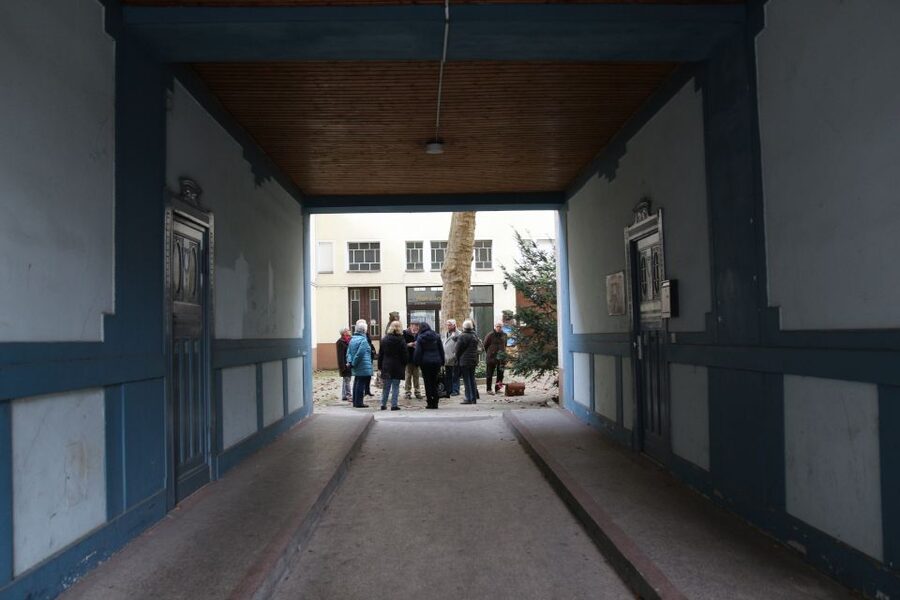
The Ilsenhof is a residential complex from the 1920s and one of the clearest architectural stops on the route. It gives you a way to think about housing as part of Berlin’s social history, not just as a row of facades.
A housing complex from this period can tell you about the ambitions of its time: how homes were planned, how residents were organized, and how the city tried to shape daily life. The tour information does not provide a full architectural specification, so you should expect interpretation rather than a technical building survey.
This stop also helps connect Neukölln’s past to its present. Housing remains central to the district’s identity, especially as the area changes. Looking at the Ilsenhof allows you to see that Neukölln’s story is not only about nightlife, art, or new businesses. It is also about where people live and how the built environment affects a neighborhood.
I find this kind of stop more useful than a quick photo opportunity. You come away with a clearer sense of why the older buildings matter. If you enjoy architecture, urban planning, or social history, the Ilsenhof may be one of the walk’s most rewarding sections.
The 1912 archaeological discovery
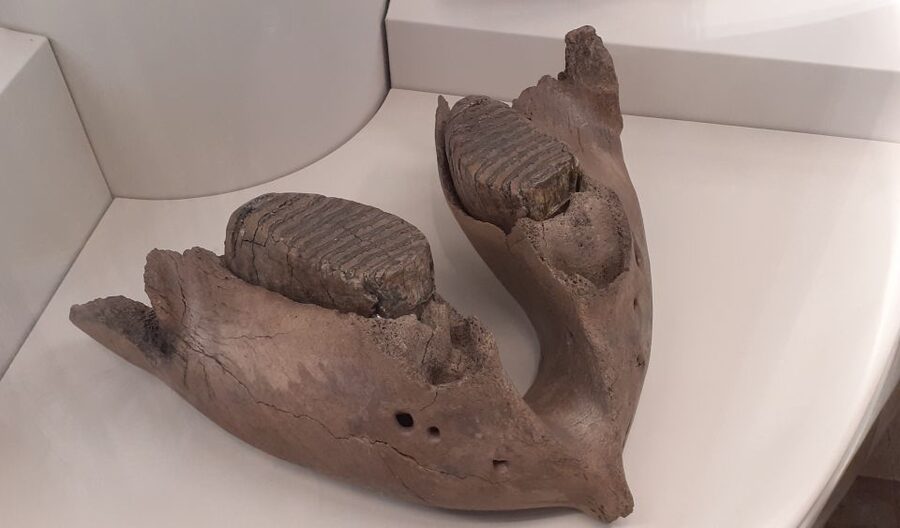
On the way to Körner Park, Steinle points out an archaeological discovery from 1912. The available description does not identify the exact object or site, so I would not plan your visit around a particular artifact. The appeal lies in the surprise: a modern Berlin neighborhood contains a trace of something much older or less expected.
This kind of detail is easy to miss without a guide. An archaeological find may not announce itself with a large museum display or a dramatic ruin. You need someone to explain what happened and why the discovery matters.
The stop also adds another layer to the tour’s sense of time. You move from 1920s housing and local personalities to an older piece of evidence, then onward to a formal garden. Those shifts make the route feel like a sequence of connected clues rather than a simple walk from one address to another.
For you, the practical lesson is simple: keep your attention on the surroundings. Some of the tour’s best moments seem designed to reward close looking, not quick photography.
Körner Park, the garden finale
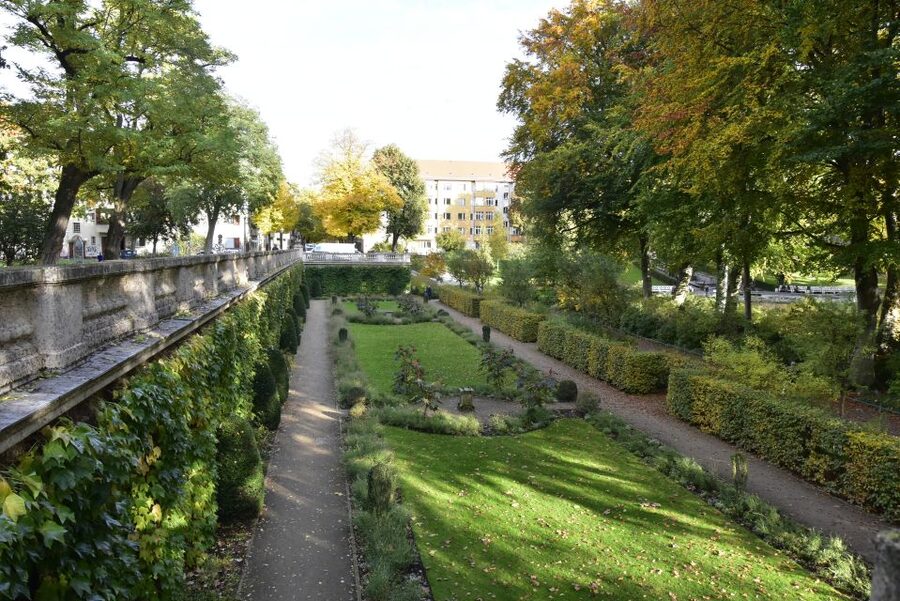
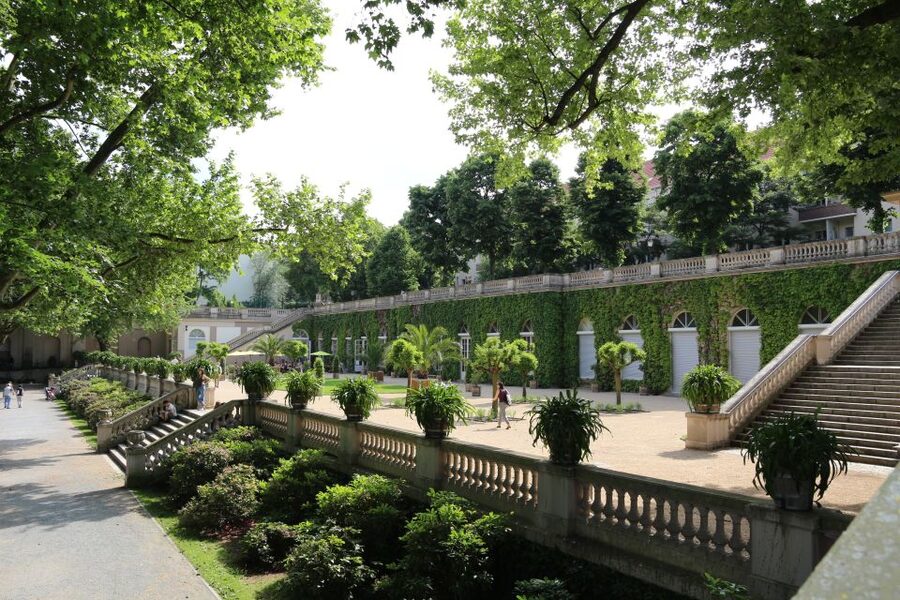
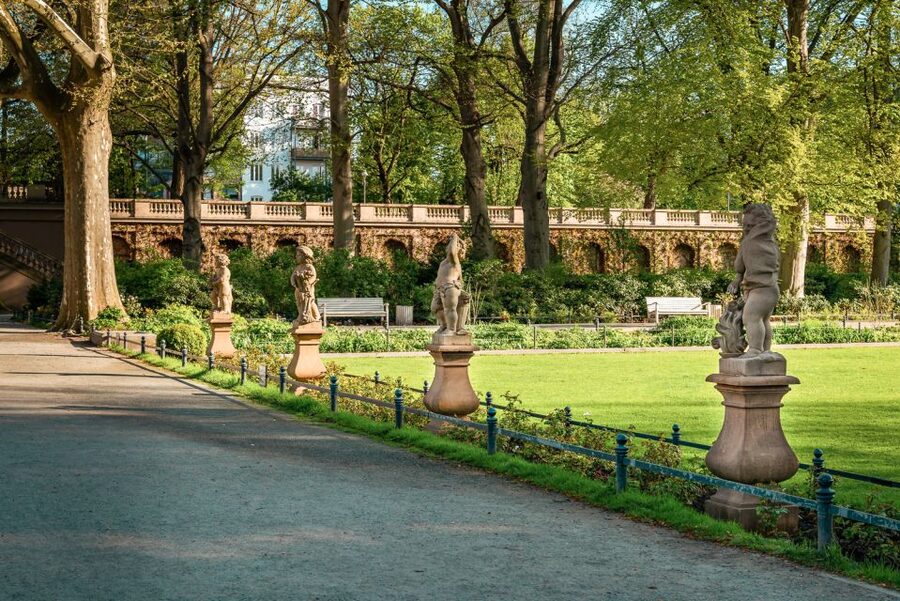
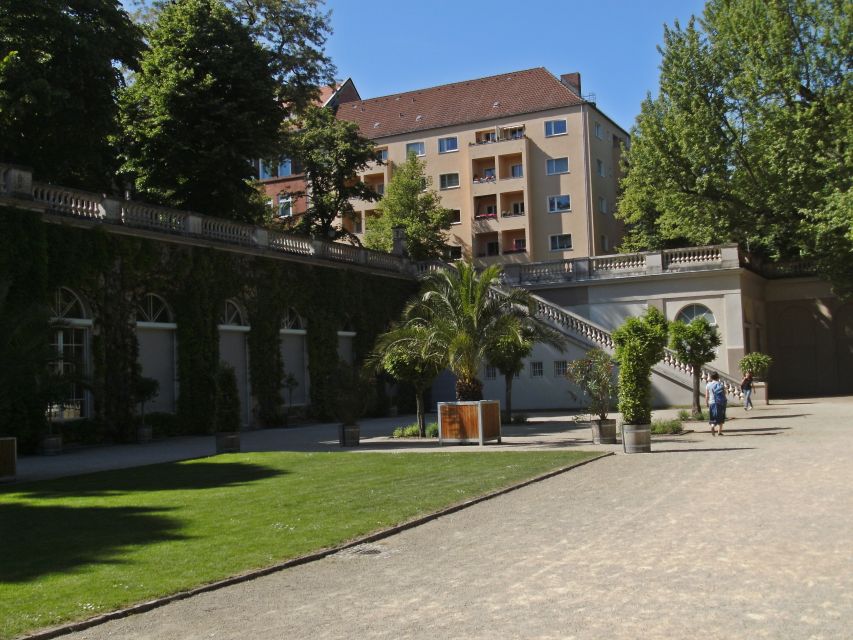
Körner Park is the tour’s highlight, and it is easy to see why. The garden is described as Berlin’s most important neo-Baroque garden, or at least one of its key examples, and its setting makes it memorable: a formal green space in the middle of Neukölln’s older buildings.
The contrast does much of the work. You are not visiting a grand palace garden separated from city life. You reach a carefully designed garden within a lived-in district. The sudden change in atmosphere gives the final stop real force.
Körner Park also helps explain why a neighborhood walk can be more satisfying than a list of famous landmarks. The park may be beautiful on its own, but the route gives it context. You have already heard about the district’s residents, housing, cultural links, and earlier discoveries. By the time you arrive, the garden feels like part of Neukölln’s story rather than an isolated pretty place.
The tour information calls the garden astonishing, which is strong language, but the setting supports the enthusiasm. You should expect a garden visit, not a long botanical or horticultural lecture. The main reward is the design, the contrast with the surrounding buildings, and the way the park closes the route.
If you have limited time in Berlin, this is the stop that may persuade you to visit Neukölln. It offers a visual payoff without requiring a major attraction ticket.
What the guide adds to the experience
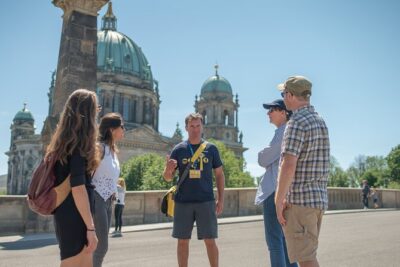
The guide is the heart of this tour. Reinhold Steinle is repeatedly described as engaged, enthusiastic, and full of local knowledge. The strongest praise centers on his energy and the way he tells stories, not just on the number of facts he can deliver.
That distinction matters. A guide can list dates and names while leaving you cold. Steinle’s approach appears more animated, with anecdotes about former residents and a sense of personal investment in Neukölln. You should expect the route to feel like a conversation led by someone who genuinely cares about the area.
The tour is offered in German only. You need enough German to follow a spoken walking tour, including historical explanations and jokes. If you are comfortable with German conversation, the language can make the experience feel more immediate. If not, the tour will not be a good fit unless someone in your group can translate.
At the end, you receive a written summary of the main content. That is a useful touch, especially because a 90-minute walk can bring up many names and connections. You also get Steinle’s suggestions for further places to see and things to do, which can help you extend the Neukölln visit after the official route ends.
Is $70 good value for a private group?
The price is $70 per group of up to six people. That works out to about $11.67 per person if six people join, before any personal extras. For a couple, the effective per-person cost is higher, but you are paying for a private guide rather than a seat on a large public walk.
The private format is the key value point. You are not paying only to be led from one sight to another. You are paying for local interpretation, questions, and a route shaped around a small group. The value is strongest when your party can share the full group price.
The 90-minute length also keeps the cost in proportion. This is a compact introduction, not an expensive half-day commitment. You can place it early in your Berlin stay, then use the guide’s recommendations to plan more time in the district.
Free cancellation up to 24 hours before the start and the option to reserve now and pay later make it easier to fit the walk into a changing schedule. Those policies are practical, but the real booking decision comes down to language, mobility, and your interest in local history.
Who should book this walk?
I would recommend it to you if you have already seen Berlin’s main sights and want a district with a different pace and story. It also suits repeat visitors, German-speaking couples, families with older children, and small groups who prefer a private guide to a large tour.
The walk is a good match for people who enjoy:
- Neighborhood history rather than only famous monuments
- Architecture and housing history
- Local personalities and unusual anecdotes
- Cultural connections, including the David Bowie link
- Gardens and urban design
- Guides who tell stories with humor and personal feeling
I would be more cautious if you need an English-language tour, cannot walk comfortably, or want a route packed with major ticketed attractions. The walk is not suitable for people with mobility impairments, and the supplied information does not describe step-free access or seating along the route.
The tour also may not suit you if you want a neutral, purely academic presentation. Steinle’s role is openly positive: he wants you to see Neukölln’s good sides. That does not make the walk unreliable, but it does give it a clear point of view.
My call on this 90-minute Neukölln experience
Book this tour if you want to understand how an ordinary Berlin district becomes interesting once someone points out its layers. Körner Park is the visual reward, but the real value comes from the connections among the garden, the Ilsenhof, the 1912 archaeological discovery, local characters, Will Meisel, and David Bowie.
The strongest reason to choose it is Reinhold Steinle’s personal approach. His enthusiasm seems to carry the route, and the five-star score from nine ratings supports the picture of a guide who puts real feeling into Neukölln. Just remember that the experience is in German and favors walkers.
At $70 for a private group of six, it is a sensible choice for a small party. You will not see all of Berlin, and you will not get a standard highlight reel. You will get a focused, story-led look at a district many visitors skip, plus a written recap and tips for what to explore next.
FAQ
Where does the Neukölln walking tour meet?
The meeting point is Leuchtstoff Kaffeebar at Siegfriedstraße 19, 12051 Berlin.
How long does the tour last?
The walking tour lasts 90 minutes.
How much does the private tour cost?
The price is $70 per private group of up to six people.
What language is the tour in?
The live tour guide speaks German. The activity information lists German as the available language.
Is the tour private?
Yes. The experience is for a private group.
Does the tour include Körner Park?
Yes. Körner Park is the main highlight, described as an important neo-Baroque garden in Berlin.
Is cancellation available?
You can cancel up to 24 hours in advance for a full refund. You can also reserve the tour and pay later.
Just added around Berlin
- Berlin: Battle for Seelow Heights WW2 tour -Clash of Titans★ 5.0 · 27 reviews
- From Berlin: Gardens & Palaces of Potsdam Bike Tour★ 5.0 · 61 reviews
- From Berlin: Historical Gems of Potsdam Private Day Trip★ 4.4 · 4 reviews
- Berlin: Französischer Dom 360° Panorama & Crémant to go★ 3.9 · 5 reviews
- Explore Berlin Tour: History and Highlights★ 4.7 · 5 reviews
- Berlin: Evening Yacht Cruise with Aperitif & Dinner Upgrade★ 4.6 · 178 reviews
- Berlin: Expats in Berlin Comedy Show Ticket★ 4.7 · 182 reviews
- Berlin: The Epic Comedy Club Friday Night Showcase★ 4.8 · 28 reviews
Berlin Tours, compared.

Reichstag, Dome and Government District Guided Tour
Read our review →
1-Hour City Tour by Boat with Guaranteed Seating
Read our review →
Reichstag, Plenary Chamber, Cupola & Government Tour
Read our review →
Browse the lists this tour appears in