
Review · BERLIN TOURS
Berlin: Hidden gems around the Gendarmenmarkt – Guided walking tour
Gendarmenmarkt is more than a handsome square framed by domes. This two-hour walk follows the stories behind its grand buildings, then slips into nearby streets where Berlin’s fashion trade, banking families, writers, performers, and political history left their mark. The most surprising stop is tied to the 1989 proclamation of freedom to travel.
I like the small group of no more than 15 people, which should make it easier to hear the guide and ask questions. I also like the mix of subjects: architecture at the square, the Mendelssohn family on Jägerstraße, Berlin fashion at Hausvogteiplatz, and personalities such as Josephine Baker and Marlene Dietrich.
The main consideration is language. This is a German-language tour, and the route is not suitable for people with visual or hearing impairments. Gendarmenmarkt has also been a major construction site since 2023, so the square may not look exactly as you expect.
Key points
- Gendarmenmarkt’s three landmark buildings: Study the German Cathedral, French Cathedral, and Konzerthaus with the guide’s architectural and historical context.
- A direct link to 1989: Visit the place connected with the proclamation of freedom to travel, one of the key moments in modern German history.
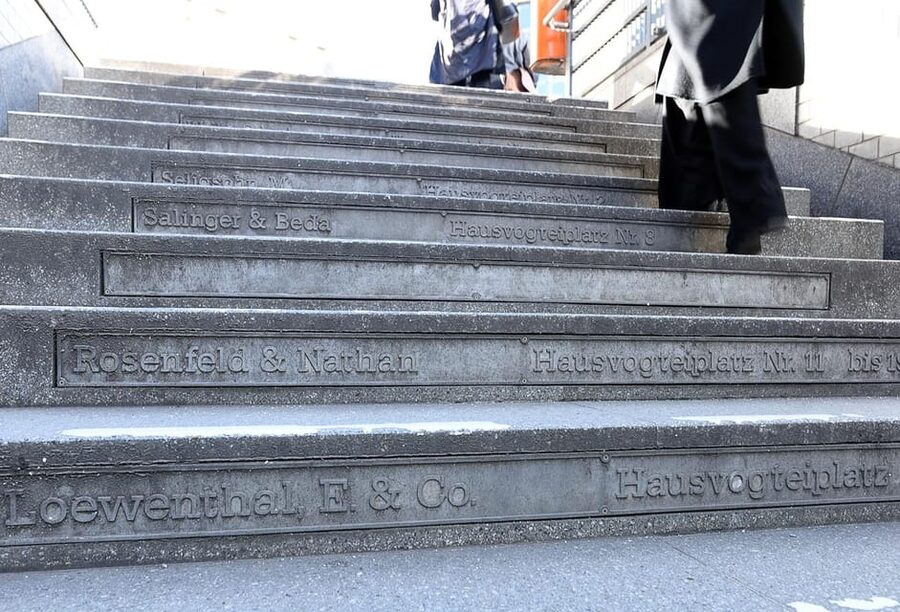
- Hausvogteiplatz’s fashion past: Learn how nearby streets helped Berlin become a fashion center.
- Jägerstraße’s double life: Follow the street from finance and banking to Enlightenment-era intellectual circles.
- A cast of memorable Berlin figures: Hear about E.T.A. Hoffmann, Josephine Baker, Marlene Dietrich, Claire Waldoff, and the Mendelssohn family.
- Practical small-group format: The walk lasts two hours, costs $20 per person, and ends where it begins.
Gendarmenmarkt: Berlin’s grand square with a complicated past
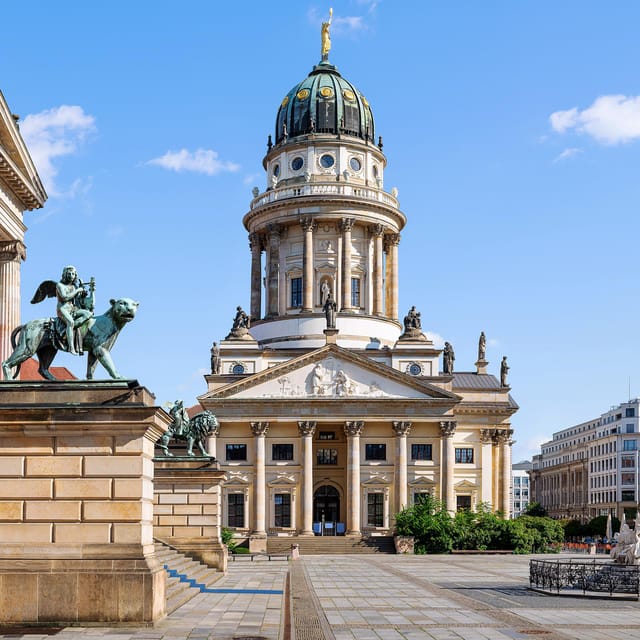
I would choose this tour for the way it treats Gendarmenmarkt as a starting point rather than the whole story. The square is often admired for its symmetry and formal architecture, but its importance comes from the events, businesses, and people connected to it.
The route begins at Gendarmenmarkt, opposite the building at Französische Straße 44. That location puts you right beside the square and its best-known architectural trio. You do not need to spend the entire tour staring at façades. The guide uses them as clues, then connects the square to the surrounding streets.
The square has changed over time, and the walk looks at those changes directly. You will hear about its past glories, its difficult periods, and the reasons it matters to Berlin today. Since the area has been a major construction site since 2023, the present-day setting is part of the experience too. Expect the guide to explain how work has affected the square, although the exact appearance and access can vary on your date.
That current construction is a small drawback for anyone hoping for a perfect postcard view. It may also alter the walking pattern. Still, the focus on change makes sense here. Gendarmenmarkt is not simply an old monument preserved behind glass. It is a public place that has been rebuilt, repurposed, and used through different chapters of Berlin’s story.
More walking tours in Berlin:
- Discover Berlin Half-Day Walking Tour
★ 5.0 · 9,624 reviews - Berlin: Third Reich and Cold War 2 Hour Walking Tour
★ 4.9 · 6,830 reviews - Berlin: Discover Berlin Walking Tour
★ 4.9 · 5,998 reviews
The German Cathedral, French Cathedral, and Konzerthaus
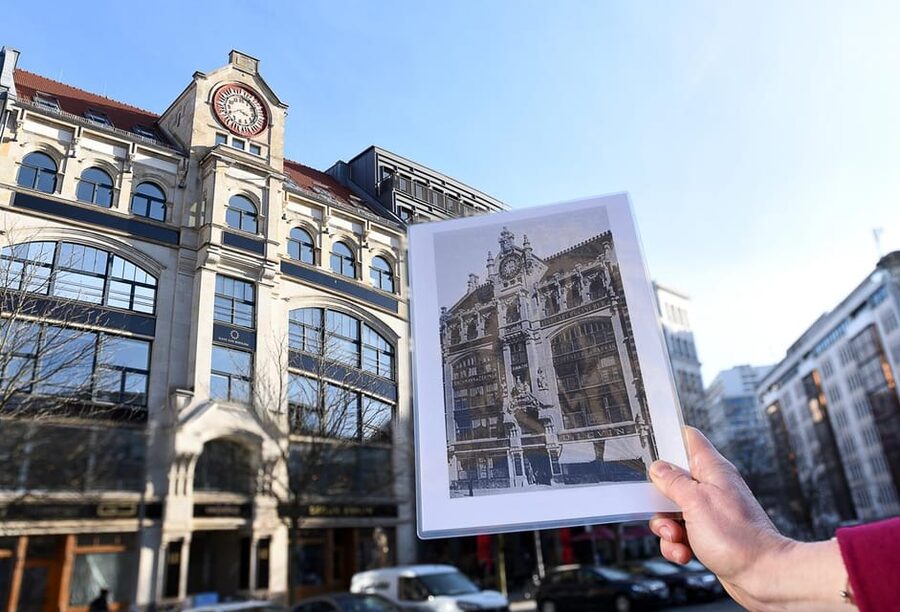
The first major section centers on the three buildings that give Gendarmenmarkt its famous appearance: the German Cathedral, the French Cathedral, and the Konzerthaus.
You will look at the architectural relationship between the two cathedrals and the concert hall. The point is not only to identify each building. The guide explains their role in the city and draws attention to features you could easily miss while taking photographs.
The German Cathedral and French Cathedral create the square’s visual balance, but they also reflect different communities and periods in Berlin’s development. The Konzerthaus adds a cultural layer, turning the square from a purely political or religious setting into a place associated with music and public life.
This is where a guide adds real value. Without context, you can admire the domes, steps, and formal lines in a few minutes. With context, you begin to understand why the square is often called Berlin’s most beautiful. The tour also promises surprising facts, so expect details that go beyond standard descriptions of the buildings.
You will not enter the buildings as part of the stated program. This is an outdoor walking tour, so the appeal lies in the explanation, the connections between sites, and the view of the architecture from the square.
The people behind the façades
The tour gives equal weight to people and buildings. That makes the walk more lively than a standard architectural circuit.
E.T.A. Hoffmann is one of the figures linked to the area. He was a writer and composer, and his presence brings Berlin’s literary and musical life into the story. The Mendelssohn family appears later on Jägerstraße, connecting art, finance, and intellectual life.
You will also hear about Josephine Baker, Marlene Dietrich, and Claire Waldoff. Their careers represent different sides of Berlin’s performance culture. Baker was a dance icon, Dietrich became an international film figure, and Waldoff was known for cabaret. Their inclusion gives the route a wider social range than a walk focused only on aristocrats, generals, and grand buildings.
I like this approach because it helps you picture Berlin as a city shaped by performers, writers, musicians, business families, and public figures. It also gives you useful names to follow up on later. If a particular person catches your interest, note the name during the walk. Two hours passes quickly, and you may not remember every connection afterward.
One named guide associated with the experience is Susanne. The tour is conducted in German, and Susanne has been praised for a friendly and capable presentation. If she leads your walk, you can expect an approach that joins people, places, and several centuries of change rather than treating each stop as an isolated fact.
The 1989 moment that changed the meaning of travel
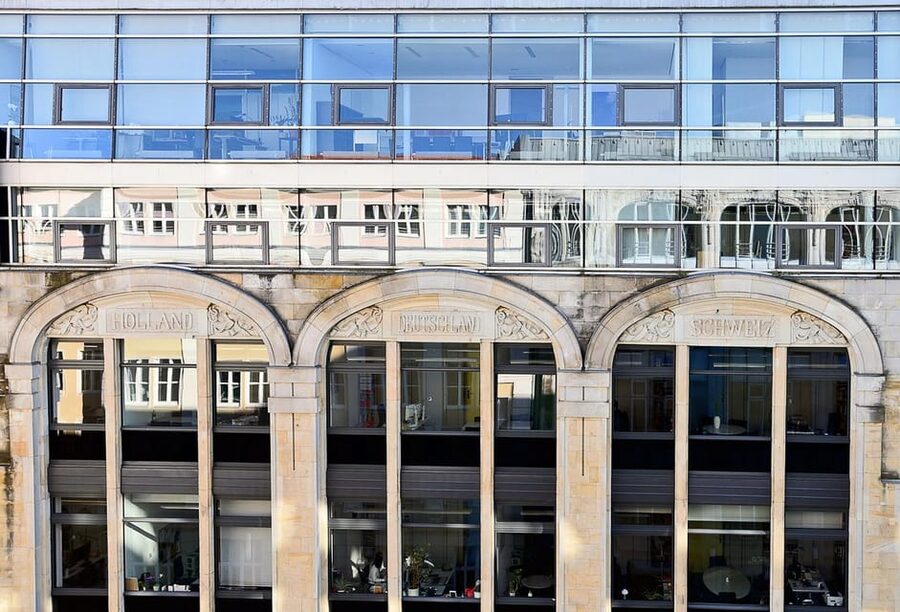
One of the most important stops is the place where freedom to travel was proclaimed in 1989.
That phrase carries enormous weight in Berlin. The city was divided, and the ability to travel between East and West was not a simple personal choice. The proclamation marked a turning point in German history and helped create the conditions for the changes that followed.
The guide’s job here is to provide the setting and explain why the moment mattered. You will not simply pass a plaque or hear a date. The stop places a major political event in the same central district where people had long worked, worshipped, performed, traded, and met.
For me, this is one of the strongest reasons to book the walk. Gendarmenmarkt can look polished and formal, but this story reminds you that Berlin’s central squares also carry memories of fear, hope, and sudden change.
The tour does not promise a long political lecture, and the two-hour format limits how much detail can fit. Still, the connection is valuable. If you have already seen the Berlin Wall or visited major Cold War sites, this stop adds another location to that story. If you are new to Berlin, it gives you a clear example of how modern German history is present in ordinary city spaces.
A few more Berlin half-days to weigh up
- Berlin: Reichstag, Dome and Government District Guided Tour
★ 4.7 · 18,288 reviews - Berlin: 1-Hour City Tour by Boat with Guaranteed Seating
★ 4.3 · 16,993 reviews - Berlin: Boat Tour Along the River Spree
★ 4.4 · 11,252 reviews - Berlin: Hop-on Hop-off Bus Tour with Live Commentary
★ 4.3 · 8,579 reviews
Hausvogteiplatz and Berlin’s lost fashion center
A short walk from Gendarmenmarkt brings you to Hausvogteiplatz, once a center of Berlin’s fashion industry.
This is a useful change of subject. You move away from domes and public monuments and learn how clothing, design, commerce, and creative work helped shape the city’s identity. The tour explains how Berlin developed into a fashion metropolis and introduces the people who influenced that rise.
Hausvogteiplatz may not have the immediate visual drama of Gendarmenmarkt. That is precisely why it benefits from a guide. Without an explanation, you could walk through the area without knowing what once took place there. The stop turns a normal-looking street into evidence of a working industry and a different Berlin economy.
Do not book this walk expecting a shopping tour or a visit to fashion museums. The emphasis is historical. You will learn how the fashion world developed in this part of Berlin, not browse current boutiques or attend a design presentation.
I find this section especially useful for repeat visitors. If you have already covered the major monuments, a story about Berlin’s former fashion center gives you a fresher way to understand Mitte. It also shows that the city’s cultural influence did not come only from government buildings and concert halls.
Jägerstraße: banking, ideas, and the Mendelssohn family
Jägerstraße adds yet another layer. It was once important to Berlin’s financial world and was home to the influential Mendelssohn Bank.
The Mendelssohn name also connects to music and culture, so the street becomes a meeting point between money, art, and public thought. The tour uses the bank as a starting point for a broader look at the people who shaped Berlin’s intellectual life.
Among them are Alexander von Humboldt, Rahel Varnhagen van Ense, and Moses Mendelssohn. They represent science, literature, salon culture, philosophy, and Jewish intellectual life. The guide explains how figures such as these met and influenced the city’s cultural direction.
This is the kind of material that can make a walking tour worth more than its modest price. You are not just collecting buildings. You are learning why certain streets attracted banks, salons, writers, thinkers, and cultural leaders at the same time.
Jägerstraße also gives you a useful contrast with the square. Gendarmenmarkt presents a formal public face, while Jägerstraße reveals the private networks and working institutions behind Berlin’s influence. The tour’s strength is the link between those two settings.
The limitation is that history this broad can feel dense. In a single walk, you will encounter architecture, fashion, banking, literature, music, cabaret, and twentieth-century politics. Bring a curious mind, but do not expect every person or institution to receive a full biography.
What two hours can realistically deliver
Two hours is enough to cover the main area at a comfortable walking-tour pace, but it is not enough for long visits inside several buildings. The experience works best if you see it as a guided introduction to Gendarmenmarkt and the streets around it.
The group limit of 15 is a practical advantage. A large crowd can make a central Berlin walk frustrating, especially when the guide is explaining details near traffic or busy public spaces. A small group should make it easier to stay together and hear the German commentary.
The tour starts and finishes at the same meeting point. That simplifies planning. You can arrange the walk before another Mitte activity without needing to calculate where you will end up. Check the available starting times when booking, since the start time is not fixed in the information provided.
The route is wheelchair accessible. That is important, but the area’s construction work could affect the exact conditions on the day. If you use a wheelchair, confirm the current route when you reserve, particularly if construction has changed surfaces or access points.
The experience is not suitable for people with visual impairments or hearing impairments. Since the tour depends on spoken German explanations and visual examination of buildings and streets, this restriction affects the core experience rather than being a minor detail.
Is $20 a fair price?
At $20 per person, I consider this good value if you want interpretation rather than a quick look at the square.
You can see Gendarmenmarkt for free. You can also photograph the German Cathedral, French Cathedral, and Konzerthaus without joining a tour. The fee pays for the connections between those buildings and the less obvious streets nearby: the 1989 travel announcement, Hausvogteiplatz’s fashion history, and Jägerstraße’s financial and intellectual past.
The small-group format improves the value. A maximum of 15 people is more personal than a large city walk, though the exact feel will depend on how many people actually book your departure. Tips are not included, so allow for an optional gratuity if the guide gives you a particularly good afternoon.
The experience includes only the guided walk. There is no stated entry to attractions, meal, drink, or transport. That keeps the cost clear and prevents you from paying for extras you may not want, but it also means you should choose this for the stories and guidance, not for included admissions.
Free cancellation up to 24 hours before the start gives you useful flexibility. You can also reserve and pay later, which helps if you are still arranging your Berlin schedule.
Who should book this Gendarmenmarkt walk?
I would recommend it to first-time Berlin visitors who want a focused introduction to Mitte, especially those who enjoy architecture with a strong human story.
It also suits repeat visitors. The fashion history at Hausvogteiplatz and the financial and intellectual connections on Jägerstraße offer more than the standard central Berlin route. You may have walked past these streets before without knowing what happened there.
History and culture fans will get the most from the range of subjects. You will encounter German and French religious communities, music, literature, fashion, banking, cabaret, film, and the political change of 1989.
The tour is less suitable if you want to enter monuments, spend long periods taking photographs, or hear the guide in English. It is also not a good match if you prefer a very narrow theme. The route covers many subjects, and its pleasure comes from seeing how they overlap.
Rain need not ruin the walk. One afternoon led by Susanne was described as so engaging that the stories helped take attention away from the weather. Still, dress for an outdoor two-hour walk, since the program is based on moving between streets and buildings rather than sitting indoors.
Should you book it?
Book this tour if Gendarmenmarkt interests you but you want more than its famous view. For $20, you get a compact German-language walk through architecture, fashion, banking, performance, and the events of 1989, all within a small group.
Skip it if you need English commentary, want interior visits, or have accessibility needs that conflict with the tour’s stated restrictions. For everyone else, this is a smart way to put Berlin’s polished façades into context and discover why the nearby streets matter just as much as the square.
FAQ
How long is the Gendarmenmarkt walking tour?
The tour lasts two hours. Check availability for the current starting times.
Where does the tour start?
It starts at Gendarmenmarkt, opposite the building at Französische Straße 44.
Where does the tour finish?
The tour ends back at the same meeting point.
What language is the tour conducted in?
The live tour guide speaks German. German is the only language listed for this activity.
Is the tour wheelchair accessible?
Yes, the activity is listed as wheelchair accessible. Since Gendarmenmarkt has been a major construction site since 2023, you may want to confirm current route conditions when booking.
What is included in the price?
The $20 price includes a guided walking tour in a small group of no more than 15 people. Tips are not included.
Just added around Berlin
- From Berlin: Gardens & Palaces of Potsdam Bike Tour★ 5.0 · 61 reviews
- Berlin: Battle for Seelow Heights WW2 tour -Clash of Titans★ 5.0 · 27 reviews
- From Berlin: Historical Gems of Potsdam Private Day Trip★ 4.4 · 4 reviews
- Berlin: Französischer Dom 360° Panorama & Crémant to go★ 3.9 · 5 reviews
- Explore Berlin Tour: History and Highlights★ 4.7 · 5 reviews
- Berlin: Evening Yacht Cruise with Aperitif & Dinner Upgrade★ 4.6 · 178 reviews
- Berlin: Expats in Berlin Comedy Show Ticket★ 4.7 · 182 reviews
- Berlin: The Epic Comedy Club Friday Night Showcase★ 4.8 · 28 reviews
Berlin Tours, compared.
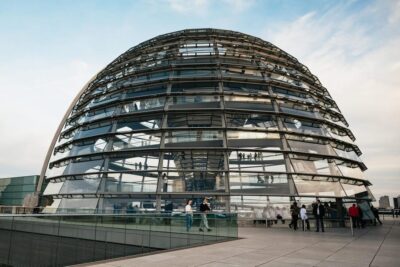
Reichstag, Dome and Government District Guided Tour
Read our review →
1-Hour City Tour by Boat with Guaranteed Seating
Read our review →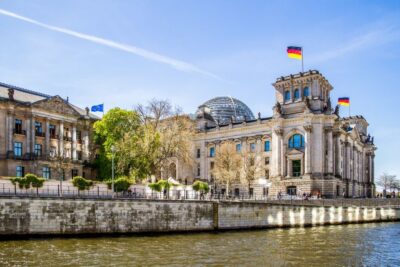
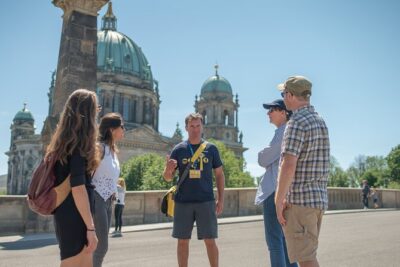
Reichstag, Plenary Chamber, Cupola & Government Tour
Read our review →
Browse the lists this tour appears in