
Review · BERLIN TOURS
Berlin: 2.5-Hour Walking Tour through Kreuzberg 61
Kreuzberg 61 reveals a quieter, more layered side of Berlin. You climb to Viktoriapark and the Prussian monument, then wander through courtyards, old residential streets, former industrial sites, and the lively area around Bergmannstrasse. I like the mix of architecture and everyday city life, and I like that the tour looks beyond the usual Berlin story of the Wall and World War II. The main drawback is simple: this is a 2.5-hour walking tour with a hill, so it may feel demanding in cold, wet, or very hot weather.
I especially like the way the route connects grand 19th-century buildings with ordinary neighborhood details. Guides such as Tobias Schwabe add personal stories and explain urban planning, politics, architecture, and German life in plain terms. If you want a quick checklist of Berlin’s biggest monuments, choose another tour. If you want to understand how one district grew and changed, this is a strong buy at $23.
Key points to know before you book
- Kreuzberg from the inside out: The route moves beyond the district’s familiar image of artists, Turkish restaurants, and nightlife.
- A hill with a city view: Viktoriapark offers a pause among trees, a waterfall, and a broad view from Kreuzberg.
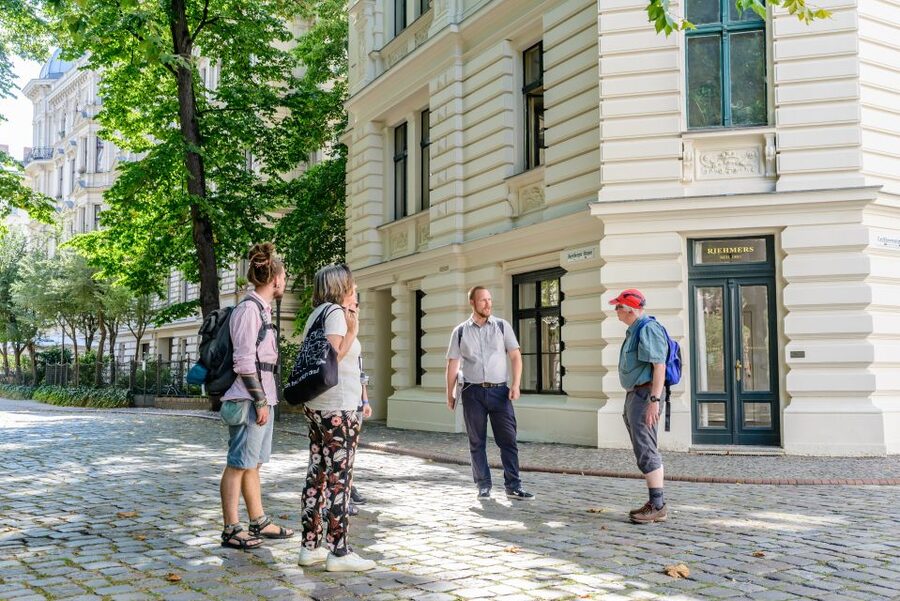
- Architecture takes center stage: Riehmers Hofgarten, Chamissoplatz, old courtyards, and former military or industrial buildings give the walk its character.
- A guide-led history lesson: English and German tours explain how residents, politics, business, and building styles shaped western Kreuzberg.
- A useful neighborhood finish: The walk ends near Bergmannstrasse and Marheineke Markthalle, where you can continue exploring on your own.
- Good value for curious walkers: At $23, the tour costs less than many major Berlin sightseeing experiences while offering a more focused look at one district.
Why Kreuzberg 61 makes a good Berlin walking tour
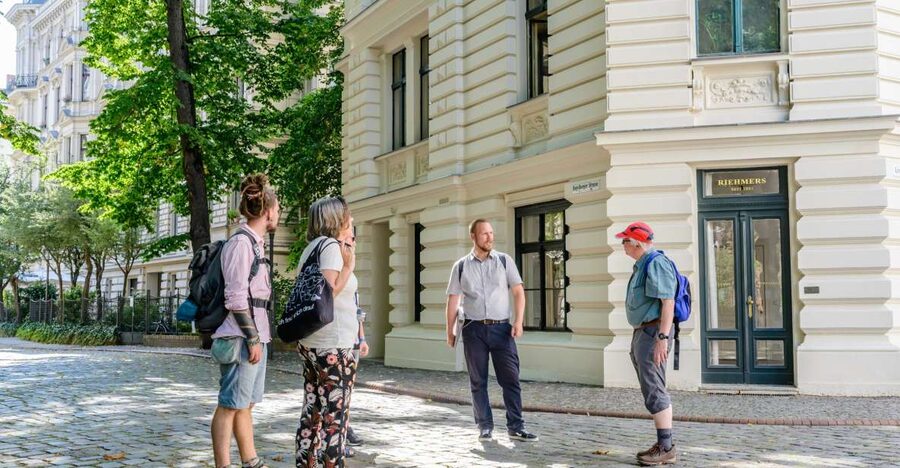
Kreuzberg is often treated as one place, but the district has several distinct personalities. This walk focuses on Kreuzberg 61, the western section around Mehringdamm and Bergmannstrasse. You see apartment blocks, military-era structures, landscaped public spaces, elegant courtyards, shops, market halls, and streets that still show different chapters of Berlin’s past.
The route begins near Platz der Luftbrücke or at the specified Mehringdamm meeting point, depending on the option you select. Confirm the exact starting place before setting out, since the meeting point can vary. From there, the tour works through the neighborhood on foot rather than rushing between famous attractions by vehicle.
That choice matters. On a walking tour, you notice the transition from one block to the next. A formal monument may sit close to a quiet courtyard. A former industrial site may now serve a new purpose. A carefully preserved square can lead toward a commercial street with a very different mood.
This is not a tour built around grand entrances or long museum stops. Several places are viewed from outside, and some are brief pass-by points. Its value comes from the guide’s explanations and from learning how to read the district for yourself.
More walking tours in Berlin:
- Discover Berlin Half-Day Walking Tour
★ 5.0 · 9,624 reviews - Berlin: Third Reich and Cold War 2 Hour Walking Tour
★ 4.9 · 6,830 reviews - Berlin: Discover Berlin Walking Tour
★ 4.9 · 5,998 reviews
Platz der Luftbrücke and the first layers of the district
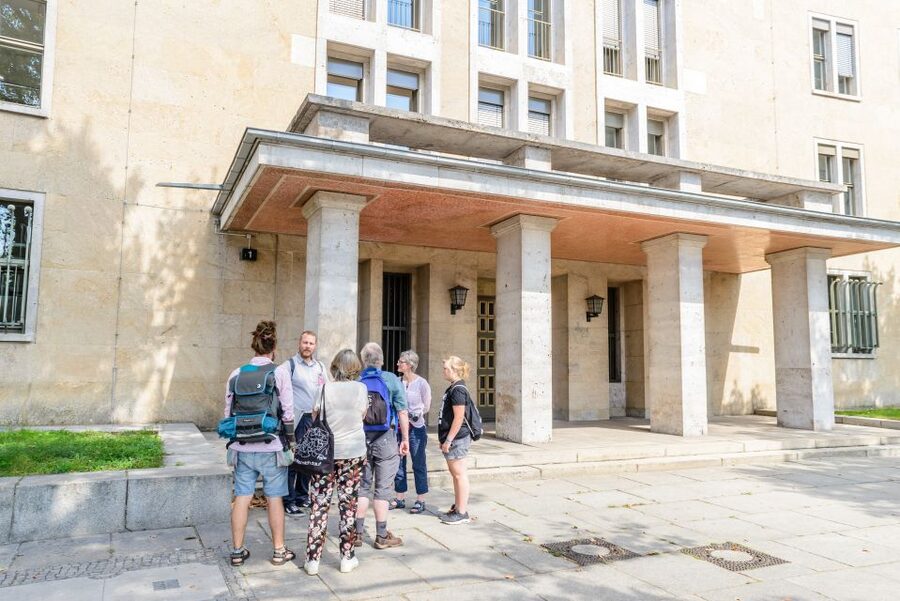
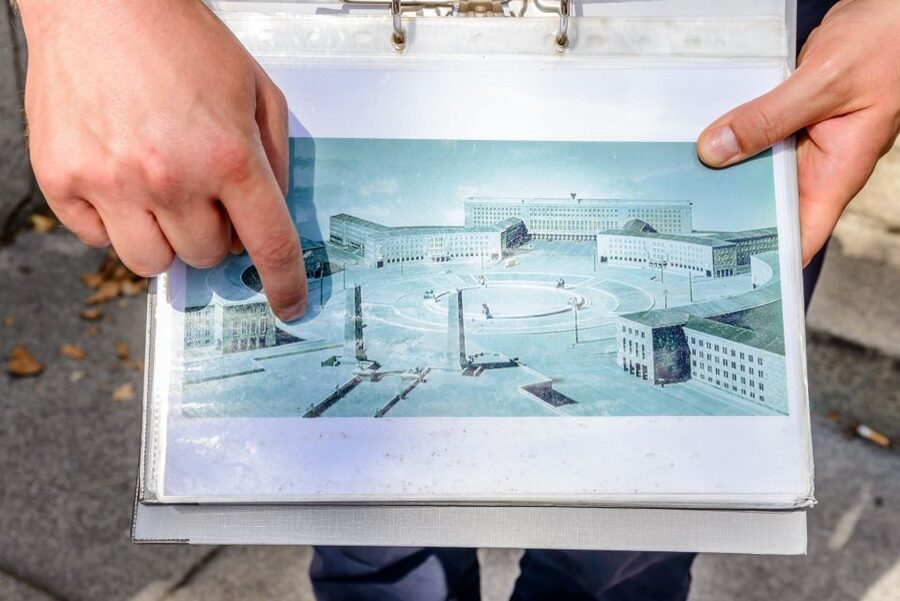
Platz der Luftbrücke is a fitting starting point because it brings together Berlin’s military and modern political past. You spend about 25 minutes here, with time for an introduction, sightseeing, and discussion before moving on.
The square is associated with the former airport and the Berlin Airlift, but this tour does not treat the place as an isolated Cold War monument. The surrounding military buildings help set up a wider conversation about Berlin’s 19th-century growth, the role of public institutions, and the changing purpose of large urban structures.
From here, the route moves toward the monument of the Verband der deutschen Buchdrucker, or Association of German Printers. You have about 10 minutes at this stop. It is a useful reminder that Kreuzberg’s story is also about work, trade unions, publishing, and organized urban life, not just war and division.
I appreciate this broader approach. Berlin tours often return to the same twentieth-century subjects. This route gives more room to earlier periods and to the people who built, worked in, and shaped the neighborhood.
Sixtusgarten and the climb to Viktoriapark
Sixtusgarten is a short stop of about 10 minutes, with time for photographs and commentary. The route then spends roughly 35 minutes in Viktoriapark, the longest stop of the day.
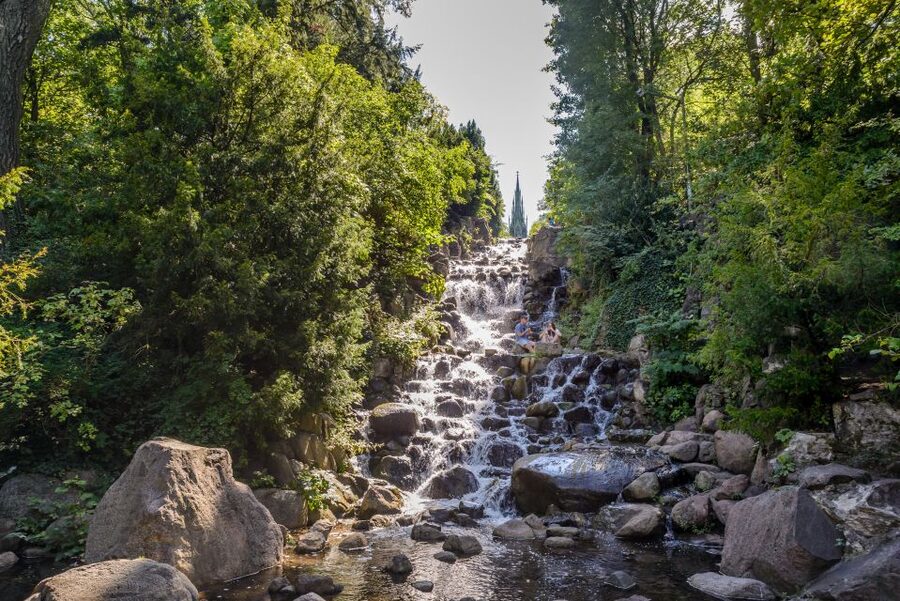
Viktoriapark is the natural centerpiece of the tour. Kreuzberg, the hill that gives the district its name, rises above the surrounding apartment blocks and old military buildings. At its top, Karl Friedrich Schinkel’s national monument for the Liberation Wars provides a broad view across Berlin.
The park also has a waterfall, which makes this one of the city’s more surprising urban pauses. You are not leaving Berlin, but the park gives the walk a calmer rhythm. The route includes scenic views along the way, and the guide explains why this hill and monument matter to the city.
You should allow time for the uphill section. The supplied schedule does not specify a level of physical difficulty, but the route includes a hill and continues on foot for several hours. Wear comfortable shoes, especially if you want to enjoy the park rather than simply pass through it.
This stop works well for photographs, but the view is only part of the reason to linger. The park shows how Berlin uses public space to combine national memory, recreation, and city views. It is also a welcome break from dense streets and apartment facades.
The Prussian monument and the meaning of public memory
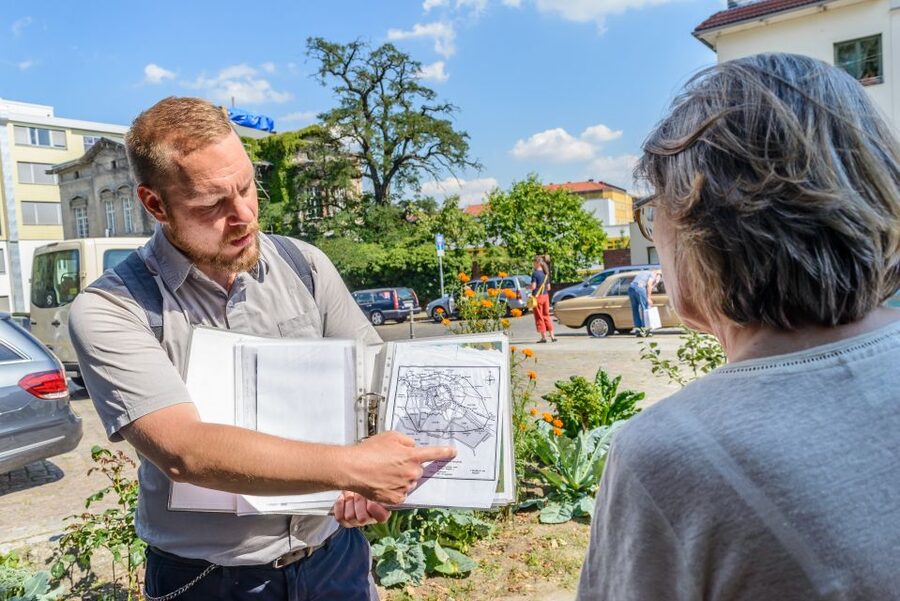
The Prussian Monument for the Liberation Wars receives about 10 minutes. You stop for photographs, sightseeing, and the view rather than for a long formal visit.
The monument helps explain how earlier German rulers used public architecture to shape civic memory. The guide can place it within Berlin’s political and architectural story, giving you a clearer sense of why large monuments appeared where they did and how their meaning can change over time.
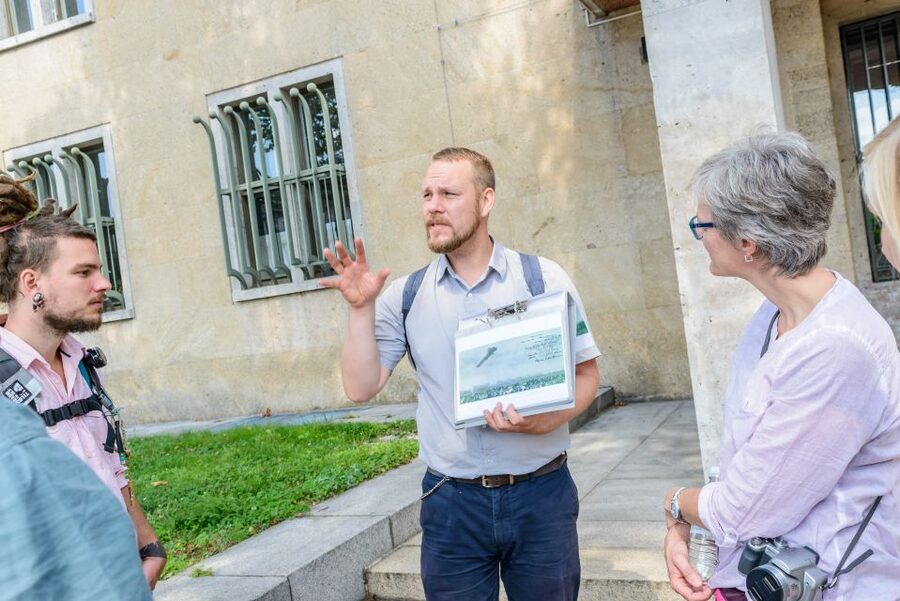
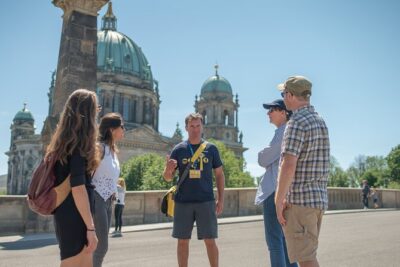
This is one reason the tour suits people who want more than a list of dates. The guide-led format lets you ask questions and connect the monument with the streets and buildings around it. Tobias Schwabe has been especially well regarded for explaining architecture, history, politics, and personal stories in an approachable way.
The emphasis is educational, but the tone does not need to feel like a lecture. Past feedback about Tobias describes him as friendly, professional, and able to point out places that are easy to miss. That is important in Kreuzberg, where much of the interest sits in details rather than in a single famous building.
A few more Berlin half-days to weigh up
- Berlin: Reichstag, Dome and Government District Guided Tour
★ 4.7 · 18,288 reviews - Berlin: 1-Hour City Tour by Boat with Guaranteed Seating
★ 4.3 · 16,993 reviews - Berlin: Boat Tour Along the River Spree
★ 4.4 · 11,252 reviews - Berlin: Hop-on Hop-off Bus Tour with Live Commentary
★ 4.3 · 8,579 reviews
Riehmers Hofgarten and western Kreuzberg’s courtyards
Riehmers Hofgarten is one of the tour’s best architectural stops. You spend about 10 minutes here, with time for a photo and a guided look at the courtyard.
The name points to the kind of enclosed residential space that gives Kreuzberg 61 much of its appeal. Instead of seeing only the street frontage, you get a sense of how apartment blocks were organized behind their facades. Courtyards reveal another side of city planning, with shared spaces and a more intimate scale than the main roads.
For architecture fans, this section may be the highlight. One past participant who had lived in Berlin for years still found unfamiliar corners on the walk and singled out the buildings and planning as a major attraction. That is a useful clue: you do not need to be a first-time visitor to get something from this tour.
The stop is brief, so do not expect a full architectural survey or interior access. You are learning how to notice the building pattern, the courtyard arrangement, and the district’s changing uses. The guide provides the context that turns a pleasant walk into a more meaningful one.
Sarottihöfe and the shift from industry to neighborhood life
Schmelzwerk in den Sarottihöfen is another 10-minute stop. It brings a different texture to the route, moving away from parks and residential courtyards toward former industrial or commercial space.
The tour uses places like this to show that Kreuzberg did not develop as one neat architectural style. Apartment blocks, military buildings, public monuments, workshops, and later businesses all occupy the same area. The result is a district where the past often survives in fragments.
You will stop for photographs and hear about the site before continuing. This is not presented as a major attraction with a long indoor visit, so keep your expectations realistic. Its value comes from understanding how old structures can be reused and how business activity helped shape the local streets.
That kind of context is often missing from a standard city highlights tour. You may not remember every name, but you will begin to recognize the relationship between building form and neighborhood history.
Bergmannstrasse, Fachwerkhof, and the modern district
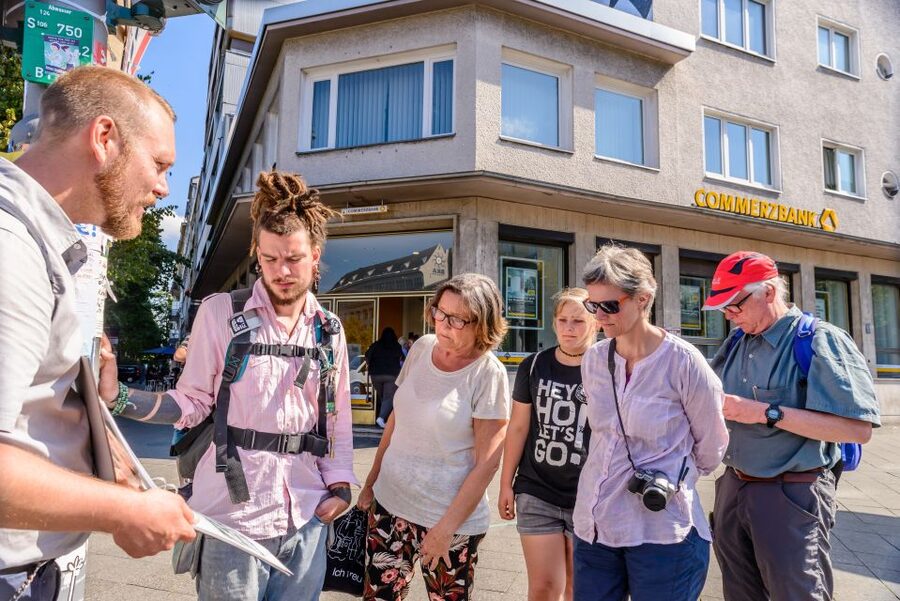
The tour spends about 20 minutes around Bergmannstrasse, combining guided sightseeing with time to notice shops and the street scene. This is where Kreuzberg’s present-day character comes forward.
Bergmannstrasse is more commercial and social than the quiet courtyards and park paths earlier in the route. The guide helps place the shops, businesses, and local atmosphere within the longer story of the district. You get a look at the multicultural side of Kreuzberg without reducing it to a single stereotype.
The route also passes Der Fachwerkhof in Berlin Kreuzberg for about five minutes. This short stop includes photographs, sightseeing, and shopping nearby. The limited time means you should see it as a quick architectural detail, not a full attraction visit.
I like the contrast here. After monuments, courtyards, and former industrial spaces, you finish in a part of Kreuzberg where daily life is easier to observe. You can browse, pause for food later, or use the guide’s suggestions to continue exploring after the tour.
Chamissoplatz and Marheineke Markthalle
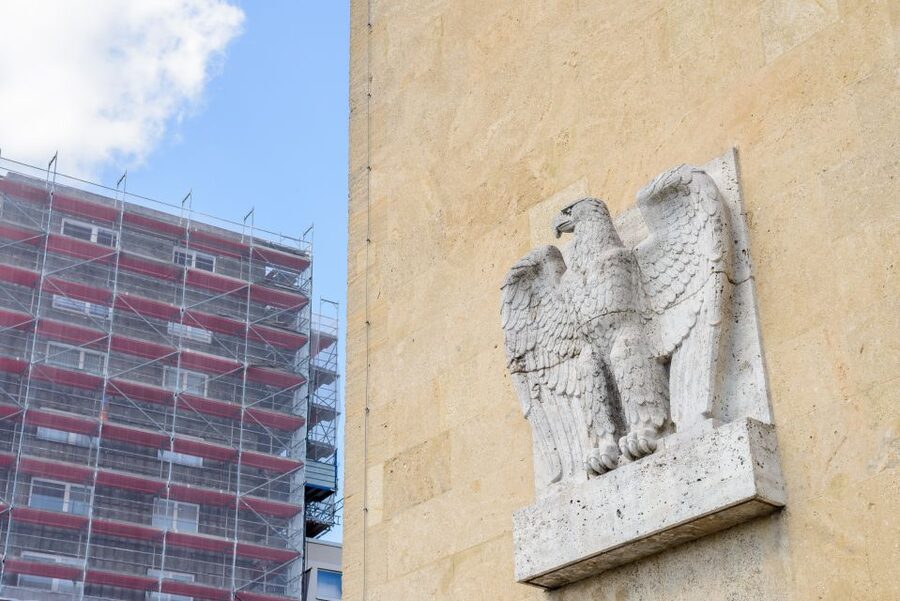
Chamissoplatz receives about five minutes, but the square is worth attention for its well-preserved architecture and calm residential setting. It gives you another chance to see how the district’s older buildings fit together as a whole rather than as isolated photo stops.
The route ends around Marheineke Markthalle, with a short five-minute break and time for shopping or sightseeing. Since the schedule is tight, do not assume you will have a long meal break during the tour. Think of this as a convenient point to continue independently after the guided walk.
The ending works well because it leaves you in a useful part of Kreuzberg rather than sending you straight back to a major transport hub. You can stay around Bergmannstrasse, visit the market hall, or retrace a favorite section at your own pace.
One past participant wished for a brief refreshment stop. That is a fair consideration. The tour includes a break, but the supplied schedule does not promise a café stop or a dedicated meal period. Bring water, and plan food before or after if needed.
What the guide adds to the experience
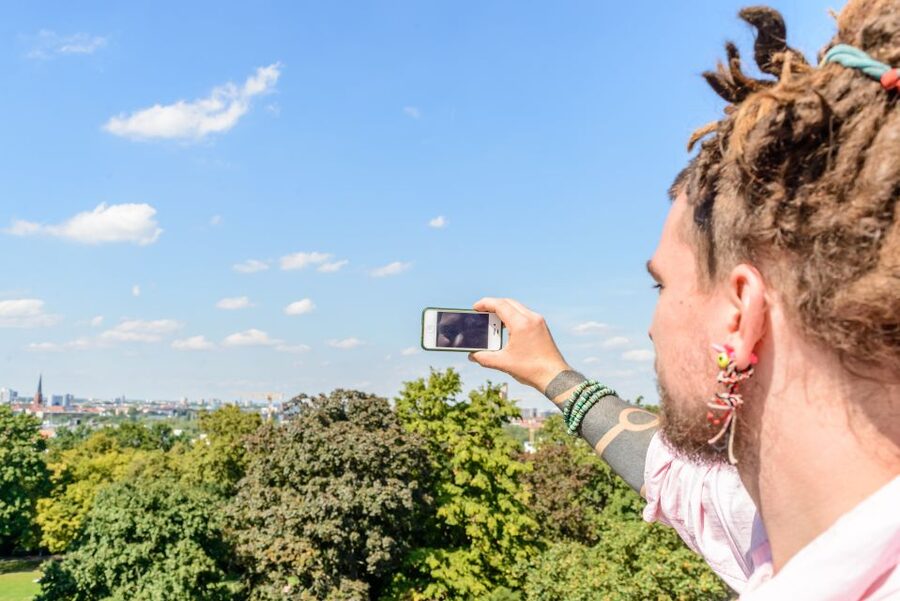
The guide is the heart of this tour. The experience is not simply a route through Kreuzberg, since several stops are short and some are pass-by locations. The explanations turn ordinary streets, monuments, and courtyards into connected parts of Berlin’s story.
Tobias Schwabe is the guide name most often associated with this experience. His style, based on the available comments, combines historical and personal stories with room for questions and conversation. Other professional guides may lead the tour, and tours are offered in English or German.
That language choice makes the activity practical for international visitors and German-speaking residents alike. You can also request a special meeting point, date, and time for your group, subject to arrangement when booking.
A small group or private arrangement may suit you if you want to ask many questions, but the supplied information does not guarantee a particular group size. Book it for the guide’s local interpretation, not for a promise of a private tour.
Price, pace, and who will enjoy it most
At $23 per person, this is good value if you care about context. You receive 2.5 hours with a professional guide and cover a focused part of Berlin that many general sightseeing tours skip. The price is especially reasonable for repeat visitors and residents, since the route is designed to reveal less familiar corners.
I would choose this tour for:
- Architecture fans who enjoy courtyards, facades, monuments, and urban planning.
- First-time visitors who want a break from Berlin’s standard landmark circuit.
- Repeat visitors who have already seen the major museums and Cold War sights.
- People interested in German history beyond World War II and the Berlin Wall.
- Anyone who likes a neighborhood walk with time for questions and discussion.
I would be more cautious if you want a fast-moving tour packed with headline attractions. You will spend time looking at residential areas and sites that may not mean much until the guide explains them. The route also requires steady walking, and weather can affect the experience.
The tour has a 4.9 rating from 525 reviews, with especially strong praise for the guides’ clear explanations, friendly manner, and ability to reveal unfamiliar parts of Kreuzberg. One person even took the tour after living in Berlin for four years and still found new places. That is a strong sign of its value for anyone who wants to see the city with fresher eyes.
Booking advice for a smoother walk
Check the meeting point carefully. The activity information gives Mehringdamm 129 as a starting option, but also notes that the exact meeting point may vary by booking choice. A special place, date, and time can be arranged for a group on request, so provide those details when booking if you need a custom plan.
The tour lasts 2.5 hours, and available start times should be checked for your date. English and German are offered. Free cancellation is available up to 24 hours before the start, and you can reserve now and pay later, which helps if your Berlin schedule is still shifting.
Wear shoes suited to a long city walk. Give yourself extra time to reach the meeting place, and consider planning a meal after the walk near Bergmannstrasse or Marheineke Markthalle rather than expecting a substantial food stop during the tour.
Should you book Kreuzberg 61?
Book this tour if you want Berlin explained at street level. You will see a hill, waterfall, monument, courtyard, old commercial spaces, preserved architecture, market life, and a multicultural shopping street, but the real reward is learning how those pieces fit together.
Skip it if your priority is only Berlin’s headline sights or if a long walking route does not suit you. For everyone else, $23 buys a focused, thoughtful introduction to western Kreuzberg, with enough local detail to make the neighborhood worth exploring again after the guide leaves.
FAQ
How long does the Kreuzberg 61 walking tour last?
The tour lasts 2.5 hours.
How much does the tour cost?
The listed price is $23 per person.
Where does the tour begin?
The tour has two starting location options, including Mehringdamm 129. The exact meeting point may vary depending on the option booked.
Can I request a different meeting point?
Yes. A special meeting point, date, and time can be arranged for you and your group upon request. Provide those details when booking.
Which languages are available?
The live tour guide is available in English or German.
Who guides the tour?
The tour includes a professional guide. Tobias Schwabe is one of the guides associated with this experience.
What places are included?
The route includes Platz der Luftbrücke, the German Printers monument, Sixtusgarten, Viktoriapark, the Prussian Monument for the Liberation Wars, Riehmers Hofgarten, Sarottihöfe, Bergmannstrasse, Fachwerkhof, Chamissoplatz, and Marheineke Markthalle.
Is Viktoriapark part of the tour?
Yes. The tour spends about 35 minutes at Viktoriapark, including sightseeing, photographs, scenic views, and the waterfall.
Is there time for shopping?
Yes. The route includes shopping and sightseeing around Bergmannstrasse, Fachwerkhof, and Marheineke Markthalle.
Can I cancel for a full refund?
Yes. You can cancel up to 24 hours in advance for a full refund.
Just added around Berlin
- From Berlin: Gardens & Palaces of Potsdam Bike Tour★ 5.0 · 61 reviews
- Berlin: Battle for Seelow Heights WW2 tour -Clash of Titans★ 5.0 · 27 reviews
- From Berlin: Historical Gems of Potsdam Private Day Trip★ 4.4 · 4 reviews
- Berlin: Französischer Dom 360° Panorama & Crémant to go★ 3.9 · 5 reviews
- Explore Berlin Tour: History and Highlights★ 4.7 · 5 reviews
- Berlin: Evening Yacht Cruise with Aperitif & Dinner Upgrade★ 4.6 · 178 reviews
- Berlin: Expats in Berlin Comedy Show Ticket★ 4.7 · 182 reviews
- Berlin: The Epic Comedy Club Friday Night Showcase★ 4.8 · 28 reviews
Berlin Tours, compared.
Reichstag, Dome and Government District Guided Tour
Read our review →
1-Hour City Tour by Boat with Guaranteed Seating
Read our review →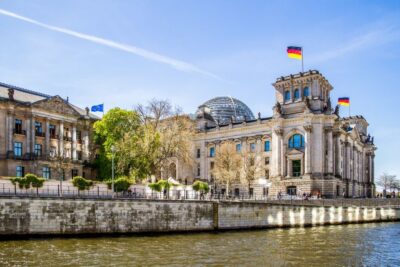
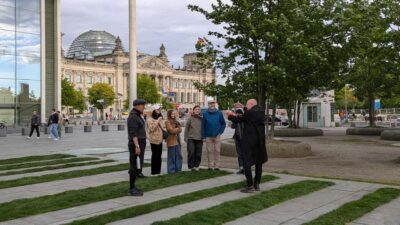
Reichstag, Plenary Chamber, Cupola & Government Tour
Read our review →
Browse the lists this tour appears in