Review · BERLIN TOURS
An Introduction to Berlin Walking Tour
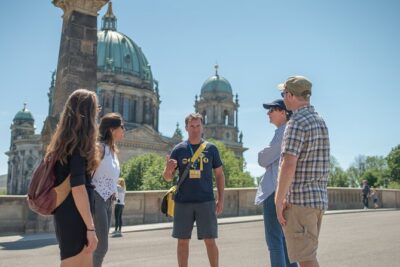
Berlin’s story is written across its streets, from Prussian power and imperial grandeur to Nazi crimes, Cold War division, and reunification. This three-hour walk links those chapters through the Reichstag, Brandenburg Gate, Unter den Linden, Potsdamer Platz, Museum Island, and the Holocaust Memorial. The small group, capped at eight, is a real strength, especially when you want to ask questions rather than trail behind a flag.
I like the focus on history taught by professors, doctoral students, journalists, and other trained storytellers. I also like the honest use of Berlin’s public transport, which lets you cover more ground than a walking-only route. The main drawback is the price, $156.53 per person, and the fact that food, drinks, hotel transfers, and transit tickets cost extra.
Key points to know before booking
- Eight people maximum: You get a far better chance to speak with the guide and follow up on subjects that catch your interest.
- Three centuries in three hours: The route connects Prussian militarism, modern democracy, the Nazi era, the Cold War, and reunification.
- Major sights without admission fees: The Reichstag, Brandenburg Gate, Museum Island, Potsdamer Platz, and other stops are viewed from outside or in public spaces.
- Public transport is part of the plan: Some gaps are too long to walk, so bring or buy a Berlin transit ticket.
- Specialist guides: Your guide may be a professor, doctoral student, journalist, or another trained city storyteller. One guide, Dan, is also an architect.
- Best for history and architecture fans: The route favors context and interpretation over long interior visits or free time for shopping.
Berlin’s story in one compact route
This tour works because Berlin’s sights are not treated as isolated photo stops. The Brandenburg Gate means one thing when you learn about Prussian kings, another when you consider Napoleon’s arrival, and something else again when you place Ronald Reagan’s Cold War speech nearby.
I like that broad frame. You are not simply checking off famous addresses. You are following the changing idea of Germany itself, from royal power to parliamentary government, from dictatorship and war to division, and finally to a reunited capital.
The tour is offered in English and lasts about three hours. That is enough time for a strong overview, but not enough for long museum visits or detailed exploration at every stop. Think of it as a guided orientation with serious historical content, not a substitute for spending a full afternoon inside Museum Island’s museums.
The group limit matters here. A guide can adjust an explanation for eight people much more easily than for thirty. If you want to ask why Berlin developed in a certain direction, or how a building fits into the city’s political past, a small group gives you a reasonable chance to do so.
More walking tours in Berlin:
- Discover Berlin Half-Day Walking Tour
★ 5.0 · 9,624 reviews - Berlin: Third Reich and Cold War 2 Hour Walking Tour
★ 4.9 · 6,830 reviews - Berlin: Discover Berlin Walking Tour
★ 4.9 · 5,998 reviews
Reichstag Building and the meaning of the glass dome
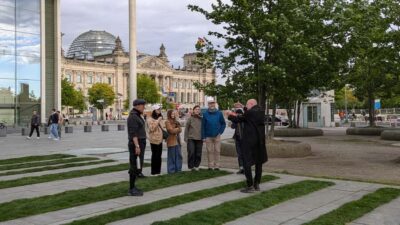
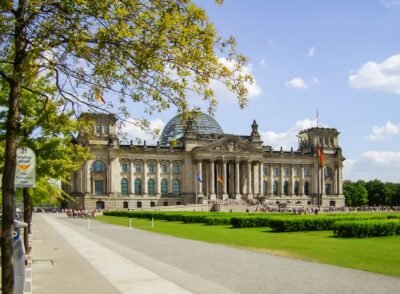
The tour begins at the Reichstag Building, home of the Bundestag, Germany’s lower house of parliament. You spend about 15 minutes here, with no admission charge included or required for this stop.
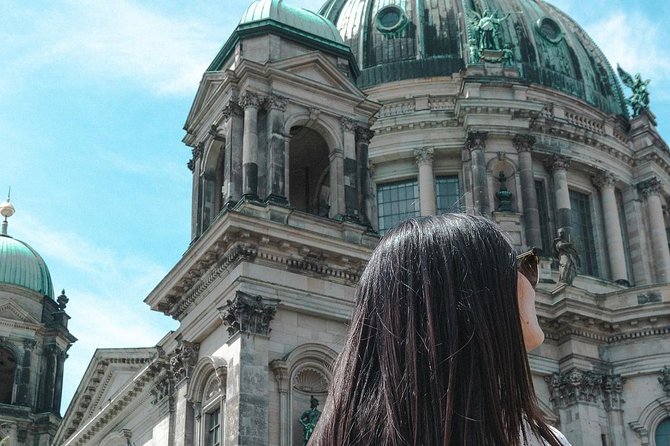
The building offers a useful starting point because it brings the story into the present. Its glass dome, added by Norman Foster in the 1990s, has become a widely recognized symbol of open government and modern German democracy. The contrast is important: this is a parliament with a troubled past, now presented through transparency and public access.
Your guide can set the Reichstag within Berlin’s larger political story before you move on. Do not expect a full tour of the interior or dome during this walk. The supplied time is short, so this stop is mainly about the building, its setting, and what it represents.
Brandenburg Gate, from royal entrance to Cold War symbol
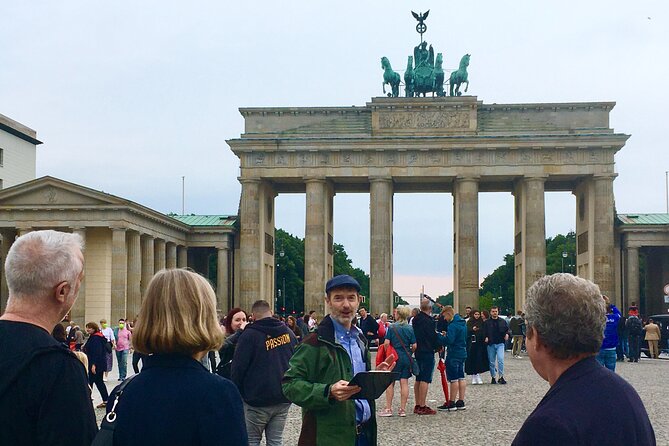
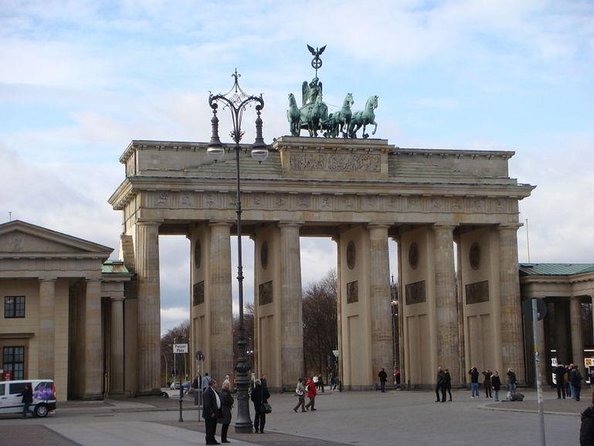
A 20-minute stop at the Brandenburg Gate gives you one of the tour’s clearest history lessons. Frederick William II ordered the neoclassical monument in the 18th century, when Prussia was shaping Berlin as a royal capital.
The gate later became a stage for major events. Napoleon entered Berlin through it after his victory, and Ronald Reagan used the area for a famous Cold War speech. The same monument has served monarchy, military triumph, division, and the language of freedom.
I find this kind of layered explanation more useful than a quick photograph and a date. Look at the gate as a political object, not just a handsome neoclassical structure. Your guide can help connect its architecture with the power systems that once used it.
The area can feel crowded, and the gate is one of Berlin’s most photographed sights. The small-group format helps with questions, but it cannot give you private access or remove the public activity around the monument.
Unter den Linden and Prussian Berlin
The 30-minute walk along Unter den Linden is one of the route’s most useful stretches. The grand boulevard runs from the former City Palace toward the Brandenburg Gate, lined with the linden trees that gave it its name.
It was Berlin’s answer to Paris’s Champs-Élysées, but its meaning is distinctly Prussian. Here, the guide can explain how royal planning, military power, and state ceremony shaped the capital. That background helps you understand why the early history of Prussian militarism matters to the rest of Berlin’s story.
This is where the tour’s stated focus on the past 300 years comes into sharper view. You are not studying militarism as a remote subject. You are seeing how a political culture left its mark on the city’s grand avenues and public buildings.
The boulevard also gives the tour some breathing room between monuments. You are moving through the city rather than standing in one square after another. Wear comfortable shoes, since the route involves sustained walking even though public transport fills some longer gaps.
A few more Berlin half-days to weigh up
- Berlin: Reichstag, Dome and Government District Guided Tour
★ 4.7 · 18,288 reviews - Berlin: 1-Hour City Tour by Boat with Guaranteed Seating
★ 4.3 · 16,993 reviews - Berlin: Boat Tour Along the River Spree
★ 4.4 · 11,252 reviews - Berlin: Hop-on Hop-off Bus Tour with Live Commentary
★ 4.3 · 8,579 reviews
Museum Island and Berlin’s royal ambitions
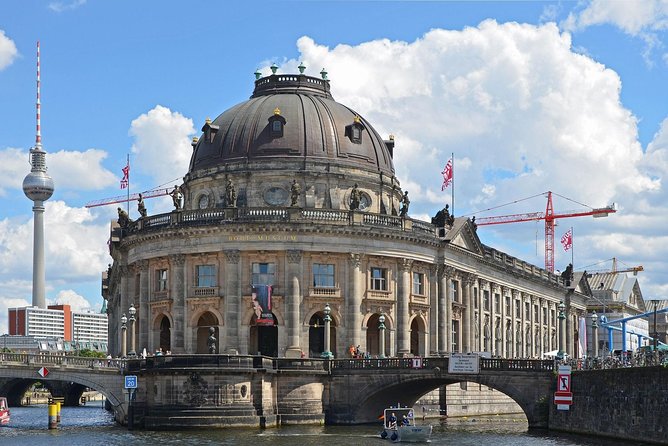
Museum Island receives about 25 minutes. The ensemble sits on Spree Island in central Berlin and includes five major museums built under Prussian rulers, including the Pergamon Museum, Neues Museum, and Alte Nationalgalerie.
The stop is valuable even if you do not enter a museum. The buildings show how Berlin’s rulers used art, archaeology, and public culture to present the capital as a European center. A guide can explain the island as part of the city’s political ambitions, not simply as a convenient group of museums.
You should be clear about the timing. Admission to the museums is not part of this three-hour tour, and the stop is too brief for a proper collection visit. If you want to see the interiors, plan a separate visit and check each museum’s current opening information before your trip.
For an architecture fan, this may be one of the strongest parts of the walk. The route gives you a framework for deciding which museum deserves your limited time later.
Potsdamer Platz and the city after the Wall
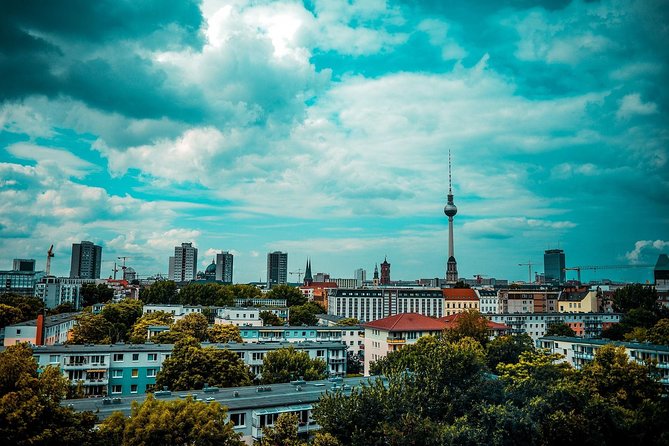
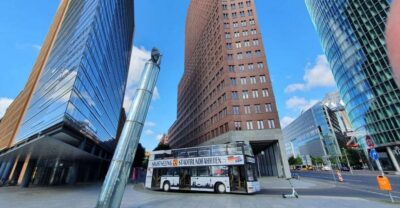
At Potsdamer Platz, you spend about 15 minutes looking at one of Berlin’s most striking examples of change after the Berlin Wall fell. Once divided and largely empty, the square was rebuilt as a center for entertainment, restaurants, and shops.
The point is not that the new buildings are old Berlin. They are not. The value lies in seeing how reunification produced a new urban center and how quickly a place marked by division could be recast for daily city life.
I would pay attention to the contrast between the polished modern district and the political weight of the ground beneath it. This is a good place to ask your guide how the Wall affected movement, development, and the shape of Berlin.
Potsdamer Platz also shows why the tour uses public transport. The city’s major sights are spread out, and a purely walking route would either take much longer or force you to skip important places.
Tiergarten and the city’s green center
The Tiergarten stop lasts about 10 minutes. Berlin’s best-known inner-city park is filled with gardens and grand statuary, offering a change from stone avenues and formal squares.
This is a short pause rather than a full park walk. Still, it helps you see Berlin as more than a collection of government buildings and memorials. The park forms a major open center within the city and provides a visual break between the monumental areas around the Brandenburg Gate and the memorial sites nearby.
Do not expect a long nature excursion. Ten minutes is enough for orientation and a few observations, not for exploring the park’s paths in depth.
The Holocaust Memorial and a difficult act of remembrance
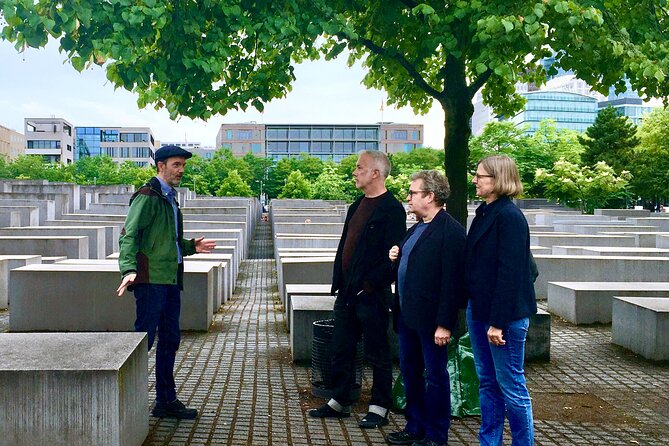
The Memorial to the Murdered Jews of Europe is one of the most serious stops on the route. Designed by Peter Eisenman and opened in 2005, it consists of 2,711 concrete slabs of different heights arranged in a space you can enter and walk through.
The design offers no simple statue or single viewpoint. As you move among the slabs, the ground and sightlines change. The experience is deliberately unsettling and calls for quiet attention.
The scheduled time is about 10 minutes. That may feel brief, especially if you want to reflect privately, but a guide can provide the essential context before allowing you time within the memorial. I would treat this as more than another stop for photographs. Listen carefully, move respectfully, and allow yourself extra time later if the memorial’s design prompts further thought.
This part of the tour also shows the value of historical context. Berlin’s past is not presented as a parade of royal buildings and Cold War landmarks. The route includes the city’s responsibility to remember the Jews murdered under Nazi rule.
Hackescher Markt and pre-war Berlin
The final listed stop is Hackescher Markt, where you spend about 15 minutes. The square offers a look at preserved Art Nouveau courtyards from pre-war Berlin.
This changes the mood and scale of the tour. After broad avenues, national monuments, and political memorials, you see a more intimate side of the city. Courtyards and older urban details help you picture everyday Berlin before the destruction and rebuilding that reshaped so much of the capital.
The stop is especially useful for architecture fans. One past participant had an architect guide, Dan, and found the pace effective for covering a lot of ground while still learning a great deal. Dan also left the group near a good Italian restaurant for lunch, which is a helpful bonus if your tour ends around midday, though lunch itself is not included.
The route ends in Berlin rather than returning you to your hotel. Confirm the final meeting details with the provider, since the published end point is given simply as Berlin.
A small group with specialist guides
The guides may be professors, doctoral students, journalists, or enthusiastic hosts and storytellers. That range suggests a tour built around explanation rather than a memorized script.
The guide’s personal field can shape the walk. An architect may pay close attention to buildings, scale, materials, and urban planning. A historian may focus more heavily on political events and cause and effect. The available information does not guarantee a particular guide, so book this for the overall guiding approach rather than for Dan specifically.
A maximum of eight people is one of the strongest practical features. It should make it easier to hear, ask questions, and keep a steady pace. It also means the tour may feel more like a guided conversation than a large group lecture.
The tradeoff is price. At $156.53 per person, this is expensive for a three-hour city walk, especially since transit, food, drinks, and hotel pickup are extra. The cost makes more sense if you place high value on a specialist guide and a carefully connected historical route.
Transit, meeting point, and what to bring
You meet at Unter den Linden 42, 10117 Berlin. The tour is near public transportation, and most people can take part, but you should expect to use the city’s transit system several times.
If you already have a Berlin visitor transit pass, this is simple. If not, the tour information recommends a day metro pass because the distances between several key sights are too far to walk comfortably within three hours. A Berlin Transit AB one-way ticket is listed at €2.80, or €1.70 for seniors. A one-person day ticket is listed at €7, or €4.70 for seniors.
Your guide can help you buy a ticket at the first metro station if you cannot arrange one before the tour. That assistance is useful, but it is still your responsibility to budget for the fare.
Bring comfortable shoes and allow room in your schedule for a thoughtful, fairly active morning or afternoon. There is no food or drink included, so plan a snack before starting or a meal afterward. The route’s ending near Hackescher Markt may make it easy to continue exploring or find lunch, but no restaurant stop is promised.
Who will get the most from this Berlin walk?
I would choose this tour if you want a strong first orientation to Berlin and care more about connections than about entering every building. It is a good match for architecture fans, students of 20th-century Europe, and anyone who wants the city’s monuments explained in political context.
It also suits a short stay. In three hours, you see a wide sweep of central Berlin and gather enough background to choose where to return on your own. The tour can save you from spending your first day wondering why the city feels so scattered and historically layered.
You may want another option if your main goal is museum interiors, shopping time, or a leisurely walk with long pauses. The itinerary covers many places, so some stops are necessarily short. The $156.53 price will also feel high if you mainly want directions and a quick introduction.
Confirmation arrives at booking, and free cancellation is available up to 24 hours before the start time. Changes or cancellations within 24 hours are not refunded, so keep that deadline in mind when planning around trains, flights, or weather.
Should you book this Berlin walking tour?
Book it if you want a serious, small-group introduction to Berlin’s political and architectural story and you are willing to pay for a specialist guide. The route is broad, thoughtful, and efficient, with enough public transport built in to connect sights that would be awkward to reach on foot.
I would be especially comfortable recommending it to an architecture enthusiast or first-time Berlin visitor with limited time. The main caution is value: this is not a cheap stroll, and admission, meals, and transit are not included. If that price fits your budget, the eight-person limit and the guide’s academic or professional background make it a strong way to get your bearings before exploring Berlin on your own.
FAQ
How long is the An Introduction to Berlin Walking Tour?
The tour lasts approximately three hours.
What language is the tour offered in?
The tour is offered in English.
How many people can join the tour?
The tour has a maximum of eight travelers.
Is public transportation included?
No. You need to pay for transportation between some sights. A one-way Berlin AB ticket is listed at €2.80, and a one-person day ticket at €7. Senior prices are also listed.
Are food and drinks included?
No. Food and drinks are not included in the tour price.
Where does the tour begin?
The meeting point is Unter den Linden 42, 10117 Berlin, Germany.
Just added around Berlin
- eSIM for Germany and 34 European Countries★ 4.5 · 16 reviews
- Your ticket to The Wall Museum Berlin★ 3.0 · 60 reviews
- Walking on the Wall: 3-Hour Tour in Berlin★ 4.5 · 34 reviews
- Rickshaw Tours Berlin – Groups of up to 16 people with several rickshaws★ 4.0 · 97 reviews
- Warnemuende Shore Excursion: Private Berlin Tour★ 4.5 · 27 reviews
- Love and War in Berlin: Self-Guided Story Puzzle Walk★ 5.0 · 7 reviews
- Warnemuende Shore Excursion: Berlin Private Sightseeing Tour from Rostock★ 5.0 · 4 reviews
- Cold War Berlin – Private Live Virtual Experience★ 5.0 · 4 reviews
Berlin Tours, compared.
Reichstag, Dome and Government District Guided Tour
Read our review →
1-Hour City Tour by Boat with Guaranteed Seating
Read our review →
Reichstag, Plenary Chamber, Cupola & Government Tour
Read our review →