
Review · BERLIN TOURS
An Introduction to Berlin Private Walking Tour
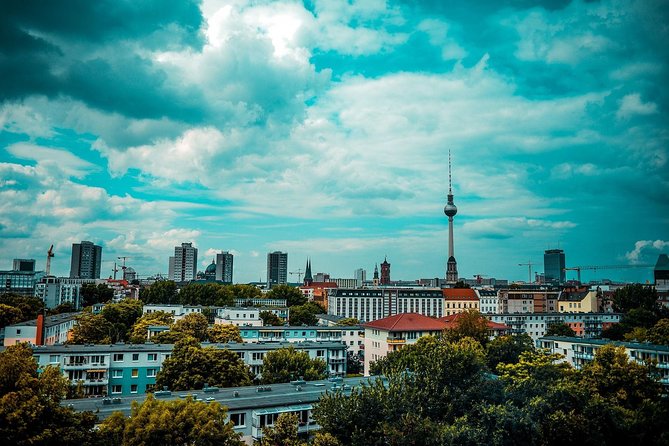
Berlin is a city where a few blocks can carry the weight of several centuries. This private three-hour tour connects Prussian Berlin, Nazi Germany, the Cold War, and reunification through places such as the Reichstag, Brandenburg Gate, Potsdamer Platz, and the Berlin Wall. Your guide is a historian, not simply a person holding an umbrella and reciting dates.
I like the private format, which lets you ask detailed questions and shape the conversation around your interests. I also like the practical route, since it links major sights that are spread across central Berlin. The main consideration is that this is not a pure walking tour: you’ll use public transportation a few times, and the $520.73 group price makes the most sense when shared by several people.
Key points at a glance
- A historian leads the way: Expect context about Berlin’s political past, not just quick photo stops.
- Eight central locations are covered: The route includes the Reichstag, Brandenburg Gate, Museum Island, Potsdamer Platz, Unter den Linden, Tiergarten, the Holocaust Memorial, and Hackescher Markt.
- Private means personal: Only your group participates, with room for individual questions and a pace suited to your interests.
- Public transit is part of the plan: The distances between major sites are too great to cover entirely on foot.
- Three hours moves quickly: You get a strong introduction, but not enough time for extended museum visits.
- The best value comes with a group: The fixed price covers up to 10 people, so the per-person cost drops as your party grows.
Berlin in three hours, from Prussia to the Wall
The real strength of this experience is the way it treats Berlin as a series of connected chapters. The Brandenburg Gate is not just a handsome neoclassical monument. Potsdamer Platz is not just a modern shopping and entertainment center. The Reichstag is not just a government building with a glass dome.
Each site helps explain a different version of Berlin. Prussian power appears along Unter den Linden. The Nazi era and the Holocaust demand a quieter pause. The Cold War comes into focus around the Berlin Wall and Checkpoint Charlie. Reunified Berlin shows itself in the rebuilt spaces around Potsdamer Platz and the restored heart of the city.
I like this approach because Berlin can otherwise feel scattered. The city’s major sights sit in different districts, and a good guide helps you understand why they belong in one story. You’ll also have a historian on hand for the questions that arise when the facts become complicated.
The private setup matters most if you already know a little about German history. One guest praised guide Jakob for answering detailed questions and adjusting the discussion to the group’s background. Jakob also shared restaurant suggestions, a useful bonus when you are still finding your feet in Berlin. Guide assignments can vary, so you should not assume Jakob will lead your departure, but the company describes its guides as local historians and enthusiastic hosts.
More walking tours in Berlin:
- Discover Berlin Half-Day Walking Tour
★ 5.0 · 9,624 reviews - Berlin: Third Reich and Cold War 2 Hour Walking Tour
★ 4.9 · 6,830 reviews - Berlin: Discover Berlin Walking Tour
★ 4.9 · 5,998 reviews
Starting at Unter den Linden and the Reichstag
Unless hotel pickup has been arranged, you meet 15 minutes early at Cafe Einstein, Unter den Linden 42. This is a sensible starting point because Unter den Linden places you near several of Berlin’s most important landmarks.
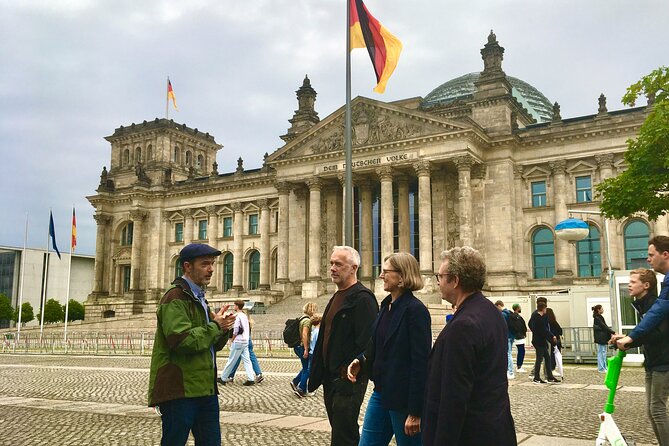
The first listed stop is the Reichstag Building, home of the Bundestag, Germany’s lower house of parliament. You’ll spend about 20 minutes here, learning how the building connects imperial Germany, the Nazi period, the divided city, and modern democratic government.
The glass dome designed by Norman Foster in the 1990s is the feature most people recognize. Its transparency carries a clear message: government should be visible and accountable. This is a good example of why a guide adds value. You can admire the architecture on your own, but the political meaning is easier to grasp when someone explains how the rebuilt building fits into present-day Germany.
Admission to the stop is free, but this tour does not promise entry into the dome. The listed time is a site visit and explanation, not a full Reichstag tour. If entering the building is a priority, ask about that before booking.
The Brandenburg Gate and Unter den Linden
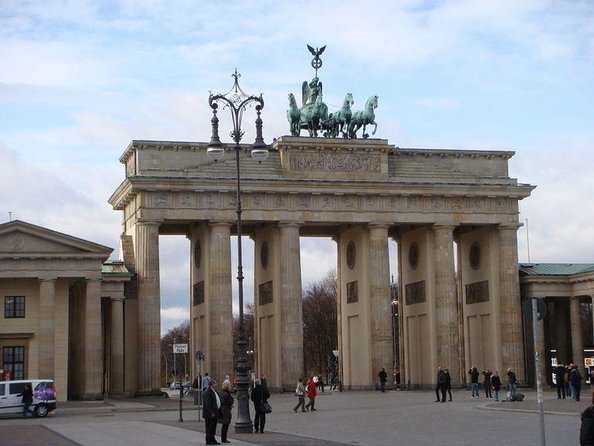
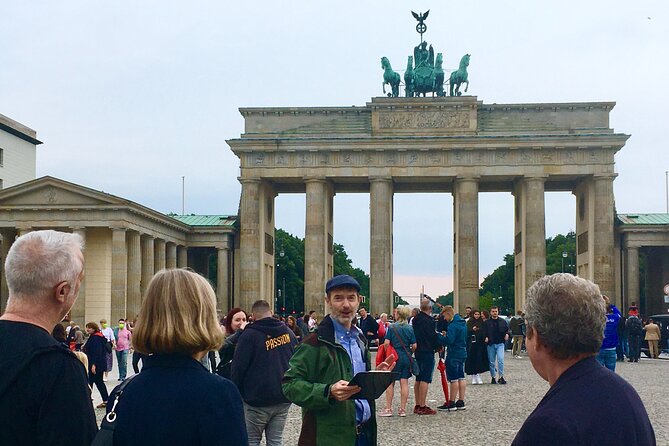
The Brandenburg Gate receives about 20 minutes. Built in the 18th century on orders from Prussian king Frederick William II, it began as a royal city gate and later became one of Europe’s most recognizable political symbols.
Your guide can connect the gate to Napoleon’s triumphant entrance, the Cold War, and Ronald Reagan’s famous speech. That range is what makes the stop worthwhile. The same monument has been used to project royal authority, national division, and democratic hope.
From here, the route follows Unter den Linden, Berlin’s grand boulevard. The name refers to the linden trees lining the avenue, and the street once linked the City Palace with the Brandenburg Gate. Allow about 30 minutes here, making it one of the longer parts of the tour.
I like this stretch because it gives you time to read Berlin’s scale. It is not a quick monument photo. You’ll see how the city’s royal center was laid out and how grand civic design was used to express power. The drawback is simple: three hours leaves little room to linger, shop, or enter buildings along the boulevard.
Museum Island and the older city center
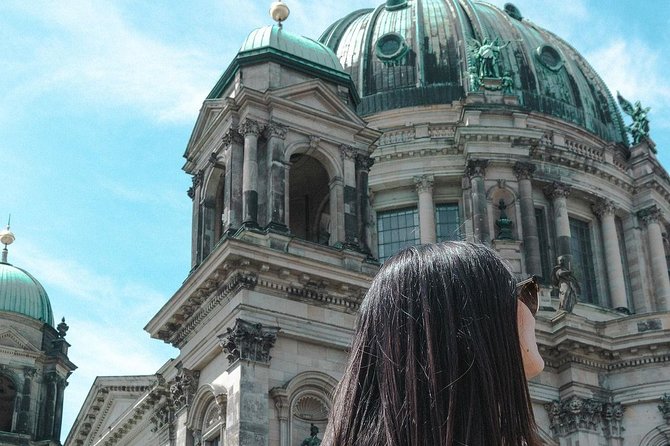
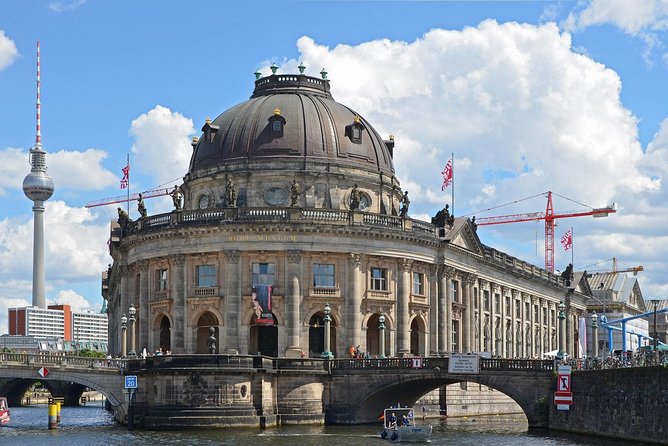
Museum Island receives around 20 minutes. This group of five museums sits on Spree Island in central Berlin and includes the Pergamon Museum, Neues Museum, and Alte Nationalgalerie.
The tour gives you an introduction to the area rather than a museum visit. That distinction matters. You’ll learn why the island was built and how it fits into Berlin’s cultural center, but you should not book this experience if you want time inside the collections.
A short visit is still useful. Museum Island can seem like a collection of grand buildings until you understand that it was planned as a major cultural district under Prussian rulers. Your guide can help you decide which museum deserves a return visit, though the supplied details do not promise specific museum recommendations or admission arrangements.
A few more Berlin half-days to weigh up
- Berlin: Reichstag, Dome and Government District Guided Tour
★ 4.7 · 18,288 reviews - Berlin: 1-Hour City Tour by Boat with Guaranteed Seating
★ 4.3 · 16,993 reviews - Berlin: Boat Tour Along the River Spree
★ 4.4 · 11,252 reviews - Berlin: Hop-on Hop-off Bus Tour with Live Commentary
★ 4.3 · 8,579 reviews
Tiergarten and the Holocaust Memorial
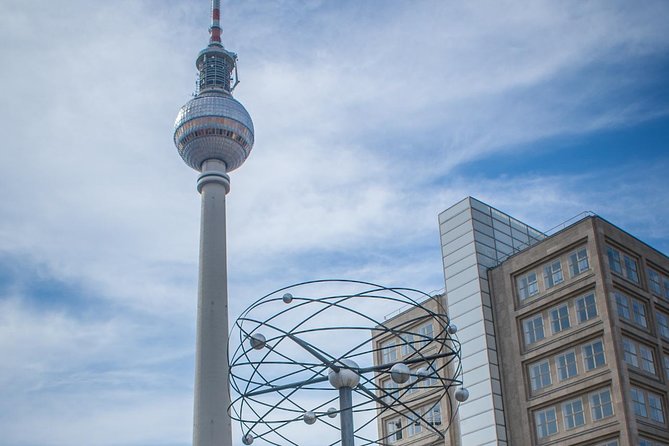
The itinerary includes about 10 minutes in Tiergarten, Berlin’s best-known inner-city park. It is filled with gardens, statuary, and broad green spaces. Here, the tour briefly changes pace from buildings and political squares to the open center of the city.
The stop is short, so think of it as orientation rather than a park walk. You’ll get a sense of how Tiergarten fits into central Berlin, but you will not have time to explore its paths in any meaningful way.
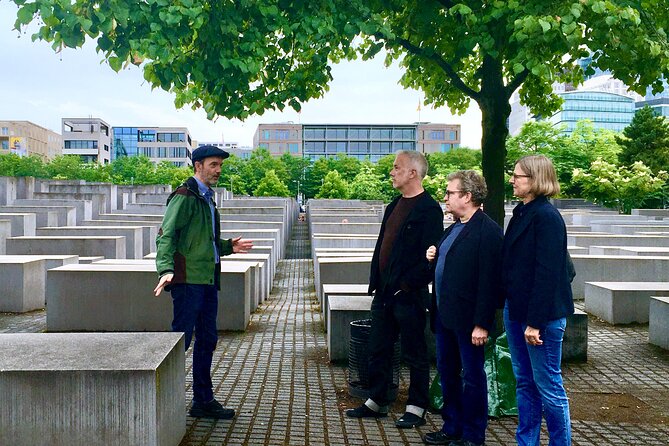
The Memorial to the Murdered Jews of Europe receives about 15 minutes. Designed by Peter Eisenman and opened in 2005, it contains 2,711 concrete slabs of varying heights. You can walk among them, where the changing levels create a serious, unsettled space for reflection.
This is not a place for a rushed explanation or casual sightseeing. A good guide should give you enough context to approach the memorial with care, then allow room for your own response. The visit is brief, but its position in the route helps place the Holocaust within Berlin’s present-day public memory.
You should also know what the tour does not do. It does not include a museum admission, food, or drinks. If you need more time at the memorial or want to visit its information center, plan a separate visit.
Potsdamer Platz and the city after reunification
Potsdamer Platz gets about 15 minutes. Before the Berlin Wall fell, this area was divided and heavily affected by the border. After reunification, it was rebuilt as a modern hub of shops, restaurants, entertainment venues, and offices.
The contrast is striking. Older Berlin often feels monumental and ceremonial. Potsdamer Platz feels planned, commercial, and new. That makes it a useful stop for understanding how reunified Berlin filled empty or damaged spaces with a different kind of urban life.
The visit is short, so you will probably see the area as part of the city’s larger story rather than stop for a meal or shopping. I would save those activities for after the tour. The guide’s job here is to explain the transformation, not give you free time in the complex.
The Berlin Wall and Checkpoint Charlie story
The highlights include the Berlin Wall and Checkpoint Charlie, though the detailed stop list does not assign separate time blocks to them. That means you should clarify the exact presentation when booking if these are your main priorities.
The Wall is central to any first look at Berlin. It represents the physical division between East and West, but also the human cost of a city split by politics. Checkpoint Charlie adds the international Cold War angle, linking Berlin’s local experience to the tension between the United States and Soviet Union.
A private guide is particularly useful here because the remaining sites and markers can be hard to interpret on your own. You can ask about how the border worked, what changed after the Wall fell, and how the city remembers the division today. Just keep your expectations realistic: the tour promises an introduction, not a long wall-tracing walk or a full museum visit.
Hackescher Markt and pre-war courtyards
Hackescher Markt is the final listed stop and receives about 10 minutes. The square offers a look at preserved Art Nouveau courtyards from pre-war Berlin, along with a lively central setting.
This stop gives the route a different finish. After government buildings, memorials, and Cold War landmarks, you see a more everyday side of historic Berlin. The courtyards help reveal the city’s older commercial and residential character, although the short stop means your guide will likely focus on orientation and key details.
Because the route covers so much ground, the ending may not be at a single major landmark with a formal farewell. The end point is listed simply as Berlin, Germany. Ask your guide where the tour will finish if you need to reach a reservation or train on time.
What the $520.73 price buys you
The price is $520.73 per group of up to 10 people. That is a high total for a three-hour introduction if you are alone or traveling as a couple. Split between 10 people, however, it becomes about $52 per person before transit costs, which is much more reasonable for a private historian-led tour.
The fixed group price is also useful for families or friends who want control over the conversation. You are not paying separately for each person, and only your group participates. The value comes from access to the guide’s attention, not from included admissions or transport.
You will need to pay for public transportation and any food or drinks yourself. A single Berlin AB ticket is listed at 2.80 euros, with a senior price of 1.70 euros. A day ticket is listed at 7 euros per person, or 4.70 euros for seniors. If you already have a visitor transit pass, bring it. If not, the guide can help you buy a ticket at the first metro station.
The transport cost is minor compared with the tour price, but it is important to know that this is not three continuous hours on foot. Comfortable shoes still matter, and you should leave room in your schedule for several changes between sites.
Who will get the most from this tour
I would choose this experience for a first visit when I wanted a strong overview before exploring Berlin on my own. It suits families, couples, and small groups who prefer to ask questions rather than follow a fixed large-group script.
It is especially useful if your group has different levels of background knowledge. A private guide can slow down for basic questions or go further into World War II, the Holocaust, the Cold War, and reunification. The experience also suits people who want a historian’s framing of difficult subjects instead of a light sightseeing circuit.
I would think twice if you want extensive museum time, a long walk beside the Wall, or a relaxed three-hour stroll with no transit. The schedule is full, several stops are short, and the major value is explanation across many locations.
Free cancellation is available if you cancel at least 24 hours before the local start time. Changes or cancellations inside that window are not accepted for a refund, so check your plans before the cutoff.
Should you book the Berlin private walking tour?
Book it if you want Berlin’s major sights tied together by a historian and you are traveling with enough people to share the fixed cost. The private format, flexible questions, and coverage of both famous landmarks and difficult history make it a strong first-day orientation.
Skip it if you mainly want to enter museums, spend a long time at the Holocaust Memorial, or walk the Wall at length. In that case, you will get better value from separate site visits.
For most small groups with serious interest in Berlin’s past, I like the balance here. You see a lot, you get an informed guide, and you leave with a clearer plan for the rest of your stay. Just bring a transit ticket or budget for one, and confirm how much time will be devoted to the Wall and Checkpoint Charlie.
FAQ
How long is the Berlin private walking tour?
The tour lasts approximately three hours.
How much does the tour cost?
The price is $520.73 per group, for up to 10 people.
Is the tour private?
Yes. Only your group participates in the activity.
What language is offered?
The tour is offered in English.
Where does the tour start?
Unless hotel pickup has been arranged, meet at Cafe Einstein, Unter den Linden 42, 10117 Berlin, 15 minutes before the start time.
Is hotel pickup available?
Pickup is offered, but it must be arranged. Without an arranged hotel pickup, you should use the default meeting point at Cafe Einstein.
Does the tour include public transportation?
No. Transportation to and from the attractions is not included, and you will need to use public transportation several times during the tour.
How much does Berlin public transportation cost?
The listed price for a Berlin Transit AB one-way ticket is 2.80 euros, or 1.70 euros for seniors. A day ticket is listed at 7 euros per person, or 4.70 euros for seniors.
Are food and drinks included?
No. Food and drinks are not included.
Can I cancel for a full refund?
Yes, if you cancel at least 24 hours before the experience start time. Cancellations made less than 24 hours before the start time are not refunded.
Just added around Berlin
- eSIM for Germany and 34 European Countries★ 4.5 · 16 reviews
- Your ticket to The Wall Museum Berlin★ 3.0 · 60 reviews
- Walking on the Wall: 3-Hour Tour in Berlin★ 4.5 · 34 reviews
- Rickshaw Tours Berlin – Groups of up to 16 people with several rickshaws★ 4.0 · 97 reviews
- Warnemuende Shore Excursion: Private Berlin Tour★ 4.5 · 27 reviews
- Love and War in Berlin: Self-Guided Story Puzzle Walk★ 5.0 · 7 reviews
- Warnemuende Shore Excursion: Berlin Private Sightseeing Tour from Rostock★ 5.0 · 4 reviews
- Cold War Berlin – Private Live Virtual Experience★ 5.0 · 4 reviews
Berlin Tours, compared.

Reichstag, Dome and Government District Guided Tour
Read our review →
1-Hour City Tour by Boat with Guaranteed Seating
Read our review →




Reichstag, Plenary Chamber, Cupola & Government Tour
Read our review →