
Review · WALKING TOURS
Aachen classic walking tour
Aachen’s story begins with hot sulphur springs, then moves through Roman baths, Charlemagne’s imperial court, and the coronation of Holy Roman Emperors. This 1.5-hour walk gives you that whole sweep in a compact route through the old town, with the Elisenbrunnen and cathedral as major anchors.
I like the Italian-language guiding and the way the route links grand monuments with smaller details such as the Coin Fountain, Puppet Fountain, and Nobis Printen shop. Guide Sara also brings historical images, anecdotes, and a friendly style to the walk. The main limitation is clear: monuments are viewed from outside, so you will not receive a guided explanation inside the cathedral or other buildings.
Key points at a glance
- Roman hot springs: Begin at Elisenbrunnen, where sulphurous vapour recalls Aachen’s ancient thermal fame.
- Charlemagne’s city: Connect Aachen’s medieval power to the emperor and his Palatine Chapel.
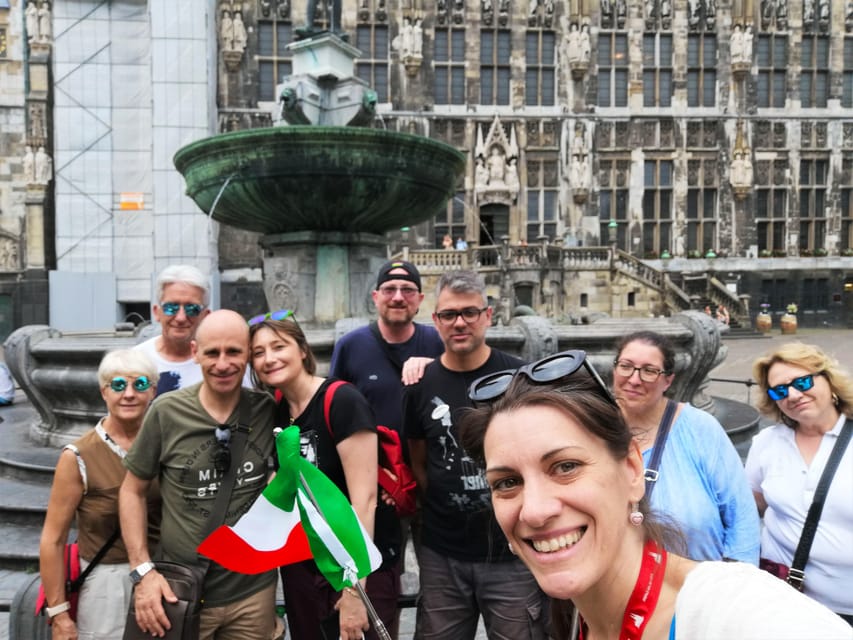
- Italian-speaking guide Sara: The tour is led in Italian by a certified, native Italian-speaking guide.
- Stories with visual context: Historical images and anecdotes make the city’s past easier to picture.
- Compact old-town route: Cover fountains, towers, the Town Hall, market, cathedral, and other central sights in 90 minutes.
- Outside views only: The tour explains the monuments from the street, but interior visits are not included.
Why Aachen makes a strong walking-tour subject
Aachen is not simply a handsome old German city with a famous cathedral. Its importance comes from several layers packed into a small centre.
The Romans came for the hot springs and called the settlement Aquae Granni. Charlemagne later chose Aachen as the centre of his empire and built the palatine complex here. Centuries of rulers came for coronation ceremonies, while the city’s position near modern Germany, Belgium, and the Netherlands helped keep it tied to the wider story of Europe.
I like this kind of city walk because the history is easy to follow on foot. You do not need a bus or a long transfer between sights. The tour moves from thermal springs to medieval power, then to the city’s civic buildings and market squares.
The route also avoids making Aachen feel like one giant monument. Fountains, shopfronts, archaeological remains, and old towers fill in the everyday picture. That mix is useful if this is your first visit and you want to understand how the city fits together before exploring on your own.
More walking tours in Germany:
- Discover Berlin Half-Day Walking Tour
★ 5.0 · 9,624 reviews - Berlin: Third Reich and Cold War 2 Hour Walking Tour
★ 4.9 · 6,830 reviews - Munich: Third Reich & WWII Walking Tour
★ 4.6 · 6,181 reviews
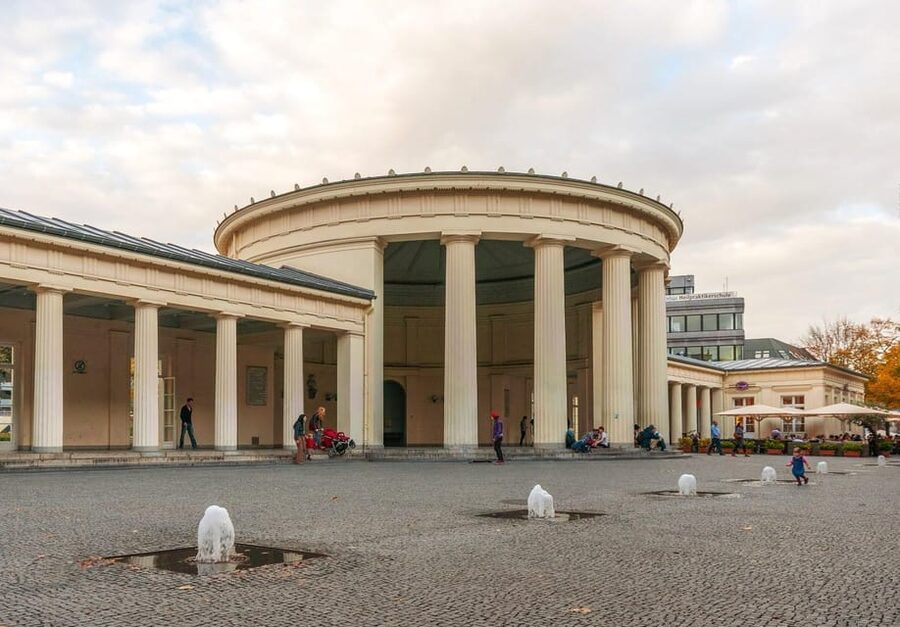
Starting at the Elisenbrunnen and Aachen’s thermal springs
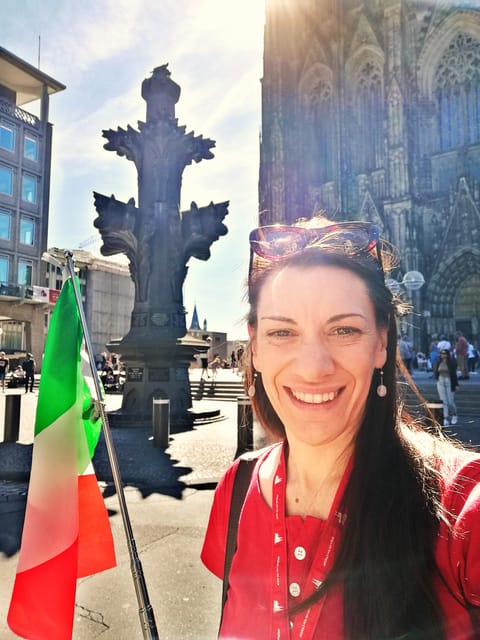
The meeting point is in front of the tourist board. Look for the guide carrying the Italian flag. This is a simple arrangement, but it matters in a busy old-town setting because the meeting place is easy to identify.
The opening stop is the Elisenbrunnen, the grand neoclassical fountain at the entrance to Aachen’s old town. Sulphurous vapours rise from the thermal water, giving you a sensory reminder that this is a spa city, not just a medieval one.
The springs helped draw the Romans to Aquae Granni. Much later, 18th-century nobility came to Bad Aachen to take the waters. That contrast gives the first part of the walk a nice shape: the same natural feature attracted Roman settlers, imperial visitors, and fashionable spa guests across very different eras.
The Elisenbrunnen is also a practical starting point. It introduces Aachen’s oldest appeal before the tour turns toward Charlemagne and the cathedral. If you arrive a little early, this is a good place to get your bearings and notice the contrast between the formal fountain structure and the surrounding streets.
Roman traces, fountains, and small old-town details
From the thermal springs, the route includes an archaeological site that points back to Aachen’s Roman period. You should not expect a large open-air Roman complex. The value here is in seeing how traces of the earlier settlement fit into the modern city.
The Coin Fountain adds another layer. Aachen’s fountains are not decoration alone. They help tell local stories and give the walk visual pauses between the larger monuments.
The Puppet Fountain is especially suited to a guide-led visit. Its figures offer a way to talk about Aachen’s people, customs, and civic character without turning the tour into a list of dates. This is where Sara’s use of anecdotes becomes useful. Small stories can help you remember a city better than a string of rulers and battles.
The route also passes Nobis Printen. Printen is a traditional Aachen gingerbread-style specialty, and the stop connects the tour with a local food tradition. The supplied information does not promise a tasting, so consider this a sight and a possible shopping reference rather than part of the paid experience.
These smaller stops matter because the walk is not built only around the cathedral. You get glimpses of local life and street-level history, which makes the old town easier to read after the tour ends.
Charlemagne’s Aachen at Am Hof and the Palatine complex
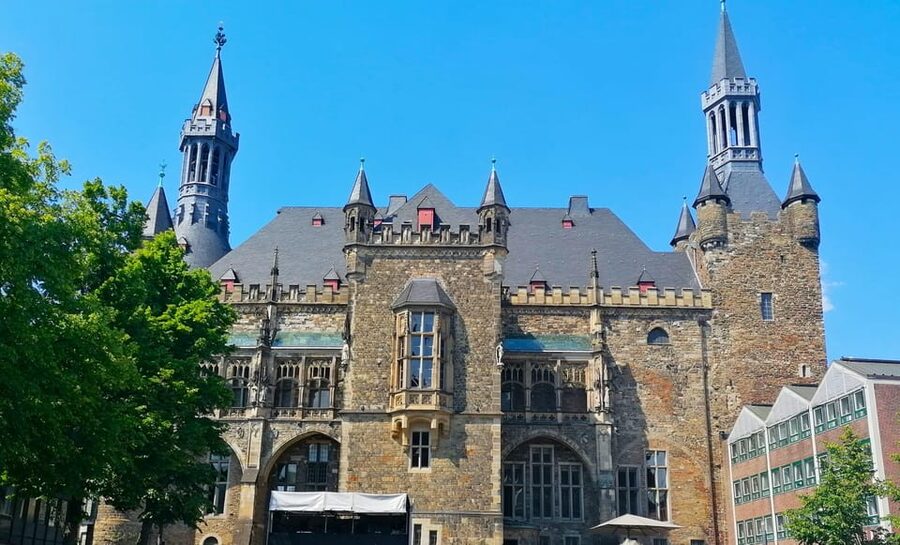
The route continues through Am Hof and toward the Palatine Courtyard. This is the heart of the Charlemagne story.
Charlemagne made Aachen his main seat in the late eighth and early ninth centuries. His palace complex turned the city into a centre of government, religion, and ceremony. The surviving cathedral is the clearest reminder of that ambition, but the surrounding spaces help you understand that it was once part of a much larger imperial setting.
This is a good section for historical images. The modern city does not preserve every part of Charlemagne’s palace in an obvious way, so visual material can help you picture the former arrangement. You can also expect stories about Charlemagne and Aachen’s political role, rather than only architectural description.
The route includes the Granus Tower, another useful reminder that Aachen’s past is layered. A tower, a courtyard, a fountain, and a cathedral each represent a different part of the city’s development. In 90 minutes, you get an outline of that story without committing to a full-day museum visit.
Same city, a completely different sort of afternoon:
- Berlin: Reichstag, Dome and Government District Guided Tour
★ 4.7 · 18,288 reviews - Berlin: 1-Hour City Tour by Boat with Guaranteed Seating
★ 4.3 · 16,993 reviews - Hamburg: Sex and Crime in St. Pauli Tour for Ages 18+
★ 4.7 · 15,447 reviews - Hamburg: 1.5-Hour Harbor and Speicherstadt Day Cruise
★ 4.6 · 14,200 reviews
Aachen Cathedral and the Palatine Chapel
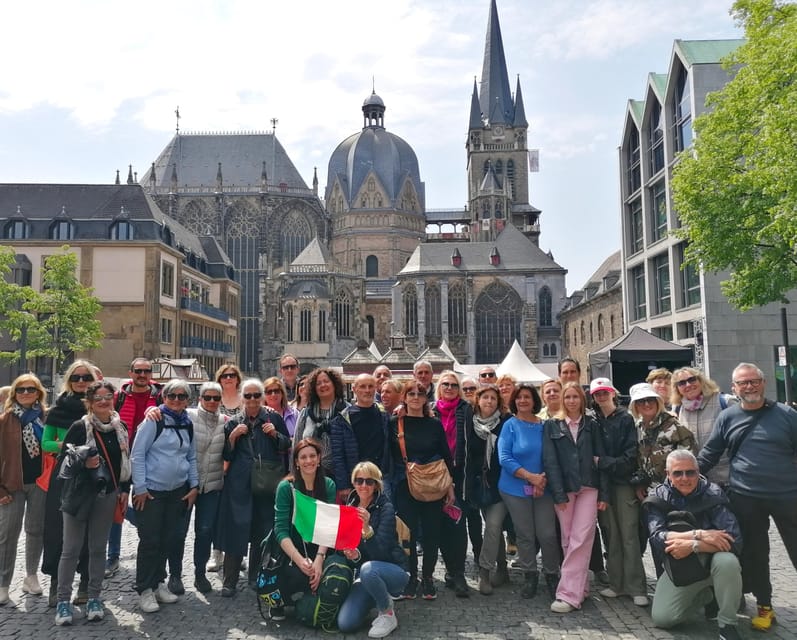
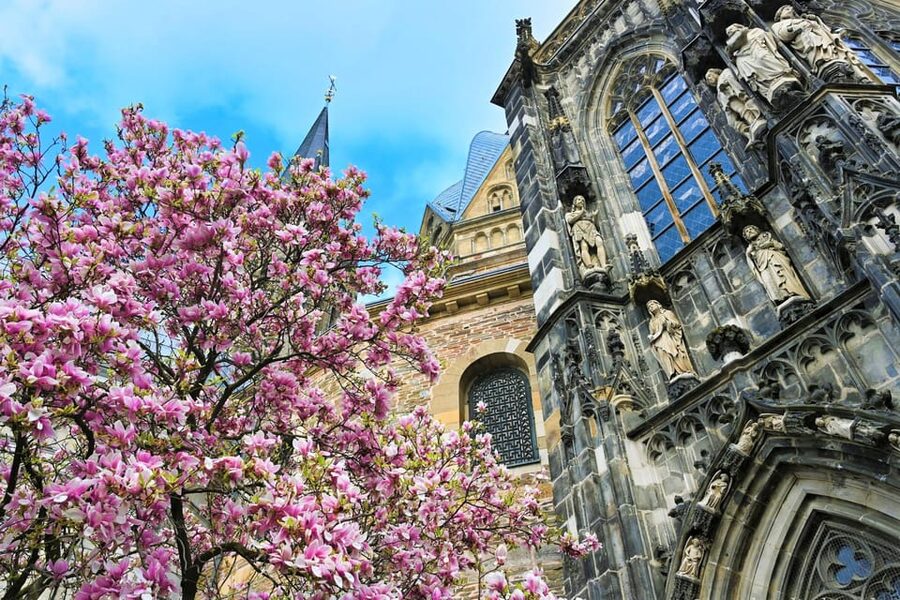
The cathedral is the tour’s great centrepiece. You will see the Palatine Chapel, also known as the Aachen Cathedral, from its exterior and learn why it matters.
Architecturally, the chapel is one of Europe’s major medieval buildings. It was built for Charlemagne’s imperial court and later became the coronation church for Holy Roman Emperors. It is also the burial place of Charlemagne and Germany’s first UNESCO World Heritage Site.
Those facts can feel abstract if you only read them on a sign. A guide helps connect them to the building in front of you: the imperial ambition, the religious purpose, and the long afterlife of Charlemagne’s court.
The tour itinerary also includes the Treasury Chamber. Since the activity covers monuments from the outside, do not assume that entry to the treasury is part of the price. The same applies to the cathedral interior. You will see the exterior, learn its significance, and need a separate visit if you want to explore the artworks and treasures inside.
That limitation is the most important point to understand before booking. One person who took the tour specifically found it unfortunate that interior explanations were not possible. I see the issue, but I also think the outside-only format can work well as an introduction. You can decide afterward if the cathedral deserves a longer visit.
If the cathedral is a priority, leave extra time before or after the walk for an independent interior visit. The tour itself does not include that experience, and the 90-minute schedule is designed around a wider old-town circuit.
The Town Hall, market square, and imperial power
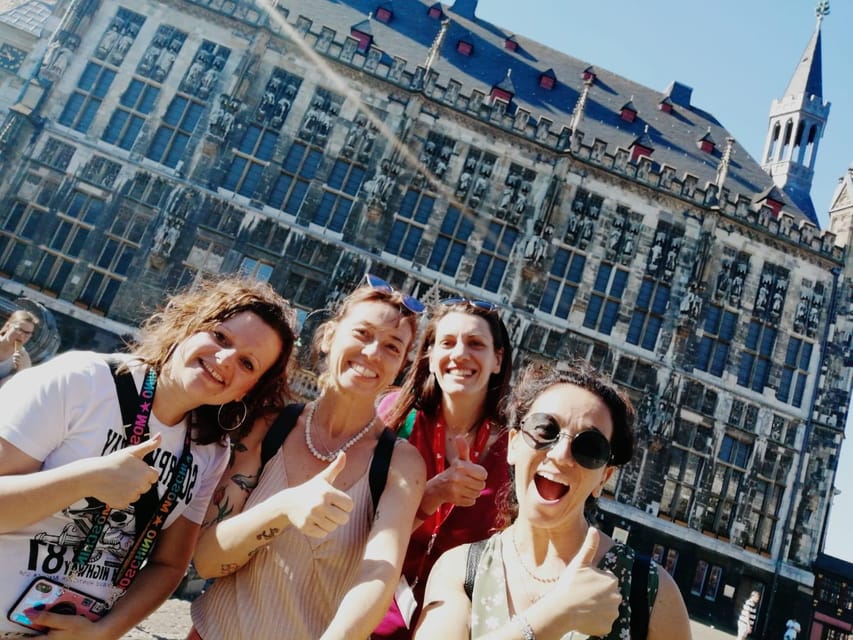
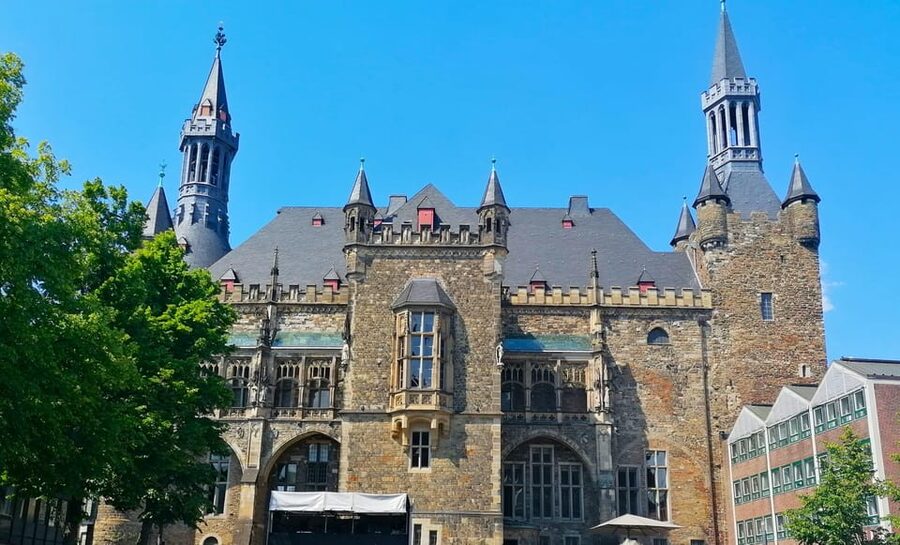
Aachen’s Town Hall gives the tour a second major architectural focus. The building occupies the foundations of the former palatine hall, used in the eighth and ninth centuries.
That detail makes the Town Hall more than a civic building. It shows how Aachen reused and reshaped its imperial past. The city’s political centre changed over time, but the old palace continued to influence the form of the town.
The nearby Market Square and Charles Fountain add a more public, urban setting. After the solemnity of the cathedral, these spaces bring you back to commerce, civic life, and the daily rhythm of the old town.
I like this change of mood. A walking tour can become tiring when every stop is a grand monument. The market and fountains give you a chance to look around, take photographs, and see how Aachen functions as a living city rather than a museum display.
The guide also explains Aachen’s political and historical role at the centre of Europe, both in the past and today. The tour does not present Charlemagne as an isolated figure. It uses him to explain why Aachen mattered, how power moved through the city, and why its location still carries political weight.
How Sara’s guiding style shapes the experience
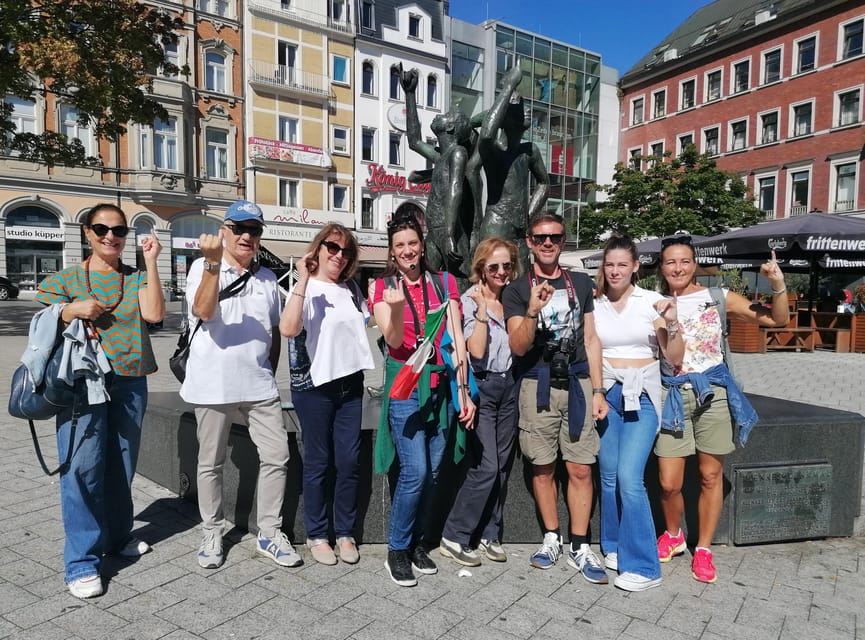
The guide is Sara, a certified, native Italian-speaking guide working with Guida di Colonia Sara. The activity is specifically offered in Italian, so it suits you best if you want to hear Aachen’s complicated history in your strongest language.
The strongest praise has focused on Sara’s preparation, humour, friendliness, and passion for the city. That combination is important on a short historical walk. You need enough structure to understand the timeline, but you also need a guide who can keep the material from feeling like a lecture.
The descriptions of Sara’s approach point to stories about Aachen and Charlemagne, along with unusual facts and amusing details. One account also describes a broad historical explanation reaching from the Romans to the Second World War. Because the route is centred on Aachen, the main focus remains the city’s Roman, Carolingian, imperial, and civic past, but the guiding can place those periods in a longer timeline.
Historical images are another strong feature. Old views can make a major difference when a modern street hides the shape of an earlier palace or settlement. You are not just told that a building once had another purpose. You get help picturing the change.
The rating is 4.8 from seven reviews, with praise concentrated on Sara’s preparation and personable delivery. That is a small sample, so I would not treat the number as a guarantee. Still, the repeated comments point to a clear strength: this is a guide-led history walk, not a silent checklist of photo stops.
What the $29 price gives you
At $29 per person, the tour sits in a reasonable range for a 90-minute private-feeling introduction to a historic city, though the exact value depends on what you want from Aachen.
You are paying for a live Italian-language guide, a planned route, historical interpretation, and a chance to ask questions as you go. The tour covers many central sights, including the cathedral, Town Hall, fountains, archaeological site, Palatine Courtyard, and Granus Tower.
You are not paying for entry to the cathedral, Treasury Chamber, museum, or other interiors. That keeps the price from becoming excessive, but it also means you should budget separately if those places matter to you.
I see the best value here for a first visit, a short stay, or a day when you want a clear introduction before exploring independently. The guide’s context can save you from wandering past important places without understanding them.
The reserve-now, pay-later option also gives you flexibility, and cancellation is free up to 24 hours before the start for a full refund. Those terms are useful if your plans around Aachen are still shifting.
Who should book this Aachen walk
I would choose this tour if you want:
- A focused introduction to Aachen in Italian
- Roman and Charlemagne-era history explained in a connected way
- A short route through the old town rather than a long museum visit
- Stories, anecdotes, and historical images
- An outside look at the cathedral and Town Hall before deciding where to spend more time
It is especially suitable for Italian-speaking couples, families, and small groups who prefer a personal guide to reading signs alone. The 1.5-hour duration also works well if Aachen is one stop on a longer Northern Germany itinerary.
I would think twice if your main goal is a full cathedral visit, treasury access, or detailed architectural study inside the buildings. Those elements are not included. You may still book the walk, but treat it as an orientation and plan a separate interior visit.
Wear comfortable shoes. The tour is a walking route through the old town, and its value comes from seeing the sights in sequence rather than rushing from one isolated monument to another.
Should you book the Aachen Classic Walking Tour?
Book it if you want Aachen’s big story explained clearly in Italian, from Aquae Granni and the thermal springs to Charlemagne, the cathedral, and the Town Hall. Sara’s friendly, story-based approach is the main reason to choose this tour over exploring the same streets without a guide.
The best plan is to use it as your historical introduction, then return to the cathedral or Treasury Chamber on your own if you want to see the interiors. At $29, it offers solid value for a compact, well-focused city walk, as long as you understand that the monuments are viewed from outside.
FAQ
Where does the Aachen walking tour meet?
The meeting point is in front of the tourist board. The guide will have the Italian flag.
How long does the tour last?
The walking tour lasts 1.5 hours.
What language is the tour offered in?
The live tour guide speaks Italian. The guide is described as a certified, native Italian-speaking guide.
Who is the guide?
The guide is Sara, who works with Guida di Colonia Sara.
Does the tour enter Aachen Cathedral?
No. The activity includes guided viewing of monuments from the outside. The cathedral interior and its artworks are not included in the tour.
Is the Treasury Chamber included?
The itinerary includes the Treasury Chamber as a sight, but the activity is described as an outside walking tour. Entry to the Treasury Chamber is not included.
What places are included on the route?
The route includes Elisenbrunnen, an archaeological site, the Coin Fountain, Nobis Printen, the Puppet Fountain, Am Hof, Couven Museum, Granus Tower, Town Hall, Market Square, Charles Fountain, the Palatine Courtyard, the Treasury Chamber, and the Palatine Chapel or Aachen Cathedral.
Can I cancel the booking?
Yes. You can cancel up to 24 hours in advance for a full refund. You can also reserve now and pay later.
Just added around Germany
- From Berlin: Gardens & Palaces of Potsdam Bike Tour★ 5.0 · 61 reviews
- Berlin: Battle for Seelow Heights WW2 tour -Clash of Titans★ 5.0 · 27 reviews
- From Berlin: Historical Gems of Potsdam Private Day Trip★ 4.4 · 4 reviews
- From Amsterdam: Cologne Private Sightseeing Tour★ 5.0 · 4 reviews
- Freiburg: Veni, vidi, vino – wine hike and tasting★ 4.5 · 144 reviews
- From Alken: Return Day Trip by Boat to Cochem★ 4.6 · 141 reviews
- Fritz Haarmann – Die Mördertour★ 4.6 · 41 reviews
- Freiburg: Tour of the city with cathedral visit★ 4.7 · 167 reviews
Walking Tours, compared.

Berlin’s Best: 2 Hour Walking Tour Third Reich and the Cold War
Read our review →
Third Reich Berlin: Hitler and WWII Walking Tour
Read our review →Browse the lists this tour appears in