
Review · BERLIN TOURS
Berlin: Guided Walking Tour in English
Berlin’s past makes the most sense when you walk it in sequence. This 2.5-hour route begins at Alexanderplatz and ends at the Brandenburg Gate, linking medieval Berlin, Prussian power, Nazi terror, the Berlin Wall, and reunification in one steady story.
I like the clear route and the way it uses real places instead of a museum room to explain history. I also like that guides such as J.R., Jule, Ru, and Will have been praised for making the walk lively while adding useful tips for the rest of your stay. The main drawback is the distance and the lack of a clearly promised drink or restroom stop, so dress for the weather and plan ahead.
Key points to know before booking
- The route runs from Alexanderplatz to Brandenburg Gate: You cross much of Berlin’s historic center rather than circling one small neighborhood.
- The story follows time: Medieval Berlin comes first, then royal Berlin, the Nazi period, the Wall, and reunification.
- Museum Island is a visual highlight: You get open public space and a fine view of Berlin Cathedral without entering the museums.
- The guide makes the difference: J.R., Jule, Ru, and Will have been singled out for clear, engaging explanations and practical city advice.
- Checkpoint Charlie and Hitler’s bunker site add weight: These stops deal with Berlin’s hardest subjects, not just its pretty squares.
- The $31 fee covers the reservation and guide payment: The tour uses a pay-as-you-wish format, but your booking payment is not an extra tip.
A chronological walk from Alexanderplatz to the Brandenburg Gate
This tour has a smart design. Instead of presenting Berlin as a pile of disconnected sights, it moves through the city’s story in order. That helps you understand why the center looks the way it does, and why so many buildings carry layers of rebuilding, loss, and political change.
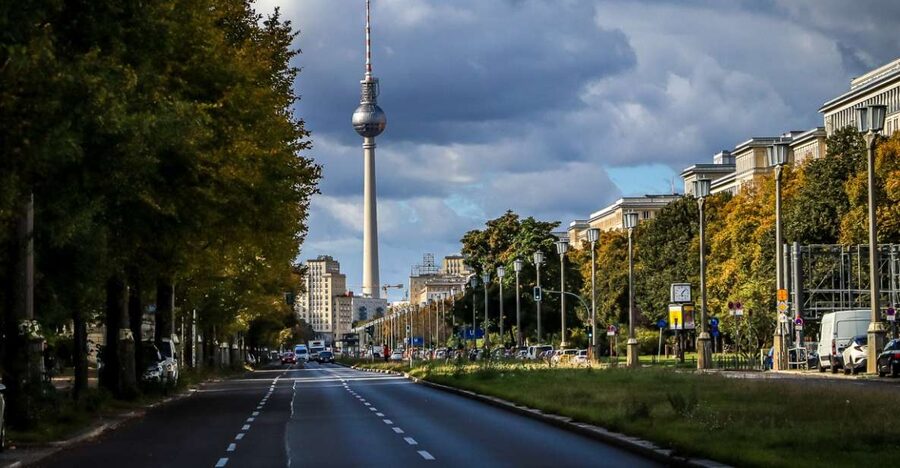
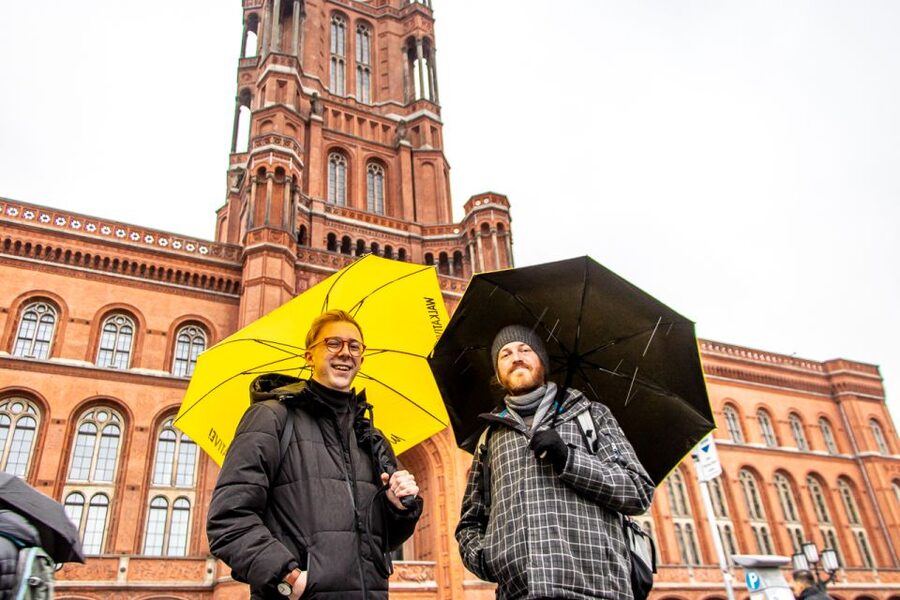
You meet in front of the Red Town Hall, or Rotes Rathaus, near the TV Tower and Neptune Fountain. Arrive about 10 minutes early. The starting point is easy to recognize, but Alexanderplatz can feel spread out, so giving yourself a little extra time is sensible.
The route ends at the Brandenburg Gate. That is useful planning-wise. You begin on the eastern side of the historic center and finish near one of Berlin’s most important landmarks, rather than ending back where you started. You can continue sightseeing from there after the tour, though the activity itself does not include onward transport.
More walking tours in Berlin:
- Discover Berlin Half-Day Walking Tour
★ 5.0 · 9,624 reviews - Berlin: Third Reich and Cold War 2 Hour Walking Tour
★ 4.9 · 6,830 reviews - Berlin: Discover Berlin Walking Tour
★ 4.9 · 5,998 reviews
Alexanderplatz and Berlin’s modest medieval beginning
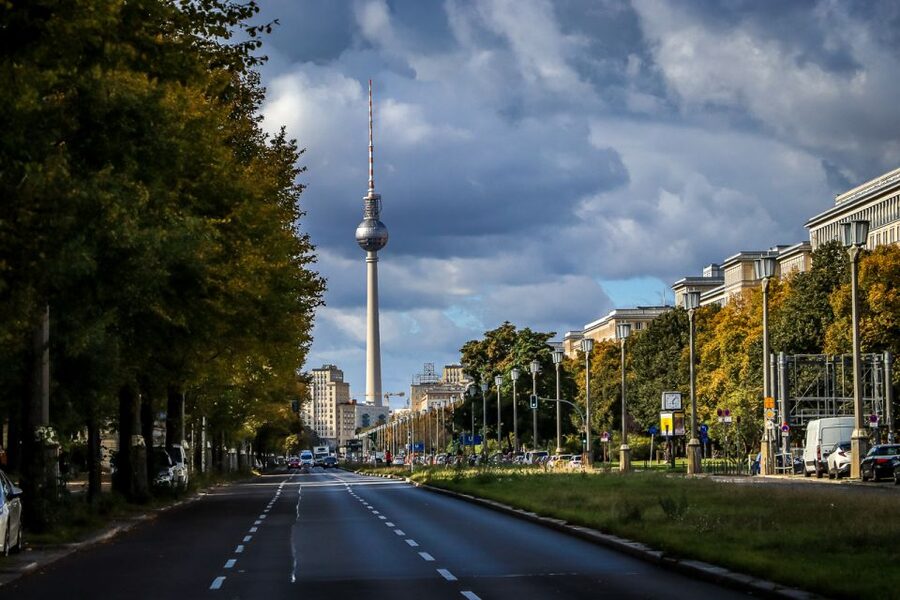
Alexanderplatz gives the walk a strong opening because it shows Berlin as more than a grand capital. You begin near the TV Tower, one of the city’s most familiar modern markers, then look back to the small medieval settlement that existed long before Berlin became the capital of Prussia and later Germany.
That contrast is important. Berlin often feels like a city built in chapters, with modern structures beside reconstructed façades and traces of older streets. The guide’s job here is to set the clock, giving you a starting point for the centuries that follow.
I like beginning here because the first lesson is about scale. The city’s political importance grew over time. It was not always the powerful capital you see today. That simple idea makes later stops, particularly the royal buildings and government sites, easier to understand.
Alexanderplatz can also be busy and visually confusing. The benefit of a live guide is that you do not need to sort out the city’s early story from a map while trying to find the next stop. Pay attention at the beginning, since the chronological structure depends on this foundation.
The former Royal Palace and the open space of Museum Island
From Alexanderplatz, the route passes the controversial reconstructed former Royal Palace of the Hohenzollern. This is one of the best places to discuss Berlin’s habit of rebuilding its past, and the word controversial matters. A recreated royal building can look impressive, but it also raises questions about which parts of history a city chooses to restore and how it presents them.
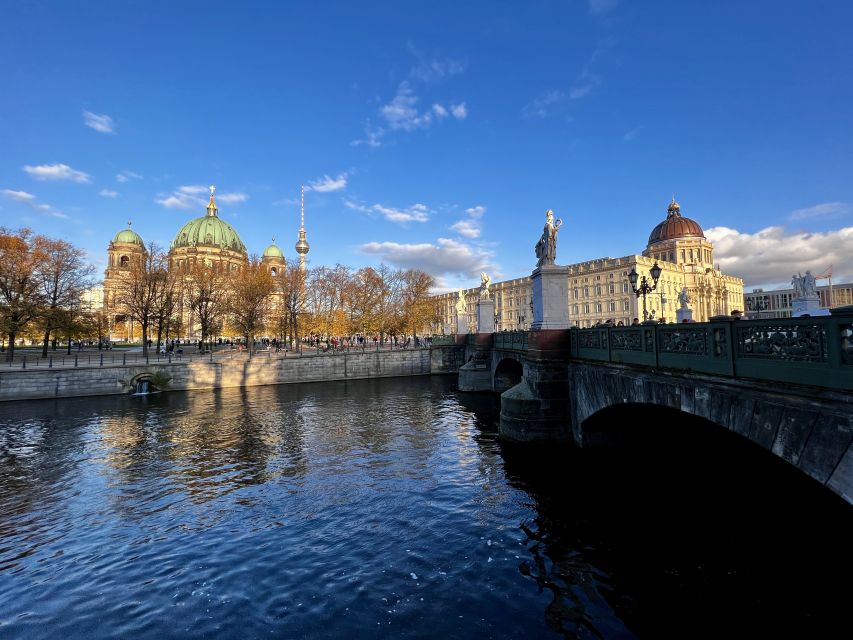
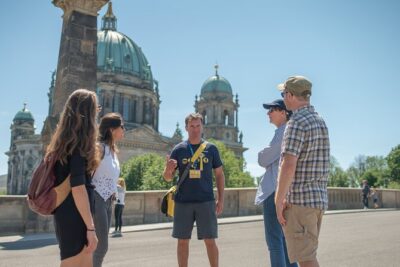
The walk then reaches Museum Island. You are not paying for museum admission on this activity, so think of this stop as an outdoor introduction rather than an art tour. The open space gives the group room to pause, and the view toward Berlin Cathedral provides one of the walk’s strongest photo moments.
I like this part because it gives your legs and eyes a break after the more crowded streets. You can take in the grand scale of the cathedral and the surrounding cultural district while the guide explains how the area fits into Berlin’s development.
Do not book this walk expecting detailed tours inside the museums. The tour passes through the area and uses it to explain the city. If you want to visit the museums, set aside separate time and admission money.
Humboldt University and the road to Gendarmenmarkt
The route continues past Humboldt University, then heads through central streets toward Gendarmenmarkt. This transition shows Berlin changing from a medieval settlement into a planned royal and intellectual center.
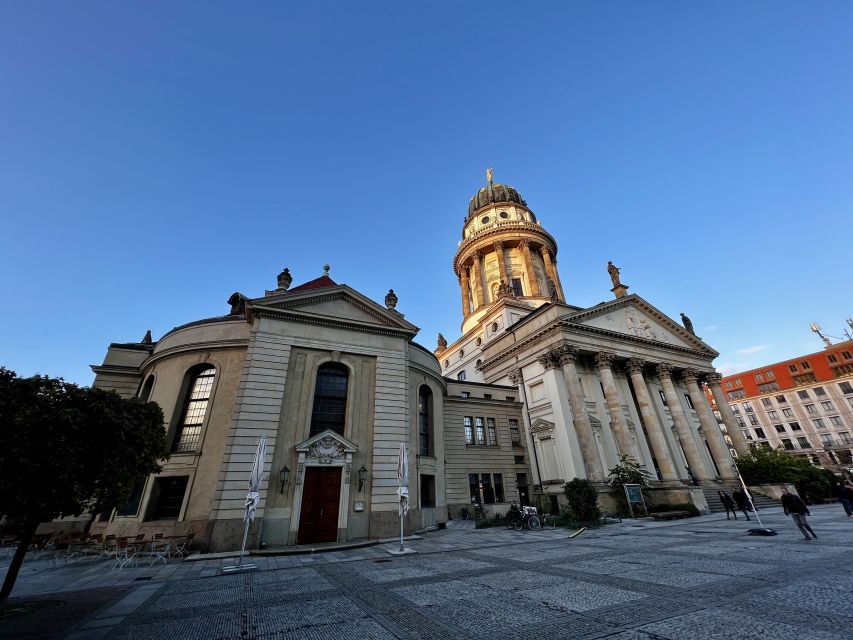
Gendarmenmarkt is described as the prettiest square on the route, and it is easy to see why it earns that attention. The square offers a more polished view of the German capital, with formal architecture and a spacious setting that feels very different from Alexanderplatz.
This is a good point to let the guide connect architecture with power. Squares like this were not accidental gathering spaces. They were part of the way a capital displayed order, wealth, and authority.
The square’s beauty also creates a useful pause in the tour’s mood. Berlin’s story is not only made of war and division. It includes art, education, government, and public design. A good guide can hold those ideas together without turning the walk into a list of dates.
The route involves continuous walking through central streets, so comfortable shoes matter more than stylish ones. The exact amount of time at each stop can vary with the guide and group, but the overall activity lasts 2.5 hours.
A few more Berlin half-days to weigh up
- Berlin: Reichstag, Dome and Government District Guided Tour
★ 4.7 · 18,288 reviews - Berlin: 1-Hour City Tour by Boat with Guaranteed Seating
★ 4.3 · 16,993 reviews - Berlin: Boat Tour Along the River Spree
★ 4.4 · 11,252 reviews - Berlin: Hop-on Hop-off Bus Tour with Live Commentary
★ 4.3 · 8,579 reviews
Checkpoint Charlie and the Berlin Wall
Checkpoint Charlie brings the tour into the modern political story. Here, you learn about the Berlin Wall and the division of the city during the Cold War.
This is one of the stops where location does much of the teaching. A wall, checkpoint, or border crossing can seem abstract in a book. Standing at a former crossing point helps you picture how Berlin was split and how movement through the city was controlled.
The name Checkpoint Charlie is famous, but fame can also flatten a place into a quick photograph. I value having a guide here because the stop needs context. The important point is not simply that the checkpoint existed. It is what the division meant for Berlin and for the people who lived on opposite sides.
You should also keep your expectations realistic. This is a walking tour, not a full Berlin Wall museum visit. The route offers an explanation at the site, while a separate museum or memorial visit would be needed for a longer treatment of the Wall.
This stop can feel especially useful early in your Berlin stay. One participant specifically praised J.R. for offering practical advice that helped with the following days. That is a worthwhile feature to look for in a city walk: not just facts about the stop, but guidance that helps you choose what to see next.
The former bunker site and Berlin’s darkest chapter
The walk passes the location where Hitler’s bunker formerly stood. This is a sober stop, and it should be treated that way. The site is significant because it connects the final days of the Nazi regime with the destruction and moral reckoning that followed.
There is no grand bunker interior to tour here. The value comes from the explanation and the setting. The absence of a dramatic monument can itself prompt a useful question: how should a city mark a place connected to dictatorship and mass murder?
I appreciate that the route puts this subject alongside the city’s royal and cultural landmarks. Berlin’s history cannot be understood through attractive squares alone. You need the uncomfortable places too, and the guide can help explain why they matter without turning the stop into spectacle.
This section may be emotionally heavy, especially after the lighter architectural portions of the walk. The chronological format helps because it shows how the city moved from imperial power into dictatorship and then toward a new political order.
Brandenburg Gate and the meaning of the final stop
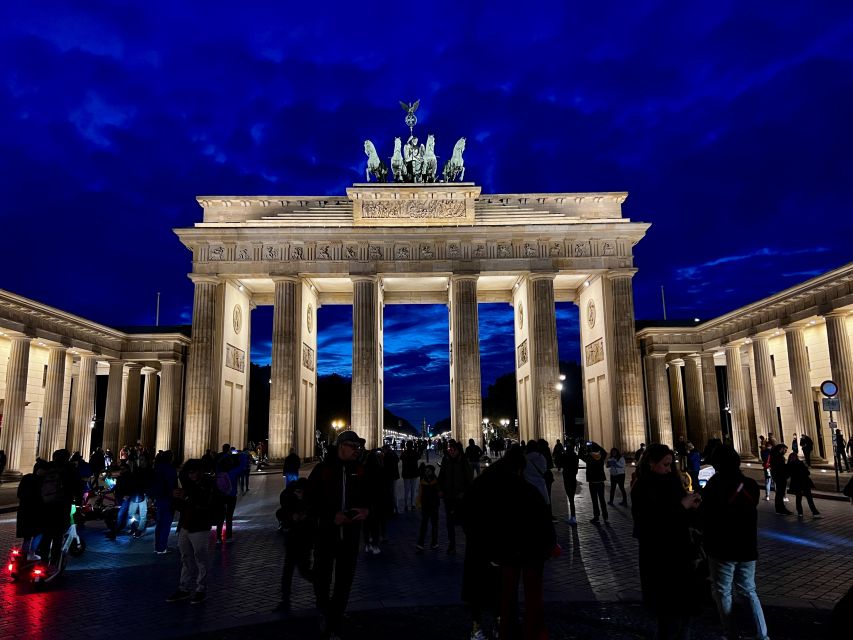
The Brandenburg Gate is the symbolic finish. Its classical archways have served as a backdrop to major changes in German history, and today the gate is associated with German and European unity.
Ending here gives the tour a clear destination rather than a random final corner. After walking through Berlin’s divisions and crimes, you arrive at a landmark that represents a more open era. The guide’s closing explanation ties together the medieval town, royal capital, Nazi dictatorship, divided city, and reunified Germany.
The gate is also a practical place to finish. You can take photographs, continue exploring central Berlin, or use the location as a reference point for later plans. The activity does not include hotel pickup, meals, or drinks, so you will make your own arrangements after the walk.
The final stop works best if you pay attention to the whole route. Brandenburg Gate is famous on its own, but the preceding sites give it more meaning. You are not just seeing a handsome arch. You are seeing the endpoint of a story about how Berlin changed.
Why the English guide matters
This is a history-heavy tour, and the guide is central to its value. The best feedback has focused on clear explanations, entertaining delivery, and practical suggestions for the rest of a Berlin visit.
J.R. was praised for combining stories with useful advice. Will was described as a strong guide who made the walk both informative and good exercise. Jule received special praise for making the city easier to understand by walking through it, while Ru was noted for staying attentive to the cold weather.
Those details tell you what to expect from a good outing with this company. You are not simply following a route between photo stops. You are relying on a live person to adjust the pace, explain difficult material, and keep the group moving.
Guide quality can vary from one departure to another, as it can with any walking tour. The named guides show the level of presentation you can hope for, but they do not guarantee who will lead your particular departure.
The tour is in English, and the activity is listed as wheelchair accessible. Because it covers city streets for 2.5 hours, you may still want to confirm route needs when booking if you require specific assistance.
Price, pay-as-you-wish format, and real value
The price is $31 per person. That is a fair charge for a live, English-language introduction covering much of central Berlin, especially if the guide gives you useful ideas for the rest of your visit.
The payment wording deserves attention. This is presented as a general pay-as-you-wish tour, where guests traditionally decide how to reward the guide. For this booking, the $31 amount covers the reservation fee and the guide’s payment. In practical terms, you should not assume that you will owe an additional required tip for the tour.
You are paying for interpretation, not admission tickets. Food, drinks, hotel pickup, and museum entry are not included. The value is strongest if you want a city orientation, a historical framework, and help deciding where to spend more time later.
For a first day in Berlin, I think the fee can make good sense. You see a wide stretch of the center and learn how the parts connect. If you already know Berlin well or prefer to explore at your own pace, the price may be harder to justify.
Timing, clothing, and the effort of the walk
The activity lasts 2.5 hours, which is long enough to cover substantial ground but short enough to fit into a busy sightseeing day. You should expect to be on your feet for most of that time.
Wear weather-appropriate clothing. This sounds basic, but Berlin’s open spaces can feel cold, particularly around Museum Island and the Brandenburg Gate. Ru was praised for being mindful of cold conditions, yet you should still bring your own warm layers and sensible footwear.
The tour does not promise a scheduled drink or restroom break. One booking comment specifically pointed out that this would have been useful information before booking. Plan ahead before meeting the guide, especially if you are traveling with children or know that a 2.5-hour walk is demanding for you.
There is free cancellation up to 24 hours before the activity for a full refund, and you can reserve now while paying later. Those options help if your Berlin plans are still shifting, but they do not change the physical demands of the route.
Who will get the most from this Berlin walk
I would choose this tour for a first visit, particularly if you want the city’s history explained in a connected way. It suits people who prefer streets and landmarks to a long indoor lecture.
It is also a good match for visitors who want practical help at the start of a trip. A guide who points out useful areas and explains how the center fits together can save you time over the next few days.
History fans will appreciate the broad range of subjects, from medieval Berlin and the Hohenzollerns to Nazi Germany, the Wall, and reunification. You will not receive a specialist lecture on any single period, but you will gain a useful framework.
The tour may be less suitable if you dislike walking, need frequent scheduled breaks, or want to enter the museums and monuments along the route. It is also not the right choice if you want a narrow focus on the Berlin Wall or World War II. This is a city overview with serious historical stops, not a single-topic tour.
Should you book the 2.5-hour Berlin walking tour?
Book it if you want to understand how Berlin’s main historic areas connect, and if you like having a live guide explain the meaning behind familiar sights. The route is especially useful at the beginning of your stay, when Alexanderplatz, Museum Island, Gendarmenmarkt, Checkpoint Charlie, and Brandenburg Gate are still separate points on your map.
The strongest reasons to go are the chronological structure, the broad route, and the guides’ reported mix of history and practical city advice. J.R., Jule, Ru, and Will have each been praised for making the walk clear and engaging.
Skip it if you want museum entry, a relaxed pace with regular refreshment stops, or a deep focus on one era. For most first-time visitors who can manage 2.5 hours on foot, $31 is a sensible way to get Berlin’s story in place before exploring further.
FAQ
Where does the Berlin walking tour meet?
The meeting point is in front of the Red Town Hall, or Rotes Rathaus, close to the TV Tower and Neptune Fountain.
Where does the tour finish?
The walk ends at the Brandenburg Gate, a symbol of German and European unity.
How long does the activity last?
The guided walk lasts 2.5 hours. Starting times depend on availability.
Is the tour conducted in English?
Yes. The activity includes a live English-speaking local guide.
Is the tour wheelchair accessible?
Yes, the activity is listed as wheelchair accessible.
What is included in the $31 price?
The price covers the reservation fee and the guide’s payment within the general pay-as-you-wish tour format. Food, drinks, and hotel pickup are not included.
Just added around Berlin
- From Berlin: Gardens & Palaces of Potsdam Bike Tour★ 5.0 · 61 reviews
- Berlin: Battle for Seelow Heights WW2 tour -Clash of Titans★ 5.0 · 27 reviews
- From Berlin: Historical Gems of Potsdam Private Day Trip★ 4.4 · 4 reviews
- Berlin: Französischer Dom 360° Panorama & Crémant to go★ 3.9 · 5 reviews
- Explore Berlin Tour: History and Highlights★ 4.7 · 5 reviews
- Berlin: Evening Yacht Cruise with Aperitif & Dinner Upgrade★ 4.6 · 178 reviews
- Berlin: Expats in Berlin Comedy Show Ticket★ 4.7 · 182 reviews
- Berlin: The Epic Comedy Club Friday Night Showcase★ 4.8 · 28 reviews
Berlin Tours, compared.

Reichstag, Dome and Government District Guided Tour
Read our review →
1-Hour City Tour by Boat with Guaranteed Seating
Read our review →
Reichstag, Plenary Chamber, Cupola & Government Tour
Read our review →
Browse the lists this tour appears in