
Review · BERLIN TOURS
Berlin: Hitler’s Berlin The Rise & Fall Guided Walking Tour
Berlin is the place where Hitler’s regime took control of Germany, built its machinery of terror, and finally collapsed. This 150-minute walking tour links those events to the actual streets and buildings around central Berlin, making the story easier to follow than a string of disconnected memorials.
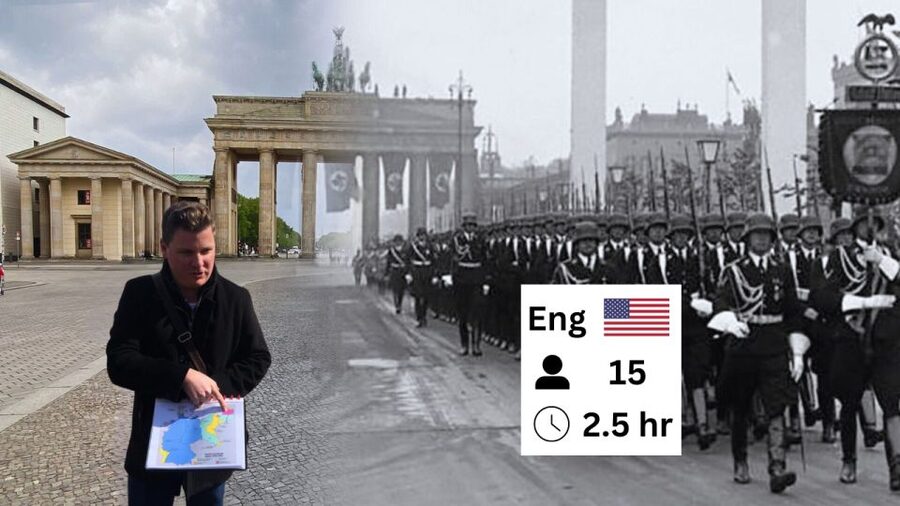
I like the clear route from the rise of dictatorship to the final battle in 1945, and I like the use of historic maps and Then & Now photographs to show how much Berlin changed. Guides such as Scott, Hannah, Matt, and Mark have earned especially warm praise for explaining difficult subjects plainly and welcoming questions. The main drawback is simple: this is an outdoor history lesson with considerable walking, so bad weather and tired feet can affect the experience.
Key things to know before you book
- The route covers Berlin’s full Nazi-era story: From the Reichstag and Hitler’s appointment to power, through persecution and terror, to the bunker site and Soviet victory.
- You visit several major memorials: The Holocaust Memorial, the Sinti and Roma memorial, and the Soviet War Memorial each call for a different kind of attention.
- The guide is the main attraction: The company focuses on Second World War history, with academically trained guides who connect ideology, politics, repression, and military events.
- The tour stays outdoors: Indoor museum exhibitions are not included, so plan a separate visit to places such as the Topography of Terror if you want to explore its displays.
- It is good for first-time visitors and history fans: The explanation starts with basic context but leaves room for detailed questions.
- Comfort matters: Wear good walking shoes, bring water, and dress for Berlin weather. An umbrella is not supplied.
Why this walking tour makes sense in Berlin
Berlin has many sites linked to National Socialism, but they are spread across a large central area and do not always explain themselves. A plaque may tell you what happened at one location, yet leave you unsure how it fits into the larger story.
This tour gives you that structure. You begin with the destruction of democracy, move through the symbols and institutions of Nazi power, then finish near the former SS and Gestapo headquarters. Along the way, the guide explains how political control became one-party rule, how propaganda and fear shaped daily life, and how persecution led to mass murder.
That order matters. You are not simply ticking off the Reichstag, a memorial, and a bunker. You are following a chain of events. The central question is how a modern state moved from parliamentary government to dictatorship and then to total war.
The guides are also praised for making serious material accessible without turning it into a dry lecture. Scott is repeatedly singled out for his clear delivery, friendly manner, and ability to answer questions. Hannah is noted for adding personal stories and presenting more than one angle. Matt is praised for detailed answers and a relaxed, welcoming style. Since guides vary, your exact experience will depend on who leads the walk, but the company’s focus is clear.
More walking tours in Berlin:
- Discover Berlin Half-Day Walking Tour
★ 5.0 · 9,624 reviews - Berlin: Third Reich and Cold War 2 Hour Walking Tour
★ 4.9 · 6,830 reviews - Berlin: Discover Berlin Walking Tour
★ 4.9 · 5,998 reviews
Starting at Brandenburg Gate and the end of democracy
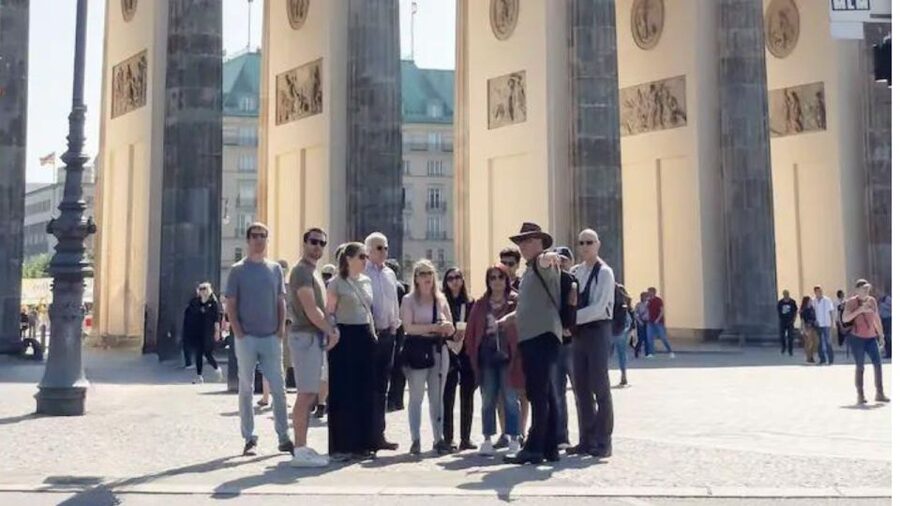
Meet at the Tourist Office by Brandenburg Gate and look for the blue umbrella. This is a sensible starting point. The gate is one of Berlin’s best-known landmarks, but its meaning changed sharply during the Nazi period and the later division of the city.
Expect a short visit and photo stop here, around 10 minutes. Your guide uses the setting to explain how Berlin became the political center of the Third Reich and how public symbols can be reshaped by different governments.
The gate is also a useful place to get your bearings. From here, the route moves through the government quarter and nearby memorials, with relatively little wasted time between major stops. Because the tour starts outdoors, arrive ready to walk rather than expecting a long indoor introduction.
The Sinti and Roma memorial, a quieter place to pause
The Memorial to the Sinti and Roma Victims of National Socialism is one of the first serious stops. The planned visit lasts about 10 minutes, with time for explanation and reflection.
This memorial broadens the story beyond the persecution of Jewish people, showing that Nazi racial policy targeted other groups as well. That is an important part of the tour’s value. The Nazi system did not rely on one form of hatred or one method of repression, and a good guide can help you see how its categories of enemies worked.
The stop is short, so you may want to ask questions while you are here. The group then continues on foot toward the Reichstag.
The Reichstag and the machinery of power
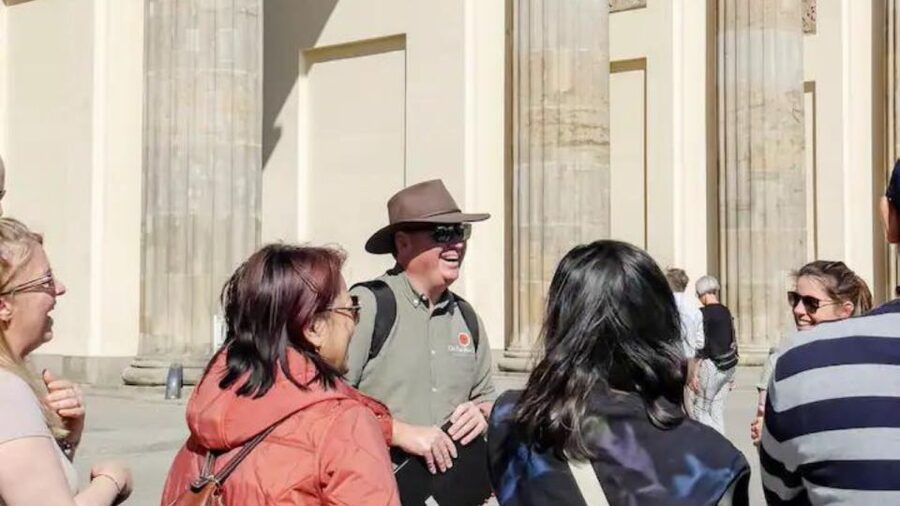
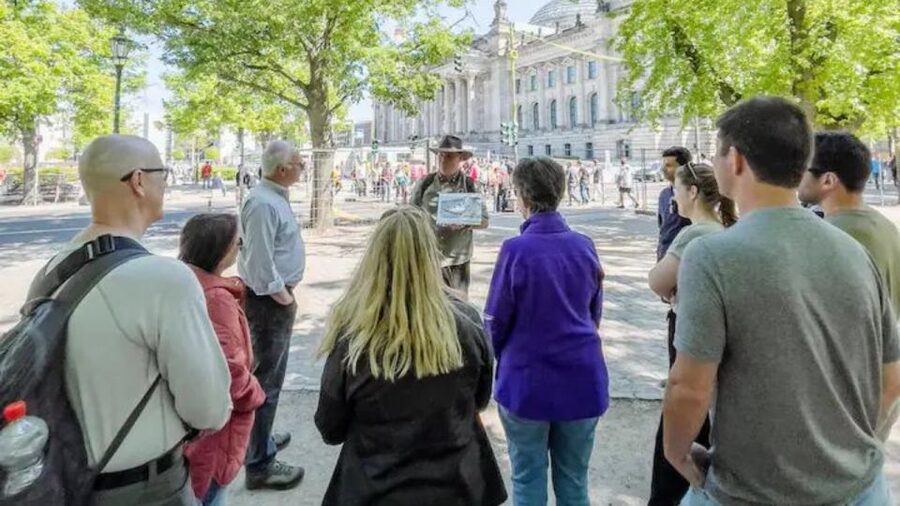
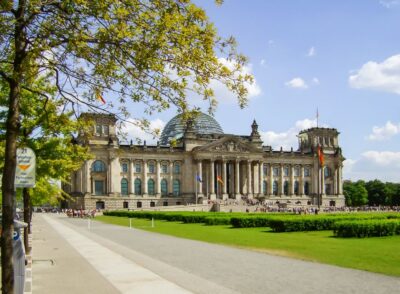
You spend about 20 minutes around the Reichstag, one of the most useful stops for understanding the political beginning of the story. The building represents democracy, dictatorship, and German reunification, all in one place.
The guide explains how the Nazis seized power and how democratic institutions were dismantled. This is where the tour moves beyond the familiar image of Hitler as a dictator and examines the political process that allowed his regime to take control.
That context is especially useful if your knowledge of German politics in the early 1930s is limited. You do not need to arrive with a detailed grasp of elections, constitutional rules, or party politics. The guide’s job is to connect those details to the wider change from elected government to dictatorship.
The Reichstag stop also prevents the tour from becoming only a military history walk. The focus begins with political failure, public fear, propaganda, and the use of legal power. That makes the later discussion of prisons, police, and war easier to understand.
A few more Berlin half-days to weigh up
- Berlin: Reichstag, Dome and Government District Guided Tour
★ 4.7 · 18,288 reviews - Berlin: 1-Hour City Tour by Boat with Guaranteed Seating
★ 4.3 · 16,993 reviews - Berlin: Boat Tour Along the River Spree
★ 4.4 · 11,252 reviews - Berlin: Hop-on Hop-off Bus Tour with Live Commentary
★ 4.3 · 8,579 reviews
The Soviet War Memorial and the Battle of Berlin
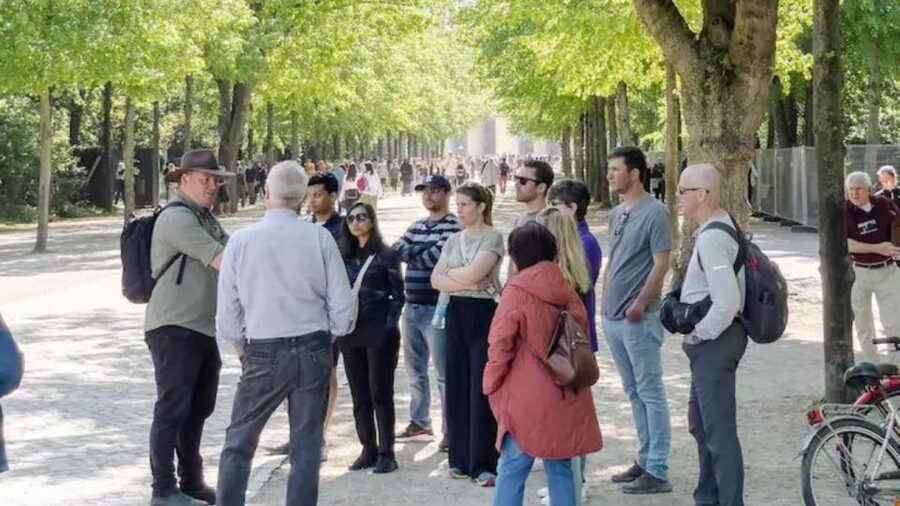
The Soviet War Memorial in Tiergarten receives about 20 minutes. It recalls the brutal Battle of Berlin and the Soviet victory that brought the war in Europe to its final stage.
This stop adds a military and human dimension to the tour. Earlier locations explain how Nazi control was built. Here, the story turns toward destruction, defeat, and the cost of fighting on Berlin’s streets in 1945.
The memorial also gives you a chance to consider how different countries remember the war. The route does not present Berlin only as the seat of Nazi power. It also shows the city as a battlefield and as a place shaped by the armies that defeated Germany.
There is a photo opportunity here, but the subject is not light sightseeing. Listen for the connections between the military collapse and the political end of the regime. The guide uses the stop to keep the final phase of the war tied to the earlier story.
The Holocaust Memorial and the scale of persecution
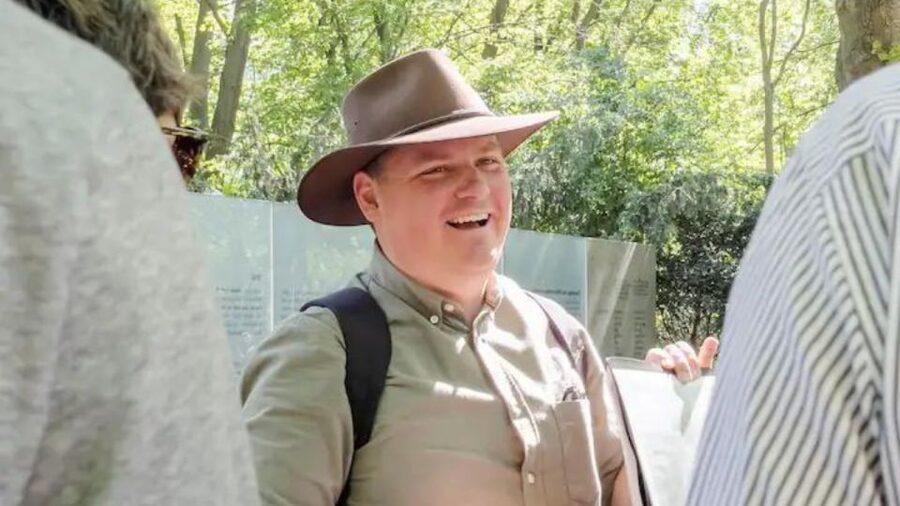
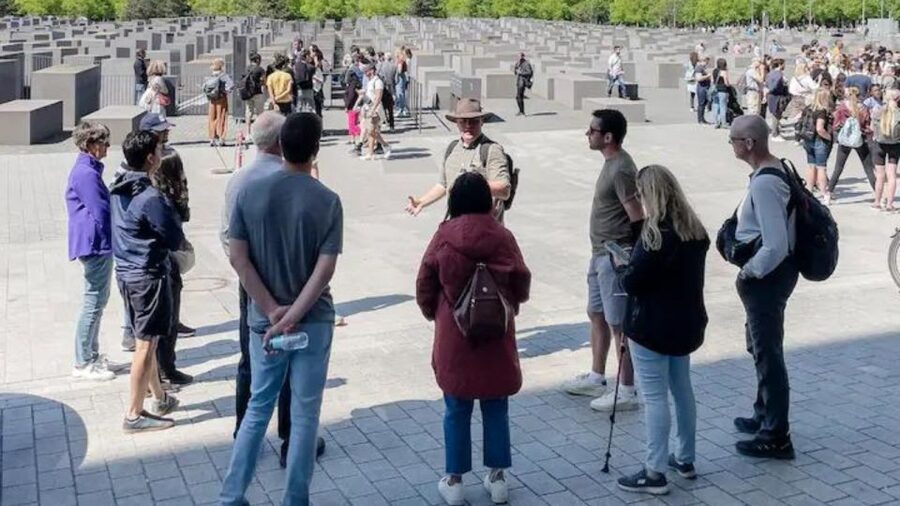
The Memorial to the Murdered Jews of Europe is one of the tour’s most important stops, with roughly 20 minutes for the visit and explanation. The concrete blocks create a powerful physical setting, but the guide’s interpretation gives the site its historical force.
Here, you examine why Jewish people were systematically targeted and how persecution developed under the Nazi regime. The tour aims to explain the process, not only the result. That means looking at exclusion, state policy, propaganda, repression, and the gradual removal of rights.
A guide is particularly helpful at this memorial because the open site can otherwise feel abstract. You may see the blocks, take photographs, and move on without understanding the stages that led to genocide. The tour places the memorial within the wider system of Nazi rule.
The stop is also a reminder to be respectful. This is a place for reflection, not a dramatic backdrop. Your guide should help set that tone while giving you enough historical detail to understand what the memorial represents.
Hitler’s bunker site and the final days of 1945
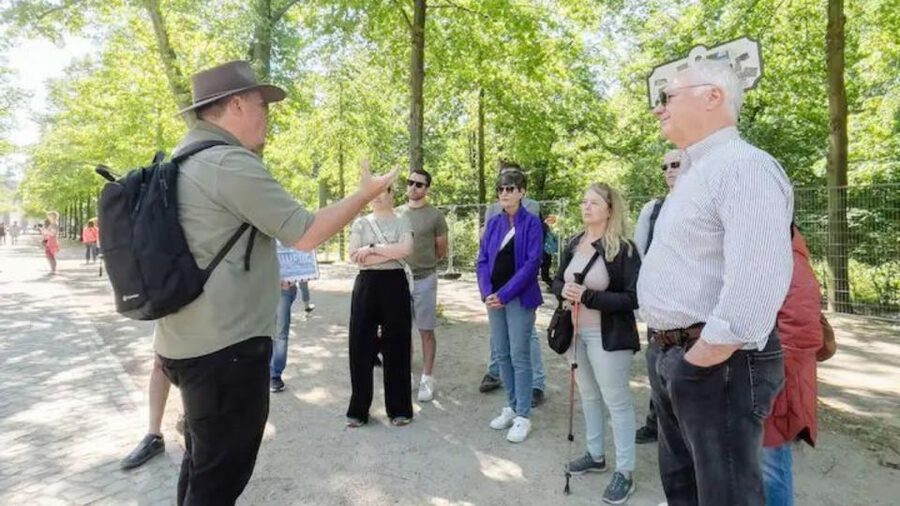
The former Hitler’s bunker site is visited for about 15 minutes. There is no intact bunker interior to tour here, and indoor access is not part of the experience. Instead, the guide explains what happened at this location and how the war in Europe ended amid the ruins of Berlin.
That limitation is worth knowing before you book. If you expect a preserved underground complex, you may be disappointed. The value is in the explanation and the location, not in entering a dramatic surviving room.
The stop works best as part of the full route. By this point, you have heard how the regime gained power, built terror, and launched a war. The bunker site then shows the narrow, grim end of that process.
Your guide may use photographs and maps to help you picture the wartime setting. Several guides have been praised for adding detail and answering questions here, which matters because little remains above ground to explain the site on its own.
Johann Georg Elser and the importance of resistance
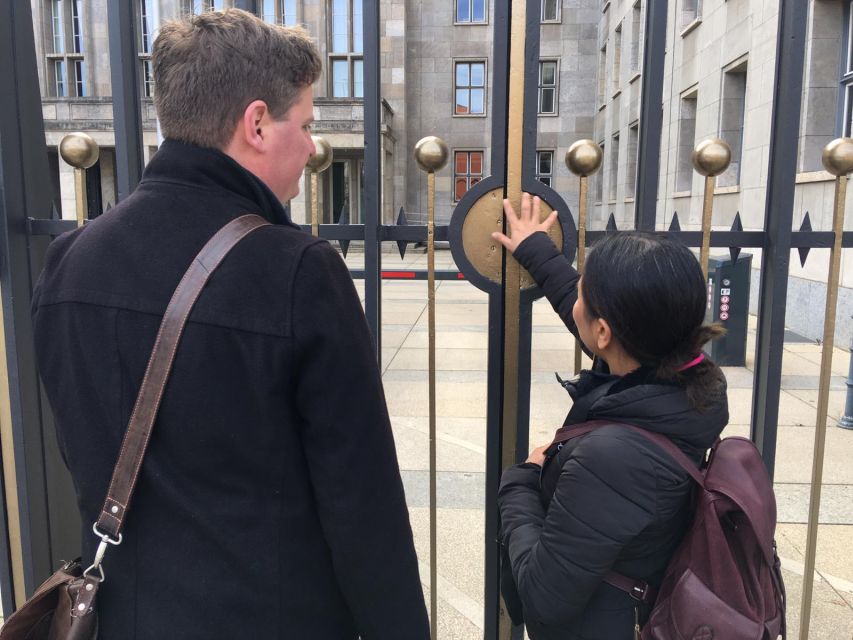
The Johann Georg Elser Memorial receives about 10 minutes. Elser attempted to kill Hitler in 1939, making this a valuable stop for discussing resistance inside Germany.
Many visitors know the broad outline of Nazi repression but have a less complete picture of opposition to the regime. This memorial helps correct that. It shows that resistance existed, though it was dangerous, limited, and often crushed.
The stop also adds a personal story to a tour that otherwise deals with governments, institutions, and armies. Elser’s actions make you consider the choices available to individuals living under dictatorship, along with the risks of acting alone.
Because the visit is brief, pay attention to the guide’s explanation rather than expecting a large memorial complex. It is a compact stop with a clear purpose.
The German Finance Ministry and the reach of the state
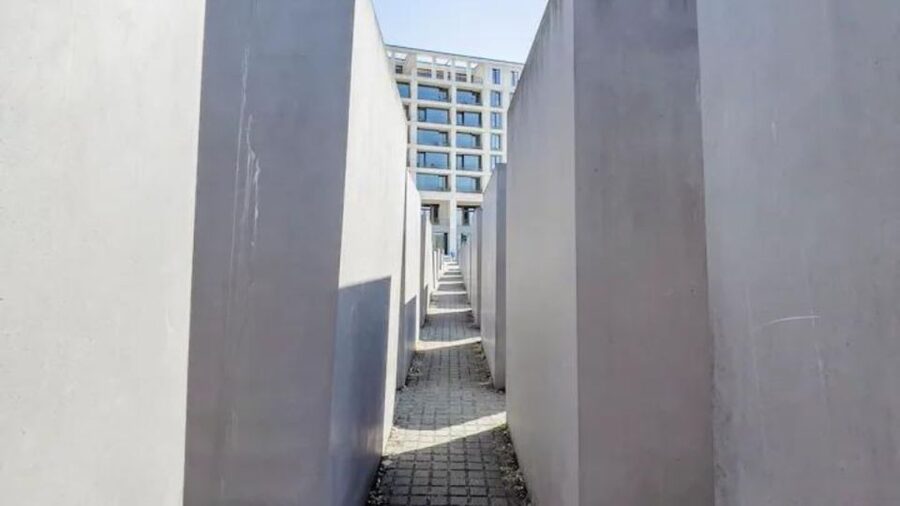
The German Finance Ministry is a short five-minute photo and explanation stop. It may seem less immediately striking than the Holocaust Memorial or the Reichstag, but it helps show that Nazi rule was not maintained by speeches and violence alone.
Government offices, administrative systems, and state finances all supported the regime. A brief explanation here can connect the grand political story to the practical business of running a dictatorship and a war economy.
This is also a reminder that Berlin’s Nazi past is not confined to obvious ruins. Modern government buildings and ordinary streets can sit on sites with difficult histories. The tour’s outdoor format lets you see that the city has been rebuilt around, and sometimes over, these layers of the past.
Topography of Terror and the nerve center of repression
The tour finishes at the Topography of Terror, near the former Gestapo and SS headquarters. The planned visit lasts about 15 minutes, with a photo stop and guided explanation.
This is a strong ending because it brings the discussion back to the institutions that enforced Nazi rule. The Gestapo and SS were central to surveillance, imprisonment, torture, deportation, and mass murder. At this point, the political rise and wartime collapse are tied to the machinery of terror that operated in between.
The tour itself remains outside. Access to the indoor exhibitions is not included, so I recommend treating the finish as a useful introduction rather than a substitute for the museum. If you have time, you can explore the exhibition separately and build on what the guide has explained.
Ending here also makes practical sense. You finish at a major site rather than returning to the starting point, giving you the freedom to continue sightseeing or visit the exhibition on your own.
How much walking and how difficult is it?
The tour lasts two and a half hours and includes considerable walking between stops. You will spend time standing while the guide speaks, then walk through central Berlin to the next location.
The route is wheelchair accessible, but anyone with mobility concerns should still note the length of the outing and the amount of time spent outdoors. Wear comfortable shoes, bring water, and check the forecast before leaving. The tour runs in changing weather, and personal umbrellas or walking sticks are not supplied.
The pace appears to include pauses at the sites rather than nonstop walking. One guide, Hannah, was praised for allowing rest while continuing the explanation, and another guide reportedly went over the allotted time to answer questions. Do not count on extra time, though. Your scheduled experience is 150 minutes.
The $47 price and what you receive
At $47 per person, this is not the cheapest way to see central Berlin. You can walk past many of these locations for free. The question is whether the guide’s context is worth paying for.
For most people interested in the Nazi period, I think the price is reasonable. You cover a wide section of central Berlin, visit several important memorials, and receive a connected explanation rather than isolated facts. The small-group format should also make it easier to ask questions and stay involved.
The value is strongest if you are visiting Berlin for the first time or if you know the broad outline but want to understand how the locations relate to each other. It is less valuable if you prefer to read at your own pace, already know the sites well, or plan to spend several hours inside museums with specialist displays.
Food, drinks, transport, and hotel pickup are not included. Build the tour into a day when you are already exploring central Berlin, and plan extra time at the Topography of Terror if its indoor exhibition interests you.
Who should book this tour?
I would choose this tour if you want a serious, guided introduction to Nazi Berlin without committing to a full-day program. The route is especially useful for adults, older children, students, and anyone who wants political and military history explained in plain language.
It also suits people who already know a fair amount about the Second World War. Several guides are praised for handling detailed questions, and one participant who already knew a good deal about the war still felt the tour added useful information.
This is not a light sightseeing walk. The subject is persecution, dictatorship, genocide, and war. The guide keeps the presentation friendly and approachable, but the material remains heavy. Families should decide if younger children are ready for that subject.
Booking, language, and cancellation details
The tour is conducted in English with a live guide. Small groups are used for a more personal and interactive experience, although the exact group size is not provided.
You meet at the Tourist Office at Brandenburg Gate and identify the guide by the blue umbrella. Free cancellation is available up to 24 hours before the start, and you can reserve now and pay later. Check the available start times when booking.
The activity is wheelchair accessible, though the outdoor distance and standing time still deserve consideration. There is no hotel pickup or drop-off.
Should you book Hitler’s Berlin?
Book it if you want the city’s Nazi-era sites placed into one clear story. The strongest parts are the guide-led explanations at the Reichstag, Holocaust Memorial, Hitler’s bunker site, and Topography of Terror, supported by maps and Then & Now images.
The main caution is to expect an outdoor walking tour, not an indoor museum visit or a preserved bunker experience. If you dress for the weather and arrive ready to listen, $47 buys a focused and useful introduction to one of Berlin’s most difficult chapters.
FAQ
How long does the Hitler’s Berlin walking tour last?
The tour lasts 150 minutes, or two and a half hours.
Where does the tour begin?
You meet at the Tourist Office at Brandenburg Gate. Look for the blue umbrella.
Where does the tour finish?
The tour finishes at the Topography of Terror.
What language is the tour conducted in?
The live guided tour is conducted in English.
Does the tour enter museums or indoor exhibitions?
No. The tour takes place outdoors, and access to indoor museum exhibitions is not included.
Is the tour wheelchair accessible?
Yes, the activity is listed as wheelchair accessible. It also involves considerable outdoor walking and standing.
What should I bring?
Wear comfortable shoes and dress for the weather. Bring a water bottle, and bring your own umbrella or walking stick if you need one.
What is the cancellation policy?
You can cancel up to 24 hours in advance for a full refund. You can also reserve your place and pay later.
Just added around Berlin
- From Berlin: Gardens & Palaces of Potsdam Bike Tour★ 5.0 · 61 reviews
- Berlin: Battle for Seelow Heights WW2 tour -Clash of Titans★ 5.0 · 27 reviews
- From Berlin: Historical Gems of Potsdam Private Day Trip★ 4.4 · 4 reviews
- Berlin: Französischer Dom 360° Panorama & Crémant to go★ 3.9 · 5 reviews
- Explore Berlin Tour: History and Highlights★ 4.7 · 5 reviews
- Berlin: Evening Yacht Cruise with Aperitif & Dinner Upgrade★ 4.6 · 178 reviews
- Berlin: Expats in Berlin Comedy Show Ticket★ 4.7 · 182 reviews
- Berlin: The Epic Comedy Club Friday Night Showcase★ 4.8 · 28 reviews
Berlin Tours, compared.
Reichstag, Dome and Government District Guided Tour
Read our review →
1-Hour City Tour by Boat with Guaranteed Seating
Read our review →
Reichstag, Plenary Chamber, Cupola & Government Tour
Read our review →
Browse the lists this tour appears in