
Review · BERLIN TOURS
East Meets West: Berlin Food Culture & Street Art
Berlin’s food culture makes the most sense when you walk it. This tour links Friedrichshain and Kreuzberg, pairing schnitzel, currywurst, Turkish street food, Ukrainian soul food, coffee, and vegan donuts with stories of the Berlin Wall and the city’s changing neighborhoods.
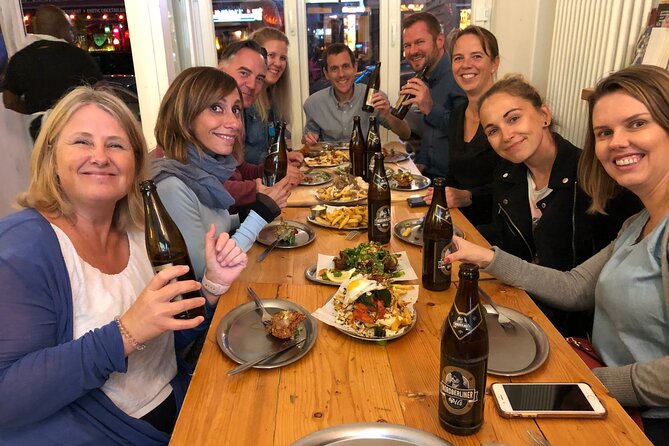
I like the small maximum of eight people, which gives guides such as Lee, Elena, Tiago, and Will room to answer questions. I also like the range of food, from traditional Berlin staples to immigrant cooking and modern plant-based treats. The main drawback is price: at $169.38, you’ll want to arrive hungry and ready to value the history and guiding as much as the food.
Key things to know before you book
- Six tastings with drinks included: Expect a substantial food crawl, Berliner Pilsner, and several styles of Berlin cooking.
- East Berlin to West Berlin: The route begins near Friedrichshain, visits the East Side Gallery, and finishes around Kottbusser Tor in Kreuzberg.
- A serious history lesson: Nazi-era stories, Communist East Berlin, the Berlin Wall, and Turkish immigration all shape the walk.
- Small-group format: The maximum is eight people, a useful size for questions and personal attention.
- Come very hungry: Several direct accounts describe generous portions and enough food to replace both breakfast and dinner.
- Plan for walking and transit: Comfortable shoes and rain protection make sense, and your BVG ticket is not included.
A food walk through Berlin’s dividing line
I like this tour because it does not treat food as a separate activity from city history. Berlin’s neighborhoods were shaped by war, dictatorship, a divided city, migration, and a restless creative scene. You taste those changes one stop at a time.
The route begins at Industriepalast Hostel on Warschauer Strasse at noon. From there, you move through Friedrichshain, cross the former East-West divide, and finish near U Kottbusser Tor. The walk lasts about three and a half hours, though the pace includes frequent food stops and explanations.
You should expect a full meal’s worth of food rather than a few token nibbles. The experience includes six local tastings, beverages, food samples, and Berliner Pilsner. The exact mix can vary, but the planned stops cover German, Turkish, Ukrainian, vegan, and other influences on the city’s table.
That variety is the point. You are not simply eating famous Berlin dishes. You are seeing how Berlin became a city where a German schnitzel, Turkish street food, Ukrainian nalivanki, currywurst, and vegan donuts can all belong to the same afternoon.
More food tours in Berlin:
- Berlin Center Food Tour with 8+ Authentic Local Tastings
★ 5.0 · 1,227 reviews - Berlin City Bike Tour with Beer Garden Stop
★ 5.0 · 917 reviews - Kreuzberg: Culinary Food Tour
★ 4.5 · 770 reviews
Friedrichshain and the East Side Gallery
Friedrichshain opens the tour with a look at former East Berlin. The neighborhood is tied to the revolutionary spirit of East Berliners, and its present-day creative character grows from that past.
The first stop itself is brief, about 20 minutes, so do not expect an exhaustive neighborhood tour. Instead, use it to get your bearings and listen for the connections between Communist-era Berlin and the city you see today.
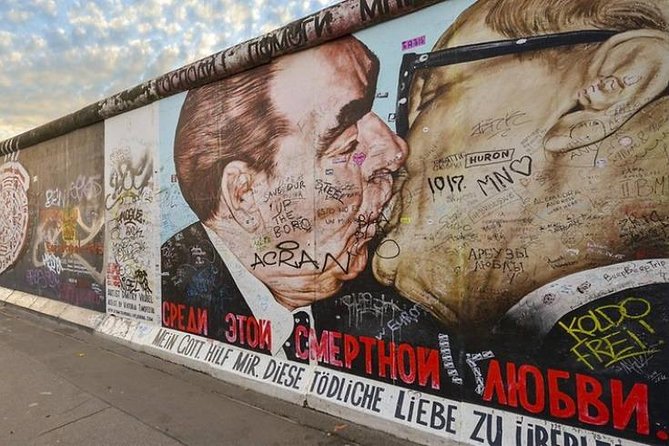
The East Side Gallery is the route’s clearest visual history lesson. This remaining section of the Berlin Wall is covered with political murals, turning a former barrier into a long outdoor gallery. You get to touch an actual surviving part of the Wall while hearing how the paintings reflect the politics of the time.
The stop lasts about 20 minutes. That is enough to understand why the site matters, but not enough to study every mural in detail. If the Wall is a major reason for your Berlin visit, plan a separate visit to see more of the city’s Wall memorials and museums.
The tour then crosses toward former West Berlin. That movement is more than a change of neighborhood. It gives the guide a natural way to explain how the city’s two halves developed different identities, economies, and street cultures.
Kreuzberg, schnitzel, and Berlin’s changing table
Kreuzberg is where the tour’s food focus gains momentum. The district is linked with culinary experiments, independent bars, street art, and Berlin’s multicultural population. You will spend about 30 minutes getting a feel for the area before the tastings begin in earnest.
At Scheers Schnitzel, you try a Berlin-style schnitzel from a local institution. This stop offers a useful reminder that Berlin food is not only kebabs and trendy cafés. A schnitzel may not sound adventurous, but it gives you a traditional German reference point before the tour moves into more international flavors.
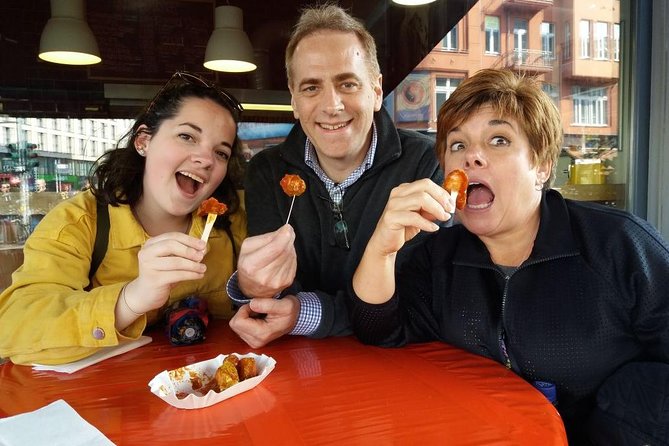
The tour also explains the story of currywurst at Ketels Curry. Currywurst is one of Berlin’s defining fast foods, and its origin story is less familiar than its fame suggests. The guide connects the dish with the city’s postwar food culture and explains how it changed Berlin’s everyday eating habits.
These stops are practical as well as tasty. You leave with a better idea of what Berliners grab for a quick meal, not just what appears on a formal restaurant menu.
Street art as a record of East and West
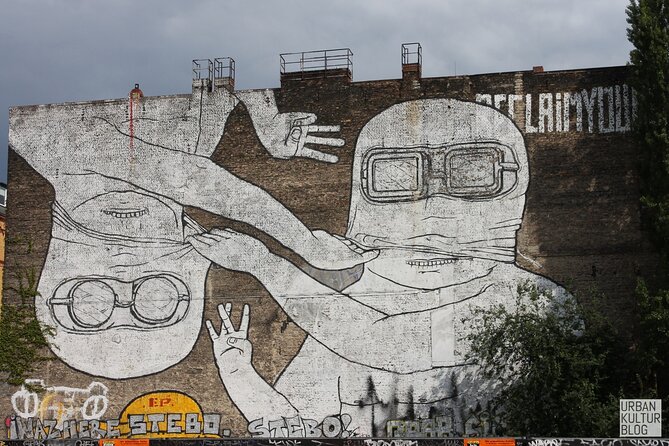
Kreuzberg’s street art stop is short, around 15 minutes, but it adds an important visual layer. Murals here tell stories about the city’s divided past, political struggles, and creative future.
I would not book this tour as a dedicated street-art expedition. The time is enough to see a major mural and hear its context, but not enough for a detailed survey of Berlin’s artists or techniques. Still, the stop works well because the art is placed within the neighborhoods and stories you are already walking through.
That setting matters. Instead of viewing street art in a gallery, you see it on the walls of a district shaped by migration, protest, music, and changing rents. The guide helps connect the images to the city around you.
This is also where a small group pays off. With no more than eight people, you can ask why a mural matters, how the former Wall shaped the area, or what parts of the scene have changed. Guides including Elena and Tiago have been praised for explaining Berlin’s people, culture, and districts alongside the food.
Same city, a completely different sort of afternoon:
- Berlin: Reichstag, Dome and Government District Guided Tour
★ 4.7 · 18,288 reviews - Berlin: 1-Hour City Tour by Boat with Guaranteed Seating
★ 4.3 · 16,993 reviews - Berlin: Boat Tour Along the River Spree
★ 4.4 · 11,252 reviews - Discover Berlin Half-Day Walking Tour
★ 5.0 · 9,624 reviews
Ukrainian soul food and immigrant Berlin
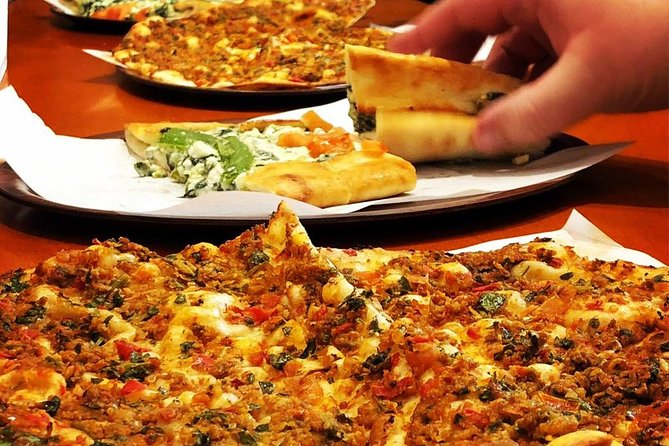
Slava Berlin introduces modern Ukrainian cooking through an immigrant women-led restaurant. The stop lasts about 20 minutes and includes Ukrainian soul food and nalivanki, a type of infused drink.
This is one of the tour’s most current-feeling stops. Berlin’s food story did not end with the arrival of Turkish communities in the 20th century. The city continues to change as new residents bring their cooking, businesses, and traditions.
The value here is the connection between a specific restaurant and a larger story. You get a taste, but you also learn how migration keeps reshaping Berlin. If you have dietary needs, tell the operator when booking. Vegetarian options are available, though the supplied details do not specify every ingredient or substitution at each stop.
The food mix can include surprises. One direct account described German, Ukrainian, Turkish, and Chinese tastings on the same tour. That suggests the experience is designed around Berlin’s current food culture rather than a fixed list of only old-fashioned local dishes.
Markthalle Neun and Kreuzberg’s food community
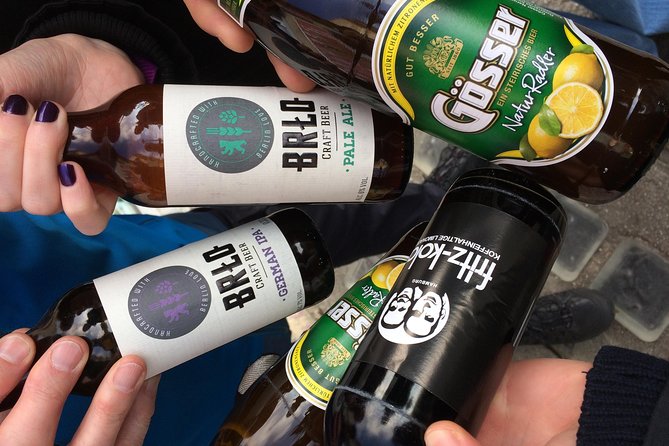
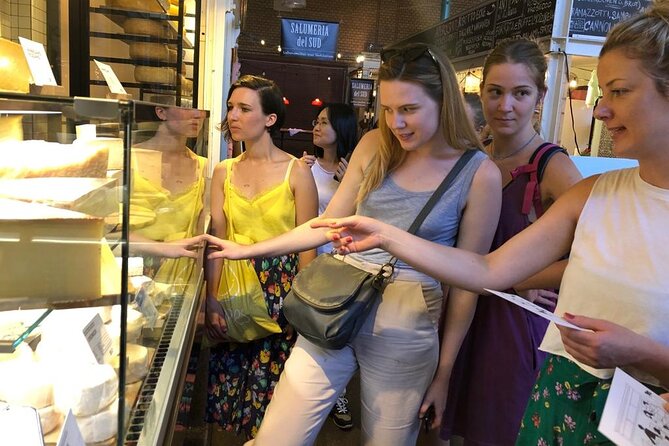
Markthalle Neun occupies a refurbished market hall dating from the early 1900s. The building survived the destruction of World War II and later pressure to become a more commercial property. Today it functions as an independent food center with events connecting Berlin producers, cooks, and drink makers.
You spend about 30 minutes here, making it one of the longer stops. The hall gives you a chance to pause, look around, and understand how Berlin’s food scene works beyond individual restaurants.
The market is especially useful for readers who want to continue exploring after the tour. Its event calendar brings together food and beverage businesses from around Berlin and nearby producing areas. The exact activity inside the hall can vary, so do not expect the same event or stall arrangement on every visit.
The main strength is context. Markthalle Neun shows food as part of a local network, not merely as something bought and eaten. It also gives the tour a change of pace after the street-side stops.
Little Istanbul and the Turkish influence
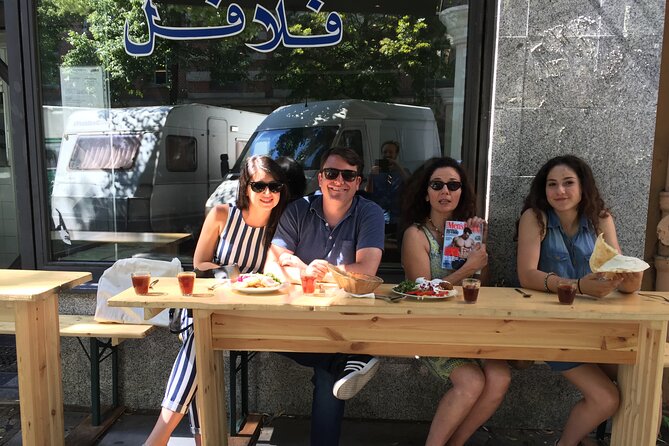
The stop at Leylak brings you into the Turkish influence that defines much of Kreuzberg. Berlin has the largest Turkish population outside Turkey, and Turkish residents helped rebuild and reshape the district through the 1980s and 1990s.
At Leylak, you taste Anatolian street-food recipes. This is more than a kebab stop. The guide explains how Turkish communities changed the character of Kreuzberg, from its shops and restaurants to its wider multicultural identity.
I consider this one of the most important parts of the tour because it corrects a common Berlin mistake. Visitors often treat Turkish food as an inexpensive convenience rather than as a central part of the city’s modern story. Here, the dish comes with the background needed to understand its place.
The stop lasts about 20 minutes. Portions across the tour are described as generous, so you may want to pace yourself. Do not fill up at the first German tasting and assume the rest will be light.
Coffee, vegan donuts, and Berlin now
The experience includes a visit to one of Friedrichshain’s fashionable coffee shops. This gives you a look at another side of the city, one shaped by specialty coffee, design, and newer creative businesses.
The final sweet stop is Brammibal’s Donuts at Maybachufer. These vegan donuts show how strongly Berlin has embraced plant-based food. The stop is a useful contrast with schnitzel and currywurst, and it helps explain why Berlin is often associated with modern vegan cooking.
You should see this as a broad survey rather than a specialist coffee or vegan tour. The aim is to show how old and new food habits sit beside one another. Traditional German dishes, immigrant cooking, and vegan treats all appear in one route.
That broad approach is also why some people may find the food less impressive for the price. The tastings are generally from accessible local places rather than expensive restaurants. You are paying for the combination of food, drinks, guiding, walking, and cultural context.
Is $169.38 a fair price?
At $169.38 per person, this is not a cheap lunch. The price makes more sense if you want a guided introduction to two of Berlin’s most interesting districts and prefer several small tastings to one restaurant meal.
The maximum of eight is a real benefit. A guide can keep the group together, answer questions, and adjust explanations more easily than on a large bus or standard city walk. Guides such as Lee, Elena, Tiago, and Will have been singled out for clear explanations, personable delivery, and the ability to lead people to places they might not find alone.
You should also count the included beer and other beverages. A direct account described the portions as large enough to skip both breakfast and dinner, though your appetite and the precise food lineup will determine how full you feel.
The value drops if you only want famous sights or high-end food. One less enthusiastic assessment found the food fairly inexpensive and the sightseeing limited beyond the East Side Gallery and the crossing into former West Berlin. That is a fair warning. The tour is strongest as a guided neighborhood and food experience, not as a checklist of Berlin monuments.
Timing, walking, and practical details
The meeting time is noon, and the starting point is Industriepalast Hostel at Warschauer Strasse 43. The tour ends at U Kottbusser Tor, served by the U8 and U1 lines. Since the BVG transport ticket is not included, keep a transit ticket or other suitable fare in mind if you need public transportation during the route.
A moderate amount of walking is involved. Wear comfortable shoes, and bring a rain jacket or poncho if the weather looks uncertain. Berlin weather can change quickly, and much of the experience takes place outdoors.
The group is capped at eight people. Most people can participate, and service animals are allowed. Tell the operator about dietary requirements when you book. A vegetarian option is available, but you should not wait until the meeting point to mention it.
The operator may change the meeting point or time by season and will reconfirm those details by email before departure. Read that message carefully rather than relying only on the original booking screen.
Free cancellation is available if you cancel at least 24 hours before the start time. A minimum number of participants is required, so a cancellation by the operator can result in another date, another experience, or a full refund.
Who should book this Berlin food walk?
I would choose this tour if you want Berlin explained through its neighborhoods and everyday food. It suits first-time visitors who want an introduction to Friedrichshain and Kreuzberg, as well as returning visitors who would rather eat in local-style spots than repeat the main monuments.
It is especially useful for anyone curious about migration and modern Berlin. The Turkish and Ukrainian stops are not decorative additions. They show how people arriving from elsewhere helped shape the city’s character and cooking.
The tour also suits hungry people. Several tastings, drinks, schnitzel, street food, currywurst, and donuts add up. Eat lightly beforehand, but do not skip food if you need a steady meal schedule.
I would hesitate if your priority is a long East Side Gallery visit, a full street-art study, or a luxury dining experience. The sightseeing portions are brief, and the food comes from casual places. You also need to accept a fairly high price for a walking tour.
Should you book East Meets West?
Book it if you want a small-group food walk with real city context, especially if the stories of East Berlin, Turkish Kreuzberg, street art, and new immigrant cooking interest you. The variety is its strongest feature, and the guides can make the route much more than a series of snacks.
Skip it if you want a low-cost meal, a major-sights tour, or detailed time at each mural and landmark. For the right audience, the $169.38 cost buys a useful first look at how Berlin eats and how its neighborhoods changed. Arrive hungry, wear good shoes, and treat the tour as a city lesson served in several courses.
FAQ
Where does the tour start?
The tour starts at Industriepalast Hostel, Warschauer Strasse 43, 10243 Berlin, Germany.
Where does the tour finish?
It finishes at U Kottbusser Tor, near the U8 and U1 lines.
What time does the experience begin?
The listed start time is 12:00 pm. The operator may change the meeting time by season and will reconfirm details by email.
Is public transportation included?
No. A BVG transport ticket is not included in the tour price.
Are vegetarian options available?
Yes. Vegetarian options are available, but you should advise the operator about dietary requirements when booking.
How many people can join the tour?
The maximum group size is eight travelers.
More Street Art in Berlin
- Berlin: City Street Art Guided Walking Tour
★ 4.8 · 886 reviews - Berlin: 3-Hour Street Art Tour
★ 4.7 · 778 reviews - Berlin Street Art Walking Tour – Off The Grid
★ 5.0 · 270 reviews - Berlin Street Art & Graffiti Walking Tour
★ 5.0 · 109 reviews
Just added around Berlin
- eSIM for Germany and 34 European Countries★ 4.5 · 16 reviews
- Your ticket to The Wall Museum Berlin★ 3.0 · 60 reviews
- Walking on the Wall: 3-Hour Tour in Berlin★ 4.5 · 34 reviews
- Rickshaw Tours Berlin – Groups of up to 16 people with several rickshaws★ 4.0 · 97 reviews
- Warnemuende Shore Excursion: Private Berlin Tour★ 4.5 · 27 reviews
- Love and War in Berlin: Self-Guided Story Puzzle Walk★ 5.0 · 7 reviews
- Warnemuende Shore Excursion: Berlin Private Sightseeing Tour from Rostock★ 5.0 · 4 reviews
- Cold War Berlin – Private Live Virtual Experience★ 5.0 · 4 reviews
Berlin Tours, compared.
Reichstag, Dome and Government District Guided Tour
Read our review →
1-Hour City Tour by Boat with Guaranteed Seating
Read our review →
Reichstag, Plenary Chamber, Cupola & Government Tour
Read our review →
Browse the lists this tour appears in