
Review · BERLIN TOURS
Small-Group 3-Hour Berlin Walking Tour of Kreuzberg ‘s Wild Side
Kreuzberg’s story is one of Berlin’s best urban turnarounds: a poor district shaped by industry, migration, protest, squats, music, and art that now draws visitors to its cafés, bars, courtyards, and food halls. This three-hour walk takes you through that change on foot, from Kottbusser Tor to Oberbaumbrücke.
I like the small group of no more than 12, which gives you a better chance to ask questions than on a large city tour. I also like the route’s range, from Club SO36 and Oranienstrasse to former squatted buildings, the Berlin Wall area, and Market Hall Nine. The main concern is organization: one recorded outing involved a wait of about 25 minutes for the guide, and a separate date was canceled after a public transport strike and low attendance.
Key points to know before booking
- Kottbusser Tor start: Begin in one of Kreuzberg’s most multicultural areas, surrounded by cafés, bars, clubs, and restaurants.
- SO36 focus: Learn how Club SO36 and the surrounding district became linked with Berlin’s music and alternative culture.
- Small-group format: The maximum group size is 12, useful on narrow streets and in busy public areas.
- Market Hall Nine break: Pause at a well-known food market, but food and drinks cost extra.
- History beyond the postcard: See courtyards, former squat projects, St. Thomas Church, Bethanien, and a treehouse beside the former Berlin Wall.
- Practical route: The tour ends at Oberbaumbrücke, not back at the starting point, so plan your next stop from there.
Why Kreuzberg needs a walking tour
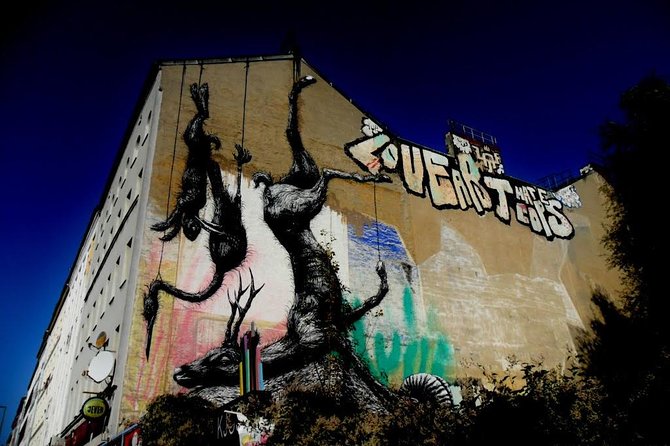
Kreuzberg is easy to visit badly. You can walk down Oranienstrasse, take a few photos, and leave with a blur of cafés, graffiti, and busy sidewalks. The useful part of this tour is the explanation of how the district changed and why its streets look and feel so different from Berlin’s grand central areas.
The walk covers Kreuzberg from the 19th century to the present. That long view matters. You are not seeing only a fashionable nightlife district. You are seeing an area shaped by working-class housing, migration, political activism, alternative culture, and redevelopment.
The tour also helps you read ordinary details. A courtyard is not just an attractive passage between buildings. A former hospital is not just an old façade. A house beside the former Wall can carry a story about protest, housing, and the unusual ways Berlin residents used leftover urban space.
I would choose this walk early in a Berlin visit if Kreuzberg is on your list. It can give you a useful frame for returning later on your own, especially for food, music, markets, and evening drinks.
More walking tours in Berlin:
- Discover Berlin Half-Day Walking Tour
★ 5.0 · 9,624 reviews - Berlin: Third Reich and Cold War 2 Hour Walking Tour
★ 4.9 · 6,830 reviews - Berlin: Discover Berlin Walking Tour
★ 4.9 · 5,998 reviews
Starting at Kottbusser Tor and entering SO36
The meeting point is Skalitzer Strasse 137, near Kottbusser Tor. This is a practical public transport area, but you should allow time to find the exact spot. Kottbusser Tor is not a quiet square where a guide is easy to spot from a distance. It is one of the city’s major multicultural gathering points, with heavy traffic and a wide mix of shops, cafés, restaurants, and nightlife venues.
From here, the route enters Kreuzberg’s SO36 district. The name refers to a former postal code and is now strongly tied to the area’s alternative identity. The walk explains the district’s cultural and architectural development instead of treating Kreuzberg as a single, uniform neighborhood.
One early stop is Club SO36, where the group spends about 10 minutes. Admission is free because this is an exterior and neighborhood-history stop, not a club visit with an event ticket. The point is to understand the role of music and nightlife in Kreuzberg’s public image.
This is a good place to ask questions about how the district moved from poor and neglected to popular and expensive. The tour does not promise a concert or special club access, so book it for context, not nightlife entertainment.
Oranienstrasse, courtyards, and alternative culture
Oranienstrasse is described as the heart of the SO36 district. It is also where the walk’s mix of history and present-day street life becomes most obvious. You pass the kind of cafés, bars, restaurants, and small businesses that make Kreuzberg feel distinct from Berlin’s museum quarter.
The guide discusses the area’s development in fashion, art, and music. Those subjects are useful here because Kreuzberg’s character is not held in one landmark. It is spread across storefronts, back courtyards, community spaces, nightlife venues, and buildings that have been used in changing ways.
A major benefit of walking with a guide is that you can pause in places you might otherwise hurry through. Typical Berlin courtyards are part of the route, and their design helps explain how dense urban housing worked in earlier periods. I would pay attention to the relationship between the front street and the interior spaces. The tour is at its best when it connects those physical details to everyday life.
The route also includes former squatted house projects. These are important for understanding Kreuzberg’s modern political and cultural identity. The tour presents them as part of the area’s development, rather than as isolated curiosities. You should expect discussion of housing, protest, art, and changing use of space, though the supplied details do not identify which specific buildings you will enter. Plan on viewing sites from public streets unless the guide says otherwise.
Rio-Reiser-Platz and the Schokoladenfabrik area
The next listed stop is Rio-Reiser-Platz, with Heinrichplatz and the Frauen Zentrum Schokoladenfabrik included in the same part of the route. The stop lasts about 10 minutes and is free.
This section adds another layer to Kreuzberg’s alternative culture. The reference to Schokoladenfabrik points to a women’s center, while Rio-Reiser-Platz connects the neighborhood with music and cultural memory. Together, these places show that Kreuzberg’s identity was built by more than bars and clubs.
I like this stop because it gives the tour a social side. A visitor who sees only painted walls and busy restaurants can miss the community organizations and political spaces that shaped the district. If you are interested in Berlin’s postwar culture, urban activism, or independent arts scene, listen closely here.
The tour’s short stop times also tell you what kind of experience this is. Ten minutes is enough for an explanation and a look around, but not for a long visit inside each place. This is a moving neighborhood walk, not a series of museum tours.
A few more Berlin half-days to weigh up
- Berlin Highlights 3-Hour Bike Tour
★ 5.0 · 948 reviews - Berlin Highlights: 3-Hour Bike Tour
★ 4.9 · 809 reviews - Berlin: 3-Hour Street Art Tour
★ 4.7 · 778 reviews - Berlin: 3-Hour Secret Food Tour
★ 4.8 · 269 reviews
Mariannenplatz, Bethanien, and St. Thomas Church
As the walk continues toward Mariannenplatz, it brings together architecture, social history, and the legacy of the former Berlin Wall. The Arthouse Bethanien is a historic hospital building beside the former Wall. Its current use connects an older structure with Berlin’s art scene.
This is one of the route’s strongest ideas: Kreuzberg’s past has not been packed away in a museum. Older buildings keep changing roles. A hospital can become an arts venue, and former conflict zones can become part of a normal neighborhood walk.
St. Thomas Protestant Church is another stop along the way. The tour includes it as part of the district’s architectural and cultural story. You should not expect a long church interior visit unless the guide confirms one. The value here is the setting and the connection between the church, the surrounding streets, and the neighborhood’s changing population.
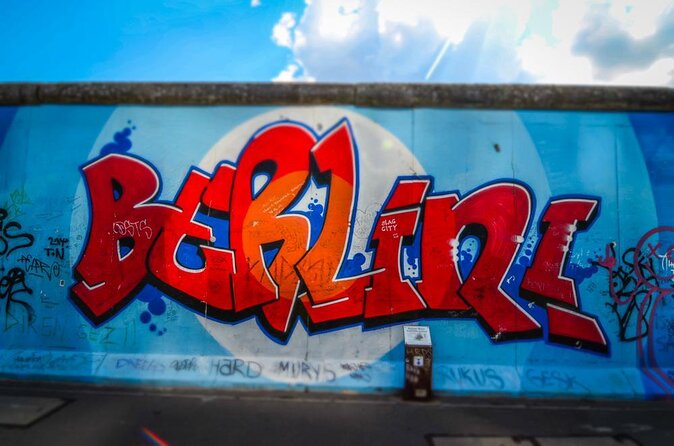
The former Berlin Wall is also treated as part of the local story rather than as a distant monument. One unusual sight is a treehouse built next to the Wall. It is the sort of detail that is easy to miss without someone pointing it out and explaining why it matters.
Gorlitzer Park and the route’s open-air pause
Görlitzer Park receives about 15 minutes on the listed itinerary. The park is a change of pace after dense streets, courtyards, and building façades. It also gives the guide room to talk about how open public spaces fit into Kreuzberg’s daily life.
You should keep your expectations practical. This is not a dedicated park tour or a long rest stop. It is one part of a route that also includes history, architecture, music, and local culture. The park is useful as a place to see Kreuzberg beyond its main commercial streets.
The tour also passes Wiener Strasse and other parts of the district before continuing toward the eastern end of the route. Since the walk covers a lot in three hours, wear comfortable shoes and avoid bringing anything that makes walking awkward. The information provided does not state the exact walking distance, so I would not plan another timed activity immediately afterward.
Market Hall Nine and the food break
A break at Market Hall Nine is included. This is a welcome practical stop because Kreuzberg’s food culture is one of its major attractions, and the market gives you a chance to see that side of the district during the tour.
Food and drinks are not included in the $22.45 price. Bring money if you want to buy something, but do not assume you need to purchase a meal for the tour to work. The break is part of the experience, not an included tasting program.
Market Hall Nine also makes the route useful for planning your own Kreuzberg time. You can note the location, ask the guide about the surrounding area, and return later if you want a slower visit. Because market schedules can vary, the supplied information does not promise a specific selection of stalls or a particular market event on your date.
What the $22.45 price really buys
At $22.45 per person, this is a reasonably priced introduction to Kreuzberg. You are paying for about three hours with a local guide, a small group, and a route that covers several parts of the district. The price does not include food, drinks, or transport to and from the meeting points.
The value depends on your interest. If you only want a quick walk past the main bars and restaurants, you can explore much of Kreuzberg independently. If you want the connections between 19th-century development, migration, squats, music, art, public housing, and the Wall, the guide adds useful value.
The group limit matters here. Twelve people is small enough for the guide to keep the group together without making every explanation feel like a public speech. It also gives you a better chance to ask about places that catch your eye.
This is not a ticketed attraction tour with major admission costs. The listed stops are free, and the experience is mainly about interpretation and route planning. That keeps the price low, but it also means the guide’s timing and communication matter a great deal.
Timing, meeting points, and one organization concern
The tour begins at Skalitzer Strasse 137 and ends at Oberbaumbrücke. That one-way format is helpful if you plan to continue toward the bridge afterward, but it is less convenient if your hotel or next activity is back near Kottbusser Tor.
The tour is near public transport, and most people can participate. Since no hotel pickup or drop-off is included, you need to reach the start independently. A mobile ticket is provided, and confirmation is issued when you book.
One practical warning deserves attention. A reported outing involved a wait of roughly 25 minutes for the guide, while another guide serving a different group happened to be nearby and provided some information. The tour operator should have a better meeting process, so I would arrive early, keep the confirmation available, and contact the provider if the guide is not present at the stated time.
The tour can also be canceled if the minimum number of participants is not reached. On one date affected by a BVG strike, the guide arrived but the other participants did not, and the outing was canceled. Public transport disruptions are unusual, but this is a reason not to schedule a tight connection right after the walk.
Free cancellation is available until 24 hours before the start time. Changes or cancellations inside that window are not accepted for a refund.
Who will get the most from this Kreuzberg walk
I would recommend this tour to first-time Berlin visitors who want more than central monuments. It suits anyone curious about neighborhood change, alternative culture, architecture, migration, music, and the former Wall.
It is also a good choice if you prefer a small group and a guide-led introduction before exploring independently. The route gives you several useful places to revisit, including Oranienstrasse, Market Hall Nine, Gorlitzer Park, and Oberbaumbrücke.
You may want something else if you need a slow, highly structured sightseeing tour with long interior visits. The pace covers many places, and the stop times are short. It is also not a food tour, club tour, or private tour.
The overall rating is 4.2 from 11 ratings, which suggests a generally positive but not flawless experience. The strongest value comes from the subject and route. The main risk lies in guide punctuality and occasional cancellation caused by low attendance or transport disruption.
Should you book it?
Book this walk if you want a low-cost introduction to Kreuzberg’s past and present, especially if SO36, street culture, former squats, and Berlin Wall history interest you. The small group and wide-ranging route make it a sensible first look at the district.
Skip it if you want guaranteed food tastings, club entry, extensive museum time, or a round-trip route. For the best experience, book it early in your Berlin stay, arrive at Skalitzer Strasse 137 with extra time, and keep your afternoon flexible after the three-hour walk.
FAQ
How long is the Kreuzberg walking tour?
The tour lasts approximately three hours.
Where does the tour begin?
It begins at Skalitzer Strasse 137, 10999 Berlin, near Kottbusser Tor.
Where does the tour end?
The walk ends at Oberbaumbrücke, 10243 Berlin.
How many people can join the tour?
The maximum group size is 12 travelers.
Is the tour offered with a mobile ticket?
Yes. A mobile ticket is provided.
Is food included in the price?
No. Food and drinks are not included, although the tour includes a break at Market Hall Nine.
Is hotel pickup included?
No. Hotel pickup and drop-off are not included.
What places are covered?
The route includes SO36, Rio-Reiser-Platz, Heinrichplatz, the Frauen Zentrum Schokoladenfabrik area, Gorlitzer Park, Oranienstrasse, Berlin courtyards, former squatted house projects, Mariannenplatz, Arthouse Bethanien, St. Thomas Protestant Church, the treehouse beside the former Berlin Wall, Wiener Strasse, Market Hall Nine, and Oberbaumbrücke.
Does the tour require a minimum number of participants?
Yes. If the minimum is not reached, the tour may be canceled and you will be offered another date or experience, or a full refund.
Can I cancel for a full refund?
Yes, if you cancel at least 24 hours before the experience start time. Cancellations made less than 24 hours in advance are not refundable.
Just added around Berlin
- eSIM for Germany and 34 European Countries★ 4.5 · 16 reviews
- Your ticket to The Wall Museum Berlin★ 3.0 · 60 reviews
- Walking on the Wall: 3-Hour Tour in Berlin★ 4.5 · 34 reviews
- Rickshaw Tours Berlin – Groups of up to 16 people with several rickshaws★ 4.0 · 97 reviews
- Warnemuende Shore Excursion: Private Berlin Tour★ 4.5 · 27 reviews
- Love and War in Berlin: Self-Guided Story Puzzle Walk★ 5.0 · 7 reviews
- Warnemuende Shore Excursion: Berlin Private Sightseeing Tour from Rostock★ 5.0 · 4 reviews
- Cold War Berlin – Private Live Virtual Experience★ 5.0 · 4 reviews
Berlin Tours, compared.

Reichstag, Dome and Government District Guided Tour
Read our review →
1-Hour City Tour by Boat with Guaranteed Seating
Read our review →




Reichstag, Plenary Chamber, Cupola & Government Tour
Read our review →
Browse the lists this tour appears in