Review · BERLIN TOURS
Kreuzberg Private Walking Tour: Immigrants, Artists & Hipsters
Kreuzberg is where Berlin’s past and future collide. On this private walk, you move from the grand Oberbaumbrücke to Berlin Wall remnants, Turkish shops, street art, cafes, and the contested edges of new development. The neighborhood feels less polished than central Berlin, and that is much of the point.
I like the private format, which lets your historian guide adjust the walk to your interests. I also like the blend of street art, immigrant culture, and Cold War history. Guide Klaus gets special praise for keeping a relaxed pace and knowing where to find good spaetzle.
The main drawback is practical: this is not a fully self-contained walk. You will need public transport between some sites, and food, drinks, and any optional bike rental cost extra. At $450 per group, it offers good value for a larger party, but it is expensive for one or two people.
Key points to know before booking
- Kreuzberg’s story is the main attraction: Learn how workers, immigrants, artists, anarchists, and Cold War politics shaped the district.
- The route covers major local markers: Oberbaumbrücke, Berlin Wall remnants, Oranienstraße, SO36, and Viktoriapark all appear during the three-hour outing.
- A private historian leads the way: Your guide can respond to your interests and set a pace that works for your group.
- Public transport is part of the plan: Some distances are too long to walk comfortably, so bring a valid transit ticket or budget for local fares.
- The tour suits groups best: The $450 price covers up to 10 people, making the per-person cost far more reasonable with family or friends.
- Kreuzberg’s future gets as much attention as its past: You will hear how riverside development may speed up gentrification.
Why Kreuzberg makes such a good Berlin walk
Kreuzberg is not a single, tidy story. It began as a 19th-century workers’ district, suffered heavy wartime damage, became part of West Berlin, and later developed a reputation for squats, protest, immigration, nightlife, and alternative culture.
That mixture still shapes the streets. You might pass a Turkish business, a wall covered in large-scale art, a small cafe, and a new retailer within a short stretch. The appeal is not simply that Kreuzberg looks different from central Berlin. It is that the neighborhood shows how cities change, and who gains or loses when they do.
A historian guide adds useful context that you will miss on a casual stroll. Instead of seeing only painted walls and busy cafes, you can connect them to abandoned buildings, cheap postwar housing, border controls, and the rise of creative communities.
The private setting matters here. Kreuzberg rewards questions. You may want to ask about immigration, street art, Berlin’s divided years, or the pressure from new riverside construction. A guide can spend more time on the subjects that matter to your group instead of following a fixed public-tour script.
More walking tours in Berlin:
- Discover Berlin Half-Day Walking Tour
★ 5.0 · 9,624 reviews - Berlin: Third Reich and Cold War 2 Hour Walking Tour
★ 4.9 · 6,830 reviews - Berlin: Discover Berlin Walking Tour
★ 4.9 · 5,998 reviews
Starting near Schlesische Straße and Oberbaumbrücke
The meeting point is Schlesische Str. 18, near public transport in eastern Kreuzberg. The walk begins around the Oberbaumbrücke, the handsome double-decker bridge crossing the Spree River.
The bridge is more than a photogenic starting point. It helps set up the story of SO36, the eastern part of Kreuzberg named after its former postal code. From here, your guide can place the district on the map and explain how the Spree, the former Berlin Wall, and the old boundary between East and West shaped local life.
Allow a little time to look closely at the bridge itself. Its red brick towers and arched design give it a strong medieval appearance, even though it belongs to the modern history of Berlin. The upper level carries the U-Bahn, while the lower level serves road traffic and pedestrians.
Because the tour is on foot, comfortable shoes are essential. The route covers several parts of Kreuzberg, and the distances between key points can be too great for an easy continuous walk. Public transport is included in the practical rhythm of the tour, but its cost is not included in the $450 price.
Berlin Wall traces among street art and empty plots
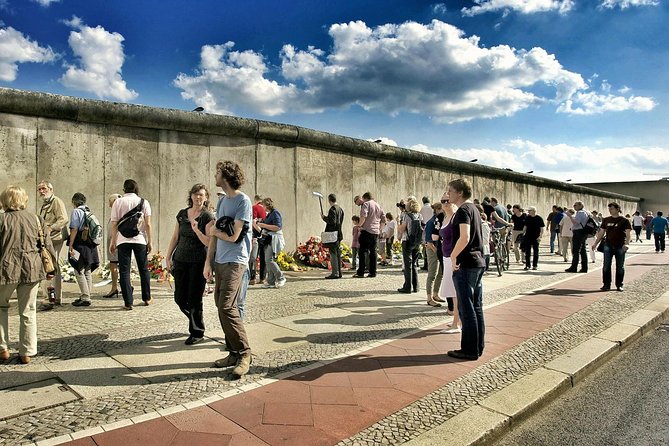
One of the most worthwhile sections focuses on what remains of the Berlin Wall. Kreuzberg was once right on the edge of West Berlin, and the Wall passed through areas that later became famous for art, protest, and alternative culture.
Do not expect a long, perfectly preserved section like the East Side Gallery. The appeal here is often more fragmented. Your guide points out remaining traces and explains how the Wall cut through ordinary neighborhoods, leaving behind awkward gaps, vacant plots, and buildings with uncertain futures.
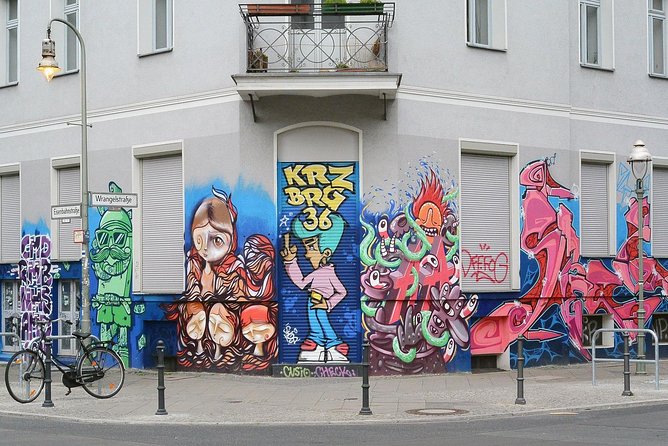
Those abandoned or underused spaces helped give artists room to work. Over time, walls became canvases, neglected plots became creative sites, and the district drew people looking for cheaper space and fewer rules. This is a useful way to understand Kreuzberg’s visual character without treating street art as decoration alone.
The art can change, disappear, or be painted over. That is part of the experience, but it also means the exact details of the route may shift. Your guide’s local knowledge is especially useful here because the meaning of a wall often depends on its location and what stood there before.
Oranienstraße and the SO36 district
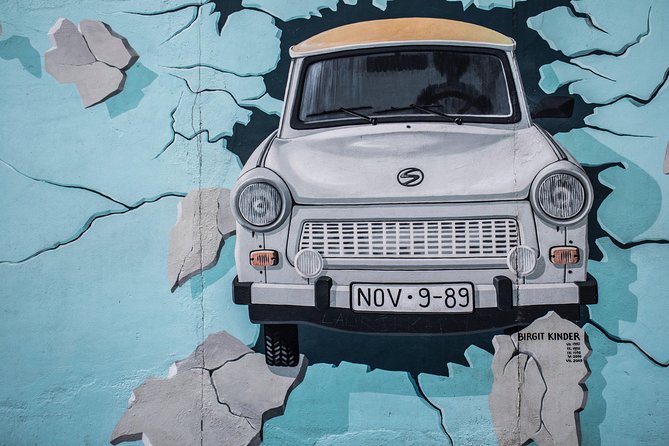
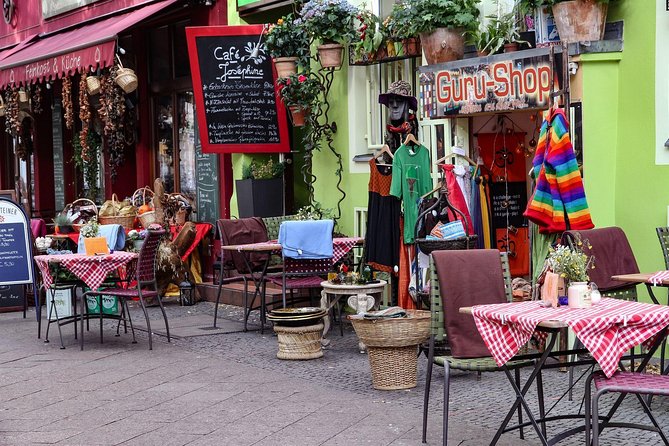
Oranienstraße is one of the best-known streets in Kreuzberg. It is lined with cafes, small shops, and eclectic businesses, giving you a more everyday view of the district than a row of major monuments would.
The street takes its name from the Dutch princely House of Orange. It is also tied to historic clashes between anarchists and police around the turn of the 20th century. That background helps explain why Kreuzberg has long carried a reputation for political energy and resistance.
The SO36 label refers to the former postal code for the eastern section of Kreuzberg. You will hear about the area’s rougher past, its working-class roots, and the role of immigrants in shaping the local economy and food culture.
This is where the tour’s focus on Turkish culture becomes especially concrete. The district is known for Turkish businesses, market goods, and varied food options. You are not simply looking at a neighborhood that has been branded as trendy. You are seeing a place shaped by people who built shops, restaurants, homes, and community life here.
Food is not included, but it can add a lot to the outing. Klaus was specifically praised for knowing where to find good spaetzle, so it is worth asking him for a food suggestion. Just make clear at booking or at the start if culinary stops are important to you, since the listed experience does not promise a meal or tasting.
A few more Berlin half-days to weigh up
- Berlin: Reichstag, Dome and Government District Guided Tour
★ 4.7 · 18,288 reviews - Berlin: 1-Hour City Tour by Boat with Guaranteed Seating
★ 4.3 · 16,993 reviews - Berlin: Boat Tour Along the River Spree
★ 4.4 · 11,252 reviews - Berlin: Hop-on Hop-off Bus Tour with Live Commentary
★ 4.3 · 8,579 reviews
Viktoriapark, a quieter change of pace
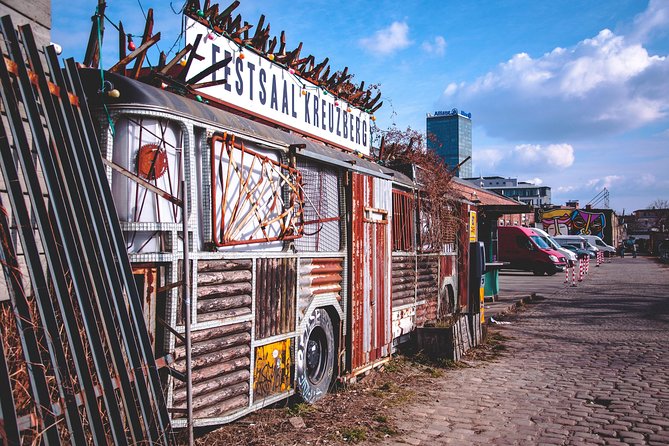
Viktoriapark brings a different mood to the route. After streets filled with political history, businesses, and painted walls, this popular green space gives you room to slow down.
The stop is listed at about 20 minutes, so do not expect a long park visit or a separate nature walk. Instead, think of it as a useful pause and another way to see Kreuzberg. The district is not only cafes, nightlife, and controversy. It also has places where residents can get away from traffic and dense city blocks.
A short stop in the park may be especially welcome if you are traveling with a child or need a break from urban walking. One past booking included a 12-year-old, and the family found the neighborhood’s history and highlights interesting. The private format also helps here because the guide can respond to your group’s pace rather than pushing everyone forward at the same speed.
What the tour says about gentrification
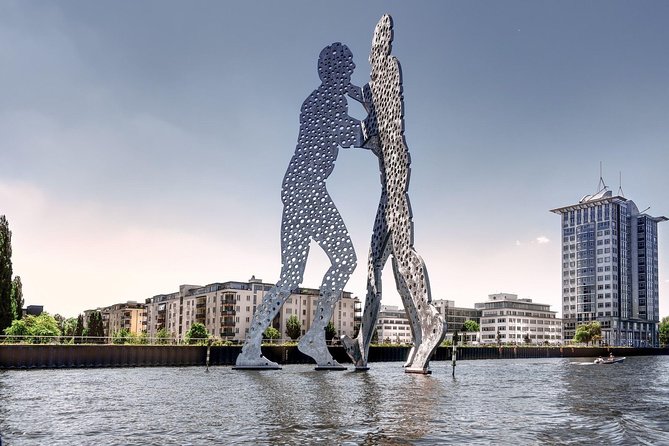
The strongest feature of this experience is its attention to Kreuzberg’s future. Many walks explain the past and then end with a few photographs. This one asks what happens next.
Kreuzberg has attracted artists and people seeking affordable space. Its immigrant businesses and counterculture helped make it appealing. That same appeal now draws investment, new retailers, and development pressure. As property and commercial interest rise, the people and businesses that gave the neighborhood its character may find it harder to remain.
The riverside development project is a key part of this discussion. Your guide explains how planned construction may speed up changes along the Spree and encourage further gentrification.
This does not mean you will receive a simple good-versus-bad answer. The value is in seeing the tradeoffs. New development can bring investment and improved spaces, but it can also push out established communities and change the feel of local streets.
I find this part especially useful for visitors who want more than a list of places to photograph. Kreuzberg is a living neighborhood, not an open-air museum. The tour helps you think about how your own visit fits into those changes.
The private guide advantage
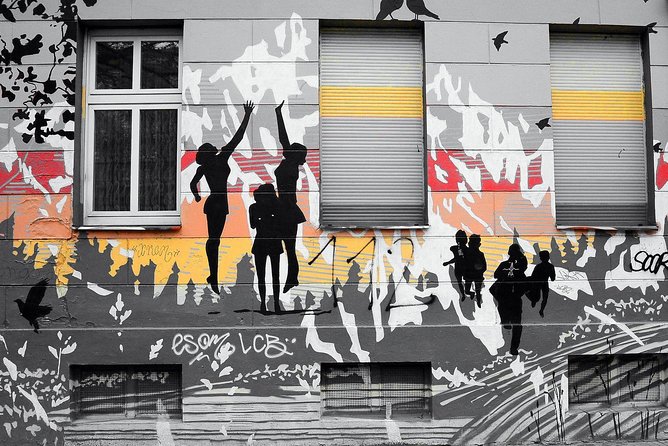
A private tour for up to 10 people can feel very different from a large group walk. You can ask direct questions, stop briefly when something catches your eye, and tell the guide what matters to you.
Guide Klaus receives particularly strong praise for being friendly, fun, and able to match the pace and interests of the people he leads. That is important in Kreuzberg because the experience can lean in several directions. One group may want Cold War history. Another may care more about Turkish culture, architecture, street art, food, or current development.
The guide is a historian, so the tour’s strength is explanation rather than entertainment alone. Expect a walk built around context, with the neighborhood itself serving as the main exhibit.
The tour is offered in the morning or afternoon. A morning departure may work better if you want to continue exploring Kreuzberg afterward, while an afternoon start can fit well around other Berlin sightseeing. Since availability is limited to a maximum of 10 people, book ahead if you need a particular time. The experience is booked on average about 10 days in advance.
Is $450 a fair price for three hours?

The price is $450 per group, not per person, with a maximum of 10 people. That works out to $45 per person if you fill every place. For six people, it is $75 each. For two people, it becomes $225 per person, which is a much bigger decision.
The value depends on what you want from a Berlin tour. If you are traveling with family or friends and want a private, flexible history walk, the price is reasonable compared with booking several separate activities. You are paying for a historian guide, a customized pace, and direct access to a local perspective.
If you are alone or a couple watching expenses, a shared walking tour may offer better value. This experience does not include food, drinks, public transport, or the optional bike rental, which costs 10 euros per person. Those extras are not large compared with the tour price, but you should add them to your day’s budget.
The group limit of 10 is a useful middle ground. You get privacy without needing to organize a very large party. The experience makes the most financial sense for families, friend groups, or small organizations that can divide the cost.
Who should book this Kreuzberg walk?
I would choose this tour if you have already seen Berlin’s central landmarks and now want to understand one of its most complicated neighborhoods. It is also a strong choice if you prefer local history, social questions, and street-level details to grand museums.
Families can benefit from the private pace. The experience has enough visual interest to hold a young person’s attention, especially if the guide connects the Wall, art, immigrant culture, and neighborhood conflict in a clear way.
It also suits visitors with specific interests. Tell the guide if you care most about:
- Berlin’s divided past and Wall remnants
- Turkish businesses and food culture
- Street art and creative spaces
- Anarchist and protest history
- New riverside development
- Local cafes, markets, and shops
I would not pick it if you want a fully planned food tour, a museum visit, or a long nature walk. It is also not the right fit if you dislike using public transport during an organized excursion. Some key sites are too far apart to reach comfortably on foot.
You should receive confirmation within 48 hours, subject to availability. Free cancellation is available if you cancel at least 24 hours before the start time. Changes or cancellations inside that window are not accepted for a refund.
Should you book the Kreuzberg Private Walking Tour?
Book it if you want Berlin explained through one neighborhood rather than reduced to a list of famous sights. The mix of Wall history, immigrant culture, street art, green space, and development gives the three hours a clear purpose.
The best value comes when you share the $450 group price with several people. Ask for Klaus if guide availability allows, especially if you want a relaxed pace and useful food advice. Bring comfortable shoes, plan for public transport, and arrive ready to look beyond the postcard version of Berlin.
FAQ
How long is the Kreuzberg Private Walking Tour?
The tour lasts approximately three hours.
How many people can join the private tour?
The private tour has a maximum of 10 travelers.
What locations are visited?
The route includes Kreuzberg, Berlin Wall remnants, the SO36 area, Oranienstraße, Viktoriapark, and Oberbaumbrücke.
Is public transportation included?
No. You need to use public transport between some sites, and those costs are not included.
Are food and drinks included?
No. Food and drinks are not included unless specifically stated. An optional bike rental is available for 10 euros per person.
Where does the tour start and when can I go?
The tour starts at Schlesische Str. 18, 10997 Berlin, Germany. Morning and afternoon departures are available, and you should state your preferred time when booking.
Just added around Berlin
- eSIM for Germany and 34 European Countries★ 4.5 · 16 reviews
- Your ticket to The Wall Museum Berlin★ 3.0 · 60 reviews
- Rickshaw Tours Berlin – Groups of up to 16 people with several rickshaws★ 4.0 · 97 reviews
- Warnemuende Shore Excursion: Private Berlin Tour★ 4.5 · 27 reviews
- Walking on the Wall: 3-Hour Tour in Berlin★ 4.5 · 34 reviews
- Love and War in Berlin: Self-Guided Story Puzzle Walk★ 5.0 · 7 reviews
- Warnemuende Shore Excursion: Berlin Private Sightseeing Tour from Rostock★ 5.0 · 4 reviews
- Cold War Berlin – Private Live Virtual Experience★ 5.0 · 4 reviews
Berlin Tours, compared.
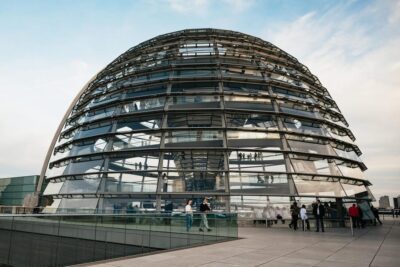
Reichstag, Dome and Government District Guided Tour
Read our review →
1-Hour City Tour by Boat with Guaranteed Seating
Read our review →
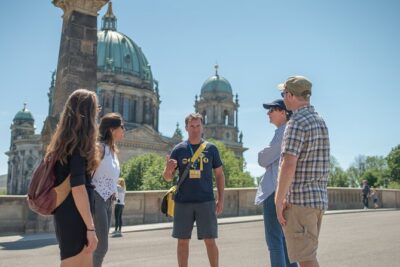
Reichstag, Plenary Chamber, Cupola & Government Tour
Read our review →