Review · BERLIN TOURS
Kreuzberg Walking Tour: Immigrants, Artists & Hipsters
Kreuzberg tells Berlin’s story in fast-forward: a Cold War border district, an immigrant neighborhood, an artists’ refuge, and now one of the city’s trendiest quarters. This tour links those changes through the Oberbaumbrücke, Berlin Wall remains, Görlitzer Park, and Markthalle 9, rather than treating Kreuzberg as just a backdrop for pretty photographs.
I like the small-group format, capped at six for the tour itself, and I like the focus on conversation with an art historian guide. Peter and Ronan are named as guides, and both bring the sort of personal, thoughtful approach that helps you discuss difficult subjects rather than simply collect dates. The main drawback is the price, $153.85 per person, especially since public transport, food, and optional bicycle rental cost extra.
Key points at a glance
- A Cold War neighborhood with a complicated present: Learn how Kreuzberg changed from a marginal district beside the Wall into a fashionable cultural center.
- A walking tour with a bicycle option: Walking lets you take your time, while the optional bike covers more ground within the district.
- Food is part of the story: Turkish shops, markets, spices, flowers, and Gözleme help explain Kreuzberg’s immigrant culture.
- Art is treated as history, not decoration: Graffiti, abandoned buildings, vacant plots, and creative reuse all have a place in the discussion.
- A genuinely small group: The advertised tour includes no more than six people, though booking information also lists larger limits for some arrangements.
- A useful final debate: The tour ends by looking at controversial development plans along the river, where Berlin’s past meets its economic future.
Why Kreuzberg makes such a good Berlin walk
Many first visits to Berlin center on the Brandenburg Gate, Museum Island, and the remains of the Wall near Bernauer Strasse. Those places matter, but Kreuzberg gives you a more lived-in view of the city. Here, history appears in old buildings, immigrant businesses, political arguments, painted walls, and the changing use of land.
The district once sat on the western edge of West Berlin, close to the Wall and surrounded on several sides by East Berlin. That position helped create its rough, isolated character. It also drew artists, political radicals, immigrants, musicians, and people who could not or did not want to fit into more orderly parts of the city.
Your guide’s job is to connect those threads. You are not simply shown a mural or a market hall. You are encouraged to think about why these things appeared here, who used the area first, and what may be lost as rents and investment rise.
That makes this a good choice if you already know Berlin’s major sights and want a neighborhood tour with more social and political context. It also works early in a Berlin visit, since the guide can suggest ways to spend the rest of your time in the city.
More walking tours in Berlin:
- Discover Berlin Half-Day Walking Tour
★ 5.0 · 9,624 reviews - Berlin: Third Reich and Cold War 2 Hour Walking Tour
★ 4.9 · 6,830 reviews - Berlin: Discover Berlin Walking Tour
★ 4.9 · 5,998 reviews
Starting across the Oberbaumbrücke
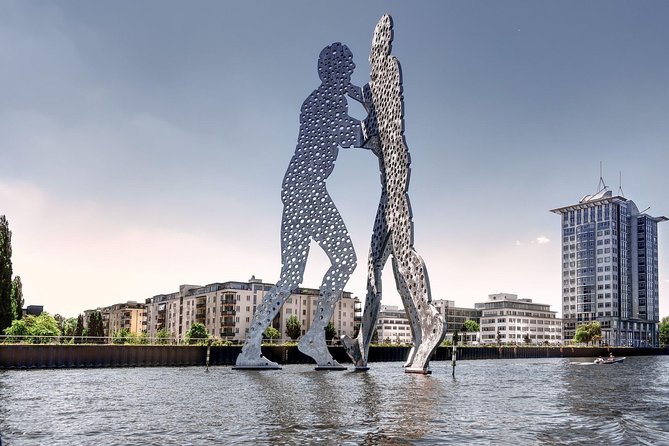
The walk begins at Schlesische Strasse 18, near public transportation, and quickly heads toward the Oberbaumbrücke. This handsome bridge crosses the Spree and is one of the most recognizable links between Kreuzberg and Friedrichshain.
The bridge is more than a scenic opening. It represents the former division between East and West Berlin and the way the two districts have been tied together since reunification. Starting here gives you an immediate sense of the district’s position beside the river, the old border, and the changing city beyond.
If you choose the bicycle version, the opening route remains within Kreuzberg but covers more ground. The bicycle is not included, and rental costs 10 EUR per person. That extra cost may be worthwhile if you enjoy cycling and want to see more of the district during the three-hour time limit.
The walking version is the better fit if you want to stop often, ask questions, or examine street art and buildings closely. You will also use public transportation several times, because some of the key sites are too far apart to reach comfortably on foot.
SO36 and the hard edges of old Kreuzberg
From the bridge, the tour moves through the main streets of SO36. The name refers to an old postal code, but it also carries a strong local identity. This part of Kreuzberg was once seen as a neglected border zone, cut off from much of West Berlin by the Wall and shaped by poverty, immigrant communities, protest movements, and alternative culture.
Your guide places the district’s famous visitors and residents in that setting. Rock legends came through during the Cold War, drawn by Kreuzberg’s unusual mix of freedom, disorder, and distance from the city’s polished center. The point is not to turn that period into a romantic tale. The area’s roughness brought real hardship as well as creative energy.
I appreciate that the tour does not stop at the easy image of Kreuzberg as a cool place for nightlife and street art. You get a look at the forces that made the neighborhood attractive to artists in the first place, along with the social pressures that continue to shape it.
Expect discussion rather than a long string of dates. Guides such as Peter and Ronan are described as patient conversationalists, so this is a tour where your questions can influence the pace and direction of the talk.
Berlin Wall traces and creative reuse
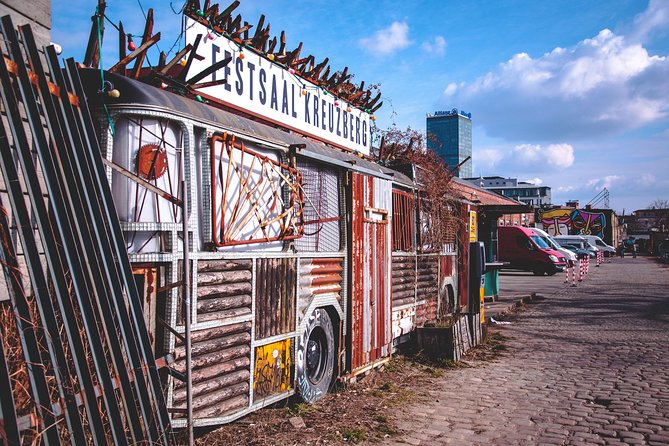
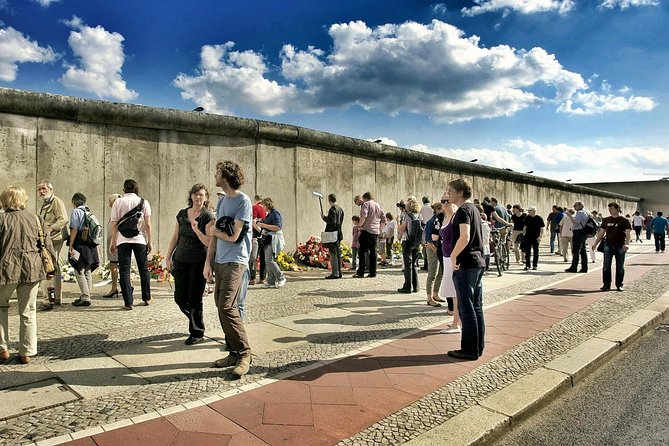
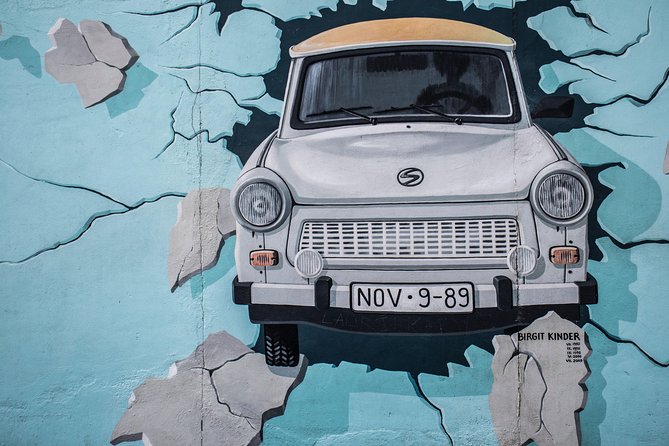
The Wall is not always present in the form people expect. In Kreuzberg, you may see surviving sections, traces of the former border, and spaces whose shape still reflects the old division. Your guide helps you read those details instead of treating the Wall as a single monument.
The tour also looks at abandoned buildings and unused plots that found new purposes. Such spaces became studios, gardens, gathering places, or informal cultural sites. Their importance lies in the freedom they offered, but also in the arguments they created over ownership, safety, planning, and development.
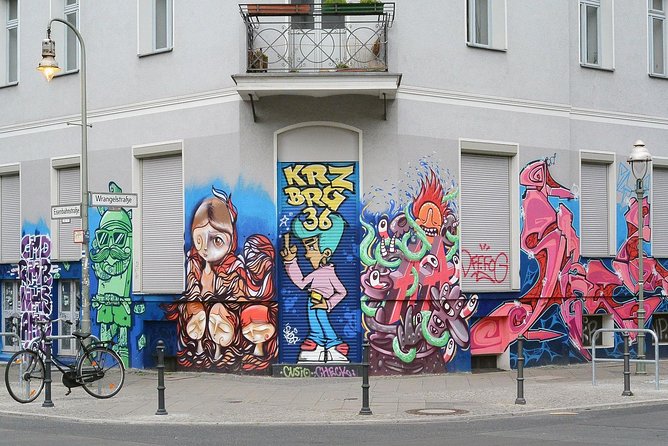
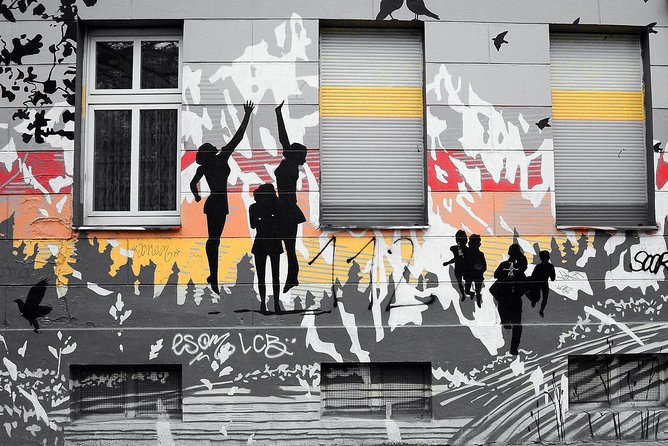
This is where the art historian guide adds value. Graffiti and street art are not presented merely as colorful extras. They are part of how Kreuzberg expresses political views, neighborhood identity, humor, anger, and resistance to commercial control.
You should keep an open mind about what counts as art here. Some work may be large and carefully planned. Some may be rough, temporary, or difficult to interpret. The tour’s strength is the context, especially when your guide explains how public walls and vacant spaces became a form of local conversation.
A few more Berlin half-days to weigh up
- Berlin: Reichstag, Dome and Government District Guided Tour
★ 4.7 · 18,288 reviews - Berlin: 1-Hour City Tour by Boat with Guaranteed Seating
★ 4.3 · 16,993 reviews - Berlin: Boat Tour Along the River Spree
★ 4.4 · 11,252 reviews - Berlin: Hop-on Hop-off Bus Tour with Live Commentary
★ 4.3 · 8,579 reviews
Görlitzer Park and Markthalle 9
Görlitzer Park offers a change of pace. After the denser streets and heavier political history, the park gives you room to see how residents use open space in the middle of the district. Its graceful setting also helps explain why Kreuzberg attracts both long-time residents and newer arrivals.
The park is not treated as a perfect urban retreat. Like many central city parks, it is part of larger debates about public space, safety, policing, and who gets to feel at home there. That mix of beauty and friction fits the tour’s larger aim: showing Kreuzberg as a real district, not a carefully staged attraction.
The route then reaches Markthalle 9, a 120-year-old market hall. This is one of the most practical stops because it brings history, food, and current neighborhood life into the same place. You can see how an old market building continues to serve a changing population.
Food is not included in the tour price, but you may want to budget for a small purchase. The tour’s food angle is not a formal tasting menu. Instead, it uses everyday eating to help you understand the people and businesses that shaped Kreuzberg.
Turkish markets, Gözleme, and everyday culture

Kreuzberg’s Turkish influence appears in shops, market stalls, flowers, spices, and takeaway food. The tour gives this culture proper weight, treating it as one of the foundations of the neighborhood rather than a colorful side note.
You may have the chance to sample Gözleme, a fried flatbread filled with ingredients such as spinach and cheese. Food purchases are optional and paid separately, so you can choose what suits your appetite and budget.
This part of the route is especially useful if you want to move beyond Berlin’s formal museums. Markets show how a city changes through ordinary businesses and family traditions. They also make the tour more sensory: you see the colors, smell the spices, and watch the daily rhythm of local commerce.
Still, keep the price in mind. At $153.85 per person, this is not a bargain food walk. You are paying mainly for the guide’s interpretation and the small-group setting. If you want a long list of tastings, this is probably the wrong product. If you want food placed inside a wider story about migration and city life, it makes more sense.
The riverfront and Kreuzberg’s next chapter
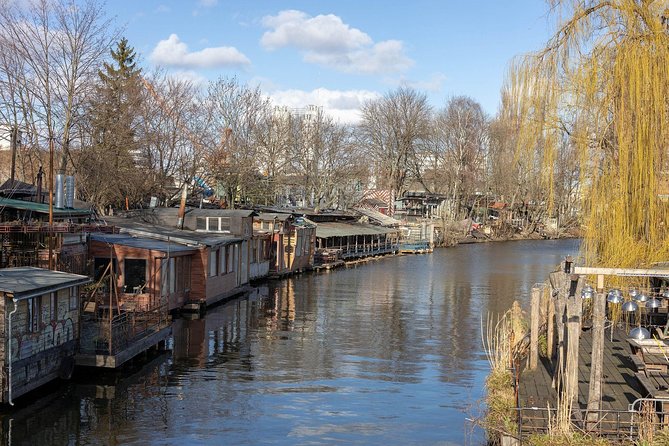
The final part turns to proposed development along the river. These plans are controversial because riverside land is valuable, while local communities often want public access, affordable space, and protection for existing cultural uses.
Ending here is smart. You begin with a bridge tied to Berlin’s division and finish with a riverfront tied to Berlin’s future. In between, you see the effects of reunification, migration, art, tourism, and investment.
The discussion may be more useful than a neat final viewpoint. Kreuzberg’s future cannot be reduced to good or bad change. New investment can bring repairs, jobs, and public improvements, but it can also push out the people and informal spaces that gave the district its identity.
If you enjoy urban planning and current affairs, this closing conversation may be one of the strongest parts of the tour. If you prefer a lighter sightseeing walk, the political discussion could feel demanding after three hours.
Walking or cycling: which version fits you?
The standard format is on foot, and that is the choice I would make if this is your first visit to Kreuzberg. Walking gives you time to notice small details and makes conversation easier. It also suits the tour’s emphasis on street art, markets, and the character of individual streets.
The bicycle option covers more ground but still stays within Kreuzberg. It costs 10 EUR per person for rental, in addition to the tour price. Choose it if you are comfortable cycling and want a broader view of the district.
You will need public transportation several times even on the walking tour. That is worth knowing before booking, since the experience is not a single continuous stroll from one nearby sight to the next. Bring a valid way to pay for transit, wear comfortable shoes, and allow enough time for the full three-hour outing.
The tour is offered in English. Children must be accompanied by an adult, and most people can participate according to the supplied activity information.
Group size, guides, and overall value
The advertised small-group format is a major advantage. A group of six gives you a better chance to hear the guide, ask about sensitive topics, and pause when something catches your attention. The booking details also refer to a maximum of eight people per booking and up to ten participants for the activity, so confirm the exact group size when you reserve.
The professional art historian guide is central to the experience. Peter is praised for his insider perspective, local affection, and useful suggestions for the rest of a Berlin visit. Ronan is noted for patience, careful discussion, and the ability to answer questions from someone who had already lived in Berlin for three years.
That tells you something important about the tour’s level. It is not designed only for first-time visitors. Someone who knows Berlin can still gain new angles on Kreuzberg, especially through discussion of art, migration, and development.
At $153.85, the value depends on what you want. The fee is high for a three-hour neighborhood outing, and you still pay for transit, food, or a bike separately. On the other hand, the group is small, the guide has an art history background, and the tour covers subjects that are hard to understand from a guidebook paragraph.
Free cancellation is available if you cancel at least 24 hours before the start time. Changes or cancellations inside that window are not accepted for a refund.
Should you book the Kreuzberg tour?
Book it if you want a thoughtful look at Berlin beyond the postcard center. It suits people who care about migration, street art, Cold War history, and urban change, and who enjoy asking questions along the way.
I would especially recommend it to repeat visitors, culturally curious first-time visitors, and anyone who wants a neighborhood introduction before exploring Kreuzberg alone. Peter or Ronan may also help you shape the rest of your Berlin plans with local suggestions.
Skip it if you want a cheap food tour, a relaxed sightseeing loop with no public transit, or a tightly timed list of famous monuments. The price is substantial, and the subject matter can be serious.
For the right reader, this is a valuable three hours. You leave with more than photographs of painted walls and a market hall. You gain a clearer sense of why Kreuzberg looks as it does, who made it that way, and why its future remains open to debate.
FAQ
Where does the Kreuzberg walking tour begin?
The tour begins at Schlesische Str. 18, 10997 Berlin, Germany.
Where does the tour end?
The listed end point is Berlin, Germany. The exact final location is not specified beyond that.
How long does the tour last?
The tour lasts approximately three hours.
Is the tour offered in English?
Yes. The tour is offered in English.
Is this a walking tour or a bicycle tour?
It can be done on foot, and a bicycle version is also offered. The bicycle option covers more ground while remaining within Kreuzberg.
Is bicycle rental included?
No. Optional bicycle rental costs 10 EUR per person.
Is food included in the price?
No. Food and drinks are not included unless specifically stated. You may wish to purchase items such as Gözleme during the market portion of the route.
Will I need public transportation?
Yes. You will need to use public transportation several times because some key sites are too far apart to walk comfortably.
How large is the group?
The included small-group tour is listed as having a maximum of six people. The booking information also states a maximum of eight people per booking and up to ten travelers for the activity, so check the group arrangement when booking.
Can children join the tour?
Yes, but children must be accompanied by an adult. The activity information states that most people can participate.
Is hotel pickup provided?
No. Hotel pickup and drop-off are not included.
What is the cancellation policy?
You can cancel at least 24 hours before the local start time for a full refund. Cancellations or changes made less than 24 hours before the start time are not accepted for a refund.
Just added around Berlin
- eSIM for Germany and 34 European Countries★ 4.5 · 16 reviews
- Your ticket to The Wall Museum Berlin★ 3.0 · 60 reviews
- Walking on the Wall: 3-Hour Tour in Berlin★ 4.5 · 34 reviews
- Rickshaw Tours Berlin – Groups of up to 16 people with several rickshaws★ 4.0 · 97 reviews
- Warnemuende Shore Excursion: Private Berlin Tour★ 4.5 · 27 reviews
- Love and War in Berlin: Self-Guided Story Puzzle Walk★ 5.0 · 7 reviews
- Warnemuende Shore Excursion: Berlin Private Sightseeing Tour from Rostock★ 5.0 · 4 reviews
- Cold War Berlin – Private Live Virtual Experience★ 5.0 · 4 reviews
Berlin Tours, compared.
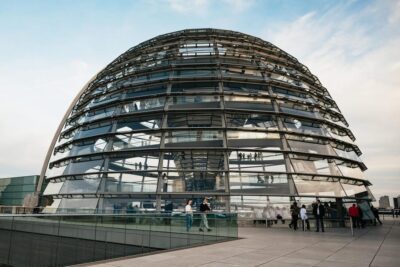
Reichstag, Dome and Government District Guided Tour
Read our review →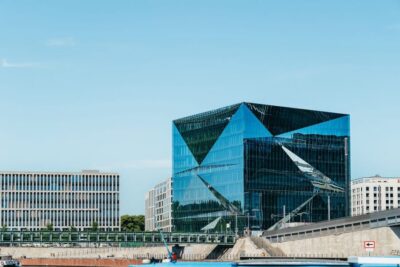
1-Hour City Tour by Boat with Guaranteed Seating
Read our review →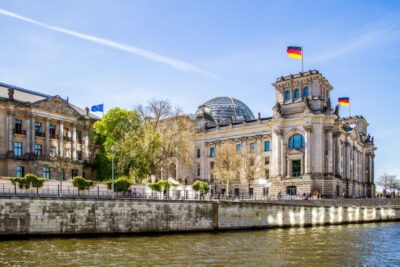
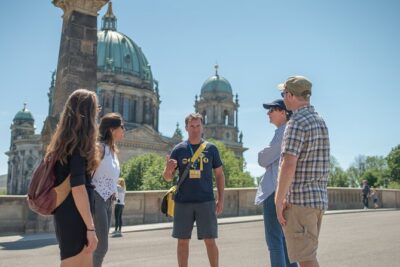
Reichstag, Plenary Chamber, Cupola & Government Tour
Read our review →