Review · BERLIN TOURS
In Search of Jewish Berlin Walking Tour
Berlin’s Jewish past comes into sharp focus on this three-hour walk through Mitte. You move from the grand New Synagogue and former Jewish institutions to memorials shaped by Nazi persecution, with a Jewish Studies scholar helping connect the places. The route shows both Jewish life and Jewish loss, rather than treating Berlin’s past as a string of isolated plaques.
I like the small group of no more than 10, which gives you room to ask questions and follow a subject that catches your interest. I also like the range of stops: the New Synagogue reflects 19th-century Jewish life and assimilation, while Block der Frauen and the Holocaust Memorial force you to consider courage, grief, and memory. The main drawback is the price, $156.53 per person, which is a serious investment for a three-hour walking tour.
Key points to know before you book
- The guide is the main attraction: Your host is a Jewish Studies scholar, professor, graduate student, or journalist, with past guides including Ioana N., Forrest, Lee, Heather, and Isabel Daniel.
- The tour is capped at 10 people: A small group makes discussion easier and can give the walk a more personal feel.
- You visit five important sites: The route includes the New Synagogue, Auguststrasse, Hackesche Höfe, Block der Frauen, and the Holocaust Memorial.
- The subject matter is serious: Expect a careful look at Jewish life, Nazi persecution, deportation, and the Holocaust.
- The walk covers several historical periods: You learn about Jewish life in Berlin from its medieval beginnings through the 19th century, the Nazi era, and the city’s present-day Jewish community.
- The route begins near public transportation: Meet at Rosenthaler Strasse 40/41 in Berlin, with the tour ending elsewhere in Berlin.
Why this walk gives Berlin more meaning
Berlin can feel like a city of fragments. A grand building may have a dark past. A quiet street may once have held schools, synagogues, shops, and homes. This tour helps you connect those pieces.
The focus is the Scheunenviertel, or Barn Quarter, in Berlin-Mitte, along with nearby sites linked to Jewish life and remembrance. You are not simply checking off monuments. You are learning how Jewish communities formed, adapted, suffered, survived, and began rebuilding in Berlin.
That range matters. Some Berlin tours focus almost entirely on the Nazi period. This one begins earlier, with Jewish life reaching back to the 12th century, then follows the changes brought by assimilation, modern city life, persecution, and postwar memory.
The guide makes a major difference. The company uses Jewish Studies scholars, professors, graduate students, and journalists. Past guides named by guests include Ioana N., who has studied the subject extensively and lived in Berlin for 17 years, Forrest, Lee, Heather, and Isabel Daniel, who was completing a Ph.D. related to the subject. The exact guide is not guaranteed, but the format is clear: expect a host who can explain context and handle questions rather than simply recite dates.
More walking tours in Berlin:
- Discover Berlin Half-Day Walking Tour
★ 5.0 · 9,624 reviews - Berlin: Third Reich and Cold War 2 Hour Walking Tour
★ 4.9 · 6,830 reviews - Berlin: Discover Berlin Walking Tour
★ 4.9 · 5,998 reviews
Starting near Rosenthaler Strasse
The meeting point is Rosenthaler Strasse 40/41, a central location near public transportation. That is useful in a city where getting to the right neighborhood can take more time than expected.
The tour lasts about three hours. The listed stops account for roughly 110 minutes, leaving the rest for walking between sites, discussion, and the guide’s explanations. Wear comfortable shoes and allow enough time to move at an unhurried pace. This is a walking tour, not a bus circuit, and the value comes from seeing how the sites relate to one another within the city.
The group limit is 10 people. That is small enough for the guide to hear your questions without turning every stop into a lecture delivered to a crowd. It also means the tone can change with the group. One group might focus on architecture, another on religious life, and another on the mechanics of Nazi persecution.
If you want a quick overview with little discussion, this may feel too slow or too serious. If you like asking questions and thinking through difficult subjects, the format is a good match.
The New Synagogue and the idea of Jewish belonging
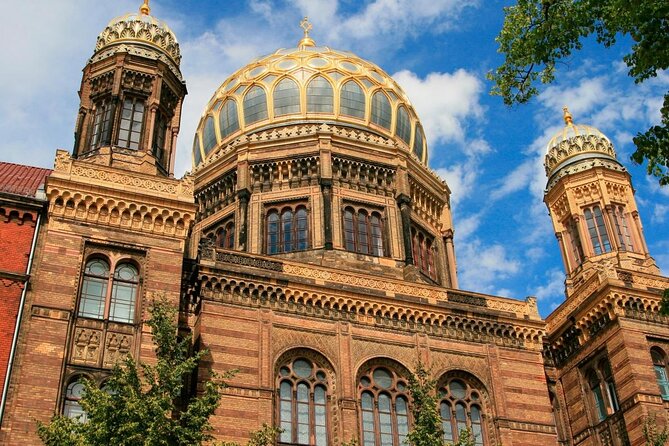
The first major stop is Stiftung Neue Synagoge Berlin, home of the Centrum Judaicum. The New Synagogue’s grand architecture once expressed the confidence of Jewish Berlin in the 19th century.
Its design reflected a period when many German Jews sought full participation in German civic life. The building therefore carries two meanings. It represents Jewish religious and cultural presence, but it also reflects the hope that Jewish identity and German citizenship could exist together without conflict.
That makes the site especially moving when placed beside what came later. The building is not only an architectural landmark. It raises questions about belonging, acceptance, and the limits of assimilation.
The site is also connected to Berlin’s Jewish community today. The tour presents the New Synagogue as part of a Jewish life that is being renewed in the city, not only as a memorial to a community destroyed.
The stop lasts about 20 minutes, and admission is included. The supplied details do not promise a full interior visit or a special museum entry, so you should think of this as a guided visit to the site rather than a separate, extended museum tour. If you want to return later for more time, ask the guide for current practical advice.
Auguststrasse and a school built for modern Jewish Berlin
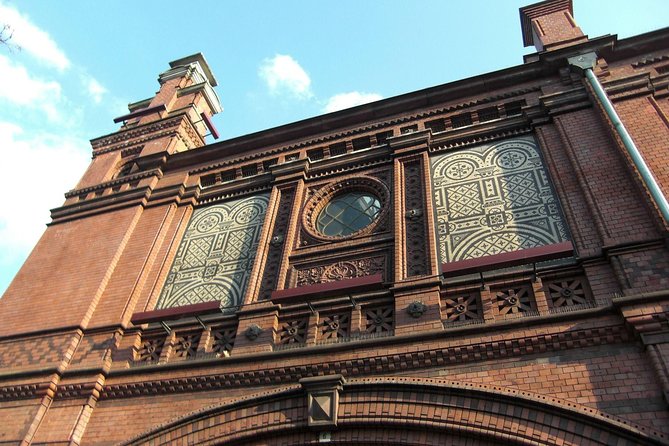
Auguststrasse offers a different view. Before the Nazi period, this street was home to Jewish institutions, including the Jewish Girls’ School at Auguststrasse 11 to 13.
The school was built between 1927 and 1928 by architect Alexander Beer in the New Objectivity style. That detail gives the stop a clear place in time. This was not an old-fashioned institution frozen in the past. It belonged to a modern Jewish community building schools and public institutions in the years before the Nazi takeover.
Today, the building contains an exhibition hall and a coffee shop. The tour stop lasts about 20 minutes, and admission is free. The coffee shop is a useful option if you want to return after the walk, though the tour itself does not include food or drinks.
I find this stop valuable because it widens your picture of Jewish Berlin. The story is not only about synagogues and persecution. It is also about education, children, professional life, and ordinary community plans. Those everyday details can make the later destruction feel more concrete.
A few more Berlin half-days to weigh up
- Berlin: Reichstag, Dome and Government District Guided Tour
★ 4.7 · 18,288 reviews - Berlin: 1-Hour City Tour by Boat with Guaranteed Seating
★ 4.3 · 16,993 reviews - Berlin: Boat Tour Along the River Spree
★ 4.4 · 11,252 reviews - Berlin: Hop-on Hop-off Bus Tour with Live Commentary
★ 4.3 · 8,579 reviews
Hackesche Höfe and the Barn Quarter
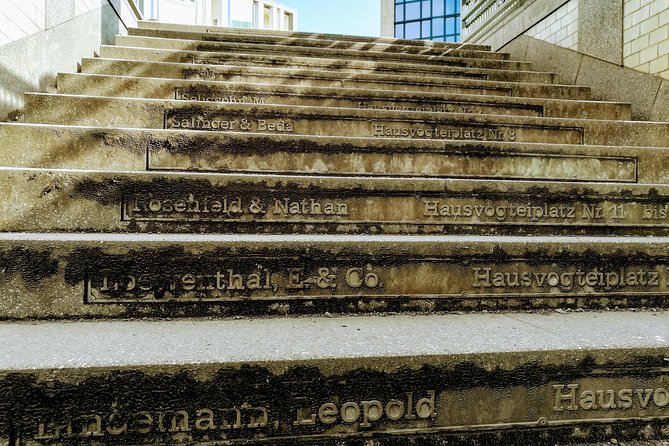
At Hackesche Höfe, the tour shifts toward the streets and courtyards around Hackescher Markt. The area was part of a Jewish community that developed around Spandauer Vorstadt and the Scheunenviertel.
You will take in the graceful architecture while hearing about German Jewish life in this part of Berlin. The 30-minute stop is the longest on the route, which makes sense. This is not one object with one story. It is an urban area where buildings, streets, commerce, and community life all overlap.
Hackesche Höfe is also one of the livelier parts of the walk, with architecture that can compete for your attention. That is both its appeal and its challenge. The area can feel visually busy, so stay close to the guide and keep listening. The tour’s small size should help, but this is still a city neighborhood rather than a quiet museum room.
This section is best for understanding Jewish Berlin as a living part of the city. You are looking at the setting where people worked, worshiped, raised families, and built institutions. The guide’s job is to help you see beyond attractive courtyards and connect them with the people who shaped the district.
Block der Frauen and a rare act of public protest
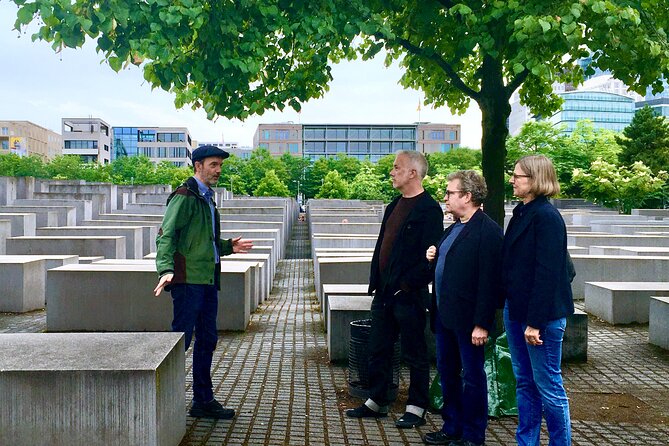
Block der Frauen is one of the most powerful stops because its story turns attention toward protest.
The memorial honors the non-Jewish wives and relatives of Jewish men arrested by the Nazis and targeted for deportation. These women sustained public demonstrations demanding the release of their husbands and family members.
The stop lasts about 20 minutes. It is a reminder that resistance did not always look like armed action or underground organizing. Sometimes it was a public refusal to leave, remain silent, or accept the disappearance of a loved one.
The site also complicates easy categories. The history of the Holocaust includes victims, perpetrators, rescuers, bystanders, and people who resisted under terrifying conditions. The guide can place this protest within the wider story without turning it into a simple lesson about heroes and villains.
Give this stop your full attention. It may be less visually imposing than the New Synagogue or the Holocaust Memorial, but the story is direct and personal. This is one of the places where a discussion-based tour earns its keep.
Walking through the Holocaust Memorial
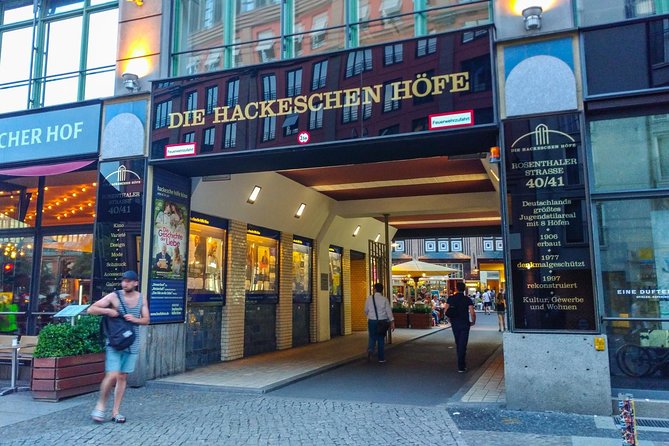
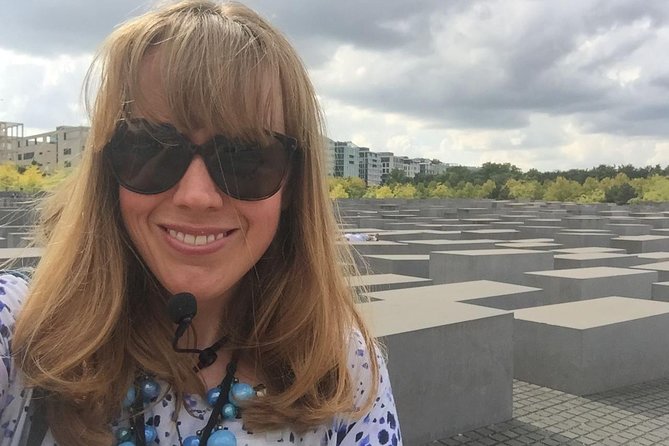
The final listed stop is the Memorial to the Murdered Jews of Europe, usually called the Holocaust Memorial. Designed by architect Peter Eisenman, it consists of 2,711 concrete slabs arranged in a large field.
The memorial is intended to give you a personal experience as you pass through the slabs. The ground and the blocks create a changing sense of scale and orientation. The design does not tell the story through a long inscription or a single statue. It asks you to move through the space and think about what the arrangement suggests.
The tour allows about 20 minutes here. That is enough for a guided introduction and discussion, but not necessarily enough for every part of the memorial’s wider interpretation. If you want a longer visit, make a note to return on your own. The tour ends in Berlin rather than returning to the starting point, so you can continue exploring from there.
The memorial is a serious ending. It gives the earlier stops a painful frame, linking Jewish community life and public institutions with the mass murder that followed. The guide’s role is especially important here. A thoughtful explanation can keep the site from becoming just another photograph on a sightseeing route.
What the guide adds to the experience
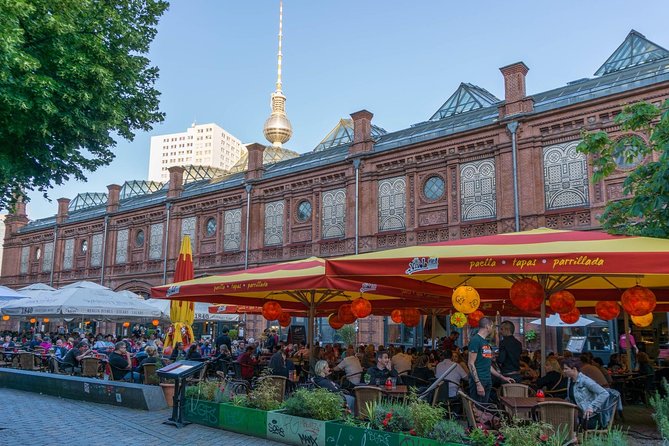
The strongest reason to pay for this walk is the guide’s ability to answer questions and adjust the conversation. Past guides have included Ioana N., Forrest, Lee, Heather, and Isabel Daniel. Their backgrounds vary, but the tour format places academic study and storytelling together.
That matters because Jewish Berlin is not a simple subject. You may want to ask about assimilation, the Jewish community’s medieval beginnings, the New Synagogue, the school on Auguststrasse, the Nazi arrest and deportation system, or Berlin’s Jewish life today. A guide who can respond to your questions makes the route more useful than a fixed audio tour.
You should also expect different personalities. One guide may bring personal insight from living in Berlin. Another may focus more on academic research. The available information describes the hosts as enthusiastic storytellers, but the exact balance of lecture and conversation will depend on who leads your group.
The small group supports that style. A group of two, as happened for one couple, can become almost a private tour. Even with 10 people, the cap is far more manageable than a large city walk.
Is $156.53 a fair price?
At $156.53 per person, this is expensive for a three-hour walking tour. The buildings and memorials listed along the way have free admission, and no food or drinks are included.
You are paying for the guide rather than entry tickets. The value depends on how much you want interpretation, discussion, and specialist knowledge. If you would be satisfied reading plaques and visiting the sites independently, the cost will be hard to justify.
If you want a structured route through a difficult subject, the price becomes easier to understand. You get a small group, a guide with an academic or journalism background, and a route that links five significant places. Group discounts may be available, which can improve the value if you are booking for several people.
The tour is also booked an average of 66 days in advance, a useful sign that you should not leave it until the last minute if the schedule matters to you. Confirmation arrives at booking, and free cancellation is available until 24 hours before the start time. Changes or cancellations inside that 24-hour window are not accepted for a refund.
Who should take this walk?
I would choose this tour if you want Jewish Berlin explained with care and context. It suits adults and older students who are comfortable with serious material and who value conversation over fast sightseeing.
It is a particularly good fit if:
- You want to understand Jewish life before the Nazi period, not only the Holocaust.
- You prefer a small group where you can ask questions.
- You are interested in architecture, urban neighborhoods, memorials, or social history.
- You want a guide who may be a professor, graduate student, scholar, or journalist.
- You are staying in Berlin long enough to give three hours to a focused subject.
It may be less suitable if you want a light, humorous introduction to Berlin or a tour built around food and shopping. The subject is painful, and the final stops require quiet attention. Families can participate because most travelers can take part, but parents should decide if the material suits their children.
My booking advice
Book it if you want a serious, guided introduction to Jewish Berlin and are willing to pay for the person leading the walk. The New Synagogue, Auguststrasse, Hackesche Höfe, Block der Frauen, and the Holocaust Memorial offer a strong sequence, moving from community life to persecution, protest, and remembrance.
Skip it if you only want free sightseeing or prefer to explore museums at your own speed. At this price, the guide must matter to you. For the right reader, the small group and specialist host are the reason to go. For everyone else, the route can be followed independently, though with less context and fewer chances to ask why each place matters.
FAQ
How long does the In Search of Jewish Berlin Walking Tour last?
The tour lasts approximately three hours.
How much does the tour cost?
The listed price is $156.53 per person. Group discounts are available.
What language is the tour offered in?
The tour is offered in English.
How many people can join the tour?
The maximum group size is 10 travelers.
Who leads the walking tour?
The guides are Jewish Studies scholars, professors, graduate students, or journalists. Guides named in available tour feedback include Ioana N., Forrest, Lee, Heather, and Isabel Daniel, but a specific guide is not guaranteed.
Where does the tour begin?
The meeting point is Rosenthaler Strasse 40/41, 10178 Berlin, Germany.
What sites are included?
The route includes Stiftung Neue Synagoge Berlin, Auguststrasse and the former Jewish Girls’ School, Hackesche Höfe, Block der Frauen, and the Holocaust Memorial.
Are food and drinks included?
No. Food and drinks are not included. Admission to the listed stops is free.
Just added around Berlin
- eSIM for Germany and 34 European Countries★ 4.5 · 16 reviews
- Your ticket to The Wall Museum Berlin★ 3.0 · 60 reviews
- Walking on the Wall: 3-Hour Tour in Berlin★ 4.5 · 34 reviews
- Rickshaw Tours Berlin – Groups of up to 16 people with several rickshaws★ 4.0 · 97 reviews
- Warnemuende Shore Excursion: Private Berlin Tour★ 4.5 · 27 reviews
- Love and War in Berlin: Self-Guided Story Puzzle Walk★ 5.0 · 7 reviews
- Warnemuende Shore Excursion: Berlin Private Sightseeing Tour from Rostock★ 5.0 · 4 reviews
- Cold War Berlin – Private Live Virtual Experience★ 5.0 · 4 reviews
Berlin Tours, compared.
Reichstag, Dome and Government District Guided Tour
Read our review →
1-Hour City Tour by Boat with Guaranteed Seating
Read our review →
Reichstag, Plenary Chamber, Cupola & Government Tour
Read our review →