
Review · BERLIN TOURS
East Berlin: City of Shadows Walking Tour
East Berlin’s Communist past is easiest to understand when you connect the grand buildings with the fear that shaped daily life. This three-hour tour does that well, moving from the Brandenburg Gate and Soviet Embassy to the Wall, Stasi headquarters, and Alexanderplatz, where mass protests helped bring the regime down.
I like the small maximum of eight people, which gives a local historian room to explain difficult subjects and answer questions. I also like the strong city orientation: you cover widely separated parts of Berlin while learning how the Wall, transit system, housing blocks, surveillance state, and public squares fit together.
The main drawback is that this is a brisk overview, not a museum tour. You will use public transport several times, and the short stop at the former Stasi headquarters does not replace a proper visit inside the Stasi Museum.
Key points at a glance
- Brandenburg Gate begins the story: Connect Reagan’s 1987 Wall speech with the Soviet presence and the postwar division of Berlin.
- The Palace of Tears shows the human cost: Friedrichstrasse station recalls families separated by East Germany’s strict border rules.
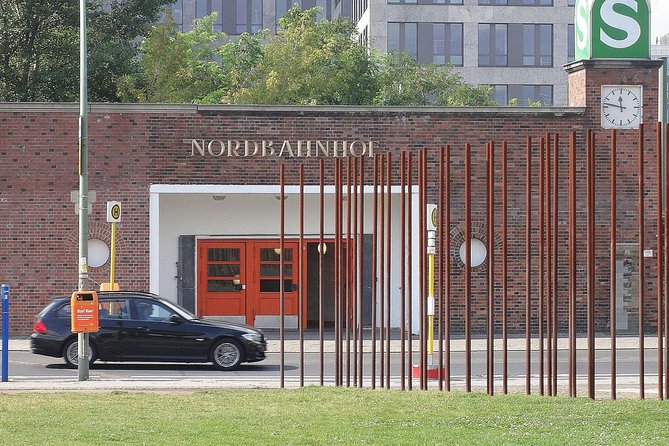
- Ghost stations explain divided Berlin: Nordbahnhof reveals how West Berlin trains passed through East German territory under guard.
- Karl-Marx-Allee reveals Communist ambition: The huge housing boulevard shows how Socialist ideals met shortages and political control.
- The Wall Memorial brings escape stories close: You see the former Death Strip and hear about people who died trying to cross.
- Alexanderplatz closes the loop: The square links East German pride with the demonstrations that helped end Communist rule.
A three-hour route through East Berlin’s difficult past
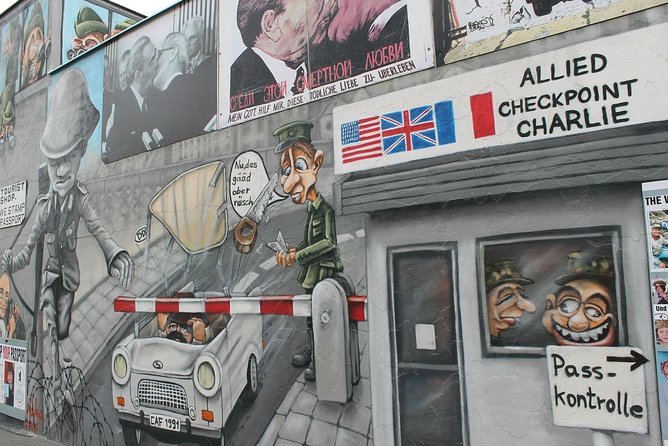
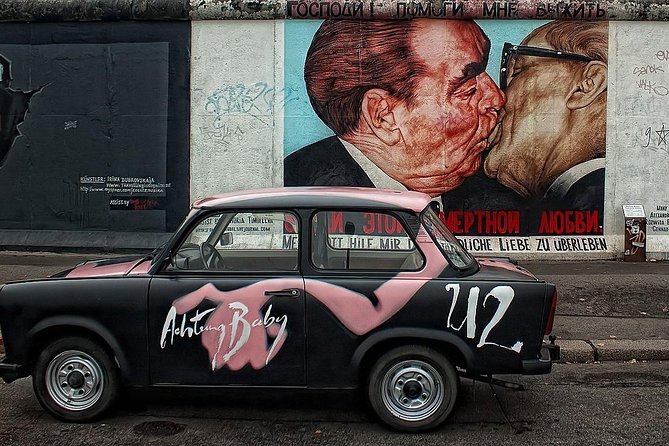
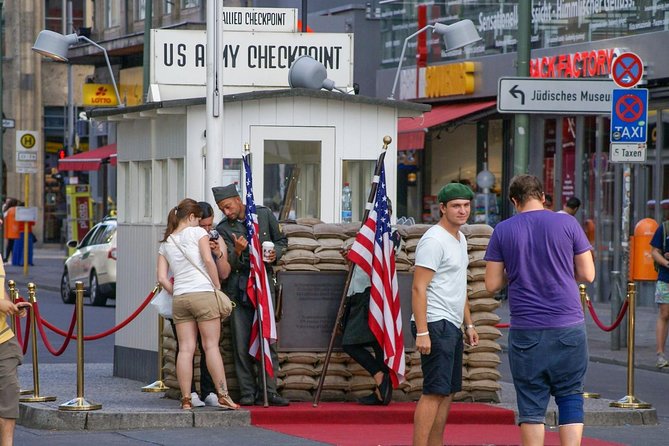
This is not a tour of pretty squares with a few Cold War facts added on. Its subject is the machinery of division: borders, propaganda, surveillance, restricted movement, and the pressure that eventually broke the East German state.
You begin at Unter den Linden 42, near the Brandenburg Gate. The route then spreads across central and eastern Berlin. Because the sites are too far apart for a comfortable walk, you will take public transport a few times. That is part of the experience, since Berlin’s train system is closely tied to the city’s division, but it also means you should allow time for station changes and short walks.
The advertised route lasts about three hours. The listed visits add up to roughly 90 minutes of stop time, so the rest is used for travel, explanation, and discussion. That makes the tour feel like a moving classroom rather than a long continuous walk.
The group limit of eight matters here. Cold War history can become a flood of dates and political names, but a small group lets the guide slow down when a question opens up an important point. The tour is offered in English and led by a local historian.
More walking tours in Berlin:
- Discover Berlin Half-Day Walking Tour
★ 5.0 · 9,624 reviews - Berlin: Third Reich and Cold War 2 Hour Walking Tour
★ 4.9 · 6,830 reviews - Berlin: Discover Berlin Walking Tour
★ 4.9 · 5,998 reviews
Brandenburg Gate and the Soviet vision of Berlin
The Brandenburg Gate is a smart place to begin because it links Berlin’s best-known image with the city’s most painful political break. The gate once represented a divided capital, and it later became a symbol of reunification.
Your guide places the gate within the postwar division of Germany into four occupation zones. Berlin itself was also divided, even though it sat inside the Soviet-controlled part of Germany. That arrangement created the tension that shaped the city for decades.
You also look toward the former Soviet Embassy, a grand building erected in 1945 among the ruins of the war. Its scale was not accidental. It expressed Stalin’s ambition to control Berlin and offered a clear reminder that the city was not simply divided by local politics. It was a major prize in the struggle between the Soviet Union and the Western Allies.
The stop also covers Ronald Reagan’s 1987 speech at the Brandenburg Gate, when he urged Mikhail Gorbachev to tear down the Wall. The point is not just to repeat a famous line. You learn why the speech mattered at that exact location, with the barrier and rival political systems still shaping everyday life nearby.
Allow about 20 minutes here. Admission is free, and the value comes from the explanation rather than from entering a site.
Friedrichstrasse and the Palace of Tears
At Friedrichstrasse station, the tour shifts from international politics to family life. This was a major crossing point between East and West Berlin, and it became the place where people often had to say goodbye after a visit.
East Germany’s immigration rules made ordinary movement across the border extremely difficult. Relatives could meet, but departures were controlled, watched, and sometimes final. The station gained its painful nickname, the Palace of Tears, because of the farewells made there.
I find this stop useful because it gives the Cold War a human scale. The Brandenburg Gate explains power. Friedrichstrasse explains what that power did to parents, children, friends, and spouses.
The stop lasts about 15 minutes. You should expect a short explanation rather than a long indoor museum visit. If you want a more extended look at the station’s history, you may need to return on your own after the tour.
Nordbahnhof and Berlin’s ghost stations
At Park am Nordbahnhof, you learn how the city’s divided transport system worked in practice. Some West Berlin subway and rail lines passed through East German territory. The trains continued moving, but certain stations were closed and heavily guarded.
These became known as ghost stations. To passengers inside the West Berlin trains, the platforms might appear dark and empty behind barriers. To East German authorities, the stations were potential escape routes that had to be watched.
This is one of the tour’s most distinctive subjects because it shows how division affected something as ordinary as a train journey. The Wall was not only a concrete barrier above ground. It also reached into the underground network.
The stop is brief, about 10 minutes, so pay attention to the guide’s explanation and ask questions as they come up. You will not get a long station visit, but the idea is memorable and helps you understand why public transport is part of the story.
A few more Berlin half-days to weigh up
- Berlin: Reichstag, Dome and Government District Guided Tour
★ 4.7 · 18,288 reviews - Berlin: 1-Hour City Tour by Boat with Guaranteed Seating
★ 4.3 · 16,993 reviews - Berlin: Boat Tour Along the River Spree
★ 4.4 · 11,252 reviews - Berlin: Hop-on Hop-off Bus Tour with Live Commentary
★ 4.3 · 8,579 reviews
Karl-Marx-Allee and the promise of Socialist housing
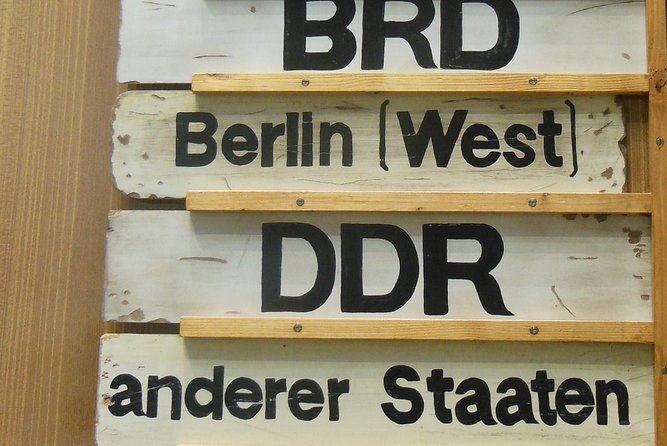
Karl-Marx-Allee gives you a different view of East Germany. Instead of walls, guards, and secret police, you see a huge housing project meant to display the promise of Socialism.
The boulevard was built on a grand scale, with monumental apartment blocks designed to show that working people could live in dignified surroundings. Its size and formal style were meant to inspire confidence in the new state.
The tour also looks at the gap between that promise and daily life. East Germany’s vision of a Socialist paradise was undermined by shortages, suppression, and paranoia. Large buildings could communicate power, but they could not hide the limits of the system forever.
This stop lasts about 10 minutes. That is enough to understand the political purpose of the architecture, but not enough for a detailed architectural study. If grand urban planning interests you, note the area and plan extra time later.
The Berlin Wall Memorial and the Death Strip
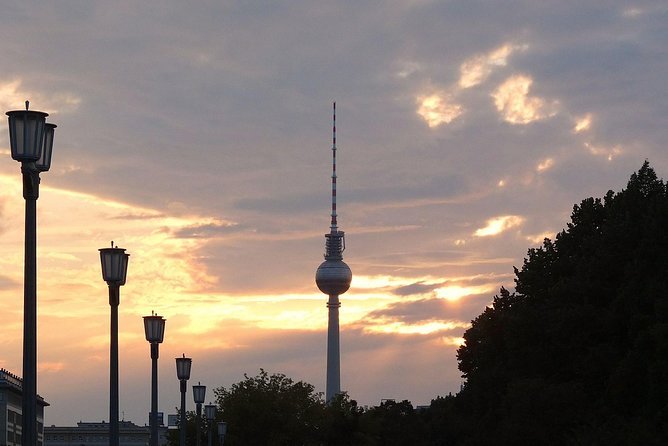
The Berlin Wall Memorial is likely to be the most emotionally direct part of the route. Here, you can see how the border system worked and hear about East Berliners who died attempting to escape.
The phrase Death Strip refers to the controlled zone between sections of the Wall. It could include watchtowers, fences, patrol routes, and open ground where guards could see anyone trying to cross. The memorial helps you picture the border as a system, not just a single wall.
This is where the tour’s earlier themes come together. The government’s restrictions at Friedrichstrasse, the guarded ghost stations, and the Stasi’s surveillance all served the same goal: keeping East German citizens inside the state.
The stop lasts around 15 minutes. That is enough for a focused introduction, though you should not expect to explore every part of the memorial. I would consider returning independently if you want more time for the documentation and memorial grounds.
The former Stasi headquarters and the reach of surveillance
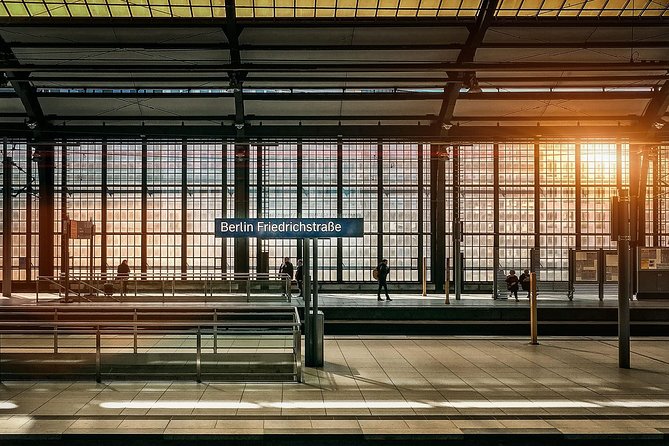
At the former Stasi headquarters, the tour turns to East Germany’s secret police. The Stasi pressured neighbors, colleagues, and family members to report on one another. Its power rested not only on official agents but also on a large network of informants.
You hear about Erich Mielke, the feared Stasi leader, and the methods used to build an extensive surveillance system. The subject can feel abstract until you understand how suspicion entered ordinary homes and relationships.
The tour’s listed stop is about 10 minutes, so treat it as a historical introduction to the institution and its headquarters. It is not a full museum visit. A useful practical point is that the actual Stasi Museum requires separate time if you want to see its exhibits and former offices in detail. One earlier review specifically advises coming back independently for that experience.
The admission details supplied for the stops say tickets are free, but food, drinks, and transport are not included. Since the Stasi Museum is mentioned as a place to revisit, confirm current entry arrangements if you plan to return.
Alexanderplatz and the end of Communist rule
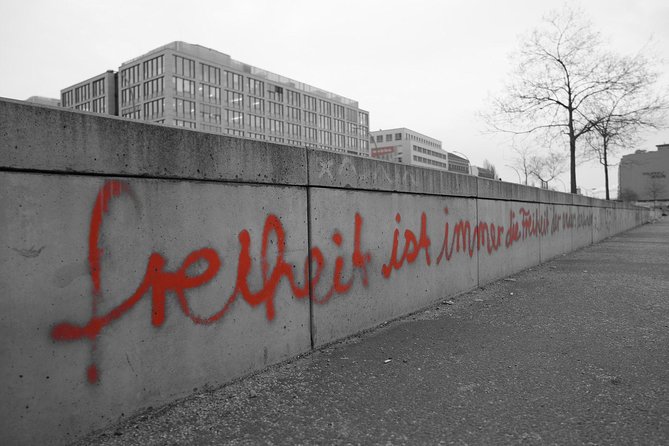
Alexanderplatz was the main public center of East Berlin. In the 1960s, the government rebuilt it with large modern monuments, including the TV Tower and a futuristic parliament building. These projects were designed to show confidence in East Germany’s future.
The square later became the setting for something the government could not control so easily: mass public demonstrations. In 1989, huge protests gathered here, helping bring down the regime and ending four decades of Communist rule.
Ending at Alexanderplatz gives the route a clear arc. You begin with the postwar division, see how the state controlled borders and information, and finish at the public square where opposition became too large to suppress.
The stop lasts about 10 minutes. That is a short amount of time for a place with so many layers, but the guide’s summary should help you recognize Alexanderplatz when you return on your own.
What the $156.53 price means
At $156.53 per person, this is not a bargain walking tour. The price makes the most sense if you value a private-feeling small group, a historian-led explanation, and help connecting sites that are spread across Berlin.
You are paying for the guide, not for entry tickets, meals, or transport. Berlin’s public transport costs extra. A single AB ticket is listed at 2.80 euros, with a senior fare of 1.70 euros. A one-person day ticket is listed at 7 euros, with a senior fare of 4.70 euros.
For this route, a day pass is the practical choice if you do not already have a Berlin transit pass. If you cannot buy one before starting, the guide can help you purchase it at the first metro station.
The value is weaker if you prefer to explore museums at your own pace or already know Berlin’s Communist-era history. In that case, you could visit many of these sites independently for much less. The value is stronger if you want a clear framework on your first day and prefer an expert to handle the historical connections while you concentrate on the city.
Who will get the most from this tour
I would choose this experience if you want a focused introduction to East Berlin and have only a short time in the city. It is also a good fit if the Berlin Wall, the Stasi, Soviet influence, and the daily reality of divided Berlin are your main interests.
The tour suits adults and older children who can follow a serious political subject for three hours. A moderate level of physical fitness is expected, since you will walk between stops and use public transport several times.
It is less suitable if you want long museum visits, a relaxed café break, or a route made entirely on foot. The pace is designed to cover ground. You will see many important places, but some stops are short.
Pickup is offered from hotels or other accommodations in Berlin, while the inclusion details say hotel pickup and drop-off are not included. Because those details conflict, confirm the pickup arrangement before booking rather than assuming a hotel transfer is part of the price.
Booking advice and final verdict
The tour earns a 4.8 rating from 11 reviews, with 91 percent recommending it. That is encouraging, though the sample is small. The clearest praise is for its brief but useful overview of several sites tied to the former German Democratic Republic.
My advice is to book it for orientation, not for exhaustive sightseeing. Bring a transit pass if you have one, wear comfortable shoes, and keep another half day free if you want to return to the Wall Memorial or enter the Stasi Museum properly.
Book this tour if you want the political story explained as you move through Berlin, especially in a group of no more than eight. Skip it if you mainly want indoor attractions or already have a detailed plan for visiting the same sites yourself. With free cancellation up to 24 hours before the start time, you have some room to adjust your plans, but changes inside that window are not accepted.
FAQ
How long is the East Berlin City of Shadows Walking Tour?
The tour lasts approximately three hours.
What language is the tour offered in?
The tour is offered in English.
What sites does the tour visit?
The route includes the Brandenburg Gate, Friedrichstrasse and the Palace of Tears, Park am Nordbahnhof, Karl-Marx-Allee, the Berlin Wall Memorial, the former Stasi headquarters, and Alexanderplatz.
Is public transportation included?
No. You must pay for public transportation separately because several sites are too far apart to reach comfortably on foot.
How much does Berlin public transportation cost for this tour?
The supplied fare information lists an AB single ticket at 2.80 euros, or 1.70 euros for seniors. A one-person day ticket is listed at 7 euros, or 4.70 euros for seniors.
Is hotel pickup included?
Pickup is offered from hotels or accommodations in Berlin, but the inclusion information says hotel pickup and drop-off are not included. Confirm the arrangement when booking.
How large is the tour group?
The tour has a maximum of eight travelers.
Can I cancel for a full refund?
Yes. You can cancel at least 24 hours before the experience start time for a full refund. Cancellations or changes made less than 24 hours before the start time are not accepted for a refund.
Just added around Berlin
- eSIM for Germany and 34 European Countries★ 4.5 · 16 reviews
- Your ticket to The Wall Museum Berlin★ 3.0 · 60 reviews
- Walking on the Wall: 3-Hour Tour in Berlin★ 4.5 · 34 reviews
- Rickshaw Tours Berlin – Groups of up to 16 people with several rickshaws★ 4.0 · 97 reviews
- Warnemuende Shore Excursion: Private Berlin Tour★ 4.5 · 27 reviews
- Love and War in Berlin: Self-Guided Story Puzzle Walk★ 5.0 · 7 reviews
- Warnemuende Shore Excursion: Berlin Private Sightseeing Tour from Rostock★ 5.0 · 4 reviews
- Cold War Berlin – Private Live Virtual Experience★ 5.0 · 4 reviews
Berlin Tours, compared.
Reichstag, Dome and Government District Guided Tour
Read our review →
1-Hour City Tour by Boat with Guaranteed Seating
Read our review →

Reichstag, Plenary Chamber, Cupola & Government Tour
Read our review →
Browse the lists this tour appears in