
Review · BERLIN TOURS
Berlin Highlights Walking Tour
Berlin’s most powerful stories are packed into a small area, and this two-hour walking tour puts them in a clear sequence. You begin at Brandenburg Gate, move through the sites tied to Nazi Germany, and finish at Checkpoint Charlie, where the Cold War split the city in two.
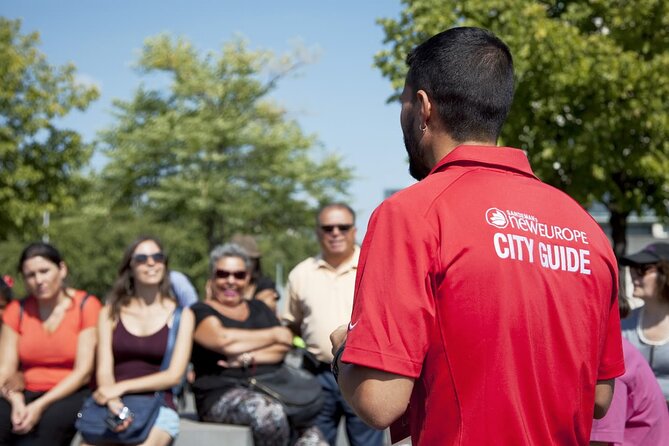
I like the efficient route and the chance to connect several major landmarks without spending a full day on a tour. I also like that the guide brings context to places that can otherwise seem confusing, especially the empty site of the Führerbunker. The main drawback is the pace: with only about 24 minutes at each stop, you get a strong introduction rather than a full museum visit or long discussion at any one place.
Key points to know before you book
- Five major sites in two hours: The route covers Brandenburg Gate, the Führerbunker site, the Holocaust Memorial, Topography of Terror, and Checkpoint Charlie.
- A serious history focus: Most of the tour concerns Nazi Germany, the Holocaust, and Berlin’s Cold War division.
- The Führerbunker site is unmarked: You will learn about the location, but the bunker itself is not visible.
- A useful first look at central Berlin: The route helps you understand how nearby monuments fit into the city’s past.
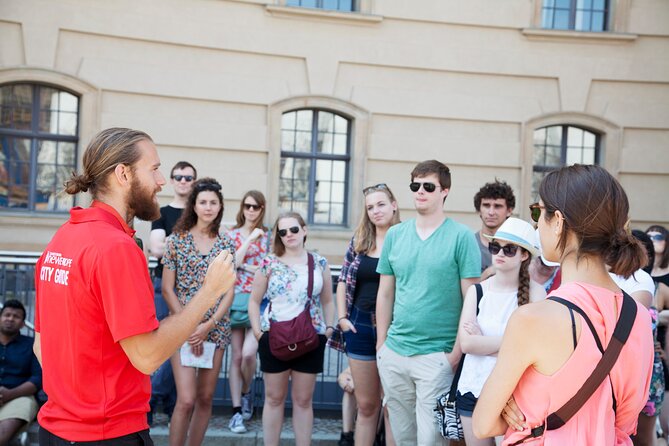
- Small enough to remain manageable: The group can include up to 25 people, with an English-speaking local guide.
- Very low listed price: At $4.81 per person, the tour offers striking value if the price is available when you book.
Why this compact Berlin route works
I like tours that help you get your bearings before you tackle a city alone. This one does that through a narrow but important slice of Berlin. It does not try to cover Museum Island, the Berlin Wall, or every famous square. Instead, it follows a concentrated line through the center, with each stop tied to a major chapter in modern German history.
The route is especially useful if you have just arrived in Berlin and want a framework for later sightseeing. After two hours, you should have a better sense of how the Brandenburg Gate, government district, Nazi memorial sites, and former Cold War border relate to one another.
The focus is not light or playful. You will spend much of the time discussing dictatorship, war, persecution, genocide, and political division. That makes this a better fit for someone who wants historical context than for someone hoping for a general city walk filled with architecture and shopping.
The group size can reach 25 people, so this is not a private stroll. That said, the fixed route and short stops make a larger group easier to manage than on a wandering neighborhood tour. If you want extended questions and a quiet pace, a smaller experience may suit you better.
More walking tours in Berlin:
- Discover Berlin Half-Day Walking Tour
★ 5.0 · 9,624 reviews - Berlin: Third Reich and Cold War 2 Hour Walking Tour
★ 4.9 · 6,830 reviews - Berlin: Discover Berlin Walking Tour
★ 4.9 · 5,998 reviews
Brandenburg Gate: beginning with Berlin’s best-known symbol
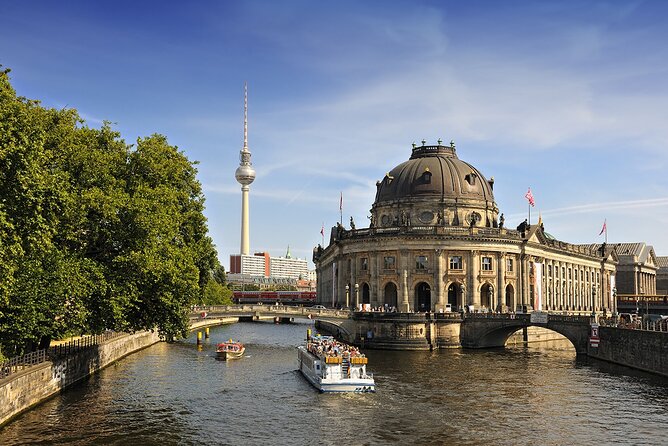
The tour starts at Starbucks, Pariser Platz 4A, near Brandenburg Gate. This is a practical meeting point because the gate is one of Berlin’s easiest landmarks to identify, but give yourself enough time to find the exact starting spot rather than simply heading toward the monument.
Brandenburg Gate gives the guide a strong opening scene. You will hear how this neoclassical gateway began as an entrance to the city and later became linked with major political events. Its meaning changed as Berlin moved through monarchy, war, division, and reunification.
I find this an effective first stop because the gate is visually impressive but historically layered. If you only take a few photographs, it is easy to miss that this was once a guarded passage and later became a symbol of a divided city before turning into a symbol of unity.
The scheduled stop lasts about 24 minutes. That is enough time for an introduction and some orientation, but not enough for a long architectural lecture. The value here is the guide’s explanation of why the gate matters, not an in-depth study of every sculptural detail.
The Führerbunker site: history where almost nothing is visible
The next stop is the former site of the Führerbunker. This is one of the most important details to understand before you go: the bunker itself is not visible. You are visiting a location and hearing its story, not entering an intact underground complex.
The site is tied to the final days of World War II and the collapse of Nazi Germany. A guide can help you separate fact from the myths and sensational stories that often surround the bunker. The setting may look ordinary, which is part of the point. The most important historical sites in Berlin are not always marked by grand buildings or dramatic ruins.
You have about 24 minutes here. That is a sensible limit for a somber location, though anyone wanting a detailed study of the war’s final days may want additional reading or a museum visit later.
I value this stop because it shows how Berlin handles difficult memory. There is no preserved monument inviting admiration, and no theatrical reconstruction. Instead, you are asked to understand what happened at the place and why the site is treated with restraint.
The Holocaust Memorial: walking through a place of uncertainty
From there, the route continues to the Memorial to the Murdered Jews of Europe. The memorial consists of concrete slabs arranged across an open field. Walking among them changes your view from the outside edge to the interior, where the ground and the surrounding blocks can feel increasingly enclosed.
Your guide will explain the memorial’s symbolism and the Holocaust history it represents. The design does not provide a simple message or a single viewpoint. It encourages a personal response while keeping the focus on the millions of Jewish people murdered by Nazi Germany.
The memorial is a place for quiet attention. You can expect the group to pause for explanation, but the visit is still part of a moving walking route, not a long private period of reflection. If you want to spend time taking in the design without listening to a guide, you may wish to return on your own.
I like the placement of this stop in the route. After learning about the Nazi regime and its final days, you encounter a memorial that shifts the focus from political power to human loss. It gives the tour moral weight without relying on a large museum collection.
The memorial is also an outdoor site, so the experience depends on the weather. Wear comfortable shoes and be prepared to walk across uneven areas between the concrete slabs. The tour is open to most people, but the compact schedule means you should be ready to keep moving with the group.
A few more Berlin half-days to weigh up
- Berlin: Reichstag, Dome and Government District Guided Tour
★ 4.7 · 18,288 reviews - Berlin: 1-Hour City Tour by Boat with Guaranteed Seating
★ 4.3 · 16,993 reviews - Berlin: Boat Tour Along the River Spree
★ 4.4 · 11,252 reviews - Berlin: Hop-on Hop-off Bus Tour with Live Commentary
★ 4.3 · 8,579 reviews
Topography of Terror: from dictatorship to documented crimes
The fourth stop is Topography of Terror, a permanent exhibition on the former site of the Gestapo and SS headquarters. This is where the tour moves from monuments and open-air sites toward a more direct presentation of the Nazi system and its crimes.
The exhibition deals with the rise and fall of the Nazi regime and the atrocities carried out by its agencies. Your guide will introduce the material, giving you a way to understand the site before you continue to Checkpoint Charlie.
With only about 24 minutes scheduled here, do not expect to see every part of the exhibition. The stop works best as an introduction. You can return later if you want more time with the displays and documents.
This is one of the tour’s most useful combinations of place and subject. The former headquarters site connects the physical location to the machinery of repression. Instead of treating Nazi history as a distant sequence of dates, the stop helps you think about the institutions and people that made the crimes possible.
The tone remains sober, and that is appropriate. This is not a stop for casual sightseeing. You will get more from it if you listen closely, ask focused questions, and accept that the tour can only sketch a large subject in a short time.
Checkpoint Charlie: finishing with the Cold War
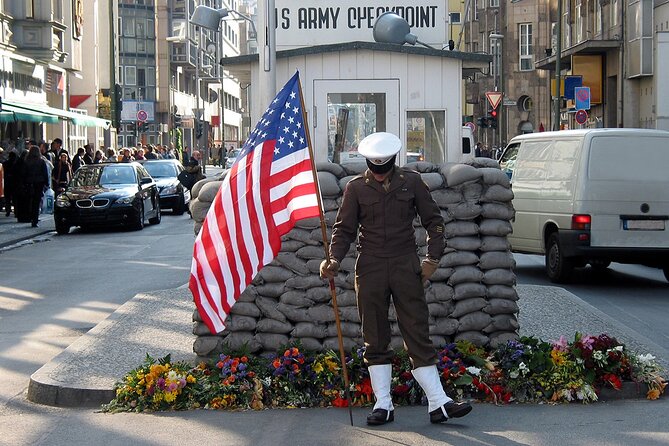
The walk ends at Checkpoint Charlie on Friedrichstraße, between the former eastern and western sections of Berlin. This border crossing became one of the most recognizable symbols of the Cold War, when the city was divided between competing political systems.
Your guide will explain the tense confrontations that took place here, along with escape attempts connected to the border. The stop helps you picture a city where crossing from one side to the other could be a dangerous political act rather than a routine trip across town.
Checkpoint Charlie is a fitting final stop because it shifts the story from Nazi dictatorship to postwar division. The tour does not end in 1945. It shows how Berlin continued to be shaped by conflict, occupation, ideology, and the eventual collapse of the divided city.
The modern setting can be visually confusing. The checkpoint is famous, but the surrounding area has changed, and you should not expect to see the original Cold War border exactly as it once appeared. The guide’s account supplies the missing context.
I also like the practical ending. After Checkpoint Charlie, you are in a central area with public transportation nearby. The tour does not leave you at an obscure edge of the city, and you can continue sightseeing from Friedrichstraße.
What $4.81 buys you in practical terms
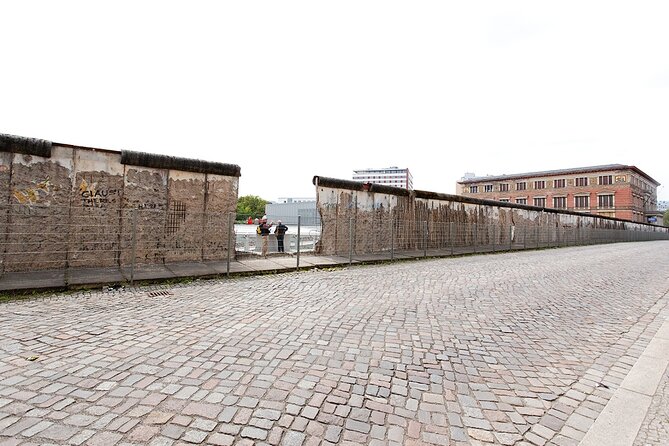
At the listed $4.81 per person, this is unusually inexpensive for a two-hour guided walk. Even if you treat it simply as a structured orientation, the price is easy to justify. You are paying for a local guide, an organized route, and explanations at five major sites, while admission is free at each stop.
The value depends on your expectations. This is not a ticketed museum tour with extended indoor access, and the price does not include a private guide. The guide is the main service, so the experience will depend on how clearly the history is explained and how well the group is managed.
One named guide connected with the experience is Nir. If your confirmation identifies him as your guide, you can expect the same route and subject matter, with the personal difference that any walking tour gains from the individual leading it.
The tour is offered in English and uses a mobile ticket. Confirmation is provided when you book. The starting point is Starbucks at Pariser Platz 4A, and the final point is Checkpoint Charlie at Friedrichstraße 43-45.
The tour is booked, on average, 19 days ahead. That does not guarantee that every departure will sell out, but it is a useful signal to avoid leaving your plans until the last minute if your Berlin schedule is fixed.
Timing, walking pace, and group size
Two hours is the real strength of this experience. You can fit it into a busy day between other plans, and the fixed end point makes it easier to schedule lunch, a museum, or an afternoon visit elsewhere.
The five listed stops each receive about 24 minutes, adding up to the full two-hour route. Time between the sites is part of the walk, so you are not simply standing at five places and then being transported between them.
That format keeps the tour moving, but it limits personal exploration. You will not have time to read every panel at Topography of Terror or linger at the Holocaust Memorial for as long as you might alone. Think of the tour as a guided introduction that helps you decide where to return.
The maximum group size is 25. That is large enough that you may need to stay close to the guide, especially around busy central streets. It is still a defined group rather than an unlimited crowd, and the route itself is straightforward.
Most people can participate, and service animals are allowed. The tour is near public transportation, which makes both the start and finish practical. Specific details about the walking surface and distance are not provided, so comfortable footwear remains a sensible choice.
Who should book this Berlin walking tour?
I would choose this tour if you have only a short time in Berlin and want the city’s major 20th-century stories explained in one sitting. It suits first-time visitors, history students, and anyone who finds memorials and political sites more meaningful with a guide beside them.
It also works well as a first activity in Berlin. You will see the locations, learn the basic connections, and then have the option of returning to the places that caught your attention.
You may want something else if your main interest is art, royal Berlin, food, neighborhoods, or the Berlin Wall beyond Checkpoint Charlie. This route is strongly focused on Nazi Germany, the Holocaust, and the Cold War. It is not a broad survey of the whole city.
I would also hesitate if you need a very slow pace or extensive museum time. The schedule is tight, and the group may include up to 25 people. The tour gives you a lot of information quickly, but you will need to do further exploring if you want detailed study.
Free cancellation is available up to 24 hours before the start time for a full refund. Changes or cancellations made less than 24 hours ahead are not accepted for a refund, and the cut-off follows Berlin local time.
Should you book it?
Book this walk if you want five central sites in two hours, clear historical framing, and a very low listed price. The route is focused, serious, and efficient, with Checkpoint Charlie providing a natural finish.
Skip it if you want long museum visits, a private experience, or a relaxed neighborhood stroll. For everyone else, especially a first-time visitor trying to understand Berlin’s most difficult chapters, this is a practical starting point. Use it to get the story straight, then return to the sites that deserve more time.
FAQ
How long is the Berlin Highlights Walking Tour?
The tour lasts approximately two hours.
What language is the tour offered in?
The tour is offered in English.
Where does the tour start?
The meeting point is Starbucks, Pariser Platz 4A, 10117 Berlin, Germany.
Where does the tour end?
The tour ends at Checkpoint Charlie, Friedrichstraße 43-45, 10117 Berlin, Germany.
Which sites are visited?
The route includes Brandenburg Gate, the former Führerbunker site, the Memorial to the Murdered Jews of Europe, Topography of Terror, and Checkpoint Charlie.
Is the Führerbunker open to visitors?
No. The bunker itself is no longer visible. The guide discusses its history at the former site.
How many people can join the tour?
The activity can have a maximum of 25 participants.
Is cancellation available?
Yes. You can cancel up to 24 hours before the experience begins for a full refund. Changes or cancellations made less than 24 hours before the start time are not accepted for a refund.
Just added around Berlin
- eSIM for Germany and 34 European Countries★ 4.5 · 16 reviews
- Your ticket to The Wall Museum Berlin★ 3.0 · 60 reviews
- Walking on the Wall: 3-Hour Tour in Berlin★ 4.5 · 34 reviews
- Rickshaw Tours Berlin – Groups of up to 16 people with several rickshaws★ 4.0 · 97 reviews
- Warnemuende Shore Excursion: Private Berlin Tour★ 4.5 · 27 reviews
- Love and War in Berlin: Self-Guided Story Puzzle Walk★ 5.0 · 7 reviews
- Warnemuende Shore Excursion: Berlin Private Sightseeing Tour from Rostock★ 5.0 · 4 reviews
- Cold War Berlin – Private Live Virtual Experience★ 5.0 · 4 reviews
Berlin Tours, compared.

Reichstag, Dome and Government District Guided Tour
Read our review →
1-Hour City Tour by Boat with Guaranteed Seating
Read our review →




Reichstag, Plenary Chamber, Cupola & Government Tour
Read our review →