
Review · NUREMBERG TOURS
“Rotes Bier” and “Blaue Zipfel”. A historical-culinary walk
Nuremberg’s food story is more than a plate of tiny sausages. This two-hour walk connects the city’s old town with the kitchens, breweries, markets, and customs that shaped local eating. You taste red beer, Nuremberg bratwurst, gingerbread, and other small samples while your guide explains why these foods matter.
I like the route’s mix of real city sights and edible history, especially the walk from the Old Town Hall through the Hauptmarkt to the Altstadthof Brewery. I also like that the guide leaves room for questions. Sonja, one of the guides, has been praised for explaining the subject with humor and clear command of the material.
The main drawback is simple: the tour is held in German. The food samples are a pleasant bonus rather than a full meal, and one recent assessment found some of the smaller snacks less substantial than expected. Come for the stories and tastings together, not dinner alone.
Key points before you book
- Red beer is the tour’s signature drink: You finish at the Altstadthof Brewery, where the local specialty gives the walk a clear ending.
- The bratwurst stop answers a famous local question: You taste a genuine Nuremberg bratwurst and explore why these sausages are notably small.
- Food questions guide the history: The tour covers gingerbread, ravioli, meat consumption, the so-called Devil’s Kitchen, and links to the planner of Munich’s English Garden.
- The route stays in the old town: Stops include the Old Town Hall, Hauptmarkt, Trödelmarkt, Unschlitthaus, and St. Sebaldus Church.
- It works best for German speakers: The live guide speaks German, with no other language listed.
- The price is modest for a guided tasting walk: At $29 per person, you get the guide, walking tour, snacks, and beer, but not transportation or a full meal.
Why Nuremberg’s food makes a good walking tour

Food is a useful way to read a city. Instead of treating Nuremberg’s old town as a series of handsome buildings, this walk asks what people cooked, drank, sold, and ate in those places. The result is part city tour, part culinary lesson, and part conversation about daily life.
The questions sound appealingly odd. Why is bratwurst called bratwurst? Why are Nuremberg’s sausages so small? What makes the city’s gingerbread special? Since when did local cooks know dishes resembling ravioli? How much meat did people eat?
You are not just being handed samples without context. Each tasting is tied to a story or question about Nuremberg’s food traditions. That connection gives the snacks more meaning. A bite of sausage becomes a clue about local custom, while gingerbread opens a path into the city’s baking culture.
The experience is also compact. Two hours is long enough to cover several central sights without turning the food into an afterthought. It is short enough to fit into a morning or afternoon between other Nuremberg plans.
More history-led days in Nuremberg:
- Nuremberg: 1.5-Hour Private Tour through Historical Old Town
★ 4.8 · 283 reviews - Nuremberg: World War 2 History Tour with Beer Tasting
★ 5.0 · 4 reviews - Leipzig: City History Canal Sightseeing Tour on a Motorboat
★ 4.7 · 6,232 reviews
Meeting at the Old Town Hall
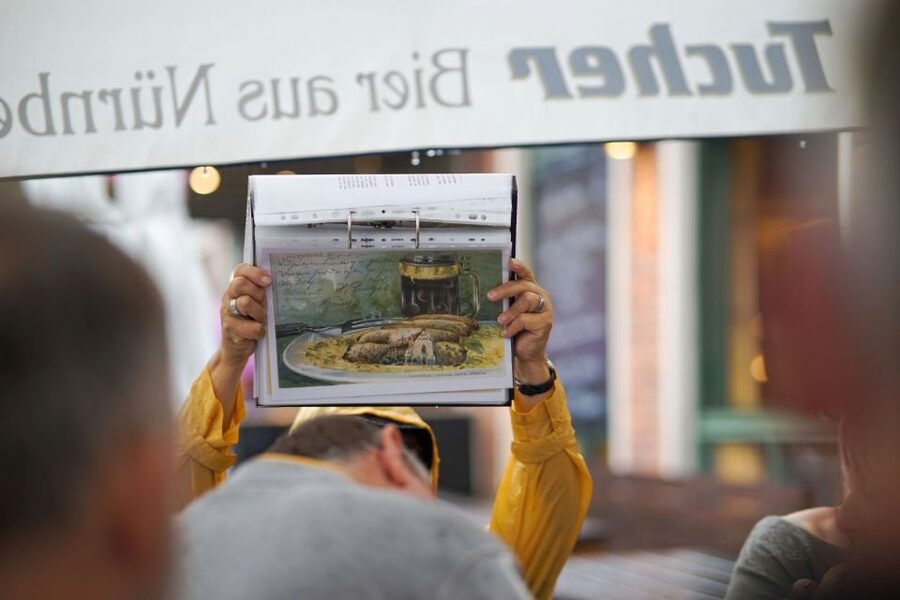
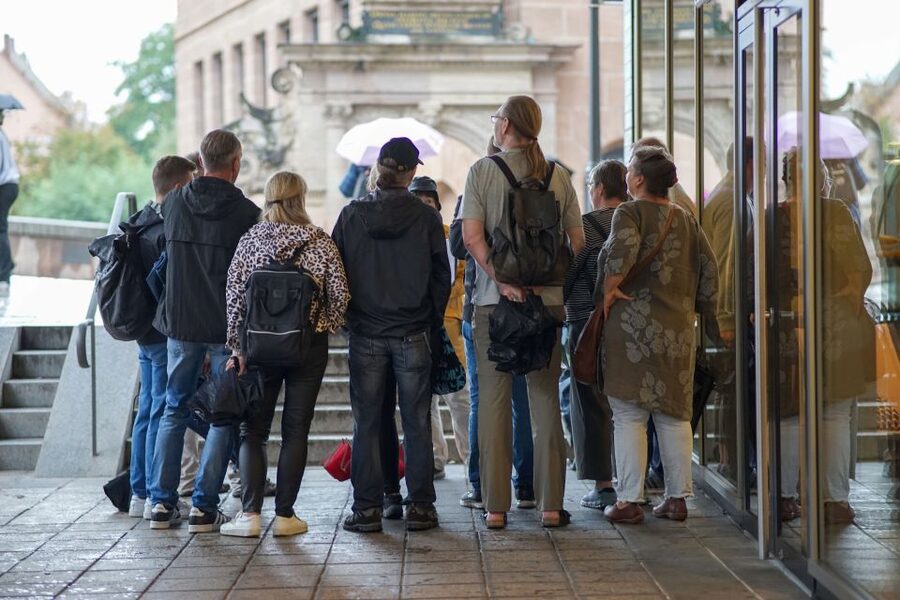
The walk begins at the main entrance of the Alte Rathaus, or Old Town Hall, at Rathausplatz 5. Look for the guide holding a picture folder and displaying the green logo of Geschichte Für Alle e.V.
This is a practical meeting point because you begin in the middle of Nuremberg’s historic center. You do not need transportation to reach the first stop if you are already exploring the old town, but getting to Rathausplatz is your responsibility. Transportation to and from the meeting point is not included.
The opening section sets the tone. Rather than rushing straight to a restaurant, the guide starts with the city’s civic center and uses it as a doorway into Nuremberg’s food past. A picture folder helps support the explanations, and the guide can take questions along the way.
That last point matters. The subject includes several unusual details, so this is not a tour where you need to remain silent and simply follow the group. If you want to ask about a food term, a historical custom, or one of the sights, there is room to do so.
Bratwurst Röslein and the small Nuremberg sausage
After the first stop, you walk about five minutes to Bratwurst Röslein. Here the tour turns from civic history to one of Nuremberg’s best-known foods.
You get a bratwurst tasting and an explanation of what makes the Nuremberg version distinctive. The small size is not an accident, and the tour specifically addresses why the sausage is made this way. It also explores the meaning behind the word bratwurst, giving you more than a quick restaurant sample.
This is likely to be one of the most satisfying stops for first-time visitors. Nuremberg bratwurst is easy to find across the city, but eating it while hearing the local story gives you a better sense of place. You can also compare the tasting with the larger sausages found elsewhere in Germany.
Do not count on this stop to fill you up. The tasting is part of a sequence, not a full plate of sausages with side dishes. If you have a large appetite, plan a separate meal before or after the walk.
Hauptmarkt, gingerbread, and the city’s food questions
The next walk takes only about three minutes to Nuremberg’s Hauptmarkt. This is one of the old town’s central public spaces, and the tour uses it for another guided section and food tasting.
The Hauptmarkt stop is a good example of how the experience works. You move through a recognizable city landmark, then connect the setting with a local food tradition. The subject turns to Nuremberg gingerbread, one of the city’s most famous edible products.
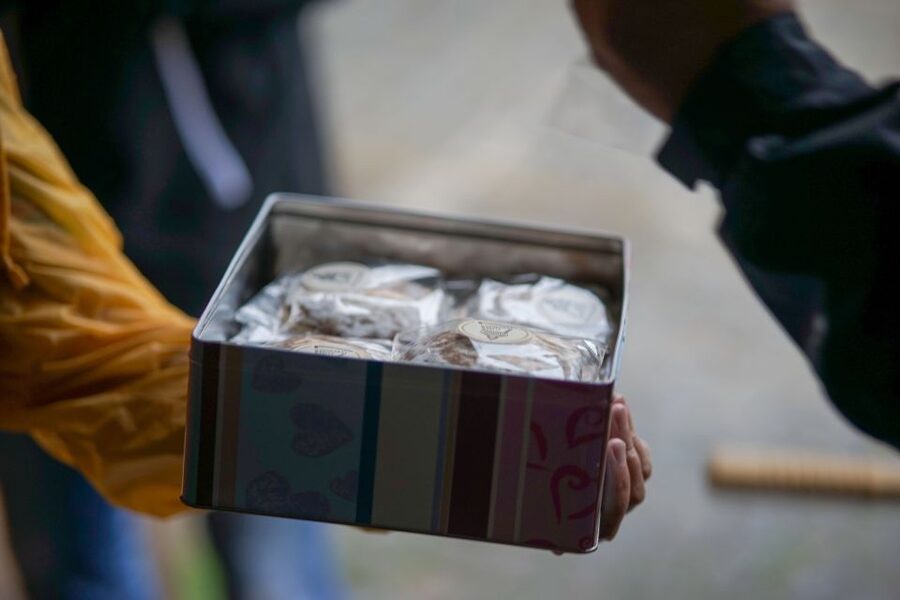
The tour presents gingerbread as more than a souvenir sweet. You learn what is special about Nuremberg gingerbread and why it has such a strong place in the city’s culinary identity. A tasting lets you judge the flavor for yourself.
A second stop at Hauptmarkt 2 follows, again with a guided explanation and tasting. The short distance between these points keeps the pace easy and leaves more time for the guide’s stories. You are not spending half the tour marching from one neighborhood to another.
If you are visiting during wet or cold weather, the open-air sections deserve some thought. The walk operates rain or shine, so wear a weather-appropriate layer and comfortable shoes. The route is wheelchair accessible, but weather and old town paving can still affect comfort.
More walking tours in Nuremberg:
- Nuremberg: Old Town Guided Walking Tour
★ 4.6 · 2,416 reviews - Nuremberg: Walking Tour of Former Nazi Party Rally Grounds
★ 4.7 · 1,665 reviews - Nuremberg Old Town and Nazi Party Rally Grounds Walking Tour in English
★ 4.5 · 504 reviews - Nuremberg Old Town and Nazi Rally Grounds Walking Tour
★ 4.7 · 377 reviews
Trödelmarkt and the food beneath the old town
From Hauptmarkt, the group walks about five minutes to Trödelmarkt 13. This keeps you within the historic center while shifting the setting from the large central market square to a smaller old town location.
The food theme continues through another tasting and explanation. The supplied details do not specify every snack at each stop, so you should expect a sequence of small samples rather than a fixed restaurant menu. The appeal lies in the changing combination of food, place, and story.
This is also where the tour’s broader questions help. The guide discusses subjects such as how much meat Nuremberg citizens ate and how local cooks knew dishes resembling ravioli. These topics bring the focus down from famous specialties to ordinary cooking and eating.
I like that approach. A city’s cuisine is not only its signature dish. It also includes what families could afford, what cooks prepared, and how food moved through daily life. If you enjoy social history, these details may be more interesting than a simple list of restaurants.
Unschlitthaus and the stranger side of food history
The next walk takes roughly five minutes to Unschlitthaus. This historic stop adds a more unusual note to the route, including discussion of the Devil’s Kitchen.
The name alone makes this part memorable, but the value comes from the explanation behind it. You are encouraged to think about where food was prepared, how old buildings were used, and how colorful expressions can preserve traces of the past.
The tour also asks what the planner of Munich’s English Garden had to do with Nuremberg food. That is the sort of connection you are unlikely to encounter on a standard old town walk focused only on architecture. It broadens the story beyond local dishes and shows how people, ideas, and food customs can connect across Bavaria.
At this point, the tasting format should be clear. You stop, listen, sample, and walk a short distance to the next place. That rhythm helps keep two hours from feeling like a lecture, though anyone expecting a large amount of food may find the portions limited.
St. Sebaldus Church and history with another tasting
The route then takes about ten minutes to St. Sebaldus Church, the longest walk between stops. The church provides another major old town landmark and another guided section with food tasting.
The stop works well for visitors who want more than a food crawl. You see an important historic building while the guide continues the culinary theme. The tour does not treat food as separate from the city’s religious, civic, and architectural life.
Because the walk covers several subjects, you may want to listen for the connections rather than trying to memorize every detail. The guide moves between buildings, cooking customs, famous foods, and local history. A good guide can make that range feel coherent, and the strongest praise for the experience has focused on clear explanations, wit, and willingness to answer questions.
The ten-minute walk here is still easy by normal sightseeing standards. Comfortable shoes remain important, especially if you are already spending the day on foot in Nuremberg.
Altstadthof Brewery and the final red beer
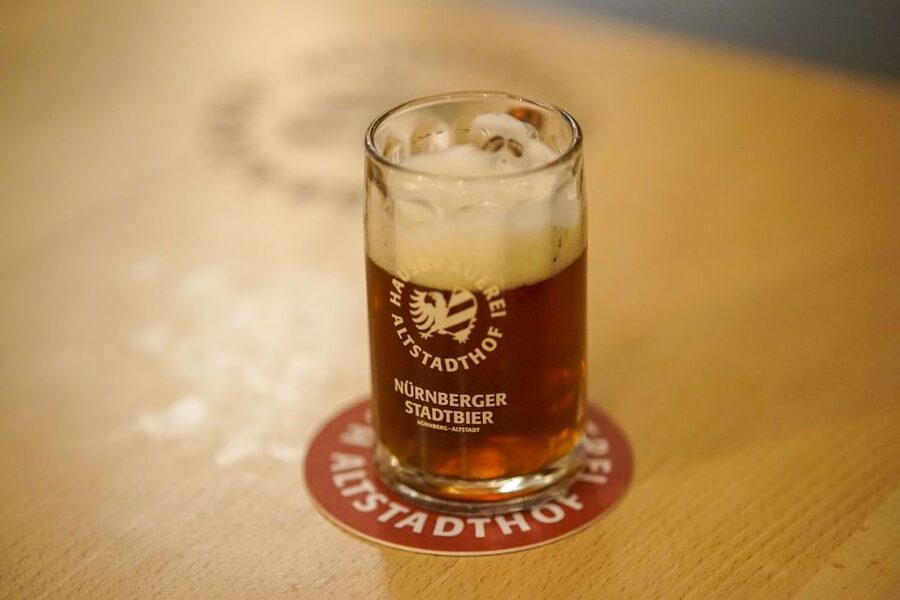
The last walk takes about five minutes and ends at the Altstadthof Brewery, specifically the Rotbierstüberl at the Hausbrauerei Altstadthof, which also includes a whisky distillery.
This is the tour’s most natural finale. After tracing Nuremberg’s food customs through the old town, you finish with beer at a local brewery. The tasting centers on Rotbier, or red beer, a style closely associated with Nuremberg.
The beer gives the experience a clear local identity. You could order beer at many places in Germany, but tasting Nuremberg red beer at the end of a food history walk helps tie the drink to the city you have just explored.
The tour includes beer, but the available details do not state the exact amount or number of pours. Think of it as a guided tasting rather than an evening brewery session. If you want to stay for more food or drinks, the finish point gives you a convenient place to continue independently.
What the $29 price really gets you
At $29 per person, the cost is reasonable if you value the guide and the food context. You receive a two-hour walking tour, a live guide, snacks, and beer. The price covers several tastings and a route through central Nuremberg, not simply one drink and one sausage.
The value is strongest for someone who would otherwise book both a general old town tour and a separate food experience. Here, the two subjects are combined. You get the main landmarks along the route and a focused explanation of local dishes.
The value is weaker if your main goal is a large meal. The samples are spread throughout the walk, and one recent assessment specifically found that some of the snacks could be more substantial. Bratwurst, gingerbread, and beer are the key foods, but you should still budget for lunch or dinner.
The booking terms add flexibility. You can cancel up to 24 hours before the start for a full refund, and you can reserve now and pay later. If you need an invoice, note that bookings made through GetYourGuide do not receive one. The booking confirmation serves as proof of payment.
Who will enjoy this walk most
I would choose this experience for a visitor who wants a German-language cultural tour with a clear local food focus. It suits couples, solo visitors, and families who enjoy tasting small portions while walking between historic sights.
It is also a good choice for repeat visitors to Nuremberg. The route may pass places you already know, but the food questions can give familiar squares and buildings a new purpose. A local resident even found fresh information in the explanations, which suggests the subject goes beyond the most basic tourist facts.
You will get the most from the walk if you understand German well enough to follow a live guide and ask questions. The tour is conducted in German, and no alternative language is listed. If you do not speak German, the tastings and sights may still be pleasant, but the central historical content will be difficult to follow.
You should also be comfortable with a rain-or-shine walk. Bring weather-appropriate clothing and shoes made for walking. The activity is wheelchair accessible, which is useful to know, though a two-hour route through an old town still calls for sensible planning around weather and surfaces.
What to expect from the guide
Guide quality matters here because the tour covers a wide range of material. The strongest feedback has singled out guides who explain with humor, speak clearly, and make time for questions. Sonja is one named guide associated with especially warm praise for her wit and command of the subject.
The organization Geschichte Für Alle e.V. provides the guide, identified at the meeting point by the green logo and picture folder. You are not simply joining an anonymous food tasting. The experience has a historical and educational purpose, with the samples used to make the subject easier to understand.
Expect a lively explanation rather than a formal academic lecture. The topics include word origins, food customs, famous specialties, local buildings, and surprising connections. That mix should appeal to you if you like history delivered through stories and examples.
Should you book the Nuremberg food history walk?
Book it if you want to understand Nuremberg through what people brewed, baked, and cooked. The route is short, central, and well priced, with red beer, bratwurst, gingerbread, and several smaller tastings built into the experience. The combination of food and old town sights gives you more context than a standard snack stop.
Skip it if you need an English-language tour or want a full meal. The guide speaks German, the tour runs in all weather, and the food is served as samples rather than dinner portions.
For German speakers, especially those curious about local customs, this is a smart two-hour choice. Go with comfortable shoes, arrive ready to listen, and save room for a proper meal afterward.
FAQ
Where does the tour begin?
The tour begins in front of the main entrance of the Alte Rathaus, or Old Town Hall, at Rathausplatz 5 in Nuremberg. The guide carries a picture folder and displays the green Geschichte Für Alle e.V. logo.
Where does the tour end?
The walk ends at Hausbrauerei Altstadthof, specifically the Rotbierstüberl at the Altstadthof Brewery and Whisky Distillery.
How long does the experience last?
The tour lasts two hours. Starting times vary, so you need to check availability for the date you want.
Is the tour offered in English?
No. The live tour guide speaks German, and German is the listed tour language.
What food and drinks are included?
The experience includes snacks and beer. The route features Nuremberg bratwurst, gingerbread, and local red beer, along with other small tastings.
Is the tour wheelchair accessible?
Yes, the activity is listed as wheelchair accessible. It takes place outdoors and runs rain or shine, so weather-appropriate clothing is still recommended.
Just added around Nuremberg
- Tour en español al Campo Zeppelin★ 5.0 · 8 reviews
- Stein: Public guided tour of the “Old Mine” museum★ 4.5 · 18 reviews
- Nuremberg: Old Town Guided Tour By Bus★ 4.4 · 198 reviews
- Nürnberg Bachelor(ette) Party with Night PubCrawl★ 4.2 · 5 reviews
- Nuremberg: Bar and Club Tour with Free Shots and Free Entry★ 3.8 · 23 reviews
- Nürnberg kennenlernen: Highlights in der Altstadt★ 4.7 · 189 reviews
- Nuremberg: World War 2 History Tour with Beer Tasting★ 5.0 · 4 reviews
- Tour del tercer Reich por Núremberg en español★ 5.0 · 23 reviews
Nuremberg Tours, compared.
Tunnels and Secret Passages in the City Wall Tour
Read our review →
Walking Tour of Former Nazi Party Rally Grounds
Read our review →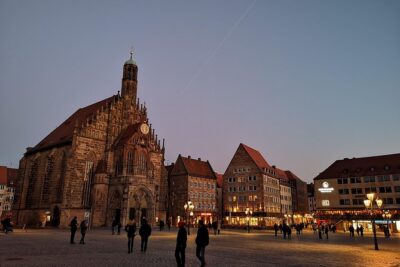
Browse the lists this tour appears in