
Review · NUREMBERG TOURS
Tour del tercer Reich por Núremberg en español
Nuremberg was not chosen by chance as the showcase city of Nazi Germany. Hitler presented it as the heir to medieval German power, then used its old imperial image, vast parade grounds, and mass rallies to sell the regime’s message. This three-hour Spanish tour connects that political theater with the Nuremberg Trials and the city’s continuing work of remembrance.
I like the Spanish-language guidance and the way the tour links grand Nazi displays with the human cost of antisemitism. I also like that guide Federico explains the subject with documents and clear historical context, rather than reducing Nuremberg to a few dramatic photographs. The main consideration is scope: three hours gives you a strong city-based introduction, but it cannot cover every Nazi site in detail.
Key points to know before booking
- A Spanish tour led by Federico: The guide is praised for clear explanations, historical knowledge, and a pleasant teaching style.
- Nuremberg’s propaganda role: Learn why Hitler treated the city as the symbolic heir to the Germanic Empire of the Middle Ages.
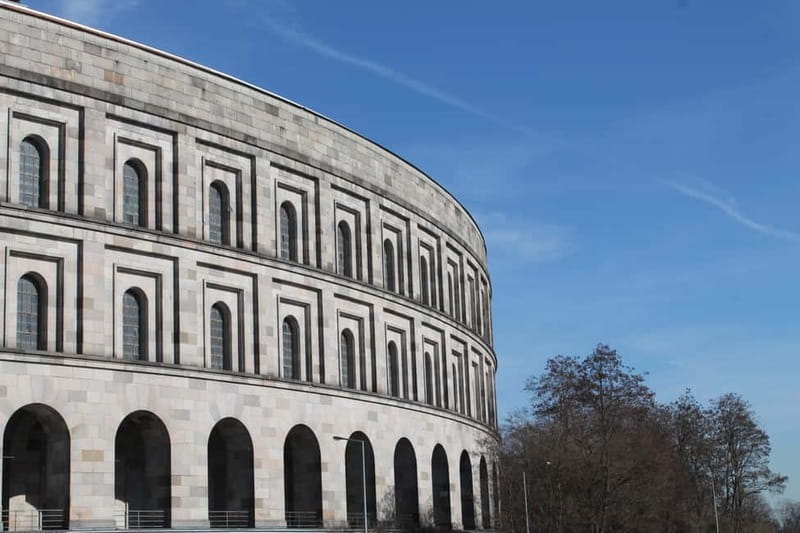
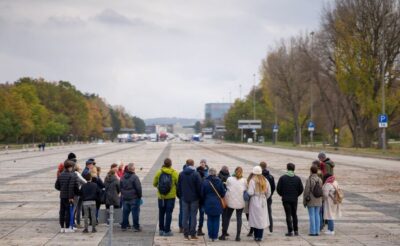
- The Nazi Party congresses and Zeppelin Field: See how architecture, ceremony, and mass gatherings helped shape political propaganda.
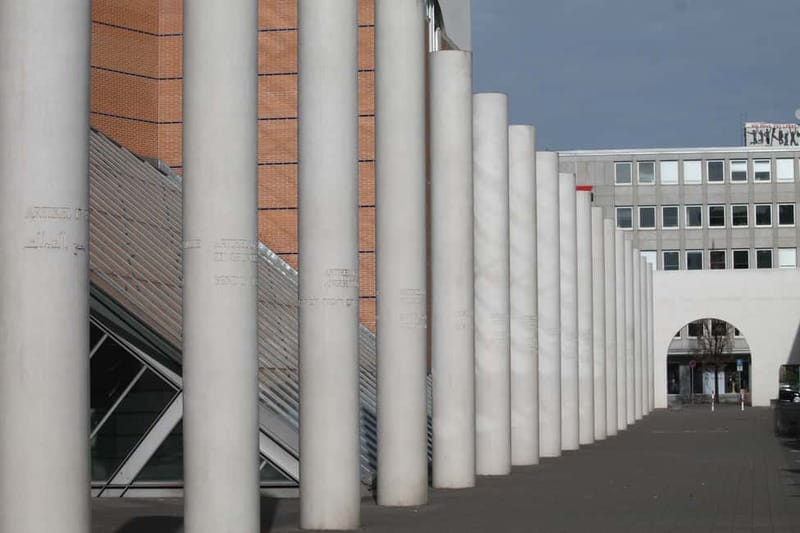
- The Nuremberg Trials and Street of Human Rights: Connect Nazi crimes with the legal response after the war and a modern memorial to human rights.
- A private, three-hour walk: The group format allows a more focused experience, while comfortable shoes remain essential.
- Simple pricing and flexible booking: At $19 per person, the tour offers a low-cost way to build historical context into a Nuremberg visit.
Why Nuremberg mattered so much to Hitler
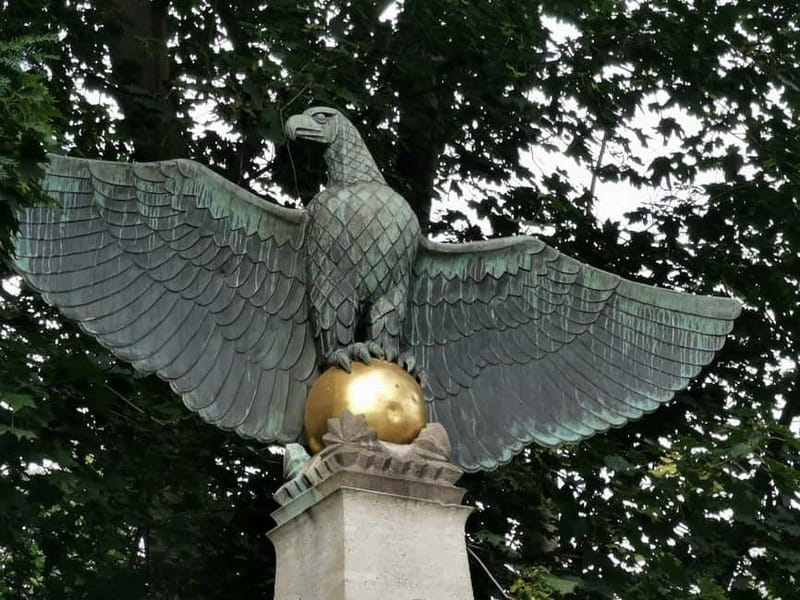
To understand this tour, you first need to understand Nuremberg’s symbolic value. For centuries, the city had been tied to the Holy Roman Empire and German imperial traditions. Nazi leaders turned that older prestige into political theater.
Hitler wanted the regime to look like the continuation of a powerful German past. Nuremberg supplied the setting. Its medieval associations, central role in German memory, and broad public spaces helped the Nazis present their movement as something larger than a modern political party.
That idea was false and carefully manufactured, which is exactly why the city is so useful for learning about the period. You are not only studying what the Nazis believed. You are examining how they used history, architecture, ceremony, and public space to make their claims seem legitimate.
The tour focuses on this process. You can expect the guide to explain how Nuremberg became the preferred propaganda center of the Third Reich and why the city was presented as the most loyal locality in Germany. That background makes the later sites easier to read. A parade ground is not just an empty field once you understand the message it was built to deliver.
A few more Nuremberg half-days to weigh up
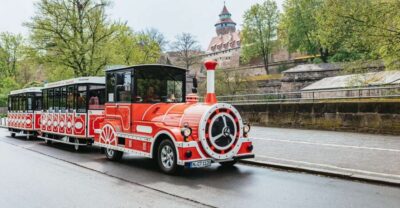
- Nuremberg: City Tour with the Bimmelbahn Train
★ 4.4 · 2,475 reviews - Nuremberg: Old Town Guided Walking Tour
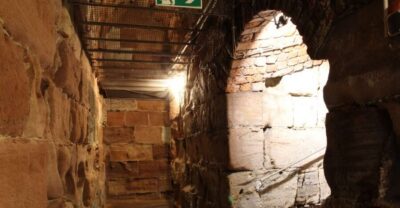
★ 4.6 · 2,416 reviews - Nuremberg: Tunnels and Secret Passages in the City Wall Tour
★ 4.8 · 2,334 reviews
Meeting at Frauenkirche and setting the tone
The tour begins in front of the main entrance of the Frauenkirche on Hauptmarkt. Look for the white and red umbrellas. This is a practical meeting point in the center of Nuremberg, and it gives you an easy place to organize yourself before the history begins.
The tour also ends at the same meeting point. That matters if you are planning another activity afterward, since you will not need to arrange a separate return trip or locate a distant finish point.
The opening location also puts the subject in a useful setting. Nuremberg’s older identity and its Nazi-era identity are not separate stories. The Nazi regime deliberately borrowed older German symbols and traditions. Starting in the historic center helps frame the city as a place whose past was repackaged for political use.
Plan on three hours and wear comfortable shoes. The experience is described as wheelchair accessible, though the route itself is not set out in detail, so you may want to confirm any specific mobility needs before booking.
From medieval symbolism to Nazi propaganda
One of the most useful parts of this experience is the explanation of why Nuremberg became the city of Nazi Party congresses. The congresses were not ordinary political meetings. They were carefully staged mass events, designed to show discipline, unity, and the supposed strength of the movement.
The Nazi leadership understood the power of spectacle. Uniforms, flags, formations, speeches, and monumental buildings created an image of order and national purpose. The tour helps you see that these events were part of a propaganda system, not simply gatherings where party members listened to speeches.
You will also learn about National Socialist demonstrations and the role they played in shaping public opinion. This is valuable because it moves the subject away from a simple story of one dictator. The regime depended on symbols, institutions, public participation, and repeated messages.
I find this kind of explanation more useful than a quick list of dates. Once you understand the purpose of the congresses, the city’s open spaces begin to make more sense. Their scale was part of the message. The setting was meant to make individuals feel small and the movement feel permanent.
Zeppelin Field and the power of mass spectacle
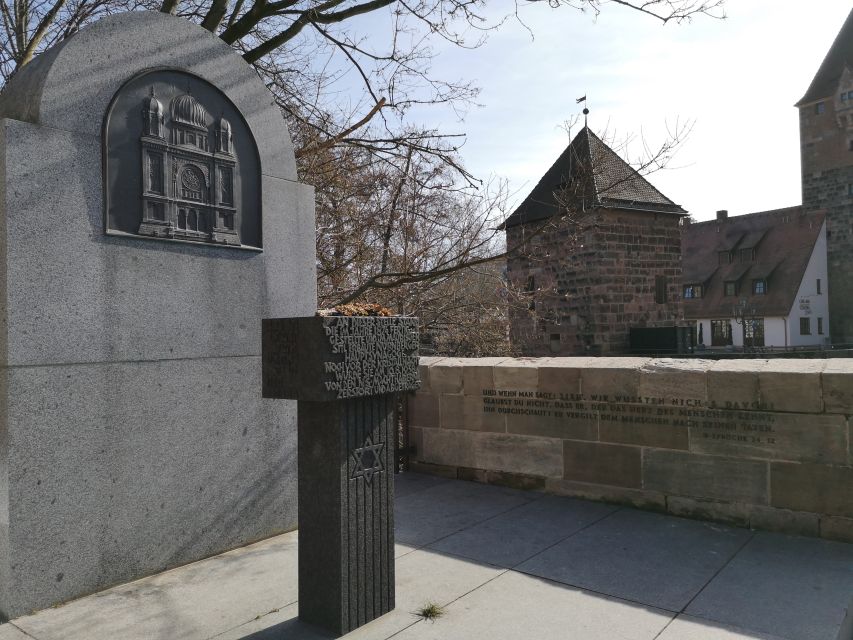
Zeppelin Field is one of the key subjects connected with the tour. It is associated with the huge Nazi rallies that turned political loyalty into a public performance.
Here, the guide can explain how the regime used space to organize people and control what they saw. The size of the site mattered. So did the repeated ceremonies and the visual rhythm of crowds, banners, uniforms, and speeches.
For you, the important point is not only what happened at Zeppelin Field, but how the place functioned. Nazi architecture and public events aimed to make ideology feel physical. A political claim could be turned into a wall, a platform, a marching route, or a sea of spectators.
The site also raises a difficult question about how to handle places connected with dictatorship. The tour treats the subject as history, not as a spectacle to admire. That approach is especially important at a place designed to glorify a criminal regime.
The available information does not promise a long stop at every structure or a detailed architectural survey. If Zeppelin Field is your main reason for visiting, check the exact route and starting time when you book. If your goal is to understand Nuremberg’s role in the Third Reich as a whole, its inclusion gives the tour an essential anchor.
Same city, a completely different sort of afternoon:
- Nuremberg: Medieval Dungeons Guided Tour
★ 4.8 · 1,726 reviews - Nuremberg: Walking Tour of Former Nazi Party Rally Grounds
★ 4.7 · 1,665 reviews - Medieval Tour in Nuremberg in Spanish
★ 5.0 · 1,374 reviews - Nuremberg: Historischer Kunstbunker WWII Art Bunker Tour
★ 4.8 · 921 reviews
The Nuremberg Laws and the machinery of antisemitism
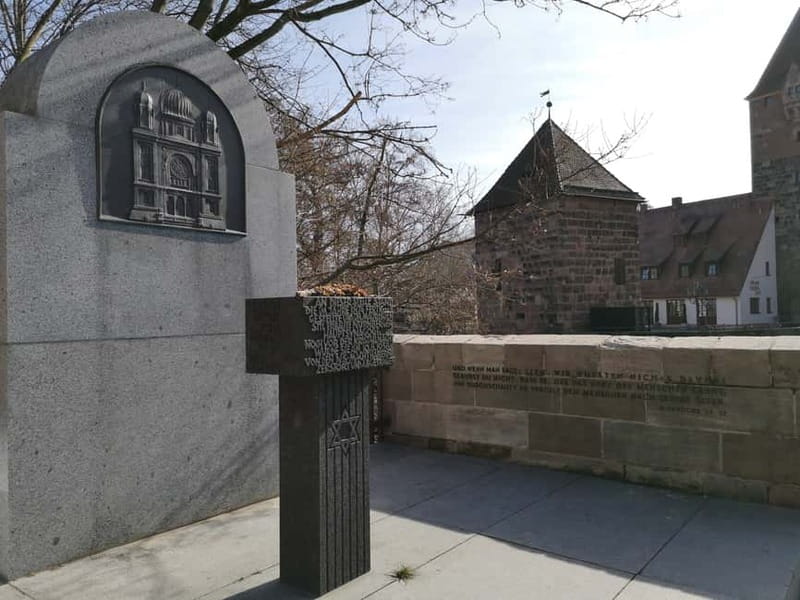
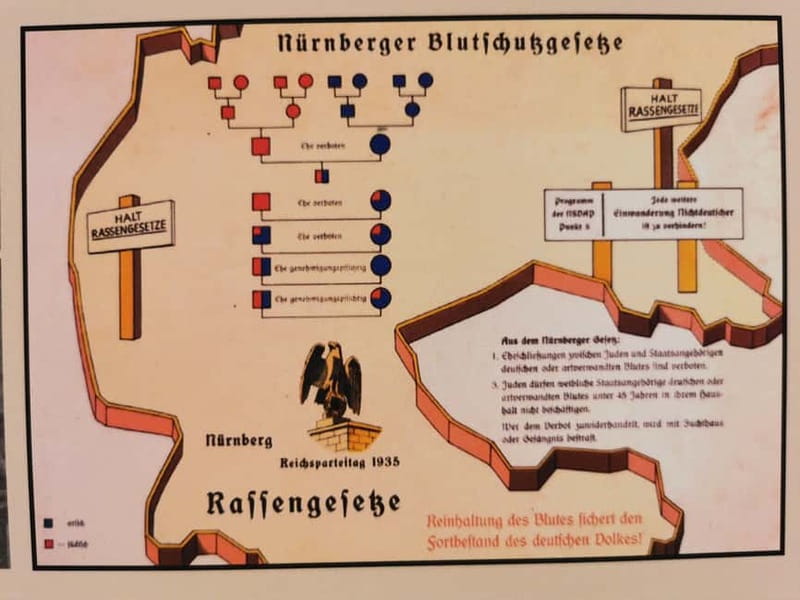
The tour also addresses the Nuremberg Laws, written in the city by Wilhelm Frick. These laws helped turn antisemitic ideology into state policy. That transition, from hateful propaganda to legal discrimination, is one of the most important parts of the subject.
A discussion of the laws gives you a clearer picture of how persecution worked. Antisemitism was not only expressed in speeches or newspapers. It was built into official rules that stripped Jewish people of rights and defined them according to Nazi racial categories.
The city was also connected with Julius Streicher, one of the regime’s leading antisemites and the owner and promoter of the weekly newspaper Der Stürmer. His role shows how newspapers and repeated public messaging helped normalize hatred.
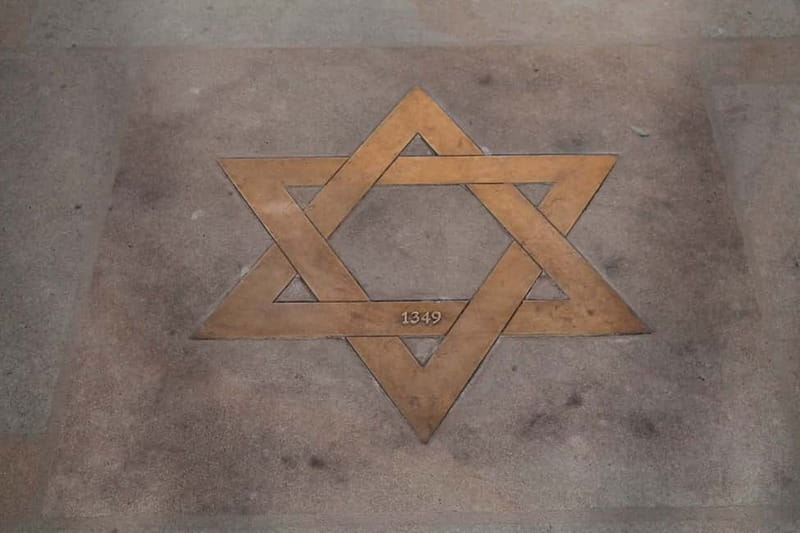
The tour includes the Jewish quarter in Nuremberg and the history of antisemitism. This makes the experience broader than a study of military sites or Nazi architecture. You are asked to consider the people targeted by the regime and the local setting in which exclusion and persecution took place.
This part may be emotionally difficult, and that is appropriate. A good historical tour should not make the subject comfortable at the cost of accuracy. Federico’s approach is described as didactic and well supported by information and documents, which should help keep the discussion clear rather than sensational.
The Nuremberg Trials and the question of justice
The Nuremberg Trials form the other major pillar of the tour. After the war, leading Nazi figures were prosecuted in the city whose name had been attached to some of the regime’s most infamous racial laws.
The trials matter for more than local history. They helped establish the idea that political leaders could be held personally responsible for crimes committed in the name of the state. The court proceedings also forced the world to confront evidence of Nazi crimes in a public legal setting.
On this tour, the trials provide a sharp contrast with the earlier propaganda sites. At the party congress grounds, the regime tried to present itself as glorious and untouchable. At the trials, its leaders faced evidence, testimony, and judgment.
The provided details do not specify a visit inside the courtroom or the current opening schedule of the Memorial Nuremberg Trials. You should not assume that admission to an interior museum is part of the $19 tour. The experience is described as a guided tour, and the emphasis is on learning about the trials as part of Nuremberg’s Third Reich story.
That distinction helps with planning. If you want a longer museum visit focused on courtroom documents and trial evidence, you may need to arrange that separately. The Spanish tour works well as a way to place the trials within the city’s wider political history.
The Street of Human Rights and modern remembrance
The Street of Human Rights offers a different tone. It connects Nuremberg’s difficult past with a public statement about universal rights.
Including this location is one of the tour’s strongest features. A historical walk about Nazism should not end with Nazi power as the final word. The Street of Human Rights points toward a civic response: remembering the past while affirming principles that the regime rejected.
The contrast is clear. Nazi rallies used public space to promote racial hierarchy, obedience, and exclusion. The Street of Human Rights uses public space to express equality and human dignity.
You may find this transition especially helpful after the heavier material about the Nuremberg Laws, antisemitism, and the trials. It gives the tour a sense of direction without pretending that remembrance erases the past.
The Jewish quarter and the people behind the history
The mention of Nuremberg’s Jewish quarter adds an important local dimension. Large political events can make history feel distant, especially when the focus is on leaders, buildings, and crowds. A neighborhood brings the subject back to daily life and to the communities affected by Nazi policies.
The tour’s treatment of the Jewish quarter and antisemitism helps you see that persecution was not an abstract policy imposed from nowhere. It affected real residents, families, businesses, and places of worship.
The information provided does not list individual buildings, addresses, or a detailed sequence of stops in the quarter. For that reason, it is best to see this as a guided historical theme rather than a guaranteed checklist of specific surviving sites.
Still, the theme matters. It keeps the tour from becoming too focused on Hitler’s image of Nuremberg. You learn about the city the regime wanted to display, but also about the people and traditions that Nazi ideology attacked.
Flossenbürg concentration camp in the wider story
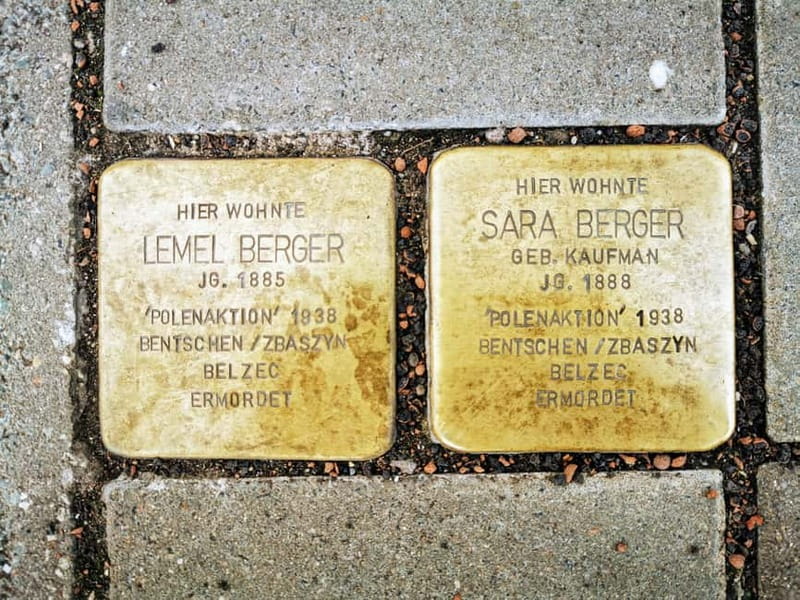
Flossenbürg concentration camp is included among the subjects covered. This gives the tour a link to the concentration-camp system and the wider network of Nazi persecution.
The available details do not say that the three-hour Nuremberg tour includes transport to Flossenbürg or a visit to the memorial site. Since the experience begins and ends at Frauenkirche and lasts three hours, treat Flossenbürg as a topic of historical discussion unless the operator confirms otherwise.
That clarification is important. A concentration camp memorial requires time and careful attention. It should not be confused with a quick city stop. If you want to visit Flossenbürg itself, ask separately about travel, entry, and the time required.
Its inclusion as a subject still helps place Nuremberg in context. Nazi persecution operated across Germany and occupied Europe. The city was a propaganda center and a legal setting, but it was also part of a much larger system of imprisonment, forced labor, and mass murder.
Federico’s guiding style and the value of Spanish
The guide named in the feedback is Federico. He is described as cultured, highly informed about Nuremberg and its Third Reich history, and able to explain difficult material in a pleasant, didactic way.
That combination matters. A guide can know many facts and still lose the thread. Here, the strongest praise focuses on Federico’s explanations, historical documents, and ability to make the key moments understandable.
Spanish-language guiding is a major advantage if Spanish is your strongest language. Complex subjects such as racial law, Nazi institutions, and postwar trials are easier to follow when you are not translating every sentence in your head.
The private group format may also suit you if you want to ask questions or keep the discussion focused. The exact group size is not provided, so do not assume this means a one-on-one tour. It does mean the tour is described as private rather than a general public group.
This is a serious subject, but the guide’s friendly and clear manner can make three hours easier to manage. The aim is not entertainment in the usual sense. It is a well-organized explanation that helps you understand how places and events fit together.
Is $19 a fair price for three hours?
At $19 per person, the value is strong if you want a guided introduction to Nuremberg’s Nazi-era history. You receive a professional Spanish-speaking guide and three hours of instruction, with no separate food or drink costs built into the price.
The price does not include hotel pickup or drop-off. Since the tour starts and ends at Frauenkirche, you need to make your own way to Hauptmarkt and plan your onward transport.
You should also keep your expectations realistic. A low-cost walking tour cannot provide unlimited time at every site, an in-depth museum visit, and transport to an outlying concentration camp. Its value comes from connecting major themes and locations in one structured experience.
I would consider it particularly worthwhile early in a Nuremberg stay. The explanation can give meaning to other places you visit later, including the historic center, Nazi-era sites, and any separate museum or memorial visit.
The booking terms add flexibility. You can reserve now and pay later, and cancellation is free up to 24 hours in advance for a full refund. Those terms are useful if your schedule in Bavaria is still changing.
Who should book this Spanish history tour?
This tour suits you best if you want:
- A serious introduction to Nuremberg’s role in the Third Reich
- Explanations in Spanish rather than a self-guided visit
- A private-group setting
- Context about both Nazi propaganda and the victims of antisemitism
- A three-hour activity that starts and finishes in central Nuremberg
- A low-cost way to organize several major historical themes
It is a particularly good choice for adults and older students who want political and historical context, not just photographs of Nazi buildings. The subject includes antisemitism, Nazi law, concentration camps, and war-crimes trials, so it is not a light sightseeing outing.
You may want something else if your priority is a long visit inside the Nuremberg Trials courtroom, a dedicated museum tour, or a full excursion to Flossenbürg. Those experiences may require separate planning, since they are not clearly included in this walk.
Should you book the Tour del Tercer Reich por Núremberg?
Book it if you want a Spanish-speaking guide to explain why Nuremberg became the Nazi Party’s showcase city and how that legacy connects to the Nuremberg Trials and human-rights remembrance. Federico’s clear, document-supported approach is a strong reason to choose this option.
The tour is not designed to cover every site in exhaustive detail. It gives you a focused three-hour framework, and at $19 per person, that is a sensible trade-off. Wear comfortable shoes, meet at the Frauenkirche entrance under the white and red umbrellas, and keep extra time available if you plan a museum or memorial visit afterward.
FAQ
Where does the tour begin?
It begins in front of the main entrance of the Frauenkirche at Hauptmarkt. Look for the white and red umbrellas.
Where does the tour end?
The activity ends back at the meeting point near the Frauenkirche.
How long does the tour last?
The tour lasts three hours. Starting times depend on availability.
Is the tour conducted in Spanish?
Yes. It includes a live Spanish-speaking guide.
Is this a private tour?
Yes. The group type is listed as a private group.
Is the tour wheelchair accessible?
Yes, the activity is described as wheelchair accessible.
What should I bring?
Bring comfortable shoes.
Are hotel transfers, food, or drinks included?
No. Hotel pickup and drop-off, food, and drinks are not included.
Just added around Nuremberg
- Tour en español al Campo Zeppelin★ 5.0 · 8 reviews
- Stein: Public guided tour of the “Old Mine” museum★ 4.5 · 18 reviews
- “Rotes Bier” and “Blaue Zipfel”. A historical-culinary walk★ 4.4 · 190 reviews
- Nuremberg: Old Town Guided Tour By Bus★ 4.4 · 198 reviews
- Nürnberg Bachelor(ette) Party with Night PubCrawl★ 4.2 · 5 reviews
- Nuremberg: Bar and Club Tour with Free Shots and Free Entry★ 3.8 · 23 reviews
- Nürnberg kennenlernen: Highlights in der Altstadt★ 4.7 · 189 reviews
- Nuremberg: World War 2 History Tour with Beer Tasting★ 5.0 · 4 reviews
Nuremberg Tours, compared.
Tunnels and Secret Passages in the City Wall Tour
Read our review →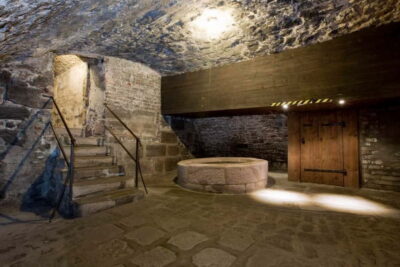
Walking Tour of Former Nazi Party Rally Grounds
Read our review →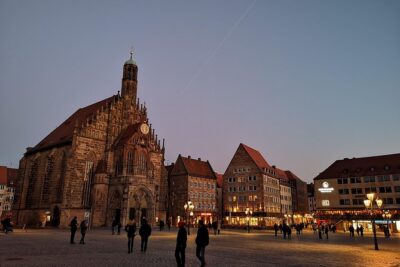
Browse the lists this tour appears in