
Review · BERLIN TOURS
Explore Berlin: Walking Tour of All The Iconic Sites
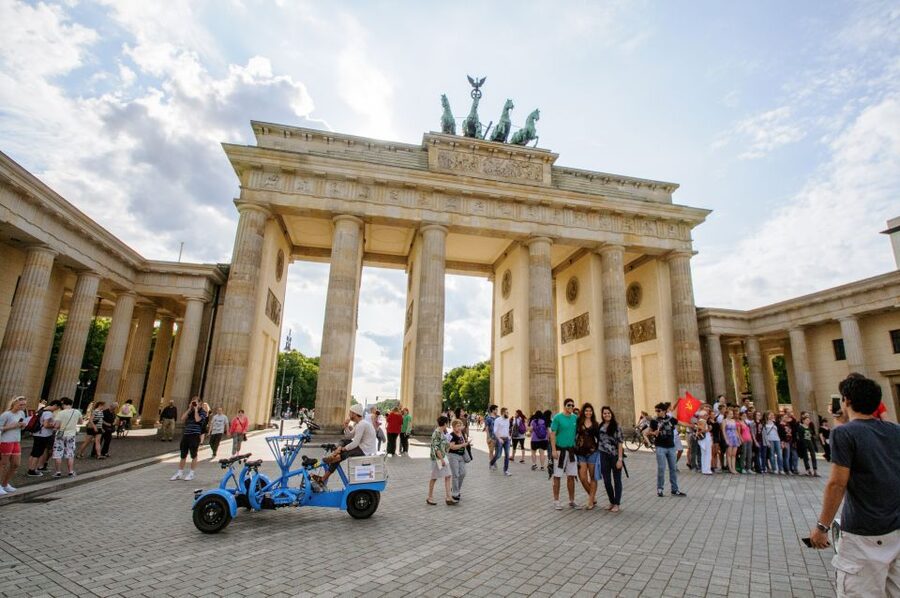
Berlin’s past is packed into this three-hour walk through the city center. You’ll move from Prussian grandeur to Nazi terror, the Cold War division, and the modern German capital, often within a few minutes of one another. The route covers the Brandenburg Gate, Reichstag, Checkpoint Charlie, the Berlin Wall, Hitler’s Bunker, and the Holocaust Memorial.
I like two things especially: the route gives you a useful first look at Berlin’s main sights, and the guides bring plenty of personality to difficult material. Hannah is praised for clear explanations and family-friendly humor, while Daniel, Xavier, Rohan, Tina, and others are noted for keeping the pace lively and answering questions well. The main drawback is simple: three hours means a lot of standing and walking, with only an outside look at most sites.
Key points to know before booking
- Start beside the Palace of Tears: Meet outside Friedrichstrasse station, near the yellow umbrellas.
- Follow Berlin’s major turning points: The route links Prussian Berlin, Nazi Germany, the Cold War, and reunification.
- Expect outdoor sightseeing: You see the Reichstag, museums, memorials, and Wall sites from outside rather than entering them.
- Guides make the difference: English, German, and Spanish tours are available, with private and small-group choices.
- Good value at $17: For a full central-city orientation and three hours of live commentary, the price is low.
- Wear proper shoes: The walk operates rain or shine and includes frequent stops on city streets and open plazas.
Why this route works for a first look at Berlin
Berlin can feel confusing at first. Its important sights are spread across several districts, and the city’s story is not one smooth timeline. A grand boulevard may lead to a memorial, a modern office block may cover the site of a former Nazi headquarters, and an ordinary-looking street can mark the old border between East and West.
This tour helps you connect those pieces. I like that it does not focus on one period alone. You hear about Berlin as a royal capital, see the scars of the Nazi era, examine the Cold War divide, and finish with the symbols of a reunited Germany.
The tour costs $17 per person, which makes it a strong orientation walk. You are paying for a live guide rather than admission tickets, so do not expect entry to the Reichstag, museums, or memorial interiors. Still, the route reaches a large number of major sights in one morning or afternoon, and you can return later to the places that deserve more time.
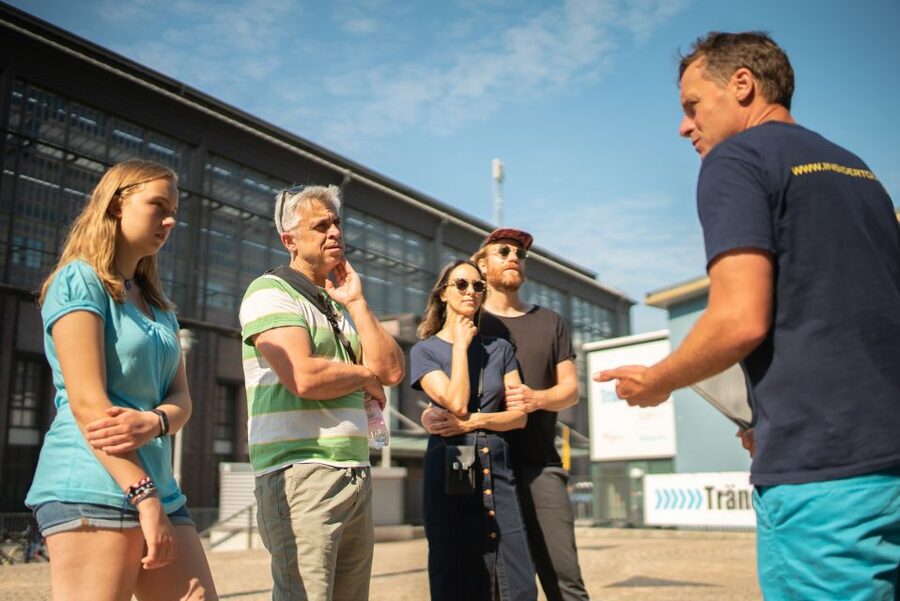
The guides appear to be the heart of the experience. Hannah is repeatedly praised for making history clear and enjoyable, even for families with children aged 10 and 12. Daniel is described as both entertaining and careful, and Rohan is noted for fitting a large amount of information into an engaging presentation. Tina is also praised for practical suggestions about food, bars, and transport.
Guide quality can vary on any scheduled walking tour, but this one offers several useful signs: live commentary, multiple language options, and private or small-group formats. If you enjoy asking questions, a smaller group should give you more room to do so.
More walking tours in Berlin:
- Discover Berlin Half-Day Walking Tour
★ 5.0 · 9,624 reviews - Berlin: Third Reich and Cold War 2 Hour Walking Tour
★ 4.9 · 6,830 reviews - Berlin: Discover Berlin Walking Tour
★ 4.9 · 5,998 reviews
Friedrichstrasse and the Palace of Tears
The meeting point is outside Friedrichstrasse train station, on the square beside the Traenenpalast, also called the Palace of Tears. Look for guides holding yellow umbrellas. That detail matters in a busy transport area, where a large group can otherwise be hard to spot.
The Palace of Tears was a border crossing used during Berlin’s division. Its name comes from the tearful goodbyes that took place there when people from the West had to leave East Berlin. Beginning here gives the tour an immediate human angle: Berlin’s division was not only about walls and armed guards, but also about families being separated.
The guide then sets the period and direction of the walk. You are not simply collecting postcard views. The aim is to understand how the city changed from a divided capital into the seat of a united Germany.
Wear comfortable shoes from the start. The route takes about three hours, and the frequent stops do not remove the need to walk between them. Bring water, a camera, and an umbrella or rain jacket if the forecast looks uncertain. The tour runs in all weather.
Museum Island and Bebelplatz
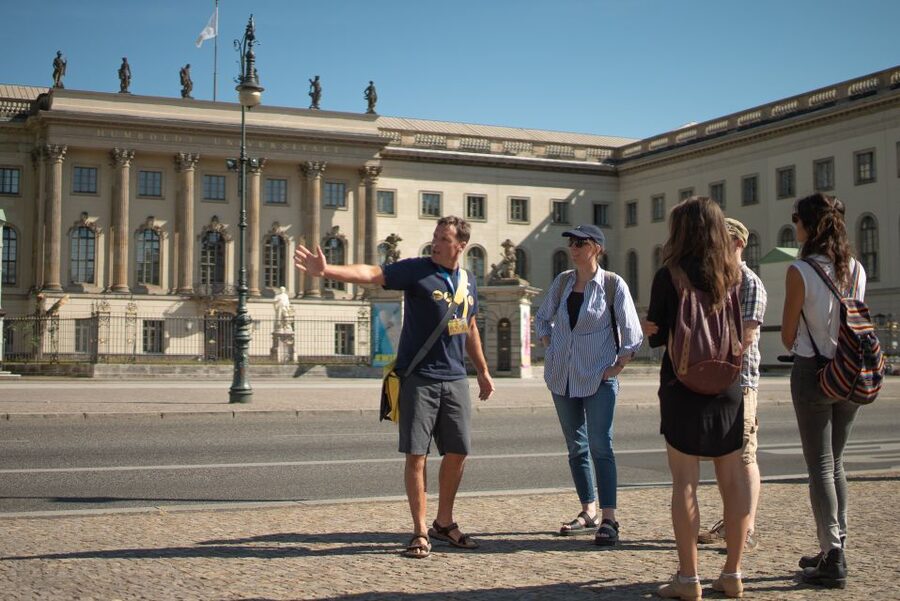
Museum Island appears early in the route, with about 15 minutes of guided commentary. This part of central Berlin brings together some of the city’s grandest cultural buildings, though this tour treats them as outside landmarks rather than museum visits.
That distinction is important. If you want to see collections inside the museums, plan a separate visit and allow much more time. Here, the value comes from the setting and the guide’s explanation of how central Berlin was shaped.
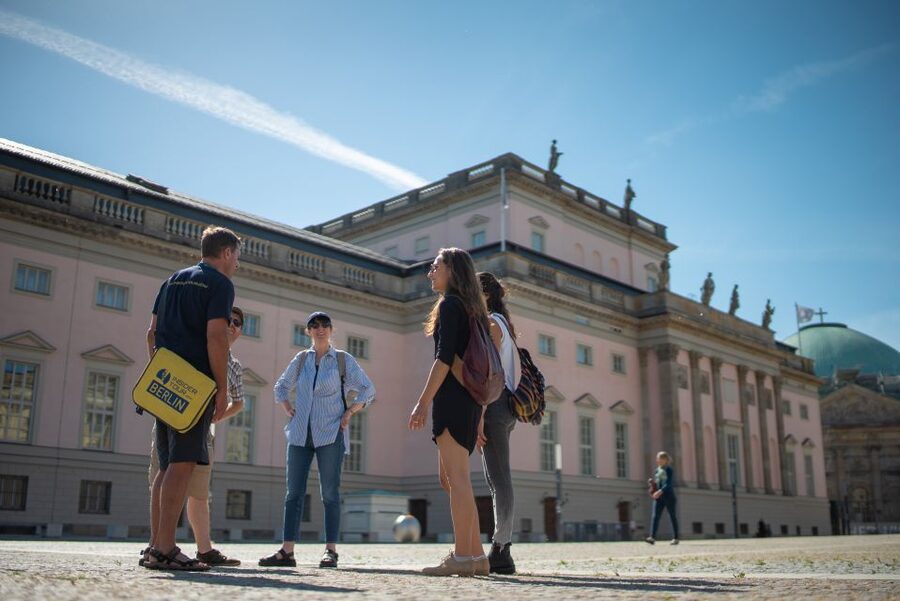
At Bebelplatz, the focus turns darker. This square is associated with the Nazi book burning, one of the clearest reminders that political repression can begin with attacks on ideas and public debate. A stop of roughly 10 minutes gives the guide time to explain the site without turning it into a rushed photo opportunity.
I appreciate the route’s handling of these shifts. You move from royal and cultural buildings to a place connected with Nazi censorship, then onward to the physical remains of dictatorship and division. The sights are close together, but their meanings are very different.
Gendarmenmarkt and the changing capital
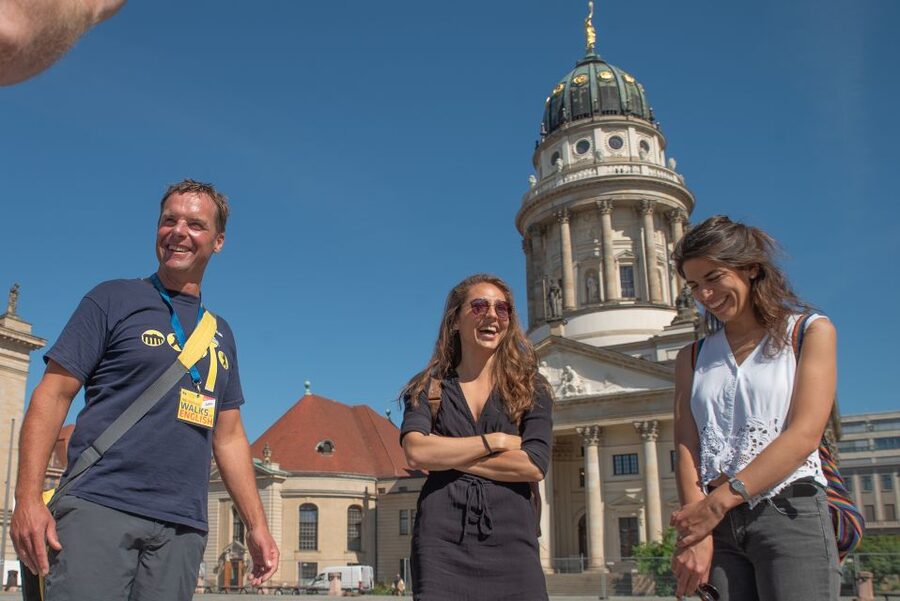
Gendarmenmarkt is another 10-minute stop. The square offers a change of mood, with monumental architecture and one of Berlin’s most formal urban settings.
The guide uses this stop to help you read the city as a series of political projects. Berlin was repeatedly reshaped by rulers, governments, war, and ideology. The square is not just a pretty pause between heavier subjects. It helps explain the scale and ambition of the capital that later became the center of Nazi power and, after reunification, the German government.
The route’s short stops work well for orientation. You get enough explanation to recognize the site later, but not enough time to study every architectural detail. I would treat this as a framework for your own exploring, not as a substitute for a dedicated architecture walk.
A few more Berlin half-days to weigh up
- Berlin: Reichstag, Dome and Government District Guided Tour
★ 4.7 · 18,288 reviews - Berlin: 1-Hour City Tour by Boat with Guaranteed Seating
★ 4.3 · 16,993 reviews - Berlin: Boat Tour Along the River Spree
★ 4.4 · 11,252 reviews - Berlin: Hop-on Hop-off Bus Tour with Live Commentary
★ 4.3 · 8,579 reviews
Checkpoint Charlie and the Berlin Wall
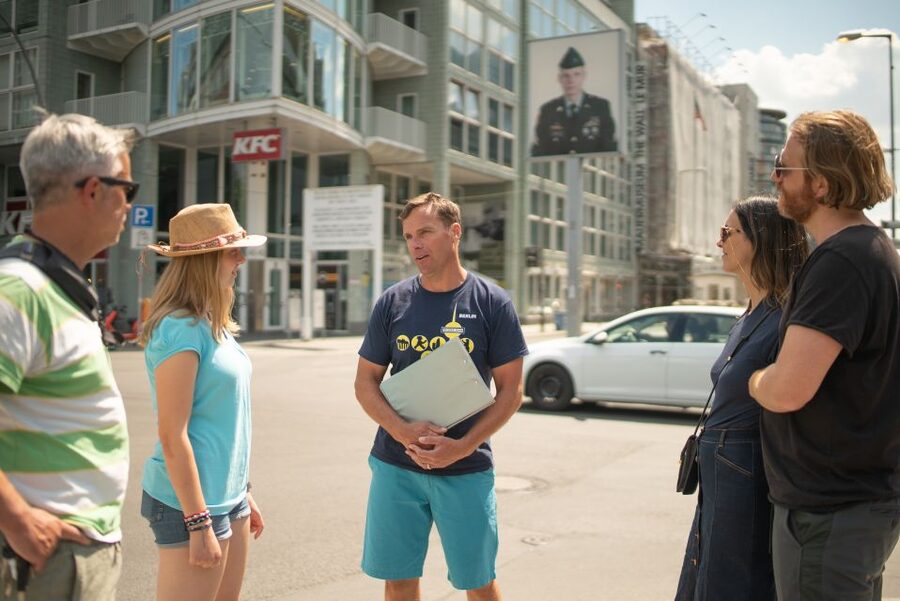
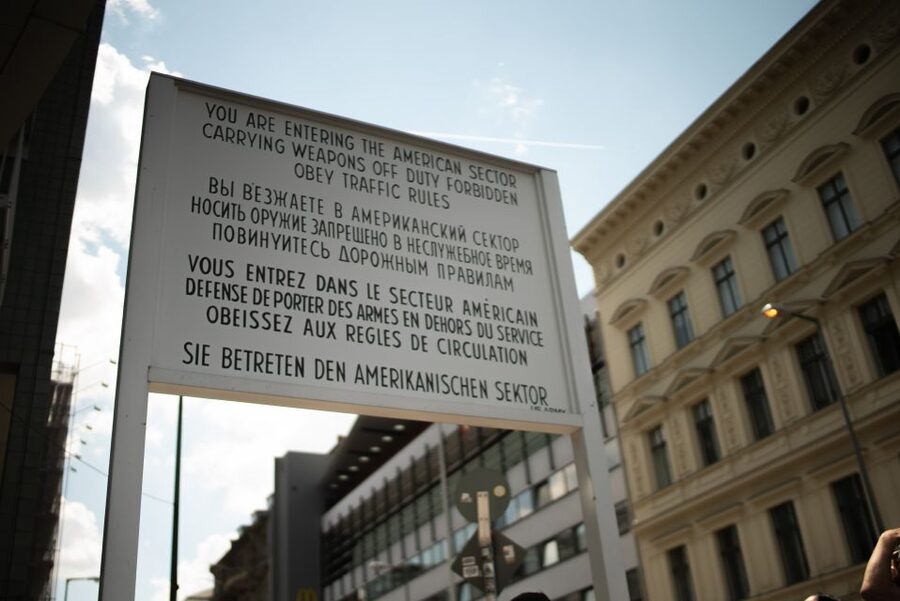
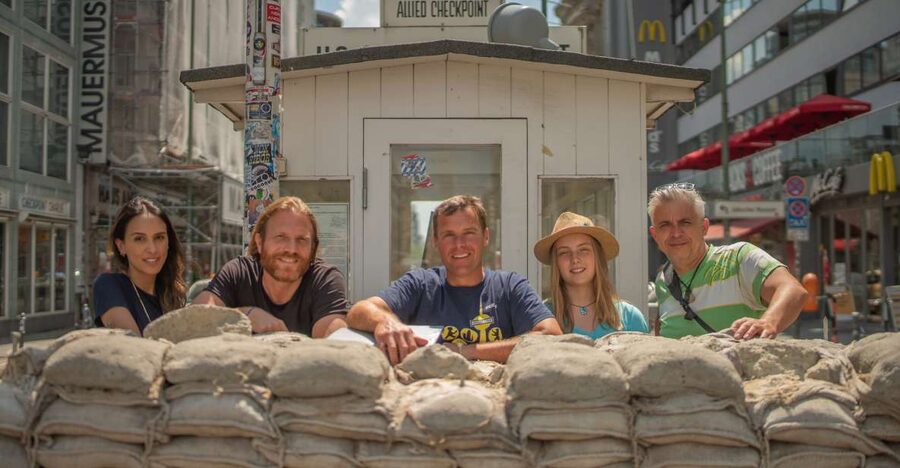
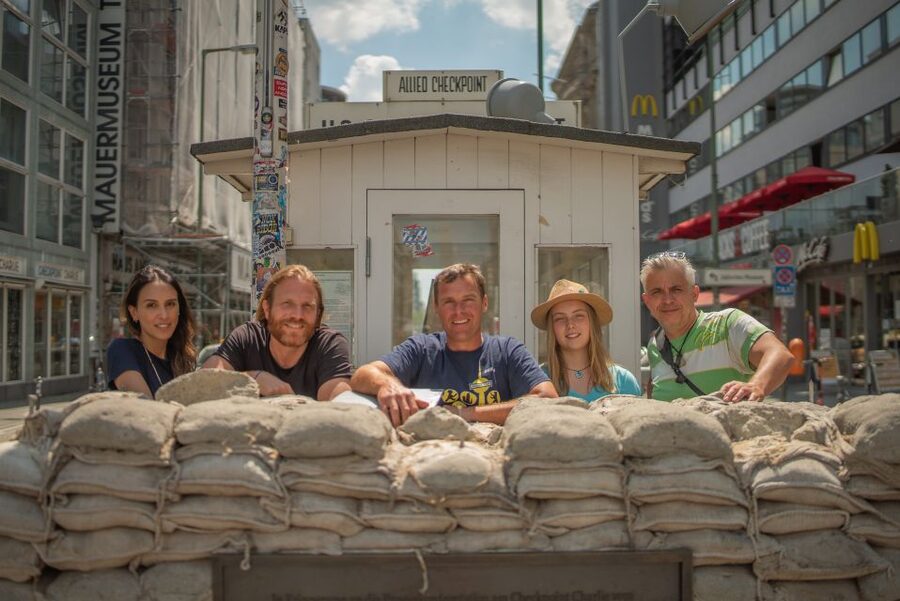
Checkpoint Charlie receives around 10 minutes, including time for photos and a guided explanation. This was one of the best-known crossings between East and West Berlin during the Cold War.
Today, the area can feel more like a busy city attraction than a preserved border site. That is one reason a guide is useful. The physical setting alone cannot explain the tension that once surrounded the crossing, the restrictions on movement, or the stories of people who tried to escape across the border.
The Berlin Wall stop adds another piece of that story. You can touch surviving sections of the Wall and hear about Cold War espionage and escape attempts. The route makes clear that the Wall was not simply a concrete barrier. It divided neighborhoods, families, and a whole city.
At roughly 10 minutes, this is another outside stop. You should not expect a long museum visit or a detailed examination of every remaining section. Instead, you get a clear explanation of what the Wall meant and how Berlin changed after it fell.
For me, this is one of the strongest reasons to take the tour early in your stay. Once you understand the old border, the city’s layout becomes easier to read. You also get useful context before visiting a larger Wall memorial on your own.
Hitler’s Bunker and the difficult work of remembering
The stop at Hitler’s Bunker lasts about 10 minutes and includes a photo opportunity. The site is now marked by an ordinary-looking urban setting rather than a dramatic monument. That lack of spectacle is part of the point.
A guide can explain what happened here and why the bunker is not presented as a shrine. Berlin has had to find ways to mark Nazi crimes without glorifying Nazi leaders. The conversation is likely to be sober, and it should be. This is not a light sightseeing stop, but it is an important one.
The tour moves quickly through several painful chapters, so listen for the connections. Bebelplatz addresses censorship. The bunker points to the Nazi regime’s final days. The Holocaust Memorial then shifts attention to the millions of Jewish people murdered under that regime.
The Holocaust Memorial and the former Death Strip
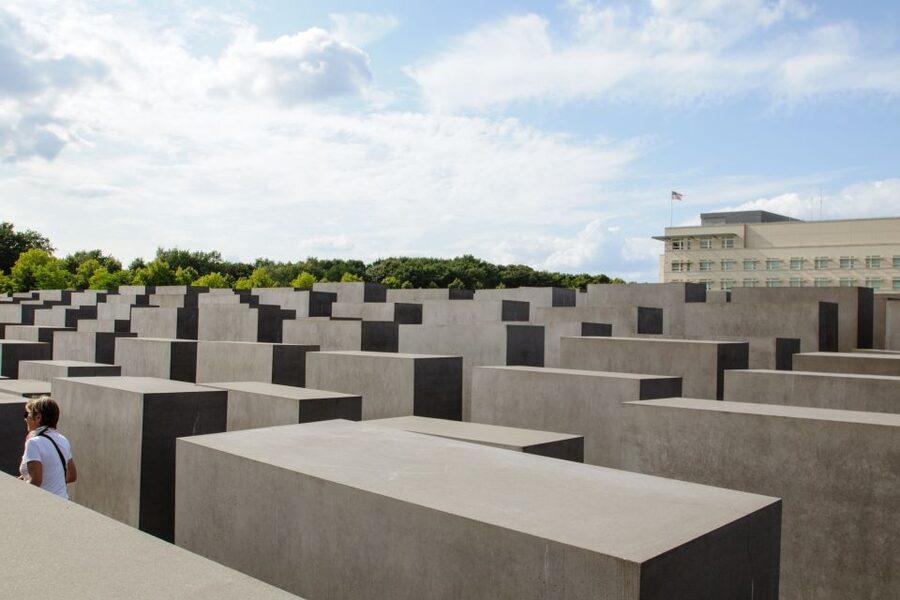
The Memorial to the Murdered Jews of Europe is one of the tour’s most affecting stops. You can walk among the concrete blocks and hear the guide explain the memorial’s purpose and design.
The route also refers to crossing the former Death Strip. That phrase connects the Nazi-era sites with the later Cold War border, showing how the same central part of Berlin was shaped by two different dictatorships. You are not seeing isolated attractions. You are walking through layers of political violence and public memory.
The memorial deserves quiet attention, even within a group tour. A 15-minute explanation can give you the basic context, but it cannot replace a slower personal visit. If you find the site powerful, return later without a schedule and spend more time there.
This is also a useful point to remember that Berlin’s memorials do not all speak in the same way. Some preserve physical remains. Some use architecture. Some leave empty spaces. The guide helps you understand those choices rather than simply taking photographs.
The Reichstag and Brandenburg Gate
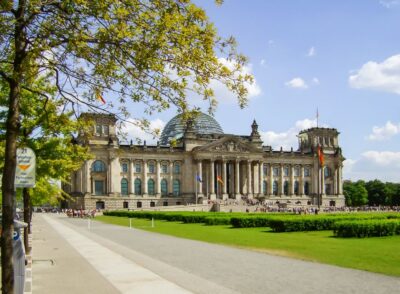
The Reichstag is covered in a roughly 10-minute stop with time for photographs and commentary. You see the German parliament building from outside and learn how it fits into Berlin’s return as a united capital.
The building carries several layers of meaning: government, war, division, and reunification. The tour does not include entry, so you will need a separate reservation or visit if you want to see the interior. The walking tour’s job is to place the Reichstag in the wider story.
The final major stop is the Brandenburg Gate, also with about 10 minutes of guided time. This is Berlin’s best-known symbol, but its importance goes well beyond its familiar shape. It once marked a city gate, later appeared in Cold War imagery, and became a powerful image of reunification.
Walking through the gate gives the tour a satisfying finish. You have moved from the former border areas and sites of oppression toward the center of the modern capital. The guide ties together Berlin’s transformation from a divided city into a place where national government, memorials, culture, and daily life now share the same streets.
The published details identify Berlin and Pariser Platz among the drop-off locations, while also describing the activity as ending back at the meeting point. Check the exact end point shown for your selected option when booking.
How the guide shapes the experience
A history-heavy walking tour rises or falls on its storytelling. Berlin has no shortage of facts, dates, and famous names. The challenge is selecting the details that help you understand what you are seeing.
The strongest guide descriptions here point to a clear pattern. Hannah is praised for explaining complicated subjects in a specific, easy-to-follow way and for using humor without losing respect for serious places. Daniel is described as polite, caring, funny, and willing to run beyond the planned time when the group was still engaged. Xavier is praised for an interactive style and for welcoming questions.
Other guides named in the feedback include Maria, Martha, Ru, Glen, Emma, Paul, Natalie, Arte, Eran, and Giles. Their reported strengths include personal warmth, local recommendations, enthusiasm, and the ability to connect separate periods of Berlin’s past.
You should still keep your expectations realistic. No guide can give every stop a full lecture in 10 or 15 minutes. If you already have a strong background in German history, some material may feel introductory. The benefit is that the tour gives you a coherent route and leaves you with better questions for museums and memorials afterward.
Who should book this $17 walk?
I would recommend it most strongly to first-time visitors, families, and anyone who wants a quick map of central Berlin before exploring alone. The route covers enough ground to show how the main sights relate to one another, and the explanations help you avoid treating Checkpoint Charlie or the Brandenburg Gate as disconnected photo stops.
It also suits visitors with only a short stay. For $17, you get three hours of live guiding across a large number of significant sites. That is good value if you would otherwise spend the same time wandering without context.
Families should find the format workable. The tour stops often, and guides such as Hannah are praised for keeping children aged 10 and 12 interested. Still, the subject matter includes Nazi persecution, murder, war, and escape attempts. Parents should decide if that level of history suits their children.
I would be more cautious if you have limited mobility or dislike walking in poor weather. The activity is wheelchair accessible, but it operates rain or shine, and the route involves outdoor movement between stops. Private or small-group options may be worth considering if you need a slower pace or more direct access to the guide.
English, German, and Spanish tours are available. A private option can include pickup from your Berlin accommodation, with the guide wearing a yellow name tag and waiting in the hotel lobby arrangement described for that option. The standard meeting point is the yellow umbrella outside Friedrichstrasse station.
Free cancellation is available up to 24 hours before the tour for a full refund, and you can reserve now and pay later. Those terms are useful if your Berlin plans are still shifting.
My verdict: book it for context, not museum depth
Book this tour if you want Berlin’s major central sights explained as one connected story. The route is especially useful at the start of a trip, when the city’s geography and history may still feel scattered.
Do not book it expecting indoor access, long museum visits, or a slow study of each memorial. You will see many sites from outside and spend much of the time listening, walking, and moving on.
For $17, the balance is very good. You get the Brandenburg Gate, Reichstag, Holocaust Memorial, Hitler’s Bunker site, Berlin Wall, Checkpoint Charlie, Bebelplatz, Gendarmenmarkt, and Museum Island in one organized walk. Bring comfortable shoes, stay open to difficult subjects, and use the tour as your city orientation. Afterward, you will know exactly which places deserve a second visit.
FAQ
How long does the Berlin walking tour last?
The tour lasts three hours. Check the available booking options for the current starting times.
Where does the standard tour meet?
Meet outside Friedrichstrasse train station, on the square beside the Traenenpalast, also called the Palace of Tears, at Reichstagufer 17, 10117 Berlin. Look for guides holding yellow umbrellas.
Which languages are available?
Live guided tours are available in English, German, and Spanish.
Does the tour enter the museums, Reichstag, or memorials?
The supplied details describe guided outdoor stops and photo stops. They do not include admission to the museums, Reichstag, or other attractions.
Is the walking tour wheelchair accessible?
Yes. The activity is listed as wheelchair accessible.
Can I cancel the tour or pay later?
You can cancel up to 24 hours in advance for a full refund. The reserve-now, pay-later option allows you to book without paying immediately.
Just added around Berlin
- From Berlin: Gardens & Palaces of Potsdam Bike Tour★ 5.0 · 61 reviews
- Berlin: Battle for Seelow Heights WW2 tour -Clash of Titans★ 5.0 · 27 reviews
- From Berlin: Historical Gems of Potsdam Private Day Trip★ 4.4 · 4 reviews
- Berlin: Französischer Dom 360° Panorama & Crémant to go★ 3.9 · 5 reviews
- Explore Berlin Tour: History and Highlights★ 4.7 · 5 reviews
- Berlin: Evening Yacht Cruise with Aperitif & Dinner Upgrade★ 4.6 · 178 reviews
- Berlin: Expats in Berlin Comedy Show Ticket★ 4.7 · 182 reviews
- Berlin: The Epic Comedy Club Friday Night Showcase★ 4.8 · 28 reviews
Berlin Tours, compared.

Reichstag, Dome and Government District Guided Tour
Read our review →
1-Hour City Tour by Boat with Guaranteed Seating
Read our review →
Reichstag, Plenary Chamber, Cupola & Government Tour
Read our review →
Browse the lists this tour appears in