
Review · BERLIN TOURS
East Berlin and the Wall: Walking Tour
Berlin’s Wall story becomes far clearer when you walk through the places where it happened. This tour links Bernauer Strasse’s preserved death strip with Alexanderplatz and the East Side Gallery, while your guide explains both political events and ordinary life in East Berlin. I like the strong route and the attention to personal stories, including escape attempts and the pain of divided families. The main catch is that public transport and a day ticket for zones AB cost extra.
I also like the small-group setup, which gives you a better chance to ask questions than a large city walk. Guides such as Paolo, Elisa, Claudia, and Catherine have brought warmth, clear explanations, and, in some cases, personal family connections to the subject. At 3 to 3.5 hours, this is a focused history tour, not a casual stroll, so wear good shoes and expect several train and subway rides.
Key points at a glance
- Bernauer Strasse shows the Wall as a working border: You see original sections, the former death strip, and evidence of escape attempts.
- Nordbahnhof was a ghost station: The S-Bahn stop closed after the Wall went up and remained shut for nearly 30 years.
- Alexanderplatz connects politics with protest: Socialist architecture sets the scene for the peaceful demonstrations that helped bring down the Wall.
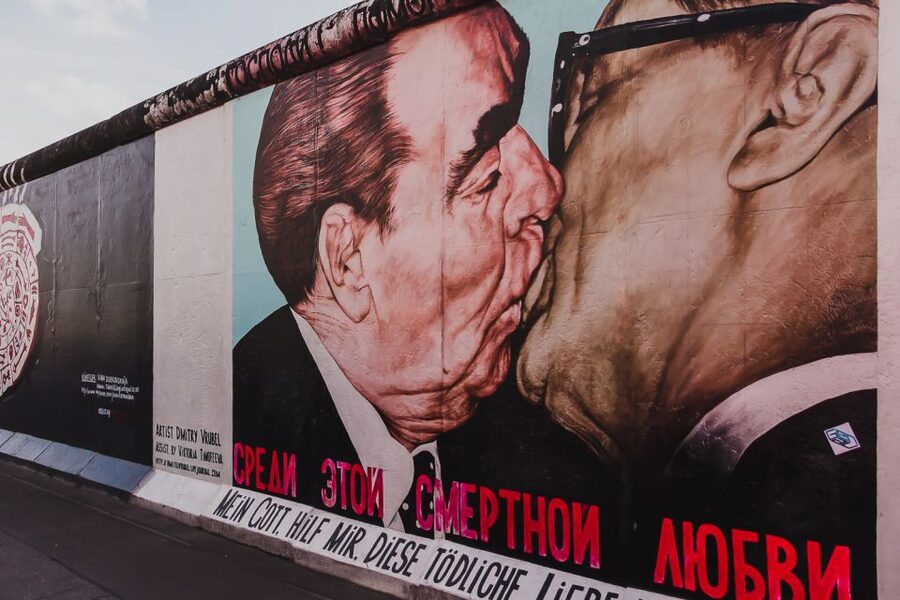
- The East Side Gallery supplies a visual finale: Its 104 murals include the famous Brezhnev-Honecker kiss.
- The price works best for a full group: At $351 for up to six people, six participants pay about $58.50 each before transport.
- Language choice is a real advantage: Tours are offered in English, German, French, Italian, and Spanish, with private groups available.
Why this route tells Berlin’s story well
Many Berlin history walks focus on a single Wall site. This one moves across the city, showing how the border affected transport, housing, politics, and daily routines. You begin at Potsdamer Platz, travel north to Bernauer Strasse, continue to Alexanderplatz, and finish at the East Side Gallery.
That sequence gives you a useful timeline. Potsdamer Platz helps set up postwar division. Bernauer Strasse shows the physical and human cost of the Wall. Alexanderplatz brings the story toward protest and collapse. The East Side Gallery shows how the former barrier is remembered and reinterpreted today.
The route also avoids treating East Berlin as a collection of ruins. You hear about the socialist system, state control, STASI repression, and the customs of daily life under the GDR. That broader view matters. A Wall tour can otherwise become a quick lesson in concrete, barbed wire, and escape tunnels, without explaining what it meant to live on the eastern side for decades.
More walking tours in Berlin:
- Discover Berlin Half-Day Walking Tour
★ 5.0 · 9,624 reviews - Berlin: Third Reich and Cold War 2 Hour Walking Tour
★ 4.9 · 6,830 reviews - Berlin: Discover Berlin Walking Tour
★ 4.9 · 5,998 reviews
Starting at Potsdamer Platz
The exact meeting point depends on the option you book, so check your confirmation carefully. If you choose hotel pickup, include your hotel name and address and wait in the lobby 10 minutes before the agreed time. The private version needs at least 72 hours to arrange a guide, so this is not a last-minute booking.
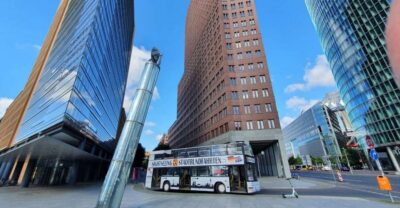
Potsdamer Platz is a useful starting place because it represents Berlin’s sharp changes across the 20th century. The tour uses it as a launch point for the postwar story before taking you by S-Bahn toward Nordbahnhof. Your guide can establish how Berlin became divided after World War II and why the city became such a tense Cold War symbol.
Do not expect a long stop here. The schedule gives you roughly eight minutes on the train afterward, so Potsdamer Platz functions mainly as the opening chapter rather than a full sightseeing visit.
Nordbahnhof and the city beneath the border
The S-Bahn ride to Nordbahnhof takes about eight minutes. This short trip is part of the lesson, not just a way to cover ground. Nordbahnhof was one of Berlin’s so-called ghost stations, a stop that was closed for almost three decades after the Wall was built.
Stations like this show how the border cut through normal city life. Trains still passed through parts of divided Berlin, but some stops were sealed, watched, or left dark. A map can explain that policy, but arriving by public transport makes the idea easier to grasp.
You will spend about 15 minutes on this guided portion. Since the stop is brief, listen for the link between transport control and state security. The tour’s use of trains and subways also means you are not simply looking at a distant memorial. You are moving through the same city system that was reshaped by the Wall.
Bring a valid public transportation ticket for zones AB. A day ticket is not included, and you will need it during the tour. This is an extra cost, but it also lets you continue using Berlin’s public transport after the tour if your plans allow.
Bernauer Strasse, where the Wall cut through homes
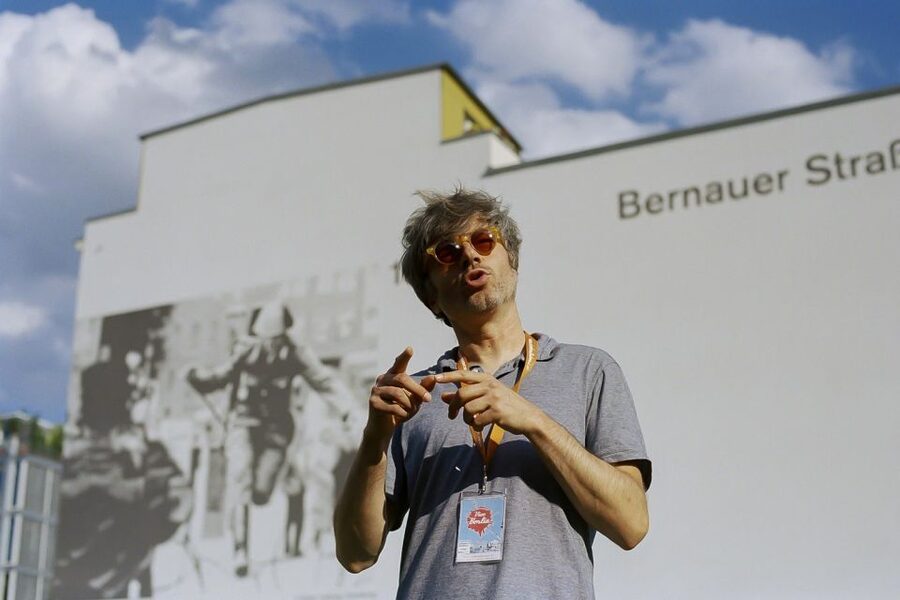
Bernauer Strasse is the emotional center of the experience. The guided visit lasts about 50 minutes, giving your guide enough time to explain the border system rather than simply point out a surviving slab of concrete.
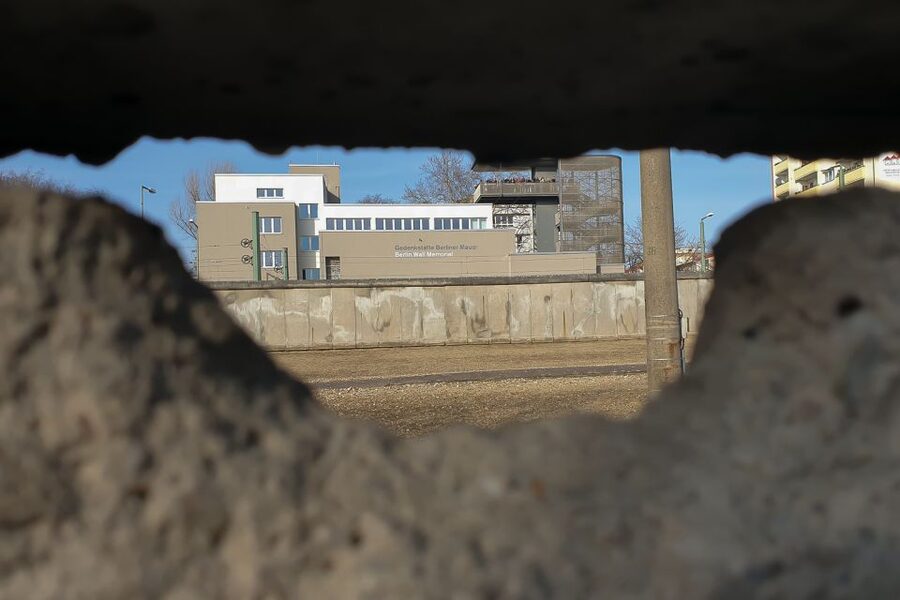
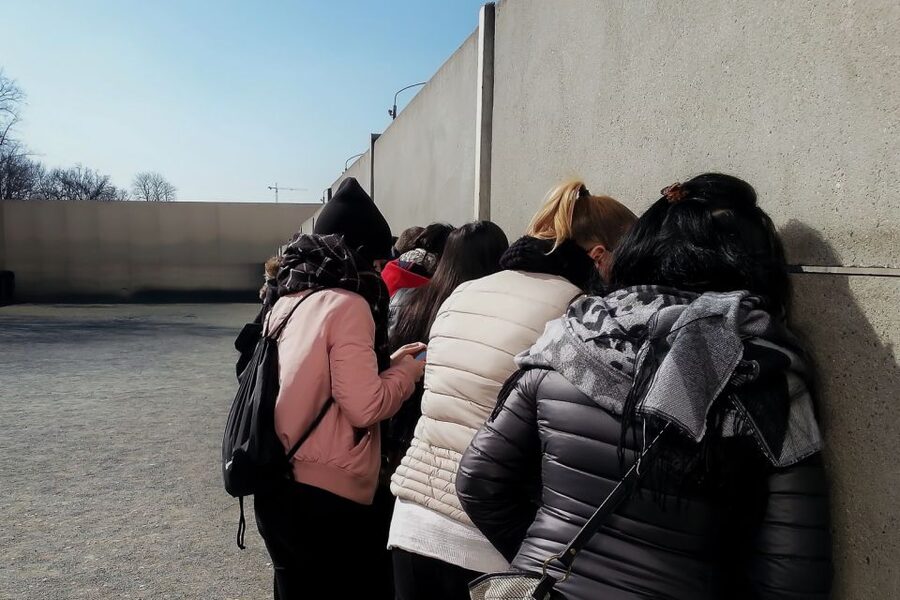
Here, the Wall ran directly along a street where buildings and families were caught on opposite sides. The memorial preserves original Wall portions and parts of the former death strip. You learn how the border was built, how it was guarded, and why crossing it was so dangerous.
The strongest part of this stop is its focus on individual escape attempts and people who died trying to get through. The subject is painful, but the site gives those stories a physical setting. You can better understand the risks when you see the narrow spaces, barriers, and layered security measures rather than hearing only dates and political names.
Your guide also explains how the Wall changed everyday behavior. Families could be separated. Familiar streets became no-go zones. A short walk or visit to a nearby address could become impossible. This is where the tour delivers its clearest answer to the question of what life was like in East Berlin.
Plan on standing and walking for much of the stop. Comfortable shoes are essential, especially if the weather is poor. The memorial is not a quick photo stop, and its subject matter may feel heavy. That is a reason to choose this tour for serious historical interest, not a reason to avoid it.
A few more Berlin half-days to weigh up
- Berlin: Reichstag, Dome and Government District Guided Tour
★ 4.7 · 18,288 reviews - Berlin: 1-Hour City Tour by Boat with Guaranteed Seating
★ 4.3 · 16,993 reviews - Berlin: Boat Tour Along the River Spree
★ 4.4 · 11,252 reviews - Berlin: Hop-on Hop-off Bus Tour with Live Commentary
★ 4.3 · 8,579 reviews
Alexanderplatz and the pressure beneath socialist design
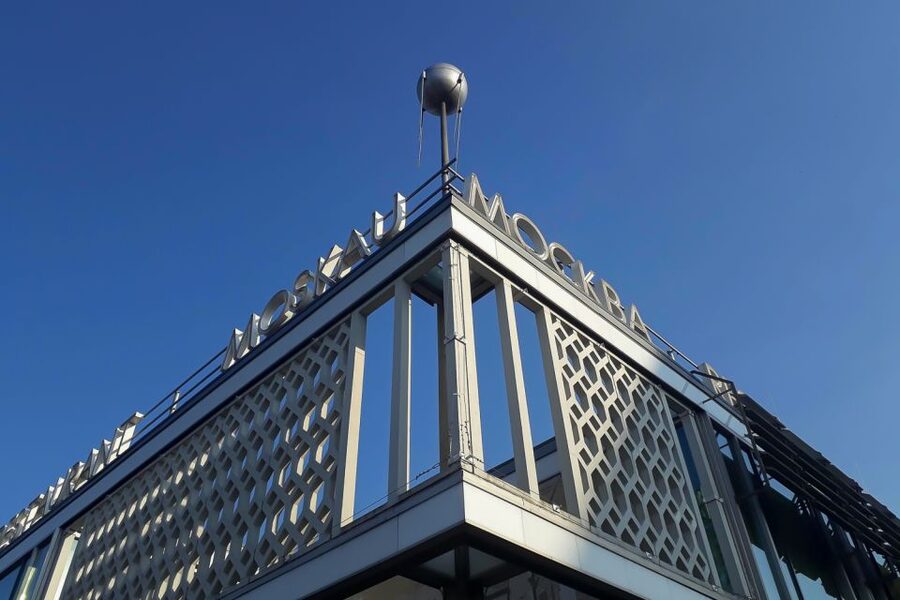
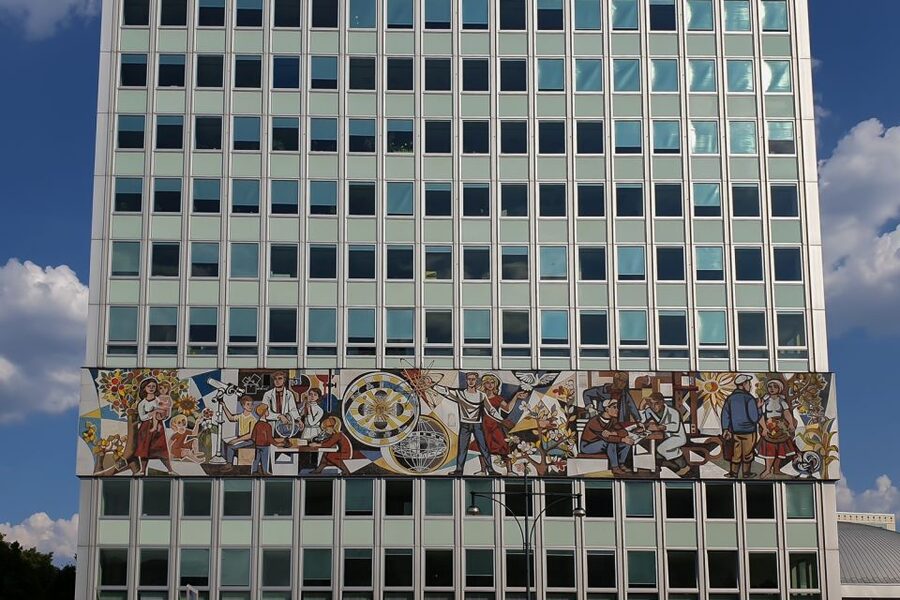
After Bernauer Strasse, you take the subway for about 10 minutes to Alexanderplatz. The guided visit here lasts about 10 minutes, so the stop is compact. It works best as a political transition between the Wall’s physical reality and the events that brought down the GDR government.
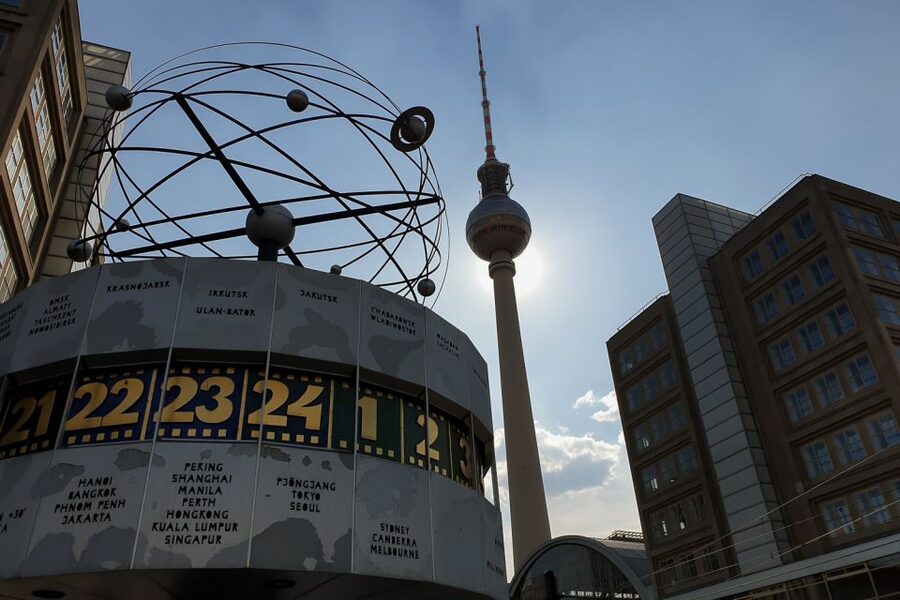
Alexanderplatz is surrounded by socialist-era architecture and is closely linked with the peaceful demonstrations that challenged STASI repression. Your guide explains how public protest grew in 1989 and how pressure on the government helped lead to the Wall’s opening and the collapse of the Soviet bloc.
This is an important part of the route because it reminds you that the Wall did not simply disappear on its own. Political control, public fear, and popular resistance all shaped the final years of East Berlin. The square gives that story a public stage.
The short stop may leave you wanting more time with the architecture. If you are especially interested in East Berlin’s urban design, you may wish to return later and explore Alexanderplatz at your own pace. During the tour, though, it serves as a clear and efficient link in the larger story.
The TV Tower and the image of East Berlin
The next 10-minute stop is at the Berlin TV Tower. The tour does not include a visit to the tower’s observation areas, so think of this as an exterior look and a chance to discuss its place in the city.
The TV Tower is one of the clearest visual markers of East Berlin’s socialist identity. It was built as a major state project and became a symbol of the eastern capital. Its scale and location help explain how architecture could communicate political power.
This stop is brief, but it adds balance to the Wall memorial. Bernauer Strasse shows repression and separation. The TV Tower points to the GDR’s effort to project modernity, confidence, and state authority. That contrast helps you see East Berlin as more than a place defined by the border.
East Side Gallery and the Wall after 1989
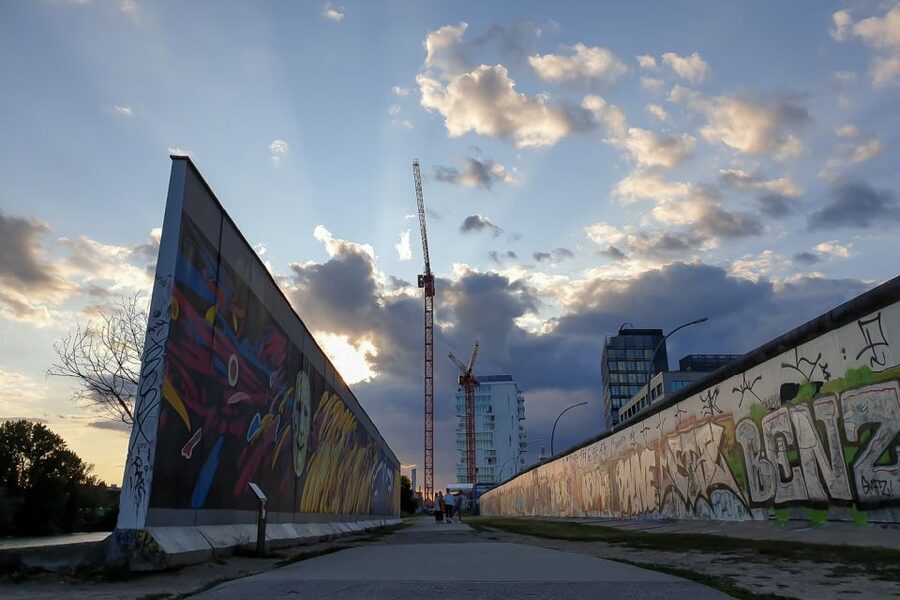
The final subway ride takes about 10 minutes, bringing you to the East Side Gallery. The guided visit lasts around 15 minutes. This open-air stretch is covered with 104 murals painted on a surviving section of the Wall.
The most famous image is the painted kiss between Soviet leader Leonid Brezhnev and East German leader Erich Honecker. It is funny at first glance, but the image also carries political meaning. The mural turns a symbol of party loyalty and state power into a public joke, and it captures the strange mix of relief, satire, and memory that followed reunification.
The East Side Gallery is a lively contrast to Bernauer Strasse. At the memorial, the Wall is presented through loss and remembrance. Here, it becomes a canvas. I like ending with this change in tone because it shows that Berlin’s Wall story is not only about what was destroyed. It is also about how people later claimed the space and gave it new meaning.
The visit is short, so you will not study all 104 murals in detail. If the artwork interests you, return independently for more time and photos. The tour gives you the context and the main highlights, then leaves you free to make a longer visit later.
How the guide shapes the experience
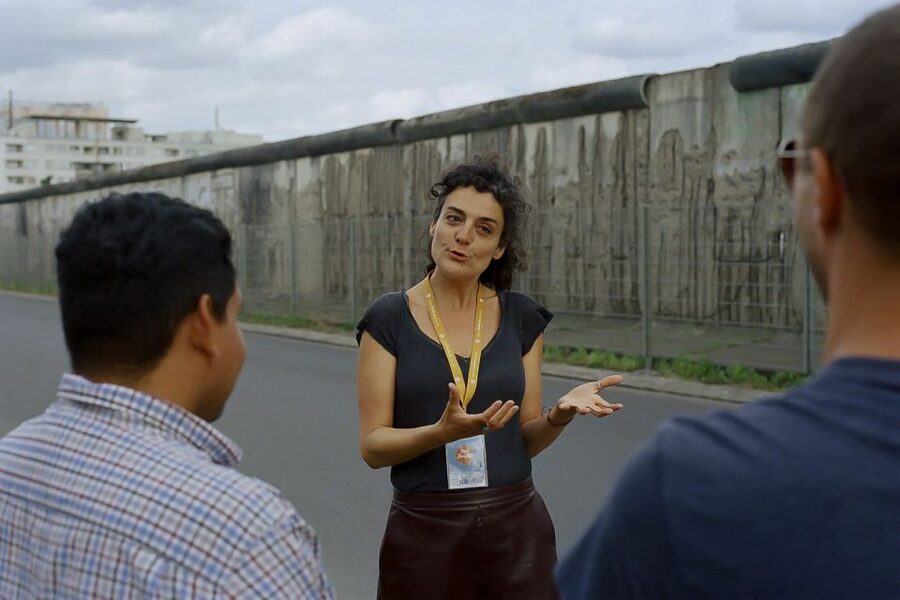
This tour depends heavily on the guide. The route is easy to follow, but the meaning of each place is not always obvious from what you can see. A strong guide connects the ghost station, the Wall memorial, socialist architecture, peaceful protests, and the murals into one readable story.
The guide team includes English, German, French, Italian, and Spanish speakers. Names associated with recent tours include Paolo, Elisa, Claudia, and Catherine. The personal touch can matter here, especially when a guide adds family experience or explains how the political system affected ordinary households.
Past feedback highlights clear explanations, engaging anecdotes, and guides who keep the history accessible. The repeated praise for Paolo and Elisa points to a lively presentation, while Catherine has been noted for adding personal testimony. You should still remember that guide assignment depends on the date and language you choose.
If you are booking a private group, you can choose a departure time with the provider. That flexibility helps families or small groups who want to ask many questions or move at a slower pace. It also means the $351 price can be good value when divided among six people, but expensive for one or two.
Is $351 a fair price?
The listed price is $351 per group of up to six. At the full six-person capacity, that works out to about $58.50 per person. For three people, it is $117 each, and for two people, it is $175.50 each, before the public transport ticket.
That pricing makes the tour most attractive to families, friends, or a private party of four to six. You receive a 3 to 3.5-hour guided route, a guide in your chosen language, and a private-group option. The small size also gives you more room to ask about sensitive subjects such as STASI surveillance, escape attempts, and life under socialism.
For a solo visitor or couple, the price is harder to justify unless the private format and language choice are especially important. The tour does not include food, drinks, or transport. Still, the AB ticket is a modest practical add-on compared with the guide fee, and the public transport is built into the route rather than treated as dead time.
Free cancellation is available up to 24 hours before the tour, and you can reserve now and pay later. Those terms are helpful if your Berlin schedule is still changing.
Who will get the most from this tour?
I recommend it most for you if this is your first serious look at Berlin’s divided past. The route covers the key sites without requiring you to plan several separate visits, and the guide supplies the political and personal context that signs alone cannot provide.
It suits adults, older children, and students who can handle a sober subject. The Wall memorial includes tragic stories, so it is not designed as a light sightseeing outing. The East Side Gallery adds color and humor near the end, but much of the tour deals with surveillance, restricted movement, failed escapes, and deaths at the border.
It is also a good choice if you prefer a guide in French, Italian, Spanish, German, or English. The strong response to Italian-speaking guides such as Paolo, Elisa, and Claudia suggests that language comfort can make a major difference when the topic is complex.
You may prefer a different format if you want museum interiors, a long visit to the TV Tower, or a slow architectural walk. This experience is mainly outdoors and in transit, with short stops at several major places. It gives you range and structure rather than long, detailed time at one site.
Practical advice before you go
Wear comfortable shoes. You will walk between sites, stand at memorial areas, and use several trains and subway connections.
Have your AB public transport ticket ready before the tour begins. The transport time is short, but delays or confusion over tickets can eat into the scheduled visits.
Check the meeting point because it may change with the option you select. If you book hotel pickup, send the hotel name and address and confirm the details with the provider before the day.
Allow a little mental space after Bernauer Strasse. The stories there are difficult, and the tour moves on to Alexanderplatz and the East Side Gallery rather quickly. If you want more time at the memorial or murals, plan a return visit.
Should you book East Berlin and the Wall?
Book it if you want a guided route that connects the physical Wall remnants with the political collapse of East Germany and the ordinary routines of life behind the border. The 4.9 rating from 407 reviews reflects the experience’s strongest feature: guides who explain serious history in clear language and keep the pace engaging.
The best value comes when six people share the $351 group price. I would also choose it for a private family group, a first visit to Berlin, or anyone who wants Italian, French, Spanish, German, or English guidance.
Skip it if you want a quiet, self-guided visit, a museum-heavy program, or a dedicated tour of the TV Tower. For everyone else, this is a well-planned way to see the Wall in context, from the ghost stations and death strip to the peaceful protests and painted concrete of the East Side Gallery.
FAQ
How long does the tour last?
The tour lasts about 3 to 3.5 hours.
What places does the tour visit?
The route includes Potsdamer Platz, Nordbahnhof, the Berlin Wall Memorial at Bernauer Strasse, Alexanderplatz, the Berlin TV Tower area, and the East Side Gallery.
Is public transportation included?
No. You need a valid public transportation ticket for zones AB during the tour. The transport ticket is not included in the price.
Is hotel pickup available?
Pickup is optional for the private tour. If you select it, provide your hotel name and address, wait in the lobby 10 minutes before the scheduled time, and confirm the pickup details with the provider.
Which languages are available?
Live guides are available in English, German, French, Italian, and Spanish.
Can I book a private group?
Yes. A private group option is available, with pricing of $351 for a group of up to six people. Private tours cannot be arranged less than 72 hours in advance.
What should I bring?
Bring comfortable shoes and a valid AB public transport ticket.
Can I cancel the booking?
You can cancel up to 24 hours in advance for a full refund. The reserve-now, pay-later option lets you hold your place without paying immediately.
Just added around Berlin
- From Berlin: Gardens & Palaces of Potsdam Bike Tour★ 5.0 · 61 reviews
- Berlin: Battle for Seelow Heights WW2 tour -Clash of Titans★ 5.0 · 27 reviews
- From Berlin: Historical Gems of Potsdam Private Day Trip★ 4.4 · 4 reviews
- Berlin: Französischer Dom 360° Panorama & Crémant to go★ 3.9 · 5 reviews
- Explore Berlin Tour: History and Highlights★ 4.7 · 5 reviews
- Berlin: Evening Yacht Cruise with Aperitif & Dinner Upgrade★ 4.6 · 178 reviews
- Berlin: Expats in Berlin Comedy Show Ticket★ 4.7 · 182 reviews
- Berlin: The Epic Comedy Club Friday Night Showcase★ 4.8 · 28 reviews
Berlin Tours, compared.
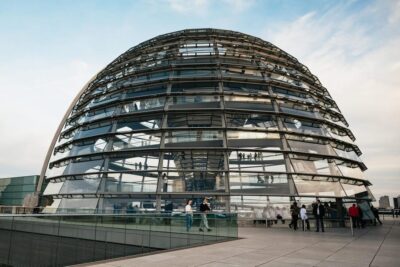
Reichstag, Dome and Government District Guided Tour
Read our review →
1-Hour City Tour by Boat with Guaranteed Seating
Read our review →
Reichstag, Plenary Chamber, Cupola & Government Tour
Read our review →
Browse the lists this tour appears in