Review · BERLIN TOURS
Wall Tour Berlin – Fates, Heroes & Love Stories
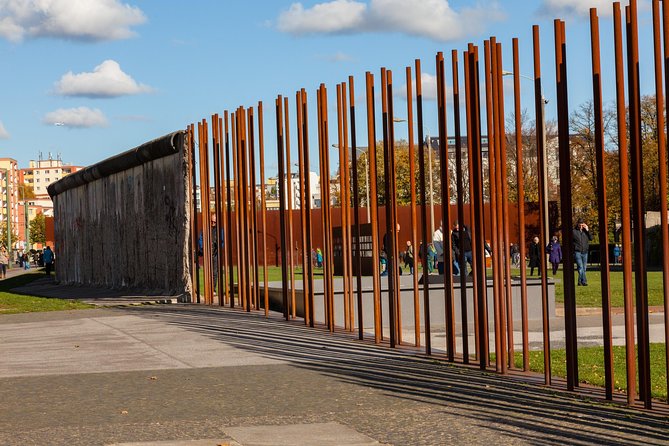
Berlin’s Wall was not just a slab of concrete. It cut through streets, homes, churches, train lines, and families. This two-hour walk follows the Berlin Wall Memorial along Bernauer Strasse, where the old border strip, watchtower area, memorial window, and escape sites make the story unusually easy to picture.
I like the way the tour links specific places to personal fates, rather than treating the Wall as a distant Cold War symbol. I also like the route from Nordbahnhof to Mauerpark, which brings in ghost stations, tunnel escapes, the Church of Reconciliation, Conrad Schumann’s famous jump, and the Wall’s fall.
The main concern is reliability. The experience has a 4.1 rating from nine posted ratings, but two separate complaints say no guide appeared at the meeting point. Confirm the meeting details shortly before setting out, and keep your booking confirmation handy.
Key points before you book
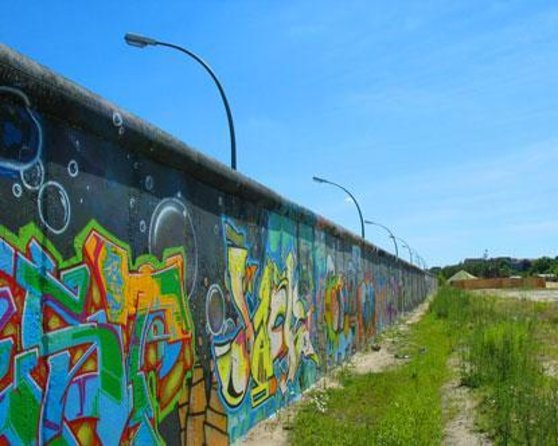
- You walk the Bernauer Strasse memorial area: The route covers the clearest surviving section of the former border fortifications in central Berlin.
- You hear individual stories: Deaths at the Wall, window escapes, tunnel attempts, kidnappings, youth propaganda, and love stories give the history a human scale.
- The tour runs about two hours: Thirteen short stops keep the pace moving, though several stops allow time to look at photographs and videos.
- The walk ends at Mauerpark: From there, you can take the M10 tram toward Berlin Hauptbahnhof.
- The group can reach 25 people: That is small enough for a walking tour, but the guide’s ability to hold everyone’s attention will matter.
- The price is modest: At $19.66 per person, the value is strong if the guide arrives and adds context you would not get from simply walking through the memorial alone.
Starting at Nordbahnhof and the ghost stations
The tour begins at Elisabeth-Schwarzhaupt-Platz, near the entrance to Nordbahnhof S-Bahn station on Gartenstrasse. The first stop has a small visual joke with a serious point: you symbolically jump over the Wall at the station entrance.
The subject here is the so-called ghost stations. During the divided years, some train lines in West Berlin passed under East Berlin, but trains were not allowed to stop at certain stations. The platforms were sealed off and watched by East German guards, leaving dark, unused stations beneath the city.
This is a smart opening because it shows that the Wall was more than a fence above ground. It also controlled movement below the streets. If you arrive by public transport, Nordbahnhof is an easy place to get oriented before the walk begins.
A few more Berlin half-days to weigh up
- Berlin: Reichstag, Dome and Government District Guided Tour
★ 4.7 · 18,288 reviews - Berlin: 1-Hour City Tour by Boat with Guaranteed Seating
★ 4.3 · 16,993 reviews - Berlin: Boat Tour Along the River Spree
★ 4.4 · 11,252 reviews
How a city became a border
At the Berlin Wall Memorial, the guide explains how the border could be built in the first place. The first few stops are brief, but they set up the political crisis that led to the Wall.
On June 15, 1961, East German leader Walter Ulbricht claimed that no one intended to build a wall. Less than two months later, on August 13, the border was sealed and construction began. The speed matters. Berliners went to bed with one city and woke to barricades, soldiers, blocked streets, and separated relatives.
You learn how the border strip developed from an initial barrier into a heavily guarded system. The point was not simply to keep outsiders out. It was designed to keep East German citizens in.
The route is especially useful if you know the broad outline of the Cold War but want to understand how the machinery worked on the ground. A short stop cannot cover every political detail, but it can show how quickly an official denial became a physical reality.
The memorial window and the human cost
One of the most sobering points is the memorial window, where the guide tells the stories of people who died trying to cross. At least 140 people were killed at the Berlin Wall between 1961 and 1989, though the exact total remains uncertain.
That uncertainty is worth noting. Numbers can make historical suffering feel tidy. Individual stories do the opposite. They remind you that each death involved a name, a family, a decision, and a final moment of fear.
The guide’s approach is described as direct and unsparing. You hear about people who paid with their lives for the chance to leave, not just about generals and treaties. This makes the stop powerful, but it may be difficult for children or anyone who prefers a lighter historical walk.
The experience also includes stories of people who jumped from windows in desperation. These accounts are not presented as adventure tales. They show how the border turned ordinary homes into dangerous escape points.
The viewing platform and the former border strip
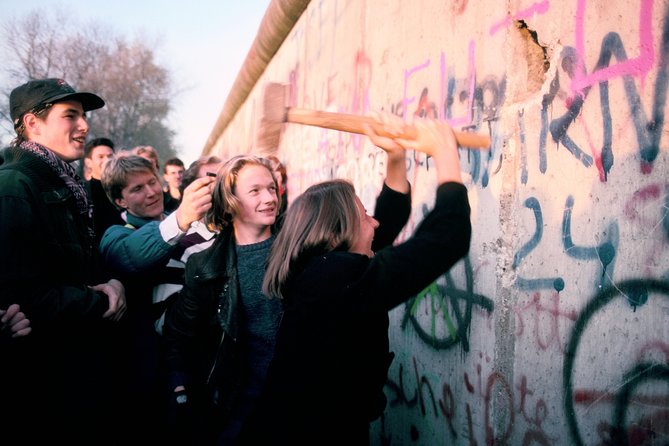
The route continues to a viewing platform overlooking the former border strip on Bernauer Strasse. This is one of the most useful stops because it lets you see the arrangement of the border area from above.
From ground level, it can be hard to understand how many layers separated East from West. The viewing platform helps you read the space: the former wall line, the open strip, and the area once controlled by border guards. Even where modern Berlin has grown around it, the memorial preserves enough structure to make the division visible.
I would pay close attention here rather than rushing for photographs. The guide’s explanation gives meaning to what might otherwise look like an open patch of grass and concrete. You begin to see why crossing was so dangerous and why the memorial remains in this particular place.
There is no admission fee at the listed stops, so the guide is providing interpretation rather than access to a paid attraction. That helps explain the price. You are paying mainly for the walking route, organization, and storytelling.
Same city, a completely different sort of afternoon:
- Discover Berlin Half-Day Walking Tour
★ 5.0 · 9,624 reviews - Berlin: Hop-on Hop-off Bus Tour with Live Commentary
★ 4.3 · 8,579 reviews - Berlin: Government District around the Reichstag Guided Tour
★ 4.7 · 8,447 reviews - Berlin: Reichstag, Plenary Chamber, Cupola & Government Tour
★ 4.6 · 8,422 reviews
A church trapped between two Berlins
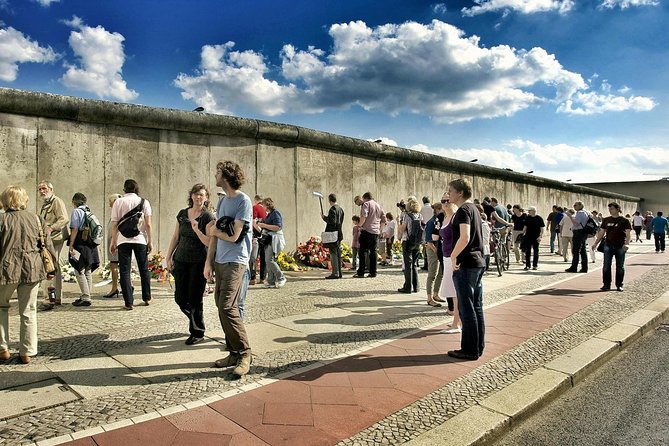
Near Ackerstrasse, the walk reaches the Chapel of Reconciliation. It marks the site of a church that once stood inside the border strip.
Before the Wall, people from East and West Berlin worshiped together there. After the border closed, the church became trapped in the restricted zone. Its fate shows how the division damaged religious life and ordinary community ties, not just political institutions.
This stop adds a different kind of sadness. The Wall did not only separate political enemies. It cut through neighborhoods that had shared schools, shops, churches, and daily routines.
The chapel also gives the route a moment of quiet after the grim accounts at the memorial window. You still learn about the destruction caused by the border, but the setting encourages reflection rather than shock.
Permits, youth propaganda, and controlled movement
The tour then turns to agreements intended to make the Wall more permeable. These passenger agreements were made between the West Berlin Senate and the East German government.
This part helps explain that the border was not equally closed to everyone at all times. Movement could be negotiated, restricted, and manipulated. Small changes in access had large effects on families and daily life.
The guide also discusses how East Germany used children and young people for propaganda. That is a less familiar part of the Wall story, and it broadens the tour beyond escape attempts. The state did not rely only on concrete, guards, and weapons. It also tried to shape how young people understood the country, the border, and those on the other side.
For me, this is one of the more valuable subjects on the route because it shows how political control worked through institutions and education. The tour does not treat the Wall as an isolated construction project. It connects the barrier to the wider system around it.
Windows, jumps, and homes turned into traps
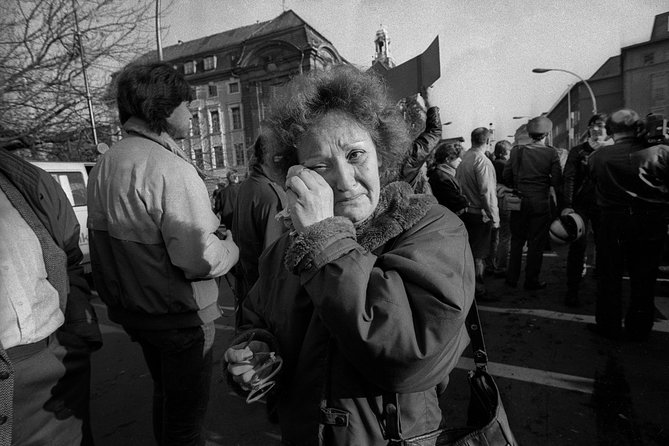
Bernauer Strasse once had residential buildings with windows and exits facing West Berlin, while the buildings themselves stood in East Berlin. That strange legal and physical arrangement created one of the most tragic chapters in the area’s history.
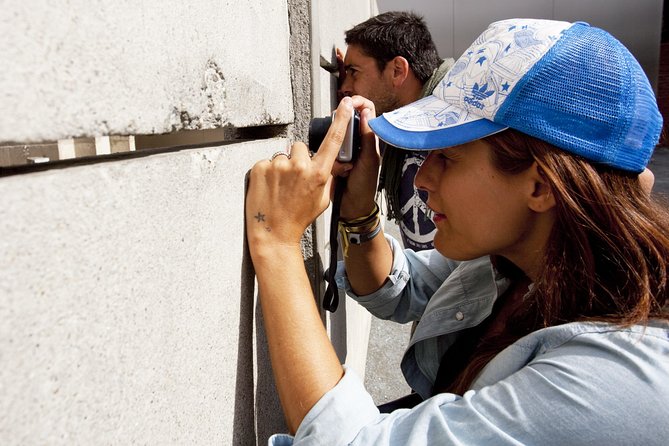
People jumped from windows to escape. Some were caught or rescued. Others died. Hundreds are said to have jumped from the buildings out of fear and desperation, and the tour gives you time to examine photographs and videos connected with these events.
This is a strong part of the walk because the setting makes the story immediate. You are not hearing about an escape from an anonymous frontier. You are standing beside former homes and imagining residents looking out at a destination that was only a few meters away but guarded by a deadly system.
The photographs and videos can be viewed at your own pace, which is useful. The guide gives the historical frame, then you have a chance to take in the evidence without being hurried along immediately.
Still, expect serious material. The stories involve suicide, violence, and political abuse. I would not book this as a carefree introduction to Berlin. It is a focused history walk with a heavy middle section.
Tunnel escapes and the propaganda machine
The 1960s brought many tunnel escape attempts. One famous tunnel lies close to the border house on the route.
Tunnels required money, planning, secrecy, and enormous physical effort. They also carried the risk of collapse, betrayal, and discovery. The guide explains how one tunnel became legendary and how East Germany changed the story for propaganda purposes.
That final point matters. Escape attempts were not only practical contests between people trying to leave and guards trying to stop them. They were also battles over the story told afterward. East Germany could recast an escape as a criminal act or use an incident to justify tighter control.
This stop works well alongside the window stories. You see two very different escape methods: one exposed and desperate, the other hidden and planned. Both show how much effort people were willing to risk for freedom.
Conrad Schumann and the famous leap
The story of border guard Conrad Schumann is one of the route’s most memorable episodes. In 1961, Schumann jumped over the barbed wire into West Berlin. The image became one of the best-known photographs of the Wall.
The guide also covers what happened to Schumann afterward. He remained wanted until the fall of East Germany, so the escape was not a simple moment of freedom followed by an easy life.
This stop gives you a useful correction to the usual postcard version of the photograph. The leap lasted seconds. The consequences lasted decades.
It also adds a different angle to the tour. Much of the walk focuses on civilians trying to escape East Germany. Schumann was a border guard, which shows that the system could also trap the people ordered to enforce it.
Kidnapping and the cold side of the Cold War
The walk covers kidnappings carried out on East German orders. Former members of the National People’s Army and the People’s Police were among those targeted from the West and taken back to East Germany by criminal groups.
One kidnapping ended in death. The subject is disturbing, but it explains that the Wall’s reach extended beyond the barrier itself. The state could pursue people after they had crossed into the West.
This is not the best-known part of Berlin Wall history, so it adds useful depth. You hear about surveillance, intimidation, and retaliation rather than only guards at watchtowers.
The stop is short, about five minutes, so the guide cannot give every detail. Think of it as a sharp glimpse into the wider security system, not a full investigation of East German intelligence operations.
The loudspeaker war in divided Berlin
The Cold War in Berlin also involved a loudspeaker war. East and West used loudspeakers to broadcast messages across the border and make daily life more difficult for people on the other side.
This may sound minor next to shootings and escape tunnels, but it gives you a feel for the constant pressure of division. The conflict reached into the sound of the street.
I like this inclusion because it keeps the walk from becoming a simple list of deaths and escapes. The Wall shaped the senses of daily life: what people saw, where they could go, and what they heard.
The stop is brief, but it helps fill in the atmosphere of a city living under permanent political confrontation.
Mauerpark and the Wall’s fall
The tour finishes at Mauerpark, near Bernauer Strasse and Oderberger Strasse. The ending turns to the fall of the Wall and the events that made it possible.
That placement makes sense. The walk begins with the Wall being built and ends with its collapse, but the route does not treat November 1989 as a magical overnight change. The fall also had its own chain of events, pressure, confusion, and public action.
Mauerpark is a practical finishing point. From Bernauer Strasse and Oderberger Strasse, you can take the M10 tram toward Berlin Hauptbahnhof. You are not left at an isolated memorial with no easy onward route.
The final stop lasts only about five minutes, so anyone wanting a full account of the reunification process should plan separate museum time. This tour is strongest at connecting places along the Wall with stories of individuals.
Price, group size, and practical value
At $19.66 per person, the tour is fairly priced for a two-hour guided walk, especially since the route includes thirteen stops and no separate admission fees. You are paying for the guide’s structure and explanation, not for entry to a private site.
The value depends heavily on the guide. The memorial area is free to visit, and you can walk much of Bernauer Strasse independently. A good guide saves you from piecing together the border strip, tunnel stories, church history, propaganda, and escape accounts on your own.
The group limit is 25 people. That is a reasonable maximum for a street walk, though it is large enough that you should stay close to the guide and listen carefully at busy points.
The booking record contains both strong praise and serious service complaints. Three posted ratings are five-star, with the highest praise focusing on a lively, engaging explanation that makes two hours pass quickly. Another five-star account says the tour left a lasting impression and gave the group a better understanding of the Wall and German division.
At the same time, two one-star reports say the guide did not appear, and one complaint describes a late and rude response when the group tried to make contact. This is too important to brush aside. The content may be worthwhile, but the operator has a reliability concern.
The experience is sold with a mobile ticket, confirmation is issued at booking, and it is near public transportation. Most people can take part, but remember that this is a walking tour with multiple outdoor stops. It also requires good weather and a minimum number of participants.
Free cancellation is available up to 24 hours before the start time. Inside that window, you should expect no refund. If poor weather or low enrollment cancels the tour, you are offered another date or experience, or a full refund.
Who should book the Wall Tour Berlin
I would choose this walk if you want a human-focused introduction to the Berlin Wall and prefer real locations to a museum-only presentation. It suits adults, students, and families with older children who can handle difficult subjects.
You should also book it if you want to connect several parts of the Wall story in one outing: ghost stations, the border strip, the viewing platform, the church site, window escapes, tunnels, Conrad Schumann, kidnappings, loudspeakers, and the fall of the Wall.
I would hesitate if you need guaranteed, polished operations. The two reports of a missing guide are a real warning, especially if you have limited time in Berlin. Contact the provider before the start and verify the meeting point at Elisabeth-Schwarzhaupt-Platz.
Should you book it?
Book this tour for the route and the subject matter, not simply because it is cheap. At $19.66, it offers good value when the guide provides the promised context, and the strongest feedback praises its lively pace and lasting impact.
My advice is to treat it as a focused Wall Memorial walk rather than a complete Berlin history tour. If you can accept the serious stories and confirm the appointment in advance, it can give you a clear, personal understanding of what the Wall did to Berlin. If a missed tour would seriously disrupt your plans, choose a provider with a stronger operating record.
FAQ
How long does Wall Tour Berlin last?
The tour lasts approximately two hours.
Where does the tour begin?
It begins at Elisabeth-Schwarzhaupt-Platz, 10115 Berlin, near the entrance to Nordbahnhof S-Bahn station on Gartenstrasse.
Where does the tour end?
It ends at Mauerpark, near Bernauer Strasse and Oderberger Strasse in Berlin’s Pankow district.
What places are included?
The walk includes the Berlin Wall Memorial, Nordbahnhof and its ghost stations, the former border strip on Bernauer Strasse, a viewing platform, the Chapel of Reconciliation site, tunnel locations, the area connected with Conrad Schumann’s escape, and Mauerpark.
How much does the tour cost?
The listed price is $19.66 per person.
Can I cancel for a full refund?
Yes. You can cancel at least 24 hours before the local start time for a full refund. Cancellations or changes made within 24 hours are not refunded or accepted.
Just added around Berlin
- eSIM for Germany and 34 European Countries★ 4.5 · 16 reviews
- Your ticket to The Wall Museum Berlin★ 3.0 · 60 reviews
- Walking on the Wall: 3-Hour Tour in Berlin★ 4.5 · 34 reviews
- Rickshaw Tours Berlin – Groups of up to 16 people with several rickshaws★ 4.0 · 97 reviews
- Warnemuende Shore Excursion: Private Berlin Tour★ 4.5 · 27 reviews
- Love and War in Berlin: Self-Guided Story Puzzle Walk★ 5.0 · 7 reviews
- Warnemuende Shore Excursion: Berlin Private Sightseeing Tour from Rostock★ 5.0 · 4 reviews
- Cold War Berlin – Private Live Virtual Experience★ 5.0 · 4 reviews
Berlin Tours, compared.
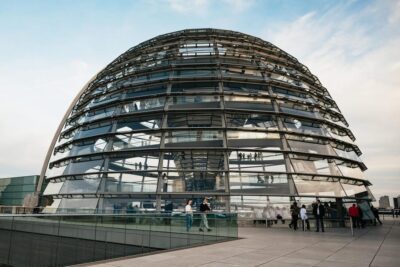
Reichstag, Dome and Government District Guided Tour
Read our review →
1-Hour City Tour by Boat with Guaranteed Seating
Read our review →
Reichstag, Plenary Chamber, Cupola & Government Tour
Read our review →