
Review · MUNICH TOURS
Third Reich & WWII Walking Tour
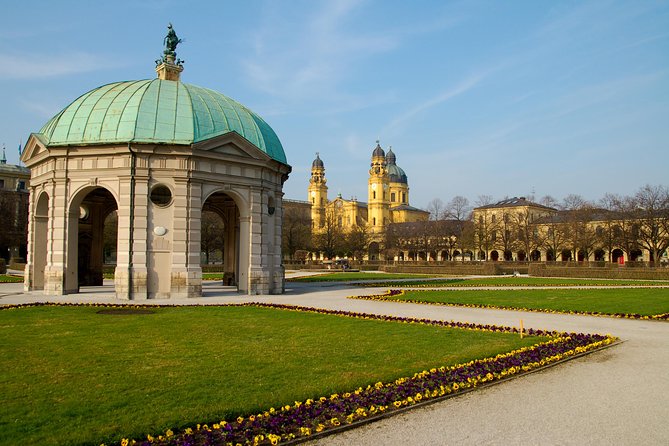
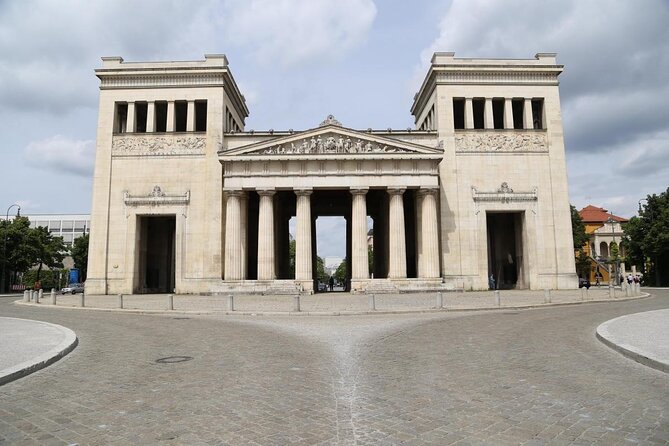
Munich’s Nazi past comes into sharp focus on this walk through the city center. You follow the movement from its early meeting place at the Hofbräuhaus to the failed coup at Feldherrnhalle, the mass rallies at Königsplatz, and the White Rose resistance discussed in the Hofgarten. The city itself becomes the classroom, with ordinary streets tied to events that changed Germany and the world.
I like the strong local focus and the guides’ ability to connect political events with the buildings around you. I also like the human tone: Josh, Michael, Alex, Ulrich, Danielle, Bridget, and others are described as clear, engaged, and sensitive when handling grim material. The main drawback is physical rather than historical: you walk and stand for nearly three hours, often with little time to sit, and a few people have found it hard to hear the guide in busy streets.
Key points before you book
- Follow Munich’s Nazi story in sequence: Begin near Marienplatz and trace the rise of the Nazi Party through central Munich.
- See four major sites: The route includes Hofbräuhaus, Feldherrnhalle, Königsplatz, and the Hofgarten, with each place tied to a different part of the story.
- Expect serious, careful storytelling: The subject includes dictatorship, persecution, war, resistance, and the destruction of Munich.
- Plan for almost three hours outside: Bring water, a snack, and weather protection. There is only a short opportunity to warm up or rest.
- Guides add real value: Josh, Michael, Alex, and Ulrich receive especially strong praise for clear explanations, thoughtful answers, and good group management.
- Finish at a former Nazi headquarters: The walk ends at Königsplatz, near Hitler’s former headquarters and the Documentation Center area.
Why this Munich history walk matters
Munich is often sold through beer halls, palaces, and picture-book old streets. Those are real parts of the city, but they tell only half the story. Munich was also the birthplace and early power base of the Nazi movement, making it one of the most important places in Germany for understanding how Hitler gained influence.
This tour does not treat the subject as a collection of dates. It links political unrest after World War I with specific meeting halls, public squares, government buildings, and acts of resistance. That approach is useful because you can see how a political movement used familiar city spaces to attract followers, stage ceremonies, project power, and shape public life.
I would not choose this as a light sightseeing walk between coffee and shopping. The material is grim, and the tour is intended for people who can handle a serious discussion of dictatorship, war, and human suffering. The stated guidance is that it is not recommended for children under 12.
At the same time, the walk is not presented as a lecture with no room for questions. The guides are described as open to discussion, and some use historic photographs or visual material to help you connect the modern streets with their wartime appearance. That matters in Munich, where many buildings and squares have changed, been rebuilt, or returned to ordinary daily use.
More WWII History Tours in Munich
- Munich: Third Reich & WWII Walking Tour
★ 4.6 · 6,181 reviews - Dachau Concentration Camp Memorial Site Tour from Munich by Train
★ 4.5 · 5,637 reviews - Third Reich Walking Tour Munich
★ 4.5 · 4,291 reviews
Starting at Marienplatz and entering the story
The meeting point is Marienplatz in central Munich. This is a convenient place to begin because it is near public transportation and easy to combine with other sightseeing, though you should check the exact meeting instructions carefully before arriving. One person had trouble finding the group because the map pin was inaccurate and the detailed directions were not prominent enough.
The opening section sets the political stage. In 1919, Germany was defeated after World War I, Bavaria was caught in revolution and political violence, and hyperinflation was damaging daily life. Those conditions did not automatically produce Nazism, but they created fear, anger, and instability that the movement could exploit.
A good guide will help you see the difference between explanation and excuse. The tour’s value lies in showing how resentment, propaganda, group pressure, and promises of national recovery helped Hitler gain a hearing. You are not simply told that Munich was the birthplace of Nazism. You are shown how the city’s political atmosphere helped the movement grow.
This beginning may feel more abstract than the later stops. You are dealing with forces such as inflation, revolution, and defeat before reaching the most recognizable Nazi locations. I think that context is necessary, though visitors who want only famous WWII landmarks may need patience during the first part.
Hofbräuhaus and the Nazi Party’s early public life
The route includes Hofbräuhaus, one of Munich’s best-known beer halls. Today it is a major tourist attraction, but the tour points to its role as the site of an early mass Nazi meeting. That contrast is one of the walk’s most unsettling features: a familiar dining and drinking venue is also tied to the movement’s early public growth.
Here, the guide can explain how political groups used large public interiors to gather supporters, make speeches, and create a sense of shared purpose. The location helps you understand that Nazism did not appear fully formed in government offices. It grew through meetings, arguments, slogans, public performance, and organized loyalty.
This stop also gives the tour a useful Bavarian angle. You are not studying WWII as a distant story that happened elsewhere. You are looking at Munich’s role in the movement’s beginnings and at the way local politics fed into national power.
Do not expect a meal break at Hofbräuhaus. Food and drinks are not included, and the walk is structured as a continuous historical route. If you want to eat there, plan it before or after the tour rather than counting on time during the walk.
Feldherrnhalle and the failed attempt to seize power
At Feldherrnhalle, the story moves from speeches and meetings to open confrontation. This is the site associated with Hitler’s failed attempt to seize power, an event that showed both the ambition of the Nazi movement and the limits of its early support.
The stop is important because it helps you see that Hitler did not simply win power in one smooth step. The road included setbacks, strategic changes, public theater, and later efforts to gain control through legal and political means. A guide who explains that progression gives you a much better grasp of how an unsuccessful coup could still become part of the Nazi myth.
The square also raises a practical issue. Central Munich can be crowded, especially during busy periods such as the Christmas market season. Several guides are praised for moving groups safely and keeping explanations organized among large numbers of people, but you may occasionally need to stand close and listen carefully.
That is where group size matters. The tour is promoted as a small group limited to 10 people, yet the additional information allows up to 30 participants. I would prepare for a genuinely small group if numbers are low, but I would not assume that every departure will have only 10 people. A larger group can make street-side explanations harder to hear.
More wartime history tours in Munich:
- From Munich: Dachau Memorial Site Day Tour
★ 4.8 · 2,723 reviews - From Munich: Dachau Memorial Site Half-Day Trip
★ 4.7 · 2,526 reviews - From Munich: Dachau Memorial Site Full-Day Tour
★ 4.9 · 1,406 reviews - Dachau Concentration Camp Memorial Tour with Train from Munich
★ 4.5 · 955 reviews
The Hofgarten and the White Rose resistance
The Hofgarten section gives the walk moral balance. Much of the route follows the rise and power of the Nazi movement, but here you learn about the White Rose resistance, a group of German students who opposed Hitler and distributed anti-Nazi leaflets.
This stop matters because it prevents the easy mistake of treating German society as one silent block. Resistance was dangerous and limited, but it existed. The guide’s discussion of the White Rose also adds a personal scale to the tour. Instead of hearing only about parties, rallies, and military power, you consider individuals who made choices under extreme pressure.
I especially value this part for visitors who already know the broad outline of WWII. The early Nazi story can sometimes become a parade of leaders and dates. A resistance stop asks a harder question: what did ordinary people do when the cost of dissent was severe?
The tone here is expected to be respectful rather than theatrical. Several guides are praised for allowing quiet moments and giving the group space to process difficult information. That restraint suits the subject. This is not a stop for dramatic reenactment or sensational storytelling.
Königsplatz and the public image of power
Königsplatz is the tour’s major closing location and one of its most important sites. The square was used for mass Nazi party rallies, turning architecture and open space into tools of political display. At this point, the movement’s growth becomes easier to picture. Large crowds, ceremony, symbols, and carefully staged public events helped create the image of unstoppable power.
The guide connects the square to Munich’s wider transformation under Nazism. The city became the movement’s capital, and its public places were reshaped to support Nazi ceremony and control. You can stand in the same broad urban setting while learning how it once functioned as a stage for propaganda.
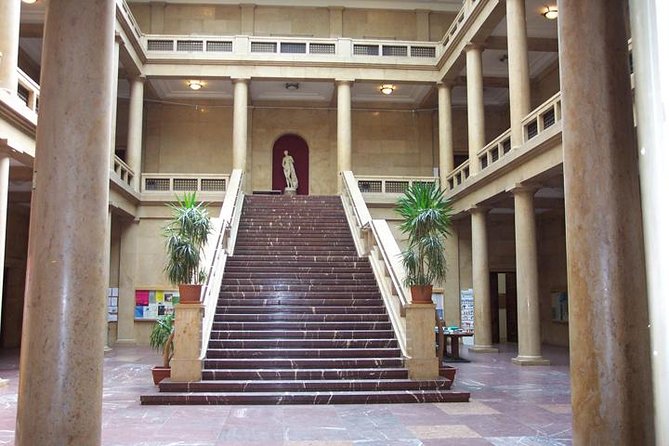
The tour ends at Königsplatz 1, near Hitler’s former headquarters. The finish is practical if you want to continue with Munich’s modern documentation sites, and one guide specifically suggested visiting the Documentation Center after the walk. Admission to any museum or other attraction is not included, so check separately if you want to go inside.
Ending here also gives the walk a clear sense of direction. You begin in the heart of present-day Munich and finish at a place tied directly to Nazi rule. The route does not return you to Marienplatz, so allow for that when planning lunch, transport, or your next appointment.
How the guides handle a difficult subject
The strongest part of this experience is the guiding. Josh is repeatedly singled out for his command of the subject, clear pacing, and ability to explain how Munich’s political past shaped later events. Michael is praised for detailed answers and an interactive style. Alex is described as personable, organized, and particularly good at handling questions and moments of reflection.
Other guides, including Ulrich, Danielle, Bridget, and Joel, are also praised for clear narration and a serious approach. You cannot choose a specific guide from the information provided, so the experience may vary in voice and presentation. The consistent pattern is that the guides are expected to know the material well and treat it with care.
The best guides do more than recite facts. They explain connections, show historic pictures, answer questions, and point out other museums or places worth adding to your Munich plans. That extra local help can be useful if this is your first visit and you want to understand what to see next.
There are two cautions. First, one person found the guide difficult to hear, so stay close when the group stops in a noisy area. Second, this is an English-language tour, and the subject includes complicated political and social developments. If you have no background in German or WWII history, you can still follow it, but the amount of material may feel heavy.
Walking pace, weather, and comfort
The advertised duration is about 2 hours 45 minutes. In practice, you should plan for nearly three hours of walking and standing, with only a short break or indoor stop. One person described the walking and standing as tiring, while others found the pace comfortable and well managed.
Wear comfortable shoes. This is not a long-distance hike, but the route covers several central locations and involves repeated stops on city streets and squares. There is little time for a leisurely café pause, so bring water and a snack if you need regular refreshments.
Weather matters more than it might on a museum visit. Guides have continued through freezing conditions, and one made time for the group to warm up indoors. Still, that should not replace a warm coat, especially in winter. In warmer months, sun protection and water will make the walk easier.
Most people can participate, but the tour is not ideal if you have difficulty walking or standing for extended periods. Service animals are allowed, and the route is near public transportation. Food, drinks, and hotel pickup are not part of the experience.
Is $35.09 a fair price?
At $35.09 per person, this is reasonably priced for a professionally guided walk lasting almost three hours. You are paying mainly for the guide’s preparation, storytelling, and ability to make several separate locations fit into one understandable route.
The value is strongest if you want context rather than a quick photo stop. You could walk past Hofbräuhaus, Feldherrnhalle, or Königsplatz on your own, but the buildings would not explain themselves. A good guide shows how the places connect and why each one mattered at a different stage of Nazi history.
The price is less attractive if you dislike long walking tours, already know Munich’s Nazi history in detail, or want entry to museums. No admission ticket is included, and the route itself is the main product. If you plan to visit the Documentation Center afterward, budget for that separately.
The tour is booked, on average, 22 days ahead. That suggests planning early if this is important to your itinerary, especially during busy travel periods. Free cancellation is available if you cancel at least 24 hours before the start time. Changes or cancellations inside that window are not accepted for a refund.
Who should book this tour?
I would choose this walk if you want to understand Munich’s role in the rise of Hitler and the Nazi Party, not just see famous buildings. It suits adults and older teenagers with an interest in modern German history, political movements, resistance, or the way cities remember painful events.
It also works well early in a Munich visit. The guides may suggest museums, landmarks, restaurants, and other places to see, and the route gives you a useful mental map of central Munich. You can then return to the Documentation Center or other sites with better context.
I would think twice if you need frequent rests, dislike emotionally heavy subjects, or want a relaxed introduction to Munich. The tour is serious, information-packed, and mostly outdoors. A larger-than-expected group or street noise may also affect how easily you hear every explanation.
Should you book the Third Reich and WWII Walking Tour?
Book it if Munich’s Nazi past is one of your priorities and you want a clear account tied to real places. The combination of Hofbräuhaus, Feldherrnhalle, Königsplatz, and the White Rose story gives you both the movement’s rise and examples of resistance.
Bring water, a snack, good shoes, and suitable clothing. Arrive with the meeting point confirmed, stay near the guide in crowded areas, and leave room afterward for the Documentation Center if you want more photographs, films, and exhibits.
For a serious three-hour walk at $35.09, the value is good. The tour will not make the subject easy, but it can make Munich’s role much easier to understand.
FAQ
Where does the Third Reich and WWII Walking Tour start?
The tour starts at Marienplatz in central Munich, Germany.
Where does the tour end?
It ends at Königsplatz 1, near Hitler’s former headquarters.
How long does the walking tour last?
The tour lasts approximately 2 hours 45 minutes.
What language is the tour offered in?
The tour is offered in English and includes a professional guide.
Is the tour suitable for children?
The tour is not recommended for children under 12 because of its serious subject matter.
Is admission to museums or attractions included?
No. Admission tickets are not included. Food, drinks, and hotel pickup and drop-off are also excluded.
More Walking Tours in Munich
- Munich: Old Town & Viktualienmarkt City Walk in German
★ 4.7 · 2,304 reviews - Munich: Night Watchman Walking Tour
★ 4.7 · 2,092 reviews - Munich Ghosts and Spirits Evening Walking Tour
★ 5.0 · 1,900 reviews - Munich Old Town Walking Tour
★ 4.5 · 1,287 reviews
Just added around Munich
- Munich: Express Walk with a Local in 90 minutes★ 5.0 · 7 reviews
- Exploring Munich in a Rikscha★ 4.9 · 33 reviews
- Exploring Munich by Pedicab: Premium Two Hour Tour★ 5.0 · 10 reviews
- Erding: 1-Day Spa Ticket at Therme Erding★ 4.5 · 50 reviews
- Munich: KUNSTLABOR 2 Entry Ticket★ 4.2 · 89 reviews
- Private Van Tour to the Royal Palace of Herrenchiemsee★ 5.0 · 6 reviews
- From Munich: Königssee Day Trip with Boat Ride and Salt Mine★ 4.5 · 93 reviews
- Dachau Memorial Site Tour With Small Group★ 4.9 · 124 reviews
Munich Tours, compared.
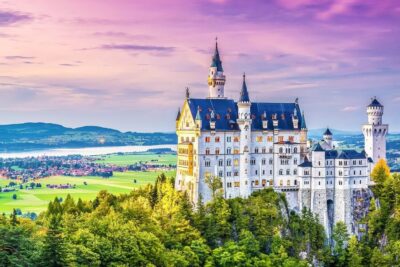
Neuschwanstein & Linderhof Castle-Fairytale Day Tour from Munich
Read our review →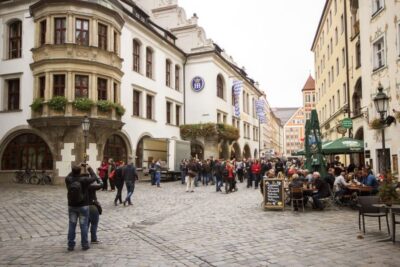
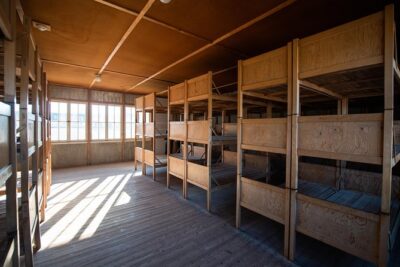
Dachau Concentration Camp Memorial Site Tour from Munich by Train
Read our review →
Munich Hop-On Hop-Off Tour: 1-Day or 2-Day Ticket
Read our review →Browse the lists this tour appears in