Review · BERLIN TOURS
Queer Berlin Walking Tour
Berlin’s queer past comes alive on foot, from the cabaret streets of Schöneberg to the Tiergarten’s long-standing meeting spots. You’ll connect figures such as Friedrich the Great, Magnus Hirschfeld, Christopher Isherwood, and Klaus Wowereit to the city’s changing ideas about sexuality and public life.
I like the wide historical sweep, which covers both celebration and persecution. I also like the way the tour links famous names to real streets, bars, memorials, and meeting places. The main drawback is simple: three and a half hours of walking can feel long, especially in poor weather, and transport or entrance costs are not included.
Key points to know before you book
- Schöneberg is the starting point for Berlin’s queer story: Follow the district’s cabaret, nightlife, lesbian, gay, and trans connections.
- The former Eldorado adds atmosphere: Learn about one of Berlin’s oldest gay and trans bars and the world around it.
- Magnus Hirschfeld’s work is a major focus: Hear how his Institute for Sexual Science supported queer and trans people before the Nazis shut it down.
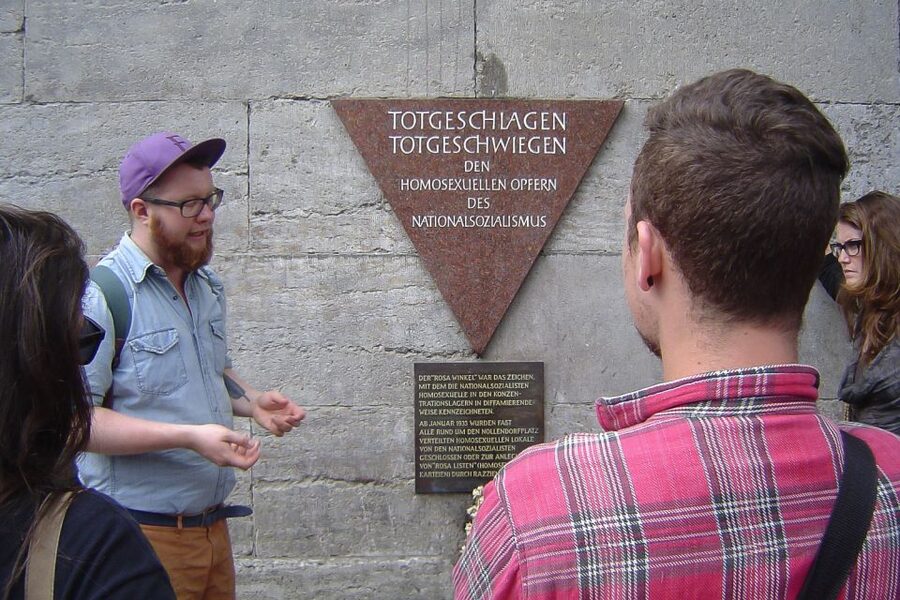
- The tour faces the difficult chapters: Visit a memorial to homosexual people persecuted by the Nazis and learn about Section 175.
- The Tiergarten gives the tour a different mood: Berlin’s best-known gay meeting area brings the story into the open air.
- Guides bring different strengths: Past tours have been led by Tobi, Tom, Finn, Jared, Beth, and Kyle, with guests praising clear storytelling, humor, patience, and thoughtful answers.
Starting in Schöneberg, Berlin’s queer neighborhood
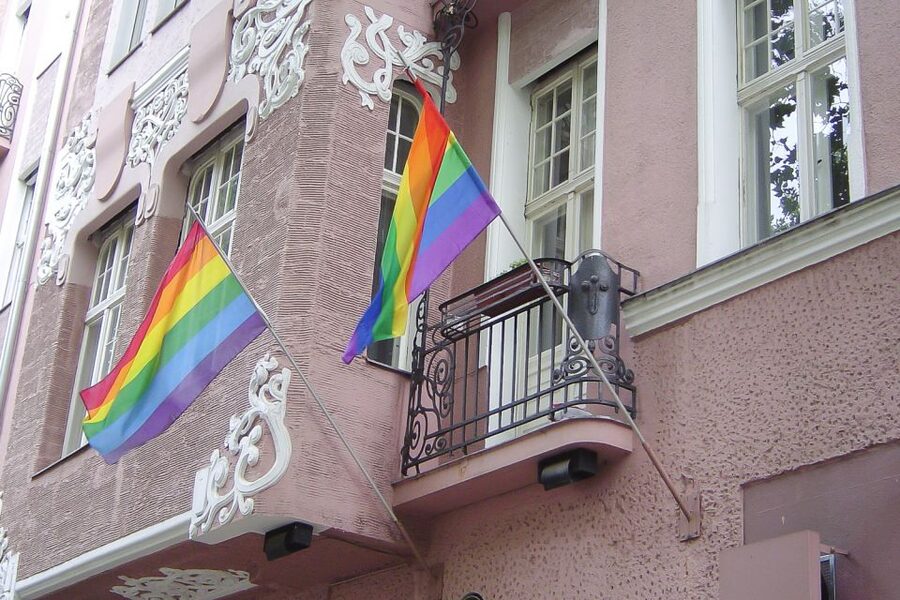
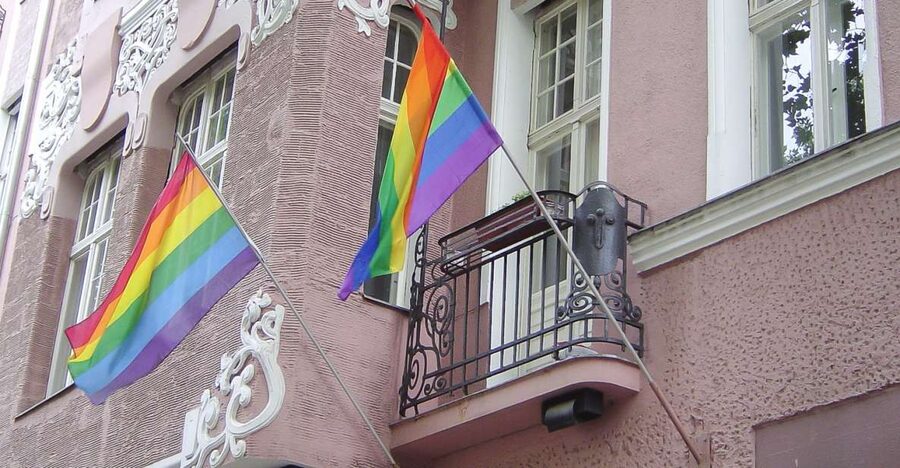
Schöneberg is the natural place to begin. For much of Berlin’s modern queer story, this district was a center of bars, clubs, artists, sex workers, writers, performers, and political organizing. The streets still carry that association, even as Berlin’s nightlife and housing patterns continue to change.
The tour uses the neighborhood to show how queer life was not confined to private rooms. It appeared in cafés, cabarets, apartment buildings, newspapers, clubs, and public streets. That matters because Berlin’s story is not simply one of legal progress. It is also a story of people claiming space, being watched, taking risks, and building support networks.
You’ll hear about Marlene Dietrich and the cabaret culture that made Berlin famous between the world wars. Christopher Isherwood and Otto Dix recorded different sides of this world, one through writing and the other through art. Their work helps you picture a city where nightlife could feel open and daring, even while legal and social pressure remained close at hand.
The tour does not treat Schöneberg as a museum frozen in the past. It also looks at current queer culture and changes in the district. One past participant found the discussion of the former East German gay neighborhood and later gentrification especially useful. That wider view helps you see how a neighborhood can be both a place of liberation and a place affected by rising rents, shifting nightlife, and changing identities.
More walking tours in Berlin:
- Discover Berlin Half-Day Walking Tour
★ 5.0 · 9,624 reviews - Berlin: Third Reich and Cold War 2 Hour Walking Tour
★ 4.9 · 6,830 reviews - Berlin: Discover Berlin Walking Tour
★ 4.9 · 5,998 reviews
The former Eldorado and Berlin’s cabaret years
One of the most memorable stops is the site of the former Eldorado, a celebrated gay and trans bar. The name carries a lot of weight because the venue belonged to a period when Berlin’s nightlife attracted queer people from across Germany and beyond.
At this stop, you can expect more than a date and a building facade. The guide uses Eldorado to explain the social world around bars and cabarets: who went there, how people presented themselves, and why these venues offered both freedom and risk. The story also corrects the lazy idea that Berlin’s queer life began recently. It had public faces, performers, meeting places, and political debates more than a century ago.
The Eldorado stop should appeal to anyone interested in nightlife history, not only visitors focused on LGBTQIA+ topics. It shows how entertainment venues can become informal community centers. It also gives context to the artists and writers linked to Schöneberg.
Do not expect the former bar to function as a preserved attraction. The value is in the history attached to the site, not in entering a historic interior. Entrance fees are not part of the tour, and the experience is primarily an outdoor walk.
Magnus Hirschfeld and the Institute for Sexual Science
Magnus Hirschfeld is one of the most important figures in the tour. A physician and sex researcher, he created the Institute for Sexual Science, which offered research, advice, and practical support to queer and trans people.
The institute’s work was unusual for its time. It approached sexuality and gender as subjects for study rather than simply as moral failings or crimes. The center also helped people who needed medical guidance, legal support, or a place where their identity could be treated with some dignity.
That work makes the story feel concrete. You are not just hearing that Berlin was progressive. You are learning about an institution that tried to turn new ideas into help for real people.
The Nazis shut down the institute in 1933, and its library was destroyed during the notorious book burnings. This is one of the tour’s sharpest turns. The same city associated with freedom, cabaret, and sexual research also became a place where books, institutions, and people were targeted.
The physical traces of the institute may be limited, so this part depends heavily on the guide’s ability to explain the setting. Past guides such as Tom, Jared, and Beth have been praised for making difficult material clear while leaving room for questions. If Hirschfeld is the main reason you are booking, pay close attention to the meeting point details for your chosen option, since the exact route can vary.
From Section 175 to Nazi persecution
The tour gives proper weight to Section 175, the German penal code provision that criminalized male homosexuality. It remained in force for decades after World War II, which is a useful reminder that the end of Nazi rule did not mean immediate freedom for gay men.
This part of the walk places legal change beside personal experience. A law can shape where people meet, how openly they live, and whether they trust doctors, police, employers, or neighbors. The guide’s task is to connect those broad facts to Berlin’s streets and communities.
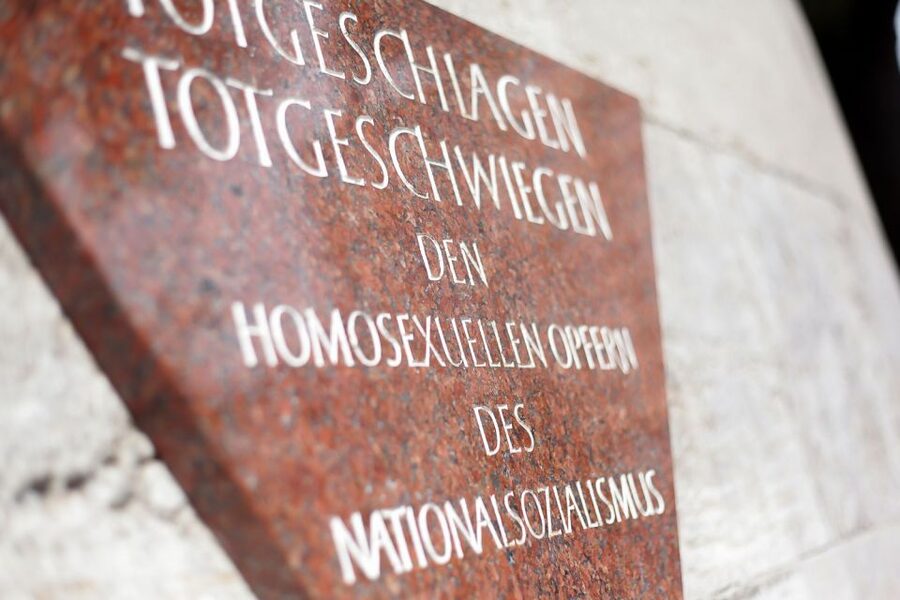
You’ll also stop at a memorial for homosexual people persecuted by the Nazis and sent to concentration camps. It is a quiet and serious moment in a tour that otherwise includes entertaining stories and colorful nightlife history.
That balance is important. Berlin’s queer past includes daring performers and social pioneers, but it also includes surveillance, imprisonment, forced labor, and murder. The memorial keeps the tour from turning the city’s past into a simple party story.
The description also promises stories about an openly gay Nazi leader. That unusual detail opens a difficult question: personal identity does not automatically produce humane politics. The point is not to offer a tidy hero story, but to show how power, ideology, and private life can collide.
A few more Berlin half-days to weigh up
- Berlin: Reichstag, Dome and Government District Guided Tour
★ 4.7 · 18,288 reviews - Berlin: 1-Hour City Tour by Boat with Guaranteed Seating
★ 4.3 · 16,993 reviews - Berlin: Boat Tour Along the River Spree
★ 4.4 · 11,252 reviews - Berlin: Hop-on Hop-off Bus Tour with Live Commentary
★ 4.3 · 8,579 reviews
The Tiergarten and the city’s open-air meeting place
The walk continues into the Tiergarten, Berlin’s best-known gay meeting spot. The change from urban streets to park paths gives the tour a different pace and mood.
Here, the guide explains how queer people used the park as a place to meet, often in the shadow of the Berlin Wall. The setting helps you understand the practical side of queer history. Community is not created only by institutions and famous clubs. It can also grow through repeated encounters in public spaces.
The Tiergarten section also reminds you that public visibility has never meant the same thing in every era. A park can offer privacy within a public place, but it can also expose people to danger, policing, or harassment. The guide’s historical framing gives the site more meaning than a quick look at a patch of greenery.
The walking route appears to cover a lot of ground. Wear comfortable shoes, carry water, and bring a small snack. One past participant specifically advised packing light while keeping a cool drink and something to eat close by. Since the tour runs in all weather, a rain layer is sensible even when the forecast looks good.
Famous Berlin figures, from Friedrich the Great to Klaus Wowereit
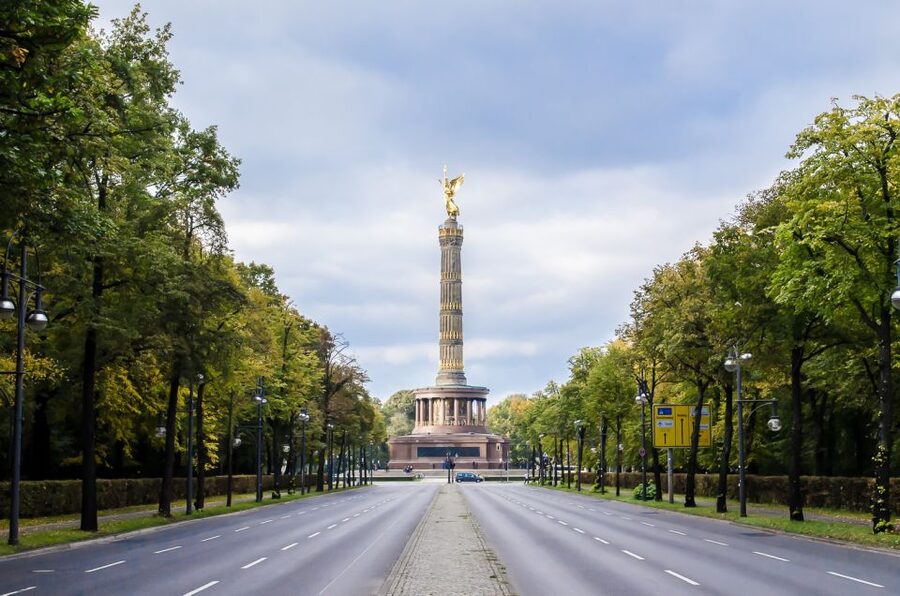
The tour reaches across several centuries. Friedrich the Great provides an early example of how the private lives and public images of powerful figures can complicate conventional history.
The discussion then moves through the nineteenth and twentieth centuries, including the period when Berlin became known for its sexual subcultures and cabaret. Marlene Dietrich, Christopher Isherwood, Otto Dix, and Magnus Hirschfeld each show a different route into the story: performance, writing, visual art, medicine, and activism.
Klaus Wowereit brings the story into modern political life. As an openly gay mayor of Berlin, he represents a period when queer identity could be stated publicly by a major elected official rather than hidden or treated only as scandal.
This range is one of the tour’s strongest features. You are not getting a narrow sequence of bar addresses. You are seeing how queer Berlin connects with monarchy, medicine, art, dictatorship, urban politics, and present-day culture.
A tour shaped by the guide
Because the tour covers sensitive subjects and a long period of time, the guide matters a great deal. The format is not a self-guided route with plaques and dates. It depends on spoken explanation, anecdotes, and the ability to answer questions.
Guides named in past sessions include Tobi, Tom, Finn, Jared, Beth, and Kyle. Tobi was praised for covering many parts of queer Berlin, while Tom was singled out for combining clear information with humor, patience, and helpful answers. Finn was described as personable, and Jared was noted for bringing both queer history and current Berlin into the walk.
One useful strength is the mix of factual history and personal touches. A past guide was praised for drawing attention to women’s history rather than allowing the tour to become mostly about gay men. That matters because lesbian bars, women’s networks, and women’s resistance can disappear from a standard account of Berlin nightlife.
The group can also shape the experience. If you have a question about a figure, neighborhood, or current nightlife, ask it. Guides have helped people with practical suggestions for an evening out, though the tour itself is a history walk rather than a pub crawl.
How much value do you get for $23?
At $23 per person, the price is reasonable for a 3.5-hour guided walk, especially if queer history is a main reason for your Berlin visit. You are paying for a specialist subject, a route through two important areas, and live interpretation that ties scattered sites together.
The value is strongest if you want context. You could walk through Schöneberg and the Tiergarten alone, but you would miss much of the connection between Eldorado, Hirschfeld, cabaret culture, Section 175, Nazi persecution, and present-day politics.
There are limits. The English or German-speaking guide is included, but public transport, if needed, is not. Entrance fees are also excluded, though the listed experience is mainly an outdoor walking tour. Meeting points can vary by booking option, so check the exact details before setting out.
The free cancellation window extends to 24 hours before the tour, and you can reserve now and pay later. Those terms are useful in Berlin, where rain, late nights, and changing plans can easily disrupt a morning schedule.
Who should take this Berlin walk?
I would choose this tour if you want a serious look at Berlin’s queer past but still enjoy a lively guide and a few good stories. It suits first-time visitors who want a stronger sense of Schöneberg, as well as repeat visitors who have already seen the usual museums and monuments.
It is especially useful for:
- People interested in LGBTQIA+ history, rights, and community life
- Visitors curious about Berlin’s cabaret and nightlife culture
- Anyone who wants more women’s and trans history than a standard city tour provides
- History-minded visitors who can handle discussion of Nazi persecution and discrimination
- Visitors looking for practical ideas for queer nightlife after the walk
It may be less suitable if you dislike long walks, want a tour focused only on current bars, or expect to enter every historic site. The route runs in all weather, and the meeting point may change depending on the option you select.
Look for the guide wearing a blue Original Berlin Walks name badge. That simple detail should make the meeting easier in a busy area.
Should you book the Queer Berlin Walking Tour?
Book it if you want to understand why Berlin became associated with queer freedom, and why that freedom has never been simple or secure. The tour moves from Schöneberg’s cabarets to the former Eldorado, from Hirschfeld’s groundbreaking work to Nazi destruction, and then into the Tiergarten’s long public life.
I especially recommend it if you want a balanced account that includes celebration, political progress, persecution, lesbian history, trans lives, and modern city politics. At $23, the walk offers solid value for three and a half hours.
Skip it only if the amount of walking is a serious problem or if you want an attraction with preserved interiors and formal exhibits. For everyone else, bring water, wear good shoes, and leave room for the guide’s questions and stories. This is a useful way to see Berlin through a perspective that standard sightseeing often leaves out.
FAQ
How long is the Queer Berlin Walking Tour?
The tour lasts 3.5 hours.
What languages are available?
The live guide speaks English or German, depending on the tour and guide.
Where does the tour meet?
The meeting point may vary depending on the booking option. Check the details for your selected option before arriving.
What is included in the price?
An English-speaking guide is included. The tour costs $23 per person.
Are public transport and entrance fees included?
No. Public transport, if needed, and entrance fees are not included.
Does the tour run in bad weather?
Yes. The tour runs in all weather, so bring suitable clothing and comfortable walking shoes.
Just added around Berlin
- eSIM for Germany and 34 European Countries★ 4.5 · 16 reviews
- Your ticket to The Wall Museum Berlin★ 3.0 · 60 reviews
- Walking on the Wall: 3-Hour Tour in Berlin★ 4.5 · 34 reviews
- Rickshaw Tours Berlin – Groups of up to 16 people with several rickshaws★ 4.0 · 97 reviews
- Warnemuende Shore Excursion: Private Berlin Tour★ 4.5 · 27 reviews
- Love and War in Berlin: Self-Guided Story Puzzle Walk★ 5.0 · 7 reviews
- Warnemuende Shore Excursion: Berlin Private Sightseeing Tour from Rostock★ 5.0 · 4 reviews
- Karl-Marx-Allee Tour: Life and Architecture in East Berlin★ 5.0 · 19 reviews
Berlin Tours, compared.

Reichstag, Dome and Government District Guided Tour
Read our review →
1-Hour City Tour by Boat with Guaranteed Seating
Read our review →
Reichstag, Plenary Chamber, Cupola & Government Tour
Read our review →