
Review · BERLIN TOURS
Private Guide Up to Group 6 – ONE Rickshaw, (E)Bikes, E-Scooters
Berlin becomes much easier to read when you move through it with a guide who can connect the grand monuments to the streets around them. This private tour lets your group choose between rickshaw, e-bikes, regular bikes, and e-scooters, then travel together through central Berlin with stops for stories and photos.
I especially like the flexible vehicle setup and the relaxed style associated with guide Levi, who speaks Dutch and brings humor into the history. The rickshaw also gives less-mobile visitors a practical way to get close to major sights. The main drawback is that the tour covers a lot in three hours, so most stops are brief and are for viewing rather than full museum visits.
Key points at a glance
- One private group of up to six: You do not share the experience with strangers, which makes it easier to ask questions and adjust the pace.
- Four ways to get around: Use a rickshaw, e-bikes, regular bikes, or e-scooters, with the group still stopping together.
- Berlin’s major story in one route: The tour links Prussian landmarks, Nazi sites, Cold War history, and reunification.
- Levi’s personal approach: His humor, Dutch-language guiding, and willingness to answer questions suit families and small groups.
- Strong option for limited mobility: The rickshaw can bring you close to sights without requiring long walks between them.
- A photo-friendly outing: The guide can stop at places where you want pictures, rather than keeping you inside a fixed sightseeing vehicle.
Why this private Berlin ride works
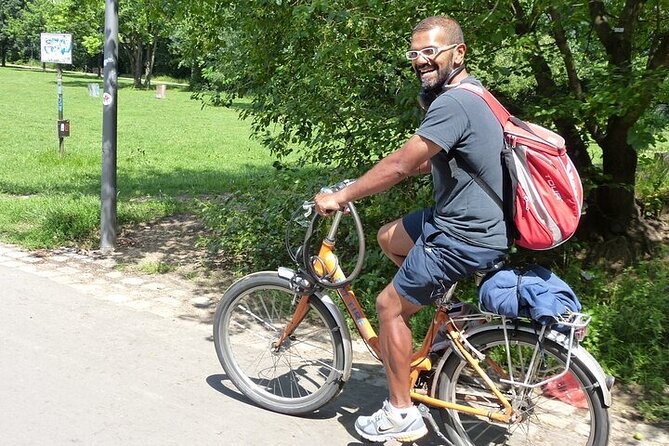
The clever idea here is not simply using wheels instead of walking. It is bringing different kinds of visitors together without forcing everyone to use the same vehicle. Three people might ride e-bikes, one person might use a regular bike, and another might sit in the rickshaw, yet the group can still move through Berlin and hear the same explanations at each stop.
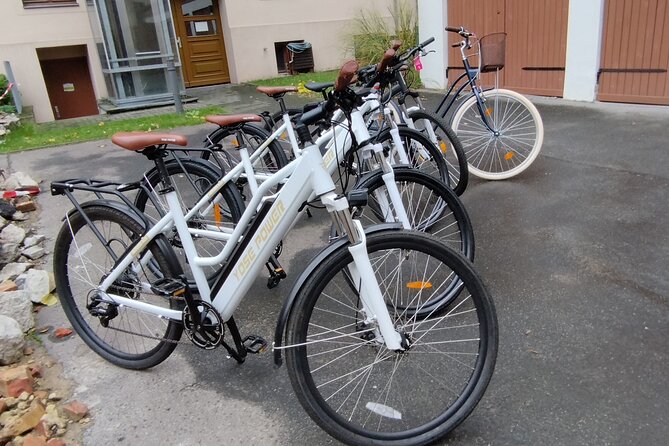
That arrangement is useful for families with mixed energy levels, friends with different cycling habits, or a work group that wants a shared outing. The vehicle information lists two regular bikes, three e-bikes, and one rickshaw that can hold up to seven people, while the booking is priced for a private group of up to six. I would confirm the exact vehicle mix when booking, especially if your group has a specific need.
At about three hours, this is a city orientation rather than a full museum tour. You get a broad look at Berlin Mitte, with enough time to understand how the city changed from royal capital to divided Cold War city and then to reunited Germany. The route is packed, but the private format helps. You can ask Levi to explain a point, pause for a picture, or spend less time at a sight that does not interest you.
The experience is especially appealing if formal guided tours make you switch off. Levi’s style is informal, funny, and personal. Past visitors also appreciated that he could guide in Dutch, so Dutch-speaking groups should ask about language availability when booking.
More scooter hire in Berlin:
- Berlin: Thrilling E-Scooter Adventure Tour
★ 4.4 · 66 reviews - 2-H Berlin: Top Sights Guided E-Scooter Tour
★ 4.3 · 48 reviews - Berlin: Ultimate E-Scooter Adventure Tour
★ 4.5 · 35 reviews
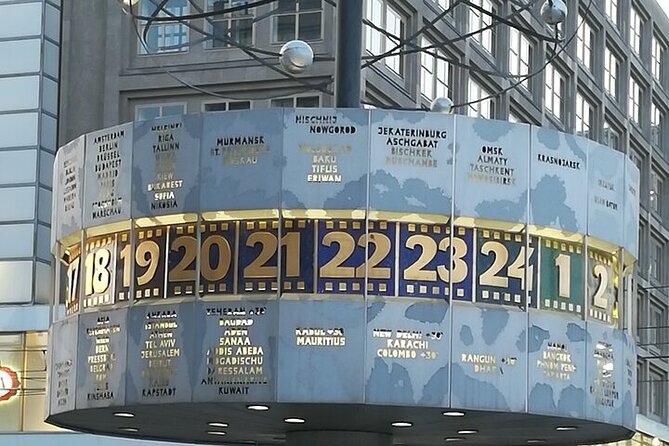
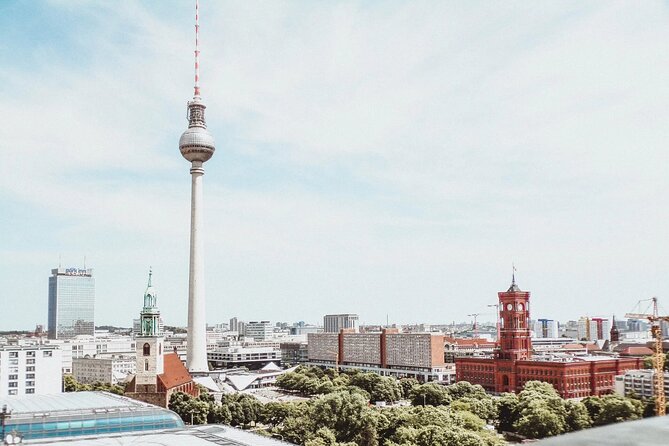
Starting near Alexanderplatz and the TV Tower
The supplied meeting details give Weinbergsweg 6, 10119 Berlin as the start and end point. The sightseeing outline also uses the TV Tower at Alexanderplatz as the opening reference. Since those locations are not the same, confirm the precise meeting point and route start before setting off.
The Fernsehturm, or TV Tower, is one of Berlin’s clearest orientation points. Its tall shaft and silver sphere rise about 368 meters above the city, making it easy to spot from many central streets. The observation deck sits around 203 meters up and offers 360-degree views, but admission to the tower is not part of this outing.
That matters because the tower works here mainly as a city marker and backdrop. You can hear why Alexanderplatz became such an important part of East Berlin, take pictures, and begin the tour with a sight that immediately tells you where you are. If you want to go up the tower, plan that as a separate activity.
Rotes Rathaus and the royal city center
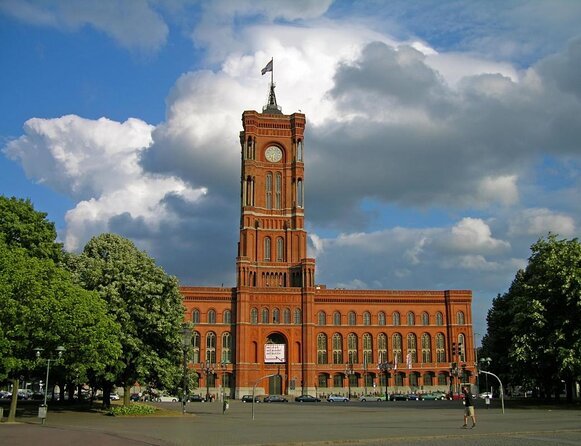
Berlin’s City Hall, known as the Rotes Rathaus, brings the route into the political center of the city. Its red-brick exterior and civic role make it a useful stop for understanding Berlin as a capital, not just a collection of postcard sights.
The nearby Stadtschloss, or Berlin City Palace, offers a different story. Originally built as a royal residence in the 15th century, it was tied to the Hohenzollern rulers and the growth of Prussia. The palace was destroyed during World War II, and its later reconstruction became part of a long argument about how Berlin should handle its past.
Today, the Humboldt Forum uses a modern interior behind a Baroque-style exterior. The tour allows about 15 minutes here, with no admission included. That is enough for an exterior explanation and photographs, but not enough to see the whole cultural center. If the palace interior interests you, return later with a separate ticket and more time.
Museum Island and Unter den Linden
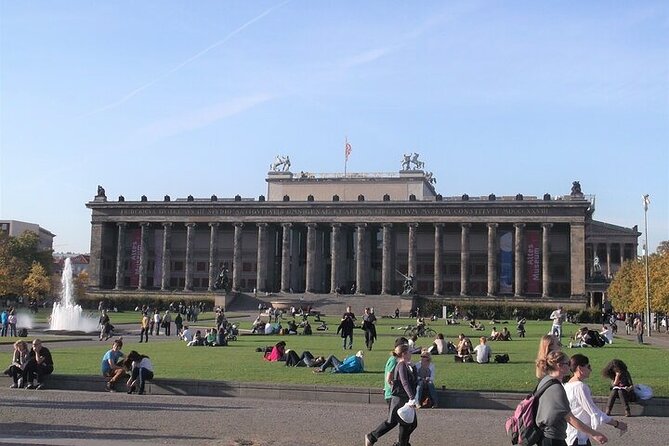
Museum Island is one of Berlin’s major cultural centers and a UNESCO World Heritage site. The island gathers several important museums and monumental buildings in a compact area, making it an efficient stop on a moving tour.
You should think of the 20-minute pause as an introduction. You will see the setting, hear why the museums matter, and decide if you want to come back for a longer visit. Museum admission is not included, and the schedule does not leave room for a full museum entry.
From there, Unter den Linden provides one of the city’s great ceremonial routes. This broad boulevard runs through the old center toward Brandenburg Gate and includes a mix of Baroque, Neoclassical, and later buildings. The Berlin State Library and Kronprinzenpalais are among the notable sights along the way.
The 10-minute stop is short, but the boulevard is well suited to a rolling tour. You can cover more ground than on foot while still getting close enough to notice the architecture. It also helps connect the royal center around the palace with the symbolic sights farther west.
A few more Berlin half-days to weigh up
- Berlin: Reichstag, Dome and Government District Guided Tour
★ 4.7 · 18,288 reviews - Berlin: 1-Hour City Tour by Boat with Guaranteed Seating
★ 4.3 · 16,993 reviews - Berlin: Boat Tour Along the River Spree
★ 4.4 · 11,252 reviews - Discover Berlin Half-Day Walking Tour
★ 5.0 · 9,624 reviews
Bebelplatz and the cost of remembering
Bebelplatz looks open and elegant, yet its history is painful. In May 1933, books condemned by the Nazi regime were burned here in a public act of intellectual repression. A memorial by artist Micha Ullman places empty bookshelves beneath a glass panel in the square.
The memorial is easy to miss if you do not know where to look. That is one reason a guide adds real value at this stop. Levi can point out the underground shelves and explain why the square is tied to censorship, state power, and the destruction of free thought.
The scheduled 10 minutes is enough for the story and a quiet look at the memorial. I would treat this as a place for respectful attention rather than a quick photo stop. The tour moves at a lively pace, but not every location should be handled like a sightseeing checklist.
Gendarmenmarkt’s architectural trio
Gendarmenmarkt is one of Berlin’s most polished urban squares. Three major buildings frame it: the Konzerthaus, the French Cathedral, and the German Cathedral.
The French Cathedral reflects the presence of Huguenot refugees in 18th-century Berlin. Across the square, the German Cathedral completes the pair, while the Konzerthaus fills the center with its grand Neoclassical frontage. The square offers a compact lesson in architecture, religion, migration, music, and state culture.
Again, the listed 10-minute stop is for orientation and exterior views. You will not have time to attend a concert or explore the cathedral interiors during this tour. Restoration work or public events can also affect what you see, so keep your expectations focused on the square itself.
Checkpoint Charlie and Cold War Berlin
Checkpoint Charlie is one of the most recognizable Cold War locations in Berlin. It was a crossing point between the American and Soviet sectors and became a symbol of the division between East and West Berlin.
The guardhouse visible today is a replica, and actors in U.S. military police uniforms sometimes pose there for photographs. The nearby Mauermuseum, now associated with the site, requires separate time and admission. The tour’s 15-minute stop gives you the political background and the basic geography, but the area can feel heavily commercial compared with other historic sites.
This is a good place to ask questions. Berlin’s wall and border system can be hard to understand from a modern street map, and a guide can explain what the checkpoint meant within the divided city. If you want a serious look at escape attempts and border history, return to the museum afterward.
Topography of Terror and the Nazi period
The Topography of Terror occupies the former site of the Gestapo and SS headquarters. Its exhibits use documents, photographs, and surviving traces of the buildings to explain how Nazi institutions organized persecution and violence.
The site is direct and difficult by design. It does not turn Nazi crimes into distant legend. Instead, it shows how government offices, police forces, and administrative systems helped carry out terror. The 20-minute tour stop can introduce the site, but you need extra time to read the displays properly.
This is one of the places where a private guide can help you set the right tone. You get context before moving on, rather than arriving cold at a serious historical site. If this part of Berlin’s story matters to you, schedule a separate visit after the ride.
The Führerbunker site and the Holocaust Memorial
The former Führerbunker lies beneath a modern parking area near In den Ministergärten and Gertrud-Kolmar-Straße. There is no visible bunker structure today. Most of it was removed after the war so the site would not become a shrine for Nazi extremists.
The 10-minute stop is therefore about location and explanation, not a bunker interior. That distinction is important. You will stand near an unmarked modern space and learn what happened there during the final months of World War II.
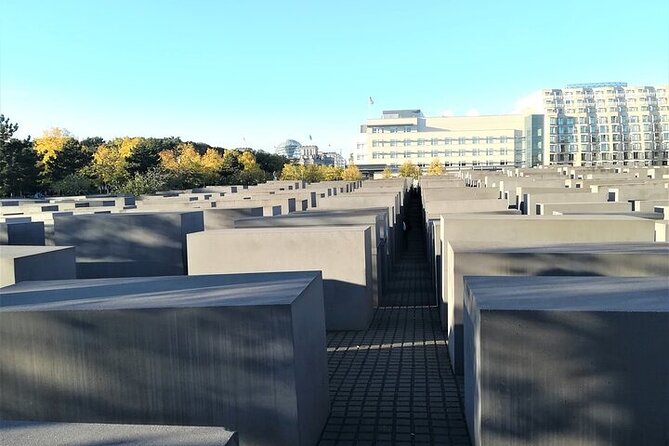
A short ride away, the Memorial to the Murdered Jews of Europe creates a much more visible place of remembrance. Its 2,711 concrete slabs vary in height and sit across a sloping field. As you walk between them, the ground changes and the city seems to fade from view.
The tour allows about 10 minutes here. You may enter the memorial briefly, but you will not have time for a long, reflective visit or the underground Information Centre. The memorial is open to the public, but it is not a conventional monument with a simple message. Give it your attention, avoid treating the slabs as playground equipment, and consider returning later if you want more time.
The pairing of the bunker site and the Holocaust Memorial is powerful. One location marks the end of the Nazi regime from the leadership’s point of view. The other remembers the Jewish people murdered by that regime. A good guide can help you understand why both sites belong in the same central Berlin route.
Brandenburg Gate and the end of the route
Brandenburg Gate is the natural final image for this tour. Completed in 1791 for King Frederick William II of Prussia, the Neoclassical gate originally marked the start of the road toward Unter den Linden. Over time, it became linked to war, division, the Berlin Wall, and reunification.
Its meaning changed with the city around it. During the Cold War, the gate sat beside the Wall in a restricted zone. Today it is a public symbol of a reunited Berlin. The 10-minute stop gives you time for the classic view and a short explanation, though the area can be crowded and photo opportunities may take patience.
Because the activity returns to the meeting point, you should not assume Brandenburg Gate is the final drop-off. The tour ends back at the listed starting location, Weinbergsweg 6. That makes the outing easy to plan as a round trip, but it also means you may need separate transport if you want to continue sightseeing from the gate.
What the $465.43 group price really buys
At $465.43 per private group of up to six, the price looks high for a three-hour outing until you compare it with six separate tickets on a group tour. The real purchase is privacy, a guide dedicated to your party, and a vehicle plan that can accommodate different abilities.
For six people, the cost works out to roughly $77.57 per person before currency changes or booking fees. That is easier to justify for a family or friend group that wants to stay together and ask its own questions. For only two people, the per-person cost is much higher, so a shared walking or cycling tour may offer better value.
Bottled water, onboard WiFi, and an air-conditioned vehicle are listed as included, along with the guide and selected bikes or rickshaw setup. Lunch is not included. The schedule is too tight for a proper meal during the route, so eat beforehand or plan lunch after returning.
Free cancellation is available if you cancel at least 24 hours before the local start time. Inside that window, the payment is not refunded, and late changes are not accepted.
Who should book this Berlin tour?
I would choose this for a small group that wants a broad first look at Berlin Mitte without spending three hours on foot. It suits families, groups with children, Dutch-speaking parties who can arrange that language, and people who want the guide’s attention rather than a standard large-group script.
It is also a sensible choice for less-mobile visitors. The rickshaw can bring you close to monuments, and the activity notes that you can enter it in only a few steps. You can ask to stop for photos and see many sights without walking long distances between them.
Cyclists should note that the outing is not a nonstop bike ride. The point is to stop and hear the same information together. If you want a serious cycling workout, this is not the right product. If you want to connect Berlin’s major chapters while enjoying an easy ride, it makes more sense.
Final verdict: a flexible and friendly Berlin introduction
Book this tour if your group values personal guiding, mixed mobility options, and a fast route through Berlin’s central landmarks. Levi’s humor and informal approach can make heavy subjects easier to follow without turning them into entertainment, and the private format gives you room to ask questions.
Skip it if you want long museum visits, deep time at memorials, or the lowest possible per-person price. The itinerary covers a lot, and several stops last only 10 minutes. For a first orientation, a family outing, or a comfortable way to connect Alexanderplatz, Checkpoint Charlie, the Nazi-era sites, and Brandenburg Gate, this is a practical choice.
FAQ
How long is the private Berlin tour?
The tour lasts approximately three hours.
How many people can join the private activity?
The price covers a private group of up to six people.
Which vehicles are available?
You can choose from a rickshaw, e-bikes, regular bikes, or e-scooters. The included vehicle information lists two regular bikes, three e-bikes, and one rickshaw with capacity for up to seven people.
Where does the tour start and finish?
The stated meeting point is Weinbergsweg 6, 10119 Berlin, Germany. The activity ends back at the meeting point. Because the sightseeing outline also refers to the TV Tower as a meeting location, confirm the exact pickup point before starting.
Is this tour suitable for people with limited mobility?
Yes. The rickshaw is specifically offered for less-mobile visitors, and the activity states that it can be entered in a few steps and can bring you close to monuments.
Is food included?
Lunch is not included. Bottled water is included.
What is the cancellation policy?
You receive a full refund if you cancel at least 24 hours before the experience start time. Cancellations or changes made less than 24 hours in advance are not refunded or accepted.
Just added around Berlin
- eSIM for Germany and 34 European Countries★ 4.5 · 16 reviews
- Your ticket to The Wall Museum Berlin★ 3.0 · 60 reviews
- Walking on the Wall: 3-Hour Tour in Berlin★ 4.5 · 34 reviews
- Rickshaw Tours Berlin – Groups of up to 16 people with several rickshaws★ 4.0 · 97 reviews
- Warnemuende Shore Excursion: Private Berlin Tour★ 4.5 · 27 reviews
- Love and War in Berlin: Self-Guided Story Puzzle Walk★ 5.0 · 7 reviews
- Warnemuende Shore Excursion: Berlin Private Sightseeing Tour from Rostock★ 5.0 · 4 reviews
- Cold War Berlin – Private Live Virtual Experience★ 5.0 · 4 reviews
Berlin Tours, compared.
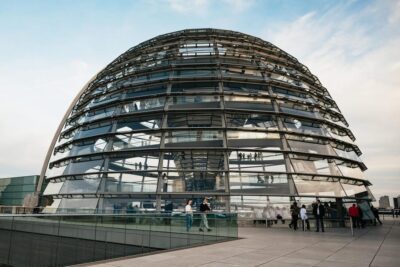
Reichstag, Dome and Government District Guided Tour
Read our review →
1-Hour City Tour by Boat with Guaranteed Seating
Read our review →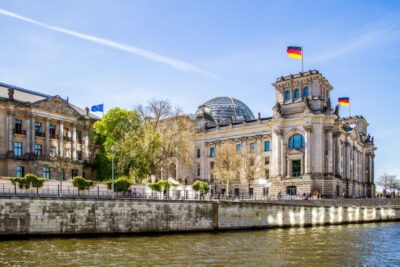
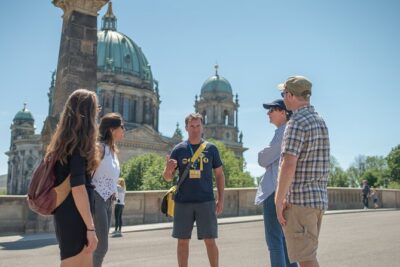
Reichstag, Plenary Chamber, Cupola & Government Tour
Read our review →
Browse the lists this tour appears in