Review · BERLIN TOURS
Path of Resistance: Berlin’s Hidden Holocaust Stories
Berlin’s Holocaust story is not confined to grand memorials. It lives in courtyards, pavement plaques, a former workshop, and the quiet site of a women’s protest. This 2.5-hour walk follows people who resisted Nazi rule in different ways, from Otto Weidt protecting Jewish workers to German women demanding the release of their husbands.
I like the human scale of this tour and its focus on lesser-known acts of courage. I also like the use of historical maps and Then & Now photographs, which help you see how ordinary streets became places of persecution and defiance. The subject is painful, and the brisk walking pace plus all-weather schedule may not suit everyone.
Key points
- Otto Weidt’s workshop: See the small workplace where a partially blind brushmaker tried to protect blind and deaf Jewish workers.
- Rosenstraße protest: Learn how German women publicly demanded the release of Jewish husbands held by the Nazis.
- Bebelplatz book burning site: Stand above the empty library memorial marking the May 10, 1933 attack on books and free thought.
- Old Jewish quarter: Visit the New Synagogue, Grosse Hamburger Strasse Cemetery, Stolpersteine, and other memorial traces.
- Specialist-led walk: Guides such as Tom and Hannah explain difficult subjects with patience, detail, and room for questions.
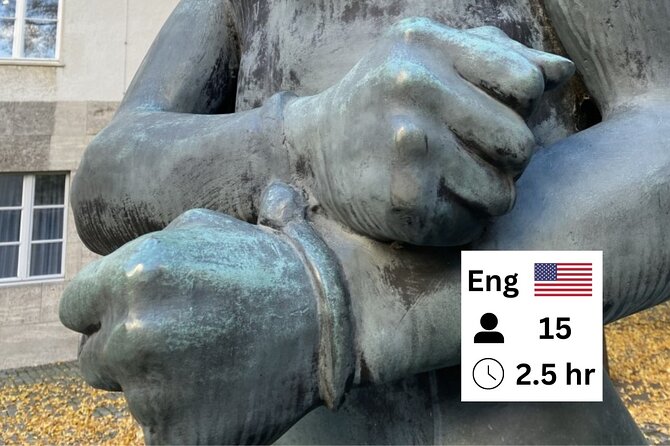
- Small-group format: The activity is advertised for a limited group, with capacity details listed as either 10 or 15, so confirm the exact number when booking.
Why this Berlin walk feels different
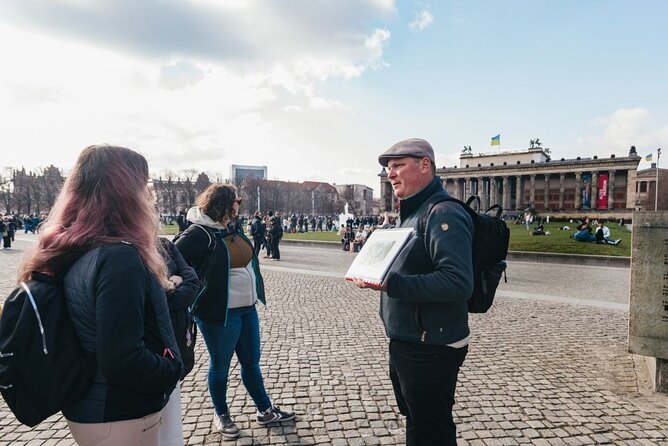
Many Berlin history tours concentrate on Nazi headquarters, wartime ruins, and the Berlin Wall. This one takes another route. It asks what resistance looked like in daily life, when the people involved were not soldiers or famous political leaders, but workers, spouses, teachers, religious figures, and families.
That approach gives the walk its purpose. You hear about people who hid others, spoke out, protected colleagues, or refused to accept the removal of Jewish neighbors. You also confront the harder question of why so many people did not resist.
The tour explains Nazi racial ideology, including the belief in Aryan superiority and the classification of supposed sub-races. That background matters because the persecution did not begin with deportation. It developed through antisemitic laws, public humiliation, exclusion from schools and jobs, forced separation, and the steady use of state power against Jewish people and other groups.
You should expect a serious experience, not a light sightseeing stroll. The guide leads an interactive discussion and takes questions, so the tour works best if you want context rather than a quick list of dates.
A few more Berlin half-days to weigh up
- Berlin: Reichstag, Dome and Government District Guided Tour
★ 4.7 · 18,288 reviews - Berlin: 1-Hour City Tour by Boat with Guaranteed Seating
★ 4.3 · 16,993 reviews - Berlin: Boat Tour Along the River Spree
★ 4.4 · 11,252 reviews
Starting at the former Imperial Post Office
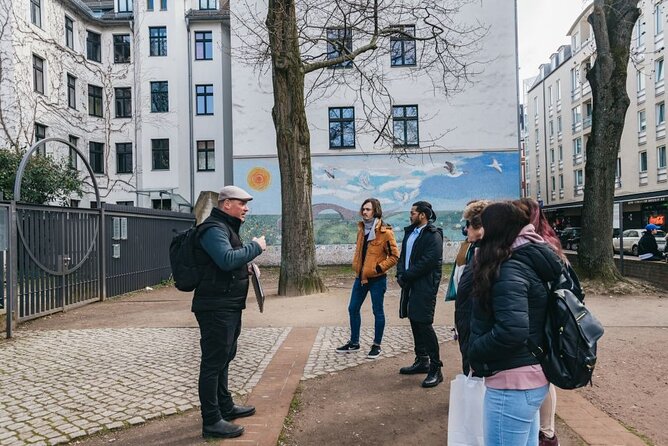
The meeting point is the former Imperial Post Office. Arrive 10 minutes early and look for the guide at the main entrance with a blue umbrella.
This is a sensible place to begin because the tour quickly shifts your attention from Berlin’s grand imperial buildings to the people affected by the regime. The contrast is useful. You are not being shown a sealed-off historical site. You are walking through a functioning part of the city, where daily life continued while persecution spread around it.
The guide speaks English and uses maps and Then & Now images throughout the route. Those visual aids should help you follow changes in the streetscape and understand how places looked before wartime destruction, postwar rebuilding, or later redevelopment.
New Synagogue and the Moses Mendelssohn school
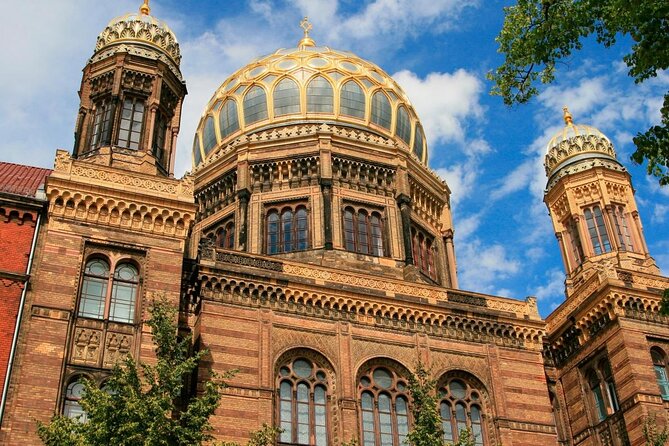
The first major stop is the New Synagogue Berlin, also known as the Jewish Centre. You spend about 15 minutes here with a guided explanation and time to take in the site.
The synagogue helps establish the importance of Berlin’s Jewish community before the Nazi period. This is an important correction to the way Holocaust history is sometimes presented. Jewish life was not a small footnote that appeared only when persecution began. It was part of Berlin’s social, religious, educational, and cultural life.
You then walk to the Jüdisches Gymnasium Moses Mendelssohn, a Jewish school, for about 10 minutes. Here the story becomes more personal. A school is a place of learning and hope, but under Nazi rule, Jewish children and families faced exclusion and danger simply because of their identity.
The short stops mean you will not have time for a full museum visit at each place. Instead, the guide links them into one larger story. If you want long periods inside exhibitions, this is not that kind of tour. If you prefer a connected walk with several carefully chosen stops, the format works well.
Grosse Hamburger Strasse and the first signs of forced removal
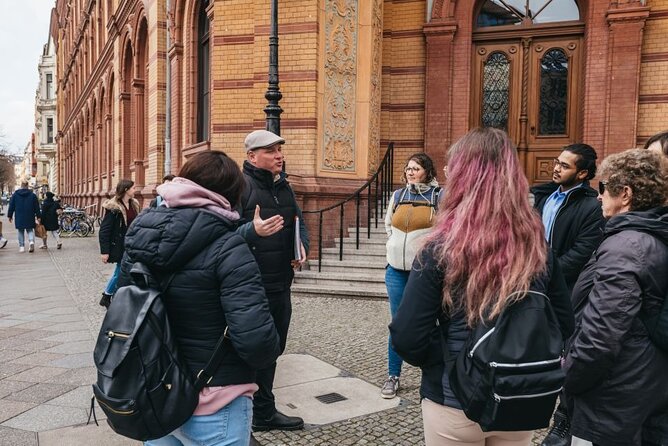
At Grosse Hamburger Strasse Cemetery, the tour examines one of Berlin’s oldest Jewish burial sites. Allow around 15 minutes.
Cemeteries can make history feel immediate because they connect names, families, and generations to a particular street. This stop also shows how Jewish places were treated during the Nazi era and how memory survived despite destruction and persecution.
The route also includes Stolpersteine, the small brass pavement memorials placed outside former homes. You may find these easy to miss when exploring Berlin alone. A guide gives them meaning by explaining that the stones mark individual people, not an anonymous mass.
The former deportation centre is another important part of this section. You stand in a place associated with Jewish families being taken from their homes and sent away. The strength of the stop is its ordinary setting. There is no need for an imposing structure to convey what happened. The street itself becomes part of the evidence.
You will hear how antisemitism changed from prejudice into government policy and then into organized genocide. That progression is one of the most valuable parts of the experience because it shows that mass violence was built through many steps.
Same city, a completely different sort of afternoon:
- Discover Berlin Half-Day Walking Tour
★ 5.0 · 9,624 reviews - Berlin: Hop-on Hop-off Bus Tour with Live Commentary
★ 4.3 · 8,579 reviews - Berlin: Government District around the Reichstag Guided Tour
★ 4.7 · 8,447 reviews - Berlin: Reichstag, Plenary Chamber, Cupola & Government Tour
★ 4.6 · 8,422 reviews
Otto Weidt’s workshop and quiet protection
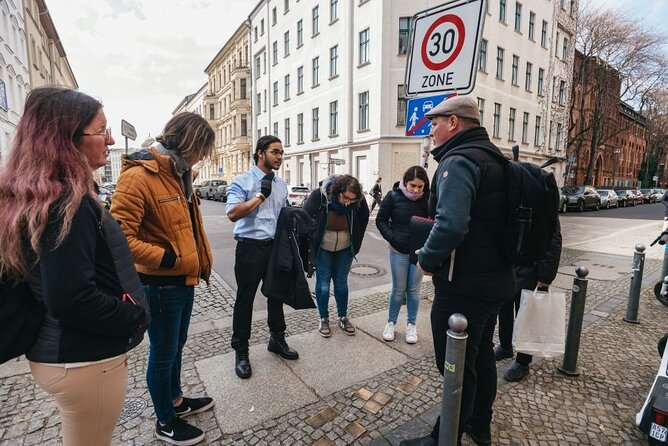
Otto Weidt’s Workshop for the Blind is one of the tour’s most distinctive stops. You spend about 15 minutes at this modest workplace.
Weidt made brushes and employed blind and deaf Jewish workers. He tried to protect them from deportation and persecution by arguing that their work was necessary. The workshop gives you a close look at a form of resistance that was practical, risky, and rooted in personal responsibility.
I find this stop especially useful because it avoids the idea that resistance must always be dramatic. Some people fought the regime through underground networks or open political opposition. Others resisted by keeping a workplace going, hiding someone, falsifying information, or using their position to shield a vulnerable person.
The tour also includes the story of Nicholas Winton, the British organizer who helped hundreds of Jewish children escape the Holocaust. His story broadens the discussion beyond Berlin and shows that resistance could involve planning, transport, paperwork, and persistence across borders.
The guide does not present courage as simple. Protecting another person under a dictatorship carried real danger. You are encouraged to think about the choices available to ordinary people, and the moral cost of choosing not to act.
Rosenstraße and the Block of Women
The Block of Women marks the site of the Rosenstraße Protest. You spend about 15 minutes here learning how German women gathered to demand the release of their Jewish husbands.
This is one of the clearest examples on the route of collective action by people who were not part of a formal resistance organization. The women stood publicly and kept pressing the authorities. Their protest focused on their own families, but it also challenged the regime’s treatment of Jewish men.
The site gives the tour an important change of pace. Earlier stops show separation, removal, and individual protection. Rosenstraße shows people using their numbers and public presence to push back.
You should listen closely here because the value lies in the sequence of events and the people involved, not in a large structure you can simply look at. The memorial is understated. The guide’s explanation supplies the context.
This stop also helps you understand that resistance had limits. One protest did not bring down the Nazi system, and it did not stop the Holocaust. Yet it shows that Nazi power was not always absolute and that public pressure could sometimes produce a result.
Museum Island and Neue Wache
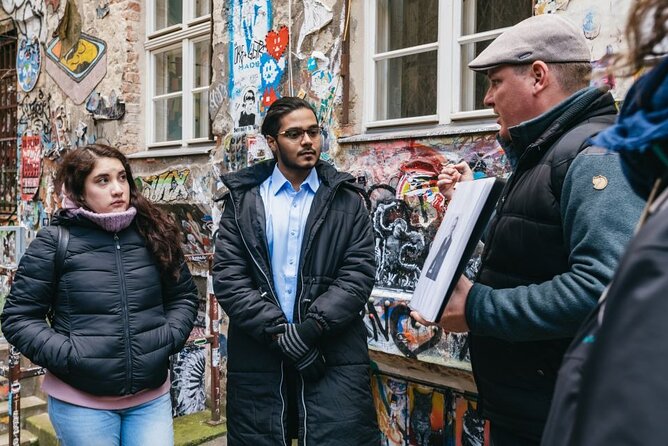
The route continues across Museum Island, with about 20 minutes for guided sightseeing. This section connects the Jewish quarter to Berlin’s central civic and cultural district.
Museum Island is one of the city’s main sightseeing zones, but on this walk it serves a different purpose. The guide places Nazi-era events within the wider city, rather than treating Jewish history as an isolated subject. You see how places of culture, government, and public life existed alongside persecution.
At Neue Wache, you spend around 15 minutes. The memorial is associated with victims of war and tyranny, and its spare design encourages a pause rather than a long lecture. This is one of the points where the guide can help you sort through the broad categories of remembrance used in Berlin.
The walk involves frequent stops and discussion. Comfortable shoes are essential. Public transport is not required during the tour, but you will be on foot for the full route, and the schedule runs in rain or sunshine.
Bebelplatz and the May 10, 1933 book burning
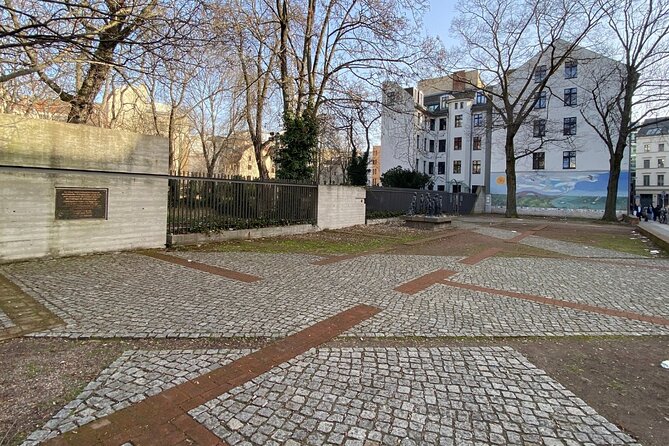
At Bebelplatz, you visit the memorial to the Nazi book burning of May 10, 1933. The guided stop lasts about 10 minutes.
The site marks the Nazi campaign against free thought, intellectual freedom, and political opposition. Students and supporters of the regime burned books deemed un-German, including works by Jewish writers and political opponents.
Look down into the square for the underground library memorial, a stark room of empty shelves. It is easy to miss if you are simply crossing Bebelplatz, which is why a guided visit adds real value.
This is not only a story about books. It is about control over education, art, journalism, and public debate. The book burning came early in the Nazi period, before the Holocaust reached its full murderous scale. That timing makes the site useful for understanding how censorship and public intimidation helped prepare the ground for later crimes.
The stop is brief, but its subject is large. If you want time to sit and reflect, you may need to return on your own after the tour.
Trains to Life, Trains to Death
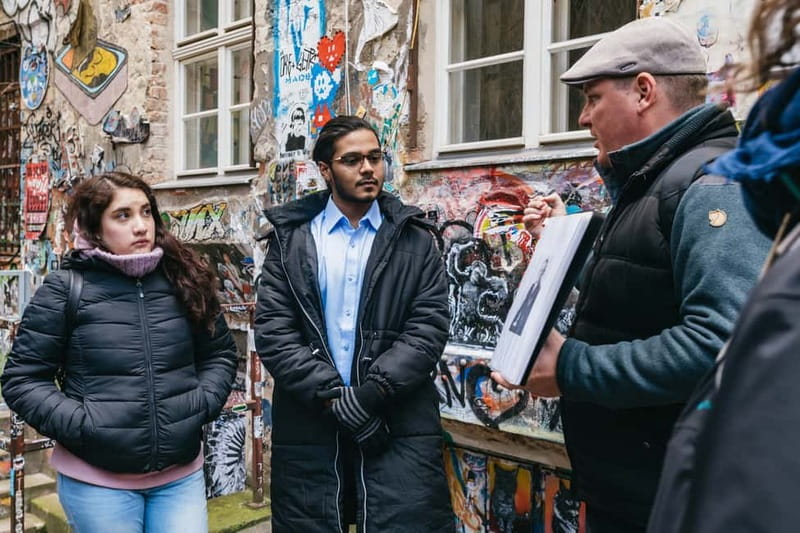
The final major memorial is Trains to Life, Trains to Death. It brings together two very different outcomes for Jewish children and families.
The title refers to the Kindertransport effort that helped some Jewish children escape to safety, while other trains carried people toward deportation and death. Together with the Nicholas Winton story, the memorial brings the human choices of rescue into the same frame as the machinery of persecution.
The contrast can be difficult, but it is effective. You are reminded that escape was possible for some, yet unavailable to many others because of money, borders, official restrictions, family circumstances, or the speed of Nazi persecution.
The route is listed as finishing at Berlin Friedrichstraße station, while the meeting information says the activity ends back at the meeting point. Because those details do not fully match, confirm the exact end location when you reserve. Either way, the tour remains within central Berlin and does not require a transport ticket during the walk.
Guide quality and group size
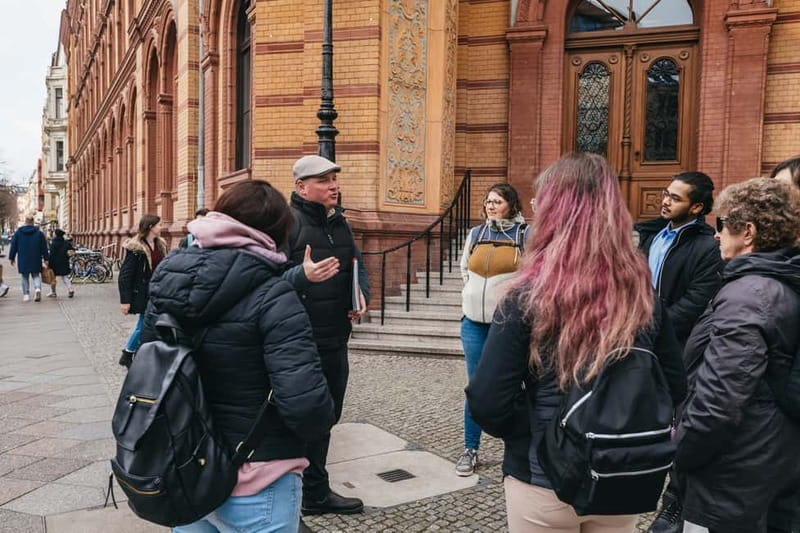
The guide is the heart of this experience. Tom is described as friendly, professional, and patient when handling sensitive subjects. Hannah is noted for her passion and for bringing forward less familiar people who acted with courage.
That matters here. Holocaust interpretation requires more than dates and names. You need a guide who can explain the setting without turning suffering into spectacle, and who can answer questions without losing the thread of the walk.
The tour includes interactive discussion and questions. That makes it more engaging than a one-way speech, but it also means the exact feel can vary with the group. A small group should make it easier to hear the guide and ask something specific.
The capacity information lists both a maximum of 10 and a maximum of 15 participants. Treat it as a small-group experience, but confirm the precise limit if group size is important to you.
Is $56 a fair price?
At $56 per person, this is not Berlin’s cheapest walking tour. The value depends on what you want from a guide.
You are paying for a 2.5-hour route led by a local historian with a World War II specialty, plus access to museums and memorials included in the activity. The use of maps, photographs, and researched personal stories adds more than you would get from walking between the same sites with a guidebook.
The price makes the most sense if you want careful explanations of lesser-known places. Otto Weidt’s workshop, Stolpersteine, the deportation centre, and Rosenstraße are easy to pass without understanding their significance. A specialist guide connects them into one account.
It is less good value if you mainly want famous Berlin sights or prefer to explore at your own speed. You will cover many stops, but most visits are short, usually 10 to 20 minutes. The tour gives you a strong framework, not hours inside each museum.
Free cancellation up to 24 hours before the start and a reserve-now, pay-later option make booking less risky. Entry to museums and memorials is included. Food, drinks, and public transport are not, though transport is not needed during the walk.
Who should book this experience?
I would recommend it to you if you want a serious, place-based history tour and have already seen some of Berlin’s main landmarks. It is also a good choice for first-time visitors who want to understand how the city remembers Jewish life, Nazi persecution, and resistance.
History students, teachers, and families with older children may find the personal stories especially useful. The discussion of Aryan ideology and sub-races gives the tour an educational structure, while the stories of Weidt, Winton, and the Rosenstraße women make the subject easier to connect with real people.
This is not the best pick if you want a relaxed sightseeing walk, a broad overview of all Berlin history, or a tour with little emotional weight. The route deals directly with deportation, genocide, antisemitism, and public resistance. Bring water, dress for the weather, and wear comfortable shoes.
The walk is wheelchair accessible, but the activity runs in all weather. Bring an umbrella, rain protection, or sun cover as needed. Alcohol and drugs are not allowed.
Should you book the Path of Resistance walk?
Book it if you want to see Berlin through the actions of people who resisted, protected others, or demanded change under a brutal regime. The strongest parts are the small, easily missed places and the guides’ attention to personal stories.
Before booking, confirm the group limit and end point, since the practical details give two different capacity figures and two different descriptions of where the walk finishes. If those points work for you, $56 is a fair price for a focused, specialist-led experience that gives meaning to streets and memorials you might otherwise pass without notice.
FAQ
How long does the tour last?
The walking tour lasts 2.5 hours.
What language is the tour conducted in?
The live tour guide speaks English.
Where does the tour start?
The meeting point is the former Imperial Post Office. The guide will be at the main entrance with a blue umbrella.
How early should I arrive?
Arrive 10 minutes before the scheduled start time.
Where does the tour finish?
The route information lists Berlin Friedrichstraße station as the finish, while the meeting details say the activity ends back at the meeting point. Confirm the exact end location when booking.
Is public transport needed?
No public transport is required during the walking tour. Public transport tickets are not included.
What is included in the price?
The price includes a local historian guide, entry to museums and memorials, historical maps, Then & Now photographs, interactive discussion, questions and answers, and recommendations for further exploration.
Are food and drinks included?
No. Food and drinks are not included.
Is the tour wheelchair accessible?
Yes, the activity is listed as wheelchair accessible.
What should I bring?
Bring comfortable shoes, water, and an umbrella or other weather protection. The tour operates in all weather conditions.
Can I cancel the booking?
You can cancel up to 24 hours in advance for a full refund. A reserve-now, pay-later option is also available.
Just added around Berlin
- From Berlin: Gardens & Palaces of Potsdam Bike Tour★ 5.0 · 61 reviews
- Berlin: Battle for Seelow Heights WW2 tour -Clash of Titans★ 5.0 · 27 reviews
- From Berlin: Historical Gems of Potsdam Private Day Trip★ 4.4 · 4 reviews
- Berlin: Französischer Dom 360° Panorama & Crémant to go★ 3.9 · 5 reviews
- Explore Berlin Tour: History and Highlights★ 4.7 · 5 reviews
- Berlin: Evening Yacht Cruise with Aperitif & Dinner Upgrade★ 4.6 · 178 reviews
- Berlin: Expats in Berlin Comedy Show Ticket★ 4.7 · 182 reviews
- Berlin: The Epic Comedy Club Friday Night Showcase★ 4.8 · 28 reviews
Berlin Tours, compared.
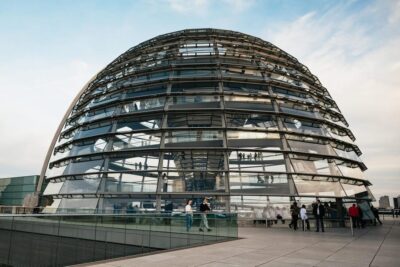
Reichstag, Dome and Government District Guided Tour
Read our review →
1-Hour City Tour by Boat with Guaranteed Seating
Read our review →
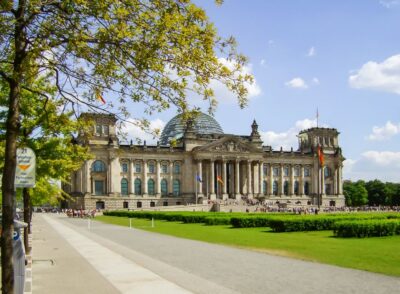
Reichstag, Plenary Chamber, Cupola & Government Tour
Read our review →