
Review · BERLIN TOURS
Night magic city tour in Berlin
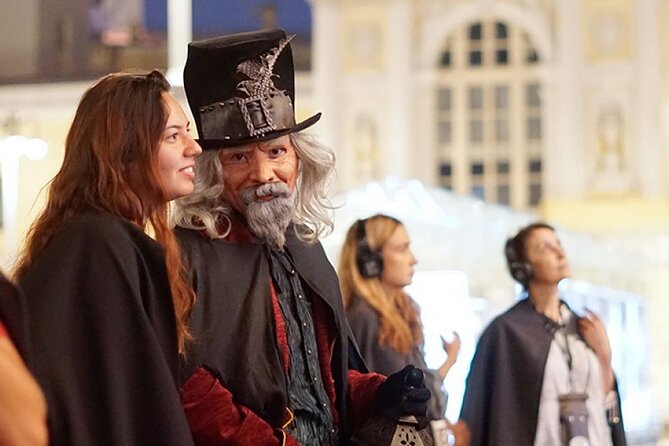
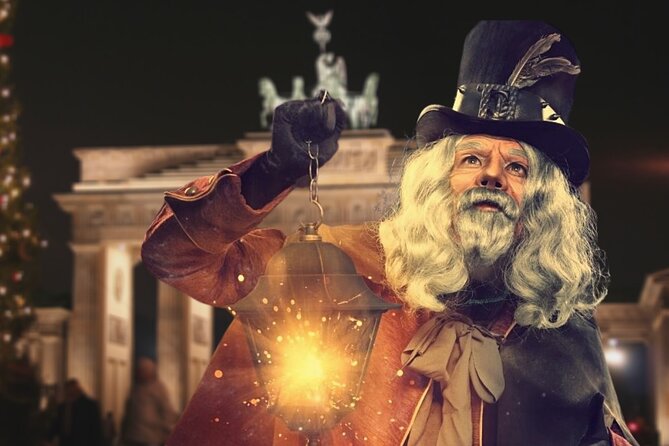
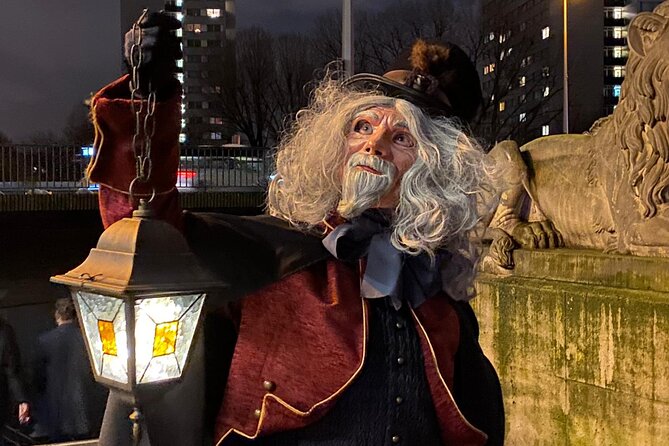
Berlin changes character after dark. On this 90-minute walking tour, fountains, old churches, restored lanes, and the Spree become a stage for stories about the city’s past. The route links several central sights, but the real draw is the theatrical treatment: costumes, actors, an audio-guide element, and visual effects turn a standard sightseeing walk into something more playful and atmospheric.
I like two things in particular. First, you get a focused introduction to Berlin’s medieval core without spending half a day on your feet. Second, the interactive style gives the history some life, with small performances and moments that involve the group. The main caution is practical: this is an outdoor night tour, so cold, icy, or wet weather can affect the experience, and one poor review reports a guide failing to appear.
Key points at a glance
- A theatrical route through old Berlin: Walk from St. Marienkirche toward Ephraim’s, passing the Neptune Fountain, Red City Hall, Nikolaiviertel, St. Nicholas’ Church, Humboldt Forum, and Mühlendamm.
- Audio, actors, and visual effects: The experience combines live performance with recorded narration and visual elements, rather than relying only on a conventional guide talk.
- A short evening format: At about 1 hour 30 minutes, it fits neatly into an evening of sightseeing, dinner, or a night out in Mitte.
- A small maximum group: The tour is limited to 20 people, which should make the interactive parts easier to follow.
- A few memorable extras: The experience may include costume elements, coffee, chocolate, and a schnapps at the end, according to the supplied tour details.
- Weather matters: The activity requires good weather, and cancellation is possible if conditions are poor or the minimum group size is not reached.
Why Berlin at night works so well
Berlin’s central district can feel scattered in daylight. One grand building leads to a modern square, then suddenly you are in a quiet lane beside the Spree. At night, the contrasts are easier to notice. The lighting narrows your attention, and the city’s older corners feel less like items on a checklist.
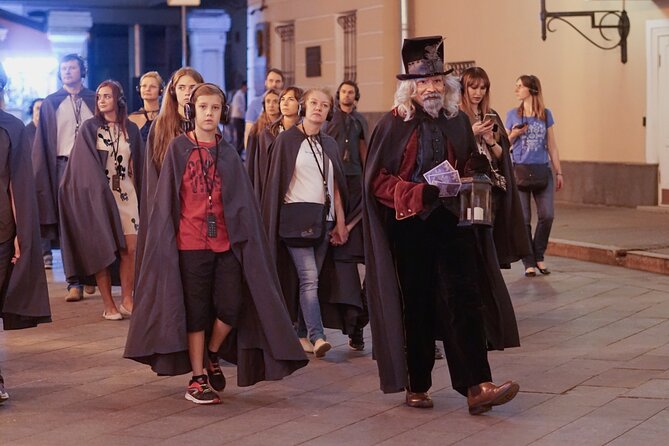
This tour uses that mood well. You are not simply led from monument to monument while someone recites dates. The theatrical approach asks you to watch, listen, and sometimes take part. The supplied descriptions refer to actors, costumes, an audio guide, and visual effects, so you should expect a performance with historical content rather than a purely traditional walking tour.
That format will not suit every visitor. If you want a precise architectural lecture or long time at each sight, the pace and theatrical touches may feel distracting. If you want a light, unusual introduction to Berlin’s center, the mix can make the city easier to remember.
The English option is useful, since the activity is offered in English and uses more than live commentary alone. Still, check the language selected when booking. The experience depends on following spoken material and timed elements, so the right language matters.
More evenings out in Berlin:
- Berlin: Solar Powered Sunset Catamaran Cruise & Audio Guide
★ 4.6 · 1,043 reviews - Berlin: Live-Guided Evening Sightseeing Tour by Open-top Bus
★ 4.1 · 783 reviews - Berlin: Bus Tour by Night with Live Commentary
★ 4.2 · 687 reviews
Starting at St. Marienkirche
The meeting point is St. Marienkirche on Karl-Liebknecht-Strasse 8, near Alexanderplatz. This gives you a practical starting location in central Mitte, with the city’s older core close at hand.
The church itself helps set the tone. It is one of Berlin’s old central churches, and the route soon moves toward the quarter around St. Nicholas’ Church. You should arrive with enough time to locate the meeting point, especially at night. The tour ends elsewhere, at Ephraim’s on Spreeufer 1, so do not plan to return to the starting point without checking the route on a map.
The experience is limited to 20 people. That is not an intimate private walk, but it is small enough for the performance elements to work better than they would in a large crowd. The group size also matters if audience participation is part of the evening. You can expect a shared activity, not a solitary audio walk.
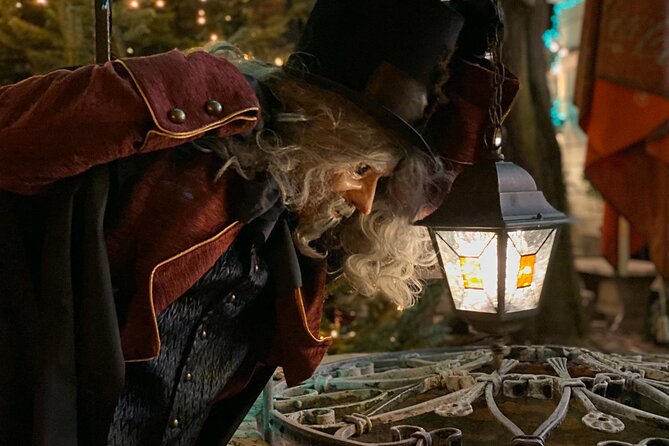
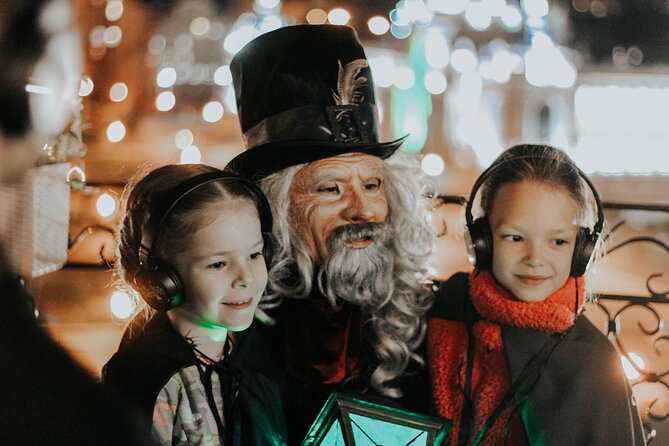
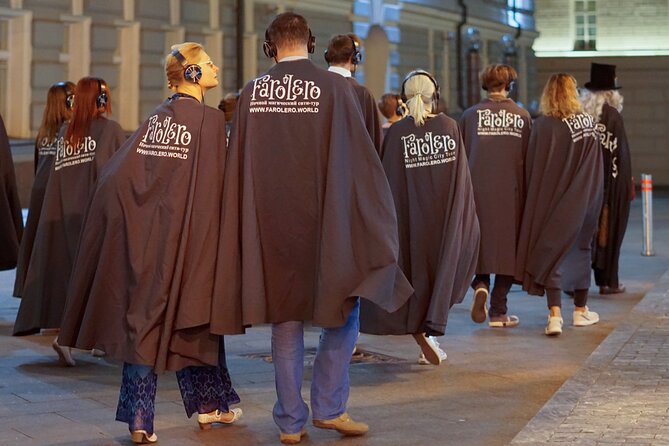
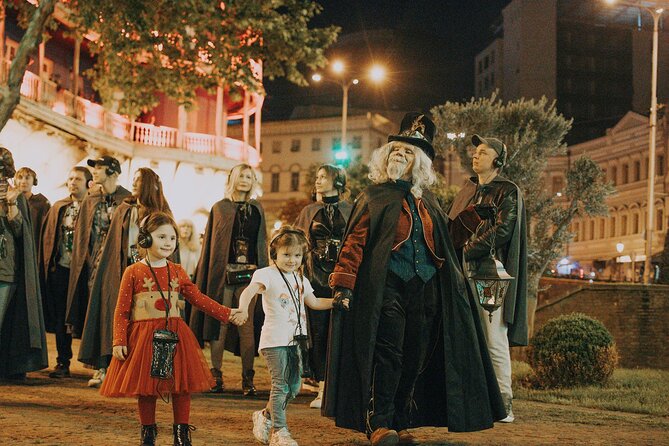
The tone appears friendly and informal. One supplied account describes the group being warmly welcomed and dressed in costume before setting off. That detail is worth keeping in mind: you may be asked to play along a little. You do not need to be a performer, but a willingness to join in will likely make the evening more fun.
The Neptune Fountain and Berlin’s old symbols
One of the first important sights is the Neptune Fountain, built in 1891 and designed by Reinhold Begas. Neptune sits at the center, surrounded by four female figures representing the major rivers of Prussia at the time: the Elbe, Rhine, Vistula, and Oder.
The sculpture gives the guide a useful opening into Berlin’s political geography. The figures are not random decoration. The Elbe holds fruits and ears of corn, the Rhine is linked with a fishnet and grapes, the Vistula has wooden blocks connected with forestry, and the Oder is shown with goats and animal skins.
You can also use this stop to notice how borders and names change. The Vistula is now entirely in Poland, while the Oder forms part of the border between Germany and Poland. A quick look at the fountain becomes a lesson in how Prussia’s old map no longer matches the modern one.
At night, the fountain should provide a strong visual moment, though lighting conditions can vary. Do not expect a long museum-style stop. The value here is the combination of sculpture, storytelling, and the setting around Alexanderplatz and the old center.
Red City Hall and the red-brick city center
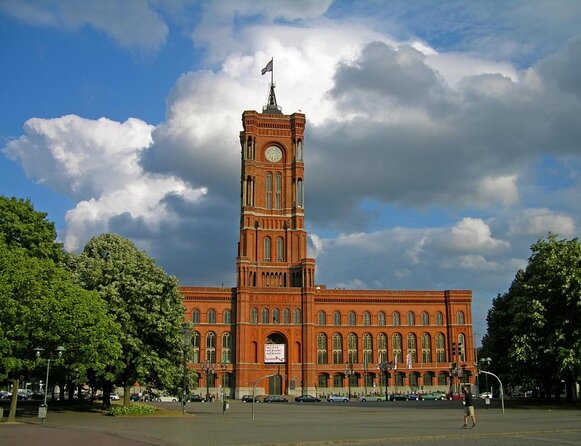
The route continues to the Rotes Rathaus, or Red City Hall, on Rathausstrasse near Alexanderplatz. Its name comes from the red clinker brick used across the facade, which gives the building an unusually bold appearance.
This is still Berlin’s city hall and the home of the governing mayor and the Berlin Senate. That makes it more than a photogenic stop. It is an active political building tied to the city you are exploring, not simply a preserved relic.
The tour’s dramatic approach may help you see the building as part of Berlin’s civic story. The city has repeatedly rebuilt, divided, and redefined itself, and the Red City Hall sits in the middle of that shifting center. You will probably get a concise explanation rather than a full political history, but the stop adds useful context to the surrounding streets.
If you want interior access, this activity does not promise it. Treat the town hall as an exterior sight on a nighttime walk.
A few more Berlin half-days to weigh up
- Berlin: Reichstag, Dome and Government District Guided Tour
★ 4.7 · 18,288 reviews - Berlin: 1-Hour City Tour by Boat with Guaranteed Seating
★ 4.3 · 16,993 reviews - Berlin: Boat Tour Along the River Spree
★ 4.4 · 11,252 reviews - Discover Berlin Half-Day Walking Tour
★ 5.0 · 9,624 reviews
Ampelmännchen, a small figure with a big history
Berlin’s Ampelmännchen is one of the city’s most recognizable modern symbols. The name means little traffic-light man, and it refers to the figure used on pedestrian signals.
Before reunification in 1990, East and West Germany used different pedestrian figures. West Germany generally used a generic human shape. East Germany used a more distinctive male figure wearing a hat. That East German version survived reunification and became a popular symbol far beyond the traffic signal.
This is a smart subject for a short walking tour because it connects ordinary street details with major twentieth-century history. You do not need to enter a museum to see the legacy of the former East and West. Look at the pedestrian signals as you move through the city, and the story becomes part of your surroundings.
The Ampelmännchen stop also keeps the tour from becoming too focused on grand monuments. Berlin’s identity is found in its street signs, public design, and everyday objects as much as in its palaces and churches.
Nikolaiviertel, the reconstructed heart of old Berlin
The Nikolaiviertel is the emotional center of the route. This quarter, about five minutes from Alexanderplatz, is tied to the beginnings of Berlin around 1200. Along with nearby Cölln, it formed the early core of the city.
Today, the area contains restored medieval-style buildings and some modern imitations. That distinction matters. You are not walking through an untouched medieval neighborhood. Much of the quarter was reconstructed, so the atmosphere is historical in appearance but shaped by later rebuilding.
That does not make it worthless. In fact, the reconstruction gives you a clear sense of how compact old Berlin once was. The lanes are more human in scale than the broad avenues nearby, and the change in mood is immediate. At night, the quarter is especially suited to a theatrical story because its streets feel enclosed and visually separate from the traffic around Alexanderplatz.
The supplied descriptions point to humorous audience involvement and small performances here. This is likely where the tour’s theatrical approach feels most natural. You can expect history presented through characters and scenes, not just a list of dates.
Keep your expectations sensible. The tour lasts only about 90 minutes, and the Nikolaiviertel is not an open-air museum with every doorway explained. Think of it as a vivid introduction that may encourage you to return during the day.
St. Nicholas’ Church and the oldest church setting
St. Nikolai-Kirche, or St. Nicholas’ Church, is one of the most important stops. The church was built between 1220 and 1230 and is described as the oldest church in Berlin. It sits within the Nikolaiviertel, bounded by Spandauer Strasse, Rathausstrasse, the Spree, and Mühlendamm.
The church gives the tour a strong anchor. Around it, the restored quarter tries to recall Berlin’s medieval beginnings. Even if you do not go inside, the exterior and surrounding streets help explain why this part of Mitte is treated as the city’s historical heart.
I like this stop because it shows a quieter side of Berlin. The city is often associated with modern architecture, Cold War sites, and large cultural institutions. Here, the story reaches back to the first centuries of the settlement.
Again, do not expect a lengthy church visit unless the tour specifically confirms interior access. The information supplied describes the church and its setting, but not an interior tour. Comfortable shoes remain sensible, and pay attention to the pavement in winter. One complaint specifically mentions cold conditions and icy surfaces, which is a useful warning for evening bookings.
Humboldt Forum and the rebuilt royal setting
The Humboldt Forum brings the route into a more modern and debated part of Berlin’s center. It is a museum of non-European art on Museum Island, named for Prussian scholars Wilhelm and Alexander von Humboldt.
Its architecture combines three reconstructed Baroque facades from the former Royal Palace with a contemporary side facing the Spree. Inside, the design is modern and the building houses non-European collections from the Berlin State Museums, along with temporary exhibitions and public events.
This is an especially good stop for understanding Berlin’s habit of placing old and new side by side. The building recalls a royal palace, yet its purpose is a modern museum with collections from outside Europe. That mixture raises questions about empire, collecting, reconstruction, and how a capital chooses to present its past.
The nighttime tour will not replace a visit inside the Humboldt Forum. The activity is a walking experience, not a museum admission. Still, the exterior makes an effective story point, and you can return in daylight if the subject interests you.
Mühlendamm and the Spree crossing
The final part of the route reaches Mühlendamm, or Mill Dam, and finishes at Ephraim’s on Spreeufer. Mühlendamm runs through central Mitte and crosses the Spree at Mühlendammbrücke.
The name comes from watermills that once operated here. A causeway was first laid out around 1200, and the crossing helped form the basis of the late medieval city. That makes the stop a fitting link between the river, trade, engineering, and Berlin’s first urban growth.
The river is important to the experience’s mood. After the tighter streets of Nikolaiviertel, the Spree provides a more open finish. The endpoint at Ephraim’s keeps you in the same central district, close to the historic quarter and major city sights.
Because the tour ends at a different location from where it begins, plan your next step before setting out. The route stays central, but the exact onward walk depends on where you are staying and what you plan to do next.
What the theatrical format adds
The best part of this experience is the way several tools work together. An audio-guide component can provide a steady historical thread, while actors and visual effects create moments that a normal walking lecture cannot. Costume elements also help shift the group from passive sightseeing into participation.
The supplied feedback describes the experience as interactive, entertaining, and helped by the way the audio and live elements block out traffic noise and other distractions. That is a real advantage in central Berlin, where cars, trams, and crowds can compete with a guide’s voice.
The small extras also add warmth. Coffee, chocolate, and a schnapps at the finish are mentioned as part of one evening. Treat these as possible features rather than guaranteed items, since the exact offering may depend on the performance or booking conditions.
The main tradeoff is control. A theatrical tour follows its own rhythm. You may not get as much freedom to stop for photographs, linger at the church, or ask detailed questions as you would on a private walk. I would choose it for atmosphere and storytelling, not for exhaustive sightseeing.
Price, timing, and who gets good value
At $46.99 per person, this costs more than a simple self-guided walk through Mitte. The price makes more sense if you value the live performance, audio elements, visual effects, and small hospitality touches. You are paying for an event, not only for a route between public landmarks.
The 1 hour 30 minute length is a strong point. You can fit it before dinner, after a daytime museum visit, or into an evening near Alexanderplatz. It is long enough to cover several connected places but short enough that you are unlikely to feel trapped in a full-night commitment.
The experience is booked, on average, 53 days ahead. That suggests you should reserve early if your dates are fixed, especially during busy periods. Confirmation normally arrives at booking, but reservations made within two days of departure may be confirmed within 48 hours and remain subject to availability.
Most people can participate, according to the activity details, but this is still an outdoor walk with night-time pavement and possible winter conditions. Wear shoes suited to walking and dress for the forecast. Poor weather can lead to a different date or a full refund, and the same options apply if the minimum number is not reached.
Free cancellation is available up to 24 hours before the start time. After that point, the price is not refunded and late changes are not accepted.
Should you book the Night Magic City Tour?
Book it if you want Berlin history delivered with humor, performance, and a little audience participation. It is particularly suited to first-time visitors who want a quick orientation to Mitte, families and couples who prefer an activity to a formal lecture, and anyone who enjoys theatrical storytelling.
Skip it if your priority is a quiet private walk, detailed architectural analysis, or guaranteed access inside every building. The one serious practical concern is reliability, since one account describes the guide not arriving at the agreed place and time. That appears alongside a strong overall rating of 4.7 out of 5 and a 92 percent recommendation rate, so it is not enough to dismiss the tour, but it is worth confirming the meeting details on the day.
For the best chance of enjoying it, arrive early at St. Marienkirche, bring warm clothing, and approach the evening ready to take part. At roughly $47, it is fair value when you want a compact night show with Berlin history attached. It is less compelling if you only need a list of sights.
FAQ
Where does the Night Magic City Tour begin?
It begins at St. Marienkirche, Karl-Liebknecht-Strasse 8, 10178 Berlin, Germany.
Where does the tour end?
The tour ends at Ephraim’s, Spreeufer 1, 10178 Berlin, Germany.
How long does the tour last?
The experience lasts approximately 1 hour 30 minutes.
What language is offered?
The tour is offered in English.
What sights are included on the route?
The route includes the Neptune Fountain, Rotes Rathaus, Ampelmännchen, Nikolaiviertel, St. Nikolai-Kirche, Humboldt Forum, and Mühlendamm.
How many people can join the tour?
The maximum group size is 20 people.
Is the tour suitable for most people?
The activity information says most people can participate. It is an outdoor walking experience, so weather and pavement conditions may affect comfort.
What happens if the weather is poor?
The experience requires good weather. If it is canceled because of poor weather, you will be offered another date or a full refund.
Can I cancel for a full refund?
Yes. You can cancel at least 24 hours before the start time for a full refund. Cancellations and changes made less than 24 hours before the start time are not accepted for a refund.
Just added around Berlin
- eSIM for Germany and 34 European Countries★ 4.5 · 16 reviews
- Your ticket to The Wall Museum Berlin★ 3.0 · 60 reviews
- Walking on the Wall: 3-Hour Tour in Berlin★ 4.5 · 34 reviews
- Rickshaw Tours Berlin – Groups of up to 16 people with several rickshaws★ 4.0 · 97 reviews
- Warnemuende Shore Excursion: Private Berlin Tour★ 4.5 · 27 reviews
- Warnemuende Shore Excursion: Berlin Private Sightseeing Tour from Rostock★ 5.0 · 4 reviews
- Love and War in Berlin: Self-Guided Story Puzzle Walk★ 5.0 · 7 reviews
- Cold War Berlin – Private Live Virtual Experience★ 5.0 · 4 reviews
Berlin Tours, compared.

Reichstag, Dome and Government District Guided Tour
Read our review →
1-Hour City Tour by Boat with Guaranteed Seating
Read our review →




Reichstag, Plenary Chamber, Cupola & Government Tour
Read our review →
Browse the lists this tour appears in